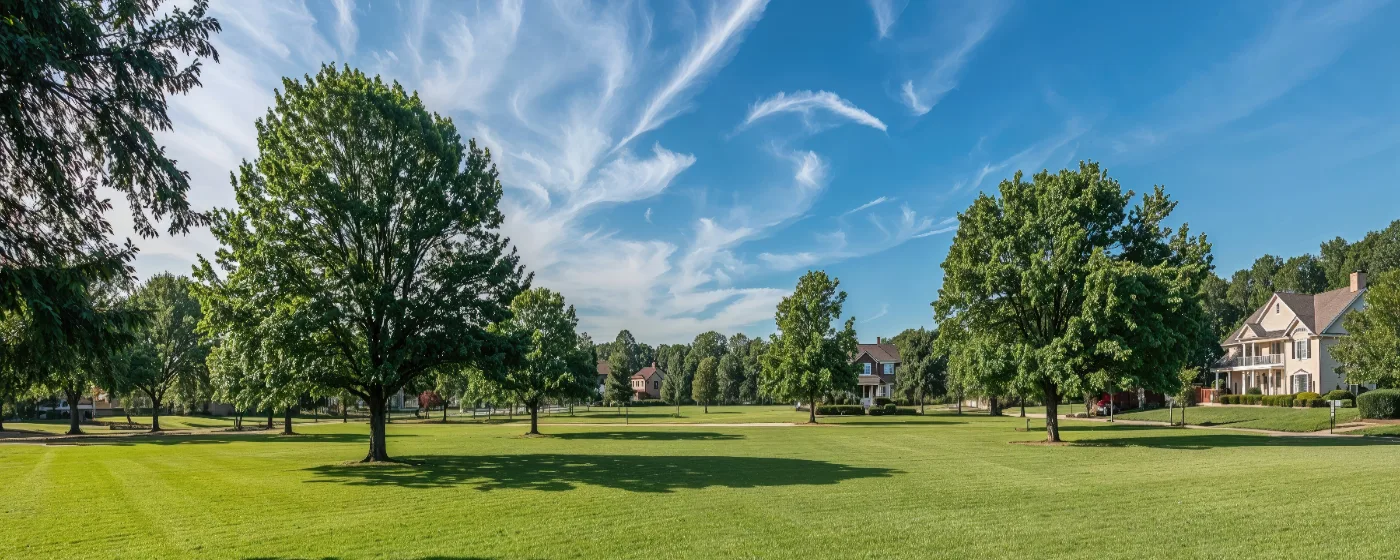
Allen surprises a lot of people from higher-cost states who run the numbers and expect a catch. The city consistently ranks among the most educated, safest, and highest-income communities in North Texas — yet everyday costs here are genuinely manageable compared with coastal metros. That gap exists because Texas's tax structure does most of the heavy lifting: no state income tax, a city that has cut its own property tax rate for 30 consecutive years, and groceries that run noticeably cheaper than the U.S. norm. What you give up is transit and the kind of urban density that keeps car costs down, and in summer you will pay for every degree of air conditioning.
Allen's economy is anchored by Allen Independent School District — one of the largest employers in the city — alongside the City of Allen itself, a regional hospital campus, and a growing cluster of corporate tenants including Experian and financial services operations. The median household income of $130,901 reflects a workforce that skews toward professional, dual-income households. That income profile matters when reading the housing numbers: Allen is not a budget suburb, and the typical home price is out of reach for the median household without a substantial down payment or dual income.
The comparison that matters most for most buyers is between Allen and its immediate neighbors — Plano to the south, Frisco to the west, and McKinney to the north. Allen's pricing falls roughly in line with Plano and McKinney, while Frisco runs noticeably higher. What separates Allen from the others day to day is not price but infrastructure: excellent public schools, well-maintained parks along Celebration Park and Bethany Lakes, and a city government that has managed growth with unusual fiscal discipline. The catch is a commute that is almost entirely car-dependent, with US-75 (Central Expressway) as the main artery south toward Dallas.
Whether you are weighing a move or stress-testing a budget, the sections below cover Allen's housing costs, everyday expenses, how it stacks up against nearby cities, and the tax environment that shapes what you actually keep.
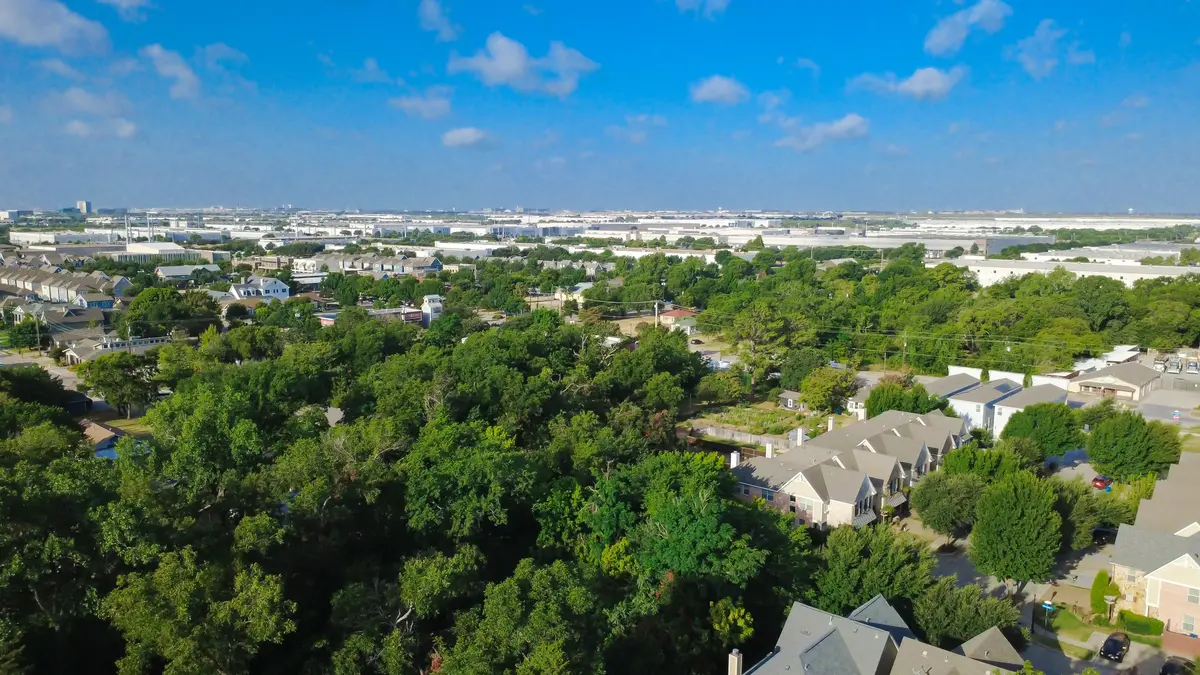
What It Really Costs to Live in Allen
Allen's monthly cost picture is shaped by a few specific line items. Utilities run approximately $196 per month on average — noticeably above what many Sun Belt cities average — driven almost entirely by summer air-conditioning demand. Groceries average around $457 per month for a typical household, which runs below national norms thanks to the density of grocery competition in Collin County. Transportation costs average around $292 per month, reflecting the car-dependent reality of the city. Phone and internet together average roughly $188 per month, and miscellaneous everyday spending runs around $117 per month.
The one line item that consistently catches newcomers off guard is utilities. North Texas heat is relentless from June through September, and the gap between a mild-weather month and a peak August bill is substantial. Budget for that before you move — it is not a rounding error.
The other honest caveat is cars. Allen has limited transit options beyond the Collin County Rides program for residents 65 and older or those with qualifying disabilities. Almost every errand, school run, and commute happens by car, which means fuel, insurance, and maintenance are meaningful fixed costs here in a way they are not in more transit-connected cities. The safety picture and the school district are covered on their own pages — see the safety page and the schools page for those details.
Housing: Rent vs Buy in Allen
The typical home in Allen was priced at $493,450 as of July 2026 (Zillow Home Value Index). That figure sits well above what most single-income households can comfortably carry, and the fact is direct: the median household income falls short of what is generally needed to buy the typical home here, by roughly $15,000. In practice, Allen's buyer profile skews toward dual-income households, people relocating with equity from a higher-cost market, or buyers making a larger down payment to lower the monthly load. The interactive calculator below this section will give you a payment estimate at current rates.
Entry-level options do exist — older construction from the 1990s and early 2000s can be found below the city median, particularly in sections of the city that developed earliest. Lost Creek Ranch is where buyers most often find a path in below the city-wide figure. The neighborhoods of Twin Creeks, Watters Crossing, Starcreek, Suncreek, and Shaddock Park all run above the city median; Montgomery Farm is another established community in Allen worth exploring depending on your priorities. For a neighborhood-by-neighborhood breakdown, the best neighborhoods guide covers character and fit in detail.
The effective property tax rate in Allen is approximately 1.30% — meaningful in dollar terms at this price point, but the city has approved its 30th-consecutive tax rate decrease for fiscal year 2025-2026, bringing the city's own portion to the lowest level since 1993. Allen also applies a 5% homestead exemption to owner-occupied primary residences, which reduces the assessed value used to calculate the city's share of the tax bill. The effective rate of approximately 1.30% reflects the combined burden across all taxing entities — city, school district, county — not just the city slice.
Renting in Allen runs $1,703 per month for a typical unit as of July 2026 (Zillow ZORI). Renting makes the most sense if you are new to the area and want time to learn the city before committing to a neighborhood, if you are not yet confident about job stability in the Dallas-Fort Worth market, or if you are waiting for equity from a previous home to close. Buying makes more sense if you are settled in a dual-income situation and plan to stay at least five years — the homestead exemption and the city's consistent tax discipline both reward long-term ownership.

Everyday Costs Beyond Housing in Allen
| Category | Typical Monthly Cost | Notes |
|---|---|---|
| Housing (typical rent) | $1,703/mo | City-wide typical rent. Buying? Use the calculator above for a mortgage estimate. |
| Utilities | $210–$310/mo | Electricity, gas, water, sewer, trash |
| Groceries | $520–$720/mo | Food at home, household of 2–3 |
| Transportation & Gas | $160–$280/mo | Fuel, and transit where it is a real option |
| Phone & Internet | $110–$180/mo | Mobile plan plus home broadband |
| Misc / Discretionary | $250–$480/mo | Dining out, entertainment, subscriptions |
Non-housing figures are estimates for a household of two to three, not a sourced index; housing is the city-wide typical rent (Zillow ZORI, July 2026). Refreshed with the rest of the city data.
Groceries are a genuine bright spot: Allen's food costs run below the national average, and the density of grocery competition in Collin County keeps prices in check. Clothing and general goods also come in below the U.S. norm. The counterweight, as noted above, is utilities. Allen sits in Texas's deregulated electricity market, which means residents can shop among competing providers — a meaningful opportunity to lower the electric bill if you take the time to compare plans when you move in. Summer cooling is the dominant driver, and the swing between a mild-weather month and a peak August bill is substantial.
Transportation is the other real cost driver. With limited public transit in Allen — a deliberate city choice, since joining DART would require reallocating local sales tax revenue currently directed to economic and community development — almost every trip is by car. A regional feasibility study was formally unpaused in March 2026 to examine whether DART service could eventually extend north from Plano through Allen to McKinney, but no funding or timeline has been committed. Until that changes, budget for two-car ownership if you are a household with multiple commuters. The commute to Dallas runs about 30 minutes under normal conditions via US-75 (Central Expressway), though peak-hour traffic on that corridor can stretch that considerably.
Looking to buy in Allen? Estimate your payment.
Enter your numbers to see an estimated monthly mortgage payment.
Estimate only. Excludes HOA fees and mortgage insurance. The interest rate above is a starting point, not a quoted rate — replace it with your own to see real numbers. Insurance is a flat placeholder, not a Allen quote.
Allen vs Nearby Cities: Cost Comparison
| City | Typical Home Price | Typical Rent | Cost vs Allen |
|---|---|---|---|
| Allen (this city) | $493,450 | $1,703/mo | — |
| McKinney | $480,265 | $1,806/mo | 3% lower |
| Plano | $499,723 | $1,722/mo | About the same |
| Frisco | $649,173 | $1,852/mo | 32% higher |
Source — home prices: Zillow ZHVI, July 2026; rent: Zillow ZORI, July 2026. Nearby-city figures are the same series, refreshed together.
Allen's pricing is roughly in line with Plano and McKinney, while Frisco runs noticeably higher — the table below shows the current figures for each city alongside a computed cost difference so you can see exactly where Allen stands.
Taxes & the Bottom Line for Allen
Texas levies no personal state income tax — the rate for individuals is 0%. For a household earning $130,901, that represents a substantial difference compared with most states, and it is one of the most frequently cited reasons people relocate to the Dallas-Fort Worth area from California, the Pacific Northwest, or the Northeast. There is no separate Collin County income tax layer either.
The combined sales tax rate in Allen is 8.25%, composed of the 6.25% Texas state base plus a 2% city levy with no additional county tax. That 8.25% is the ceiling Texas law allows, so Allen is at the top of the sales-tax range — higher than what buyers moving from low-tax states may expect at the register, though it is standard across most of the DFW suburbs. The 8.25% replaces, rather than stacks on top of, what a state income tax would otherwise take.
On property taxes, the effective rate of approximately 1.30% is the honest number to plan around. Allen's 30-year streak of annual city-rate decreases and its 5% homestead exemption for primary residences are genuine advantages, but the school district and county portions of the bill are beyond the city's control. At the home-price level this city trades at, the annual property tax obligation is a real line item — not a trivial one. The calculator in the housing section above will show you the math at current assessed values.
The bottom line on who Allen fits: it is a strong match for dual-income professional households, people relocating from higher-cost metros with equity to deploy, and families prioritizing school quality and public safety alongside fiscal stability. It is a stretch for single-income buyers near the median, anyone expecting urban transit access, or households looking to keep housing well under a third of gross income at this price point. The no-income-tax environment and the city's consistent fiscal management make the numbers work better than the sticker price alone suggests — but the sticker price is real, and the summer electric bill always surprises people in year one.
Local Expert Takeaway: Allen's cost story is really a tale of two lines: no state income tax and 30 consecutive years of city property-tax cuts work hard in your favor, while the $493,450 (July 2026) typical home price and a summer electric bill that can run roughly double what spring months cost work against you. Groceries in Collin County run below the national average, but every errand and commute happens by car — budget for two-car ownership and the fuel, insurance, and maintenance that come with it. Buyers who arrive from California or the Pacific Northwest with equity typically find Allen a meaningful step down in housing cost; buyers moving from rural Texas or lower-cost metros often find it a step up.
Quick Takeaways & FAQs
✅ Allen's groceries and everyday goods run below national averages, and no state income tax means a meaningfully larger take-home paycheck than most states allow.
⚠️ Utilities run well above the national average, and summer electricity bills in Allen can nearly double between spring and August — a cost newcomers consistently underestimate in year one.
📍 Allen's transit options are limited, meaning two-car ownership is a practical reality for most households — factor fuel, insurance, and maintenance into any budget before you commit.
What is the typical home price in Allen, TX?
Does Allen, TX have a state income tax?
What is the property tax rate in Allen, TX?
How does Allen compare in cost to Plano and Frisco?
Is public transit available in Allen, TX?
Moving to Texas?
Tell us what you need help with and we'll connect you with local resources.
