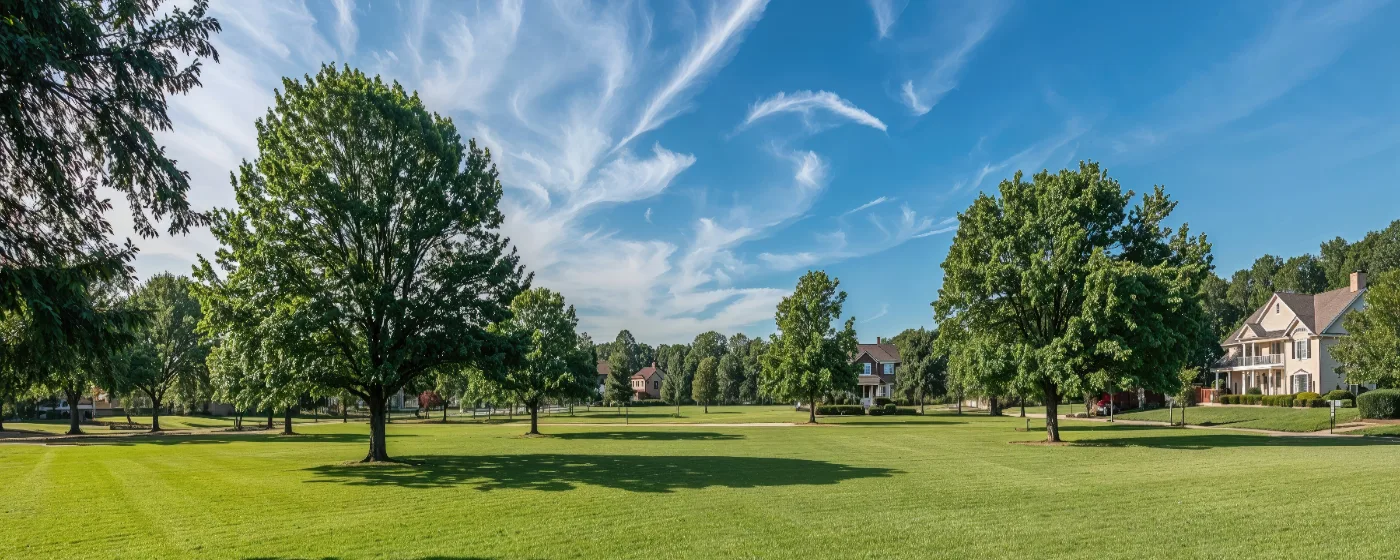
You've done the math on Texas and it looks good on paper — no state income tax, property tax freezes for seniors, a hospital inside city limits. What the spreadsheet doesn't capture is what Allen actually feels like to retire in: a fast-growing suburb of 113,447 people that still operates like a community, with a trail system you can use year-round, a dedicated senior center, and two purpose-built 55+ communities that didn't exist a decade ago. The city sits about 30 minutes to Dallas, anchored by US-75 (Central Expressway), and draws retirees who want metropolitan-level healthcare and amenities without the cost or congestion of the core.
Allen is fundamentally a family city — Allen Independent School District drives a lot of the civic identity, and the neighborhoods reflect that. But the same qualities that attract parents with school-age children — safety, well-kept parks, a low crime rate — translate directly into retirement livability. The typical home price here is $493,450 (Zillow Home Value Index, July 2026), which is meaningful context: this is not a budget retirement destination. Retirees who sell a home in a pricier market and arrive with equity tend to land here comfortably. Those coming from modest means and expecting a low cost of entry will find the full cost-of-living picture worth reading carefully before deciding.
The outdoor infrastructure is genuinely impressive for a suburb. More than 102 miles of hike-and-bike trails connect neighborhoods, parks, and the Watters Creek walking paths, and the terrain is flat — which matters more than most people admit when they're planning a retirement. Summers are long and hot; Allen logs 232 sunny days a year, and July highs regularly push past 95°F. The trail system and the 149,000-square-foot Stephen G. Terrell Recreation Center exist partly because outdoor life in August requires an indoor alternative.
Whether you're comparing Allen to McKinney, Frisco, or Plano, or just trying to understand what retirement actually costs here, the sections below cover healthcare access, the retiree tax picture, daily life, downsizing options, and an honest comparison with nearby cities.
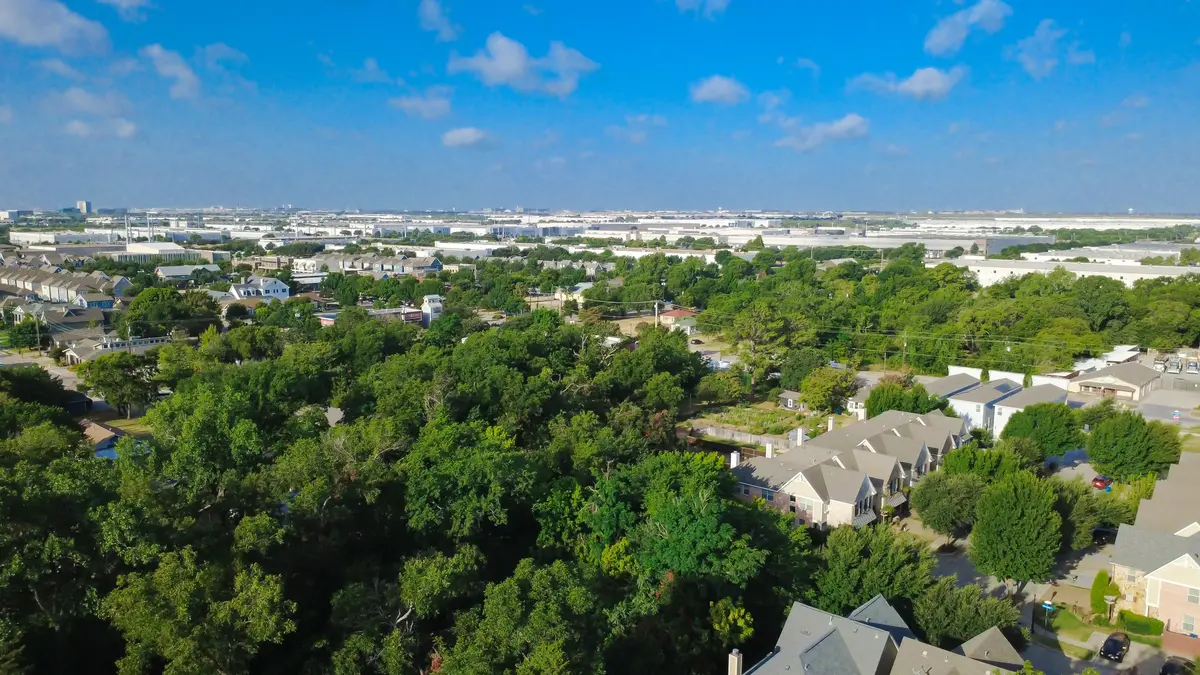
Why Retirees Are Choosing Allen
The retirees who tend to thrive in Allen share a profile: they want a quiet, safe suburb with real medical access, they're comfortable driving for most errands, and they're either bringing equity from another market or have a solid retirement income. Allen is not a destination for those who want a walkable downtown, a bohemian arts scene, or the lowest possible cost of entry into North Texas.
What Allen offers is consistency. The streets are well-maintained, the parks are genuinely usable, and the city has invested in senior infrastructure — a dedicated recreation center, a trail system that's flat enough for daily walks at 70, and two age-restricted communities that didn't have to be shoe-horned into an afterthought location. The typical home price of $493,450 (July 2026) sits in a range that requires real purchasing power, but it also reflects a city where the housing stock is relatively new, single-level options exist, and HOA-maintained communities reduce the maintenance burden that often pushes older homeowners out of larger homes.
The honest caveat: most errands in Allen mean getting in the car. That's a permanent feature of life here, not something that improves over time. The summers are brutal — plan around them rather than through them. And if advanced specialty care beyond what a community hospital offers becomes a priority, you're looking at a drive. None of those are dealbreakers for the right retiree. They are dealbreakers for the wrong one, and this guide names them plainly. For more on who Allen suits overall, the living in Allen overview covers the full picture.
Healthcare & Medical Access in Allen
Texas Health Presbyterian Hospital Allen is the closest hospital to most Allen residents — it sits inside the city limits, which matters in an emergency. It's an 88-bed acute-care facility that has served northern Collin County since 2000, and its service depth is broader than its size suggests. Orthopedics, back and spine, cardiology, robotic surgery, and heart and vascular care are all offered on site, and the hospital carries Joint Commission accreditation as both a Primary Stroke Center and a Chest Pain Center — two designations that carry particular weight for retirees monitoring cardiovascular health.
For day-to-day medical needs — primary care, sports medicine, outpatient procedures, and the orthopedic work that becomes more common in retirement — the hospital and the cluster of affiliated clinics around it cover the field well. The honest limit is tertiary and quaternary care: complex oncology, organ transplantation, or highly specialized neurology will require a drive to Dallas or the Texas Medical Center in Houston. That's true of virtually every suburban hospital in the metro, and Allen's position about 30 minutes to Dallas makes that drive manageable.
The patient satisfaction picture is strong. A strong majority of surveyed patients said they would recommend Texas Health Presbyterian Hospital Allen to others, which aligns with the city's broader health livability profile — Allen scores well on preventable hospitalization rates relative to comparable cities. For retirees whose primary concern is consistent, local access to cardiac and orthopedic care without navigating a major urban medical campus every appointment, Allen's setup is genuinely well-suited. The gap to watch is if your care needs grow complex: build a relationship with specialists in Dallas before you need them urgently, not after.
What the Accreditations Mean Practically
The Primary Stroke Center designation means the hospital has met specific standards for rapid stroke response — imaging, neurology protocols, and clot-retrieval pathways. For retirees, that's the most time-sensitive credential a community hospital can hold. The Chest Pain Center accreditation signals parallel readiness for acute cardiac events. These aren't marketing labels; they represent staffing and protocol commitments that are re-evaluated on a cycle.
The Retiree Budget in Allen
Texas is one of the most favorable states in the country for retirement income — not just compared to California or New York, but in absolute terms. There is no state income tax, which means Social Security, pension distributions, 401(k) withdrawals, and investment income all land in your account untouched by state withholding. Groceries and prescription medications are also exempt from Texas sales tax, two line items that matter disproportionately on a fixed income.
The property tax picture in Allen has shifted meaningfully for seniors. Following voter approval of Propositions 11 and 13 in November 2025, Texas homeowners age 65 and older now receive a combined $200,000 school-district homestead exemption — a $140,000 standard exemption plus a $60,000 senior add-on. Those changes are retroactive to the 2025 tax year. More importantly, once you qualify for the over-65 exemption, your school district taxes are frozen at the level owed in the year you turn 65, effectively capping that portion of your tax bill regardless of what happens to assessed values. Texas also allows seniors to defer property taxes on their primary residence entirely until the home is sold or ownership changes — a meaningful option for cash-flow-constrained retirees who own significant equity.
Allen's effective property tax rate runs approximately 1.30%, which is worth understanding in context. The full cost-of-living breakdown covers what that rate means against the typical home price. What the rate alone doesn't show is the senior exemption stack: after the $200,000 school-district exemption and the freeze, a qualifying senior homeowner's effective tax burden drops substantially below the headline rate. The combination of no state income tax, a generous senior exemption, and frozen school taxes makes Allen's tax environment one of the strongest arguments for retiring here — arguably stronger than the weather.
Daily Costs on a Fixed Income
Groceries, healthcare copays, and utilities are the three pressure points for retirees on fixed incomes in Allen. The Allen Senior Recreation Center offers low-cost meals for adults 60 and older, which is a genuine budget tool, not just a social amenity. Dining out is affordable at the casual end of the local scene, though the full cost-of-living page has the specific figures. Utilities run high in summer — air conditioning from June through September is not optional, and electric bills reflect it.
Looking to buy in Allen? Estimate your payment.
Enter your numbers to see an estimated monthly mortgage payment.
Estimate only. Excludes HOA fees and mortgage insurance. The interest rate above is a starting point, not a quoted rate — replace it with your own to see real numbers. Insurance is a flat placeholder, not a Allen quote.
Walkability, Community & Staying Active in Allen
Most errands in Allen require a car — grocery shopping, medical appointments, and most dining mean driving rather than walking. If car-free daily living is a priority in retirement, that's the central thing to weigh about Allen before you commit. What the city does offer instead is an unusually strong active-living infrastructure for a suburb of its size.
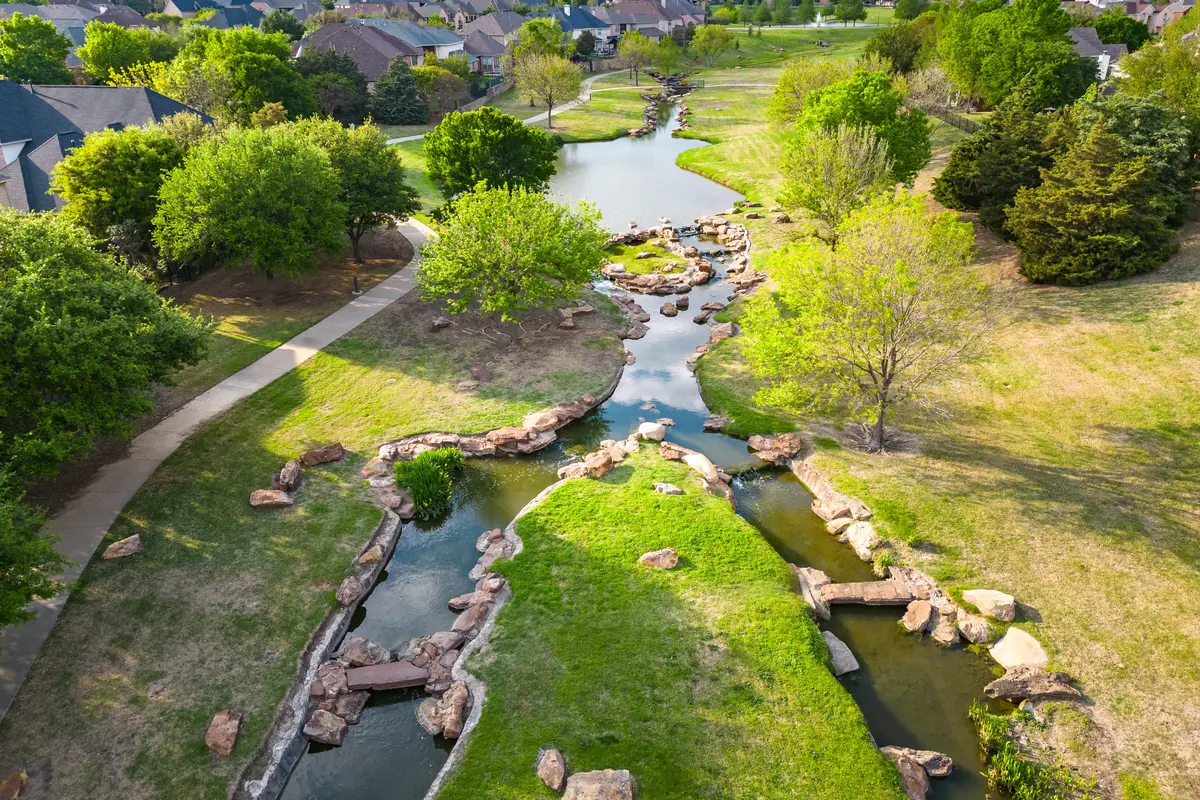
More than 102 miles of hike-and-bike trails run through the city, ranging from wide concrete paths to natural-surface walks. The terrain is flat throughout — no elevation to navigate, which makes trail access genuinely sustainable into later retirement. The Watters Creek walking trails and the paths through Bethany Lakes Park are among the most-used segments. The recent Rowlett Trail Extension added another 1.67 miles and expanded connections to regional systems. For a retiree whose daily walk is both exercise and social ritual, this trail network is Allen's most underrated asset. See the parks and recreation page for the full trail map and park details.
The Allen Senior Recreation Center is the social anchor for adults 60 and older. Fitness classes, arts and crafts, music programs, travel trips, and low-cost meals give the center a real daily-life function beyond a place to use a treadmill. The 149,000-square-foot Stephen G. Terrell Recreation Center serves all ages but functions as a genuine retreat during Allen's hot summers — indoor fitness options matter here from June through September in a way they simply don't in milder climates.
Where Retirees Actually Gather
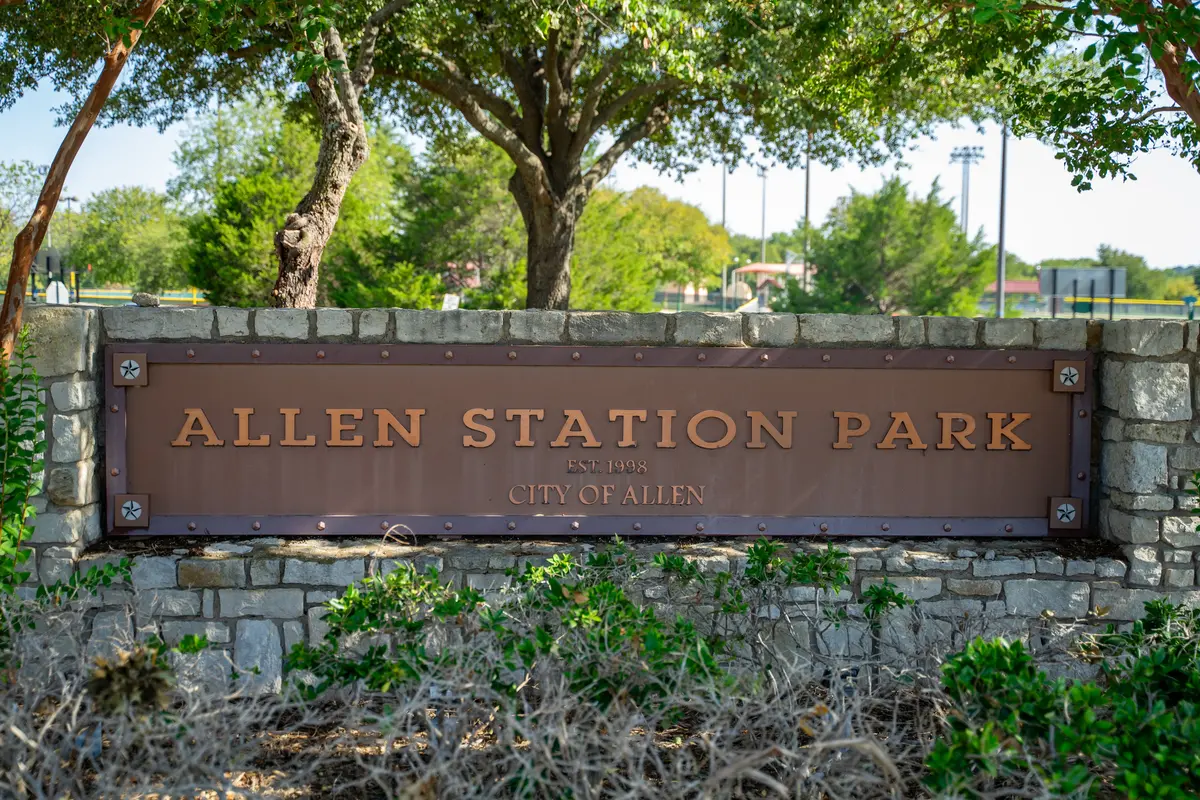
Celebration Park's 97 acres include tennis and pickleball courts that draw a consistent adult crowd, and pickleball in particular has built an active community of older players. The Watters Creek at Montgomery Farm development draws retirees for its walkable mix of restaurants and outdoor seating — not a substitute for driving-free errands, but a genuinely pleasant place to spend an afternoon. Twin Creeks Golf Course rounds out the active-adult options for those who want a regular game without leaving the city. Allen Station Park and Bethany Lakes Park both offer paved loop trails well-suited to morning walks.
Volunteering opportunities connect through the City of Allen and through the school district — AISD's volunteer programs regularly draw retired educators and parents looking to stay engaged. The faith community here is substantial, with several large congregations running robust senior programs of their own.
Right-Sizing: Downsizing in Allen
The practical reality of downsizing in Allen is that single-level living exists but requires intentional searching. Most of Allen's housing stock is traditional two-story suburban construction built for families, and the transition from a four-bedroom two-story to a manageable single-level home isn't as straightforward here as it would be in a retirement-focused market. Patio homes and single-story options exist within several of the established neighborhoods, and new construction has added some single-level product, but buyers looking specifically for this configuration should work with an agent who knows which subdivisions to target. For neighborhood-by-neighborhood context, the best neighborhoods page covers the housing stock in detail.
Allen has two verified 55+ communities, and they represent meaningfully different approaches to active-adult living.
Gatherings at Twin Creeks
Gatherings at Twin Creeks is a condominium community of 189 single-level homes across seven buildings. Built by Beazer Homes, the community sits near US-75 (Central Expressway) and offers direct access to the Allen Trail System — you can walk or bike the city's trail network without getting in a car. The amenity center includes a pool, putting green, fitness center, gardens, yoga lawn, and social space. For retirees who want the maintenance-free appeal of condo ownership without sacrificing outdoor access, this community checks both boxes. Single-level units eliminate stairs entirely, which is the most practical feature for aging in place.
Uptown Crossing
Uptown Crossing, within the Legends at Twin Creeks master plan, is a 55+ active-adult community by Trophy Signature Homes. It carries its own amenity center with a clubhouse, fitness center, and resort-style pool, and the Allen Trail System runs through the Twin Creeks area, giving residents walkable access to miles of paths. The community has a more traditional single-family feel compared to Gatherings' condominium format, which suits retirees who want the social benefits of an age-restricted community without fully surrendering the detached-home experience.
Both communities sit in the Twin Creeks area, which runs above the city-wide price median — the neighborhoods page has the tier context. Neither community is a budget entry point into Allen, but both represent a realistic option for retirees arriving with equity from a prior home sale.
One honest gap: Allen does not have the depth of senior living options — continuing care communities, independent living campuses — that larger retirement markets offer. The two 55+ communities are the purpose-built active-adult options. Retirees who anticipate needing tiered care over time should factor that into their planning and understand that care transitions may eventually mean a move.
Allen vs Nearby Retirement Destinations
| City | Cost vs Allen | Primary Hospital | Walkability | Senior Living Depth | Overall Retirement Fit |
|---|---|---|---|---|---|
| Allen | — | Texas Health Presbyterian Hospital Allen (in city) | Trail-strong; most errands need a car | Two 55+ communities; senior rec center | Strong for active, car-comfortable retirees |
| McKinney | About the same | Medical City McKinney (in city) | Historic downtown adds some on-foot options | Broader range of senior and independent living | Comparable fit; historic square appeals to some |
| Plano | About the same | Medical City Plano; Texas Health Presbyterian Plano | Similar suburban car dependence | Larger city; more senior living variety | Slightly more urban amenities; larger scale |
| Frisco | Noticeably higher | Texas Health Frisco; Medical City Frisco | Car-dependent; newer development patterns | Growing 55+ inventory in newer communities | Premium option; more new construction |
| Fairview | About the same | Relies on Allen and McKinney facilities | Quiet and residential; car needed for most trips | Limited dedicated senior living | Better for those who want space and quiet over amenities |
| Lucas | About the same | Relies on Allen and McKinney facilities | Rural-suburban; car required for everything | Minimal senior infrastructure | Best for those prioritizing acreage and privacy |
McKinney is the most natural comparison for Allen retirees. It comes in at roughly the same cost level and has its own acute-care hospital, but adds a genuine historic downtown square — a walkable few blocks that Allen simply doesn't have, and that matters to retirees who want to walk to lunch without driving. McKinney also has a broader range of senior and independent living facilities, which is worth weighing if care needs might evolve.
Plano offers more urban density and a slightly wider range of specialist physicians given its larger scale, but it doesn't fundamentally change the retirement calculus — both cities are car-dependent suburbs with similar price levels and similar hospital access. Frisco wins on new construction and newer 55+ communities, but at a noticeably higher cost basis that narrows the field of buyers who can access it with equity to spare.
Fairview and Lucas appeal to retirees who want to trade amenities for space and quiet — larger lots, more rural character — while remaining in Collin County. The practical downside is that both cities rely entirely on Allen's and McKinney's medical infrastructure, with nothing of their own. If proximity to a hospital is a genuine priority, that gap matters. For most retirees doing the comparison, Allen's combination of an in-city hospital, a dedicated senior center, two age-targeted communities, and a mature trail system puts it ahead of its smaller neighbors even if it doesn't beat McKinney on walkable character or Plano on sheer specialist depth.
Local Expert Takeaway: Allen's retirement case is strongest for people who arrive with equity, drive comfortably, and want a well-run suburb with real medical access close by. Texas Health Presbyterian Hospital Allen being inside the city limits — not in the next town over — is not a small thing. The senior property tax breaks that took effect in 2025, combined with Texas's no-income-tax structure, make the tax environment genuinely favorable once you're over 65. The Allen Senior Recreation Center and the 102-mile trail network give daily-life structure that many suburbs this size don't invest in. The honest limits: most errands mean getting in the car, summers run brutal from June through September, and the 55+ community inventory is exactly two purpose-built options. Retirees who want tiered care or prefer to get around on foot should look at McKinney or Plano before deciding. Everyone else should put the Allen Senior Recreation Center on their tour list.
Quick Takeaways & FAQs
✅ Texas has no state income tax and now offers a combined $200,000 school-district homestead exemption for seniors age 65 and older, with school taxes frozen at the year of qualification — one of the strongest senior tax positions in the Sun Belt.
⚠️ Allen is a car-dependent suburb with no walkable downtown core, brutal summer heat from June through September, and only two purpose-built 55+ communities — retirees who want a walkable lifestyle or tiered continuing care will find larger nearby markets worth comparing.
📍 Texas Health Presbyterian Hospital Allen sits inside the city limits and carries Joint Commission accreditation as both a Primary Stroke Center and Chest Pain Center — unusually strong emergency credentials for a community hospital of its size.
Does Allen, Texas have a senior center?
What property tax breaks are available to retirees in Allen?
What 55+ communities are in Allen, TX?
How is healthcare access in Allen for retirees?
Is Allen a good place to retire if you prefer to get around on foot?
Moving to Texas?
Tell us what you need help with and we'll connect you with local resources.
