
What Is Living in Montgomery, Texas Like?
Most people who end up in Montgomery didn't plan to. They were searching for something more affordable than The Woodlands, something quieter than Conroe, and someone showed them a lake house with a boat dock and that was that. Montgomery sits approximately 50 miles northwest of downtown Houston, anchored by TX-105 and FM-149, with Lake Conroe on one edge and the Sam Houston National Forest pressing in on the other. The city has grown substantially in recent years, and that growth reflects something real: people are choosing a smaller life here, deliberately. The catch is the commute, which we will get to.
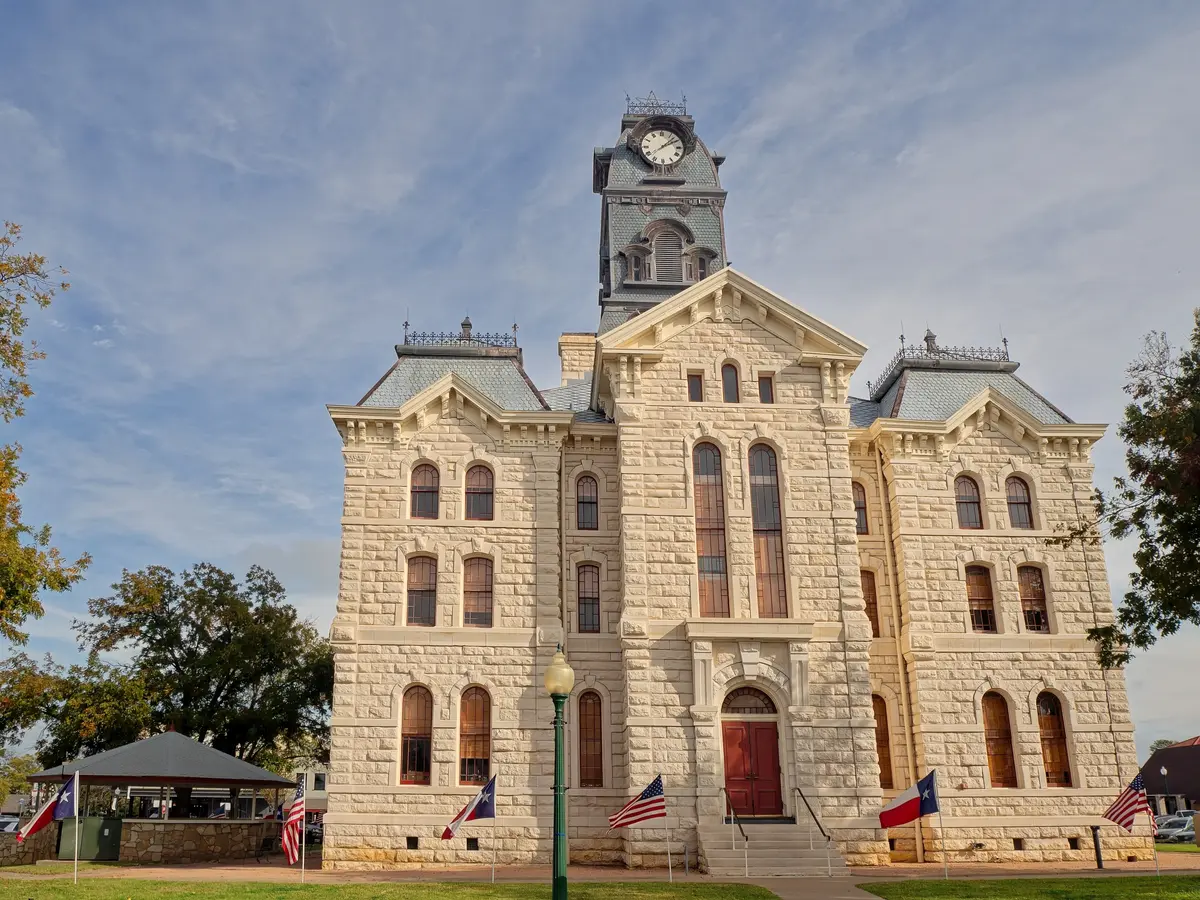
The economic backbone of the city is modest by metro standards: the Montgomery Independent School District is the largest employer, followed by the City of Montgomery itself and Walmart. What actually drives growth here is the surrounding region — professionals working in The Woodlands or Houston's energy corridor who want a lake town, not a subdivision. Montgomery ISD holds a B rating, according to the Texas Education Agency, and that rating matters to families choosing between this zip code and its neighbors. The city, founded in 1837, also carries genuine historical weight — Dr. Charles Bellinger Stewart drafted the Texas Lone Star Flag design here, and Historic Downtown still bears that civic pride in its preserved buildings and recurring community festivals.
Housing runs at a typical price of $393,324 (Zillow Home Value Index, July 2026), which sits noticeably below The Woodlands and somewhat below Magnolia — though it comes with an effective property tax rate of approximately 1.36%, which is something Houston-area buyers learn to account for quickly. Most errands require a car; daily life here is built around driving. What you get in exchange is direct access to a 22,000-acre reservoir, trail systems through national forest land, and a genuine small-town downtown that most master-planned suburbs can only approximate. For more detail on costs and taxes, the cost of living page breaks it down fully.
Whether you are considering a move or still in the research phase, the sections below cover Montgomery's neighborhoods, daily life, the housing market, commuting realities, and what weekends here actually look like.

Montgomery at a Glance
Looking to buy in Montgomery? Estimate your payment.
Enter your numbers to see an estimated monthly mortgage payment.
Estimate only. Excludes HOA fees and mortgage insurance. The interest rate above is a starting point, not a quoted rate — replace it with your own to see real numbers. Insurance is a flat placeholder, not a Montgomery quote.
Why Are People Moving to Montgomery?
Montgomery County is among the fastest-growing counties in Texas, and Montgomery city is one of the clearest illustrations of why. People are not moving here because it is convenient — it is not. They are moving here because it offers something the inner suburbs stopped offering years ago: space, a real lake, trees, and a downtown that was not built by a developer last decade.
The Lake Conroe Factor
Lake Conroe is a 22,000-acre reservoir that anchors the entire lifestyle case for this area. Boating, bass fishing, kayaking, and water skiing are not weekend aspirations here — they are Tuesday evening plans for a lot of residents. The communities built around the lake, from Bentwater's marina and yacht club to the more accessible entry points at Walden on Lake Conroe and April Sound, give buyers at different price levels a way into that lifestyle. It is not a lake town in name only.
History That Actually Shows Up
Montgomery was founded in 1837 and holds the distinction of being the birthplace of the Texas Lone Star Flag — a fact the Texas Legislature formally commemorated in 1997. Dr. Charles Bellinger Stewart drafted the flag's design here, and that heritage is not just a plaque on a wall. Historic Downtown Montgomery is the kind of place where that history is legible in the buildings, the antique shops, and the recurring festivals like the Antique & Unique Festival and the Freedom Festival.
Schools as a Genuine Draw
Montgomery ISD draws families who have done the comparison shopping. The district holds a B rating, according to the Texas Education Agency — and has been cited as the highest-rated district in Montgomery County. For parents with school-age children weighing this city against Conroe or Willis, that rating moves the needle. More detail on individual campuses is on the schools page.
What Pushes People Out
After about six months, new residents tend to hit one of two walls: the commute is longer than it felt on move-in day, and a serious shopping trip still means driving out of town. People who moved from a walkable inner-loop Houston neighborhood sometimes find that adjustment harder than expected. The city suits people who came to Montgomery because they wanted exactly this — not people who settled for it.
What Daily Life Feels Like in Montgomery
Daily life in Montgomery is slow in the best sense and occasionally inconvenient in the honest sense. The mornings are quiet. The streets of Historic Downtown fill up on weekends. The lake is never more than a short drive away, and on a warm afternoon that matters more than most things on a checklist.
The Small-Town Reality
Montgomery has roughly 3,100 residents. That is not a typo, and it is not a suburb — it is a small city with a genuine town center. Errands that require a big-box store or a regional mall mean leaving. That is simply the shape of life here, and residents who thrive in Montgomery tend to have already made peace with it before they signed the contract.
Where People Actually Gather
The gravitational center of the community is Historic Downtown, especially during the Antique & Unique Festival and on regular market days. Fernland Historical Park gives the city a green, historically grounded gathering place that most suburbs of this size do not have. For families with children, Woodforest's trail system, pools, and the 27-hole golf club at that community provide a structured activity calendar without leaving the neighborhood.
Outdoor Life Is the Point
Lake Conroe and the Sam Houston National Forest set the rhythm of weekends here. Bass fishing on the reservoir, trails through national forest land, and boating that runs genuinely year-round give this city a recreational depth that is unusual for a town of its size. The outdoor life is not an amenity; it is the reason most people moved here.
A Seasonal Surprise
New residents from drier climates are often caught off guard by Houston-area humidity, which arrives by late spring and does not fully relent until October. Montgomery gets 203 sunny days a year — respectable by national standards — but the heat index through July and August shapes everything: when you boat, when you run trails, when you schedule outdoor events. People who have lived here a few years plan their outdoor lives around the early mornings and the fall, not the peak of summer.
The Montgomery Housing Market Right Now
The typical home price in Montgomery is $393,324 (Zillow Home Value Index, July 2026). That figure covers an unusually wide range of housing types — from resort cottages and patio homes to lakefront estate properties — which is worth keeping in mind as you look at individual listings. The city-wide typical rent runs at $1,903 per month (Zillow, July 2026).
What the Market Actually Looks Like
The housing mix here is genuinely broad: single-family homes, golf course properties, condominiums, townhomes, and lakefront homes all coexist within the same city limits. Woodforest alone spans a 3,000-acre master-planned footprint with homes across multiple price tiers. Bentwater, on the shores of Lake Conroe with its yacht club and marina, runs above the city-wide median. Walden on Lake Conroe and April Sound both sit below it — two of the more accessible entry points into the lake-lifestyle market.
One Affordability Reality to Understand
The median household income in Montgomery is $70,306, which sits meaningfully below the income level needed to carry the typical home price here at current rates. That gap is not unusual in fast-growing Texas lake towns, and it reflects what the market has become: a destination for buyers relocating from higher-income metros, not primarily a market for first-generation local buyers. If financing mechanics matter to your decision, the first-time homebuyer page covers those in full.
How This Compares Nearby
Compared with The Woodlands, Montgomery prices are noticeably lower. Magnolia runs somewhat lower than Montgomery, and Conroe comes in noticeably lower still. Each of those markets has its own character, and the neighborhoods page walks through how the communities inside Montgomery compare to each other.
Montgomery Neighborhoods
Montgomery has several distinct areas — each with its own character and appeal. Here’s a breakdown to help you narrow down where to focus your home search.
🏡 Woodforest
A 3,000-acre master-planned community built around a 27-hole golf club, with parks, miles of walking trails, pools, and an aquatics center — it suits active families who want community infrastructure without sacrificing a small-town feel. The neighborhood has been growing steadily since 2009 and offers some of the widest variety of home styles in Montgomery.
🏠 Bentwater
A 1,400-acre lakefront community on Lake Conroe with a manned entrance, yacht club, marina, and 54 holes of golf — it represents the higher end of the Montgomery market and attracts buyers who came specifically for the water. The marina access and golf amenities make it one of the most self-contained residential communities in the area.
🌳 Walden on Lake Conroe
One of the more accessible entry points into the Lake Conroe lifestyle, with a mix of single-family homes and condominiums that appeal to buyers who want lake proximity without the Bentwater price point. It has a long-established community feel and a loyal base of repeat buyers.
🏘 April Sound
A gated community on Lake Conroe that draws buyers looking for a quieter, more private lake setting. The mix of waterfront and interior lots gives buyers flexibility, and the community's scale keeps the atmosphere notably less crowded than some of the larger lakeside developments.
🏔 Grand Harbor
A higher-end community on Lake Conroe with estate-style homes and direct water access, suited for buyers who want a more spacious, upscale residential setting with the lake as a daily feature rather than a weekend destination. Its position above the city median reflects both the lot quality and the proximity to the water.
🌆 Crown Ranch
A master-planned community with a ranch aesthetic and larger lot sizes, appealing to buyers who want space and a natural setting without fully committing to rural life. It suits families and semi-rural buyers who want the Montgomery address but a quieter, more open residential character.
Pros & Cons of Living in Montgomery
The Pros
- Historic small-town downtown with genuine 19th-century charm
- Direct access to Lake Conroe for boating, fishing, and lake-life amenities
- Strong, high-performing Montgomery ISD schools
- Reasonable commute to The Woodlands' major employers
The Cons
- No full-service hospital within city limits, requiring a drive to Conroe or The Woodlands
- Property tax rates above the national average
- Homes can sit on the market much longer than in nearby metro submarkets
Getting Around & Commuting in Montgomery
Montgomery is built around the car. TX-105 and FM-149 are the primary routes in and out of the city, and both carry the full weight of a community that has grown faster than its road infrastructure. Most daily trips — groceries, school runs, dinner out — require driving.
The Commute You Need to Know
The most common commute corridor runs toward The Woodlands, about 40 minutes under normal conditions. That phrase, "under normal conditions," does real work here: the routes along TX-105 during peak morning hours carry considerably more traffic than they did even five years ago, and Montgomery County launched a countywide mobility study in 2025 with road bond projects underway to address regional travel. Improvement is coming; it is not here yet.
Who This Commute Works For
The commute profile that fits Montgomery best is a hybrid or remote worker, or someone whose office is in The Woodlands or the north Houston energy corridor. Commuting daily to downtown Houston is possible — the drive is approximately 50 miles — but it is a significant time commitment that shapes quality of life in ways worth simulating before you commit to a zip code. Residents who make it work tend to use flexible schedules, travel against the peak direction, or have consolidated their in-office days.
Day-to-Day Driving
Within Montgomery itself, everything runs on car trips. George Bush Intercontinental Airport is 44 miles away, which is the nearest major airport for travel. People who move here and underestimate the cumulative impact of that driving — the errand trips, the school runs, the commute — are among the ones who eventually move out. It is not a dealbreaker for people who moved here for the lake life, but it is the honest price of admission.
Schools in Montgomery
Families relocating to Montgomery have public, private, and higher-education options nearby. Here’s a quick overview.
🎓 School District
Montgomery Independent School District serves K–12 students across Montgomery and the surrounding area. Rated B (source: Texas Education Agency, 2025 A-F accountability rating (2024-25 school year)).
🏆 Graduation Rate
The 4-year high-school graduation rate here is approximately 95.5%.
📚 Higher Education
Texas’s public universities — the University of Texas at Austin, Texas A&M University, and the University of Houston — offer four-year degrees statewide, with one of the largest community college systems in the country (50+ public community college districts) providing two-year and workforce programs.
🌐 Online Learning
UT Austin Online and Texas A&M University Online offer fully accredited online degrees for remote learners across the state.
Safety in Montgomery
A quick look at how Montgomery compares on the numbers that matter most when weighing a neighborhood or a move.
🛡 Violent Crime
Approximately 0.65 per 1,000 residents.
🔒 Property Crime
Approximately 12.97 per 1,000 residents.
Compared to the most recent national figures from the Bureau of Justice Statistics (2024), Montgomery’s violent crime is below the national average (about 3.7 per 1,000), and property crime is below the national average (about 18.4 per 1,000).
Against Texas as a whole, Montgomery’s violent crime is a small fraction of the state average, and property crime is roughly two-thirds of the state average (Bureau of Justice Statistics, Crime Known to Law Enforcement, 2024 (tables 2 and 3)).
Crime rates can vary a lot within a single city, so the citywide numbers above are only a starting point. Some neighborhoods in Montgomery run well below these averages, while others run higher — the kind of block-by-block detail that matters most when you’re actually choosing where to live. The full guide below breaks it down neighborhood by neighborhood.
Working in Montgomery
Montgomery’s largest employers span several industries — here are some of the anchors of the local job market.
🎓 Montgomery Independent School District
Education
🏛 City of Montgomery
Municipal government
🛒 Walmart
Retail
Parks & Recreation in Montgomery
Some of the outdoor spaces that shape everyday life in Montgomery.
🌱 Fernland Historical Park
🌱 Lake Conroe
Montgomery residents don’t have to go far for green space — spots like Fernland Historical Park and Lake Conroe are part of everyday life here, whether that’s a morning walk, a weekend hike, or just somewhere to unwind outside. The full guide below covers more of what Montgomery has to offer for parks and outdoor recreation.
Retiring in Montgomery
Montgomery draws retirees for its balance of amenities, outdoor access, and cost. Here’s what to weigh.
🌤 Climate
Montgomery gets 203 sunny days a year, with mild winters that suit outdoor year-round recreation. Summers are genuinely hot and humid — the heat index through July and August runs high, and most retirees plan their active outdoor time around early mornings and the October-through-April shoulder seasons. Spring and fall on Lake Conroe are among the finest weather stretches in the Houston region.
🍴 Lifestyle
Retirement life in Montgomery centers on the lake and the small-town downtown. Boating, fishing, and golf are year-round pursuits. Historic Downtown's independent coffee shops, restaurants, the Montgomery Farmers Market, and recurring festivals give daily life a social texture that is rare in a city this size. Fernland Historical Park adds a civic and cultural anchor for residents who want more than just recreation.
🏚 55+ Communities
No 55+ communities were identified in Montgomery during research. Retirees who want a structured age-restricted environment typically look at communities elsewhere in the Lake Conroe corridor. Montgomery itself offers a wide range of housing types — lakefront homes, patio homes, and golf course properties — that work well for downsizers, even without a dedicated age-restricted community.
✈ Getting Around
Everything in Montgomery requires a car, and retirees who prefer not to drive would find the city genuinely difficult to navigate independently. For medical care, a major regional health system operates a full-service hospital approximately 18 miles away. George Bush Intercontinental Airport is 44 miles out, making longer travel manageable but not effortless.
🏛 Texas Taxes for Retirees — What to Know
- No state income tax — Texas has no personal income tax — constitutionally protected under Article VIII, Section 24. Social Security, pensions, 401(k)/IRA withdrawals, and annuity payments are all untaxed at the state level, with no state return to file.
- Sales tax is the tradeoff — The state sales tax is 6.25%, and local add-ons bring the combined rate in Montgomery to 8.25% (Texas Comptroller of Public Accounts, city sales and use tax rates, July 2026). Groceries and prescription drugs are exempt.
- Property taxes — the real tradeoff — Texas’s effective property tax rate averages about 1.40%, among the highest in the country, since property tax (not income tax) funds most local government and schools.
- Over-65 homestead exemption and school-tax freeze — Homeowners 65+ (or disabled) get an additional $60,000 exemption from their home’s value for school district taxes, on top of the general homestead exemption — $200,000 off school taxable value combined, following November 2025’s Proposition 11 (SB 23), which raised the over-65 exemption to $60,000, and Proposition 13 (SB 4), which raised the general homestead exemption to $140,000. Once claimed, your school district tax bill is frozen at that year’s amount and cannot increase as home values rise, and the ceiling can transfer if you move to a new home within Texas.
- Deferral option if cash is tight — Homeowners 65+ can defer property tax payment entirely for as long as they live in the home, rather than paying it currently — interest accrues, but no forced sale.
- No estate or inheritance tax — Texas has no estate tax, no inheritance tax, and no gift tax.
- No separate capital gains tax — Because Texas has no state income tax, capital gains — including on investments and home sales — are not taxed at the state level at all, unlike states such as Washington that tax capital gains separately from income.
Tax laws change frequently and individual situations vary. This is general information, not tax advice — always consult a qualified Texas tax professional or CPA for personalized retirement tax planning.
Weekends & Local Favorites in Montgomery
Weekends in Montgomery organize themselves around the lake, the downtown, and the calendar of community events that fills Historic Downtown through most of the year. It is a small city, but it has more anchors than its size would suggest.
On the Water
Lake Conroe is the center of weekend life for a large share of residents. Lake Conroe Park and Cagle Recreation Area give boaters and kayakers accessible launch points. Stubblefield Lake Recreation Area, within the Sam Houston National Forest, adds a quieter option for fishing and camping for residents who want to get off the main reservoir. Bass fishing on Lake Conroe is serious business here — not a tourist activity, a local one.
Historic Downtown on a Weekend
The Historic Downtown corridor is where the community's character is most visible. The Montgomery Farmers Market draws regulars looking for local produce and crafts. The Antique & Unique Festival and the Freedom Festival mark the civic calendar. Luv Coffee, Trixie's Coffee Shop, Wilderlove Coffee, Roasted Woodforest, and Moss and Co. Market give the downtown real texture — these are genuine small-business anchors that residents actually frequent. Fernland Historical Park sits nearby as a grounding reminder of the city's founding-era roots.
Food and Drink
The dining scene is scaled to the city's size but covers real ground. Conroe Lake House and Monty's Lighthouse serve the lake-town dining niche well. License to Chill Bar & Café brings a casual, marina-adjacent energy that fits the weekend mood. Walden's and Bar-A-BBQ round out the local options with the kind of straightforward, well-regarded cooking that keeps people from feeling like they need to drive into Conroe every time they want a good meal.
What Woodforest Adds
Woodforest's 27-hole golf club, community pools, and miles of walking trails make it something close to self-contained for active families on a weekend. It is the kind of neighborhood where people run into each other regularly, by design — and for families with kids, the aquatics center and basketball courts mean the weekend schedule rarely requires leaving the community at all.
Local favorites in Montgomery
Restaurants
- Conroe Lake House
- Monty's Lighthouse
- License to Chill Bar & Café
- Walden's
- Bar-A-BBQ
Outdoors
- Lake Conroe
- Lake Conroe Park
- Cagle Recreation Area
- Stubblefield Lake Recreation Area
Coffee
- Luv Coffee
- Trixie's Coffee Shop
- Wilderlove Coffee
- Roasted Woodforest
- Moss and Co. Market
Farmers Markets
- Montgomery Farmers Market
Top Things Locals Say About Montgomery
The best intel about a city comes from the people who actually live there. Here’s what Montgomery residents say when newcomers ask the questions everyone’s thinking.
“We knew the commute would be longer, but we did not expect how much the lake would reset everything. After six months, I stopped counting the drive in minutes and started counting it in boat trips.”
— Recent Montgomery home buyer
“What's the most surprising thing about living in Montgomery?”
How much the pace genuinely changes once you are here. People coming from The Woodlands or the Energy Corridor expect Montgomery to feel like a quieter suburb. It does not — it feels like a different kind of place entirely. The Historic Downtown is real, the lake is real, and the distance from a big-box store is also very real. Most people who stay past a year say it was exactly the trade-off they wanted.
“What do locals love most about Montgomery?”
The lake, without question. On a weekday morning, you can be on Lake Conroe with almost no one else around — that is not something you can say about most recreational lakes this close to Houston. The Historic Downtown is a genuine point of pride too. The Antique & Unique Festival draws people from well outside the county, and locals treat it as a civic gathering, not just a tourist event.
“What should newcomers to Montgomery know?”
Plan your shopping before you need it. A run to a major grocery chain or a home improvement store means leaving town, and that is just how it works. People new to TX-105 also underestimate how much that corridor can back up during weekday mornings — timing your commute departure by 15 minutes can make a meaningful difference. And join something in Woodforest or downtown early — this is the kind of small city where community happens fast once you show up.
“How much do you need a car in Montgomery?”
A car is the foundation of daily life here. Every errand, every school run, every dinner out requires one. Most residents drive TX-105 for their primary commute, and anything beyond local basics means a trip into Conroe or further. People who move here from walkable urban neighborhoods find the adjustment real and ongoing. Those who came specifically for the lake life tend to stop noticing after a few months.
Cities Near Montgomery
Other communities near Montgomery worth a look — each with its own character and price point.
| City | Distance | Best For | Vibe | Median Rent | Median Buy |
|---|---|---|---|---|---|
| Conroe | 13 mi | buyers wanting lower prices & urban amenities | faster-paced, more urban, growing quickly | $1,579 | $315,986 |
| The Woodlands | 20 mi | corporate commuters & top-tier amenities | polished, master-planned, higher-cost | $1,900 | $630,000 |
| Magnolia | 17 mi | rural feel & slightly lower prices | spacious, quiet, country-road character | $1,884 | $364,817 |
More Helpful Guides for Montgomery
Going deeper on Montgomery? Our blog series covers everything from first-time buying to retiring here — explore the guides below.
Local Expert Takeaway: Montgomery is the rare Houston-area city where the lifestyle case genuinely leads the housing case. The typical home price of $393,324 (July 2026) buys you access to Lake Conroe's 22,000 acres, a historically grounded downtown with real independent businesses, and Montgomery ISD's B-rated schools — all at a price point noticeably below The Woodlands. The catch is honest: TX-105 and FM-149 carry the full weight of a city that has grown quickly, the commute to The Woodlands runs about 40 minutes, and a serious shopping trip still means leaving. If you moved here for the lake, the trails, and the pace, you already know that. If you are still on the fence about the commute, spend a weekday morning on TX-105 before you make an offer.
Quick Takeaways & FAQs
✅ Montgomery ISD holds a B rating from the Texas Education Agency — the highest-rated district in Montgomery County — making it a genuine draw for families with school-age children.
⚠️ The commute to The Woodlands runs about 40 minutes, TX-105 carries significant peak-hour traffic, and daily life here is built entirely around driving.
📍 Montgomery is the birthplace of the Texas Lone Star Flag — Dr. Charles Bellinger Stewart drafted the design here in the 1830s, and Historic Downtown still carries that founding-era character.
How far is Montgomery, Texas from Houston?
What are the best neighborhoods in Montgomery, TX?
Is Montgomery, Texas a good place to raise a family?
What is the cost of living like in Montgomery, TX?
Are there 55+ communities in Montgomery, Texas?
Helpful Links for Moving to Montgomery
Moving to Texas?
Tell us what you need help with and we'll connect you with local resources.
