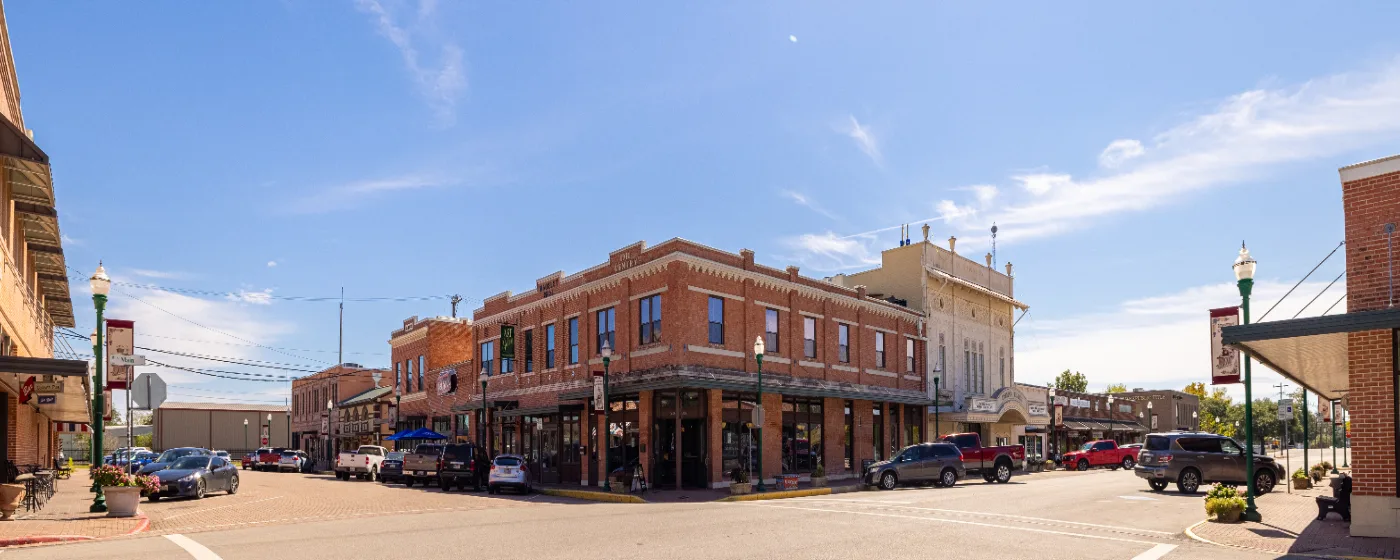
What Is Living in Conroe, Texas Like?
More people moved into Conroe on one-way trucks than any other Houston-area suburb in recent years — and that volume reflects something real about why households are choosing this city over the alternatives: the combination of a 20,118-acre lake, an arts-designated downtown, a cost of living running roughly 10% below the U.S. average, and prices that central Houston and The Woodlands cannot come close to matching. Conroe sits at the northern edge of the Houston metro along I-45, about 40 miles north of downtown, and its growth has been so fast that the population has more than doubled since 2010 — from 56,207 to 119,564 today — making it the 35th-largest incorporated city in Texas.
The economic backbone here is more layered than a typical bedroom community. The Conroe Independent School District is the city's largest employer, with 72,757 students enrolled in 2025-26 and a B rating, according to the Texas Education Agency. A major regional health system operates inside city limits. Lone Star College–Montgomery anchors the higher-education side. And Conroe Park North — a 1,655-acre industrial park — houses more than 40 companies in medical device manufacturing, freight distribution, oilfield services, and food processing, and was running at roughly 98% capacity as of the most recent count. Families with school-age children have driven much of the migration, but so have remote workers priced out of The Woodlands and younger buyers who want lake access without a luxury-market price tag.
The typical home price sat at $315,986 as of July 2026 — noticeably below neighboring The Woodlands, and enough below the region's median to put new construction within reach in several planned communities. The city-wide typical rent runs $1,579 per month. Texas has no state income tax, and the effective property tax rate here is 1.52%. Outdoor life centers on Lake Conroe and the Sam Houston National Forest, which borders the upper reaches of the lake — fishing, boating, and trail access are genuinely close, not just a marketing claim. For a full breakdown of costs and taxes, see the cost of living page.
Whether you are being relocated here, escaping Houston's traffic, or simply following the numbers on a spreadsheet that led you north, the sections below break down Conroe's neighborhoods, commute realities, schools, job market, local culture, and what daily life here is really like once you have signed the papers.
Conroe at a Glance
Looking to buy in Conroe? Estimate your payment.
Enter your numbers to see an estimated monthly mortgage payment.
Estimate only. Excludes HOA fees and mortgage insurance. The interest rate above is a starting point, not a quoted rate — replace it with your own to see real numbers. Insurance is a flat placeholder, not a Conroe quote.
Why Are People Moving to Conroe?
The simplest answer is price and proximity — but that undersells what Conroe has actually built. Most cities at this distance from a major metro are commuter towns in the flattest sense: you sleep there, you live somewhere else. Conroe has spent the past decade adding reasons to stay on the weekend.
The Economic Pull
Conroe's job base is real and diversifying. The school district and the city itself are the two largest direct employers, but Conroe Park North has become a serious industrial anchor — medical device companies, freight logistics, food processing, and oilfield services firms all operate inside city limits. ExxonMobil's large petrochemical campus is in Spring, and many Conroe residents make that drive regularly. For anyone whose work is in downtown Houston, the commute is about 50 minutes on I-45 — workable, but not trivial, and worth understanding before you commit to a neighborhood.
The Lake Factor
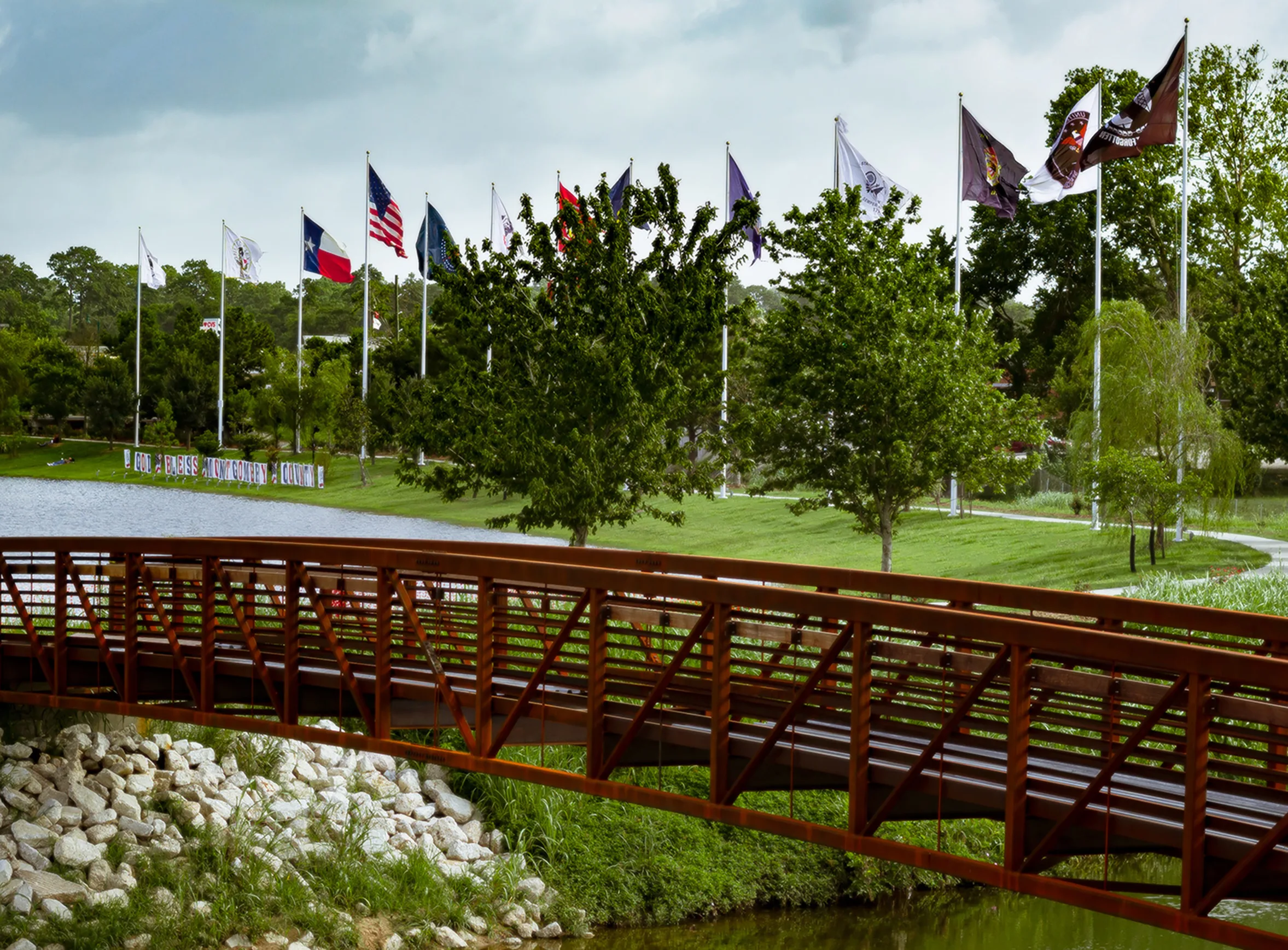
Lake Conroe is a 20,118-acre reservoir on the West Fork of the San Jacinto River, and it functions as the city's most distinctive amenity. Largemouth bass, catfish, white bass, and crappie draw anglers year-round. The Sam Houston National Forest runs along the upper third of the shoreline, which keeps that stretch from being walled off by private development. People moving here from landlocked suburbs elsewhere in Texas consistently say they underestimated how much the lake changes the weekend calculus.
The Schools and the Safety Picture
The Conroe Independent School District holds a B rating, according to the Texas Education Agency — a consistent performer in a county where school quality is often the deciding factor for families with kids. On 2024-25 state assessments, 58% of students reached math proficiency and 64% reached reading proficiency. The district runs active UIL athletics programs, and Friday night football at several of the high schools draws the kind of community turnout that surprises people used to suburban anonymity. For a deeper look, see the schools page.
On safety: Conroe posts a violent crime rate of 3 per 1,000 residents and a property crime rate of 18 per 1,000 residents — both below the state and national figures. For more detail and context, the safety page has the full breakdown.
What the Growth Numbers Actually Mean
The sustained inbound migration to Conroe reflects a structural reality: the city is capturing households that would have gone to The Woodlands a decade ago, but cannot absorb the price premium that community now commands. Willis sits somewhat lower in price than Conroe; Montgomery runs noticeably higher. Conroe sits in the middle of that range with more infrastructure and amenities than either.
What Daily Life Feels Like in Conroe
Six months after moving here, most newcomers have the same realization: Conroe is larger and more self-contained than it looked on a map. At 77.6 square miles, it is not a small town with one main street — it is a mid-sized city that happens to sit in a fast-growing county, and the daily rhythms reflect that.
The Geographic Reality
I-45 is the city's spine. What sits east of the freeway and what sits west are genuinely different in character — older neighborhoods, more established tree cover, and the historic downtown core tend to cluster to the east, while the newest planned communities and master-planned subdivisions have expanded to the west and northwest. Buying without understanding this distinction is one of the more common mistakes relocating buyers make.
Loop 336 and SH-105 handle the cross-town circulation, and you will learn both of them quickly. SH-242 connects the eastern side and SH-75 runs through the older commercial corridors. None of it is a walkable grid — Conroe is a car city, full stop. Most errands require a drive, and that is simply the deal you are making when you move here.
The Cultural Side That Surprises People
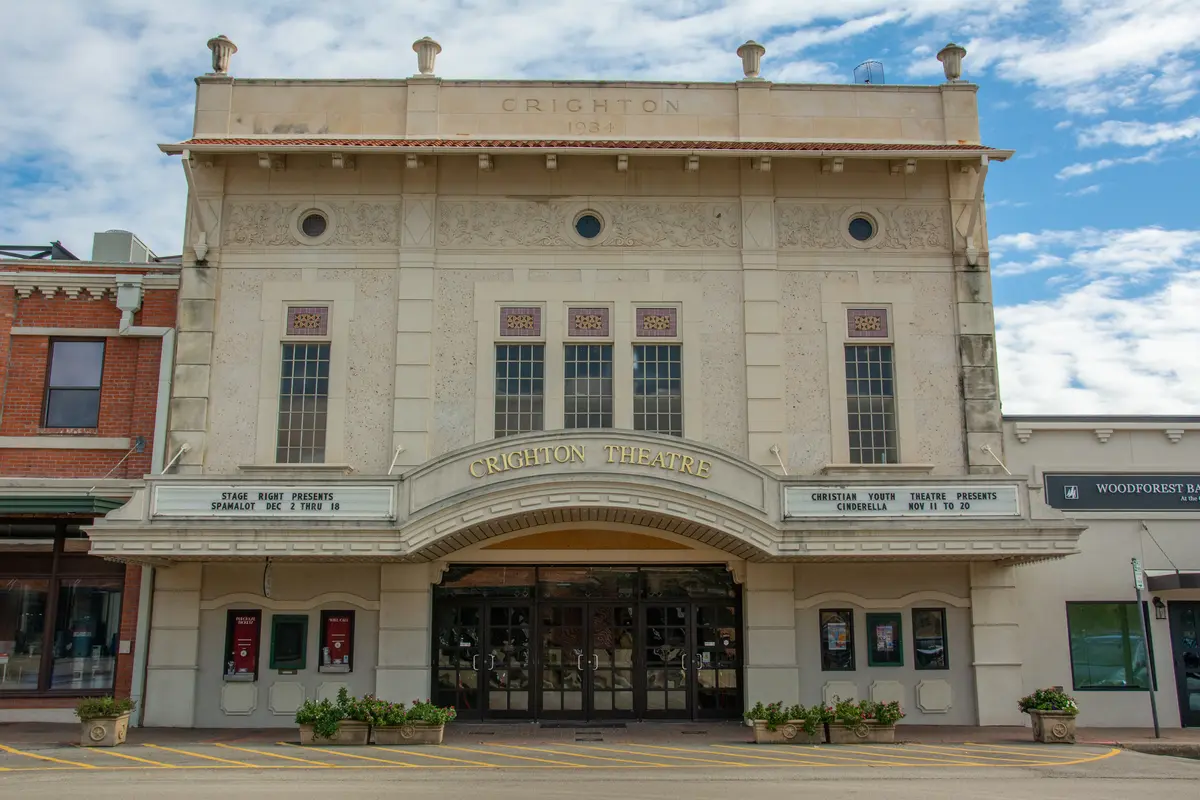
Downtown Conroe is a genuine cultural district — designated as such by the Texas Commission on the Arts — not a marketing label applied to a strip of vacant storefronts. The Crighton Theatre, built in 1934 and restored in 1976, hosts live performances year-round. A second live performance venue in the district is home to a local theatre company and doubles as a venue for the annual Greater Conroe Film Festival, which showcases films by local directors. The Conroe Symphony Orchestra performs in the district, and the Greater Conroe Arts Alliance coordinates 21 arts organizations across Montgomery County.
Each October, the Conroe Cajun Catfish Festival takes over downtown for three days, drawing crowds from across the region with live music, Cajun food vendors, and a kids' section that makes it genuinely a family outing rather than just a bar crawl. The Greater Conroe Arts Festival at Founder's Plaza — free, with fine art vendors, outdoor music stages, and plein air painting — runs in the spring. These are events that residents actually show up for, not just things that exist on a calendar.
The Seasonal Friction Newcomers Don't Expect
Houston-area summers are serious, and Conroe is no exception. The combination of heat and humidity from late May through September is not like a dry Texas summer — it is a different animal entirely, and people moving from drier climates spend their first summer recalibrating their outdoor expectations. The lake is the answer for many, but the afternoons are genuinely brutal from June onward. The flip side is that winters are mild enough that the outdoor season runs from October through April, and those months are what longtime residents plan their lives around.
For a detailed look at neighborhood character and which areas run above or below the city median, the neighborhoods page covers each community.
The Conroe Housing Market Right Now
The typical home price in Conroe sat at $315,986 as of July 2026 (Zillow Home Value Index). That number puts Conroe well below The Woodlands and noticeably below the broader Houston metro's most sought-after submarkets, which is a significant part of why the migration numbers look the way they do.
New construction is active across multiple planned communities on the city's western and northwestern edges. Buyers who want a lake-view lot, a master-planned community with amenity centers, or an older established street with mature trees can find all three here — they are just in very different parts of the city and reflect different points on the cost spectrum. Several neighborhoods — including Harper's Preserve, Graystone Hills, Jacobs Reserve, and Stewart's Forest — run above the city-wide typical price, while the broader city's new construction pipeline keeps options available at the entry level.
One honest note on affordability: the median household income in Conroe is $76,206, which runs below the income needed to comfortably carry the typical home here. That gap is not unusual for fast-growing Texas cities, but it is worth understanding before you start the search. For buyers interested in the financing landscape, the first-time homebuyer page covers loan programs and down payment considerations.
The city-wide typical rent is $1,579 per month, which reflects a rental market that has tightened alongside the ownership side. The effective property tax rate is 1.52% — meaningful in the monthly math, and worth building into your budget from the start. Texas has no state income tax, which partially offsets that figure. For the full cost picture, see the cost of living page.
Conroe Neighborhoods
Conroe has several distinct areas — each with its own character and appeal. Here’s a breakdown to help you narrow down where to focus your home search.
🏡 Grand Central Park
A large master-planned community with a commercial village, trails, and a mix of townhomes and single-family houses that draws buyers who want new construction with built-in walkability to shops and restaurants. It suits younger families and remote workers who want neighborhood infrastructure without leaving Conroe.
🏠 Harper's Preserve
A community built around preserved natural areas and ponds, with a distinctly quieter feel than some of Conroe's larger planned neighborhoods. It tends to attract families with school-age children who prioritize green space and lower traffic density.
🌳 Artavia
One of Conroe's newer master-planned communities, anchored by a large amenity center and a focus on connected outdoor living with trails and green corridors running through the neighborhood. It suits families looking for a social, community-oriented environment with new construction.
🏘 Graystone Hills
An established community with mature trees, larger lots than most of Conroe's newer subdivisions, and a neighborhood feel that attracts buyers who want more space without moving to a fully rural setting. Homes here run above the city-wide typical price.
🏔 Jacobs Reserve
A wooded community with a reputation for neighborhood cohesion and strong school access, appealing to families who want the feel of a settled subdivision rather than a newly platted development. Homes here run above the city-wide typical price.
🌆 Stewart's Forest
A neighborhood with a mix of housing sizes and a community park as its social anchor, suited to families with school-age children who want a quieter residential setting. Homes here run above the city-wide typical price, reflecting the neighborhood's established character and lot sizes.
Pros & Cons of Living in Conroe
The Pros
- Significantly more affordable housing than nearby The Woodlands or Houston
- Lake Conroe offers boating, fishing, and lakeside living
- Strong, growing local job base with new corporate and industrial investment
- Highly-rated Conroe ISD school district
The Cons
- Homes are taking longer to sell than a couple of years ago, signaling a cooling/buyer-leaning market
- Montgomery County property tax rates run above the national average
- Hot, humid summers and rapid growth are straining roads and traffic
Getting Around & Commuting in Conroe
Conroe is an I-45 city. Everything about how people move through it — and out of it toward Houston — flows from that single corridor.
The Houston Commute
The drive to Houston is about 50 minutes under reasonable traffic conditions, which means it can stretch significantly during morning rush hour. I-45 carries a heavy volume of commuter traffic from Montgomery County each weekday morning. Residents who work in The Woodlands have a much shorter drive and largely avoid the worst of the I-45 congestion — that proximity to The Woodlands' employment centers is something a lot of buyers factor into their neighborhood decision.
The City of Conroe operates a park-and-ride bus service connecting Conroe to downtown Houston, which is worth knowing if your employer sits downtown and you want to avoid driving the full stretch daily.
Local Navigation
Inside the city, Loop 336 handles the circumferential movement and is the route most residents use to cross from one side of I-45 to the other without getting on the freeway. SH-105 and SH-75 connect the older commercial corridors. SH-242 extends east and is the main route for residents on the city's eastern edge.
A practical note: the I-45 interchange near the Loop 336 junction is the city's most reliable congestion point during afternoon drive times. Residents who have moved into communities on the far west or northwest side — several of the newer master-planned subdivisions — add meaningful drive time just to reach the freeway.
The Airport
George Bush Intercontinental Airport is 33 miles from central Conroe. For anyone who travels frequently for work, that is a genuine selling point compared with living south of the airport closer to downtown Houston — you are inside the metro but approaching the airport from a direction that avoids the worst of the inbound traffic.
What Locals Know About Getting Around
Car dependency here is not a criticism — it is a structural reality to plan around. The downtown core is genuinely walkable once you are parked in it, but no one walks to the grocery store from a residential neighborhood. The park-and-ride is underused by newcomers who don't know it exists, and for commuters who make the Houston run several days a week, it changes the math on wear and stress considerably.
| Destination | Primary Route | Typical Commute |
|---|---|---|
| Downtown Houston | I-45 (North Freeway) | About 50 minutes |
| The Woodlands | I-45 South | 15–20 minutes |
| George Bush Intercontinental (IAH) | I-45 South | 33 miles / approx. 35–40 min off-peak |
| Spring / ExxonMobil Campus | I-45 South | 20–25 minutes |
| Cross-town (east–west) | Loop 336 / SH-105 | 15–25 min depending on origin |
The drive times above reflect typical off-peak conditions; I-45 southbound during morning rush adds time that varies by season and construction activity.
Schools in Conroe
Families relocating to Conroe have public, private, and higher-education options nearby. Here’s a quick overview.
🎓 School District
Conroe Independent School District serves K–12 students across Conroe and the surrounding area. Rated B (source: Texas Education Agency, 2025 A-F accountability rating (2024-25 school year)).
🏆 Graduation Rate
The 4-year high-school graduation rate here is approximately 95.6%.
📚 Higher Education
Texas’s public universities — the University of Texas at Austin, Texas A&M University, and the University of Houston — offer four-year degrees statewide, with one of the largest community college systems in the country (50+ public community college districts) providing two-year and workforce programs.
🌐 Online Learning
UT Austin Online and Texas A&M University Online offer fully accredited online degrees for remote learners across the state.
Safety in Conroe
A quick look at how Conroe compares on the numbers that matter most when weighing a neighborhood or a move.
🛡 Violent Crime
Approximately 3 per 1,000 residents.
🔒 Property Crime
Approximately 18 per 1,000 residents.
Compared to the most recent national figures from the Bureau of Justice Statistics (2024), Conroe’s violent crime is below the national average (about 3.7 per 1,000), and property crime is about the same as the national average (about 18.4 per 1,000).
Against Texas as a whole, Conroe’s violent crime is roughly two-thirds of the state average, and property crime is somewhat below the state average (Bureau of Justice Statistics, Crime Known to Law Enforcement, 2024 (tables 2 and 3)).
Crime rates can vary a lot within a single city, so the citywide numbers above are only a starting point. Some neighborhoods in Conroe run well below these averages, while others run higher — the kind of block-by-block detail that matters most when you’re actually choosing where to live. The full guide below breaks it down neighborhood by neighborhood.
Working in Conroe
Conroe’s largest employers span several industries — here are some of the anchors of the local job market.
🎓 Conroe Independent School District
Education
🏛 City of Conroe
Municipal government
🏥 HCA Houston Healthcare Conroe
Healthcare
🎓 Lone Star College–Montgomery
Higher education
💼 ExxonMobil
Petrochemicals, located in Spring
Parks & Recreation in Conroe
Some of the outdoor spaces that shape everyday life in Conroe.
🌱 Lake Conroe
Conroe residents don’t have to go far for green space — spots like Lake Conroe are part of everyday life here, whether that’s a morning walk, a weekend hike, or just somewhere to unwind outside. The full guide below covers more of what Conroe has to offer for parks and outdoor recreation.
Retiring in Conroe
Conroe draws retirees for its balance of amenities, outdoor access, and cost. Here’s what to weigh.
🌤 Climate
Conroe gets 205 sunny days a year, with mild winters that make outdoor life comfortable from October through April. Summers are hot and humid — the Gulf influence is real, and heat index values from June through September routinely exceed 100°F. Most retirees here structure their outdoor activities around the cooler months.
🍴 Lifestyle
Lake Conroe anchors the recreational side of retirement here — fishing, boating, and lakeside trails are accessible year-round. Downtown Conroe's cultural district offers live theater at the Crighton Theatre, the Conroe Symphony Orchestra, and a steady calendar of arts events. The Farmers Market at 1488 provides a regular social anchor for the week.
🏚 55+ Communities
Two dedicated 55+ communities operate in Conroe: Villas at White Oak Ranch and Water Crest on Lake Conroe. Water Crest's lakefront setting makes it a standout option for retirees who moved here specifically for lake access. For more on the retiree landscape in the broader area, see the retiring page.
✈ Getting Around
A car is essential for daily errands and appointments in Conroe. The city is not walkable in a residential sense, though the downtown core covers a manageable area on foot once you are parked. George Bush Intercontinental Airport is 33 miles away — a meaningful convenience for retirees who travel frequently to see family.
🏛 Texas Taxes for Retirees — What to Know
- No state income tax — Texas has no personal income tax — constitutionally protected under Article VIII, Section 24. Social Security, pensions, 401(k)/IRA withdrawals, and annuity payments are all untaxed at the state level, with no state return to file.
- Sales tax is the tradeoff — The state sales tax is 6.25%, and local add-ons bring the combined rate in Conroe to 8.25% (Texas Comptroller of Public Accounts, city sales and use tax rates, July 2026). Groceries and prescription drugs are exempt.
- Property taxes — the real tradeoff — Texas’s effective property tax rate averages about 1.40%, among the highest in the country, since property tax (not income tax) funds most local government and schools.
- Over-65 homestead exemption and school-tax freeze — Homeowners 65+ (or disabled) get an additional $60,000 exemption from their home’s value for school district taxes, on top of the general homestead exemption — $200,000 off school taxable value combined, following November 2025’s Proposition 11 (SB 23), which raised the over-65 exemption to $60,000, and Proposition 13 (SB 4), which raised the general homestead exemption to $140,000. Once claimed, your school district tax bill is frozen at that year’s amount and cannot increase as home values rise, and the ceiling can transfer if you move to a new home within Texas.
- Deferral option if cash is tight — Homeowners 65+ can defer property tax payment entirely for as long as they live in the home, rather than paying it currently — interest accrues, but no forced sale.
- No estate or inheritance tax — Texas has no estate tax, no inheritance tax, and no gift tax.
- No separate capital gains tax — Because Texas has no state income tax, capital gains — including on investments and home sales — are not taxed at the state level at all, unlike states such as Washington that tax capital gains separately from income.
Tax laws change frequently and individual situations vary. This is general information, not tax advice — always consult a qualified Texas tax professional or CPA for personalized retirement tax planning.
Weekends & Local Favorites in Conroe
Conroe's weekend life splits between the lake, the downtown arts district, and the green spaces that most newcomers find more accessible than they expected. The city is not the kind of place where you drive to the metro for entertainment every weekend — there is enough here to keep most households occupied without leaving Montgomery County.
On the Water
Lake Conroe is the anchor. The 20,118-acre reservoir offers fishing for largemouth bass, white bass, catfish, and crappie, and the Sam Houston National Forest along the upper shoreline keeps a stretch of the lake feeling genuinely wild rather than fully suburbanized. W.G. Jones State Forest, closer to the city's southern edge, provides accessible trails and forest cover for a weekday walk or a quick trail run without driving far. The Sam Houston National Forest is the larger destination for day hiking and backcountry access.
Parks and Green Space
Carriage Hills Park and Stewarts Creek Park serve different parts of the city and are the spots where you will find families gathered on weekend mornings — youth sports, walking paths, and the kind of low-key park activity that anchors a neighborhood's social life. Neither is a regional destination, but both are well-used and within reach of most residential areas.
The Farmers Market
The Farmers Market at 1488 is the weekly gathering point for local produce, prepared foods, and the social ritual of running into neighbors. It is genuinely local in character — not a curated experience for tourists, but the kind of market that has a regular crowd with regulars.
Food and Coffee
Conroe's dining and coffee scene has grown alongside the population. For coffee, Ruah Café - Conroe, Hellcat Coffee Co. Ltd, Galindo's Coffee + Elixirs, Texas Grind Coffee Co., and Galavants Coffee all offer something distinct — from a quiet spot to work to a more social café environment. On the restaurant side, Vernon's Kuntry Katfish is the kind of long-standing local institution that draws people from outside the city. Benihana - Conroe brings the teppanyaki experience to a northern Houston suburb that would otherwise require a drive into the city for it. Joe's Italian Restaurant fills the neighborhood Italian niche. The Catch: Conroe and Pacific Yard House round out a scene that is broader and more interesting than a city this size typically produces at the suburban edge of a major metro.
Arts and Culture
The Crighton Theatre and the downtown performing arts venues anchor the cultural district, and the calendar runs year-round. The Heritage Museum of Montgomery County — which chronicles the region's history as the Birthplace of the Lone Star Flag — draws visitors from across the country and is worth an afternoon even for longtime residents who have never made it inside. Conroe Founder's Plaza hosts the annual Greater Conroe Arts Festival each spring, and the October Cajun Catfish Festival is the social event of the fall — three days of live music, Cajun food, and the kind of street-festival energy that reminds you a city of 119,564 people can still feel like a town.
Local favorites in Conroe
Restaurants
- Vernon's Kuntry Katfish
- Benihana - Conroe
- Joe's Italian Restaurant
- The Catch: Conroe
- Pacific Yard House
Outdoors
- Lake Conroe
- W.G. Jones State Forest
- Carriage Hills Park
- Stewarts Creek Park
- Sam Houston National Forest
Coffee
- Ruah Café - Conroe
- Hellcat Coffee Co. Ltd
- Galindo's Coffee + Elixirs
- Texas Grind Coffee Co.
- Galavants Coffee
Farmers Markets
- Farmers Market at 1488
Top Things Locals Say About Conroe
The best intel about a city comes from the people who actually live there. Here’s what Conroe residents say when newcomers ask the questions everyone’s thinking.
“I expected a suburb. What I got was a city with a real downtown, a lake ten minutes away, and a school district that actually has its act together. What nobody told me was how much the summer heat would reshape my whole schedule — you learn fast that October through April is when you live outdoors here.”
— Recent Conroe home buyer
“What's the most surprising thing about living in Conroe?”
Most people are surprised by how much is actually here. The downtown arts district, the Crighton Theatre, the October Cajun Catfish Festival — it does not feel like a place that just became large recently. The lake is the other one: people move here knowing about Lake Conroe abstractly, and then spend their first weekend on the water realizing it changes everything about what the weekends are for.
“What do locals love most about Conroe?”
The space and the price, relative to where most people came from. You can get a house with a yard, in a neighborhood with a real community feel, for a price that would buy a condo in Houston's inner loop. The lake access is genuinely close rather than a marketing claim, and the downtown has enough going on — the Crighton, the arts festivals at Founder's Plaza — that you do not feel like you gave up culture to get the square footage.
“What should newcomers to Conroe know?”
Learn I-45 before you commit to a neighborhood. Where you sit relative to the North Freeway matters enormously for your daily commute, and the difference between a house that is ten minutes from the on-ramp versus twenty-five minutes can change how you feel about the drive to Houston in month six. Also: the summer heat starts earlier and hits harder than most people from outside Texas expect — plan your outdoor life around October through April, and you will be much happier.
“How much do you need a car in Conroe?”
A car is essential for daily life here. Most errands — groceries, school runs, getting to the lake, reaching the downtown arts district from a residential neighborhood — require a drive. The city's park-and-ride bus service gives commuters a real alternative for the Houston run, and it is genuinely underused by newcomers who do not know it exists. But for everything day-to-day inside Conroe, you will be driving.
Cities Near Conroe
Other communities near Conroe worth a look — each with its own character and price point.
| City | Distance | Best For | Vibe | Median Rent | Median Buy |
|---|---|---|---|---|---|
| The Woodlands | 10 mi | Families seeking polished amenities | Planned, upscale, forest-canopied | $1,800 | $630,000 |
| Willis | 10 mi | Budget-conscious buyers, lake proximity | Small-town, rural edge, quieter | $1,300 | $280,000 |
| Montgomery | 15 mi | Rural lifestyle, larger lots | Historic, spread-out, slower pace | $1,903 | $393,324 |
More Helpful Guides for Conroe
Going deeper on Conroe? Our blog series covers everything from first-time buying to retiring here — explore the guides below.
Local Expert Takeaway: Conroe is the rare fast-growing Texas city that has built real infrastructure — cultural, recreational, and economic — to match its population surge. The lake is genuine, the downtown arts district is active rather than aspirational, and the price gap with The Woodlands is large enough to matter. The honest trade-off: I-45 southbound during morning rush is a real cost of living here, and buyers who underestimate the commute or choose a neighborhood far from the freeway often regret it. Get on the road at 7 a.m. on a Tuesday before you sign anything.
Quick Takeaways & FAQs
✅ Conroe has drawn more inbound one-way moves than any other Houston-area suburb in recent years — driven by genuine amenities and prices well below The Woodlands.
⚠️ The drive to Houston is about 50 minutes on I-45, and morning rush-hour traffic on the North Freeway is a real daily variable that buyers routinely underestimate until they live it.
📍 Downtown Conroe is a Texas Commission on the Arts-designated Cultural District — the Crighton Theatre, Conroe Symphony Orchestra, and a long-running Cajun Catfish Festival are all here and all operational.
Is Conroe a good place to live for families?
How far is Conroe from Houston?
What is the typical home price in Conroe, TX?
What is Conroe, TX known for?
Is Conroe cheaper than The Woodlands?
Helpful Links for Moving to Conroe
Moving to Texas?
Tell us what you need help with and we'll connect you with local resources.
