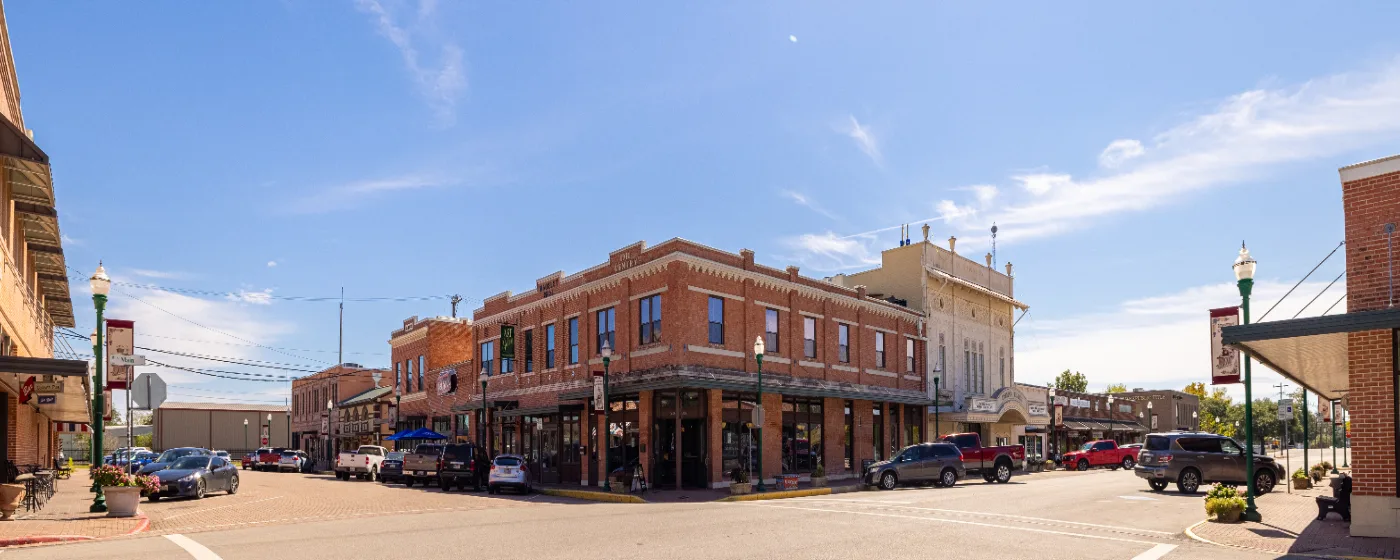
You've probably heard Conroe described as the affordable alternative to The Woodlands — and that framing is only half right. The Woodlands sits noticeably higher in price, and yes, Conroe delivers master-planned communities with resort-style pools, wooded trails, and strong Conroe ISD schools at a meaningfully lower entry point. But Conroe is not a smaller version of its famous neighbor. With a population of 119,564 and a footprint that spans from I-45 east to the Lake Conroe shore, Conroe has its own distinct corridors, its own traffic rhythms, and its own neighborhood personalities — and which one you land in will shape your daily life more than any single feature on a community brochure.
Every neighborhood covered in this guide feeds into Conroe Independent School District, which holds a B rating, according to the Texas Education Agency, with 72,757 students enrolled in 2025-26. The district's major employers anchor the local economy: the school district itself, the City of Conroe, a regional health system, and Lone Star College–Montgomery all keep a steady base of jobs inside city limits. Many residents also commute — the drive is about 50 minutes to Houston via I-45 (North Freeway), and George Bush Intercontinental Airport (IAH) sits 33 miles away, close enough for frequent travelers.
The typical home price in Conroe sits at $315,986 (Zillow Home Value Index, July 2026) — a figure that gets you into a genuine master-planned community with amenities that would cost considerably more in The Woodlands or Montgomery. The catch is that the median household income of $76,206 falls below what's needed to comfortably carry that purchase, which means buyers here are often stretching, investing equity from a prior home, or arriving with relocating-company assistance. Outdoor life is a real draw: Lake Conroe, W.G. Jones State Forest, and Sam Houston National Forest are all within reach, and Conroe sees 205 sunny days a year — enough to use those trails and pools most of the year. For more on taxes, utilities, and the full cost picture, see the cost of living in Conroe page.
Whether you're relocating from within Texas or arriving from out of state, the sections below break down Conroe's seven most sought-after neighborhoods, how they compare by buyer type, what locals actually know about each one, and the mistakes buyers consistently make when they shop here without understanding the lay of the land.

The Conroe Reality
The single most important thing to understand about buying in Conroe is that the city is not one market — it's a collection of master-planned communities strung along two corridors, and which corridor you choose determines almost everything about your commute, your school feeder pattern, and your neighbors' priorities.
The I-45 corridor running north-south is the commuter spine. Communities along or near it — Grand Central Park, Graystone Hills, Jacobs Reserve — put residents on the fastest path toward Houston and The Woodlands, at the cost of more traffic noise and a pace that feels closer to suburban than rural. The SH-242 corridor cuts east-west and draws buyers who want that same proximity to The Woodlands employment base but prefer a slightly removed, quieter setting — Harper's Preserve, Artavia, and Fosters Ridge all sit along this corridor.
The second divide is subtler but equally consequential: new construction versus established resale. Artavia and Grand Central Park are still actively building, which means living alongside construction crews and watching your amenity package evolve over years. Graystone Hills finished its last new home around 2021 and now offers mature trees, settled landscaping, and a community that has already figured out who it is. Neither is better — but buyers who didn't ask the question often wish they had.
Neighborhoods at a Glance
| Neighborhood | Best For | Vibe |
|---|---|---|
| Grand Central Park | Families Walkable | Polished, amenity-rich, adjacent retail — the most urban feel of any community here |
| Harper's Preserve | Privacy Luxury | Gated, architecturally cohesive, built around a forested wetland core |
| Artavia | Families Nature | Artsy, colorful, still building — great amenities now, more to come |
| Graystone Hills | Quiet Value | Established resale, wooded lots, low turnover — the settled choice |
| Jacobs Reserve | Nature Families | Forest-bordered, tight-knit HOA community with standout park amenities |
| Stewart's Forest | Luxury Privacy | Spacious wooded lots, semi-custom homes, small-town atmosphere near the lake |
| Fosters Ridge | Families Commuter | Practical, SH-242 access, entry into Conroe ISD without a premium price |
Conroe typical home price: $315,986 (Zillow ZHVI, July 2026). Typical rent: $1,579/mo (Zillow ZORI, July 2026). Neighborhood tiers on this page are relative to these figures.

Best Neighborhood by Buyer Type
| Buyer Type | Best Neighborhood | Why |
|---|---|---|
| First-Time Buyer | Fosters Ridge | Offers entry-level access to a master-planned community with SH-242 convenience and Conroe ISD schools without the above-median price tags of nearby options. |
| Luxury Buyer | Stewart's Forest | Semi-custom Sitterle Homes with smart home integration on spacious wooded lots start from the $700s — the clearest step up in finish and lot size. |
| Walkability Seeker | Grand Central Park | The adjacent 336 Marketplace puts over 250,000 sq. ft. of shopping and dining within walking distance — nothing else in Conroe comes close. |
| Families with Kids | Jacobs Reserve | The Woodlands College Park feeder pattern, forest-bordered lots, and Welch Park's catch-and-release pond and tennis courts make it the most complete family package. |
| Commuters | Grand Central Park | Positioned along I-45 and Loop 336 about five miles north of The Woodlands, it minimizes time on the freeway for both Houston and Woodlands-bound workers. |
| Large-Lot Buyers | Graystone Hills | Homesites average five to ten feet wider and ten to twenty feet deeper than comparable communities, on rolling terrain that's genuinely unusual for Greater Houston. |
| Renters | Grand Central Park / Artavia | Both active-build communities attract rental inventory as builders and investors bring product to market, giving renters the best shot at newer construction. |
Looking to buy in Conroe? Estimate your payment.
Enter your numbers to see an estimated monthly mortgage payment.
Estimate only. Excludes HOA fees and mortgage insurance. The interest rate above is a starting point, not a quoted rate — replace it with your own to see real numbers. Insurance is a flat placeholder, not a Conroe quote.
Most Popular Neighborhoods
1. Grand Central Park
At 2,046 acres straddling I-45 and Loop 336, Grand Central Park is the most infrastructure-complete community in Conroe right now. The Lake House amenity complex — a 13-acre hub with a resort-style pool, fitness center, event lawn, and dog park — is finished and operating, and the adjacent 336 Marketplace means residents can walk to coffee, groceries, and dinner rather than driving everywhere. The trade-off is that the community is still actively building, so construction traffic on interior roads is a real daily friction, and the community's character continues to evolve.
Best for: Commuters who want amenities now, families who prioritize walkable retail, and buyers who value I-45 access above quiet.
2. Harper's Preserve
Harper's Preserve is the only gated community in this group, and the gate changes the feel immediately — residents cite the lower drive-through traffic and the architectural consistency (the Gulf Coast Folk National style, with a palmetto-leaf motif throughout) as things they noticed after the first week and stopped taking for granted. At its core sits a 160-acre forested wetland preservation area that will never be developed, which is a genuine rarity in this part of Montgomery County. The trade-off is price: Harper's Preserve runs above the city-wide typical home price of $315,986 (July 2026), and the gated entry on SH-242 adds a few extra minutes to any I-45 commute.
Best for: Buyers who want a gated environment, architectural cohesion, and permanent green space at their doorstep.
3. Artavia
Artavia is the most visually distinct community on this list — ARTscape installations appear throughout the wooded landscape, and the nature-themed branding is backed by a Dapple Park amenity hub that includes a 5-acre lake with paddleboat and kayak launch, a splash pad, a meditation garden, and a fitness center. At roughly 2,200 acres along SH-242, it's planned for around 6,500 homes at full build-out, which means buyers today are getting in early — the upside is pricing at or near the city median, and the honest downside is that this community will look meaningfully different in five years, with construction a constant companion in the meantime.
Best for: Families drawn to nature-themed design, buyers comfortable in an evolving community, and anyone who wants amenity-rich living near the SH-242 corridor without paying above-median prices.
4. Graystone Hills
Graystone Hills finished its last new home around 2021, and that maturity shows: the trees have grown in, the amenities — a resort-style pool with slide and splash pad, greenbelt trails through a nature preserve, and a recreation center — are fully operational, and the turnover of neighbors has slowed to a settled pace. The rolling terrain and dense woodlands are genuinely atypical for Greater Houston, and the wider, deeper homesites give backyards a privacy that comparable communities rarely achieve. Because it's resale-only now, buyers do compete with the full market rather than choosing from a builder's inventory, and homes here run above the city-wide typical home price.
Best for: Buyers who want an established community with mature trees, larger lots, and no construction traffic.
5. Jacobs Reserve
What separates Jacobs Reserve from the rest of this list is W.G. Jones State Forest, which borders the community on multiple sides and creates a buffer that feels more like a nature preserve than a typical suburban greenbelt. Welch Park, the community's central gathering space, includes a resort-style pool and splash pad, a catch-and-release fishing pond, tennis courts, and miles of walking trails — and the HOA is active enough that the park actually gets used. The community is served by the Conroe ISD Woodlands College Park feeder pattern, which draws parents who've done their research on school assignments. Homes here run above the city median, and the wooded setting means some lots have genuine privacy that newer flat-lot communities simply can't replicate.
Best for: Families prioritizing the Woodlands College Park feeder, buyers who want forest-adjacent privacy without giving up community amenities.
6. Stewart's Forest
Stewart's Forest sits off Loop 336, close to both SH-105 and I-45, and it occupies an unusual niche: semi-custom homes from Sitterle Homes, starting from the $700s, on spacious wooded lots with greenbelt trails that back up to Stewarts Creek. The smart home technology integration in newer sections is a genuine differentiator, not a marketing add-on. The trade-off is that the community is smaller and quieter than the mega-planned developments on this list, which means fewer on-site amenities — the pool and recreation area are well-maintained, but residents often drive to neighboring communities or Lake Conroe for the more elaborate amenity experience. Homes here run above the city-wide typical home price.
Best for: Buyers looking for semi-custom finishes and large wooded lots who are willing to drive a bit for entertainment.
7. Fosters Ridge
Fosters Ridge occupies the northwest Conroe corridor near SH-242 and delivers what a lot of practical buyers actually need: access to Conroe ISD schools, proximity to The Woodlands employment base, community amenities including a pool and recreational green spaces, and a location convenient to the retail and dining concentrated along SH-242. It doesn't have the headline amenity package of Grand Central Park or the architectural identity of Harper's Preserve, and the data on it is thinner than for the other six communities here — which is itself a signal that it attracts less buzz. For buyers who want a functional, well-located community without the above-median price tags, that quieter profile is often the appeal.
Best for: Practical buyers, families who want Conroe ISD access near The Woodlands corridor, and buyers seeking community amenities at or near the city-wide typical home price.
Common Mistakes Buyers Make in Conroe
Treating the I-45 and SH-242 Corridors as Interchangeable
Buyers who find a home they love on SH-242 and then compare it against a home on I-45 without accounting for the commute difference often regret it. The two routes serve different directions, have different congestion patterns, and — for buyers working in The Woodlands or heading toward Houston — mean meaningfully different daily experiences. Map your actual commute from the specific community before you make an offer, not from the city center.
Chasing Square Footage Over the School Feeder Pattern
Conroe ISD is a single district, but not all feeder patterns are equal in the eyes of buyers who plan to resell in five to eight years. Jacobs Reserve's Woodlands College Park feeder is consistently cited by competing buyers as a purchase driver. Buying a larger home in a community with a less sought-after feeder pattern — even at the same price point — can compress your resale pool when the time comes.
Assuming All Master-Planned Communities Are Complete
Artavia and Grand Central Park are still actively building. What looks like a fully realized community on a developer's website may have significant phases still under construction. Buyers who didn't ask about build-out timelines have found themselves living next to a construction entrance for two or three years — a real quality-of-life issue that doesn't show up in a home inspection.
Underestimating the Property Tax Commitment
Conroe's effective property tax rate of 1.52% is not exceptional by Texas standards, but applied to above-median homes in communities like Stewart's Forest, Harper's Preserve, or Jacobs Reserve, the annual bill becomes a meaningful monthly number. Buyers arriving from states with lower property tax regimes consistently say they understood the rate in the abstract and still underestimated the dollar impact. Run the math on the specific home and tier, not the city average, before you decide how much to stretch. The cost of living in Conroe page breaks this down in full.
Best Areas to Rent in Conroe
| Area | Ideal For | Trade-off |
|---|---|---|
| Grand Central Park | Commuters Walkable | Best on-foot access to retail and dining; higher demand means less negotiating room on rent |
| Artavia | Families Nature | Newer rental inventory as the community builds out; some units still surrounded by active construction |
| Fosters Ridge | First-Time Renters Commuters | Practical SH-242 location and community amenities; fewer luxury finishes than the above-median communities |
| Graystone Hills / Jacobs Reserve area | Families Schools | Established neighborhoods with strong school feeder access; resale-dominated market means rental inventory is limited and turns slowly |
| Loop 336 / SH-105 corridor (Stewart's Forest area) | Nature Quiet | Closest to Lake Conroe and Sam Houston National Forest; smallest rental inventory of any area on this list |
The city-wide typical rent of $1,579 per month (Zillow ZORI, July 2026) covers a wide range of product — from smaller units in established neighborhoods to newer townhomes in active-build communities. Rental inventory in Conroe is dominated by single-family homes rather than apartment complexes, which means lease terms and availability tend to move with the resale market rather than on an apartment-complex schedule.

Local Expert Takeaway: The buyers who land well in Conroe are the ones who pick a corridor first, then a community — not the other way around. If your job is in The Woodlands or you're working remotely, the SH-242 corridor communities like Harper's Preserve and Artavia give you breathing room and a quieter pace. If you're commuting toward Houston and want the most amenity-dense, walkable setup available, Grand Central Park on I-45 is the clear answer. And if you want a community that's already figured itself out — mature trees, settled neighbors, no construction noise — Graystone Hills or Jacobs Reserve are where to look, knowing you'll pay above the city's $315,986 (July 2026) typical home price for the privilege.
Quick Takeaways & FAQs
✅ All seven neighborhoods feed into Conroe ISD, which holds a B rating from the Texas Education Agency — but the Woodlands College Park feeder served by Jacobs Reserve is a consistent resale advantage worth factoring into your search.
⚠️ The honest trade-off in Conroe's most amenity-rich communities is construction: both Grand Central Park and Artavia are still building, which means years of crews and equipment alongside an otherwise polished lifestyle.
📍 Stewart's Forest starts from the $700s for semi-custom homes on wooded lots — making it Conroe's clearest step into the luxury tier, and a stark contrast from the city's $315,986 typical home price (July 2026).
Which Conroe neighborhood has the best schools?
What is the typical home price in Conroe's master-planned communities?
Is Conroe safe to live in?
How long is the commute from Conroe to Houston?
Which Conroe neighborhood is best for families with young children?
Moving to Texas?
Tell us what you need help with and we'll connect you with local resources.
