
What Is Living in Magnolia, Texas Like?
You've probably heard that Magnolia is growing fast — and the numbers back that up in a way that's hard to ignore. The city's population has more than doubled since 2020, and Montgomery County ranks 7th in the nation for growth among U.S. counties. But the thing newcomers don't expect is how small Magnolia still feels: 8,095 residents spread across roughly 5.7 square miles, with a historic depot on the edge of downtown and more single-family homes than anything else. The tension here is real — you're buying into a small Texas town that is actively becoming something larger, and the timeline for that transformation matters as much as the price tag.
The Magnolia Independent School District anchors daily life here in a way that few institutions do in small Texas cities. With 15,405 students enrolled in 2025-26 and 38 active subdivisions feeding new families into the district, MISD is growing faster than its own projections — and most people who move here from the Houston metro are doing so specifically because of it. The district holds a B rating, according to the Texas Education Agency. Beyond schools, the city itself and H-E-B are the dominant local employers, with ExxonMobil's petrochemical operations in Spring drawing a steady commute from Magnolia residents who want acreage they can't afford closer in.
Magnolia sits meaningfully below the national cost-of-living baseline and well below what you'd pay in The Woodlands or even Tomball. The typical home price stands at $364,817 (Zillow Home Value Index, July 2026) — see the full cost-of-living breakdown for how that compares to the surrounding market. Daily life is car-dependent but low-friction: FM-1488, FM-1774, and SH-249 (the Aggie Expressway) handle nearly all movement in and out of the city, and most errands stay local once you know where to go.
Whether you're considering a move or just starting your research, the sections below break down Magnolia's growth story, neighborhoods, housing market, commute realities, school district, and what weekends actually look like here.

Magnolia at a Glance
Looking to buy in Magnolia? Estimate your payment.
Enter your numbers to see an estimated monthly mortgage payment.
Estimate only. Excludes HOA fees and mortgage insurance. The interest rate above is a starting point, not a quoted rate — replace it with your own to see real numbers. Insurance is a flat placeholder, not a Magnolia quote.
Why Are People Moving to Magnolia?
The case for Magnolia is straightforward: more land, lower taxes, and a school district that's drawing families out of the Houston suburbs at a pace the city's own infrastructure is still catching up to. It's not a polished relocation pitch — it's a practical calculation that a lot of Houston-area households are making right now.
The Growth Story
The U.S. Census Bureau flagged Magnolia as one of the fastest-growing cities in Texas, and the on-the-ground evidence is everywhere. Subdivisions are going up across the city; the district has 15 future residential areas with roughly 33,400 lots in various stages of planning. That scale of development in a city of 8,095 people is significant — it means the Magnolia you move into today is not the one that will exist in five years.
A $1 billion, 200-acre mixed-use development called Magnolia Town Center was under city planning and engineering review as of mid-2025, with plans for retail, a luxury hotel, housing, and civic amenities between FM-1774 and FM-1488. A town center of that scale would fundamentally change what daily life here looks and feels like.
Who Actually Moves Here
The typical buyer is a family with school-age children who has been priced out of The Woodlands or wants a bigger lot than Tomball's newer sections offer. Remote workers from the Houston energy industry make up a meaningful share of new arrivals — people who can do two or three office days a week and want a half-acre in exchange for the commute.
The Magnolia ISD is the gravitational center. Parents who research the district, visit the campuses, and talk to neighbors almost always come away committed. On 2024-25 state assessments, 52% of students reached math proficiency and 61% reached reading proficiency — figures that fall below the strongest suburban districts in the metro, but the district's trajectory and community investment carry weight with parents who are thinking long-term. See the full picture at the Magnolia schools page.
The Honest Trade-Off
Magnolia's municipal property tax rate has dropped from $0.4529 per $100 valuation in 2020 to $0.2509 in 2025, driven partly by the addition of over 25 new businesses to the tax base. That trend is real and measurable. What you give up is the finished-city experience — a walkable downtown with dining and retail density isn't here yet, though the Magnolia Economic Development Corporation was awarded funding for a Livable Centers Study aimed at building that out.
The safety picture is a genuine strength. Magnolia reports a violent crime rate of 1 per 1,000 residents and a property crime rate of 5 per 1,000 residents — well below the Texas state violent rate of 4 per 1,000 and property rate of 20.7 per 1,000, and below the national figures of 3.7 and 18.4 per 1,000 respectively. For more detail on safety, see the Magnolia safety page.
What Daily Life Feels Like in Magnolia
Magnolia is a car-first city with a small-town tempo. You will drive to almost everything — but those drives are short, the roads are generally uncrowded except during the school rush, and the trade-off is space and quiet that the Inner Loop can't offer at any price.
The Morning Routine
Most residents start their day at home or swing through one of the independent coffee spots before heading out. The pace is genuinely unhurried compared to what newcomers from the Houston suburbs expect. You don't encounter parking anxiety, you don't fight for a table, and you're not stuck in a neighborhood with one access road.
Grocery runs center on H-E-B, which is also one of the city's major employers. A serious shopping trip for anything H-E-B doesn't carry means driving out of town, which is the honest reality of living in a city this size. Most residents order online for specialty items and treat the occasional drive as part of the lifestyle, not an inconvenience.
Families and Community Texture
Unity Park is where Magnolia actually gathers. The park has a fishing lake, splash pad, amphitheater, skateboard park, volleyball and tennis courts, basketball courts, playgrounds, and a horseshoe pit — and The Stroll, a half-mile linear greenway, connects it toward downtown. Alligator sightings in the wetlands are not urban legend; they happen, and locals treat it as a feature of living in coastal-plain Texas rather than a deterrent.
Friday night UIL athletics draw genuine community crowds — the Magnolia Bulldogs and Magnolia West Mustangs both pull strong attendance, and the stands fill in a way that reminds newcomers this is still a small Texas town at its core. The Historic Magnolia Depot grounds downtown and gives the city a physical anchor that newer suburbs don't have.
What Surprises People After Six Months
The thing longtime residents hear most from newcomers after their first full summer: the heat is more intense out here than it was in the suburbs closer to the bay. Magnolia sits inland with less humidity-moderating effect, and 207 sunny days a year means long stretches of genuine triple-digit heat. New residents from Houston proper are often surprised by how much of their weekend energy goes toward staying cool between June and September.
The second surprise is how fast the city is visibly changing. Longtime residents sometimes describe the pace of new construction as disorienting — roads, schools, and retail are all playing catch-up simultaneously, and the city you drove through to look at houses may look different three months after you close.
The Magnolia Housing Market Right Now
The typical home price in Magnolia is $364,817 (Zillow Home Value Index, July 2026). That figure puts Magnolia at roughly the same level as Tomball, noticeably below Pinehurst, and well below what similar square footage costs in The Woodlands. For context on how the broader market stacks up, see the cost-of-living page.
What the Market Is Built On
Roughly 69% of Magnolia's residential structures are single-family homes, and the newest construction is concentrated in the subdivision rings expanding around the city's core. Audubon is one of the larger planned communities currently shaping the city's growth, reflecting the scale of development happening across the area.
The effective property tax rate is 1.36% — below many comparable Texas suburbs. Texas has no state income tax, which matters to buyers relocating from states with both, though the property tax burden still deserves a careful look at the cost-of-living breakdown.
Who the Market Suits
Entry-level buyers should know that the median household income in Magnolia — $78,605 — falls just short of what's needed to comfortably carry the typical home here at current rates. That gap is modest, but it's real, and it matters most for first-time buyers who are stretching. See the first-time homebuyer page for guidance on loan programs and what to expect from the process.
The market's primary appeal is the combination of price and lot size. New construction in Magnolia routinely offers square footage and outdoor space that would cost substantially more in the inner suburbs. Some areas of the city are further along in development than others — neighborhood character and geographic divides are covered in full on the best neighborhoods page.
Rental Market
The city-wide typical rent is $1,884 per month (Zillow, July 2026), which reflects the newer apartment and single-family rental stock coming online alongside the subdivision boom. Renters who want to test the area before buying will find options, though the rental market here skews toward newer construction rather than the older, smaller units you'd find closer to Houston.
Magnolia Neighborhoods
Magnolia has several distinct areas — each with its own character and appeal. Here’s a breakdown to help you narrow down where to focus your home search.
🏡 Audubon
One of Magnolia's largest and most active planned communities, Audubon is built for families who want new construction, community amenities, and proximity to SH-249. A recently completed community center and retail component make it one of the more self-contained options in the city.
🏠 Magnolia Ridge
A well-established subdivision with mature trees and a neighborhood character that feels more settled than many of Magnolia's newer builds. Families with school-age children are the core demographic, drawn by the proximity to MISD campuses.
🌳 Mostyn Manor
Mostyn Manor offers larger lot sizes and a quieter, more rural feel compared to the higher-density newer subdivisions. It suits buyers who prioritize space and a lower-traffic setting over community amenities.
🏘 High Meadow Ranch
A master-planned community with equestrian-friendly lots and significant acreage — one of the few neighborhoods in Magnolia where horses are part of the residential landscape. It appeals to buyers who want land and a sense of distance from the city's construction activity.
🏔 Thousand Oaks
Thousand Oaks has an established, wooded character with homes on generously sized lots. It draws buyers who want the feel of a settled neighborhood rather than a new subdivision, with established trees that take decades to grow.
🌆 Indigo Lake Estates
A lakefront community that offers a distinctive setting by Magnolia standards, with homes oriented around the water. It suits buyers who want natural scenery and a neighborhood that has a defined visual identity rather than a standard subdivision grid.
Pros & Cons of Living in Magnolia
The Pros
- Rapid new-home construction with modern master-planned communities
- Highly rated Magnolia ISD schools
- Relatively low crime rate for the metro
- Small-town feel with easy highway access to Houston job centers
The Cons
- No full-service hospital within city limits, requiring a drive to Tomball or The Woodlands for major medical care
- Longer commute into central Houston
- Hot, humid summers typical of the Gulf Coast region
Getting Around & Commuting in Magnolia
Three routes carry almost all of Magnolia's movement: FM-1488, FM-1774, and SH-249, the Aggie Expressway. SH-249 is the spine of the commute — it runs from FM-1774 through the city to FM-1488 and connects south toward Tomball and the Houston metro along a 49-mile corridor from I-45 in Houston to SH-105 near Navasota, with Magnolia sitting near its midpoint.
The Commute Reality
The drive to The Woodlands is about 25 minutes to The Woodlands under normal conditions, which is the reference point most Magnolia buyers use when weighing the trade-off. That's manageable for a daily office commute, and it's the reason The Woodlands' employer base — financial services, energy, healthcare — draws a significant share of Magnolia's working residents.
Buyers who commute toward downtown Houston or to ExxonMobil's operations in Spring should plan for a longer drive than the Woodlands reference suggests. SH-249 performs well in off-peak hours but can slow noticeably during the morning and evening peaks, particularly where it meets FM-1488. George Bush Intercontinental Airport (IAH) is 42 miles from Magnolia — a meaningful drive for frequent flyers but not an unusual one for this part of the metro.
How People Get Around
Every resident drives — that's the reality of this corner of Montgomery County. Buyers who relied on park-and-ride or HOV options in their previous suburb should factor in the full fuel and vehicle-cost picture before committing. Most errands within Magnolia are short and low-friction, which softens the impact considerably.
The good news is that internal Magnolia errands — school pickup, H-E-B, Unity Park, and most local services — rarely involve the frustrating traffic patterns that define Houston's inner suburbs. The congestion is mostly an inbound and outbound commute problem, not a neighborhood-circulation problem.
What Experienced Commuters Do
Residents who have been in Magnolia for a few years tend to time their commutes around school drop-off patterns — FM-1488 in particular can back up near school campuses during morning rush, especially as enrollment grows. Leaving earlier or later than the school window makes a measurable difference. Remote work has become a genuine part of the calculus here; many households structure two or three in-office days around SH-249 and treat the rest of the week as a wash.
Schools in Magnolia
Families relocating to Magnolia have public, private, and higher-education options nearby. Here’s a quick overview.
🎓 School District
Magnolia Independent School District serves K–12 students across Magnolia and the surrounding area. Rated B (source: Texas Education Agency, 2025 A-F accountability rating (2024-25 school year)).
🏆 Graduation Rate
The 4-year high-school graduation rate here is approximately 94.4%.
📚 Higher Education
Texas’s public universities — the University of Texas at Austin, Texas A&M University, and the University of Houston — offer four-year degrees statewide, with one of the largest community college systems in the country (50+ public community college districts) providing two-year and workforce programs.
🌐 Online Learning
UT Austin Online and Texas A&M University Online offer fully accredited online degrees for remote learners across the state.
Safety in Magnolia
A quick look at how Magnolia compares on the numbers that matter most when weighing a neighborhood or a move.
🛡 Violent Crime
Approximately 1 per 1,000 residents.
🔒 Property Crime
Approximately 5 per 1,000 residents.
Compared to the most recent national figures from the Bureau of Justice Statistics (2024), Magnolia’s violent crime is below the national average (about 3.7 per 1,000), and property crime is below the national average (about 18.4 per 1,000).
Against Texas as a whole, Magnolia’s violent crime is roughly a quarter of the state average, and property crime is roughly a quarter of the state average (Bureau of Justice Statistics, Crime Known to Law Enforcement, 2024 (tables 2 and 3)).
Crime rates can vary a lot within a single city, so the citywide numbers above are only a starting point. Some neighborhoods in Magnolia run well below these averages, while others run higher — the kind of block-by-block detail that matters most when you’re actually choosing where to live. The full guide below breaks it down neighborhood by neighborhood.
Working in Magnolia
Magnolia’s largest employers span several industries — here are some of the anchors of the local job market.
🎓 Magnolia Independent School District
Education
🏛 City of Magnolia
Municipal government
🛒 H-E-B
Retail
💼 ExxonMobil
Petrochemicals, located in Spring
Parks & Recreation in Magnolia
Some of the outdoor spaces that shape everyday life in Magnolia.
🌱 Unity Park
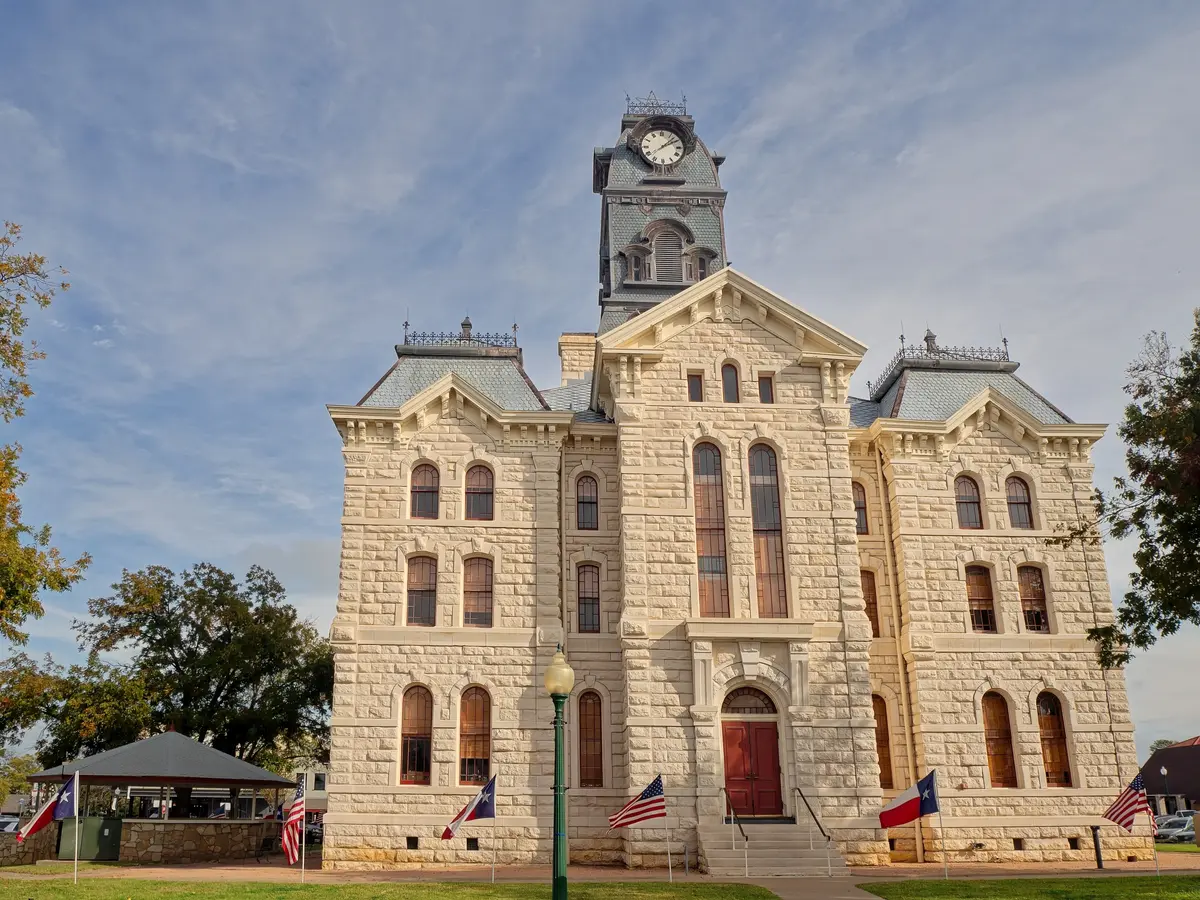
Magnolia residents don’t have to go far for green space — spots like Unity Park are part of everyday life here, whether that’s a morning walk, a weekend hike, or just somewhere to unwind outside. The full guide below covers more of what Magnolia has to offer for parks and outdoor recreation.
Retiring in Magnolia
Magnolia draws retirees for its balance of amenities, outdoor access, and cost. Here’s what to weigh.
🌤 Climate
Magnolia gets 207 sunny days a year — more sun than most people expect this close to the Gulf Coast. Summers are long and genuinely hot this far inland, running from late May through September. Winters are mild, with freezes occasional and rarely severe, though ice storms do hit Montgomery County a few times a decade.
🍴 Lifestyle
Daily life in Magnolia is quiet and low-pressure. Independent dining options, a weekly farmers market, and Unity Park's trails and lake cover the basics without the noise of a larger suburb. For higher-end dining, cultural events, or medical specialists, The Woodlands is the practical destination — about 25 minutes away.
🏚 55+ Communities
No 55+ communities were found in Magnolia. Retirees who want age-restricted living will need to look toward Tomball, The Woodlands, or other nearby communities. Magnolia's housing stock skews heavily toward single-family homes in general-population subdivisions.
✈ Getting Around
A car is the way everyone gets around in Magnolia — most errands require one, and the roads inside the city move smoothly outside of school-zone hours. George Bush Intercontinental Airport (IAH) is 42 miles away, a manageable drive for occasional travel but something to factor in for frequent flyers.
🏛 Texas Taxes for Retirees — What to Know
- No state income tax — Texas has no personal income tax — constitutionally protected under Article VIII, Section 24. Social Security, pensions, 401(k)/IRA withdrawals, and annuity payments are all untaxed at the state level, with no state return to file.
- Sales tax is the tradeoff — The state sales tax is 6.25%, and local add-ons bring the combined rate in Magnolia to 8.25% (Texas Comptroller of Public Accounts, city sales and use tax rates, July 2026). Groceries and prescription drugs are exempt.
- Property taxes — the real tradeoff — Texas’s effective property tax rate averages about 1.40%, among the highest in the country, since property tax (not income tax) funds most local government and schools.
- Over-65 homestead exemption and school-tax freeze — Homeowners 65+ (or disabled) get an additional $60,000 exemption from their home’s value for school district taxes, on top of the general homestead exemption — $200,000 off school taxable value combined, following November 2025’s Proposition 11 (SB 23), which raised the over-65 exemption to $60,000, and Proposition 13 (SB 4), which raised the general homestead exemption to $140,000. Once claimed, your school district tax bill is frozen at that year’s amount and cannot increase as home values rise, and the ceiling can transfer if you move to a new home within Texas.
- Deferral option if cash is tight — Homeowners 65+ can defer property tax payment entirely for as long as they live in the home, rather than paying it currently — interest accrues, but no forced sale.
- No estate or inheritance tax — Texas has no estate tax, no inheritance tax, and no gift tax.
- No separate capital gains tax — Because Texas has no state income tax, capital gains — including on investments and home sales — are not taxed at the state level at all, unlike states such as Washington that tax capital gains separately from income.
Tax laws change frequently and individual situations vary. This is general information, not tax advice — always consult a qualified Texas tax professional or CPA for personalized retirement tax planning.
Weekends & Local Favorites in Magnolia
Magnolia's weekend rhythm is low-key and local. The dining scene is not deep, but the places that exist have real regulars and a community-gathering feel that newer suburbs with chain-restaurant strips tend to lack.
Food and Coffee
For barbecue, The Meating Place BBQ Magnolia and Deacon Baldy's are the two names that come up most among locals. A locally rooted Tex-Mex spot handles that end of the dining rotation, and the Magnolia Diner is the classic sit-down option — the kind of place where the waitstaff knows your order by your third visit. The Treehouse Cafe adds a lighter, cafe-style option for lunches and mid-week meals.
Coffee is genuinely well-covered for a city this size. Kitty's Cafe and Sycamore Coffee Co. handle the independent, neighborhood end of the spectrum. Sweetwaters Coffee & Tea skews slightly more polished. Barbarossa Coffee HQ draws a loyal following, and 7 Brew Coffee covers the quick drive-through crowd. That's five coffee options in a city of 8,095 — a ratio most small Texas cities can't match.
Markets and Outdoor Life
The Courtyard Collective Farmer's Market is the weekend social anchor for residents who want to browse local produce and vendors. It's a small-city market — not overwhelming — but it's a consistent gathering point and one of the clearest signs that Magnolia has a community identity that predates the subdivision boom.
Unity Park earns its reputation as the city's outdoor centerpiece. The fishing lake, amphitheater, and The Stroll toward downtown make it functional year-round, though summer heat compresses the best window to early mornings. The park's birdlife — including red-shouldered hawks in the wetland corridors — gives it more natural character than a typical municipal park. Local wildlife sightings, including the occasional alligator in the wetlands, are part of living on the edge of coastal-plain Texas and something regulars mention with equal parts matter-of-factness and pride.
Day Trips and the Bigger Picture
Magnolia residents are close enough to Montgomery and the Sam Houston National Forest corridor for weekend drives, and the Woodlands Town Center handles most of the higher-end dining and entertainment needs that Magnolia's own scene doesn't yet cover. The city's own entertainment infrastructure is growing — a future Magnolia Town Center would change the weekend calculus significantly — but for now, a short drive fills most gaps.
Local favorites in Magnolia
Restaurants
- Rancho Grande Bar & Grill- Magnolia
- Magnolia Diner
- The Treehouse Cafe
- The Meating Place BBQ Magnolia
- Deacon Baldy's
Outdoors
- Unity Park
Coffee
- Kitty's Cafe
- Sycamore Coffee Co.
- Sweetwaters Coffee & Tea
- Barbarossa Coffee HQ
- 7 Brew Coffee
Farmers Markets
- The Courtyard Collective Farmer's Market
Top Things Locals Say About Magnolia
The best intel about a city comes from the people who actually live there. Here’s what Magnolia residents say when newcomers ask the questions everyone’s thinking.
“I knew the commute would add time, but I didn't expect how much I'd stop noticing it once I had a backyard and kids who could actually play outside. The first summer heat was the real adjustment — nobody warned me how different 'hot' feels when you're this far inland.”
— Recent Magnolia home buyer
“What's the most surprising thing about living in Magnolia?”
How fast it's all changing — and how the small-town feel survives it anyway. You can drive past a new subdivision going up on FM-1488 and then pull into a coffee shop where everyone knows each other. The construction pace is relentless, but the community texture has held so far. Most newcomers don't expect both to be true at the same time.
“What do locals love most about Magnolia?”
The space. Everyone says it. You get a yard, you get breathing room, and the traffic inside the city is nothing compared to what you left. Unity Park becomes a regular stop once you discover it — the fishing lake, the trails, the fact that it connects to downtown via The Stroll. Friday nights in fall, when UIL football is on and the whole city seems to show up, are when Magnolia feels most like itself.
“What should newcomers to Magnolia know?”
Time your school-zone drives carefully, especially on FM-1488 in the morning. The enrollment growth is real and the traffic around campuses reflects it. Also: get to know SH-249 in both directions during your first week. It's the road that makes Magnolia work logistically, and knowing its rhythm — when it flows, when it doesn't — makes the commute far less stressful than it might look on a map.
“How much do you need a car in Magnolia?”
You need a car for everything — H-E-B, school pickup, Unity Park, and most local services are all short drives from anywhere in the city. The driving itself is easy; the roads inside Magnolia move smoothly outside of school-zone hours. The car dependence becomes more significant only when you need something Magnolia doesn't carry yet, which means a trip toward Tomball or The Woodlands.
Cities Near Magnolia
Other communities near Magnolia worth a look — each with its own character and price point.
| City | Distance | Best For | Vibe | Median Rent | Median Buy |
|---|---|---|---|---|---|
| Tomball | 11 mi | Families wanting established neighborhoods | Small-town feel, more retail | $1,764 | $361,053 |
| Pinehurst | 3 mi | Buyers wanting space near Tomball | Rural character, larger lots | $1,700 | $392,025 |
| The Woodlands | 14 mi | Professionals, amenity seekers | Polished, master-planned, walkable | $2,100 | $630,000 |
More Helpful Guides for Magnolia
Going deeper on Magnolia? Our blog series covers everything from first-time buying to retiring here — explore the guides below.
Local Expert Takeaway: Magnolia is a city that rewards buyers who are comfortable with 'not yet.' The safety numbers are strong, the school district is growing and invested, and the price-per-square-foot beats anything The Woodlands offers. The Magnolia Economic Development Corporation was awarded funding for a Livable Centers Study to build out the walkable downtown side of the equation — a decision that's been made, even if the results aren't visible yet. The Aggie Expressway (SH-249) makes the commute math work for Woodlands-area offices, and Unity Park makes weekends livable right now. If you need a finished city today, Magnolia isn't it. If you can buy into the trajectory, the fundamentals are real.
Quick Takeaways & FAQs
✅ Magnolia reports a violent crime rate of 1 per 1,000 residents — one of the stronger safety profiles among outer-ring Houston-area cities and a genuine advantage for families evaluating the move.
⚠️ The typical home price of $364,817 (July 2026) sits above what the median household income here can comfortably carry at current rates — stretch buyers should run the numbers carefully before committing.
📍 SH-249 (the Aggie Expressway) is Magnolia's lifeline to the Houston metro — FM-1488 and FM-1774 handle everything else, and knowing those three routes means knowing how the whole city moves.
How far is Magnolia, TX from Houston?
Is Magnolia, TX a good place to raise a family?
What is the housing market like in Magnolia, TX?
What school district is Magnolia, TX in?
Is Magnolia, TX safe?
Helpful Links for Moving to Magnolia
Moving to Texas?
Tell us what you need help with and we'll connect you with local resources.
