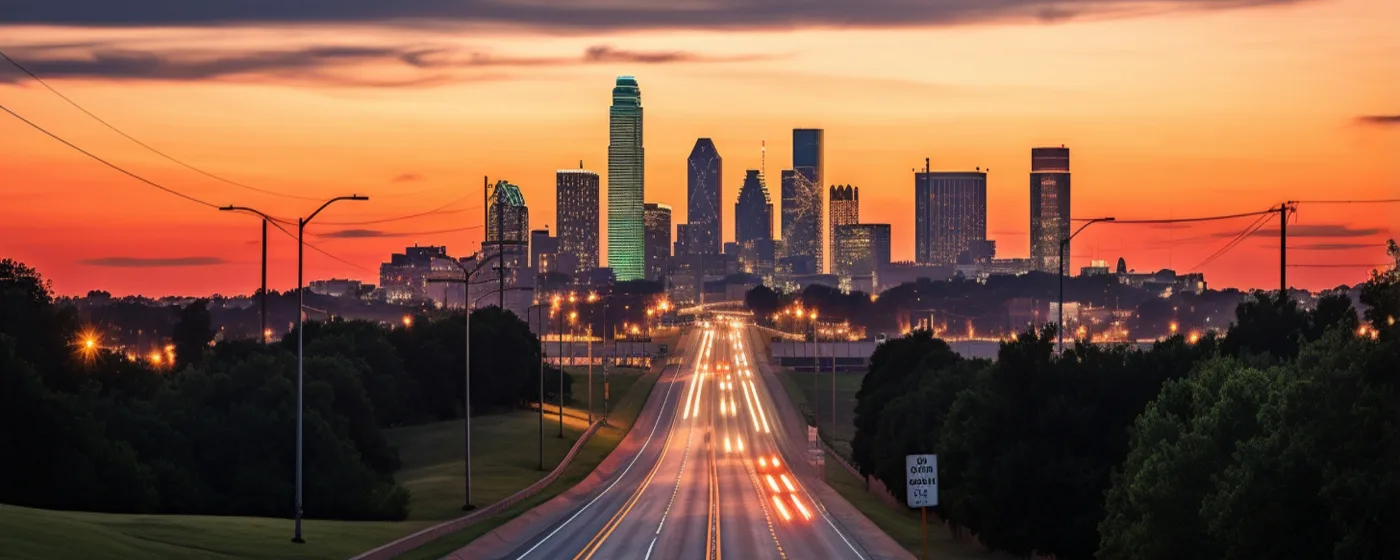
You've done the spreadsheet. Frisco checks the boxes on paper — strong schools, prices well below coastal California, and a state that levies zero income tax. But spreadsheets don't tell you that the Sam Rayburn Tollway is now your commute, that summer in North Texas is a different category of heat than anything the Bay Area or San Diego prepared you for, and that a city of 236,955 people in Collin County is still adding new subdivisions while also building out a sports-and-entertainment corridor anchored by The Star and the Omni PGA Frisco Resort. The move makes mathematical sense for most Californians. Understanding what the math doesn't say is the point of this guide.
Frisco is one of the fastest-growing large cities in American history — more than 450% population growth since 2000 — which means the infrastructure, the restaurant scene, and the neighborhood character are all still catching up with the housing stock. The Frisco Independent School District holds an A rating, according to the Texas Education Agency, making it a rare designation among large Texas districts. The major employers include Keurig Dr Pepper, the Dallas Cowboys organization, and PGA of America, with a significant slice of the workforce commuting about 35 minutes to Dallas or into Plano, where JPMorgan Chase operates a major campus. People move here for the schools, the space, and the tax bill — in roughly that order.
The cost picture is genuinely favorable compared to most California metros, but it is not the blank-check savings story some relocation blogs suggest. The typical home value in Frisco stands at $649,173 (Zillow Home Value Index, July 2026), and Frisco's effective property tax rate of 1.17% will feel sharply higher than what long-tenured California homeowners paid under Proposition 13 — even though new buyers in California are reassessed at full market value anyway. You trade a state income tax bill for a heavier annual property tax line, and the arithmetic genuinely favors Texas for most earners. Health insurance premiums typically run noticeably below California levels, though you will drive farther for specialist care than you would in a larger metro. Day-to-day grocery costs benefit from Texas exempting food from the sales tax entirely. The full cost-of-living breakdown is here.
Whether you are relocating for a job offer, following family, or simply deciding that California's housing costs have finally pushed the limit, the sections below break down the California-to-Frisco financial comparison, the property tax reality, the school picture, what daily life looks and feels like, and the honest downsides that most relocation content glosses over.
The Income Tax Calculation That Drives Most California Moves
California's top state income tax rate of 13.3% applies only to the highest earners, but the bracket structure hits upper-middle incomes hard — a single filer earning $150,000 in California pays a meaningful share of that to Sacramento before federal taxes touch it. Texas has no state income tax, full stop. That single line item reshapes a household budget in ways that compound quickly.
Independent tax tools put the annual state income-tax saving for a single filer earning around the Frisco median household income of $150,212 at roughly $9,500 per year. For a dual-income household, the number grows proportionally. That is not a rounding error — it is a car payment, a year of private tutoring, or several months of accelerated mortgage principal.
California's top state income tax rate of 13.3% is the highest marginal rate of any state in the country, and it is not close. The comparison is lopsided in Frisco's favor on this one dimension, and it is the dimension that most California transplants cite first when asked why they moved. The practical effect shows up immediately in the first paycheck after relocation — there is no withholding line for Texas state income tax, and that absence is real money.
Sales Tax: Closer Than You Think
Frisco's combined sales tax rate is 8.25% — a 6.25% Texas state base plus a 2.00% city add-on. California's statewide base sales tax rate of 7.25% is itself the highest in the nation, and local additions push combined rates in parts of Los Angeles County to 10% or above. On this comparison, the two states are closer than the income-tax story suggests, and Frisco is modestly higher than California's base rate. The meaningful offset is that Texas exempts groceries from sales tax entirely, so day-to-day food spending escapes the 8.25% altogether — a real household benefit that grocery-heavy families notice quickly.
Property Tax: The Number California Buyers Underestimate
This is where the California comparison gets complicated, and where a lot of Californians who ran the numbers in a spreadsheet get surprised by the actual tax bill in year one.
Frisco's effective property tax rate is 1.17%. On the typical home value of $649,173 (Zillow Home Value Index, July 2026), that translates to a meaningful annual obligation — and Texas reassesses residential property at or near 100% of market value each year. There is no Texas equivalent of Proposition 13 holding your assessed value down over time.
California's effective property tax rate of 0.71% looks dramatically lower, and for long-tenured California homeowners it is, because Proposition 13 caps assessed-value growth at 2% per year from the original purchase price. But here is what that comparison misses: if you are buying in California today, you are reassessed at current market value the moment you close — the Prop 13 protection applies going forward from your purchase date, not immediately. So a new buyer in a California coastal market is not paying 0.71% on a decades-old assessed value. They are paying 0.71% on whatever they just paid, against California's statewide typical home value of $773,735, which is already noticeably higher than Frisco's typical price. Frisco's rate is higher. California's base is lower. The annual dollar difference narrows considerably when you do the math on both cities at current purchase prices.
The Homestead Exemption Now Helps
Texas voters approved a ballot measure in November 2025 raising the general homestead exemption from $100,000 to $140,000 of a home's assessed value for owner-occupants. That exemption applies to Frisco buyers who establish primary residence — it reduces the taxable base and modestly offsets the headline rate. It is not a dramatic change, but it is a real one, and it was not in place for the wave of Californians who arrived five years ago.
The honest framing: if you owned a California home for fifteen or twenty years and Prop 13 had your assessed value anchored far below market, moving to Frisco will feel like a property tax increase on a per-dollar-of-value basis. If you were a newer California buyer paying full freight at market value, the comparison is much closer. Either way, the income tax savings for most households more than cover the property tax difference — but plan for the property tax line to be the most visible new number on your annual budget. See the full tax and cost breakdown.
What $649,173 Buys Here vs. California
California's statewide typical home value of $773,735 (Zillow Home Value Index) is already noticeably above Frisco's $649,173 (Zillow Home Value Index, July 2026) — and that California figure averages across inland markets that have their own competitive dynamics. In the coastal California markets where most Frisco transplants are moving from, the realistic entry point for a single-family home is substantially higher.
What that price difference buys in Frisco is space. New construction homes in master-planned communities like The Grove Frisco, Fields, and Hollyhock routinely deliver four bedrooms, three-car garages, and pools on lots that would not exist at any price in most California neighborhoods. The established communities of Phillips Creek Ranch, Stonebriar, and Newman Village — all of which run above the city median — offer mature trees and finished amenities that newer sections of town are still building toward.
The catch is that Frisco's median household income of $150,212 is below the income needed to comfortably carry the typical home here at current prices — by a meaningful gap. This is a city where dual incomes and significant equity from a California sale are both working assumptions for most buyers. The neighborhood guide breaks down where different buyer profiles tend to land. Many California transplants arrive with enough equity from their sale to put down a substantial amount, which changes the monthly math considerably and is one reason the move pencils out even when the income gap looks tight on paper.
Renting First Is a Real Option
A city-wide typical rent of $1,852 per month (Zillow ZORI, July 2026) gives Californians the ability to land, learn the city's geographic logic — SH-121 and SH-289 (Preston Road) are the main corridors, and where you sit relative to them shapes your daily life significantly — and buy deliberately rather than under pressure. Plenty of California transplants spend six to twelve months renting before making an offer. The neighborhoods that looked best on a map from Sacramento sometimes feel different once you are actually driving FM-423 on a school-year morning.
Looking to buy in Frisco? Estimate your payment.
Enter your numbers to see an estimated monthly mortgage payment.
Estimate only. Excludes HOA fees and mortgage insurance. The interest rate above is a starting point, not a quoted rate — replace it with your own to see real numbers. Insurance is a flat placeholder, not a Frisco quote.
Schools, Safety, and Daily Life in Frisco
For families with school-age children, Frisco ISD is usually the first reason the city makes the list. The district holds an A rating, according to the Texas Education Agency. The district runs active UIL athletics programs, and Friday night football at Toyota Stadium fills the stands with a community energy that surprises a lot of California arrivals who expected a suburb and got a town.
Safety in Frisco tends to compare favorably to both state and national benchmarks, with a violent crime rate of 1 per 1,000 residents and a property crime rate of 10 per 1,000 residents — well below Texas state averages. The full safety breakdown is on the safety page.
What Daily Life Actually Looks Like
Frisco is a car-dependent city, which is the adjustment that catches most California transplants off guard — even those who drove everywhere at home. There is virtually no public transit for daily commuting. Most households run two vehicles. If you are commuting toward Dallas, the Sam Rayburn Tollway is your primary route, and a toll tag is strongly recommended because pay-by-mail rates run roughly double. Budget the toll costs as a real line item, not an afterthought.
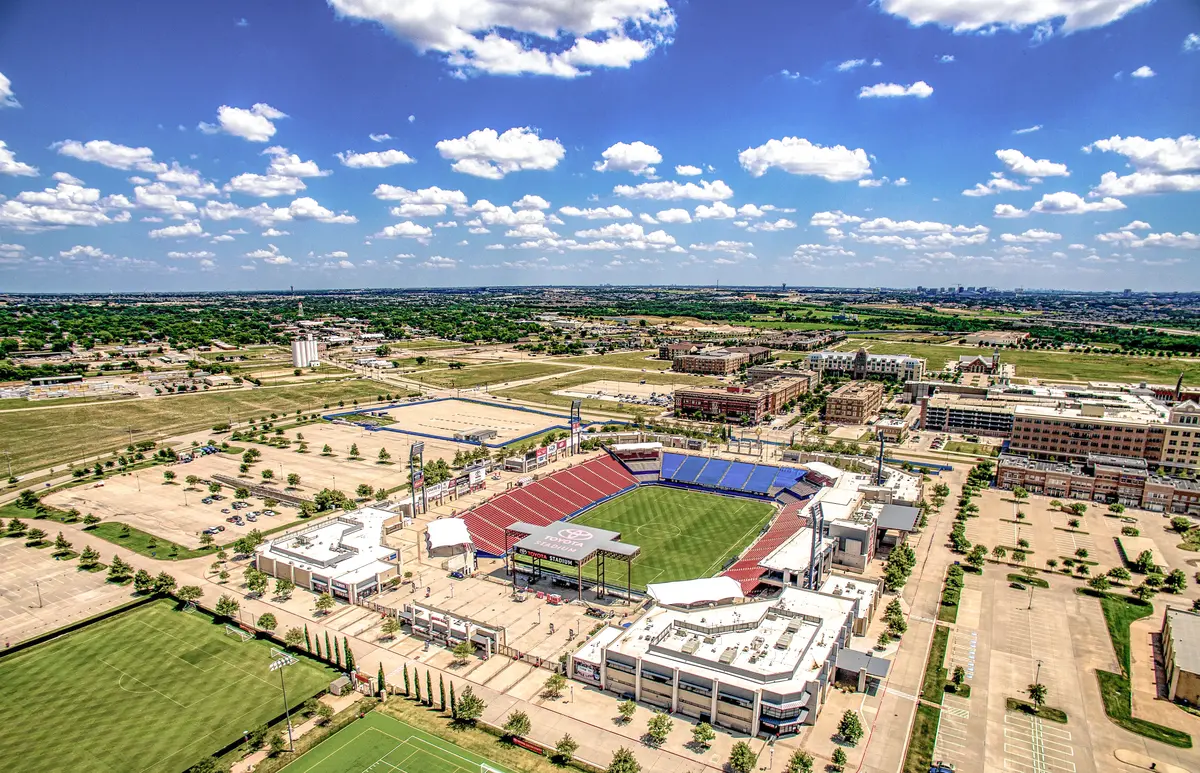
The social fabric of the city runs through its parks and its sporting infrastructure. Frisco Commons Park and the Stewart Creek Trail are where residents actually show up on weekends. The Frisco Fresh Market and the Frisco Rotary Farmers Market give the city a community gathering rhythm that feels more small-town than a city of 236,955 has any right to offer. The Star — the Dallas Cowboys headquarters and entertainment campus — along with Toyota Stadium, which served as a FIFA World Cup 2026 base camp site, anchors a sports-and-entertainment identity that is genuinely unlike anything in the Texas suburbs around it.
The restaurant scene is still building density relative to the city's size, but independent spots like Hutchins BBQ, La Hacienda Ranch, and Tupelo Honey Southern Kitchen & Bar represent what the local dining scene does well. Coffee culture has real footholds — Arwa Yemeni Coffee, La Finca Coffee & Bakery, and Kona Reserve Coffee among them — and the Sci-Tech Discovery Center and National Videogame Museum give families with kids meaningful reasons to stay local on a weekend.
The Honest Downsides: What California Transplants Don't Expect
Month three is when the novelty wears off and the friction shows up. The most common complaint from California arrivals is not the taxes, not the commute, and not the politics — it is the summer. Frisco gets more than 230 sunny days a year, but July and August in North Texas are a sustained heat event that the California coast never prepared you for. Temperatures regularly exceed 100°F, and the humidity is meaningfully higher than anything in a California inland valley. Running errands at 2pm in August is an experience you will stop choosing to repeat.
The second surprise is less dramatic but more persistent: the geographic sprawl and the sameness of the master-planned streetscape. Coming from a California city with a historic downtown, distinct neighborhoods, and walkable commercial streets, Frisco's built environment takes getting used to. Most of the city was built in the last twenty years, and much of it looks like it. The urban core is still forming — the Main Street corridor is one of the more interesting pieces of it, and the area around The Star has real density — but you will not find the layered, accidental character of an older city for a while.
The Traffic and Commute Reality
Frisco is about 35 minutes to Dallas under normal conditions, which means it is longer on a weekday morning. The Sam Rayburn Tollway carries most of the commuter load and does so reliably, but it is a tolled road every single day. Californians moving from the Bay Area often discover that Frisco's commute is actually shorter in raw time than what they left behind — the comparison to the 580 or the 101 on a bad day tends to land well. Californians from Southern California adjust faster to the car-first reality, though the toll expense is a new variable. The commute and employer breakdown is here.
Why People Leave
The residents who move out of Frisco most often cite one of three things: the heat, the property tax bill creeping upward as values appreciate, or a sense that the city is building faster than it is maturing. A handful leave because the school-district focus that makes Frisco attractive to parents with young children can make it feel thin on adult culture once the kids are grown. These are honest reasons, not dealbreakers for most buyers — but knowing them before you close is more useful than discovering them in year two.

Local Expert Takeaway: Most California transplants find that the income-tax savings alone justify the move within the first year, but the ones who thrive fastest are the ones who bought a toll tag on day one, found a neighborhood close to their primary corridor — SH-121 or Preston Road — and got into Frisco ISD before the next school year started. The ones who struggle are usually the ones who moved without accounting for August, for the property tax rate at current home values, and for a commute that requires a car for every single errand. The math is genuinely good. Go in clear-eyed about what the math doesn't tell you.
Quick Takeaways & FAQs
✅ Texas has no state income tax, putting thousands of dollars back into a California transplant's annual budget starting with the first paycheck.
⚠️ Frisco's effective property tax rate of 1.17% will likely be the largest new expense on your budget — it runs noticeably higher than California's effective rate, and Texas reassesses annually at market value.
📍 A toll tag for the Sam Rayburn Tollway is not optional in practice — pay-by-mail rates run roughly double the tagged rate, and the tollway is the main route for most daily commutes.
How much will I save on income taxes by moving from California to Frisco?
Is Frisco really cheaper than California, or does the property tax eat up the savings?
How are the schools in Frisco compared to what I had in California?
What are the biggest lifestyle adjustments for Californians moving to Frisco?
Is Frisco's sales tax higher or lower than California?
Moving to Texas?
Tell us what you need help with and we'll connect you with local resources.
