
Dallas is the 3rd-largest incorporated city in Texas, with a population of 1,329,491 spread across neighborhoods that feel less like parts of one city and more like entirely separate towns that happen to share a zip code. The surprise most buyers discover after two or three house-hunting weekends is just how much the character, the school options, and the street-level experience vary between, say, North Oak Cliff and Far North Dallas — neighborhoods that are maybe 20 miles apart but represent genuinely different ways of living. The typical home price across Dallas stands at $309,590 as of July 2026, but that city-wide figure is almost meaningless at the neighborhood level, where the range stretches from entry-level to deep eight-figure estates.
The economic backbone here is serious: Dallas Independent School District — with 134,308 students enrolled in 2025-26 — is the city's largest employer, followed by the City of Dallas itself, AT&T, Texas Instruments, UT Southwestern Medical Center, and Parkland Health. That institutional core anchors employment even when individual sectors cycle, and it draws a steady wave of corporate relocations that keeps demand for housing strong across multiple price points. The district holds a B rating, according to the Texas Education Agency, though performance varies significantly school by school and boundary by boundary — which matters enormously when you're deciding between two houses three blocks apart.
Cost of living is the other thing buyers from coastal markets consistently underestimate — not because Dallas is cheap, but because it is more nuanced than the headlines suggest. The median household income of $70,518 sits below the income needed to carry the typical home here, which tells you something honest about who the market actually serves. For lifestyle, Dallas offers 234 sunny days a year, the Katy Trail running through Uptown, White Rock Lake anchoring East Dallas, Klyde Warren Park stitching the Arts District to downtown, and a restaurant and coffee scene that has matured well beyond what most outsiders expect. Dallas Love Field sits just 6 miles from downtown, keeping travel friction low for anyone whose job involves a boarding pass.
Whether you're comparing a condo in Oak Lawn to a Tudor in the M Streets, or deciding whether Preston Hollow's schools justify the price premium over Lake Highlands, the sections below break down Dallas's eight most sought-after neighborhoods, the buyer types each suits best, the mistakes relocating buyers make, and the honest trade-offs you will face before you make an offer.
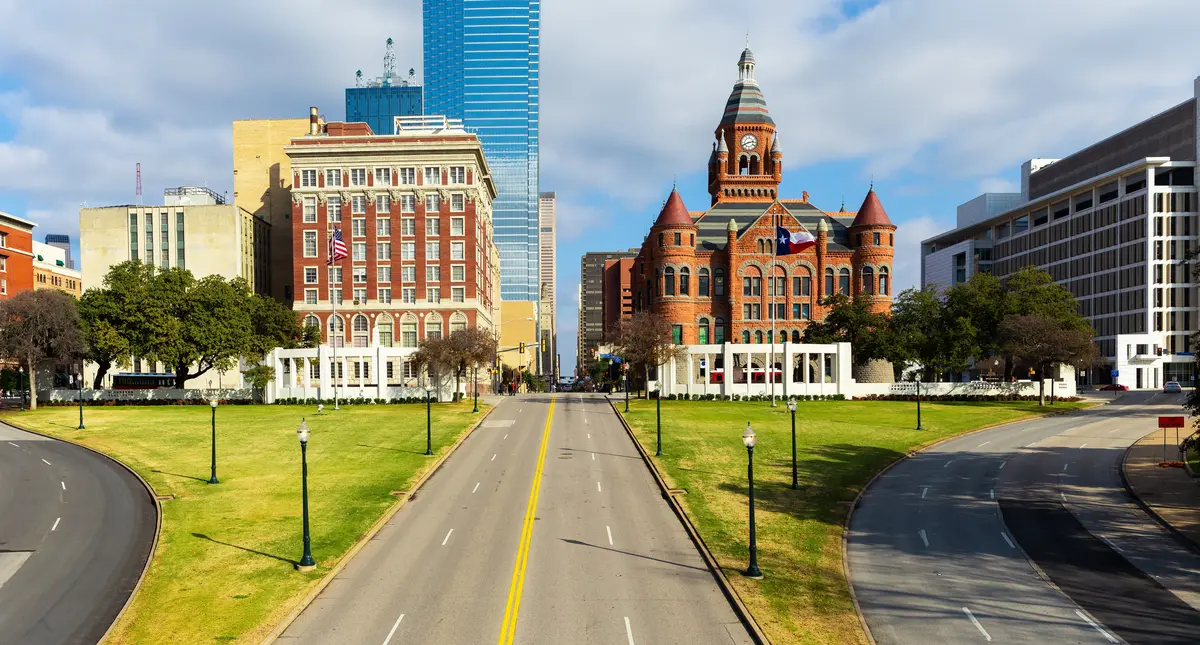
The Dallas Reality
The single most consequential decision in Dallas real estate is not which neighborhood you pick — it is which side of the Trinity River you land on. Oak Cliff and the neighborhoods south and west of the river operate in a fundamentally different development pipeline, school boundary map, and cultural register than Uptown, North Dallas, and the established East Dallas corridors. Buyers who treat the city as a uniform grid and simply chase square footage for the dollar tend to end up with a house that works on paper and a commute or school situation that grinds them down within a year.
Inside the loop — Uptown, Oak Lawn, Lakewood, and the M Streets — the trade-off is density and price for walkability and shorter drives. Further north, along US-75 (Central Expressway) through Lake Highlands and into North Dallas, the calculus shifts toward larger lots, newer construction, and access to I-635 (LBJ Freeway) for east-west movement across the metro. The corridor matters: being on the wrong side of a major interchange for your daily commute in a city without meaningful transit alternatives adds real time and real stress that no backyard makes up for.
School boundaries are the other invisible line that reshapes value overnight. Dallas ISD serves the whole city, but individual campus performance varies sharply by zone, and the private school ecosystem in Preston Hollow and North Dallas attracts buyers who price that access directly into their offer. On 2024-25 state assessments, 43% of students reached math proficiency and 49% reached reading proficiency district-wide — figures that mask genuine bright spots alongside persistent gaps, depending entirely on which school a boundary assigns your child to. Understand the boundary before you fall in love with the house.
Neighborhoods at a Glance
| Neighborhood | Best For | Vibe |
|---|---|---|
| Oak Cliff (Bishop Arts, Kessler Park, North Oak Cliff) | Walkable First-Time Renter | Creative, independent, arts-forward; the most culturally distinct pocket in Dallas |
| Uptown | Walkable Transit Renter | High-energy, high-rise, young professional; Dallas's most on-foot neighborhood |
| Preston Hollow | Luxury Privacy School | Old-money estate living; oak canopy, wide lots, private school proximity |
| Lakewood | Families Nature Views | Established, lake-anchored, architecturally proud; a neighborhood people move to and stay in |
| East Dallas / M Streets (Greenland Hills) | Families Walkable First-Time | Cottage-lined, conservation-protected, connected to Knox-Henderson and Lower Greenville |
| Lake Highlands | Families Value Quiet | Northeast Dallas suburban feel with real neighborhood depth and mid-century character |
| Oak Lawn | Walkable Renter Commuter | Inclusive, eclectic, centrally located; the closest thing Dallas has to a true urban neighborhood |
| North Dallas (Far North Dallas, Bent Tree, Preston Highlands) | Luxury School Commuter | Affluent, spacious, suburban polish; great freeway access, strong private school ecosystem |
Dallas typical home price: $309,590 (Zillow ZHVI, July 2026). Typical rent: $1,605/mo (Zillow ZORI, July 2026). Neighborhood tiers on this page are relative to these figures.

Best Neighborhood by Buyer Type
| Buyer Type | Best Neighborhood | Why |
|---|---|---|
| First-Time Buyer | East Dallas / M Streets | Conservation-district protections keep the stock intact, and walkable connections to Knox-Henderson give you the urban payoff without Uptown pricing. |
| Luxury Buyer | Preston Hollow | The 1930s-era Old Preston Hollow lots are among the largest inside Dallas city limits, and the private school corridor is unmatched. |
| Walkability Seeker | Uptown | The McKinney Avenue Trolley (M-Line), DART access, and the Katy Trail make Uptown the one Dallas neighborhood where a car genuinely feels optional. |
| Families with Kids | Lakewood | White Rock Lake, the Dallas Arboretum, and a tight-knit community that draws families who stay put for a decade or more. |
| Commuter | Oak Lawn | Minutes from downtown via multiple routes, close to Dallas Love Field, and positioned between Uptown and the Design District for any direction commute. |
| Large-Lot Buyer | North Dallas (Far North Dallas / Bent Tree) | Bent Tree and Preston Highlands deliver generous lot sizes and established streetscapes without the Preston Hollow price ceiling. |
| Renter | Uptown | New luxury high-rise inventory — including a recently delivered 31-story tower with units averaging 1,400 square feet — gives renters options that simply don't exist in most Dallas neighborhoods. |
Looking to buy in Dallas? Estimate your payment.
Enter your numbers to see an estimated monthly mortgage payment.
Estimate only. Excludes HOA fees and mortgage insurance. The interest rate above is a starting point, not a quoted rate — replace it with your own to see real numbers. Insurance is a flat placeholder, not a Dallas quote.
Most Popular Neighborhoods
Oak Cliff (Bishop Arts District, Kessler Park, North Oak Cliff)
Oak Cliff sits just across the Trinity River from downtown and holds more personality per block than almost anywhere else in the city. The Bishop Arts District, protected by a City of Dallas conservation designation, draws crowds from across the region with an independent-minded collection of shops and restaurants in a walkable core that feels genuinely unlike the rest of Dallas. The catch: the Trinity River corridor creates a real psychological and practical divide, and buyers should be honest with themselves about whether crossing it daily — for work, school, or errands — fits their actual life.
Best for: Creative-minded buyers, urban walkability seekers, buyers who value neighborhood identity over suburban polish.
Uptown
Uptown attracted more Gen Z in-movers in 2025 than any other Dallas ZIP code, which tells you something about both its energy and its trajectory. The Katy Trail — a flat, paved 3-mile path connecting the neighborhood outward — functions as the de facto town square on any warm evening, and the McKinney Avenue Trolley (M-Line) makes the neighborhood feel car-optional in a city where that is genuinely rare. The trade-off is density: Uptown is adding luxury high-rise inventory at a pace that has changed its character, and buyers looking for quiet or green space will feel the city pressing in.
Best for: Young professionals, renters, transit-oriented buyers, anyone prioritizing on-foot access to dining and culture.
Preston Hollow
Preston Hollow is where Dallas's old money settled, and where new money arrives when it wants that same sense of permanence. The original Old Preston Hollow section, developed in the 1930s on a roughly 56-acre footprint, features winding oak-shaded lanes and lots generous enough to feel rural inside a major city — the "honeypot" nickname locals use is not an exaggeration. Prices here run well above the city median, and the gap is wide; buyers who stretch to get in often find that the carrying costs and the private school tuition alongside them require a serious budget conversation before the offer. For those who can absorb it, the trade is hard to beat.
Best for: Luxury buyers, private-school families, buyers who want maximum lot size and canopy inside city limits.
Lakewood
Lakewood's appeal is almost unfair: White Rock Lake, a roughly 1,015-acre urban park with a 9.3-mile paved loop, sits at the neighborhood's edge and draws runners, cyclists, and dog walkers daily. The housing stock is genuinely varied — early-20th-century cottages, brick Tudors, mid-century ranches, and newer infill — which means buyers at several price points can land here, though Lakewood ranks among the city's higher-priced neighborhoods and competition for the best homes is consistent. The downside is that Lakewood's desirability has made it difficult to break into, and families who bought a decade ago are sitting on gains that push newer buyers toward neighboring streets.
Best for: Established families, outdoor enthusiasts, buyers who want architectural character alongside serious green space.
East Dallas / M Streets (Greenland Hills)
The M Streets are what happens when a 1920s conservation district gets discovered by people who care about urban design: the rows of Tudor cottages between Henderson Avenue and Mockingbird Lane are protected by strict Greenland Hills Conservation District guidelines, which means the neighborhood's character is unusually durable by Dallas standards. Walkable connections to Knox-Henderson and Lower Greenville put independent restaurants and cafés within a reasonable stroll, which is not something most Dallas neighborhoods can claim. The limitation is lot size — these are not large properties, and buyers who need room to spread out will feel the constraints quickly.
Best for: Parents with school-age children who want urban proximity, buyers who value architectural consistency, anyone moving from a walkable city who needs a soft landing.
Lake Highlands
Lake Highlands reads as the most straightforwardly family-oriented neighborhood in northeast Dallas — mid-century ranches, newer townhome infill, and a community texture built around schools and youth sports. The Highland Meadows sub-area, recognized formally in June 2025, preserves a notable collection of mid-century modern homes with large windows and open floor plans that attract a design-conscious buyer on a practical budget. The honest limitation: Lake Highlands lacks the walkable retail core that Lakewood or the M Streets offer, and most daily errands mean a car trip regardless of where in the neighborhood you land.
Best for: Families with kids, mid-century architecture enthusiasts, buyers who want northeast Dallas access without North Dallas pricing.
Oak Lawn
Oak Lawn is the most genuinely central neighborhood on this list — positioned minutes from downtown, Uptown, the Design District, and Dallas Love Field simultaneously. Cedar Springs Road has been the heart of Dallas's LGBTQ+ community for decades, giving the neighborhood a civic identity and a commercial corridor that holds through real estate cycles. The housing mix — townhouses, condos, duplexes, apartments spanning from the 1950s to the present — creates an eclectic streetscape that works for renters and owners alike. The catch is that "walkable" in Oak Lawn still means Dallas walkable: better than most, but not a neighborhood where you live without a car.
Best for: Renters, urban buyers, commuters downtown or to Love Field, buyers who prioritize centrality over quiet.
North Dallas (Far North Dallas, Bent Tree, Preston Highlands)
North Dallas stretches from Loop 12 toward I-635 (LBJ Freeway), with US-75 (Central Expressway) carrying the bulk of daily commuter traffic through the area, and the result is a neighborhood that trades inner-loop energy for space, established schools, and suburban amenity density. D Magazine describes it as home to many of Dallas's wealthiest residents, and the Preston Road shopping corridor has the kind of long-established retail infrastructure that younger parts of the city are still building. The trade-off is commute: if your office is downtown or south, you are looking at significant daily drive time, and I-635 earns its reputation for gridlock at rush hour.
Best for: Affluent buyers, private-school families, large-lot buyers who need freeway access east and west across the metro.
Common Mistakes Buyers Make in Dallas
Treating the City-Wide Median as a Neighborhood Reality
The typical home price of $309,590 (July 2026) is a useful city-wide anchor, but it actively misleads buyers shopping in Preston Hollow, Lakewood, or North Dallas, where that figure represents the entry point to a fixer — not a comfortable purchase. Buyers from out of state who arrive with that number in mind and start touring inner-loop neighborhoods often recalibrate fast. See the full breakdown on the cost of living page.
Underestimating the School Boundary Effect on Value
Two houses on the same block in Dallas ISD can feed into dramatically different campuses because of how the district draws its attendance zones. Buyers who fall in love with a house in the M Streets or Lake Highlands and skip the boundary verification step sometimes discover — after closing — that their assigned campus is not what the neighborhood's reputation suggested. The rule is simple: look up the specific address in the Dallas ISD boundary tool before the offer, not after. For school context, see the schools page.
Assuming Oak Cliff Is Still the Deal It Once Was
A generation of buyers made serious money buying in Oak Cliff before the Bishop Arts District matured into a regional destination. That window has largely closed. Buyers who arrive expecting a steep discount relative to other established Dallas neighborhoods are reading a market that is several years out of date. The neighborhood is worth buying in for its character and walkability — not a perceived bargain status that no longer reflects current conditions.
Ignoring the I-635 Commute Reality Before Buying in North Dallas
North Dallas's freeway access looks excellent on a map — I-635 (LBJ Freeway) runs the northern edge and US-75 (Central Expressway) runs through it — but both corridors are genuinely congested during weekday rush hours. Buyers who tour on a weekend afternoon and drive back toward downtown in light traffic get a false read on what Monday through Friday feels like. If your commute destination is south or central, model the actual drive at the actual time before you commit to Far North Dallas or Bent Tree.
Best Areas to Rent in Dallas
| Area | Ideal For | Trade-off |
|---|---|---|
| Uptown | Young professionals, new arrivals who want maximum walkability and social density | Among the highest rents in the city; new luxury towers have raised the floor on what's available |
| Oak Lawn | Renters who want central access and an eclectic housing mix without full Uptown pricing | Parking is tight; building quality varies widely across the older condo and duplex stock |
| East Dallas / M Streets | Renters who want a residential neighborhood feel with walkable retail nearby | Single-family rental inventory is thin and competes with owner-occupiers; turnover is low |
| Lake Highlands | Families who want northeast Dallas schools and more space per dollar | Most of the rental stock is mid-century single-family; the apartment supply is limited compared to inner-loop areas |
| North Dallas / Far North Dallas | Corporate relocations, families needing top private-school proximity, I-635 commuters | Rental inventory skews toward apartment complexes; the suburban character means a car is essential for nearly everything |
The city-wide typical rent runs $1,605 per month as of July 2026 (Zillow), but that figure compresses a wide range — a studio in Oak Lawn and a three-bedroom in Lake Highlands land in very different territory. Renters who move to Dallas without a local network consistently say the same thing six months in: they wish they had rented in Uptown or Oak Lawn first, gotten a feel for the city's geography, and then bought — rather than committing to a far-north neighborhood before understanding how Dallas actually moves day to day.

Local Expert Takeaway: The buyers who do best in Dallas are the ones who map the school boundary before the open house, drive the commute on a Tuesday morning rather than a Sunday afternoon, and resist the urge to use the city-wide median as a shopping budget. Oak Cliff's Bishop Arts District and Lakewood's White Rock Lake loop are the two neighborhood amenities that most reliably make buyers say they didn't know Dallas had this — and they represent opposite ends of the vibe spectrum. If you're still deciding between an inner-loop purchase and going north for more space, test both commutes during rush hour and see which one you'd rather do 250 times a year.
Quick Takeaways & FAQs
✅ Uptown's McKinney Avenue Trolley, Katy Trail access, and new luxury high-rise inventory make it the rare Dallas neighborhood where car-light living is genuinely achievable.
⚠️ The city-wide typical home price of $309,590 (July 2026) masks enormous neighborhood variation — Preston Hollow and Lakewood run well above that figure, and neighborhood character shifts dramatically across even short distances.
📍 School boundary lines in Dallas ISD can shift dramatically within a single block — always verify the specific address in the district's boundary tool before making an offer.
Which Dallas neighborhood is best for families with young children?
Is Oak Cliff still a good value compared to the rest of Dallas?
What is the most walkable neighborhood in Dallas?
What are the nicest neighborhoods in Dallas for luxury buyers?
Should I rent first before buying in Dallas?
Moving to Texas?
Tell us what you need help with and we'll connect you with local resources.
