
What Is Living in Greenville, Texas Like?
Greenville sits about 50 miles northeast of Dallas on I-30, billing itself as the Gateway to East Texas — and for many buyers, that position is exactly the point. You're close enough to reach the Dallas metro for a meeting, a concert, or a specialist appointment, yet far enough that the typical home price is a fraction of what you'd pay inside the loop. The city is the county seat of Hunt County, a working-class Texas town that has quietly accumulated a genuinely significant industrial anchor in L3Harris Technologies, one of the largest aerospace defense facilities in the country. That combination — Dallas proximity plus a real local job base plus prices that feel like a decade ago in the metro — is why Greenville keeps turning up in conversations about where to relocate.
The economic backbone here is more substantive than most cities this size can claim. L3Harris Technologies operates more than 3.7 million square feet of facilities in Greenville, with manufacturing, multi-sensor and anechoic testing, aircraft painting, and an FAA-approved flight-test airspace — all within city limits. The Greenville Independent School District, with 5,441 students enrolled in 2025-26, is another major employer, as is the City of Greenville itself and Innovation First International, which manufactures robotics systems. A regional health system rounds out the employer base. This isn't a bedroom community with no local economy; it's a city where a meaningful share of residents both live and work here.
Cost of living in Greenville runs noticeably below the U.S. national average, with housing costs as the largest driver of that gap. The typical home price — $243,421 as of July 2026 — puts homeownership within reach for many households that would be priced out of Royse City or Wylie. The city has 232 sunny days a year and the kind of warm Texas springs and summers that make Wright Park Golf Course a genuine weekly habit rather than a special occasion. Greenville Farmers Market gives the community a weekly gathering point, and after a full renovation completed in 2025, the Greenville Municipal Auditorium now hosts concerts, theatre, and ballet with upgraded sound and lighting.
Whether you're considering a move or just researching the area, the sections below break down Greenville's neighborhoods, cost of living, schools, local favorites, and what daily life here is really like.

Greenville at a Glance
Looking to buy in Greenville? Estimate your payment.
Enter your numbers to see an estimated monthly mortgage payment.
Estimate only. Excludes HOA fees and mortgage insurance. The interest rate above is a starting point, not a quoted rate — replace it with your own to see real numbers. Insurance is a flat placeholder, not a Greenville quote.
Why Are People Moving to Greenville?
The case for Greenville is easy to make. Prices well below the Dallas metro. A defense-sector anchor employer that's been here for decades. A city government that's actively investing in infrastructure rather than just maintaining it. The case against is shorter but honest: the school district holds a D rating, according to the Texas Education Agency, and if you have school-age kids, that's not a footnote — it's a central part of the decision.
Set that aside for a moment, though, and the growth story is real. In May 2024, Greenville voters approved a $117.6 million Recreation Centers Bond to fund a new multi-generational recreation center at the SportsPark, covering fitness, aquatics, and youth programs. Construction was already underway. The city is simultaneously pursuing a $250 million water system upgrade to support continued expansion. These aren't wish-list items — they're funded commitments from a city that's planning for growth, not reacting to it.
The L3Harris Effect
L3Harris Technologies is the employer that makes Greenville different from most small Texas cities. The Greenville facility is a genuine defense-industrial complex — over 3.7 million square feet — not a satellite office. Engineers, technicians, and program managers relocate here specifically for that campus, and they stay because the housing math makes sense in a way it simply doesn't in Plano or Garland.
Innovation First International, the robotics manufacturer behind the HEXBUG brand and competitive robotics systems, adds a different flavor of technical employment to the city. Together with the school district, the city government, and a major regional health system, Greenville has a genuinely diversified employer base for a city of 37,069.
A City Investing in Itself
In June 2025, City Council approved a citywide Trails and Bikeways Master Plan — funded through TxDOT — making Greenville the first city in Hunt County to join the regional trails initiative. In 2024, the city applied for a Texas Community Development Block Grant to modernize downtown sidewalks, lighting, and ADA accessibility, with engineering consultants already engaged. These decisions signal a city with a longer planning horizon than many of its neighbors.
For buyers relocating from higher-cost markets, the combination of these investments — civic infrastructure catching up to the population — is the real pitch. Greenville isn't finished yet, which is either a risk or an opportunity depending on your timeline.
What Daily Life Feels Like in Greenville
Six months after moving here, most people say the same thing: it's quieter than they expected, in the best sense. Not quiet as in nothing happens — quiet as in you can actually get a table without a reservation, run errands without circling a parking lot, and leave for work without the crawl that defines Dallas morning commutes inside the loop.
The Rhythm of a Working City
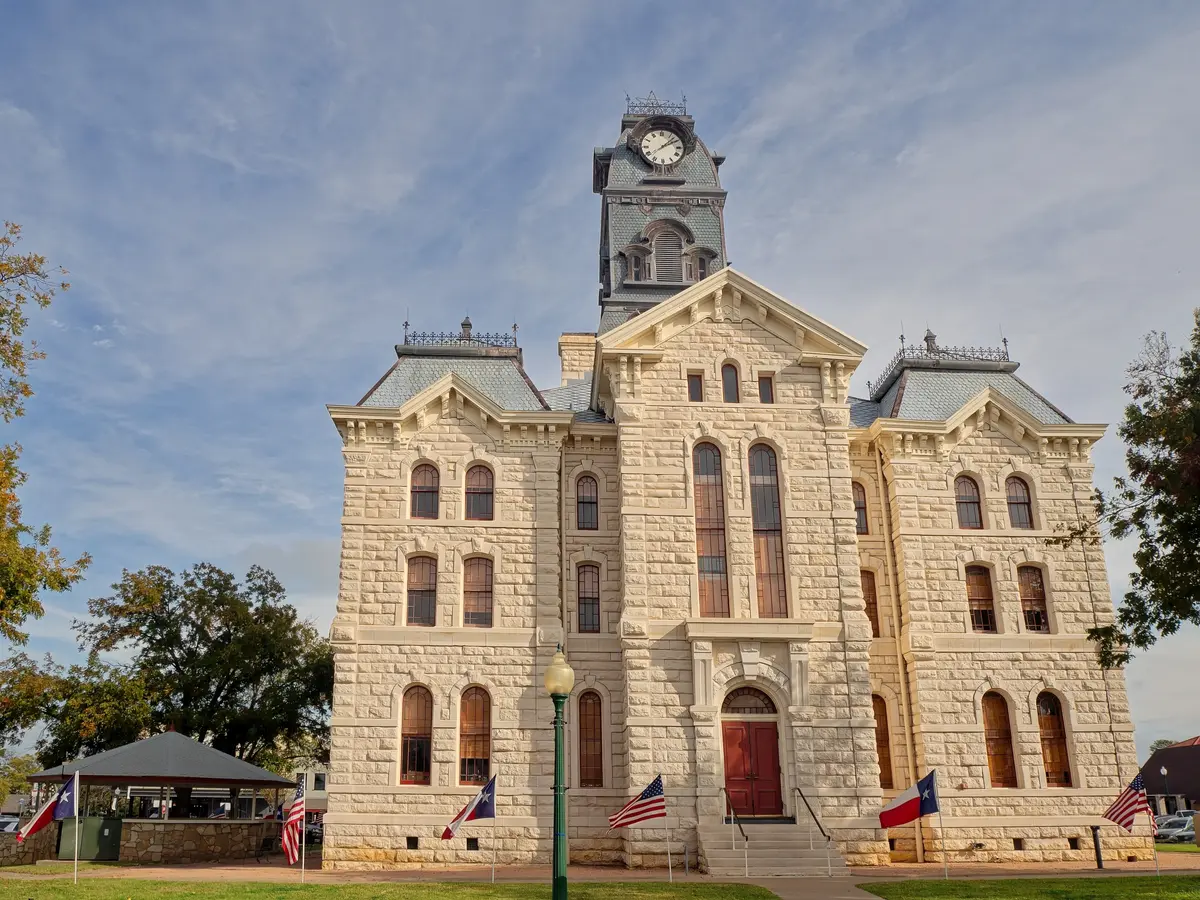
Greenville is a working town. The weekday morning has an industrial cadence — L3Harris runs shifts, the school district moves early, and the city offices open on time. That energy shapes the commercial corridors more than the downtown historic district, though the Katy Depot and Hunt County Courthouse give the city center genuine architectural weight.
Groceries, hardware, and everyday errands are all handled locally. A serious shopping trip — think department stores or specialty retail — means a drive. That's the honest trade-off of being 50 miles from a major metro: you won't notice it for the first few weeks, and then one Sunday you'll plan your week around it.
Where Families Actually Gather
The Greenville SportsPark is the city's main outdoor gathering place — active UIL athletics programs mean the Lions' games draw real crowds, and Friday night football fills the stands in a way that reminds you small-city Texas is not a cliché. Wright Park Golf Course serves a loyal regular crowd. The Audie Murphy/American Cotton Museum, sitting on ten acres, is the kind of local institution that out-of-town visitors underestimate and longtime residents quietly take pride in — it chronicles both Hunt County's cotton heritage and the life of Audie Murphy, one of the most decorated American soldiers of World War II, who was born into a Hunt County sharecropper family.
The Greenville Municipal Auditorium, renovated in 2025 with new acoustics and lighting, has brought a consistent calendar of concerts, ballet, and theatre back to downtown. For a city of this size, that's not a given — it's infrastructure that makes a real difference in whether the city feels culturally alive or just functional.
What Newcomers Don't Expect
The school district's D rating from the Texas Education Agency catches some relocating parents off guard, especially those who relied on neighborhood ratings from real estate apps without reading the underlying data. On 2024-25 state assessments, 23% of students reached math proficiency and 32% reached reading proficiency. Those numbers are low, and parents with school-age children should factor private school options and commutes into their total cost of living calculation — not just the home price. For households without school-age kids, or those already researching private options, this is a lesser concern.
The Greenville Housing Market Right Now
The typical home price in Greenville is $243,421 (Zillow Home Value Index, July 2026). That figure puts the city well below nearby Royse City and Caddo Mills, and noticeably below the Dallas metro as a whole. For buyers priced out of the metro's inner suburbs, it represents a genuine entry point into homeownership rather than a compromise.
The rental market has remained accessible compared to metro-area alternatives, and with roughly 8,000 platted lots and more than 2,000 apartments in development as of mid-2026, supply is being added — which matters for buyers watching whether prices hold, soften, or climb as the population grows. City-wide rent figures are covered in full on the cost of living page.
What the Affordability Picture Actually Looks Like
It's worth being direct here: the median household income in Greenville — $62,781 — runs below what's typically needed to carry the city's median home price. That gap is real and affects first-time buyers most acutely. Dual-income households and buyers relocating from markets where they've built equity are better positioned; single-income buyers at the local wage level will find the math tighter than the headline price suggests.
The effective property tax rate of approximately 1.57% is a factor to build into monthly budget projections. Texas has no state income tax, which offsets some of that load, but property taxes here run higher than in many Midwestern or Western states buyers may be comparing against. The full cost-of-living breakdown — including utilities, groceries, and taxes — lives on the cost of living page.
Neighborhood Character
Cedar Creek Estates and Turtle Creek Estates sit right at the city-wide typical home price — solid mid-range options for buyers who want established neighborhoods without paying a premium. Greenville Hills runs below the city median, making it the more accessible entry point into ownership. Neighborhood character and what each area actually feels like day-to-day is covered in detail on the best neighborhoods page.
Greenville Neighborhoods
Greenville has several distinct areas — each with its own character and appeal. Here’s a breakdown to help you narrow down where to focus your home search.
🏡 Mineral Heights
Mineral Heights is an established residential area with a mix of mid-century and newer construction, appealing to buyers who want a lived-in neighborhood feel without the price premium of newer developments. It suits families and long-term residents who value proximity to the city's core services.
🏠 Downtown Greenville
Downtown Greenville carries the city's architectural identity — the Hunt County Courthouse, the Katy Depot, and the Historic District give it genuine character. It suits buyers who want walkable access to the city's cultural and civic life, including the renovated Municipal Auditorium.
🌳 South Greenville
South Greenville offers some of the city's more affordable residential options, with a mix of older single-family homes and modest lots. It suits first-time buyers and those prioritizing price over newness in the housing stock.
🏘 Stonewood Estates
Stonewood Estates is a quieter, more established subdivision that attracts buyers looking for a settled neighborhood away from the commercial corridors. The housing stock skews toward larger single-family homes on consistent lot sizes.
🏔 Cedar Creek Estates
Cedar Creek Estates sits right at the city-wide typical home price, making it a reliable mid-range option. It suits buyers who want a defined neighborhood with consistent housing quality and don't want to stretch to the city's upper tier.
🌆 Greenville Hills
Greenville Hills runs below the city median, making it among the more accessible entry points into Greenville homeownership. It suits budget-conscious buyers and investors looking for value in an established residential setting.
Pros & Cons of Living in Greenville
The Pros
- Home prices well below the DFW metro average
- Short highway commute into the Dallas-Fort Worth job market via I-30
- Strong aerospace/manufacturing employment base led by L3Harris
- Historic, walkable downtown undergoing revitalization
The Cons
- School district ratings trail state averages, with mixed GreatSchools/Niche marks
- Property crime runs somewhat higher than national norms
- Limited public transit and a car-dependent layout
Getting Around & Commuting in Greenville
Greenville is a car city, full stop. I-30 is the artery that defines everything — it's how residents reach Dallas, how goods move through Hunt County, and how the city's identity as the Gateway to East Texas gets its practical meaning. US-69, US-67, and TX-34 branch out from Greenville to the smaller communities nearby. Spur 302, also known as Lee Street, connects the interstate to the city's commercial core.
The Dallas Commute Reality
The drive to Dallas is about 60 minutes under reasonable conditions. That number matters more in one direction than it sounds: heading west on I-30 toward Dallas during the morning peak, the trip can stretch significantly depending on where in the metro your destination sits. Heading back east in the evening is generally cleaner. Buyers who commute three or four days a week manage it; daily round-trippers often reconsider within the first year.
Dallas Love Field (DAL) is the nearest major airport, at 55 miles. For business travelers, that's a meaningful drive before every flight — factor it into any job that involves regular travel.
Local Errands vs. Metro Trips
Within Greenville itself, most daily errands are manageable by car in under ten minutes. The commercial corridor along Lee Street handles groceries, pharmacies, and fast-casual dining without requiring a metro-area excursion. Most errands mean a drive, but the city is compact enough that the daily driving burden is low compared to sprawling suburbs closer to Dallas.
The outlying communities of Commerce, Caddo Mills, and Quinlan are all within a short drive on the state and US highways, which gives Greenville a natural role as the service and commerce hub for the surrounding area. That regional function is part of why the city's retail and dining options punch slightly above what its population of 37,069 alone would typically support.
What's Coming
The citywide Trails and Bikeways Master Plan approved in June 2025 is a first step toward non-car connectivity — but the operative word is first step. The plan was funded, consultants are engaged, and Greenville is the first Hunt County city in TxDOT's regional trails initiative. Implementation takes years. Buyers who want walkable daily access to work today should be clear-eyed: that's not Greenville yet.
Schools in Greenville
Families relocating to Greenville have public, private, and higher-education options nearby. Here’s a quick overview.
🎓 School District
Greenville Independent School District serves K–12 students across Greenville and the surrounding area. Rated D (source: Texas Education Agency, 2025 A-F accountability rating (2024-25 school year)).
🏆 Graduation Rate
The 4-year high-school graduation rate here is approximately 92.1%.
📚 Higher Education
Texas’s public universities — the University of Texas at Austin, Texas A&M University, and the University of Houston — offer four-year degrees statewide, with one of the largest community college systems in the country (50+ public community college districts) providing two-year and workforce programs.
🌐 Online Learning
UT Austin Online and Texas A&M University Online offer fully accredited online degrees for remote learners across the state.
Safety in Greenville
A quick look at how Greenville compares on the numbers that matter most when weighing a neighborhood or a move.
🛡 Violent Crime
Approximately 2.1 per 1,000 residents.
🔒 Property Crime
Approximately 12.1 per 1,000 residents.
Compared to the most recent national figures from the Bureau of Justice Statistics (2024), Greenville’s violent crime is below the national average (about 3.7 per 1,000), and property crime is below the national average (about 18.4 per 1,000).
Against Texas as a whole, Greenville’s violent crime is roughly half the state average, and property crime is roughly half the state average (Bureau of Justice Statistics, Crime Known to Law Enforcement, 2024 (tables 2 and 3)).
Crime rates can vary a lot within a single city, so the citywide numbers above are only a starting point. Some neighborhoods in Greenville run well below these averages, while others run higher — the kind of block-by-block detail that matters most when you’re actually choosing where to live. The full guide below breaks it down neighborhood by neighborhood.
Working in Greenville
Greenville’s largest employers span several industries — here are some of the anchors of the local job market.
🎓 Greenville Independent School District
Education
🏛 City of Greenville
Municipal government
💼 L3Harris Technologies
Aerospace defense
🏥 Hunt Regional Medical Center
Healthcare
🏭 Innovation First International
Robotics manufacturing
Retiring in Greenville
Greenville draws retirees for its balance of amenities, outdoor access, and cost. Here’s what to weigh.
🌤 Climate
Greenville gets 232 sunny days a year — long, warm springs and hot Texas summers, with mild winters that occasionally dip hard but rarely last. Fall is genuinely pleasant: cool enough to spend evenings outdoors, warm enough that a light jacket handles most of it. Summer heat is real and consistent, which retirees from northern climates either love or need a full season to adjust to.
🍴 Lifestyle
The renovated Greenville Municipal Auditorium brings concerts, ballet, and theatre to a proper venue downtown. The Audie Murphy/American Cotton Museum offers a rich local history experience. Wright Park Golf Course serves the regular weekend crowd, and the Greenville Farmers Market provides a weekly community anchor through the growing season. Dining and coffee options are solid for a city this size.
🏚 55+ Communities
No 55+ communities were found in Greenville. Retirees here typically purchase single-family homes or rent apartments from the general housing stock. A major regional health system is located within city limits, which matters for healthcare access — full details are on the retiring page.
✈ Getting Around
A car is essential for daily life in Greenville. Within the city, most errands are a short drive. Dallas Love Field (DAL) is the nearest major airport, at 55 miles. The citywide Trails and Bikeways Master Plan, funded in 2025, will eventually add non-car options, but that infrastructure is years from completion.
🏛 Texas Taxes for Retirees — What to Know
- No state income tax — Texas has no personal income tax — constitutionally protected under Article VIII, Section 24. Social Security, pensions, 401(k)/IRA withdrawals, and annuity payments are all untaxed at the state level, with no state return to file.
- Sales tax is the tradeoff — The state sales tax is 6.25%, and local add-ons bring the combined rate in Greenville to 8.25% (Texas Comptroller of Public Accounts, city sales and use tax rates, July 2026). Groceries and prescription drugs are exempt.
- Property taxes — the real tradeoff — Texas’s effective property tax rate averages about 1.40%, among the highest in the country, since property tax (not income tax) funds most local government and schools.
- Over-65 homestead exemption and school-tax freeze — Homeowners 65+ (or disabled) get an additional $60,000 exemption from their home’s value for school district taxes, on top of the general homestead exemption — $200,000 off school taxable value combined, following November 2025’s Proposition 11 (SB 23), which raised the over-65 exemption to $60,000, and Proposition 13 (SB 4), which raised the general homestead exemption to $140,000. Once claimed, your school district tax bill is frozen at that year’s amount and cannot increase as home values rise, and the ceiling can transfer if you move to a new home within Texas.
- Deferral option if cash is tight — Homeowners 65+ can defer property tax payment entirely for as long as they live in the home, rather than paying it currently — interest accrues, but no forced sale.
- No estate or inheritance tax — Texas has no estate tax, no inheritance tax, and no gift tax.
- No separate capital gains tax — Because Texas has no state income tax, capital gains — including on investments and home sales — are not taxed at the state level at all, unlike states such as Washington that tax capital gains separately from income.
Tax laws change frequently and individual situations vary. This is general information, not tax advice — always consult a qualified Texas tax professional or CPA for personalized retirement tax planning.
Weekends & Local Favorites in Greenville
Greenville's weekend life is more layered than its highway-exit reputation suggests. The Downtown Greenville Historic District anchors the cultural side of the city, with the Hunt County Courthouse, the Katy Depot, and the Old Greenville Post Office giving the core genuine architectural character rather than the generic strip-mall feel that defines so many Texas towns of similar size.
Food & Coffee
Prairie Coffee Co. and Huey's Coffee are where the weekday-morning crowd goes to start the day. For something different, TA Boba Tea House Greenville has found a steady following among younger residents. Texas Snow handles the warmer months the way any self-respecting Texas shaved-ice operation should.
Glenda's Cafe & Catering is the kind of longtime local anchor that regulars defend fiercely. Bottlecap Alley and Snuffer's Restaurant & Bar offer reliable sit-down options. Baker's Ribs serves the smoked-meat crowd that expects their brisket to be taken seriously. Shenaniganz Entertainment Center crosses the line between dining and activity — it's the kind of place families end up on a rainy Saturday afternoon. Yen Jing Chinese Restaurant rounds out an eclectic local mix that's better than the city's size would typically predict.
History & Culture
The Audie Murphy/American Cotton Museum is the city's most serious cultural institution — ten acres, a story that ties together Hunt County's cotton economy and one of the most remarkable military careers in American history. The 24-panel outdoor exhibition, funded by a 2023 Humanities Texas grant, extends the museum's reach to the sidewalk and covers underrepresented Hunt County history in a format that's accessible without buying a ticket.
The renovated Greenville Municipal Auditorium — the 1939 building brought fully up to date in 2025 with L-Acoustics sound and professional rigging — gives the city a proper performance venue for the first time in a long time. Concerts, ballet, and theatre now have a home worth the drive from nearby communities.
Outdoors
Wright Park Golf Course is the city's most used outdoor amenity among adults — a consistent draw for the regular weekend round. The Greenville SportsPark hosts youth sports and community events, and the $117.6 million recreation center bond approved in 2024 will add fitness and aquatics facilities to the SportsPark footprint once construction completes. The Greenville Farmers Market gives the city a seasonal gathering rhythm that brings the community out in a way that a strip mall never does.
Local favorites in Greenville
Restaurants
- Bottlecap Alley
- Snuffer's Restaurant & Bar
- Shenaniganz Entertainment Center
- Yen Jing Chinese Restaurant
- Baker's Ribs Caddo Mills/Greenville
Outdoors
- Wright Park Golf Course
- Greenville SportsPark
Coffee
- Glenda's Cafe & Catering
- Prairie Coffee Co.
- Huey's Coffee
- TA Boba Tea House Greenville
- Texas Snow
Farmers Markets
- Greenville Farmers Market
Top Things Locals Say About Greenville
The best intel about a city comes from the people who actually live there. Here’s what Greenville residents say when newcomers ask the questions everyone’s thinking.
“I knew the commute to Dallas would be long, but I underestimated how much I'd stop caring about it once I had a house with an actual yard and a garage. What I didn't expect was the L3Harris campus — I had no idea there was a facility that size in a city like this.”
— Recent Greenville home buyer
“What's the most surprising thing about living in Greenville?”
Most people are surprised by how much is actually here. You come in expecting a highway stopover and find a 1939 auditorium that just got a full professional renovation, a robotics company that ships products worldwide, and a defense campus that's been quietly operating for decades. It doesn't advertise itself the way the suburbs closer to Dallas do, but the city has real substance once you're inside it.
“What do locals love most about Greenville?”
The space and the price, honestly. You get a house with a yard, a neighborhood where you know your neighbors, and a city small enough that you're not anonymous. The Greenville Farmers Market, Friday night Lions games at the SportsPark, and the Audie Murphy museum give the city a community texture that residents take real pride in — it's not just a place to sleep before driving to Dallas.
“What should newcomers to Greenville know?”
Do your school district homework before you close. The TEA rating is a D and the proficiency numbers are low — that's not something to discover after you've moved in with kids. Also: the commercial corridor along Lee Street handles most daily errands just fine, but anything specialty or big-box means a drive. Plan one real shopping trip a month and you'll stop noticing the gap. And give yourself a full summer before you decide whether the heat is manageable — it is for most people, but the first July is always a negotiation.
“How much do you need a car in Greenville?”
Completely. Most errands mean a drive, and the city is laid out along I-30 in a way that makes a car the practical center of daily life. The good news is that within the city itself, most errands take under ten minutes — it's genuinely compact once you're here. The daily driving burden is low compared to sprawling suburbs closer to Dallas. Where the car really matters is for anything outside Greenville: the Dallas metro, specialty shopping, the airport. Those are drives you plan for, not drives you absorb automatically.
Cities Near Greenville
Other communities near Greenville worth a look — each with its own character and price point.
| City | Distance | Best For | Vibe | Median Rent | Median Buy |
|---|---|---|---|---|---|
| Commerce | 15 mi | Renters, college-adjacent buyers | Small-town, university energy | $1,050 | $206,477 |
| Royse City | 20 mi | Families, new construction seekers | Fast-growing, suburban, newer builds | $2,212 | $312,413 |
| Caddo Mills | 10 mi | Rural feel, land buyers | Quiet, agricultural, spread out | $1,650 | $357,770 |
More Helpful Guides for Greenville
Going deeper on Greenville? Our blog series covers everything from first-time buying to retiring here — explore the guides below.
Local Expert Takeaway: Greenville's pitch is real but specific: it works best for households with a connection to L3Harris, a remote-work arrangement, or a deliberate choice to trade a shorter commute for significantly lower housing costs. The $243,421 typical home price (July 2026) is the headline, but the school district's D rating from the Texas Education Agency is the asterisk that shapes every family's calculation. The city is investing — the SportsPark bond, the auditorium renovation, the trails plan — and buyers who get in before that infrastructure matures are likely to benefit. Get in expecting a finished product, and you'll be frustrated. Get in understanding that Greenville is in the middle of becoming something, and the math looks very different.
Quick Takeaways & FAQs
✅ L3Harris Technologies operates one of the largest aerospace defense campuses in the country right inside city limits — giving Greenville a local job base that most similarly-priced Texas cities simply don't have.
⚠️ The Greenville ISD holds a D rating from the Texas Education Agency, with 23% math proficiency and 32% reading proficiency on 2024-25 state assessments — a genuine concern for families with school-age children that should be weighed alongside the low home prices.
📍 The Greenville Municipal Auditorium completed a full renovation in 2025, and the $117.6 million SportsPark recreation center bond passed in 2024 — two concrete signals that the city is investing in quality of life, not just growth.
Is Greenville, TX a good place to live?
How far is Greenville, TX from Dallas?
What are the major employers in Greenville, TX?
How are the schools in Greenville, TX?
What is the cost of living like in Greenville, TX?
Helpful Links for Moving to Greenville
Moving to Texas?
Tell us what you need help with and we'll connect you with local resources.
