
What Is Living in Garland, Texas Like?
Maybe you've been priced out of the Plano or Richardson zip codes you originally had in mind, and someone in your office mentioned Garland. Maybe the number on that Zillow listing stopped you mid-scroll — $287,246 for a detached house, about 25 minutes to Dallas, inside a major metro. The honest version of Garland's story is this: it is the 13th-largest incorporated city in Texas, with a population of 249,625, and it has spent decades being underestimated by buyers who drove through without stopping. The interstates — I-30 to the south and I-635 running along the western edge — are what connect it to the broader Dallas-Fort Worth Metroplex, and they shape almost everything about how people move through and within this city.
The economic backbone here is more industrial than most Dallas suburbs. The Garland Independent School District, with 49,151 students enrolled in 2025-26, is one of the city's largest employers in its own right. Kraft Heinz has operated a facility here since 1949, and Daisy Brand committed more than $25 million to a new innovation and research center in the city. The Garland Economic Development Partnership has directed more than $1.5 billion in new investment into the city since 1995. The median age sits around 34.7 years — this is a city of working families and young households, not a retirement corridor, and the homeownership rate of approximately 61.6% reflects how many of those households have put down roots. Garland holds a B rating, according to the Texas Education Agency, for its 2024-25 school year accountability evaluation.
On cost of living, Garland is meaningfully below what you'll pay in Richardson or Rowlett, while remaining a full city with its own parks system, performing arts center, and DART rail access into Dallas. With 228 sunny days a year, outdoor life runs long — the Duck Creek Greenbelt Trail, Lakeside Park, and Firewheel Golf Park all get genuine use from locals. The city approved the Grow Garland Bond in May 2025, the largest parks investment in the city's history, which will fund the Holford Recreation and Aquatic Center and renovate the Granville Arts Center downtown. Garland isn't reinventing itself so much as finally finishing what it started.
Whether you're seriously considering a move or just trying to understand what the Dallas suburbs actually look like east of the highway, the sections below cover Garland's neighborhoods, housing market, daily life, commute patterns, and what makes this city worth understanding on its own terms.

Garland at a Glance
Looking to buy in Garland? Estimate your payment.
Enter your numbers to see an estimated monthly mortgage payment.
Estimate only. Excludes HOA fees and mortgage insurance. The interest rate above is a starting point, not a quoted rate — replace it with your own to see real numbers. Insurance is a flat placeholder, not a Garland quote.
Why Are People Moving to Garland?
The case for Garland is straightforward once you stop comparing it to the suburbs north of LBJ and start comparing it to what it actually is: one of the most affordable entry points into Dallas County that still gives you a real city underneath. The typical home price of $287,246 (July 2026) is what draws the first look. What keeps people is the realization that Garland isn't a bedroom community quietly waiting to matter — it already does.
A Manufacturing Base That Stayed
Most Dallas suburbs shed their industrial identity as land values rose. Garland kept its manufacturers. Over 300 manufacturers operate here, supported by more than 30 million square feet of industrial space running at a vacancy rate around 4%. Kraft Heinz has been here since 1949. The Garland VA Medical Center anchors federal employment. The city government itself is a major local employer. This density of stable, non-speculative jobs gives Garland a different economic character than the office-park suburbs to the north.
Daisy Brand's $25 million commitment to a new innovation and research center is the most recent signal that this industrial legacy is expanding, not fading. The Garland Economic Development Partnership has tracked more than 16,000 jobs created through investment it helped attract since 1995.
The Texas Hat Connection
The Texas State Legislature officially designated Garland the Cowboy Hat Capital of Texas in 2013 — and this is not ceremonial. Three manufacturers in the city produce more than one million hats each year, including work under the Stetson and Resistol labels. In September 2025, the city unveiled the Big Hat sculpture in Historic Downtown Garland — 20 feet long, 16 feet wide, raised 15 feet in the air — the largest cowboy hat sculpture in Texas. It is the kind of specific civic identity that is harder to manufacture than most cities try.
Who Actually Moves Here
| Buyer Type | What Draws Them | Best Fit |
|---|---|---|
| First-time buyers priced out of Richardson | Home prices noticeably below neighboring cities to the north | First-Time |
| Families with school-age children | Large, established GISD district; active UIL athletics programs | Families School |
| Dallas workers who want a shorter commute bill | DART Blue Line direct to Dallas CBD; about 25 minutes to Dallas by car | Commuter |
| Manufacturing and trades workers | Employers concentrated locally; no need to drive across the metro | Value |
| Remote workers wanting space | Larger lots, lower prices, established neighborhoods | Quiet Value |
| Move-up buyers from Mesquite | Step up in price and amenities without leaving east Dallas County | Families |
The median household income in Garland is $76,320 — a working-family figure that reflects the city's actual population rather than an aspirational marketing pitch. For a full picture of how incomes and costs line up, see the cost of living page.
What Daily Life Feels Like in Garland
Garland is not a city where daily life centers on one main street. It is spread across a geography shaped by its interstates and its creeks, with distinct pockets that feel quite different from each other. Understanding that before you move is what keeps newcomers from being surprised six months in.
The Geographic Reality
I-635 (the Lyndon B. Johnson Freeway) defines the western boundary and carries the heaviest regional traffic. SH-190, the toll road arcing across the north, connects Garland toward Plano and Richardson. SH-78 (Garland Road) threads through the older core. Life east of the freeways, in the Duck Creek and South Garland corridors, has a quieter, more established feel than the commercial corridors near the major interchanges. North Garland, closest to the northern toll road, has newer retail and more recently built subdivisions. Firewheel, anchored by Firewheel Town Center, functions almost like its own node.
The Performing Arts Angle Nobody Expects
Longtime residents often mention the Granville Arts Center in Historic Downtown Garland as something newcomers genuinely do not expect from a city at this price point. The complex includes the Brownlee Auditorium — which seats up to 720 — a smaller 200-seat theater, and the Art Deco Plaza Theatre, and it serves as the performing arts anchor of the downtown square. In 2025, voters approved $25 million toward its renovation as part of the Grow Garland Bond. The Texas Music Office designated Garland a Music Friendly Texas Certified Community in 2025, adding a formal recognition to what the performing arts scene has been building for years.
What Surprises People at Six Months
The most common thing newcomers say after settling in: they didn't realize how functional the city is on its own. Garland is large enough — at 249,625 people — to support its own full range of services, employers, schools, and recreation without requiring a Dallas trip for most weekly needs. The surprise is not a hidden gem. The surprise is that the city was never as limited as its reputation suggested.
The honest friction is the traffic on I-635. During weekday peaks, the corridor moves slowly, and for households whose commutes route through it daily, this is a genuine quality-of-life variable. For schools detail and how the district performs campus by campus, see the dedicated schools page.
The Seasons
Garland gets 228 sunny days a year — more than enough to make outdoor life a genuine part of the rhythm here, not a seasonal aspiration. Summers are hot by any measure, and July and August move most activity indoors or into early mornings. Spring and fall are when the city is at its most pleasant, and the Duck Creek Greenbelt Trail and Lakeside Park see consistent use through both. Winter is mild enough that a cold snap feels like a disruption rather than a season.
The Garland Housing Market Right Now
The typical home price in Garland is $287,246 (July 2026), which puts the city well below what buyers are paying in Richardson or Rowlett and in the same general range as Mesquite, though somewhat above it. For a full comparison of costs across the metro and a detailed breakdown of what your dollar buys here, see the cost of living page.
What $287,000 Gets You
At that price point, buyers in Garland are typically looking at detached single-family homes with three bedrooms, built between the 1960s and the 1990s, on established lots with mature trees. The housing stock across Duck Creek and South Garland skews older and tends to run below the city typical. Firewheel and Spring Park run above it, with more recently built homes and the amenities that come with planned neighborhoods. North Garland sits in a similar above-median tier, reflecting proximity to the northern toll road and newer construction.
One thing worth understanding before you make an offer: the median household income here is below the income needed to qualify for the typical home at current rates by roughly $12,000. That gap is real, and it means buyers stretching to the top of Garland's market are often doing exactly that — stretching. The first-time homebuyer page covers financing approaches and what to consider before you commit.
Renting vs. Buying
Renting is a meaningful short-term option for households who want to learn the neighborhoods before committing. The areas around Firewheel Town Center and along the northern toll road corridor have the most purpose-built apartment stock. Older areas near the downtown square have a mix of small apartment buildings and duplexes.
The Effective Tax Rate
Texas has no state income tax, but property taxes carry the load. The effective property tax rate in Garland is approximately 1.41%. On a home at the typical price, that is the largest annual carrying cost outside of principal and interest, and it is worth modeling carefully before you decide how much to spend. The cost of living page breaks this down alongside income and sales tax figures.
Garland Neighborhoods
Garland has several distinct areas — each with its own character and appeal. Here’s a breakdown to help you narrow down where to focus your home search.
🏡 Firewheel
Garland's most amenity-dense corner, built around Firewheel Town Center and the 63-hole Firewheel Golf Park — it suits families and buyers who want newer construction with walkable retail nearby, and it runs above the city's typical home price.
🏠 North Garland
Closest to the northern toll road and the connections it provides toward Plano and Richardson, North Garland draws commuters and families who want newer subdivisions and easy access to the toll corridor.
🌳 Spring Park
An established area that runs above the city median, Spring Park suits families looking for a settled neighborhood with mature trees and a community feel that takes years to build, not months.
🏘 Club Hill
Club Hill sits above the city's typical price and appeals to buyers who want larger lots and more space without leaving Garland — it has an unhurried character that distinguishes it from the higher-traffic corridors.
🏔 Duck Creek
One of the more affordable entry points in Garland, Duck Creek runs below the city median and gives trail-oriented buyers direct access to the Duck Creek Greenbelt Trail — popular with runners, cyclists, and dog owners.
🌆 Downtown Garland
The city's civic and cultural core, anchored by the Historic Garland Square, the Granville Arts Center, and the DART Blue Line station — it suits buyers who want walkability and an urban feel at a fraction of what similar access costs elsewhere in Dallas County.
Pros & Cons of Living in Garland
The Pros
- Home prices well below the DFW metro median
- Short commute into Dallas
- Large, established school district with several A-rated campuses
- Strong cultural and culinary diversity
The Cons
- Property crime runs above the national average in parts of the city
- Property tax rates are higher than the Texas median
- Older housing stock in some central neighborhoods needs updating
Getting Around & Commuting in Garland
Most Garland residents drive. The average commute runs approximately 29 to 30 minutes, which is honest rather than flattering — it reflects how long it actually takes to get places, not the best-case scenario on a clear Tuesday morning.
The Freeway Network
I-30 forms the southern boundary and carries traffic toward Dallas and east toward Mesquite and beyond. I-635 (the Lyndon B. Johnson Freeway) runs along the western edge and is the primary route into the core of the Dallas metro. SH-190, a toll road, arcs across the north and connects Garland toward Plano and Richardson. SH-78 (Garland Road) is the main arterial through the older parts of the city. Loop 12 and Loop 372 handle internal circulation. Spur 244 (Northwest Highway) connects the city toward the Dallas boundary.
The I-635 corridor is where Garland's commute challenge is most concentrated. During weekday peak hours, it backs up reliably, and households whose daily routes depend on it should plan accordingly. TxDOT funded a major reconstruction project for this corridor, with work having begun in recent years to improve mobility along the stretch — a decision that was made and is on record, even if the full benefit is still ahead.
The DART Option
DART's Blue Line serves Garland with two stops: Downtown Garland Station near the historic square, with roughly 540 free parking spaces, and Forest/Jupiter Station further into the city. A ride from Downtown Garland Station into the Dallas central business district takes around 30 minutes. For workers whose Dallas offices are near DART stops downtown, this is a genuinely competitive alternative to driving — especially when I-635 is congested.
For errands and daily tasks within Garland, transit is not a practical substitute for a car. Garland is a large city and most destinations require driving or a significant transit transfer. Plan accordingly.
To and From the Airport
Dallas Love Field is the nearest major airport, approximately 20 miles from Garland. Dallas/Fort Worth International is also accessible via the freeway network. For frequent flyers, both options are within a workable drive from most parts of the city.
The Commute to Dallas
The standard benchmark: about 25 minutes to Dallas under normal conditions. That number is honest for off-peak travel and optimistic for the I-635 rush hour. Households in North Garland nearest to SH-190 often find the northern toll road a useful alternative route that bypasses the worst of the LBJ congestion.
| Destination | Primary Route | Typical Travel | Transit Option |
|---|---|---|---|
| Downtown Dallas | I-30 or I-635 | About 25 minutes | DART Blue Line (~30 min) |
| Richardson | SH-190 toll road north | 15–20 min | No direct DART link |
| Mesquite | I-30 or SH-78 | 15–20 min | Limited |
| Dallas Love Field | I-635 to Northwest Highway (Spur 244) | ~30–40 min | DART + transfer |
| Rowlett | SH-66 or I-30 east | 15–20 min | Limited |
For neighborhood-level notes on which parts of Garland put you closer to which corridor, see the best neighborhoods page.
Schools in Garland
Families relocating to Garland have public, private, and higher-education options nearby. Here’s a quick overview.
🎓 School District
Garland Independent School District serves K–12 students across Garland and the surrounding area. Rated B (source: Texas Education Agency, 2025 A-F accountability rating (2024-25 school year)).
🏆 Graduation Rate
The 4-year high-school graduation rate here is approximately 92.5%.
📚 Higher Education
Texas’s public universities — the University of Texas at Austin, Texas A&M University, and the University of Houston — offer four-year degrees statewide, with one of the largest community college systems in the country (50+ public community college districts) providing two-year and workforce programs.
🌐 Online Learning
UT Austin Online and Texas A&M University Online offer fully accredited online degrees for remote learners across the state.
Safety in Garland
A quick look at how Garland compares on the numbers that matter most when weighing a neighborhood or a move.
🛡 Violent Crime
Approximately 2 per 1,000 residents.
🔒 Property Crime
Approximately 20 per 1,000 residents.
Compared to the most recent national figures from the Bureau of Justice Statistics (2024), Garland’s violent crime is below the national average (about 3.7 per 1,000), and property crime is above the national average (about 18.4 per 1,000).
Against Texas as a whole, Garland’s violent crime is roughly half the state average, and property crime is about the same as the state average (Bureau of Justice Statistics, Crime Known to Law Enforcement, 2024 (tables 2 and 3)).
Crime rates can vary a lot within a single city, so the citywide numbers above are only a starting point. Some neighborhoods in Garland run well below these averages, while others run higher — the kind of block-by-block detail that matters most when you’re actually choosing where to live. The full guide below breaks it down neighborhood by neighborhood.
Working in Garland
Garland’s largest employers span several industries — here are some of the anchors of the local job market.
🎓 Garland Independent School District
Education
🏛 City of Garland
Municipal government
🛒 Kraft Heinz
Food manufacturing
🏥 Garland VA Medical Center
Federal healthcare
🏦 State Farm
Financial services, located in Richardson
Parks & Recreation in Garland
Some of the outdoor spaces that shape everyday life in Garland.
🌱 Granger Recreation Center at Central Park
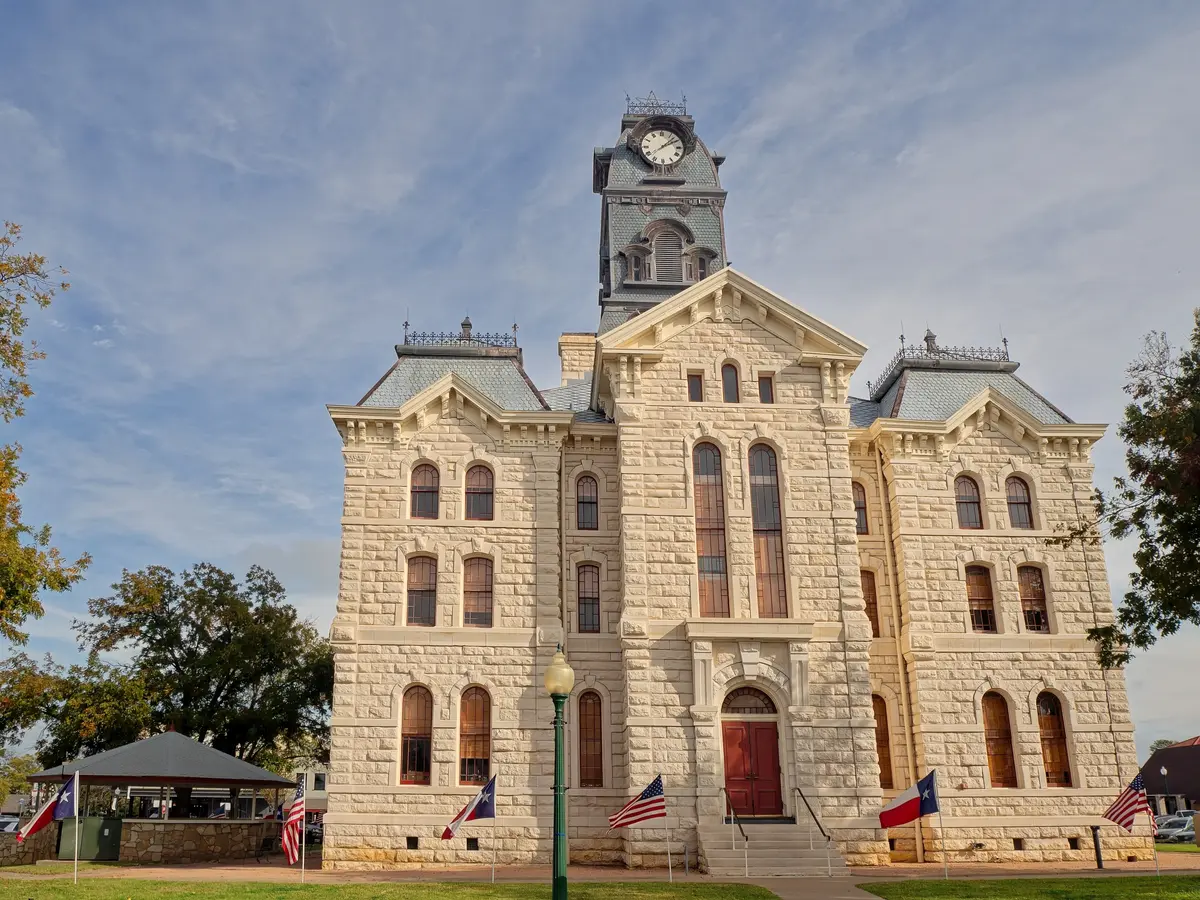
Garland residents don’t have to go far for green space — spots like Granger Recreation Center at Central Park are part of everyday life here, whether that’s a morning walk, a weekend hike, or just somewhere to unwind outside. The full guide below covers more of what Garland has to offer for parks and outdoor recreation.
Retiring in Garland
Garland draws retirees for its balance of amenities, outdoor access, and cost. Here’s what to weigh.
🌤 Climate
Garland gets 228 sunny days a year, with hot summers that push well above 90°F in July and August. Spring and fall are the most pleasant seasons — warm and long, with low humidity relative to the peak summer months. Winter is mild; hard freezes are infrequent but do occur, and the 2021 ice event is a reference point every long-timer mentions.
🍴 Lifestyle
The Granville Arts Center in Historic Downtown Garland — with its 720-seat auditorium and Art Deco Plaza Theatre — gives retirees a performing arts anchor within the city. The Duck Creek Greenbelt Trail and Lakeside Park offer outdoor options that are accessible without a long drive. Dining ranges from Texas institution Babe's Chicken Dinner House to independent cafés along the commercial corridors.
🏚 55+ Communities
No 55+ communities were found in Garland. Retirees looking for age-restricted community living will need to look at neighboring cities. The city does have a range of single-family homes and apartment options well suited to downsizers, particularly in the established neighborhoods near the downtown core.
✈ Getting Around
A car is the primary mode of transportation for daily life in Garland. The DART Blue Line connects Downtown Garland to the Dallas central business district for medical appointments or cultural outings without a highway drive. Dallas Love Field, the nearest major airport, is approximately 20 miles from the city.
🏛 Texas Taxes for Retirees — What to Know
- No state income tax — Texas has no personal income tax — constitutionally protected under Article VIII, Section 24. Social Security, pensions, 401(k)/IRA withdrawals, and annuity payments are all untaxed at the state level, with no state return to file.
- Sales tax is the tradeoff — The state sales tax is 6.25%, and local add-ons bring the combined rate in Garland to 8.25% (Texas Comptroller of Public Accounts, city sales and use tax rates, July 2026). Groceries and prescription drugs are exempt.
- Property taxes — the real tradeoff — Texas’s effective property tax rate averages about 1.40%, among the highest in the country, since property tax (not income tax) funds most local government and schools.
- Over-65 homestead exemption and school-tax freeze — Homeowners 65+ (or disabled) get an additional $60,000 exemption from their home’s value for school district taxes, on top of the general homestead exemption — $200,000 off school taxable value combined, following November 2025’s Proposition 11 (SB 23), which raised the over-65 exemption to $60,000, and Proposition 13 (SB 4), which raised the general homestead exemption to $140,000. Once claimed, your school district tax bill is frozen at that year’s amount and cannot increase as home values rise, and the ceiling can transfer if you move to a new home within Texas.
- Deferral option if cash is tight — Homeowners 65+ can defer property tax payment entirely for as long as they live in the home, rather than paying it currently — interest accrues, but no forced sale.
- No estate or inheritance tax — Texas has no estate tax, no inheritance tax, and no gift tax.
- No separate capital gains tax — Because Texas has no state income tax, capital gains — including on investments and home sales — are not taxed at the state level at all, unlike states such as Washington that tax capital gains separately from income.
Tax laws change frequently and individual situations vary. This is general information, not tax advice — always consult a qualified Texas tax professional or CPA for personalized retirement tax planning.
Weekends & Local Favorites in Garland
Garland's weekend identity is still being written, which is part of what makes this an interesting time to move here. The bones are strong — the downtown square, the trail system, the golf, the performing arts — and the investment flowing in from the 2025 bond gives that foundation real momentum.
The Downtown Square
Historic Downtown Garland Square is the city's civic and cultural center, and it earns the designation. The Granville Arts Center anchors it — the Brownlee Auditorium, the Art Deco Plaza Theatre, the smaller black-box theater. The Big Hat sculpture unveiled in September 2025 has become the photo stop that every new resident eventually takes. The square is walkable in a way most of Garland is not, and the energy there on event nights is different from anything else in the city.
Outdoors
The Duck Creek Greenbelt Trail runs approximately 5.7 miles of continuous concrete path following the creek, connecting multiple parks and linking at its northern end toward Richardson's trail system. It is the longest continuous trail in the northeastern corner of Dallas County — a real asset that residents use for running, cycling, and walking with dogs. Lakeside Park adds water access and green space to the recreation mix. Firewheel Golf Park offers 63 holes across three regulation courses — serious golf infrastructure that draws players from across the metro, not just a municipal nine-hole.
Where to Eat and Drink
Babe's Chicken Dinner House is the name locals reach for first when someone asks for a Garland restaurant recommendation — it is a Texas institution with a following that extends well outside the city. Gloria's Latin Cuisine brings Salvadoran and Mexican cooking that has developed a reputation across the Dallas market. Wildwood Firewheel and The Catch: Garland round out the sit-down options with different angles on the local dining scene. Intrinsic Smokehouse Brewery + BBQ Catering covers the barbecue and craft beer overlap that any Texas city needs accounted for.
For coffee, Rosalind Coffee, Pink Coffee, Bloom Cafe, Amora Cafe, and Cafe Frida- Coffee & Pastries give the city an independent coffee scene with genuine range — the kind of options that used to require a Dallas drive and no longer do. These are the spots where you start to recognize your neighbors.
Arts and Culture
Garland's 2025 designation as a Music Friendly Texas Certified Community by the Texas Music Office signals where the city is pointing. The Granville Arts Center renovation funded by the May 2025 bond vote will take what is already a functional performing arts anchor and substantially improve it. For families with school-age children, the Garland ISD's active UIL athletics programs mean Friday nights during football season draw the kind of community turnout that makes a new city feel like home quickly.
For a deeper look at parks and outdoor recreation, see the parks and recreation page.
Local favorites in Garland
Restaurants
- Babe's Chicken Dinner House
- Gloria's Latin Cuisine
- Wildwood Firewheel
- Intrinsic Smokehouse Brewery + BBQ Catering
- The Catch: Garland
Outdoors
- Lakeside Park
- Duck Creek Greenbelt Trail
- Firewheel Golf Park
Coffee
- Rosalind Coffee
- Pink Coffee
- Bloom Cafe
- Amora Cafe
- Cafe Frida- Coffee & Pastries
Top Things Locals Say About Garland
The best intel about a city comes from the people who actually live there. Here’s what Garland residents say when newcomers ask the questions everyone’s thinking.
“I expected to feel like I was settling, and instead I felt like I'd found the version of Dallas nobody had told me about. The DART ride downtown is legitimately easy, and the performing arts scene in Historic Downtown Garland genuinely surprised me.”
— Recent Garland home buyer
“What's the most surprising thing about living in Garland?”
How self-contained it is. You hear 'Garland' and you assume you'll be driving to Dallas for everything. Then you move here and realize there's a performing arts center downtown, a 5.7-mile trail system along the creek, 63-hole golf, and a legitimate independent coffee scene. The city runs on its own in a way that catches most newcomers off guard.
“What do locals love most about Garland?”
The price-to-space ratio is hard to beat in Dallas County, and that's not nothing when you're comparing square footage and lot sizes. But a lot of longtime residents will tell you it's the downtown square on a good event night — the Granville Arts Center, the Big Hat sculpture, the energy that shows up when the city is being itself. There's an identity here that most suburbs at this price point don't have.
“What should newcomers to Garland know?”
Learn the difference between commuting on I-635 during peak hours and any other time. That corridor is the city's main connection to the rest of the Dallas metro, and when it backs up — which it does, consistently, during the morning and evening rush — it adds real time to your day. Households that plan their schedule around it adapt fine. The ones who assume Dallas-suburb traffic is uniform across the city end up frustrated. The DART Blue Line from Downtown Garland Station is a genuinely useful alternative if your Dallas destination is near a stop.
“How much do you need a car in Garland?”
For most of the city, a car is essential for daily errands and getting between neighborhoods. Garland is a large city spread across multiple corridors, and even short trips often involve a drive. The one exception is the Historic Downtown Garland Square area, which is genuinely walkable once you are in it — the Granville Arts Center, the square, and the nearby dining and coffee options are all on foot. The DART Blue Line gives commuters a real transit option into Dallas, but for local errands and shopping outside the downtown core, you will be driving.
Cities Near Garland
Other communities near Garland worth a look — each with its own character and price point.
| City | Distance | Best For | Vibe | Median Rent | Median Buy |
|---|---|---|---|---|---|
| Rowlett | 8 mi | families wanting lakeside setting | quieter, newer, lake-adjacent | $1,650 | $360,000 |
| Mesquite | 10 mi | value-focused buyers, blue-collar roots | unpretentious, established, affordable | $1,443 | $261,109 |
| Richardson | 9 mi | tech workers, top-rated schools | polished, corporate, walkable core | $1,657 | $445,040 |
More Helpful Guides for Garland
Going deeper on Garland? Our blog series covers everything from first-time buying to retiring here — explore the guides below.
Local Expert Takeaway: Garland is the most underrated affordability play in Dallas County — not because it lacks substance, but because buyers looking east of I-635 often stop their search before they start it. The typical home price sits well below Richardson and Rowlett, the DART Blue Line gives commuters a real alternative to the freeway, and the city's industrial base means local employment is more stable than in many bedroom suburbs. The friction is real too: the I-635 corridor is genuinely congested at peak hours, and the housing stock in older parts of the city requires more renovation tolerance than buyers used to newer construction may expect. But if your budget puts you in the $287,000 range and Dallas access matters, Garland is the answer most buyers find after six months of looking elsewhere.
Quick Takeaways & FAQs
✅ Garland's typical home price of $287,246 (July 2026) is among the lowest entry points into Dallas County with direct DART rail access to downtown Dallas.
⚠️ The I-635 corridor runs along the city's western edge and slows significantly during weekday peaks — commute timing matters more here than in many Dallas suburbs.
📍 Garland is the designated Cowboy Hat Capital of Texas, home to three manufacturers producing over one million hats annually for brands including Stetson and Resistol.
Is Garland, TX a good place to live?
How far is Garland from Dallas?
What are the best neighborhoods in Garland, TX?
What is the cost of living in Garland, TX?
How are the schools in Garland, TX?
Helpful Links for Moving to Garland
Moving to Texas?
Tell us what you need help with and we'll connect you with local resources.
