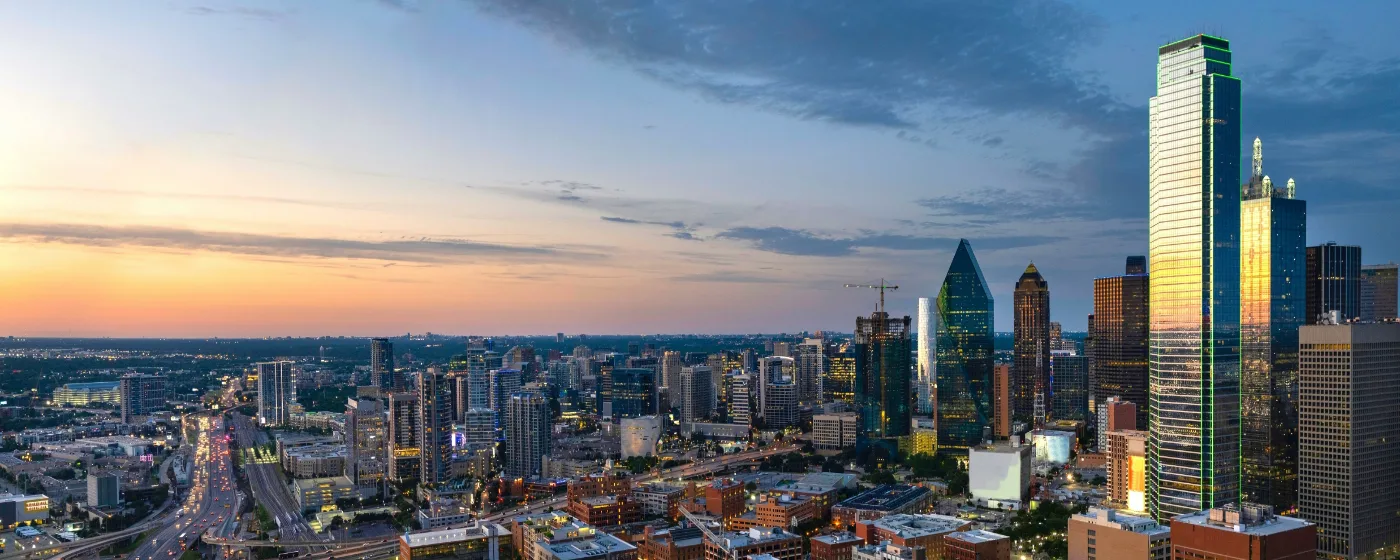
Everyone who moves to Dallas from California says the same thing around month three: they had no idea how big the savings were going to feel — and no idea how much they would miss the coast. Neither reaction is wrong. Dallas is a genuine metropolis, the 3rd-largest incorporated city in Texas, with 1,329,491 residents, a skyline you can see from the highway, and an economy that produced over $744 billion in metro GDP in 2023. What it is not is a soft landing. The heat is serious, the highways are serious, and the property tax bill will make you do a double-take the first time you open it.
The people who relocate here and thrive tend to arrive for a reason — a job at AT&T or Texas Instruments, a transfer to one of the large healthcare anchors, a tech role drawn by the data center buildout the Federal Reserve Bank of Dallas flagged in its July 2026 employment forecast. The Dallas Independent School District, with 134,308 students enrolled in 2025-26, holds a B rating, according to the Texas Education Agency, which lands it in a useful middle tier: not the top-ranked suburban districts, but a functioning, large urban system that families with kids in it describe as workable. Dallas is also one of the few major Texas cities where you can find genuinely walkable urban neighborhoods — Uptown, Oak Lawn — alongside sprawling single-family areas in North Dallas.
The cost picture is real but requires some unpacking. The typical home value in Dallas sits at $309,590 as of July 2026 (Zillow Home Value Index), a figure that will look startling to anyone pricing property in California right now. But Texas's effective property tax rate of 1.66% and homeowners' insurance costs that run well above what you were paying in a California coastal market will take a meaningful bite back. Monthly costs land closer to the national average than the sticker price difference would suggest — though they still come in noticeably below what most California transplants were spending.
Whether you are weighing the move seriously or just starting to run the numbers, the sections below break down the California-to-Dallas financial delta, the tax picture, what to expect from neighborhoods, the honest trade-offs, and what daily life actually looks like once you arrive.
The Home Price Gap: What Your California Equity Actually Buys
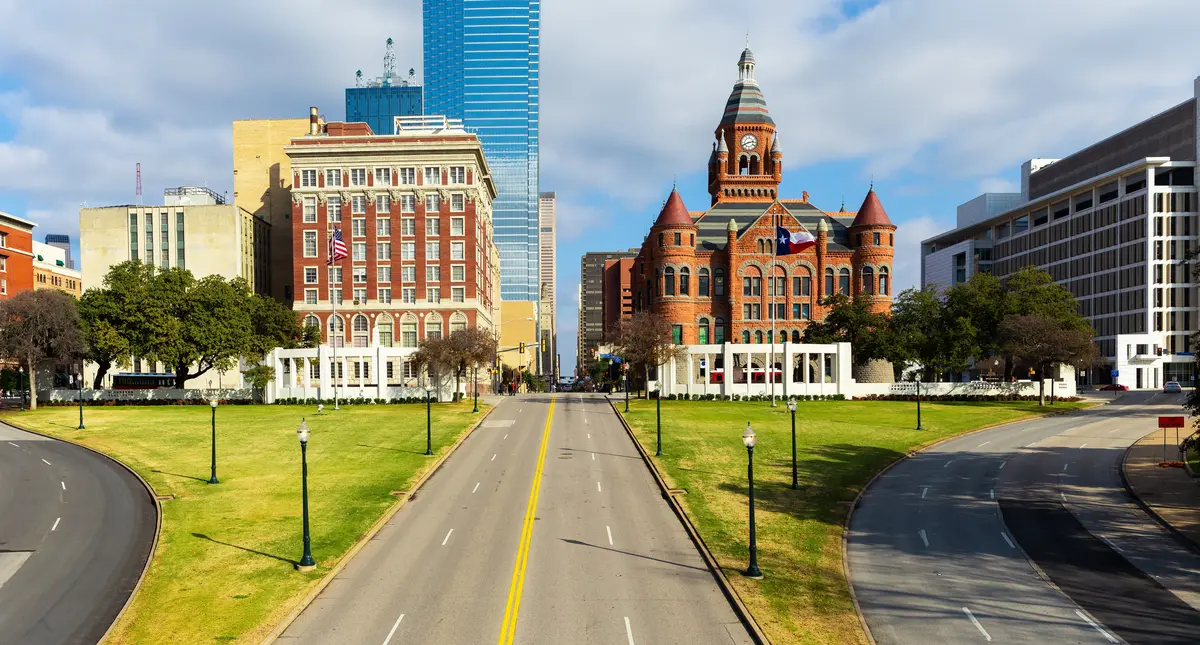
The headline number is hard to argue with. California's statewide typical home value of $773,735 is more than double Dallas's typical home value of $309,590 (July 2026, Zillow Home Value Index). For a household selling a California home and arriving with significant equity, that gap translates into a materially smaller mortgage, a lower down payment in raw dollars, or the ability to buy in Dallas without stretching.
The catch that most Californians miss is the monthly payment math. Dallas's effective property tax rate of 1.66% applies to the assessed value of your home every year — roughly four times the effective rate on a comparable California property. Homeowners' insurance costs in North Texas, elevated by hail risk and severe storm seasons, add another line item that California coastal buyers rarely budgeted for. The overall cost of living in Dallas runs close to the national average once those factors are folded in — meaningfully below California, but not as dramatically so as the sticker-price difference implies.
For context on the rental side: the city-wide typical rent sits at $1,605 per month as of July 2026 (Zillow Observed Rent Index). That figure lands noticeably below comparable California markets. The full cost-of-living breakdown walks through utilities, groceries, and transportation in more detail.
What California Equity Means in Practice
A household selling a California home near the statewide typical value and buying at Dallas's typical price could potentially buy outright — or carry a mortgage small enough that the monthly payment is largely offset by the tax savings covered in the next section. That arithmetic is exactly what drives the volume of California-to-Dallas moves the market has absorbed over the past several years. It is also the arithmetic worth stress-testing before you make an offer, because the property tax line is real and it grows with assessed value.
Health coverage costs are worth a quick note here: insurance premiums run noticeably below what most Californians were paying, though you may drive farther for specialist care than you did in a large coastal metro. It is a genuine trade-off worth factoring into your overall cost comparison.
The Tax Picture: Where Dallas Wins Big and Where It Gives Some Back
Texas levies no state income tax. Full stop. California's top state income tax rate of 13.3% applies only to the highest earners, but the brackets climb steeply: a single filer earning $100,000 in California typically saves somewhere between $5,000 and $5,200 per year in state income tax alone by living in Dallas instead. At $200,000 in income, the gap widens considerably.
California's State Disability Insurance surcharge — set at 1.3% with no wage ceiling in 2026 — is a second line item that Californians rarely think about until it disappears from their pay stub. A $200,000 earner pays roughly $2,600 in SDI on top of state income tax. Texas has no equivalent. The combined income-tax-plus-SDI swing for a high earner can easily reach five figures annually.
Capital gains treatment is where the difference becomes most dramatic for founders, investors, and retirees liquidating a portfolio. California taxes capital gains as ordinary income, at rates running from 9.3% up to California's top state income tax rate of 13.3%. Texas charges zero. For anyone with meaningful equity — startup shares, a rental property sold on the way out, a large brokerage account — the savings on a single transaction can dwarf years of wage-tax differences.
Where Texas Gives Some of It Back
Property taxes are the counterweight, and they are significant. Dallas's effective property tax rate of 1.66% applies to assessed value that is reassessed regularly and not subject to the Proposition 13-style limits that protect long-term California homeowners. California's effective property tax rate of 0.71% looks strikingly low by comparison. On Dallas's typical home value, the annual property tax bill runs roughly twice what you would pay on a comparable California property — and on a higher-value purchase, that gap widens in absolute dollars.
Sales tax is a wash, or arguably a slight advantage for Dallas. California's statewide base sales tax rate of 7.25% is the floor; most California localities stack local add-ons that push combined rates to 9%–10.25%. Dallas's combined rate is 8.25% — composed of a 6.25% state base, a 1% city levy, and a 1% Dallas Area Rapid Transit add-on. Groceries are exempt from sales tax in Texas, which meaningfully softens the effective rate for everyday spending.
The Bottom Line for High Earners
For a household earning above $250,000, the income-tax elimination almost always outpaces the property-tax increase — often by a wide margin. For households at or near the median, the trade-off is closer. Running the actual numbers for your specific income, purchase price, and investment activity before you move is worth the time; the headline savings are real, but the details determine whether the math works in your favor by a lot or just a little.
Neighborhoods: Finding Your California Analog in Dallas
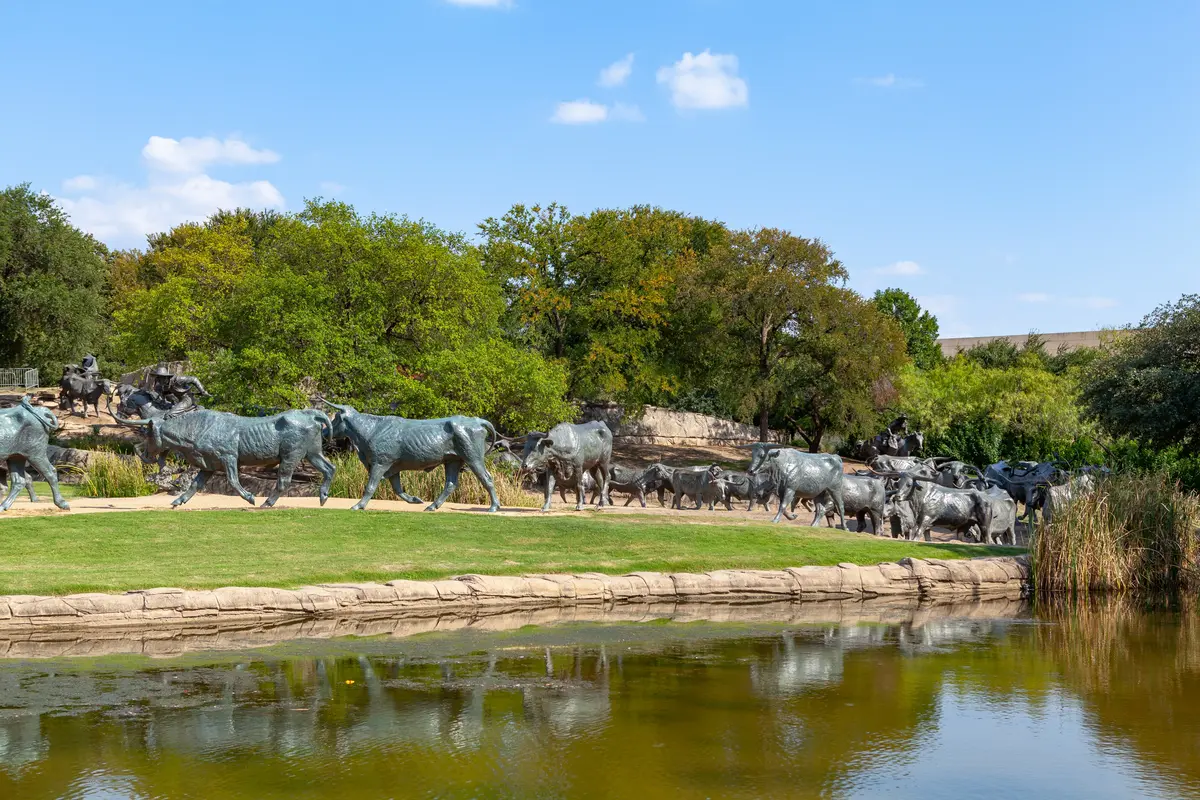
Most Californians arrive in Dallas with a mental map built around California urbanism — walkable streets, neighborhood coffee shops, a park you can reach on foot — and then discover that most of Dallas is built around a car. That is true, and it matters. But it is not the whole picture. The full neighborhoods guide covers each area in much more depth.
If You Want Urban Walkability: Uptown and Oak Lawn
Uptown is the neighborhood that comes closest to the walkable California urban experience. It sits directly north of downtown along the McKinney Avenue corridor, with easy on-foot access to the Katy Trail — a 3.5-mile urban rail trail that runs through the heart of the city. Young professionals who relocated from San Francisco or Los Angeles tend to land here first. Oak Lawn sits just to the west and offers a similar density of independent restaurants and nightlife, plus direct access to Turtle Creek Park, in an inclusive and socially active community.
If You Want Space and Privacy: Preston Hollow and North Dallas
Preston Hollow is characterized by large lots, mature oak canopies, and custom estate properties in North Dallas — a scale of residential space that buyers coming from California's higher price tiers simply could not afford there. Far North Dallas, Bent Tree, and Preston Highlands offer a similar suburban feel across a range of housing types.
If You Want Character and History: Lakewood and East Dallas
Lakewood is centered on White Rock Lake, with more than 9 miles of hiking and biking trails winding around it. The housing stock runs to early-20th-century Tudors, Colonials, and craftsman cottages on tree-canopied streets — the closest thing Dallas has to the older neighborhood character that Californians from Pasadena or Berkeley find familiar. East Dallas and the M Streets (Greenland Hills) share that architectural heritage and attract families who want walkable streets within a neighborhood that actually has them.
If You Want Culture and Edge: Oak Cliff
Oak Cliff — which includes the Bishop Arts District, Kessler Park, and North Oak Cliff — is where the city's creative and independent-minded residents have settled. It has the kind of neighborhood-level identity that takes decades to build. For Californians who came from arts-forward neighborhoods, it is often the part of Dallas that feels most like home.
Looking to buy in Dallas? Estimate your payment.
Enter your numbers to see an estimated monthly mortgage payment.
Estimate only. Excludes HOA fees and mortgage insurance. The interest rate above is a starting point, not a quoted rate — replace it with your own to see real numbers. Insurance is a flat placeholder, not a Dallas quote.
Daily Life in Dallas: The Honest Version for Californians
The thing nobody tells you before you move from California to Dallas is how disorienting the weather calendar is going to be. You will not be bracing for winter in January — you will be bracing for summer in May, and then again in June, July, August, and September. Dallas records 234 sunny days a year, which sounds appealing until you realize that a significant share of those days are at 98°F with humidity. The outdoor lifestyle that defined your California routine does not disappear in Dallas, but it relocates entirely to the early morning or early evening from roughly May through September.
The flip side is that winters are mild by any standard except California coastal. Occasional ice storms — not snowstorms, but the glazed-roads-and-school-cancellations kind — surprise transplants who expected something colder and easier to drive in. February is the month that tests new arrivals.
Where People Actually Gather
Klyde Warren Park, built over a recessed freeway in the middle of the city's arts district, is where Dallas genuinely gathers on a pleasant weekend. It draws a cross-section of the city in a way that few urban parks do. White Rock Lake anchors east Dallas in a similar way, with the White Rock Market running through the season for those who want a farmers market in a park setting. The Dallas Farmers Market operates in a dedicated facility near downtown and draws consistent crowds. The Katy Trail is the city's most-used urban amenity — a former rail corridor turned walking and running path that connects Uptown to a series of park spaces heading north.
What Californians Miss and What They Do Not
After six months, the most common complaint is not taxes or the heat — it is the lack of an ocean. There is no substitute for that, and it is worth being honest about. The second most common complaint is driving: Dallas is a highway city, and I-35E, US-75, and I-635 carry a volume of traffic that surprises people who thought California freeways had already showed them everything. The commute culture is real, the distances are real, and the assumption that a 15-mile trip will take 20 minutes will fail you regularly during peak hours.
What Californians stop missing fairly quickly: the cost of a dinner out, the cost of a home renovation, the cost of keeping a car on the road without smog checks, and the weight of California's income tax showing up in every paycheck. Those adjustments tend to compound in ways that feel genuinely significant after the first full year. The living in Dallas guide covers the commute picture and employer landscape in more detail.
Weekends and Local Favorites in Dallas
Dallas has a cultural and dining scene that surprises most Californians — not because they expected nothing, but because they expected something smaller and more provincial. The Dallas Arts District is one of the largest urban arts districts in the country, and anchors a concentration of museums, performance venues, and public spaces that gives the city genuine cultural weight.
Coffee and Morning Routines
For a city of this size, the independent coffee scene is strong. Ascension Coffee runs a notable outpost in the Design District that doubles as an all-day dining destination. NATIVE COFFEE CO. draws a loyal following for its roasting-forward approach. Magnolias Sous Le Pont is a French-leaning café with an atmosphere unlike anything else in the city. Otto's Coffee & Fine Foods and Merit Coffee Co. round out a roster that will hold up fine against what you were used to in California.
Food Worth Seeking Out
Kitchen + Kocktails has become one of the city's marquee reservation experiences. Y.O. Ranch Steakhouse delivers the Texas steakhouse experience in a setting that takes the theme seriously. JOEY Dallas and STK Steakhouse anchor the upscale end of the dining spectrum. The Woolworth occupies a historic building in the heart of the city and brings a particular energy to its space. These are places where a Californian accustomed to a serious dining culture will recognize the same ambition, even if the flavors and the cooking traditions are different.
Outdoors Inside the City
Trinity River Audubon Center sits along the Trinity River corridor and offers a naturalist experience that feels genuinely removed from the urban surroundings. Trinity Overlook Park gives the best view of the Trinity floodplain from the city's edge. Beyond those, White Rock Lake and the Katy Trail handle most of the outdoor day-to-day activity for residents who prioritize being outside — which, given the heat, means they handle it at 6 a.m. Fair Park, home to one of the largest collections of Art Deco exposition architecture in the country, anchors the city's east side and draws the entire region every fall for the State Fair of Texas.
What People Miss About California — and What Dallas Offers Instead
There is no beach, no redwood trail, and no fog rolling in off the Pacific in the evening. What Dallas offers instead is scale: a major-league sports culture that fills stadiums year-round, a restaurant economy that moves fast and takes risks, a music and live-events scene that punches well above what you would expect for a landlocked city, and a genuine sense that the place is still becoming what it is going to be. That is a trade-off, not a consolation prize.
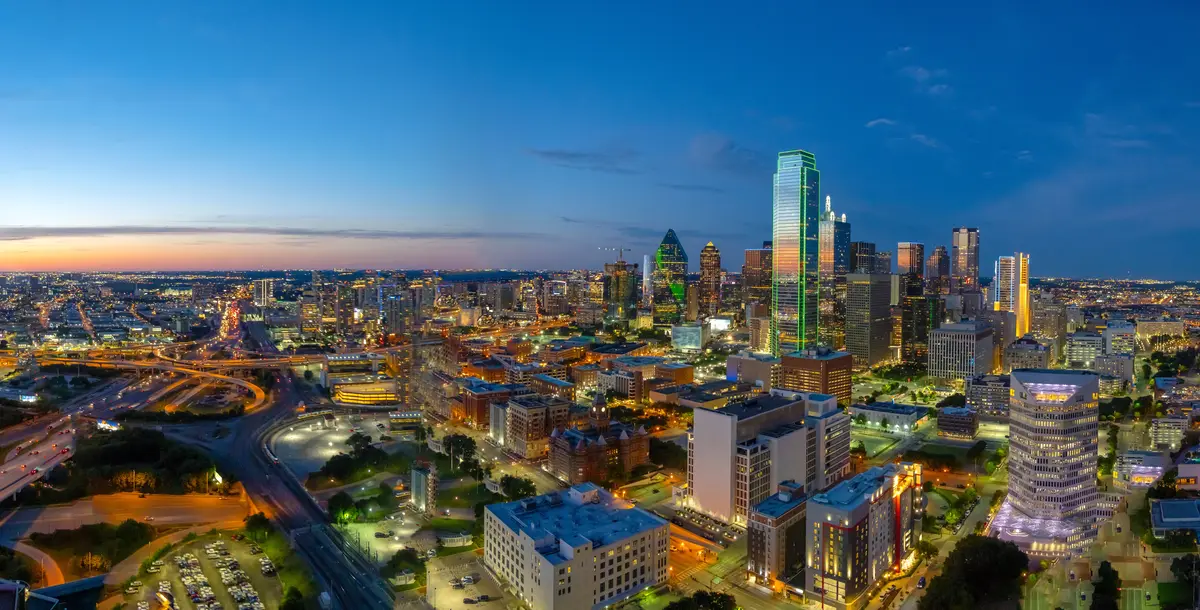
Local Expert Takeaway: The California-to-Dallas move makes obvious financial sense on paper — and it genuinely delivers on most of what the numbers promise. The income-tax elimination is real, the home price gap is real, and the dining and outdoor culture in neighborhoods like Uptown, Lakewood, and Oak Cliff will hold up against what you left behind. What the spreadsheet will not tell you is that the property tax bill at 1.66% hits harder than Californians expect, that driving I-35E at 5:30 p.m. will test your patience in ways the 405 already taught you, and that August in Dallas is a different category of summer than anything on the California coast. Go in knowing all three, and the move holds up. Go in expecting a lower-cost California, and you will be recalibrating within a year.
Quick Takeaways & FAQs
✅ Texas levies no state income tax, which means a six-figure earner relocating from California typically keeps thousands more per year starting on day one.
⚠️ Dallas's effective property tax rate of 1.66% is more than double California's effective rate, and it will take a meaningful bite out of the monthly savings that the purchase price difference creates.
📍 The Bishop Arts District in Oak Cliff and the Katy Trail corridor in Uptown are the two places California transplants tend to point to when they say Dallas surprised them — both reward walking in a city that is mostly built around driving.
How much cheaper are homes in Dallas compared to California?
Do I really save that much on taxes by moving from California to Texas?
Which Dallas neighborhoods are most similar to California urban neighborhoods?
What surprises Californians most after moving to Dallas?
What is the sales tax rate in Dallas compared to California?
Moving to Texas?
Tell us what you need help with and we'll connect you with local resources.
