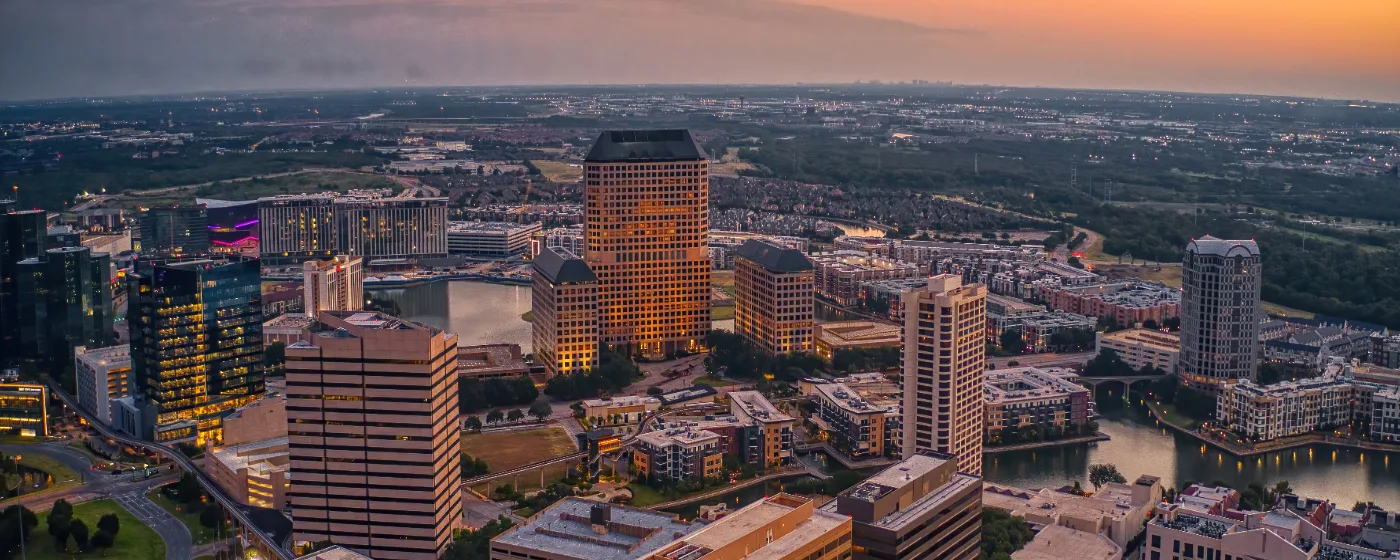
What Is Living in Irving, Texas Like?
Most people driving through Irving on their way to Dallas/Fort Worth International Airport never realize they just passed through one of the most economically dense cities in North Texas. Irving, the 12th-largest incorporated city in Texas, sits squarely between Dallas and the airport, threaded by I-635, SH-183, and SH-114 — a configuration that makes it one of the best-connected addresses in the metro. The surprise isn't the location. It's that a city of 257,076 people, with a median age of 32.8, manages to feel simultaneously like a corporate headquarters district and an actual neighborhood where people plant roots.
The economic backbone here is serious. The city has attracted an extraordinary concentration of major company operations — Fluor Corporation, Caterpillar Inc., and Kimberly-Clark all have significant presences here, and in late 2025, Wells Fargo opened a two-tower, 22-acre campus in Las Colinas, consolidating thousands of local employees into one address. The Irving Independent School District, with 29,212 students enrolled in 2025-26, is one of the largest employers in the city, and it holds a C rating, according to the Texas Education Agency. Families researching schools should read the full district breakdown before drawing conclusions from that letter alone.
On the cost side, Irving sits at a price point that feels meaningful in a metro where several neighboring cities run noticeably higher. The typical home price is $343,364 (Zillow Home Value Index, July 2026), and the city-wide typical rent is $1,611 per month — both figures that look accessible compared to Grapevine or Coppell, though the median household income of $81,830 falls short of what's needed to comfortably carry the typical home here. The effective property tax rate is approximately 1.55%. Day-to-day life is anchored by 233 sunny days a year, the 22-mile Campion Trail along the Trinity River, and a Las Colinas entertainment district that has meaningfully upgraded in the past two years. The full cost picture — utilities, groceries, and taxes — lives on the cost of living page.
Whether you're considering a move or just researching the area, the sections below break down Irving's neighborhoods, housing market, daily life, commute patterns, local employers, and what weekends actually look like here.
Irving at a Glance
Looking to buy in Irving? Estimate your payment.
Enter your numbers to see an estimated monthly mortgage payment.
Estimate only. Excludes HOA fees and mortgage insurance. The interest rate above is a starting point, not a quoted rate — replace it with your own to see real numbers. Insurance is a flat placeholder, not a Irving quote.
Why Are People Moving to Irving?
Irving draws people for one primary reason: jobs, and the proximity to more of them. The city's position between Dallas and DFW Airport — with DART's Orange Line light rail threading through Las Colinas — makes it a natural landing spot for professionals who need flexibility. The range of employers here is unusual for a city this size: engineering and construction through Fluor Corporation, heavy equipment through Caterpillar Inc., consumer goods through Kimberly-Clark, and a growing hospitality sector that employs a substantial share of the local workforce in hotels, restaurants, and tourism-related businesses.
Wells Fargo's decision to open a major campus in Las Colinas in late 2025 is the clearest recent signal of where Irving is headed. A multi-hundred-million-dollar investment doesn't happen in a city leadership has given up on. Irving's Economic Development Strategic Plan through 2030, adopted in late 2024, puts talent retention and placemaking at the center of the city's goals — which matters to anyone evaluating whether this is a place that will hold its value over a five-to-ten-year horizon.
Irving's diversity is another honest draw. With approximately 23.2% of residents identifying as Asian and a Hispanic population that shapes everything from the food landscape to the school culture, this is not a city with a monolithic identity. Newcomers from large coastal metros often find it more familiar, socially speaking, than they expected from a North Texas address.
Who Actually Moves Here
The clearest pattern: professionals with a DFW Airport commute, or a Las Colinas office, who want to live close to work without paying Coppell or Grapevine prices. Parents with school-age children who've weighed the district rating and decided the trade-off makes sense given the home prices and the neighborhood stability. And a growing number of remote workers who want the infrastructure of a large metro — good transit options, an entertainment district, a major airport eight miles away — without the density of Dallas proper.
What tends to disappoint buyers who move here: expecting Irving to feel like an inner-ring suburb with the walkability of Uptown Dallas. Most of the city is car-dependent. Las Colinas functions on foot within its own loop, but the broader city is built around the freeway grid. Understanding that distinction before you pick a neighborhood is one of the most useful things this guide can offer. The neighborhood breakdown goes deep on the geographic divides.
What Daily Life Feels Like in Irving
Workday mornings in Irving move fast. If you're based in Las Colinas, the DART Orange Line gets you into Dallas or out to DFW Airport without touching the freeway. The Irving Connector — a fixed-route local bus service that launched via a May 2026 contract with Via Transportation — includes The Loop, a free circulator linking hotels, restaurants, entertainment venues, and residences throughout Las Colinas. For the rest of the city, life runs on SH-183, SH-114, and I-635, and the rhythms of those roads set the clock.
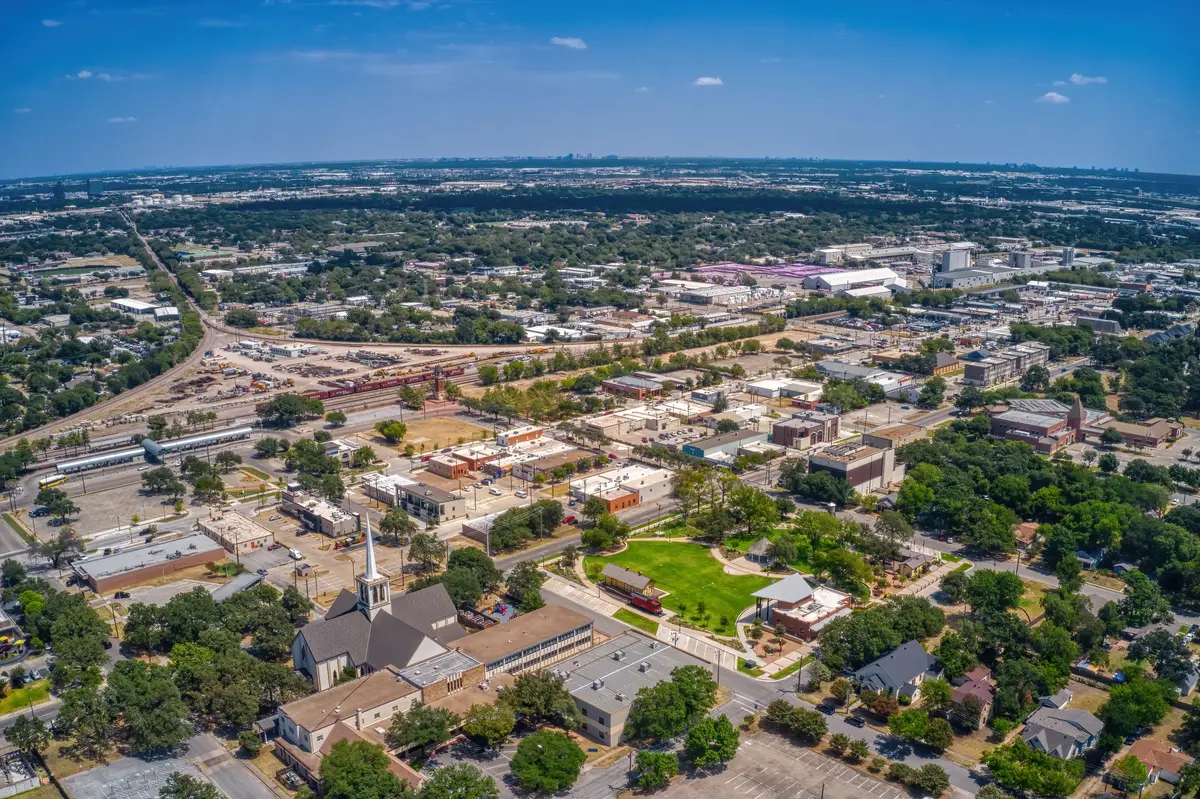
One thing newcomers don't expect: how much Irving's character shifts by district. Las Colinas reads like a polished urban center — Lake Carolyn at its center, the Mustangs of Las Colinas sculpture drawing visitors on weekdays, the Irving Convention Center anchoring the south end. Valley Ranch, a few miles north, is quieter and more suburban in feel, with tree-lined streets and parks that attract families with kids. The Heritage District around Irving Boulevard feels older and more working-class, closer to the city's pre-Las Colinas identity. Six months in, most residents pick a corner of Irving and mostly stay in it — the city is large enough that cross-town errands can eat time.
The Seasonal Reality
North Texas summers are genuinely brutal, and Irving is no exception. From late June through September, midday outdoor activities are something you plan around rather than into. The Campion Trail sees its heaviest use before 8 a.m. and after 7 p.m. during those months. The flip side: winters are mild enough that the trail is usable year-round, and the Irving Arts Center's indoor programming fills the gap when the heat or the occasional ice storm makes outdoor life impractical.
The ice storm piece is the seasonal quirk most newcomers underestimate. Irving gets perhaps two or three winter weather events a year — enough to close schools and snarl freeway traffic in ways that catch out anyone who moved from a northern climate and assumed Texas "doesn't really get ice." It does. It just doesn't prepare for it the way northern cities do, which means a glazed SH-183 on a February morning is more disruptive here than a full blizzard would be in Minneapolis.
The Irving Housing Market Right Now
Irving's typical home price sits at $343,364 (Zillow Home Value Index, July 2026) — a figure that places it well below Grapevine or Coppell, and somewhat above Dallas, making it a middle-ground choice in a metro where the spread between neighboring cities is significant. The city-wide typical rent is $1,611 per month. Both figures tell a story about a market that isn't cheap, but isn't the premium its most polished corner might suggest.
The honest framing for buyers: the median household income of $81,830 falls short of what's needed to carry the typical home here comfortably. That gap matters when you're budgeting, and it's worth reading alongside the full cost-of-living picture. An effective property tax rate of approximately 1.55% adds meaningfully to monthly carrying costs, which is the norm across Dallas County.
What the Inventory Looks Like
New multifamily supply in Irving is constrained. The only notable project underway as of mid-2025 was Heritage Square Apartments near downtown Irving — 194 units targeted at young professionals — expected to deliver in 2026. That's a thin pipeline for a city this size, which keeps rental competition steadier than in submarkets with heavy new construction.
The housing stock itself is mixed. Some areas run above the city median, with newer construction and master-planned amenities baked into the price. Other pockets offer more entry-level options, though the housing stock is aging and inspection results vary. For the full neighborhood-by-neighborhood picture, the best neighborhoods page breaks down character, housing type, and who each area suits best.
Irving Neighborhoods
Irving has several distinct areas — each with its own character and appeal. Here’s a breakdown to help you narrow down where to focus your home search.
🏡 Las Colinas
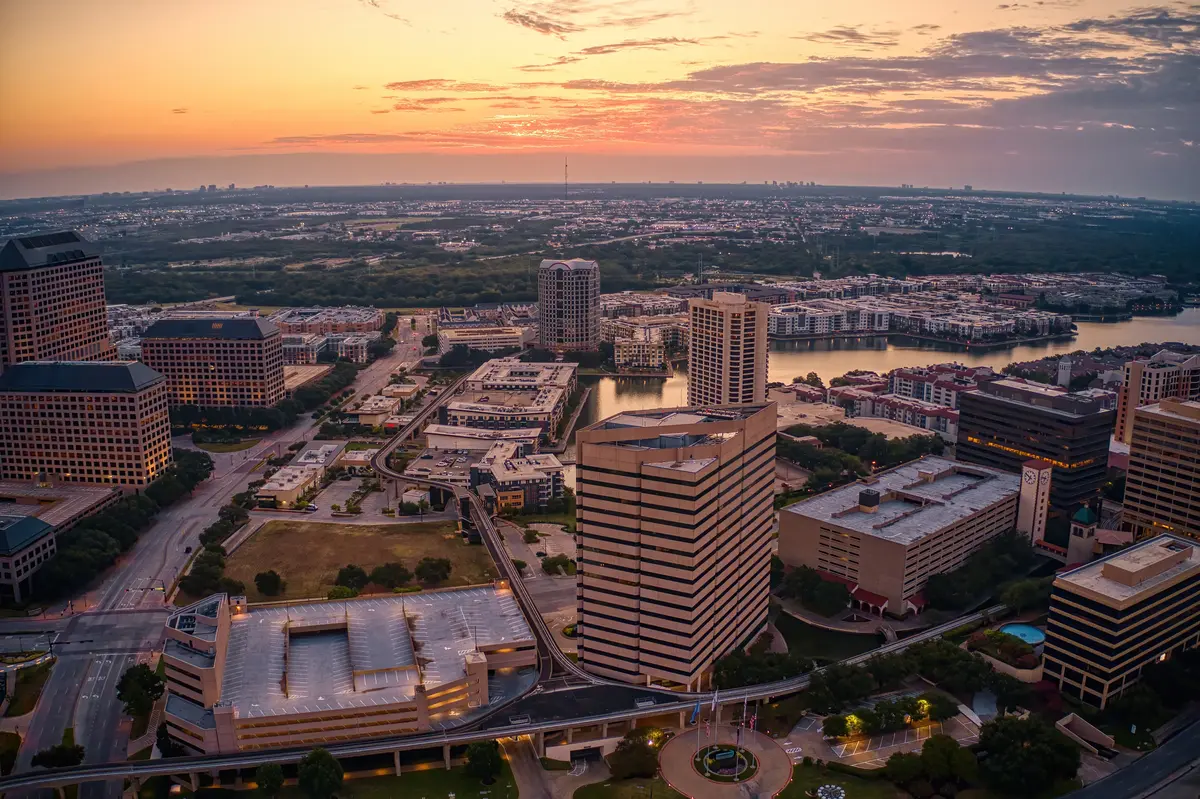
The most urban corner of Irving — a 12,000-acre master-planned district built around Lake Carolyn, with the DART Orange Line, the Toyota Music Factory, and the Irving Convention Center all within its footprint. It suits professionals who want rail access and walkable amenities, and runs above the city median in price.
🏠 Valley Ranch
A planned community with tree-canopied streets, pocket parks, and a quieter residential feel that draws parents with school-age children. Housing tends toward late-1980s and 1990s construction with larger lots, and the area sits above the city-wide typical home price.
🌳 Hackberry Creek
A gated golf course community in western Irving with larger homes and a country club atmosphere — one of the more established upscale residential pockets in the city, suited to buyers who prioritize privacy and proximity to Las Colinas without living inside it.
🏘 Heritage District
The oldest and most historic part of Irving, centered on Irving Boulevard, with a working-class character and a growing arts and small-business presence — a good fit for buyers who want older housing stock and a neighborhood still finding its next chapter.
🏔 University Hills
A mid-city residential area with modest single-family homes and good freeway access — practical and unpretentious, suited to first-time buyers or anyone who wants to stay within Irving's price range without paying a Las Colinas or Valley Ranch premium.
🌆 Hospital District
Named for its proximity to major medical facilities, this area draws healthcare workers and residents who want a short commute to Irving's medical corridor — the housing stock is mixed, and the area's identity is more utilitarian than lifestyle-driven.
Pros & Cons of Living in Irving
The Pros
- Central DFW location with quick access to DFW International Airport and downtown Dallas
- Major corporate headquarters presence supports a strong local job base
- Walkable, upscale Las Colinas district with canals, lakes, and entertainment
- Relatively diverse, international community
The Cons
- Property crime runs above national and Texas averages, especially near commercial corridors
- Texas-sized summer heat with several months of 90s-plus highs
- Several Irving ISD campuses, including the flagship Irving High School, rate only average-to-below-average on GreatSchools/Niche
Getting Around & Commuting in Irving
Irving's commute story is genuinely better than most DFW suburbs — for people who are based in Las Colinas or working Downtown Dallas. DART's Orange Line runs through Irving with stations at the Irving Convention Center, Las Colinas Urban Center, and Dallas College North Lake Campus, connecting riders to DFW Airport at one end and into the Dallas core at the other. For a suburb of this size, that's meaningful transit infrastructure.
The drive to downtown Dallas takes about 20 minutes under normal conditions — which, on SH-183 or SH-114 during peak hours, is not normal conditions. The freeways that make Irving so well-connected also concentrate the metro's traffic through it. SH-183 carries the heaviest residential commuter load. I-635 is the through-traffic artery. SH-161 and SH-114 serve the Las Colinas corridor. Loop 12 handles cross-city north-south movement. Anyone moving here without previewing the drive at 7:45 a.m. on a Tuesday should do that before signing a contract.
The DFW Airport Factor
Dallas/Fort Worth International Airport (DFW) sits just 8 miles from most of Irving — a fact that cuts both ways. For frequent travelers, it's an extraordinary convenience: 8 miles, a rail connection, and none of the cross-metro drive that Dallas or Plano residents deal with. For residents in the flight path, the ambient noise is a real consideration that some buyers tune out completely and others find intolerable. The neighborhoods that matter most for noise: northern Irving near the airport boundary, where it's worth timing a visit during peak departure windows before you make an offer.
Getting Around Without a Car
The DART Orange Line and The Loop circulator make Las Colinas genuinely functional without a car for residents who live and work within that district. Outside Las Colinas, Irving is a car city. Most errands — groceries, schools, medical appointments, most restaurants — require a drive. The Campion Trail connects neighborhoods to greenspace by bike or on foot, but it's a recreational amenity more than a practical transit network. The upcoming Phase 1B connection to Dallas, expected to complete in fall 2026, will extend that reach, but it won't replace the need for a vehicle in most daily routines.
Schools in Irving
Families relocating to Irving have public, private, and higher-education options nearby. Here’s a quick overview.
🎓 School District
Irving Independent School District serves K–12 students across Irving and the surrounding area. Rated C (source: Texas Education Agency, 2025 A-F accountability rating (2024-25 school year)).
🏆 Graduation Rate
The 4-year high-school graduation rate here is approximately 92.7%.
📚 Higher Education
Texas’s public universities — the University of Texas at Austin, Texas A&M University, and the University of Houston — offer four-year degrees statewide, with one of the largest community college systems in the country (50+ public community college districts) providing two-year and workforce programs.
🌐 Online Learning
UT Austin Online and Texas A&M University Online offer fully accredited online degrees for remote learners across the state.
Safety in Irving
A quick look at how Irving compares on the numbers that matter most when weighing a neighborhood or a move.
🛡 Violent Crime
Approximately 3.4 per 1,000 residents.
🔒 Property Crime
Approximately 22 per 1,000 residents.
Compared to the most recent national figures from the Bureau of Justice Statistics (2024), Irving’s violent crime is below the national average (about 3.7 per 1,000), and property crime is above the national average (about 18.4 per 1,000).
Against Texas as a whole, Irving’s violent crime is somewhat below the state average, and property crime is about the same as the state average (Bureau of Justice Statistics, Crime Known to Law Enforcement, 2024 (tables 2 and 3)).
Crime rates can vary a lot within a single city, so the citywide numbers above are only a starting point. Some neighborhoods in Irving run well below these averages, while others run higher — the kind of block-by-block detail that matters most when you’re actually choosing where to live. The full guide below breaks it down neighborhood by neighborhood.
Working in Irving
Irving’s largest employers span several industries — here are some of the anchors of the local job market.
🏛 City of Irving
Municipal government
🎓 Irving Independent School District
Education
💼 Fluor Corporation
Engineering, construction
🏭 Caterpillar Inc.
Heavy equipment manufacturing
🛒 Kimberly-Clark
Consumer goods manufacturing
💼 Dallas Fort Worth International Airport
Aviation, transportation, located in Grapevine
Parks & Recreation in Irving
Some of the outdoor spaces that shape everyday life in Irving.
🌱 Lake Carolyn
🌱 Cimarron Park
Irving residents don’t have to go far for green space — spots like Lake Carolyn and Cimarron Park are part of everyday life here, whether that’s a morning walk, a weekend hike, or just somewhere to unwind outside. The full guide below covers more of what Irving has to offer for parks and outdoor recreation.
Retiring in Irving
Irving draws retirees for its balance of amenities, outdoor access, and cost. Here’s what to weigh.
🌤 Climate
Irving averages 233 sunny days a year, with mild winters that make outdoor activity comfortable from October through April. Summers run hot and long — triple digits are common from late June into September. The occasional winter ice storm disrupts the city more than the temperature would suggest, since North Texas roads aren't built for frozen conditions.
🍴 Lifestyle
The Irving Arts Center offers year-round visual and performing arts programming, and the Toyota Music Factory brings national touring acts to an 8,000-seat venue. Lake Carolyn and the Campion Trail keep outdoor options accessible. The dining scene leans international, reflecting the city's diverse population — a genuine asset for retirees who want variety.
🏚 55+ Communities
No 55+ communities were found in Irving. Retirees typically look at single-family homes in established neighborhoods like Valley Ranch or Bear Creek, or at the condo and townhome inventory that exists within the Las Colinas district. The full retiring-in-Irving picture is on the retiring page.
✈ Getting Around
Most daily errands in Irving require a car outside of Las Colinas. DART's Orange Line offers rail access to Dallas and DFW Airport, and The Loop circulator covers the Las Colinas district for local trips. Dallas/Fort Worth International Airport (DFW) is 8 miles away — a significant convenience for retirees with family travel plans.
🏛 Texas Taxes for Retirees — What to Know
- No state income tax — Texas has no personal income tax — constitutionally protected under Article VIII, Section 24. Social Security, pensions, 401(k)/IRA withdrawals, and annuity payments are all untaxed at the state level, with no state return to file.
- Sales tax is the tradeoff — The state sales tax is 6.25%, and local add-ons bring the combined rate in Irving to 8.25% (Texas Comptroller of Public Accounts, city sales and use tax rates, July 2026). Groceries and prescription drugs are exempt.
- Property taxes — the real tradeoff — Texas’s effective property tax rate averages about 1.40%, among the highest in the country, since property tax (not income tax) funds most local government and schools.
- Over-65 homestead exemption and school-tax freeze — Homeowners 65+ (or disabled) get an additional $60,000 exemption from their home’s value for school district taxes, on top of the general homestead exemption — $200,000 off school taxable value combined, following November 2025’s Proposition 11 (SB 23), which raised the over-65 exemption to $60,000, and Proposition 13 (SB 4), which raised the general homestead exemption to $140,000. Once claimed, your school district tax bill is frozen at that year’s amount and cannot increase as home values rise, and the ceiling can transfer if you move to a new home within Texas.
- Deferral option if cash is tight — Homeowners 65+ can defer property tax payment entirely for as long as they live in the home, rather than paying it currently — interest accrues, but no forced sale.
- No estate or inheritance tax — Texas has no estate tax, no inheritance tax, and no gift tax.
- No separate capital gains tax — Because Texas has no state income tax, capital gains — including on investments and home sales — are not taxed at the state level at all, unlike states such as Washington that tax capital gains separately from income.
Tax laws change frequently and individual situations vary. This is general information, not tax advice — always consult a qualified Texas tax professional or CPA for personalized retirement tax planning.
Weekends & Local Favorites in Irving
The Toyota Music Factory is the clearest anchor for weekend life in Las Colinas. A $9 million plaza renovation completed in January 2025 expanded the dining footprint with new shade structures and a two-story outdoor bar, and the Pavilion — an 8,000-seat indoor/outdoor amphitheater operated by Live Nation — was voted Best Outdoor and Best Indoor Music Venue of 2025 by the Dallas Observer. On concert nights, the plaza fills and the surrounding streets around Lake Carolyn come alive in a way that feels more like a city than a suburb.
Lake Carolyn itself is the social center of Las Colinas — an 87-acre lake at the heart of a 12,000-acre master-planned district with trails, public art, and waterfront paths. The Mustangs of Las Colinas sculpture nearby is the city's most photographed landmark and worth seeing in person even if you've seen it in photos. The Irving Arts Center hosts visual and performing arts year-round, and Cimarron Park draws families on weekends with its greenspace and recreational facilities. For trail runners and cyclists, Campion Trail's 22-mile paved route along the Trinity River is the city's best outdoor asset.
Where Locals Actually Eat and Drink
The verified local anchors worth knowing: The Ranch at Las Colinas draws a mix of corporate and local regulars for steakhouse dining done seriously. Whiskey Cake Las Colinas is one of the more consistent date-night spots in the district. Mexican Sugar holds its own for upscale Mexican in a city with genuine competition in that category. Sanjh Restaurant & Bar reflects Irving's South Asian population in the best way — the kind of place locals send visiting family. Aspen Creek Grill is the neighborhood reliable that doesn't require a reservation or a special occasion.
For coffee: Argentina Bakery brings a South American café sensibility to its pastry case. Cuppa Espresso Bar and Port Coffee Co Irving handle the independent coffee shop demand. BEAME Bubble Tea & Coffee Bar-Irving has become a regular stop for Irving's younger demographic, and Cafe Hana rounds out the options for anyone who wants something beyond the drive-through chains. Heritage Park and Northwest Park offer the kind of casual Saturday morning that doesn't require planning — bring the kids, walk, sit, repeat.
Local favorites in Irving
Restaurants
- The Ranch at Las Colinas
- Whiskey Cake Las Colinas
- Sanjh Restaurant & Bar
- Mexican Sugar
- Aspen Creek Grill
Outdoors
- Campion Trail
- Lake Carolyn
- Northwest Park
- Heritage Park
Coffee
- Argentina Bakery
- Cuppa Espresso Bar
- Port Coffee Co Irving
- BEAME Bubble Tea & Coffee Bar-Irving
- Cafe Hana
Top Things Locals Say About Irving
The best intel about a city comes from the people who actually live there. Here’s what Irving residents say when newcomers ask the questions everyone’s thinking.
“I knew Las Colinas would be polished — I just didn't realize how different the rest of Irving would feel once I started driving around on weekends. The city has a lot of layers, and which one you land in makes a bigger difference than the address on your mail.”
— Recent Irving home buyer
“What's the most surprising thing about living in Irving?”
How much the city changes depending on where you are in it. Las Colinas genuinely feels urban — the Lake Carolyn waterfront, the rail station, the restaurants. But drive ten minutes toward Irving Boulevard and the Heritage District and you're in a completely different city. Most people pick their corner of Irving within the first few months and anchor their life there.
“What do locals love most about Irving?”
The airport proximity is the thing people mention first, and they're not wrong — eight miles to DFW is a real quality-of-life advantage if you travel for work. The Campion Trail is the second thing. Twenty-two miles of paved trail along the Trinity River that you can hit from multiple access points — it keeps people here who might otherwise have moved for more green space.
“What should newcomers to Irving know?”
Check the flight path before you pick a neighborhood in north Irving. Most of the city has tolerable airport noise, but certain pockets sit directly under departure routes, and you feel it. Also: SH-183 westbound in the afternoon is worse than it looks on a map app — add buffer. The Irving Connector loop circulator in Las Colinas is genuinely useful if you work in that district and can skip the car.
“How much do you need a car in Irving?”
In Las Colinas, you can manage a significant portion of daily life without one — the DART Orange Line, The Loop circulator, and the walkable district around Lake Carolyn handle a lot. Everywhere else in Irving, a car is essential. Groceries, school runs, most medical appointments, and anything outside the Las Colinas corridor all mean driving. It's a car city with one genuinely transit-friendly district inside it.
Cities Near Irving
Other communities near Irving worth a look — each with its own character and price point.
| City | Distance | Best For | Vibe | Median Rent | Median Buy |
|---|---|---|---|---|---|
| Dallas | 12 mi | Urban density, renters, young professionals | Larger, denser, more walkable core | $1,605 | $309,590 |
| Grapevine | 10 mi | Families, historic charm, top schools | Walkable downtown, higher price point | $1,770 | $554,188 |
| Coppell | 8 mi | Top-rated schools, quiet streets | Polished, suburban, premium priced | $2,032 | $621,362 |
More Helpful Guides for Irving
Going deeper on Irving? Our blog series covers everything from first-time buying to retiring here — explore the guides below.
Local Expert Takeaway: Irving is a city that rewards people who move here for a specific reason — a Las Colinas office, the DFW Airport proximity, a price point that pencils out when Coppell and Grapevine don't. It's less rewarding for buyers who move here expecting walkable urban energy across the whole city, or who assume a C-rated school district will surprise them on the upside without doing the individual school research first. The Campion Trail and Toyota Music Factory show what Irving is investing in. The Wells Fargo campus shows who's investing in Irving. Both are signals worth weighing.
Quick Takeaways & FAQs
✅ Irving hosts a remarkable concentration of major company operations for a city its size — which translates to white-collar jobs within a short commute for many residents.
⚠️ The school district holds a C rating from the Texas Education Agency, and the median household income falls short of what's needed to comfortably carry the typical home price — both worth modeling before you make an offer.
📍 DART's Orange Line runs through Las Colinas all the way to DFW Airport, making Irving one of the few DFW suburbs where you can actually leave the car at home on a work trip.
Is Irving TX a good place to live?
What is the cost of living like in Irving TX?
How are the schools in Irving TX?
What is the commute like from Irving to Dallas?
What are the safest neighborhoods in Irving TX?
Helpful Links for Moving to Irving
Moving to Texas?
Tell us what you need help with and we'll connect you with local resources.
