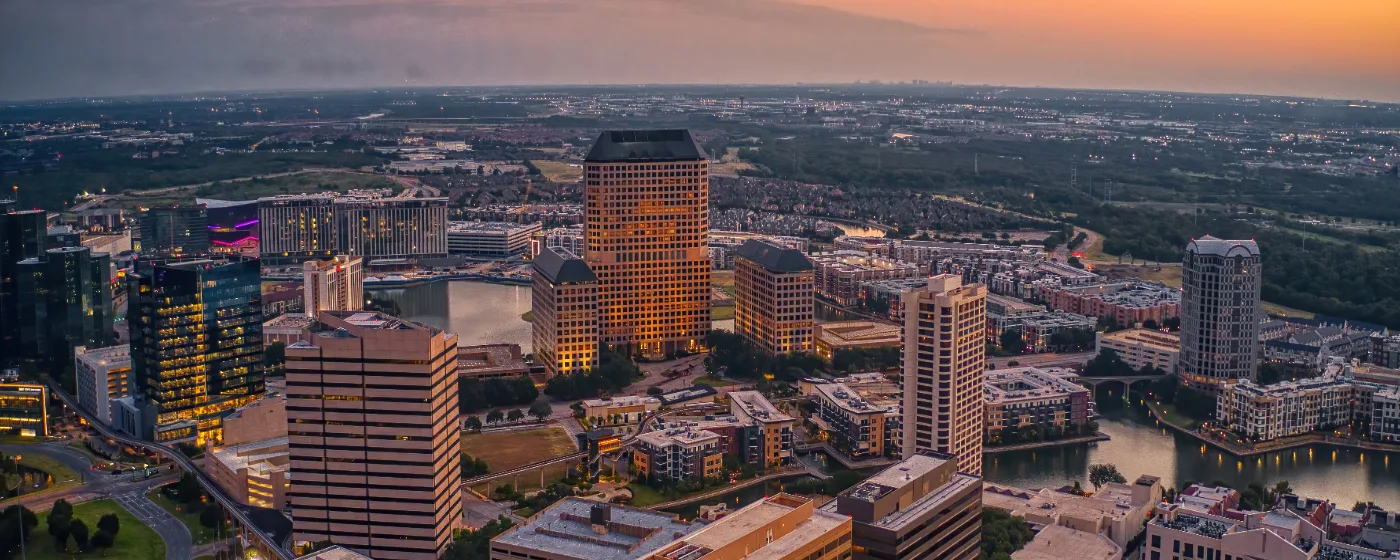
Most Californians who land in Irving say some version of the same thing around month three: they keep waiting for the catch. The income tax bill that never arrives. The mortgage payment that feels manageable for the first time in years. Irving sits squarely inside the Dallas-Fort Worth Metroplex, wrapped by I-635, SH-183, and SH-114, and connected to downtown Dallas — about 20 minutes away on a clear day — and to Dallas/Fort Worth International Airport (DFW), just 8 miles away. It is not a bedroom community that happens to have a highway. It is a city of 257,076 people with its own corporate engine, its own neighborhoods with distinct personalities, and a daily-life texture that surprises people who assumed suburban Texas was interchangeable.
The economic backbone here is unusual for a city this size. Las Colinas, Irving's master-planned district covering more than 12,000 acres, hosts a dense cluster of Fortune 500 headquarters — McKesson relocated its headquarters from San Francisco in 2019, Charles Schwab maintains a significant local presence, and Nokia runs its entire North American operation from here. Fluor Corporation, Caterpillar, and Kimberly-Clark anchor the manufacturing and engineering side. The Irving Independent School District holds a C rating, according to the Texas Education Agency — a number worth understanding before you buy, and one that shapes which neighborhoods families prioritize. People move here for the corporate job market, the airport access, and a cost structure that simply isn't available anywhere in coastal California.
Irving's overall cost of living sits effectively at parity with the national average. That sentence deserves a moment: a city inside a major metro, 8 miles from a global hub airport, running at the national norm rather than 40 or 50 percent above it. The typical home value stands at $343,364 (July 2026), a figure that lands far below what comparable square footage costs in most California markets. Parks like Cimarron Park and the Campion Trail give the city genuine outdoor infrastructure, and 233 sunny days a year means you use them. The tradeoff is Texas heat in summer — genuine, sustained heat that takes a full season to adjust to — and a car-dependent layout outside the Las Colinas and Heritage District cores.
Whether you've been recruited by a Las Colinas employer, priced out of your California market, or simply done the math on what no state income tax means for your household, the sections below break down Irving's California-vs-Texas cost picture, the tax arithmetic, neighborhood fit, and what daily life actually looks like once you're here.

The Home Price Reality: What Your California Budget Buys Here
California's statewide typical home value of $773,735 is the number most Californians carry in their heads as a reference point. Irving's typical home value of $343,364 (July 2026) sits noticeably below that — enough below that buyers coming from coastal markets routinely find themselves looking at houses with more square footage than they thought possible at their budget.
That gap is real, but it has texture. Irving's neighborhoods are not uniformly priced. Las Colinas and Valley Ranch both sit above the city median — Las Colinas with its waterfront high-rises and corporate-campus adjacency, Valley Ranch with its canal system, bike paths, and deed-restricted family character. Bear Creek sits at the city median, making it the cleaner entry point for buyers who want established Irving without the Las Colinas premium. On the other end, areas like the Hospital District — quiet, tree-lined streets, traditional homes — tend to attract buyers who want value relative to the city's higher-profile addresses.
What California Buyers Actually Experience
Coming from a California market, the sticker prices feel almost disorienting at first. A detached home with a two-car garage and a yard — the kind of property that would require significant compromise in most California metros — is available in Irving at the city median. The honest caveat: Irving's median household income of $81,830 sits below the income needed to comfortably carry the typical home here, which means this is not a low-cost market by Texas standards. It is simply far more accessible than where you're coming from.
Nearby, Dallas prices run somewhat lower than Irving's; Coppell and Grapevine both run noticeably higher. If your employer is in Las Colinas and you're weighing Irving against Coppell, you're looking at a meaningfully wider budget in Irving for the same commute zone. That's a real decision, not just a talking point.
The Rental Picture
If you're renting first — and given how disorienting the first months can be, that's a reasonable call — the city-wide typical rent sits at $1,611/mo (Zillow ZORI, July 2026). Las Colinas high-rises will run above that; older stock in Bear Creek or the Hospital District will come in below. For a Californian pricing out what a transitional year looks like, that figure represents significant monthly relief compared to what most coastal California renters carry.
The Tax Arithmetic: Where You Win, Where You Pay More
Texas has no state income tax — it is constitutionally prohibited. California's top state income tax rate of 13.3% applies only to the highest earners, but California's progressive brackets affect most middle- and upper-income households meaningfully. For a household earning $100,000, the difference works out to roughly $5,208 per year in state income tax saved by living in Texas. At $150,000, that gap widens to approximately $9,500 annually. For the professionals recruited to Las Colinas corporate campuses, this is not a marginal line item.
The Property Tax Trade-Off
Here is where Californians reliably get surprised. Irving's effective property tax rate sits at 1.55%. California's effective property tax rate of 0.71% is held artificially low by Proposition 13 protections that Texas has no equivalent of. On a home at Irving's typical value, the annual property tax bill is meaningfully higher than what a California homeowner paying 0.71% on a comparable assessed value would face — though if you bought in California recently at current prices, your assessed value and your effective bill may already be less favorable than the statewide average suggests.
The honest arithmetic: the income tax savings for most professional-level earners outweigh the property tax increase, often by a substantial margin. For lower-income households, the calculus is tighter — higher property taxes and a regressive sales tax structure can narrow or erase the advantage. Know your household's specific picture before treating the headline income-tax benefit as a guaranteed win.
Sales Tax and Gas
California's statewide base sales tax rate of 7.25% is the floor; local add-ons push most California jurisdictions above 9%. Texas's combined rate runs lower — the state base is 6.25%, capped with local additions at 8.25%. Neither state taxes groceries. The more immediately felt difference at the pump: Texas gas taxes run noticeably below California's, which is one of the highest in the country — for commuters who drive regularly, that gap compounds fast.
The Summary Table
| Tax Category | California | Irving / Texas | Who Benefits |
|---|---|---|---|
| State income tax | California's top state income tax rate of 13.3% (Tax Foundation) | None (constitutionally prohibited) | High earners |
| Effective property tax rate | California's effective property tax rate of 0.71% (Prop 13 protected) | 1.55% (Irving effective rate) | California owners |
| Statewide base sales tax | California's statewide base sales tax rate of 7.25% | 6.25% (TX base, max 8.25% combined) | Texas shoppers |
| Gas tax | Among the highest in the country | Noticeably lower than California | TX commuters |
| State income tax — $100K earner | ~$5,208 annual state liability | $0 | TX resident |
| State income tax — $150K earner | ~$9,500 annual state liability | $0 | TX resident |
Health insurance premiums in Texas generally run noticeably below what California residents pay, though the trade-off is fewer specialists available locally and longer drives for some advanced care.
Neighborhoods: Where Californians Tend to Land
Irving has more neighborhood variety than most people expect from a DFW suburb. The city spans distinct zones — corporate-urban, planned-family, historic-walkable, and quiet-traditional — and the one you pick shapes your daily experience as much as the city itself does.
Las Colinas
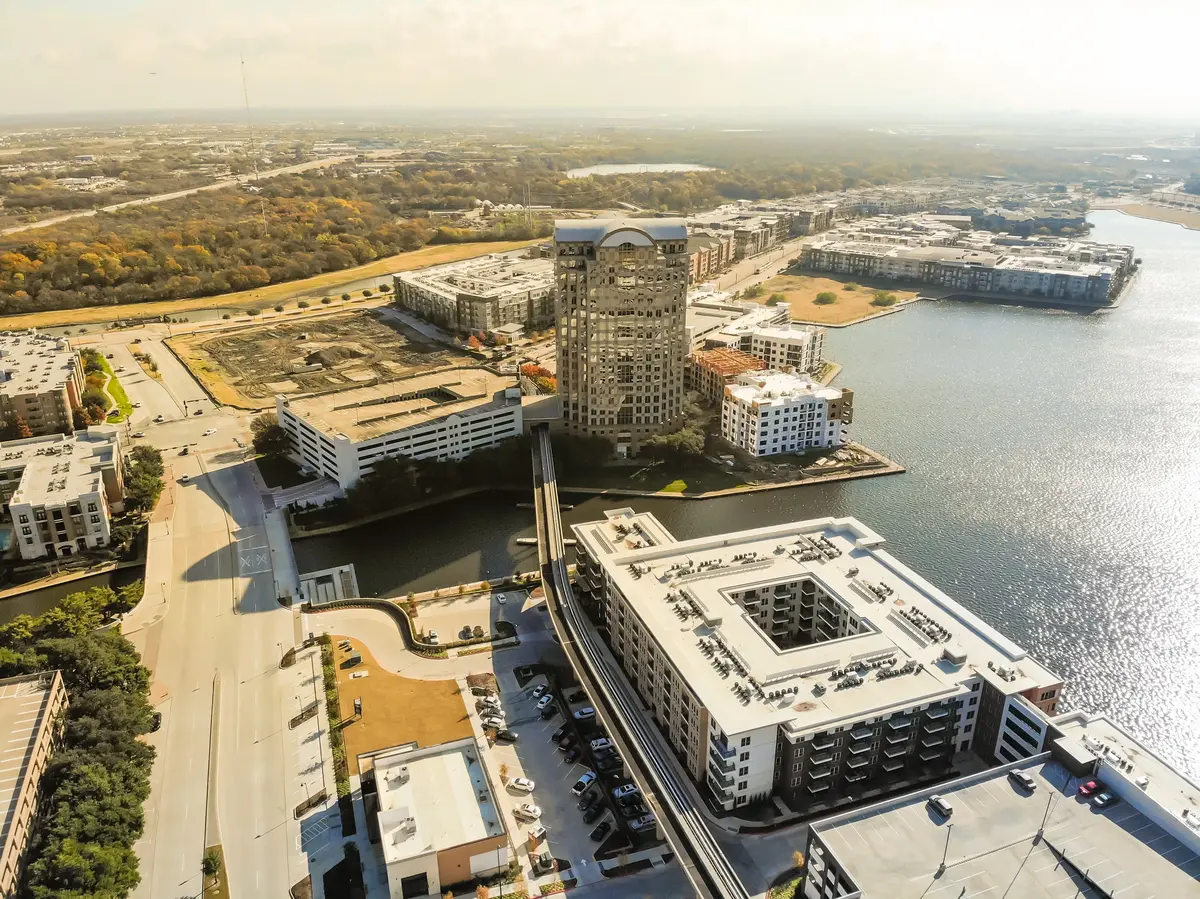
If your employer is already here, Las Colinas is the obvious starting point. It's one of the first large-scale master-planned mixed-use developments in the United States — waterfront high-rises along Lake Carolyn, corporate campuses, the Toyota Music Factory entertainment complex, and the Mustangs of Las Colinas sculpture anchoring the urban core. Home prices sit above the city median. DART Light Rail's Orange and Blue lines run through here, which is an unusual transit amenity for suburban DFW and one that Californians accustomed to at least nominal transit options appreciate. Best for: Tech/finance professionals Walkable urban lifestyle seekers
Valley Ranch
Valley Ranch is a deed-restricted master-planned community with canals, bike paths, and a family-oriented character built in the 1980s. It sits above the city median in price. For California families who want the organized-community feel — maintained common areas, clear HOA rules, a sense of intentional planning — Valley Ranch delivers that in a way that a lot of Texas cities simply don't. Best for: Families Outdoor access seekers
Heritage District
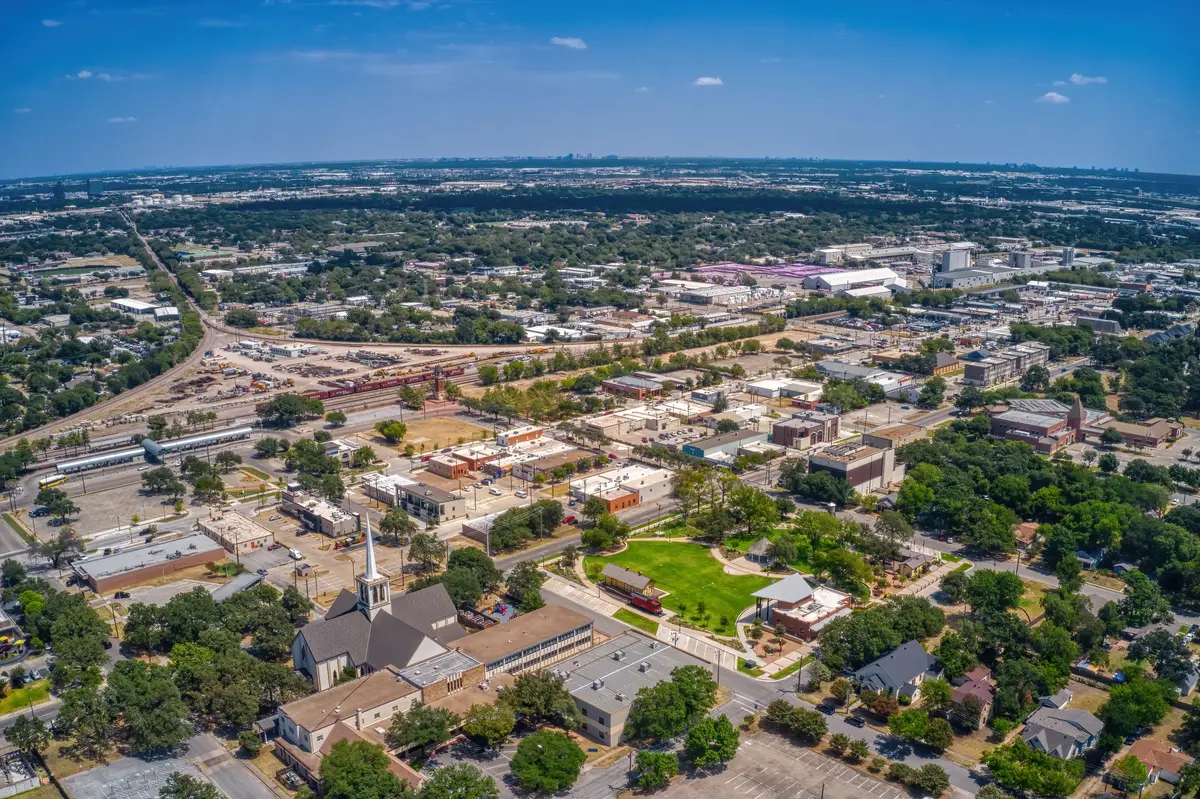
Irving's oldest neighborhood keeps its brick streets and mature trees. The Trinity Rail Express stop here connects directly to both downtown Dallas and Fort Worth — making it the most transit-accessible part of the city for commuters working in either direction. For Californians who want walkable streets and some historical character, this is the closest Irving gets. Best for: Transit commuters Walkable-neighborhood buyers
Hackberry Creek
Gated, country-club-adjacent, and priced accordingly. Hackberry Creek attracts buyers who are specifically looking for that lifestyle — security, exclusivity, golf proximity. Coming from certain California communities, the format will feel familiar even if the price point doesn't. Best for: Luxury buyers Privacy-focused households
Bear Creek
Bear Creek sits at the city median in price and offers a more affordable entry into Irving without pushing to the outer edges of the metro. It's a practical choice for buyers who want to own in Irving proper without stretching to Las Colinas pricing. Best for: First-time buyers Value-focused buyers
For a full breakdown of Irving's neighborhoods, see the best neighborhoods guide.
Looking to buy in Irving? Estimate your payment.
Enter your numbers to see an estimated monthly mortgage payment.
Estimate only. Excludes HOA fees and mortgage insurance. The interest rate above is a starting point, not a quoted rate — replace it with your own to see real numbers. Insurance is a flat placeholder, not a Irving quote.
What Catches Californians Off Guard
Six months in, most California transplants have adjusted to the tax math — that part is straightforward. What surprises them more are the things the spreadsheet didn't model.
The Heat Is Not Like California Heat
Irving has 233 sunny days a year. That number sounds appealing in January when you're looking at listings from a fog-belt California address. From June through September, the reality is sustained triple-digit heat with humidity levels California dry heat doesn't prepare you for. Your outdoor habits shift. The Campion Trail and Cimarron Park that look great on the map get used in the early morning or not much at all from July onward. This isn't a reason not to move — most transplants adjust — but it's the single biggest quality-of-life recalibration that nobody fully warned them about.
The Schools Conversation
Irving ISD holds a C rating, according to the Texas Education Agency. On 2024-25 state assessments, 31% of students reached math proficiency and 37% reached reading proficiency. For families moving from California districts with stronger performance metrics, this is a real conversation to have before you close on a house. Some families in Irving's higher-income neighborhoods use private schools or navigate inter-district options. Others prioritize the housing savings and accept the tradeoff. Neither is the wrong answer, but it should be a deliberate one, not a surprise at the first back-to-school night.
The Car Dependency Outside the Core
DART Light Rail and the Trinity Rail Express give Irving more transit infrastructure than most DFW cities its size. But outside Las Colinas and the Heritage District, this is a driving city. Californians from transit-adjacent neighborhoods in the Bay Area or Los Angeles sometimes underestimate how completely the day reorganizes around the car. If you're in Bear Creek or Valley Ranch, most errands mean a drive. That's not unusual for Texas — it's just worth knowing before you decide where to rent for your first year.
What People Move Away For
The honest answer: some California transplants leave Irving because the suburban texture — even in Las Colinas — doesn't scratch the itch for the kind of urban density and on-foot access they had in California. The Irving Arts Center, the Toyota Music Factory, and Lake Carolyn give the city genuine culture and outdoor amenities. But Irving is not Dallas. If you find yourself wanting the Deep Ellum or Uptown experience several nights a week rather than occasionally, a Dallas address might have suited you better. That realization usually hits around year two.
Weekends and Local Favorites in Irving
Irving's weekend rhythm is quieter than its corporate weekday energy suggests, which is part of the appeal for transplants who moved here specifically to decompress from a higher-intensity California pace.
Outdoor Time
The Campion Trail is the city's primary greenway — a multi-use paved trail that runs along the Trinity River corridor and connects to a broader regional trail network. Lake Carolyn in Las Colinas is the social center of that district, with waterfront paths and the kind of scenery that surprises people who picture Texas as flat and treeless. Cimarron Park and Heritage Park give the city additional open-space anchors on opposite ends of town. Northwest Park rounds out the accessible outdoor options for families with kids.
Food and Coffee
The dining scene that Irving transplants discover and return to regularly includes The Ranch at Las Colinas, known for its Texas-focused menu and setting; Whiskey Cake Las Colinas, which draws a consistent after-work and weekend crowd; Mexican Sugar, a polished take on Mexican cuisine; Sanjh Restaurant & Bar, which brings South Asian cooking to the Las Colinas dining mix; and Aspen Creek Grill for a reliable casual option. On the coffee side, Argentina Bakery brings a South American café sensibility, Cuppa Espresso Bar and Port Coffee Co Irving anchor the specialty coffee end, BEAME Bubble Tea & Coffee Bar-Irving covers the bubble tea crowd, and Cafe Hana rounds out the independent options. None of these are chains — and for California transplants who built their social life around good independent coffee and local restaurants, finding this depth in a Texas suburb is genuinely the thing they mention first when recommending Irving to friends still considering the move.
Culture and Events
The Toyota Music Factory brings nationally touring acts and has become a legitimate regional entertainment destination. The Irving Arts Center hosts rotating exhibitions and performances that punch above what you'd expect from a city this size. The Irving Convention Center anchors the Las Colinas event calendar. For Californians who moved here partly to save money, the fact that concert tickets and dining bills are simply less expensive than what they cost in major California metro markets is a quiet but persistent source of satisfaction.
Local Expert Takeaway: The California-to-Irving move makes clean financial sense for most professional-level earners — no state income tax, a typical home value of $343,364 (July 2026) that lands far below California's statewide typical home value of $773,735, and a cost of living that runs at the national average rather than well above it. The real variables are schools — Irving ISD's C rating from the Texas Education Agency is a meaningful consideration for families — and the heat, which requires a genuine lifestyle adjustment that no amount of research fully prepares you for. Land in Las Colinas if you want the urban-adjacent, transit-accessible version of Irving. Look at Valley Ranch if family infrastructure and organized community character matter more. And give yourself a full summer before you decide whether it stuck.
Quick Takeaways & FAQs
✅ Texas has no state income tax, saving a household earning $100,000 approximately $5,208 per year compared to California — the single largest financial shift in the move.
⚠️ Irving ISD holds a C rating from the Texas Education Agency, and school performance is the most common recalibration California families face after moving here.
📍 Dallas/Fort Worth International Airport sits just 8 miles from Irving's core, making this one of the few DFW cities where airport access is genuinely local rather than a metro-wide claim.
How much cheaper is Irving than California for buying a home?
Do I really save that much on income taxes by moving from California to Texas?
Which Irving neighborhood should California transplants look at first?
How are Irving's schools compared to California?
What do California transplants say they wish they'd known before moving to Irving?
Moving to Texas?
Tell us what you need help with and we'll connect you with local resources.
