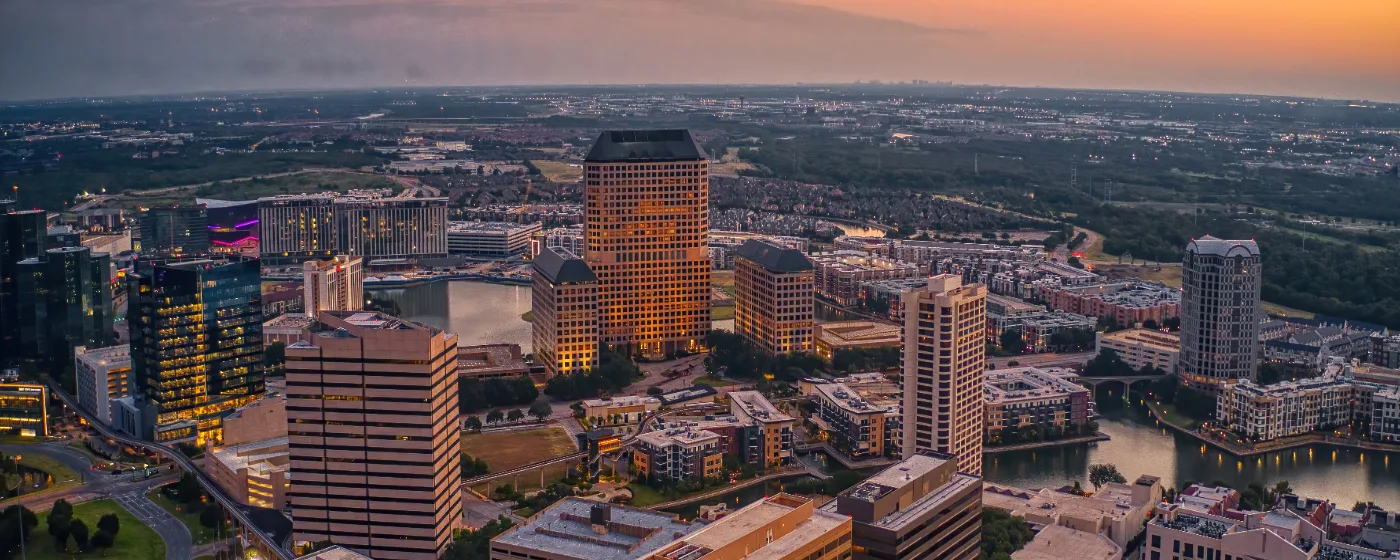
Maybe you've spent thirty years commuting past Dallas/Fort Worth International Airport and decided Irving deserves a closer look. Maybe someone told you Texas has no state income tax and you started doing the math. Either way, Irving presents a genuine retirement case that most people outside the Metroplex haven't fully considered: a city of 257,076 with a hospital inside its own limits, a light-rail line that reaches downtown Dallas and DFW without touching a car, and a typical home price of $343,364 (July 2026) that sits well below what comparable Metroplex suburbs command. The trade-off — and there is one — is that Irving doesn't feel like a retirement destination in the way that a Sun Belt resort community does. It feels like a working city that happens to be very good for retirees willing to look past the corporate towers of Las Colinas.
What actually drives daily life here is the infrastructure. Irving sits where I-635, SH-114, and SH-161 intersect, which means every major medical corridor in the Metroplex is reachable in under forty minutes. The DART Orange Line threads through the Las Colinas Urban Center and connects to downtown Dallas and the regional rail network, giving car-free residents options that most suburban cities in Texas simply don't offer. The Irving Independent School District, the city government, Fluor Corporation, and Caterpillar Inc. form the employment base — which matters to retirees because it means a stable local economy without the boom-bust volatility of single-industry towns.
On a fixed income, Irving's cost structure is more manageable than it looks at first glance. Texas's zero state income tax means Social Security checks and pension distributions land untouched, and homeowners over 65 qualify for property tax protections that genuinely bend the curve. The city's parks system — more than 90 parks across over 2,000 acres, plus 22 miles of flat paved trail along the Trinity River — means outdoor activity doesn't require a gym membership or a long drive. For daily errands, Irving is car-dependent in most neighborhoods, though the Las Colinas Urban Center area offers more on-foot access than anywhere else in the city.
Whether you're weighing Irving against staying in Dallas, comparing it to Coppell or Grapevine, or just trying to understand what a retirement here actually costs and feels like, the sections below cover healthcare access, the retiree budget, walkability, downsizing, and how Irving stacks up against nearby alternatives.

Why Retirees Are Choosing Irving
The retirees who land well in Irving tend to share a profile: they want metropolitan-level healthcare without metropolitan-level home prices, they're comfortable with a car-dependent lifestyle for most errands, and they value proximity to a major airport — Dallas/Fort Worth International Airport is roughly 8 miles away — for visiting family or wintering elsewhere. At a typical home price of $343,364 (July 2026), Irving is noticeably more affordable than Coppell or Grapevine, two suburbs many retirees consider first. That gap leaves room in a retirement budget that tighter markets simply don't.
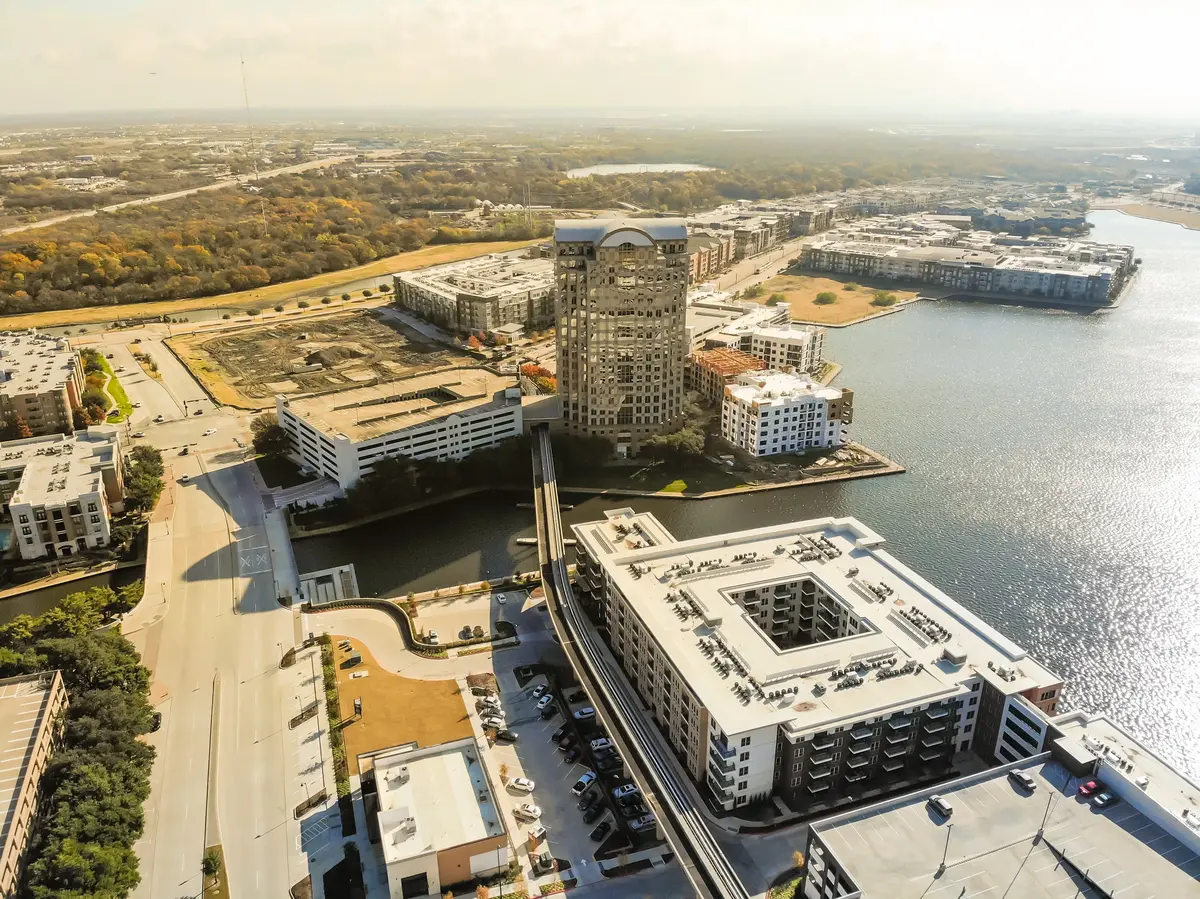
Irving also rewards retirees who want cultural and culinary variety without moving to Dallas proper. The Toyota Music Factory brings major touring acts to an outdoor amphitheater. The Irving Arts Center runs a year-round schedule of exhibits and performances. Lake Carolyn in the Las Colinas Urban Center gives the district a genuine waterfront feel — dinner overlooking the water, a morning walk, a weekend sculpture tour anchored by the Mustangs of Las Colinas. These aren't things you have to drive to another city for.
Who should look elsewhere? Retirees who want a walkable small-town downtown will find Irving's scale and car-dependence frustrating outside Las Colinas. Those seeking a purpose-built 55+ community — deed-restricted age requirements, organized activities, an HOA that handles the yard — won't find one here. No 55+ communities were found in Irving. And anyone prioritizing the absolute lowest cost in the Metroplex may find that parts of Dallas or Grand Prairie undercut Irving, depending on the neighborhood. Irving is a strong fit, not a universal one.
Healthcare & Medical Access in Irving
The anchor of Irving's healthcare picture is Baylor Scott & White Medical Center – Irving, a not-for-profit, fully accredited 297-bed hospital inside city limits. For retirees, the service lines matter most: the hospital carries advanced programs in heart and vascular care, cancer care, orthopedic surgery, digestive disorders, physical medicine and rehabilitation, and emergency medicine. It holds Joint Commission certification as a primary stroke center — a designation that matters acutely when minutes count. Joint Commission accreditation covers the facility broadly.
The depth of specialty care at a single in-city hospital is what separates Irving from most suburban alternatives. Retirees managing cardiovascular conditions, recovering from joint replacement, or navigating a cancer diagnosis don't have to default to driving into Dallas for specialist appointments at every turn. Routine and post-acute care, physical therapy, and cardiac follow-up can happen close to home.
That said, Irving is part of a larger Metroplex medical ecosystem, and some advanced subspecialty care — complex neurosurgery, transplant programs, pediatric oncology — will require travel to the major academic medical centers in Dallas. The honest read: Baylor Scott & White Irving handles the conditions that matter most to retirees exceptionally well, and the city's freeway network makes a specialty-referral trip into Dallas manageable rather than burdensome. For retirees accustomed to rural healthcare gaps, Irving's in-city hospital with this scope of service is a genuine upgrade.
A Note on SilverSneakers and Fitness Access
Every Irving recreation center, including the Heritage Senior Center, participates in the SilverSneakers program. If your Medicare Advantage or supplemental plan includes SilverSneakers, you access six recreation centers and four aquatic centers at no additional cost — that's the practical healthcare-adjacent benefit that often goes unmentioned in relocation conversations.
The Retiree Budget in Irving
Texas's zero state income tax is the headline. Social Security benefits, pension income, and retirement account withdrawals are not taxed at the state level — what you receive is what you keep, which changes the retirement math considerably for anyone moving from a state that taxes those income streams.
Property tax is the counterweight. Irving's effective property tax rate is approximately 1.55%, which is real and worth planning around. But the Texas over-65 framework softens it significantly. Homeowners 65 and older qualify for an over-65 exemption stacked on top of the standard homestead exemption. More importantly, once that over-65 exemption is granted, Texas law freezes the school-district portion of your tax bill at the level owed in the year you turn 65 — it cannot rise even as your home appreciates. That school-tax ceiling is long-established Texas Tax Code and applies automatically once you qualify.
Texas voters approved Proposition 13 in November 2025, raising the standard school-district homestead exemption to $140,000 for all homeowners. A separate legislative measure would add an additional $60,000 exemption specifically for seniors and disabled homeowners, potentially bringing the total exemption to $200,000 — but verify the final voter outcome on that additional amount before factoring it into your planning. The direction of travel is clearly favorable for senior homeowners; the precise final number warrants confirmation.
On a day-to-day basis, Irving's cost of living on a fixed income is manageable. Groceries and dining run close to Metroplex norms — neither the premium of a resort market nor the discount of a truly rural area. The city's annual recreation membership for Irving residents, which covers six recreation centers and four aquatic centers, is priced at $10 per person per year. That figure is not a typo. For the full cost-of-living breakdown, including utilities and transportation costs, see the dedicated page.
Looking to buy in Irving? Estimate your payment.
Enter your numbers to see an estimated monthly mortgage payment.
Estimate only. Excludes HOA fees and mortgage insurance. The interest rate above is a starting point, not a quoted rate — replace it with your own to see real numbers. Insurance is a flat placeholder, not a Irving quote.
Walkability, Community & Staying Active in Irving
The honest walkability picture: most of Irving requires a car. The Heritage District and the Las Colinas Urban Center are the exceptions. In Las Colinas, the free Loop circulator connects hotels, restaurants, Lake Carolyn, and the two DART light-rail stations in the Urban Center — making that corridor genuinely navigable without a car. The DART Orange Line provides a one-seat ride from Las Colinas through to downtown Dallas and out to the airport, and the Trinity Railway Express runs two stations in the Heritage District area. For retirees who want to surrender one car and keep one, the Las Colinas area makes that viable.
For residents who can't use fixed-route transit, the city-operated Irving Connector — a wheelchair-accessible on-demand service — covers the city broadly. DART's GoLink on-demand zones extend into South Irving and the Bear Creek area. These services exist and function; Irving is not leaving non-drivers stranded the way many suburban Texas cities do.
The Irving Heritage Senior Center is the social and fitness hub for older adults in the city. Operated by Irving Parks and Recreation, it offers treadmills, recumbent bikes, resistance machines, a rowing machine, aquatic exercise at the adjacent Heritage Aquatic Center, fitness classes, meals, day trips, and organized social programs. It's a real facility with regular programming — not a conference room with a potted plant.
Beyond the Senior Center, the outdoor options for active retirees are genuinely strong. Campion Trail runs 22 miles of paved, flat path along the Elm Fork and West Fork of the Trinity River. Flat and paved matters: this trail works for walkers with joint concerns, cyclists, and anyone who finds hilly terrain limiting. Irving was the first city to connect to the broader Trinity Trail System, a regional network planned to reach 250 miles across 16 North Texas counties. Cimarron Park and Northwest Park add local greenspace for shorter walks and picnics. With 233 sunny days a year, outdoor activity is realistically available most of the year — the summer heat from July through September is the constraint, not the calendar.
The cultural calendar adds dimension. The Irving Arts Center runs year-round programming. Toyota Music Factory draws a national touring schedule. The Mustangs of Las Colinas sculpture — one of the largest equestrian bronzes in the world — anchors the downtown waterfront area and draws a steady stream of visitors and locals alike. Irving isn't a sleepy retirement town, and retirees who want access to a live cultural calendar without paying Dallas prices for it tend to find that a genuine selling point.
Right-Sizing: Downsizing in Irving
No 55+ communities were found in Irving. That's the clearest piece of information for retirees expecting a deed-restricted active-adult neighborhood with age-gated amenities and a built-in social infrastructure. Irving's downsizing market is a general one — patio homes, condos, and single-level detached houses mixed into the broader residential inventory rather than organized into purpose-built senior developments.
That's not necessarily a deal-breaker. The Las Colinas and Valley Ranch areas both carry condo and townhome inventory that suits the low-maintenance lifestyle most downsizers are looking for — lock-and-leave flexibility, exterior maintenance handled by an HOA, and proximity to the transit and dining infrastructure those neighborhoods offer. The Hospital District, as its name suggests, also has a concentration of mid-size housing stock near the medical center, which appeals to retirees who want the shortest possible trip to routine appointments.
Single-level detached homes do exist in Irving's inventory, particularly in the Bear Creek area and parts of Heritage District, but they are not the dominant housing form in a city built largely during the ranch-house and two-story suburban construction eras. Buyers specifically targeting single-story homes benefit from being patient and working with an agent who can filter by construction type. At the city's typical price point, finding a single-level home below the median is realistic, though the selection is thinner than in a market purpose-built around retiree preferences.
For retirees who want the 55+ community model — organized activities, age-qualified neighbors, dedicated amenities — the honest advice is to widen the search to Grapevine, Coppell, or the broader Metroplex. Irving offers the budget and the healthcare access; it doesn't offer the structured senior-living ecosystem that some retirees find essential. If the community model matters to you, let that drive the geography before the price does.
Irving vs Nearby Retirement Destinations
| City | Cost vs Irving | Primary Hospital | Walkability | Senior Living Depth | Overall Retirement Fit |
|---|---|---|---|---|---|
| Irving | Anchor | Baylor Scott & White – Irving, in-city, full-service 297-bed | Car-dependent; Las Colinas walkable with DART Orange Line | No 55+ communities found; strong Senior Center and transit | Strong for budget + healthcare; weaker for senior community structure |
| Dallas | Somewhat lower in many neighborhoods | Multiple major medical systems; academic medical centers | Varies widely by neighborhood; some areas genuinely walkable | More senior living options across a larger inventory | Better for walkability and medical subspecialty access; neighborhoods vary significantly |
| Coppell | Noticeably higher | Relies on Irving and Carrollton facilities | More suburban; quieter streets, less transit | Limited; small-city inventory | Excellent school district reputation; quieter lifestyle; costs more |
| Grapevine | Noticeably higher | Relies on regional Metroplex hospitals | Historic downtown is walkable; broader city is car-dependent | Some active-adult options; charming downtown setting | Strong lifestyle appeal; historic district feel; premium price for the experience |
| Grand Prairie | Somewhat lower | Relies on Irving and Arlington facilities | Car-dependent throughout | Limited senior-specific inventory | Lower cost entry point; fewer amenities and transit options than Irving |
| Farmers Branch | About the same | Close access to Irving and Dallas facilities | Car-dependent; some walkable pockets | Small city; limited dedicated senior living | Quieter small-city feel; similar cost; less cultural infrastructure than Irving |
Dallas beats Irving on medical subspecialty depth and has neighborhoods that offer genuine on-foot access — but it comes at a lower price only in specific areas, and the quality varies enough that neighborhood research matters enormously there. Grapevine and Coppell offer a quieter, more polished suburban feel, but retirees pay noticeably more for that experience and give up Irving's in-city hospital. Grand Prairie undercuts Irving on price but offers less transit, fewer amenities, and no in-city hospital of comparable depth. Farmers Branch sits at a similar cost level with a smaller-city feel — appropriate for retirees who want quiet over cultural programming.
For the retiree whose priorities are healthcare access, manageable home prices, zero state income tax, and meaningful transit options, Irving is the strongest all-around case in this group. The gap it cannot close is the absence of a 55+ community structure — for that, Grapevine or the broader Metroplex market deserves a serious look.
Local Expert Takeaway: Irving's retirement case rests on three things that rarely come together in a single Metroplex city: a full-service hospital inside city limits, a light-rail line that reaches downtown Dallas and DFW without a car transfer, and home prices noticeably below what Coppell and Grapevine charge. The Heritage Senior Center is a genuinely staffed facility — not a token amenity — and the SilverSneakers partnership means many retirees access it for free through their existing insurance. The honest gap: there are no 55+ communities in Irving, and most of the city requires a car for daily errands. Retirees who want walkable independence outside Las Colinas will be disappointed; retirees who want Metroplex access, real healthcare, and a lower price point than the trendier suburbs will find Irving a smarter choice than its reputation suggests.
Quick Takeaways & FAQs
✅ Baylor Scott & White Medical Center – Irving is a 297-bed full-service hospital inside city limits with advanced cardiac, cancer, orthopedic, and stroke care — an unusual asset for a suburban city of this size.
⚠️ No 55+ communities were found in Irving, so retirees seeking a deed-restricted active-adult neighborhood will need to look at Grapevine, Coppell, or other Metroplex suburbs instead.
📍 Texas homeowners 65 and older can freeze the school-district portion of their property tax bill at the level owed when they turn 65 — a long-established state protection that caps one of Irving's largest household costs.
Does Irving have a 55+ or active-adult community?
Is Social Security taxed in Irving, Texas?
What property tax breaks are available to retirees in Irving?
How good is the healthcare in Irving for retirees?
Can you get around Irving without a car as a retiree?
Moving to Texas?
Tell us what you need help with and we'll connect you with local resources.
