What Is Living in Arlington, Texas Like?
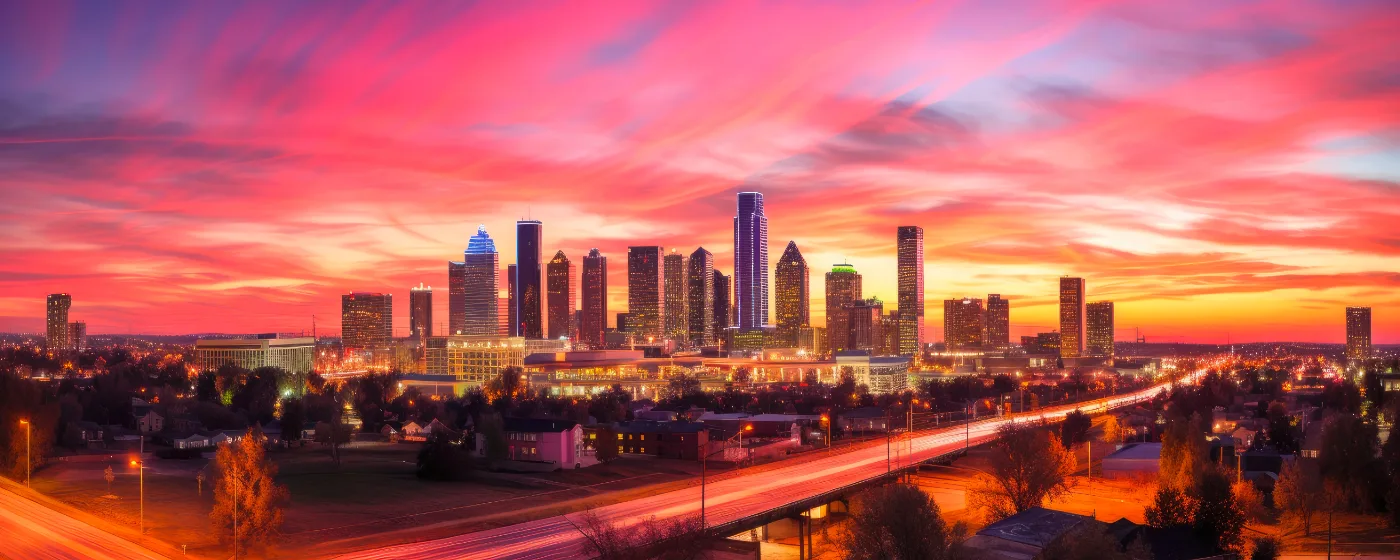
If you're choosing between Arlington and another DFW city, the decision usually comes down to this: do you want to be in the middle of everything — stadiums, highways, a major university, a General Motors plant — at a price point that still makes sense, or would you rather pay a little more for a quieter suburb on the fringe? Arlington, Texas, is the 7th-largest incorporated city in Texas and sits almost exactly between Dallas and Fort Worth on I-30, which tells you a lot about how it functions. It is not a sleepy bedroom community that grew up around one employer. It is a full city with 402,134 residents, its own economy, its own identity — and its own set of trade-offs worth understanding before you sign anything.
The economic backbone here is more varied than most newcomers expect. The Arlington Independent School District, the City of Arlington, the University of Texas at Arlington, a major regional health system, Six Flags Over Texas, and the General Motors Arlington Assembly plant — open since 1954 and one of the most significant automotive manufacturing sites in the country — all anchor local employment. The school district serves 51,139 students enrolled in 2025-26 and holds a C rating, according to the Texas Education Agency. Families move here for affordability and central location more often than for the schools specifically, though individual campuses vary considerably across the city's different areas.
The typical home price in Arlington was $312,255 as of July 2026 (Zillow Home Value Index), which puts it noticeably below what you'd pay in many inner-ring suburbs further along the DFW growth arc. The typical citywide rent runs $1,525 per month. That affordability, combined with an effective property tax rate of approximately 1.47% and a median household income of $75,171, makes Arlington genuinely accessible — though it's worth knowing that the median household income falls short of what's needed to comfortably carry the typical home purchase here. Day-to-day life leans on 235 sunny days a year, a park system anchored by the 1,300-acre River Legacy Park, and a downtown that has been steadily adding new amenities since 2025. Most errands require a drive — Arlington is built around its highway network, and a car shapes how daily life unfolds here.
Whether you're relocating for work at one of the city's major employers, priced into Arlington from a pricier DFW zip code, or simply doing your research, the sections below break down Arlington's neighborhoods, cost of living, schools, local favorites, commuting reality, and what daily life here is actually like.
Arlington at a Glance
Looking to buy in Arlington? Estimate your payment.
Enter your numbers to see an estimated monthly mortgage payment.
Estimate only. Excludes HOA fees and mortgage insurance. The interest rate above is a starting point, not a quoted rate — replace it with your own to see real numbers. Insurance is a flat placeholder, not a Arlington quote.
Why Are People Moving to Arlington?
Arlington's pitch is straightforward: a full-sized city between two of the largest metros in the country, with home prices that haven't fully followed the DFW hype cycle. That combination draws a specific kind of buyer — people who work somewhere in the I-30 corridor, want more house than Dallas or Fort Worth proper would give them, and don't need a walkable neighborhood to feel at home.
The Job Picture
The General Motors Arlington Assembly plant has been building full-size SUVs — the Chevrolet Tahoe, Suburban, GMC Yukon, and Cadillac Escalade — on the same site since 1954. It is one of the most durable private-sector employers in the entire Metroplex. Alongside it, the University of Texas at Arlington anchors a growing research and healthcare corridor, and the city's retail and healthcare industries together employ a substantial share of the local workforce. The Arlington Independent School District and City of Arlington are major public-sector employers in their own right.
People who don't work for one of those anchors often commute out — about 30 minutes to Dallas, or a comparable drive west into Fort Worth. That central position is the whole value proposition. For households where one person works in each direction, Arlington is genuinely the most logical middle ground in the Metroplex.
Redevelopment Over Raw Growth
Unlike fast-growing suburbs to the north and east, Arlington's growth story right now is about filling in what's already here. The Arlington Economic Development Corporation is actively recruiting new companies and advancing redevelopment projects citywide. Downtown is in visible transition: the Rotary Dream Park opened in January 2025, a new off-leash dog park followed in March 2025, and a boutique hotel on historic Division Street was set to open in 2026. That's a different energy than a subdivision breaking ground — it's a city reclaiming its core.
The Entertainment District, home to AT&T Stadium, Globe Life Field, and the newly opened National Medal of Honor Museum, continues to pull major investment. Arlington is also hosting matches at AT&T Stadium during the 2026 FIFA World Cup, which has accelerated infrastructure attention to that part of the city. For a buyer who believes in Arlington's long-term trajectory, this moment feels like early positioning.
Who Actually Moves Here
| Buyer Type | What Draws Them | Best Fit |
|---|---|---|
| I-30 corridor workers | True midpoint between Dallas and Fort Worth | Commuter |
| First-time buyers | Attainable entry price relative to the rest of DFW | First-Time |
| Families with school-age children | Space, yards, and suburban infrastructure at mid-range prices | Families |
| UT Arlington-connected households | Faculty, staff, and graduate students wanting proximity to campus | School |
| Value-focused buyers from higher-cost markets | More square footage per dollar than comparable DFW zip codes | Value |
| Entertainment District renters | New luxury multifamily near the stadiums and venues | Renter |
Arlington skews young — the median age is 33.7 years — and the homeownership rate of approximately 54.3% means a meaningful share of residents rent, which keeps the rental market active and the neighborhood character in flux.
What Daily Life Feels Like in Arlington
The first thing most newcomers notice is that Arlington does not have a single center of gravity. The Entertainment District pulls attention east. The university shapes the area around its campus. Downtown is being rebuilt from the inside out. And vast stretches of the city in between are classic Texas suburban — wide arterials, strip centers, single-family neighborhoods, and everything reachable by car.
The Car Reality
Daily life in Arlington runs on driving. The city operates Arlington On-Demand, an app-based rideshare service covering a 99-square-mile pickup zone, and launched Arlington Express in April 2025 — a pilot program connecting City Hall, the UT Arlington campus, and the CentrePort Trinity Railway Express station. Those options work for some trips. For groceries, school pickup, work, and most errands, a car is how residents get around.
The Seasonal Quirk Nobody Warns You About
Event traffic around AT&T Stadium and Globe Life Field is a category of its own. On a Rangers game night or a Cowboys home Sunday, entire swaths of the I-30 corridor and TX-360 effectively shut down for an hour before and after. Longtime residents plan their grocery runs and dinner reservations around the game schedule. In the weeks Arlington hosts FIFA World Cup matches at AT&T Stadium, that effect will be multiplied across the entire Entertainment District. If you're buying near that corridor, factor event proximity into your calculus — it affects resale appeal and noise alike.
What the Days Actually Look Like
Mornings in most of Arlington are quiet and suburban. River Legacy Park draws walkers and cyclists along the Trinity River trails before the heat sets in. The city gets 235 sunny days a year, and from June through August that means outdoor activity shifts to early morning or after sundown. Summers are genuinely hot — not inconveniently warm, but triple-digit-heat-index hot — and that shapes everything from how people socialize to how homes are designed.
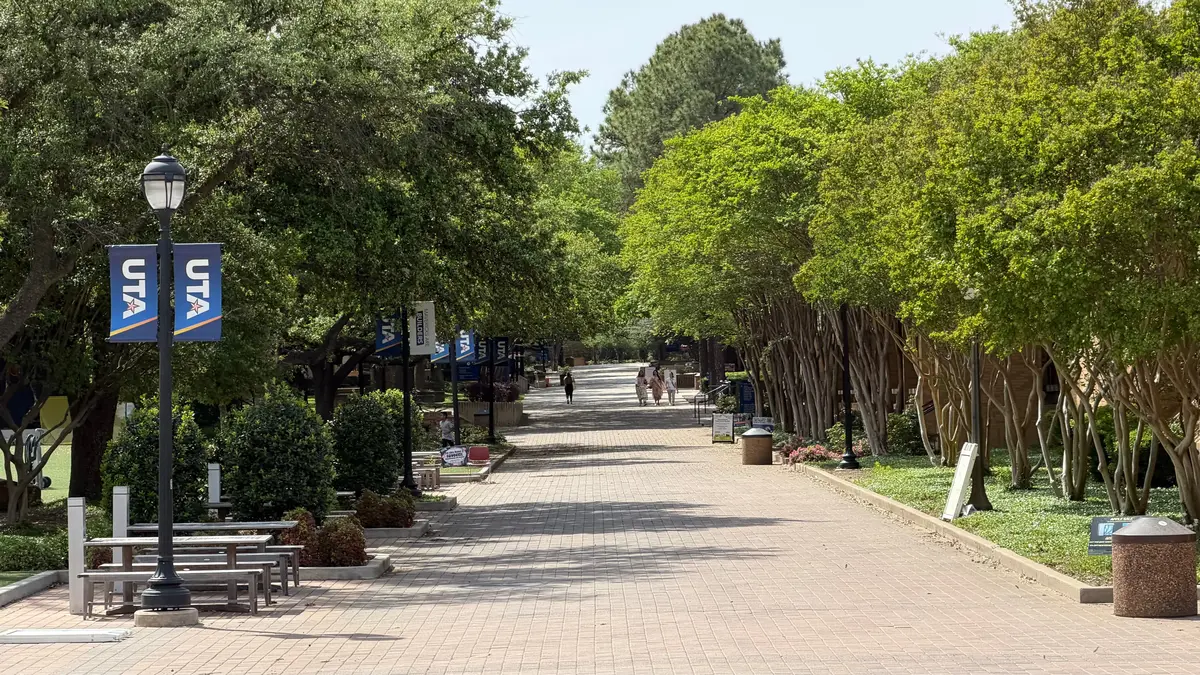
The downtown revitalization has added genuine day-to-day texture in the last two years. The Farmers Market - Arlington TX and the Downtown Arlington Farmers Market draw weekend crowds during the cooler months. The University of Texas at Arlington brings a consistent stream of cultural programming, and Levitt Pavilion Arlington runs a free outdoor concert series through the warmer months that is one of the city's most reliable community gathering points. For a full breakdown of parks and recreation options, see the parks and recreation page.
What Surprises People After Six Months
Many people who move here expecting a typical suburb are caught off guard by how much personality the city actually has — the manufacturing grit near the GM plant, the university-town energy around UTA, the stadium-district intensity, and the quieter older neighborhoods in the west and north. These don't blend seamlessly; they sit next to each other. Understanding which version of Arlington your neighborhood lives in is the most important thing you can do before choosing where to buy.
The Arlington Housing Market Right Now
Arlington's typical home price was $312,255 as of July 2026 (Zillow Home Value Index) — see the full cost breakdown on the cost of living page. For context within DFW, that figure is roughly comparable to what buyers encounter in Fort Worth and Grand Prairie, which means Arlington's central location doesn't carry a significant premium over its neighbors. That's an unusual situation in a metro where position usually costs something.
What the Price Point Gets You
At that city-wide typical figure, buyers in Arlington are generally looking at established single-family homes — many built from the 1970s through the 1990s — with three to four bedrooms, a two-car garage, and a yard. Newer construction exists but is concentrated in specific areas, particularly around the Viridian master-planned community in the northeast. Entry-level buyers will find older homes that need updating; buyers with more budget find larger lots and updated interiors in areas that run above the city median, particularly in North Arlington.
The effective property tax rate of approximately 1.47% is a real number to factor in. Texas has no state income tax, which draws buyers from higher-tax states, but property taxes here do meaningful work. On a home near the city's typical price, that rate translates to a recurring annual cost that should appear in any honest budget comparison.
Neighborhood Price Character
North Arlington runs above the city median and tends to draw buyers who want more polished suburban infrastructure. Southwest Arlington and West Arlington sit closer to the city-wide typical figure, offering solid value in established neighborhoods. East Arlington comes in below the median, making it the most accessible entry point for first-time buyers — though the neighborhoods page covers the character of each area in more detail. Some parts of the city cost noticeably more than others; where you land on that spectrum depends heavily on which employer anchor or school campus matters most to your household.
Renting vs. Buying
The citywide typical rent of $1,525 per month (Zillow ZORI, July 2026) reflects a market where renting is common — just under half the city rents. The Entertainment District and areas near the UT Arlington campus have seen new luxury multifamily construction, including the One Rangers Way development near Globe Life Field, which has raised the ceiling on what rental living looks like in Arlington. Well-priced homes in established neighborhoods tend to attract interest, particularly when they're updated and priced at or below the city median. The affordability gap — where the median household income falls short of what's typically needed to carry the city's median home price — means buyers often stretch, which keeps demand real but also keeps competition for move-in-ready homes at the mid-range level steady.
Arlington Neighborhoods
Arlington has several distinct areas — each with its own character and appeal. Here’s a breakdown to help you narrow down where to focus your home search.
🏡 North Arlington
North Arlington is the city's most polished suburban quadrant, with well-maintained established neighborhoods, mature tree cover, and easy access to the full highway network. It tends to draw parents with school-age children and buyers who want a traditional suburban feel without leaving the city limits.
🏠 South Arlington
South Arlington is a large, diverse swath of the city with a mix of housing ages and styles that draws a wide range of households. It offers solid suburban infrastructure and proximity to I-20, making it practical for commuters whose work takes them south or east.
🌳 Viridian
Viridian is Arlington's flagship master-planned community, featuring newer construction, planned amenities, and a waterfront design around a central lake. It appeals to buyers who want a coordinated, resort-adjacent neighborhood feel, and it is home to Elements at Viridian, the city's primary 55+ community.
🏘 Southwest Arlington / Fannin Farm
The Fannin Farm area and surrounding southwest neighborhoods offer established single-family homes with a quieter, more residential character than the stadium-adjacent corridors. It suits households who want predictable suburban comfort without the event-traffic dynamics of the eastern part of the city.
🏔 Downtown Arlington
Downtown Arlington is in active renewal, with new parks, a farmers market, and an incoming boutique hotel adding genuine foot-traffic energy to a historic commercial core. It suits buyers and renters who want to be close to UT Arlington and the growing dining and cultural scene taking shape along Division Street.
🌆 West Arlington / Interlochen
West Arlington and the Interlochen area offer established mid-century neighborhoods with larger lots and a lower-key pace, sitting closer to the General Motors plant corridor. It attracts buyers who value space over newer finishes and prefer a quieter residential character removed from the stadium district.
Pros & Cons of Living in Arlington
The Pros
- Central DFW location with access to both Dallas and Fort Worth job markets
- Home to major sports and entertainment venues like AT&T Stadium and Six Flags
- Home prices remain below many nearby DFW suburbs
- Large public university (UT Arlington) anchoring the local economy and culture
The Cons
- Property tax rates among the highest in Texas
- Violent and property crime rates run above national averages in parts of the city
- Limited public transit and a car-dependent layout with heavy I-30/I-20 traffic
Getting Around & Commuting in Arlington
Arlington's highway network is its real infrastructure. I-30 is the primary east-west spine connecting the city to both Dallas and Fort Worth. I-20 runs parallel to the south. TX-360, known locally as the Angus G. Wynne Freeway, carries the north-south load through the heart of the city and runs straight through the Entertainment District corridor. US-287 and TX-180 handle additional east-west movement, and TX-Spur 303 bisects the city as one of its main commercial arterials.
The Commute to Dallas and Fort Worth
The drive to Dallas is about 30 minutes under normal conditions — emphasis on normal. I-30 during rush hour, particularly inbound to Dallas in the morning and outbound in the evening, can extend that considerably. Commuters who work in Fort Worth have a comparable drive west. The midpoint position that makes Arlington geographically logical also means residents routinely choose between two congested corridors depending on the day.
For workers who need to reach downtown Dallas or the Medical District, many use the CentrePort Trinity Railway Express station, which connects to commuter rail serving both cities. The Arlington Express pilot, launched in April 2025, provides on-demand service connecting City Hall, the UT Arlington campus, and CentrePort — useful for households that want to shed one car or avoid the I-30 crawl on certain days. Arlington's wider app-based Arlington On-Demand rideshare service covers the full 99-square-mile city, filling gaps where fixed-route transit would otherwise go.
Airport Access
Dallas/Fort Worth International Airport is 13 miles from Arlington — one of the most direct airport relationships of any DFW city. That proximity matters not just for travel but for employment: the airport and its surrounding logistics corridor employ residents across Arlington. TX-360 is the primary route connecting the city to the airport, and the drive is short enough that many residents skip ride-share entirely and park themselves.
Commute Patterns by Employer
| Destination | Primary Route | Typical Commute | Notes |
|---|---|---|---|
| Downtown Dallas | I-30 East | About 30 minutes | Traffic-sensitive; TRE is an alternative |
| Downtown Fort Worth | I-30 West | Comparable to Dallas drive | Less congested than I-30 East in most hours |
| DFW International Airport | TX-360 North | Short drive, 13 miles | Among the closest DFW cities to the airport |
| GM Arlington Assembly | Local arterials | Within city | Plant is inside Arlington city limits |
| UT Arlington campus | Local streets | Within city | Campus is central to the city grid |
| Grand Prairie / Irving | I-30 / I-20 / TX-360 | 15–25 minutes | Depends on destination within those cities |
One thing that catches commuters off guard: event days at AT&T Stadium and Globe Life Field affect surface streets and on-ramp access in ways that aren't obvious until you've lived here through a full season. Building your route around that knowledge is something every Arlington commuter eventually figures out.
Schools in Arlington
Families relocating to Arlington have public, private, and higher-education options nearby. Here’s a quick overview.
🎓 School District
Arlington Independent School District serves K–12 students across Arlington and the surrounding area. Rated C (source: Texas Education Agency, 2025 A-F accountability rating (2024-25 school year)).
🏆 Graduation Rate
The 4-year high-school graduation rate here is approximately 87%.
📚 Higher Education
Texas’s public universities — the University of Texas at Austin, Texas A&M University, and the University of Houston — offer four-year degrees statewide, with one of the largest community college systems in the country (50+ public community college districts) providing two-year and workforce programs.
🌐 Online Learning
UT Austin Online and Texas A&M University Online offer fully accredited online degrees for remote learners across the state.
Safety in Arlington
A quick look at how Arlington compares on the numbers that matter most when weighing a neighborhood or a move.
🛡 Violent Crime
Approximately 4.81 per 1,000 residents.
🔒 Property Crime
Approximately 24.32 per 1,000 residents.
Compared to the most recent national figures from the Bureau of Justice Statistics (2024), Arlington’s violent crime is above the national average (about 3.7 per 1,000), and property crime is above the national average (about 18.4 per 1,000).
Against Texas as a whole, Arlington’s violent crime is somewhat above the state average, and property crime is somewhat above the state average (Bureau of Justice Statistics, Crime Known to Law Enforcement, 2024 (tables 2 and 3)).
Crime rates can vary a lot within a single city, so the citywide numbers above are only a starting point. Some neighborhoods in Arlington run well below these averages, while others run higher — the kind of block-by-block detail that matters most when you’re actually choosing where to live. The full guide below breaks it down neighborhood by neighborhood.
Working in Arlington
Arlington’s largest employers span several industries — here are some of the anchors of the local job market.
🎓 Arlington Independent School District
Education
🏛 City of Arlington
Municipal government
🏭 General Motors Arlington Assembly
Automotive manufacturing
🎓 University of Texas at Arlington
Higher education
🏥 Texas Health Resources
Healthcare
💼 Six Flags Over Texas
Entertainment
Retiring in Arlington
Arlington draws retirees for its balance of amenities, outdoor access, and cost. Here’s what to weigh.
🌤 Climate
Arlington gets 235 sunny days a year, with mild winters that rarely dip below freezing for long. Summers are the real variable — heat indexes regularly push into triple digits from June through August, which shapes how much outdoor time retirees can comfortably log during those months. Spring and fall are genuinely pleasant and represent the city at its best.
🍴 Lifestyle
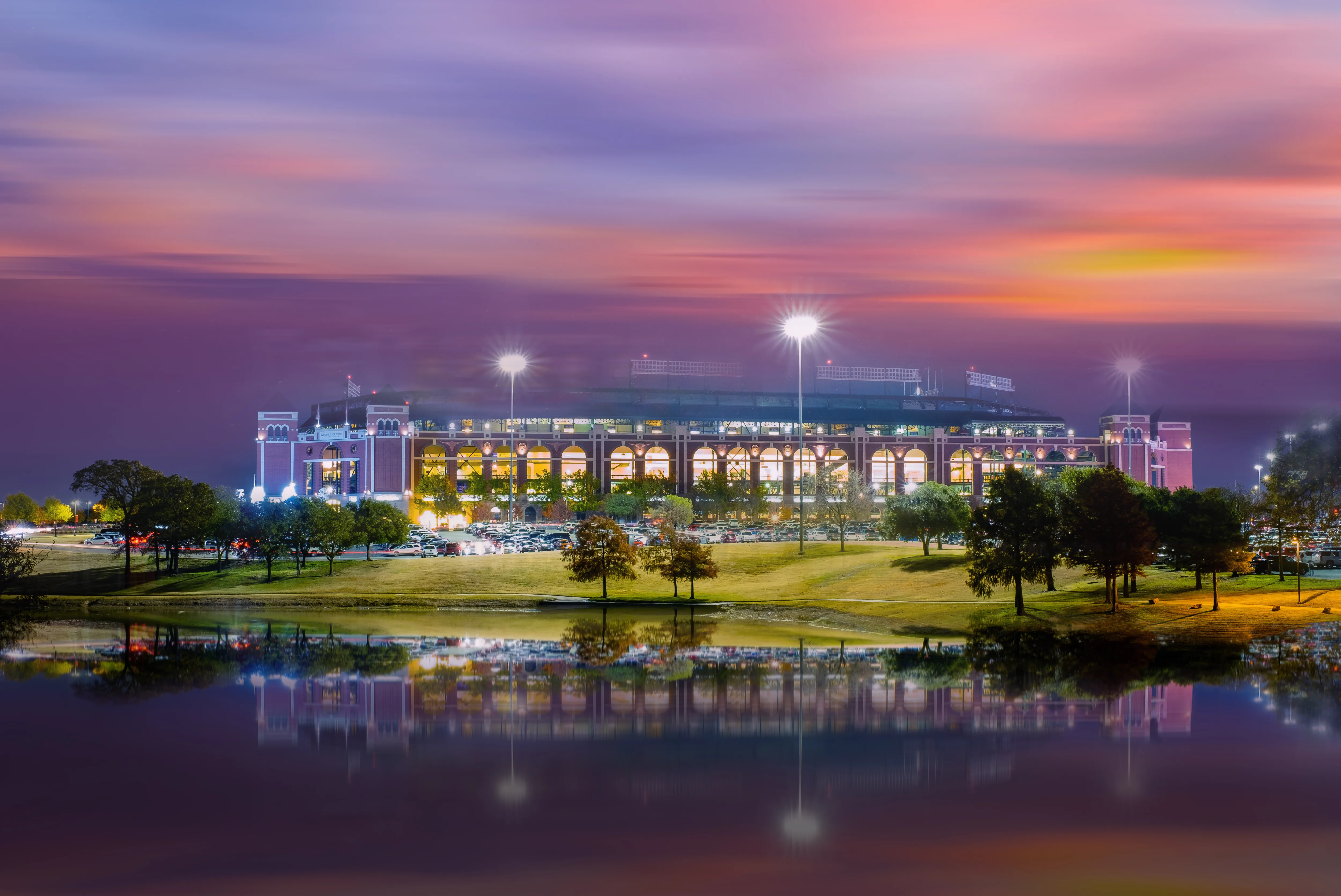
The city's entertainment anchors — AT&T Stadium, Globe Life Field, Six Flags, and the National Medal of Honor Museum — are within easy reach for retirees who want world-class events nearby. Downtown Arlington's revitalization has added walkable dining and green space, including the Rotary Dream Park. Independent coffee shops, casual dining, and a weekly farmers market round out the everyday picture.
🏚 55+ Communities
Elements at Viridian is the primary age-qualified community in Arlington, situated within the Viridian master-planned development in the northeast part of the city. It offers a purpose-built setting for residents 55 and older within an active broader community. For a fuller picture of retiring in Arlington, the retiring page covers healthcare access, lifestyle, and budget considerations in more detail.
✈ Getting Around
A car is how most residents get around in Arlington — the city's layout is suburban and distances between destinations require driving. The good news for retirees is that Dallas/Fort Worth International Airport is just 13 miles away, making travel straightforward. The Arlington On-Demand app-based rideshare service provides an alternative for trips where driving isn't practical, and the CentrePort Trinity Railway Express station connects to rail service into both Dallas and Fort Worth.
🏛 Texas Taxes for Retirees — What to Know
- No state income tax — Texas has no personal income tax — constitutionally protected under Article VIII, Section 24. Social Security, pensions, 401(k)/IRA withdrawals, and annuity payments are all untaxed at the state level, with no state return to file.
- Sales tax is the tradeoff — The state sales tax is 6.25%, and local add-ons bring the combined rate in Arlington to 8.25% (Texas Comptroller of Public Accounts, city sales and use tax rates, July 2026). Groceries and prescription drugs are exempt.
- Property taxes — the real tradeoff — Texas’s effective property tax rate averages about 1.40%, among the highest in the country, since property tax (not income tax) funds most local government and schools.
- Over-65 homestead exemption and school-tax freeze — Homeowners 65+ (or disabled) get an additional $60,000 exemption from their home’s value for school district taxes, on top of the general homestead exemption — $200,000 off school taxable value combined, following November 2025’s Proposition 11 (SB 23), which raised the over-65 exemption to $60,000, and Proposition 13 (SB 4), which raised the general homestead exemption to $140,000. Once claimed, your school district tax bill is frozen at that year’s amount and cannot increase as home values rise, and the ceiling can transfer if you move to a new home within Texas.
- Deferral option if cash is tight — Homeowners 65+ can defer property tax payment entirely for as long as they live in the home, rather than paying it currently — interest accrues, but no forced sale.
- No estate or inheritance tax — Texas has no estate tax, no inheritance tax, and no gift tax.
- No separate capital gains tax — Because Texas has no state income tax, capital gains — including on investments and home sales — are not taxed at the state level at all, unlike states such as Washington that tax capital gains separately from income.
Tax laws change frequently and individual situations vary. This is general information, not tax advice — always consult a qualified Texas tax professional or CPA for personalized retirement tax planning.
Weekends & Local Favorites in Arlington
Arlington's weekend identity is split between the epic and the everyday. On one Saturday you might be tailgating before a Rangers game at Globe Life Field or catching a touring act at AT&T Stadium. On another you're hiking the Trinity River trails at River Legacy Park while the rest of the city sleeps in. Both versions are genuinely Arlington — and which one fits your household matters for where you choose to buy.
The Big Draws
AT&T Stadium and Globe Life Field are not just sports venues — they're among the most active concert and event spaces in the country, regularly hosting touring headliners on the same stages where the Cowboys and Rangers play. Six Flags Over Texas and Six Flags Hurricane Harbor Arlington have been anchors of the city's entertainment identity for decades, drawing regional visitors and giving families with kids a literal backyard attraction. The National Medal of Honor Museum opened in the Entertainment District and offers genuinely compelling interactive exhibits — it's the kind of place locals recommend to visitors and then end up revisiting themselves. And in 2026, AT&T Stadium is a FIFA World Cup venue, making Arlington briefly one of the most-watched cities in the country.
The Everyday Places
River Legacy Park is the city's great outdoor resource — 1,300 acres along the Trinity River with trails for hiking and biking, wildlife along the floodplain, and enough room to feel genuinely removed from the suburban grid. Veterans Park, Richard Simpson Park, and the Big Bear Creek Greenbelt give other parts of the city similar green infrastructure. The Texas Rangers Golf Club, the only MLB-branded public course in the country, sits within reach of the Entertainment District for anyone who wants to play where the stadium lights are visible from the fairway.
Levitt Pavilion Arlington runs one of the region's most beloved free outdoor concert series through the warmer months — the kind of community gathering that regulars start planning around well before the season opens.
Where to Eat, Drink, and Spend a Morning
For barbecue, Hurtado Barbecue has built a serious reputation and consistently draws lines. Razzoo's Cajun Cafe brings Louisiana-style cooking and a lively atmosphere that fits the city's game-day energy. Mariano's Hacienda Ranch is a Tex-Mex institution that longtime residents treat as something close to a civic landmark. The Tipsy Oak and The Social House offer more casual, neighborhood-bar-style settings for evenings out.
On the coffee side, Savor Coffee Bar, Nehemiah Coffee Company, Inclusion Coffee, Grounds and Gold Co., and Chill Coffee and Wine Bar represent a local independent scene that punches above what you'd expect for a city this size. Each has its own character — Inclusion Coffee is a social enterprise with a mission embedded in its name; Chill bridges the coffee and wine hour in a way that suits the city's young median age. The Farmers Market - Arlington TX and the Downtown Arlington Farmers Market are the weekend gathering points during the cooler half of the year, when the heat backs off enough to make an outdoor market feel like an event rather than an endurance test.
For parks, recreation, and the full outdoor picture, the parks and recreation page goes deeper on what each green space offers.
Local favorites in Arlington
Restaurants
- Razzoo's Cajun Cafe
- Hurtado Barbecue
- Mariano’s Hacienda Ranch
- The Tipsy Oak
- The Social House
Outdoors
- River Legacy Park
- Veterans Park
- Richard Simpson Park
- Big Bear Creek Greenbelt
Coffee
- Savor Coffee Bar
- Nehemiah Coffee Company
- Inclusion Coffee
- Grounds and Gold Co.
- Chill Coffee and Wine Bar
Farmers Markets
- Farmers Market - Arlington TX
- Downtown Arlington Farmers Market
Top Things Locals Say About Arlington
The best intel about a city comes from the people who actually live there. Here’s what Arlington residents say when newcomers ask the questions everyone’s thinking.
“I knew Arlington was big, but I didn't realize how different each part of the city would feel once I actually lived here. My neighborhood near the university has a totally different pace than the friends I made who bought near the stadium corridor — event traffic is just part of their weekly math in a way I never think about.”
— Recent Arlington home buyer
“What's the most surprising thing about living in Arlington?”
How much city there actually is. People think of Arlington as a suburb between two bigger places, but it has its own distinct identity — the manufacturing heritage around the GM plant, the university energy near UT Arlington, the stadium district that draws the whole country. What catches you off guard is that these zones don't really blend. You learn pretty quickly which version of Arlington your block belongs to.
“What do locals love most about Arlington?”
River Legacy Park, genuinely. It's 1,300 acres along the Trinity River and it doesn't feel like a city park — it feels like a nature preserve that someone dropped inside the Metroplex. Beyond that, Levitt Pavilion's free outdoor concerts are a summer ritual for a lot of households, and the fact that DFW International Airport is just 13 miles away makes travel feel almost effortless compared to other parts of the metro.
“What should newcomers to Arlington know?”
Learn the event calendar before you learn anything else. When the Cowboys play at AT&T Stadium or the Rangers are at home at Globe Life Field, the traffic around I-30 and TX-360 in that corridor changes completely. Long-timers grocery shop before noon on game days. Also: the heat from June through August is real. You'll reorganize your outdoor life around early mornings and evenings faster than you expect.
“How much do you need a car in Arlington?”
Entirely. Arlington On-Demand and the Arlington Express pilot cover some trips around the city, but groceries, school pickup, work, and weekend plans all mean driving. The trade-off is that parking is almost never a problem, distances within the city are manageable once you know the grid, and DFW International Airport is a short drive rather than an expedition.
Cities Near Arlington
Other communities near Arlington worth a look — each with its own character and price point.
| City | Distance | Best For | Vibe | Median Rent | Median Buy |
|---|---|---|---|---|---|
| Fort Worth | 15 mi | Culture seekers and urban buyers | Walkable core, strong arts scene | $1,625 | $298,353 |
| Dallas | 20 mi | Career-driven urban professionals | Dense, fast-moving, high-energy | $1,605 | $309,590 |
| Grand Prairie | 10 mi | Value buyers near DFW Airport | Practical, affordable, family-oriented | $1,619 | $317,295 |
More Helpful Guides for Arlington
Going deeper on Arlington? Our blog series covers everything from first-time buying to retiring here — explore the guides below.
Local Expert Takeaway: Arlington is not a city that asks you to choose between affordability and location — it offers both, right at the midpoint of the DFW corridor. The real question is whether you're comfortable with a car-dependent lifestyle. This is a driving city, full stop. But if you're anchored to the I-30 corridor, work at or near the GM plant, UT Arlington, or any of the city's major employers, and want a genuine house at a price that still makes sense in DFW, Arlington delivers. River Legacy Park, a downtown in active revival, and a stadium district that draws world-class events make the everyday feel bigger than the price tag suggests.
Quick Takeaways & FAQs
✅ Arlington's typical home price of $312,255 (July 2026) places it among the most attainable full-sized cities in the entire DFW Metroplex.
⚠️ Daily life here runs on driving — Arlington On-Demand and the Arlington Express pilot cover some trips, but a car is how most residents handle groceries, school pickup, and work.
📍 The General Motors Arlington Assembly plant has been one of the city's largest private-sector employers since 1954, and its presence shapes the economic character of the city's industrial west side.
Is Arlington TX a good place to live?
How far is Arlington from Dallas?
What is the cost of living like in Arlington TX?
How are the schools in Arlington TX?
Does Arlington TX have public transportation?
Helpful Links for Moving to Arlington
Moving to Texas?
Tell us what you need help with and we'll connect you with local resources.
