
The question comes up on every relocation forum about the Dallas-Fort Worth Metroplex: is Arlington actually safe? The answer is more layered than a single crime rate can capture. Arlington is the 7th-largest incorporated city in Texas, home to 402,134 people — and it hosts AT&T Stadium, Globe Life Field, and Six Flags Over Texas, drawing millions of additional visitors each year. That visitor volume shapes the crime numbers in ways that can make the city look more dangerous than daily resident life actually feels.
The raw figures sit modestly above Texas and national averages. Arlington carries a violent crime rate of 4.81 per 1,000 residents and a property crime rate of 24.32 per 1,000 residents, both measured against a resident base that doesn't account for the tens of thousands of people moving through the Entertainment District on any given weekend. Context matters here more than in almost any other Texas city its size. A MoneyGeek study using FBI data ranked Arlington 10th lowest for crime cost per capita among all U.S. cities with populations over 300,000 — a finding that cuts against the headline rates and points toward the visitor-volume distortion.
The trajectory is also moving in the right direction. The Arlington Police Department's most recent Annual Report documented consecutive years of decline across all major crime categories. Crimes against persons have fallen, and the downward trend is visible across the department's incident-based reporting to the FBI's National Incident Based Reporting System, which tracks incidents at a more granular level than older summary reporting. The trend line is genuinely encouraging for a city this size.
Whether you're considering a neighborhood in North Arlington, eyeing the newer development around Viridian, or weighing the tradeoffs of living near the Entertainment District, the sections below break down Arlington's crime picture by area, compare it honestly to state and national benchmarks, explain what the property crime numbers actually mean day-to-day, and give you the tools to do your own ongoing research before settling on a neighborhood.
Arlington's Crime Rates in Context
Numbers without context produce anxiety, not insight. Arlington carries a violent crime rate of 4.81 per 1,000 residents, which sits above the Texas state rate and the national rate. The city also carries a property crime rate of 24.32 per 1,000 residents, which likewise runs above state and national figures. On paper, that looks like a meaningful gap. In practice, the gap narrows considerably once you account for what makes Arlington structurally unusual.
No other city in Texas of comparable size functions simultaneously as a major league sports hub, a national theme park destination, and a dense residential community. AT&T Stadium has hosted some of the largest sporting events in the country. That visitor traffic is real and it concentrates in specific corridors — but it inflates the per-resident crime rate for the entire city, because the denominator stays fixed at 402,134 residents while the numerator reflects incidents involving visitors as well.
The MoneyGeek large-city analysis addressed this directly. By measuring crime cost per capita — a metric designed to capture the actual financial and social burden of crime on residents — Arlington ranked 10th lowest among every U.S. city with more than 300,000 people. That ranking doesn't erase the elevated rates, but it reframes what they mean for someone deciding where to live.
The Arlington Police Department also participates voluntarily in the FBI's National Incident Based Reporting System, which enables more detailed incident-level tracking than the older summary-reporting method used by many departments. That transparency is worth noting: cities that don't report tend to look artificially safer in national comparisons.
What's Actually Driving the Property Crime Numbers
| Measure | Arlington | Texas | National | vs. national |
|---|---|---|---|---|
| Violent crime (per 1,000) | 4.81 | 4 | 3.7 | 30% higher |
| Property crime (per 1,000) | 24.32 | 20.7 | 18.4 | 32% higher |
State and national figures — Bureau of Justice Statistics, Crime Known to Law Enforcement, 2024 (tables 2 and 3). City figures — NeighborhoodScout. City rates come from a different reporting series than the state and national benchmarks, so read the comparison as a direction, not a precise multiple.
Property crime — not violent crime — is the category that most directly affects day-to-day life for Arlington residents, and motor vehicle theft is the single largest driver within that category. Larceny, burglary, and vehicle theft collectively account for the vast majority of all reported crime in the city. If you're evaluating whether Arlington is safe to live in, your most practical concern is protecting your car and your home from theft, not navigating a high rate of violent confrontation.
Motor vehicle theft has become an elevated challenge across the entire Dallas-Fort Worth Metroplex, and Arlington is not immune. Certain older-model Kias and Hyundais have been targeted citywide following a widely publicized vulnerability that spread through social media. This is worth knowing before you decide on a neighborhood: it's a category of risk that security measures — steering wheel locks, aftermarket immobilizers — can meaningfully reduce.
The Entertainment District corridor skews the property crime numbers for the whole city. Areas around AT&T Stadium and Globe Life Field generate a disproportionate share of incidents, particularly larceny from vehicles on event nights. The Arlington Police Department has coordinated dedicated public safety operations for major events, including receiving recognition for its work during a recent major league all-star game hosted in the city. What this means for residents in neighboring areas is that the crime map lights up around those venues on game nights, then returns to normal the next morning.
The department's most recent Annual Report showed a reduction in crimes against property — two consecutive years of decline in the category that matters most to residents is a more useful signal than a static rate comparison.

Neighborhood-by-Neighborhood Safety Picture
Crime in Arlington is not distributed evenly, and where you choose to live matters as much as the city-wide rate. The northern and central corridors carry heavier incident loads; the southeast and southwest quadrants offer a noticeably quieter residential profile. Understanding these differences is the most practical thing you can do before settling on a neighborhood.
North Arlington and the Central Core
North Arlington records the highest total incident count of any quadrant of the city. That doesn't mean North Arlington is uniformly unsafe — it's a large, internally varied area with plenty of quieter residential pockets — but it does mean you'll want to spend time on the Arlington Police Department's publicly searchable crime map before settling on a specific street or block.
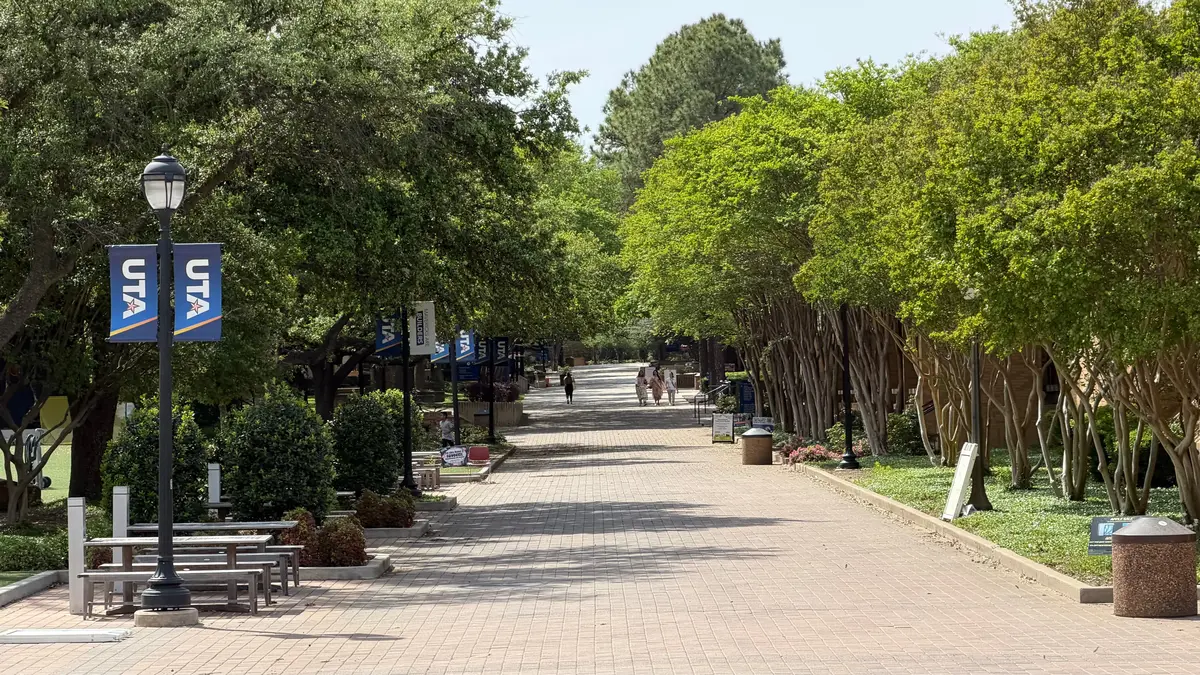
Home prices in North Arlington run above the city median, and the area carries genuine appeal: better access to established retail corridors, proximity to the University of Texas at Arlington, and denser neighborhood infrastructure. The safety picture is mixed enough that micro-location matters more here than anywhere else in the city. Best for: Commuters Walkable Access who are willing to research block-level crime patterns before committing.
East Arlington / Entertainment District
The Entertainment District carries the most misread crime numbers in Arlington. AT&T Stadium, Globe Life Field, Six Flags Over Texas, and Six Flags Hurricane Harbor Arlington collectively draw visitors in volumes that have no equivalent anywhere else in Tarrant County. Raw incident counts here run high precisely because crowd density runs high — crime following visitor traffic rather than resident risk. Living adjacent to the District means living with event-night congestion and the accompanying spike in vehicle-related incidents; it does not mean living in a particularly dangerous residential environment.
Best for: Renters and buyers who want proximity to entertainment and understand the event-night dynamics.
Southeast Arlington
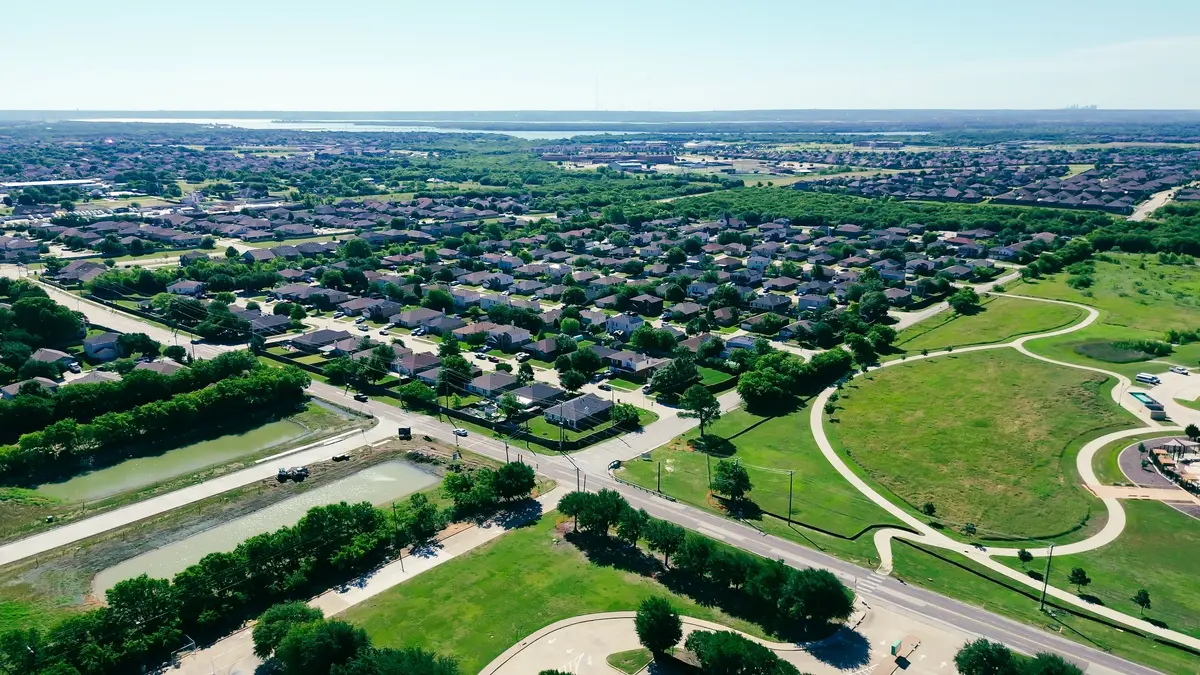
Southeast Arlington is among the more favorable quadrants for resident safety. Its suburban character, newer residential development, and distance from the high-traffic commercial corridors all contribute to a quieter crime profile — the kind of area where property incidents are relatively infrequent and violent crime is rare. The Viridian master-planned community occupies this quadrant, bringing with it a more cohesive neighborhood structure and active community engagement. Best for: Families Quiet Living
Southwest Arlington / Fannin Farm and West Arlington / Interlochen
Both Southwest and West Arlington tend toward quieter, residential crime profiles, consistent with their suburban character and lower visitor traffic. These areas lack the headline amenities of the north or east, but they also lack the concentrated incident activity. For families weighing safety as the primary criterion, the full neighborhood guide covers character and housing stock in more detail. Best for: Families Value
Downtown Arlington and South Arlington
Downtown Arlington sits within the higher-traffic central core, where crime mapping data shows elevated incident density partly driven by retail concentration and visitor activity. South Arlington's profile varies; proximity to a major east-west interstate brings commercial activity that can carry associated property crime. Neither area is monolithic — specific blocks and streets vary considerably.
Looking to buy in Arlington? Estimate your payment.
Enter your numbers to see an estimated monthly mortgage payment.
Estimate only. Excludes HOA fees and mortgage insurance. The interest rate above is a starting point, not a quoted rate — replace it with your own to see real numbers. Insurance is a flat placeholder, not a Arlington quote.
How Arlington Polices a City This Size
Policing a 402,134-person city that also functions as a national entertainment destination is a genuinely unusual operational challenge. The Arlington Police Department is authorized for 712 sworn officer positions in fiscal year 2025 and is actively recruiting both new officers and experienced lateral applicants — a hiring posture that reflects the department's growth orientation rather than a staffing crisis.
The department's community-engagement footprint is broader than most residents expect. National Night Out brings neighborhoods together annually in an event that Arlington takes seriously as a trust-building tool. Project 365, a domestic violence awareness and donation drive run in partnership with The Archway, addresses one of the harder-to-measure dimensions of community safety. Informal meet-your-officer events are designed specifically to build the kind of neighborhood familiarity that tends to improve crime reporting and deters opportunistic offenses.
The Safe Streets Arlington initiative, a cross-departmental effort focused on roadway safety, reflects an understanding that traffic-related harm is as real a safety concern as property crime for most residents. The department was also specifically recognized for coordinating public safety logistics during a major league all-star game hosted in Arlington — an event that brought extraordinary visitor volume into a compressed geography and went off without major incident.
One practical tool the department offers is genuinely useful: a publicly searchable online crime map, refreshed monthly, that allows residents to monitor incident reports by neighborhood. The city notes that the data should not be used in isolation for comparisons, which is honest guidance — a single month's map can be noisy. Used over several months, it shows patterns that no city-wide rate can capture.
What to Actually Check Before Choosing a Neighborhood
The most common mistake people make when researching safety in Arlington is treating the city-wide rate as the answer. It isn't. A city of 402,134 people with an Entertainment District that draws millions of visitors annually has meaningful internal variation — and the difference between the safest and least-safe quadrants is not marginal. The northern commercial corridors see the heaviest incident loads; the residential southwest and southeast see far fewer.
Use the APD Crime Map Actively
The Arlington Police Department's crime search portal at crimesearch.arlingtontx.gov is the most granular tool available to a prospective resident. Pull three to six months of data for the specific blocks you're considering, not just the neighborhood label. A street two blocks from a commercial corridor can look very different from one deeper into a residential subdivision — and that distinction won't show up in any quadrant-level analysis. Aggregator tools like CrimeGrade and NeighborhoodScout are also worth using to look up a specific address, keeping in mind they use their own data series and update on their own schedule.
Understand What Motor Vehicle Theft Means for You
Property crime is the dominant risk category in Arlington, and within property crime, vehicle theft is the most elevated concern. Six months after moving in, most newcomers from quieter suburban markets have had at least one conversation with a neighbor about car security. This isn't alarmism — it's the practical reality of living in a large Texas city with active theft activity. A steering wheel club, a visible deterrent, and a habit of not leaving valuables visible in your car are baseline practices here.
Account for the Entertainment District Effect
If you're considering a neighborhood within a mile or two of AT&T Stadium or Globe Life Field, build in a realistic picture of what event nights look like. Traffic, parking pressure, and property incidents all spike on game days and major event weekends. For some people, the proximity to that energy is a feature; for others, it's a recurring friction point. Either way, it's worth experiencing firsthand before you decide on the area. The neighborhood guide covers specific areas adjacent to the District in more detail.
Don't Over-Index on the Headline Rate
Arlington carries a violent crime rate of 4.81 per 1,000 residents and a property crime rate of 24.32 per 1,000 residents — both above state and national averages, and that's the honest read. But a city that ranks 10th lowest for crime cost per capita among all U.S. cities with more than 300,000 people, and that has posted consecutive years of overall crime decline, is not a city in deterioration. The trajectory and the context both matter. Most people who move here from smaller Texas cities or out-of-state suburbs adjust their expectations within the first few months and settle into a normal routine without incident.
Local Expert Takeaway: Arlington's crime numbers look elevated at first glance because they're measured against a resident base of 402,134 people in a city that hosts millions of visitors annually at AT&T Stadium, Globe Life Field, and Six Flags. The actual resident experience varies sharply by location: Southeast Arlington, Southwest Arlington, and West Arlington carry quieter, suburban-style safety profiles, while the Entertainment District corridor and parts of North Arlington see higher incident density tied closely to traffic volume and retail concentration. Property crime — particularly motor vehicle theft — is the realistic daily concern, not violent crime. The APD's publicly searchable monthly crime map is the best single tool for evaluating a specific block before you commit to a neighborhood.
Quick Takeaways & FAQs
✅ The Arlington Police Department has documented consecutive years of overall crime decline, with crimes against persons falling across multiple recent reporting periods — a genuine multi-year improvement, not a one-year blip.
⚠️ Arlington carries a property crime rate of 24.32 per 1,000 residents, running noticeably above both Texas and national averages, driven heavily by motor vehicle theft and larceny concentrated in high-traffic corridors.
📍 The Arlington Police Department publishes a publicly searchable crime map refreshed monthly at crimesearch.arlingtontx.gov — the most granular tool available for evaluating safety at the block level before choosing a neighborhood.
Is Arlington, TX a safe place to live?
What is the crime rate in Arlington, TX?
Which neighborhoods in Arlington are the safest?
Is the Entertainment District in Arlington dangerous?
How can I research crime in a specific Arlington neighborhood before moving there?
Moving to Texas?
Tell us what you need help with and we'll connect you with local resources.
