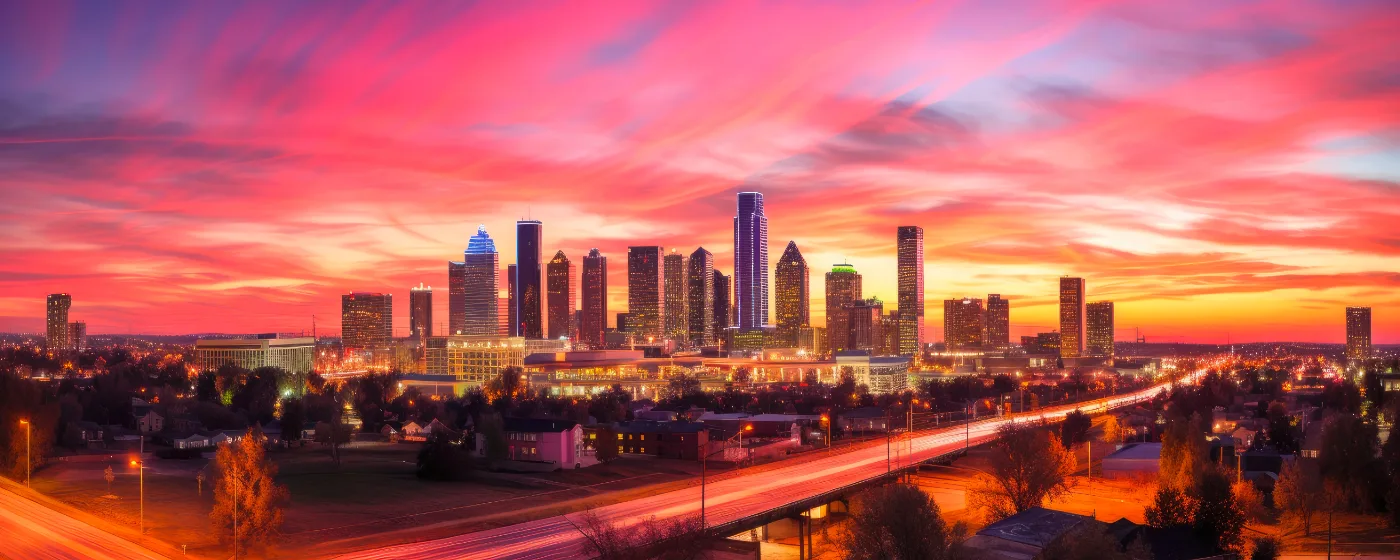
Arlington sits squarely between Dallas and Fort Worth — literally the midpoint city of the Metroplex — and that geography shapes everything about where you land here. I-30 cuts east-west through the city's midsection and I-20 anchors the south, creating distinct bands of residential character that most relocating buyers don't fully understand until they've already signed a lease or made an offer. The 7th-largest incorporated city in Texas, with a population of 402,134, Arlington is not a suburb that wants to be something else. It has its own economy, its own stadium footprint, and its own neighborhood logic that rewards buyers who do their homework.
The economic backbone here is surprisingly diverse. The Arlington Independent School District, with 51,139 students enrolled in 2025-26, is one of the city's largest employers. General Motors runs a full-scale Assembly plant here. The University of Texas at Arlington anchors the central core. Texas Health Resources employs thousands in healthcare, and Six Flags Over Texas has been drawing workers and visitors for decades. That employer mix — manufacturing, education, healthcare, entertainment — means Arlington draws a wide range of households, from blue-collar families who've been here two generations to academics and young professionals priced out of Uptown Dallas. The Arlington ISD holds a C rating, according to the Texas Education Agency, which is a real factor in where families choose to plant themselves within city limits.
On price, the typical home in Arlington sits at $312,255 (Zillow Home Value Index, July 2026) — roughly in line with Fort Worth, Dallas, and Grand Prairie — which positions it as one of the more attainable mid-size cities in the Metroplex. The catch is that the median household income of $75,171 runs below what most lenders consider comfortable for that purchase, so buyers stretching to ownership here are working with tighter margins than the headline price suggests. The city delivers in outdoor access — River Legacy Park alone covers more than 1,300 forested acres along the Trinity River — and Dallas/Fort Worth International Airport is about 13 miles from the city's northern edge. Most daily errands and commutes here mean getting in a car.
Whether you're choosing between North Arlington's established neighborhoods and Viridian's master-planned lakeside community, or weighing the energy of Downtown against the calm of Southwest Arlington, the sections below break down Arlington's neighborhoods, buyer types, common pitfalls, and the rental zones worth considering.
The Arlington Reality
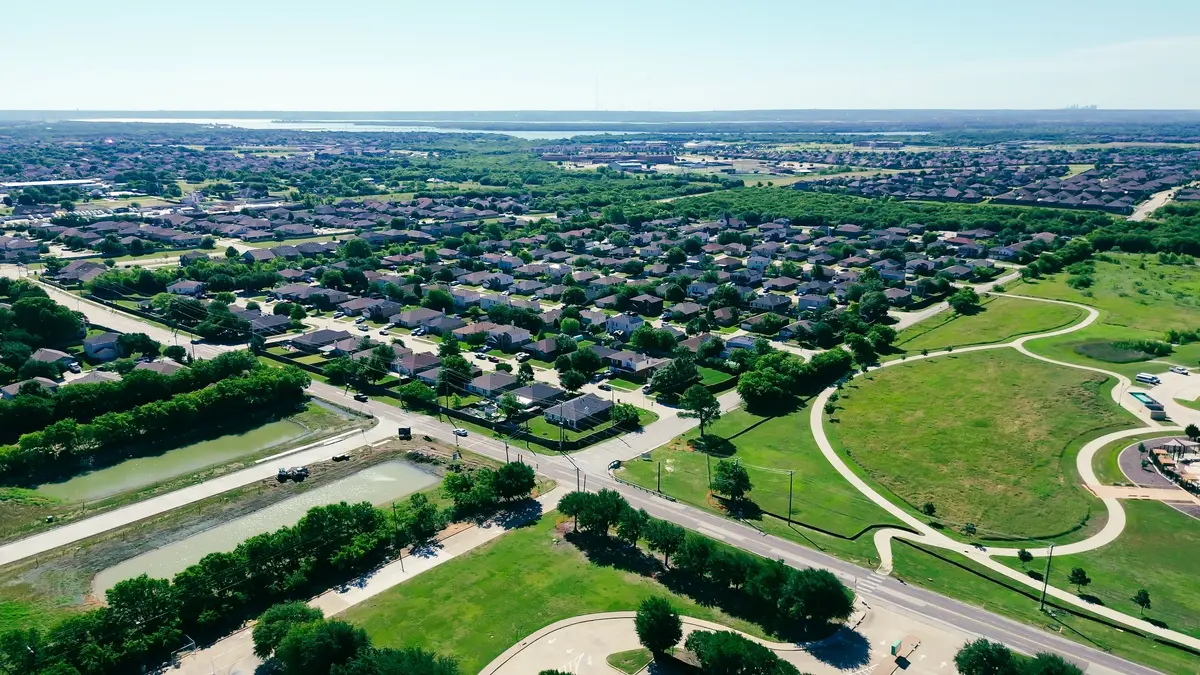
The most important dividing line in Arlington is not a river or a neighborhood boundary — it's I-20. The corridor above I-20 holds the city's older, more established residential fabric: mature trees, larger lots, proximity to River Legacy Park, and neighborhoods like West Arlington's Interlochen that carry genuine character and price premiums to match. The area below I-20 has housing that is generally newer in pockets but more variable in quality, and neighborhoods blend more gradually into one another without the strong identity markers you find further north.
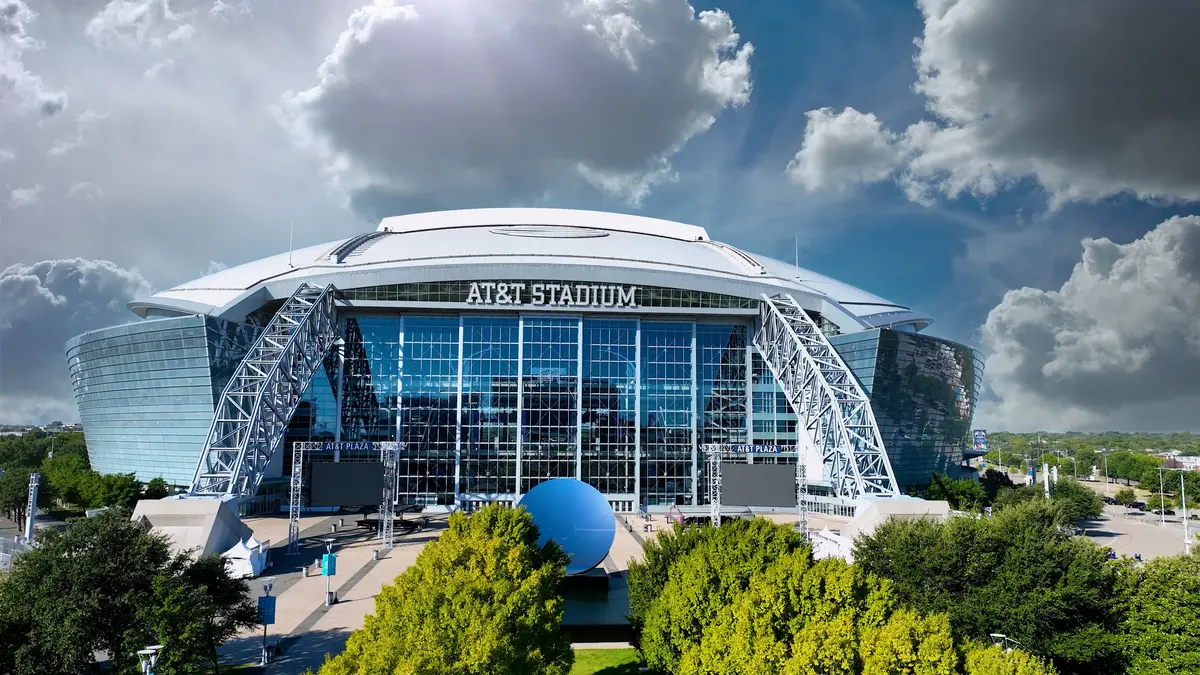
The second reality is the Entertainment District effect. AT&T Stadium, Globe Life Field, and Six Flags Over Texas cluster in the eastern corridor near I-30 and TX-360 (Angus G. Wynne Freeway). On game days and concert nights, that zone generates traffic that radiates into surrounding neighborhoods. Buyers who purchase near the District because land prices run below the city median don't always account for what 80,000 Cowboys fans departing at once does to a Tuesday night that became a prime-time football game. If your daily commute exits toward Dallas on I-30, the Entertainment District's event calendar becomes part of your commute calendar.
School boundaries inside Arlington ISD are the third factor buyers underestimate. The district serves the entire city, but individual campus quality varies enough that a half-mile shift in address can mean a different elementary school with meaningfully different outcomes. Families with school-age children should map their target home against AISD boundary lines before they fall in love with a house, not after.
Neighborhoods at a Glance
| Neighborhood | Best For | Vibe |
|---|---|---|
| North Arlington | Families Nature | Established, tree-lined, anchored by River Legacy Park; the city's most consistently sought-after corridor |
| South Arlington | Value First-Time | Transitional zone between the Entertainment District and the southern suburbs; varied housing stock at competitive prices |
| Viridian | Luxury Families | Master-planned lakeside community with resort-style amenities; the city's fastest-growing and most amenity-rich neighborhood |
| Southwest Arlington / Fannin Farm | Families Quiet | Classic suburban enclave; spacious lots, community pools, and the famous free-roaming peacocks of Fannin Farm |
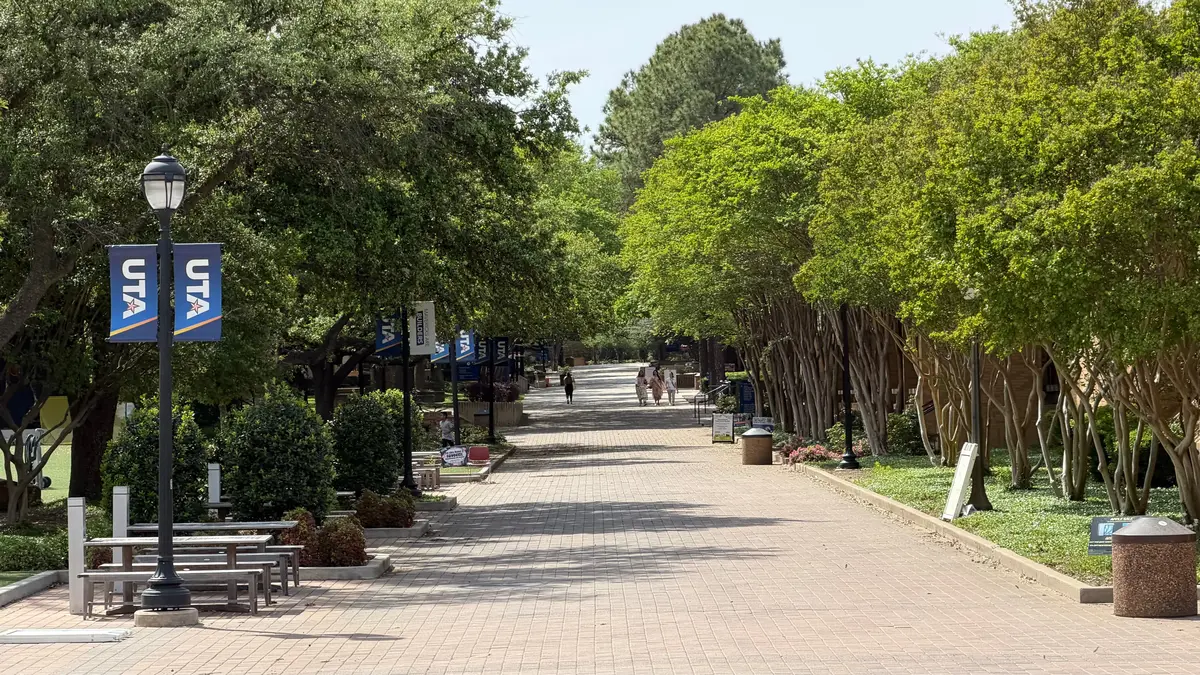
| Downtown Arlington | Walkable Urban Energy | Revitalizing urban core near UT Arlington; growing dining and mixed-use scene with genuine on-foot access |
| West Arlington / Interlochen | Luxury Views | Waterfront estate living built around Lake Interlochen; large homes, mature canopies, and an iconic holiday lights tradition |
| East Arlington / Entertainment District | Value Renters | High-energy corridor flanked by the NFL and MLB stadiums; priced below the city median but subject to event-day disruption |
| Southeast Arlington | First-Time Commuters | Growing residential area with newer apartments and park access; practical location near TX-360 and I-20 |
Arlington typical home price: $312,255 (Zillow ZHVI, July 2026). Typical rent: $1,525/mo (Zillow ZORI, July 2026). Neighborhood tiers on this page are relative to these figures.
Best Neighborhood by Buyer Type
| Buyer Type | Best Neighborhood | Why |
|---|---|---|
| First-Time Buyer | Southeast Arlington | Entry-level single-family homes and newer apartments sit near TX-360 and I-20, keeping commute options open without forcing buyers into the city's priciest corridors. |
| Luxury Buyer | West Arlington / Interlochen | Lakefront estates with floor plans commonly reaching 6,000 square feet or more, set among mature trees and three miles of private shoreline, represent the city's clearest luxury tier. |
| Walkability Seeker | Downtown Arlington | The Urban Union development and the UT Arlington campus create the city's densest cluster of restaurants, cafés, and green space within genuine walking distance. |
| Families with Kids | North Arlington | River Legacy Park next door, above-median home values that signal neighborhood stability, and some of the district's more requested elementary campuses make North Arlington the first call for parents with school-age children. |
| Commuters | North Arlington / Viridian | Quick access to I-30 and TX-360 (Angus G. Wynne Freeway) keeps the drive to Dallas manageable, and neither area sits in the game-day traffic zone. |
| Large-Lot Buyers | Southwest Arlington / Fannin Farm | Generously sized lots, community trails along Rush Creek, and a quieter pace give buyers the suburban square footage they want at prices at the city median. |
| Renters | Viridian / Southeast Arlington | Viridian's newest multifamily phase and Southeast Arlington's modern apartment stock give renters the best combination of amenities and relative affordability in the city. |
Looking to buy in Arlington? Estimate your payment.
Enter your numbers to see an estimated monthly mortgage payment.
Estimate only. Excludes HOA fees and mortgage insurance. The interest rate above is a starting point, not a quoted rate — replace it with your own to see real numbers. Insurance is a flat placeholder, not a Arlington quote.
Most Popular Neighborhoods
1. North Arlington
North Arlington is where families who've done their homework end up. The neighborhood's strongest card is River Legacy Park — more than 1,300 forested acres along the Trinity River with hiking and biking trails, a nature center, canoe launches, and fishing — which sits directly accessible to residents here in a way that feels almost unfair compared to the rest of the city. Homes run above the city median, and what you're paying for is specific: the maturity of the tree canopy, proximity to some of the more requested AISD campuses, and the kind of neighborhood stability that only comes from decades of consistent demand.
Best for: Families with school-age children, buyers who prioritize established neighborhoods and outdoor access, anyone willing to pay above the city median for long-term stability.
2. South Arlington
South Arlington functions as the city's transitional zone — positioned between the Entertainment District to the east and the quieter suburban corridors to the south and west. Housing stock here is genuinely mixed, ranging from older ranch homes to newer construction pockets, and that variety draws first-time buyers and investors in roughly equal measure. The honest downside is that the neighborhood lacks a single defining anchor the way North Arlington has River Legacy or West Arlington has its lake; it can feel like a collection of subdivisions looking for a center.
Best for: Value-oriented buyers, first-time homeowners, buyers willing to trade neighborhood identity for flexibility.
3. Viridian
Viridian is the most ambitious neighborhood story in Arlington right now — a 2,300-acre master-planned community that grew to roughly 10,000 residents by April 2025, with five major lakes, 500 acres of open space, and a Lake Club with pools, a splash pad, and a sailing center. The community recently transitioned to homeowner control, which matters to buyers because it signals maturity after years of developer management. The compromise is that Viridian's amenity-rich lifestyle comes with HOA costs and the energy of a neighborhood that is still completing its final multifamily phase, meaning construction traffic remains a background condition.
Best for: Buyers who want resort-style amenities within city limits, active adults considering Elements at Viridian (the community's 55+ neighborhood), families drawn to a planned environment over a traditional subdivision.
4. Southwest Arlington / Fannin Farm
Fannin Farm launched in 1994 and covers roughly 560 single-family homes arranged around community pools, walking trails, and views of Rush Creek. The neighborhood's most celebrated quirk is its free-roaming peacock population — an unofficial community mascot that local residents have accepted with more affection than annoyance. Prices sit at the city median, which makes this corridor genuinely competitive for families who want a traditional suburban feel without paying the North Arlington premium; the catch is that the neighborhood's distance from I-30 adds a few minutes to any eastbound commute toward Dallas.
Best for: Families with kids, buyers who want a strong neighborhood identity, anyone who finds the peacocks charming rather than baffling.
5. Downtown Arlington
Downtown Arlington drew over $100 million in investment in 2024, including the Urban Union mixed-use development and the opening of Rotary Dream Park and the Doggie Depot off-leash park in early 2025. The Caravan Court by Valencia Hotel Collection, a 145-room boutique hotel on historic Division Street, broke ground with a 2026 opening planned — which signals that developers are betting on the district's continued momentum. The honest tension here is that Downtown Arlington is still mid-transformation: the walkable streets, independent coffee shops, and dining scene are genuinely improving, but buyers who want a fully formed urban core will find gaps that neighborhoods in Dallas or Fort Worth have already filled.
Best for: Urban buyers willing to invest in an upswing, UT Arlington faculty and staff, residents who want genuine on-foot access to food and entertainment without paying Uptown Dallas prices.
6. West Arlington / Interlochen
Interlochen is built around 12-acre Lake Interlochen and nearly three miles of connected canal shoreline — a waterfront living option that is genuinely rare inside any city limits in North Texas. Homes here, mostly built in the 1970s and 1980s, sit on generously landscaped lots under mature tree canopies, with floor plans commonly reaching 6,000 square feet or more and private pools scattered throughout the streets. The neighborhood sits at the city median as an entry point, with upper-tier properties reaching well beyond it, and hosts an annual December holiday lights display along its canals that draws visitors from across the Dallas-Fort Worth area — a seasonal quirk that residents either love or quietly dread, depending on how they feel about strangers driving slowly past their front yard every night in December.
Best for: Luxury buyers, buyers who want waterfront character without moving to a lake town, anyone whose definition of a home includes a pool and room for it.
7. East Arlington / Entertainment District
AT&T Stadium, Globe Life Field, Six Flags Over Texas, and the Arlington Museum of Art — which relocated in 2024 into over 42,000 square feet inside the Expo Center and Esports Stadium — all anchor this corridor, making it the most recognizable address in the city to anyone who has ever watched a Cowboys game. Prices run below the city median, which attracts buyers and renters who want proximity to the action at a lower entry point. The honest downside is event-day disruption: on major game days, concerts, or Six Flags peak weekends, the roads near this district become genuinely difficult to navigate, and that friction doesn't disappear because you live here — it becomes your commute.
Best for: Buyers who prioritize price over quiet, sports and entertainment workers, renters who want the lowest price point in the city with the highest density of things to do nearby.
8. Southeast Arlington
Southeast Arlington sits where TX-360 (Angus G. Wynne Freeway) and I-20 intersect, giving residents straightforward freeway access in multiple directions — useful for commuters who split time between Mansfield, Grand Prairie, or the southern reaches of Dallas. The housing mix runs toward newer apartment communities and modestly sized single-family homes, with prices at the city median and access to multiple parks and trail systems. The neighborhood hasn't developed the strong identity of North Arlington or Viridian, which is precisely why the prices are what they are; buyers who can wait for that identity to solidify will likely do well here over time.
Best for: First-time buyers, commuters who need freeway flexibility, renters who want newer construction without paying Viridian rates.
Common Mistakes Buyers Make in Arlington
Assuming the City Is Uniform
Arlington is the 7th-largest incorporated city in Texas, and its 402,134 residents are spread across a footprint that feels more like several small cities stacked together than a single coherent place. Buyers who look at the city-wide typical home price and assume that number describes any given neighborhood are setting themselves up for sticker shock in North Arlington or West Arlington's Interlochen, and false confidence in East Arlington where the same median looks like a ceiling rather than a floor.
Ignoring the Entertainment District Calendar Before Buying Nearby
Homes within a mile or two of AT&T Stadium and Globe Life Field price attractively — they run below the city median — and buyers often focus on that number without sitting with a copy of the Cowboys schedule or the stadium concert calendar first. Events in that corridor happen on weeknights and weekends throughout the year, and I-30 near TX-360 (Angus G. Wynne Freeway) backs up in ways that are predictable in hindsight and genuinely frustrating in real life. If your commute to Dallas takes you through that interchange, factor the event schedule into your daily calculus before you close.
Chasing Square Footage Over School Boundaries
The arithmetic is tempting: South Arlington and Southeast Arlington offer more house per dollar than North Arlington. But Arlington ISD's campus boundaries mean that two homes a half-mile apart can feed into meaningfully different elementary schools. Families with school-age children who choose a home based on square footage and then discover the boundary assignment don't always have an easy remedy — AISD transfer requests are not guaranteed. Map the boundary before the offer, not after the inspection.
Underestimating the HOA Layer in Viridian
Viridian's amenity package — the lakes, the Lake Club, the sailing center, the trails — is real and genuinely impressive for an in-city neighborhood. What buyers sometimes miss is that the HOA structure in a community this large and this amenity-dense carries meaningful ongoing costs. The community only recently transitioned to homeowner control as of April 2025, so the fee structure is still settling. Budget conservatively, get current HOA financials before making an offer, and don't let the amenities sell you past the numbers.
Best Areas to Rent in Arlington
| Area | Ideal For | Trade-off |
|---|---|---|
| North Arlington / Viridian | Luxury Renters Nature Access | The city's highest rental price point; amenities like the Lake Club and River Legacy Park access are genuine but you pay for them |
| Downtown Arlington | Walkable Urban Lifestyle | Revitalization is real but the neighborhood is still mid-transformation; street-level retail and dining are improving but not yet dense |
| Southwest Arlington / Fannin Farm area | Families Quiet Living | Fewer large apartment communities than other zones; renters here are mostly in single-family rentals, which limits availability |
| East Arlington / Entertainment District | Budget Renters Value | The city's most affordable rental zone comes with event-night traffic and noise as recurring features rather than occasional inconveniences |
| Southeast Arlington | First-Time Renters Commuters | Newer apartment stock and freeway access make this practical; the area lacks the walkable amenities or neighborhood character that justify premium rents elsewhere |
The city-wide typical rent runs $1,525 per month (Zillow, July 2026), but that figure flattens meaningful variation across Arlington's rental zones. Renters willing to accept a longer commute into the city's quieter southern and western corridors will find the best value; renters who prioritize walkability and energy will pay above that figure to be in the Downtown or Viridian orbits.
Local Expert Takeaway: North Arlington and Viridian are the two neighborhoods that almost every serious buyer in Arlington ends up considering side by side — one for its mature trees, River Legacy Park, and established residential character, the other for its lakeside master-plan and resort amenities. They sit at different price points and attract different personalities, but both run above the city median and both require buyers to move with some decisiveness. If you're renting while you search, Southeast Arlington gives you the best freeway flexibility. If you have kids and AISD boundary placement is your primary concern, map school zones before you tour a single house — the boundary lines in this district don't follow any logic a newcomer would assume.
Quick Takeaways & FAQs
✅ River Legacy Park — more than 1,300 forested acres of trails, canoe launches, and a nature center — gives North Arlington residents an urban nature anchor that few cities its size can match.
⚠️ The Entertainment District's event calendar turns I-30 near TX-360 into a genuine commute obstacle on game and concert nights — something nearby buyers consistently underestimate.
📍 The free-roaming peacocks in Fannin Farm are not a rumor: the neighborhood's original flock has multiplied over three decades and is now as much a part of the Southwest Arlington identity as the community pools.
What is the best neighborhood in Arlington TX for families?
Is North Arlington or South Arlington better to live in?
What is Viridian like to live in, and is it worth the price?
Which Arlington neighborhoods are closest to Dallas for commuters?
Where should I rent in Arlington TX if I'm new to the area?
Moving to Texas?
Tell us what you need help with and we'll connect you with local resources.
