
Maybe you've been renting in the DFW metro and watching home prices in Dallas and Fort Worth hold stubbornly near where Arlington sits, wondering whether you're missing something. You're not — and that's actually the point. Arlington, the 7th-largest incorporated city in Texas, sits squarely between two of the nation's largest cities, served by I-20, I-30, US-287, and TX-360, and it delivers a realistic entry into homeownership that the flashier parts of the metroplex increasingly can't. The typical home price here is $312,255 (Zillow Home Value Index, July 2026), which puts actual ownership within reach for a broad range of buyers — though, as this guide will make clear, reaching it still takes preparation and a clear-eyed read of the local market.
The city's 402,134 residents live in a genuinely diverse housing landscape: mature mid-century brick homes in established west-side neighborhoods, walkable condos and townhomes near the University of Texas at Arlington campus, and larger master-planned communities like Viridian on the north side. Major employers — General Motors Arlington Assembly, the University of Texas at Arlington, Arlington Independent School District, and the City of Arlington itself — anchor a local economy that keeps steady demand on the entry-level end of the market. The median household income here is $75,171, which puts the typical first-time buyer in a position where they can reach the market but will need to manage cash carefully to get there.
For buyers coming from higher-cost Texas metros, Arlington's prices feel like relief. For buyers comparing Arlington with Fort Worth or Grand Prairie, the market lands at about the same level — so the decision usually comes down to commute, neighborhood character, and which part of the city suits your life. What everyone learns quickly is that the market, while more balanced than the frenzied conditions of 2021–2022, still moves purposefully: well-priced homes at the entry level don't sit long, and buyers who aren't prepared to act tend to miss the homes they wanted. Property taxes run at an effective rate of approximately 1.47%, and Texas's homestead exemption — expanded in 2025 — offers meaningful relief once you file promptly after closing. See the full cost of living breakdown for the complete tax and expense picture.
Whether you're buying your first home or returning to ownership after years of renting, the sections below walk through what your budget actually buys in Arlington, the step-by-step buying process as it works locally, a plain-language budget snapshot, and the specific mistakes that trip up first-time buyers here most often.
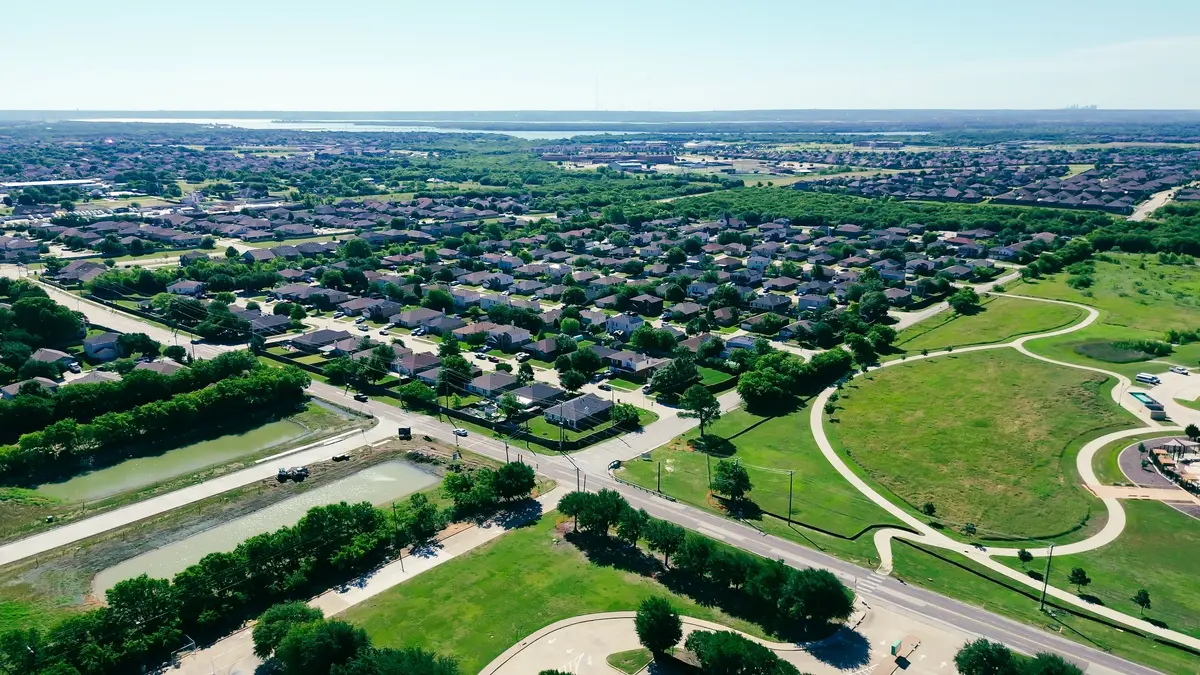
The Arlington First-Time Buyer Reality
The headline number — $312,255 as the typical home price in Arlington as of July 2026 — is encouraging compared with many DFW submarkets, but it comes with a catch that most first-timers don't see until they're already touring homes. The median household income here is roughly $18,000 below what it takes to comfortably carry that purchase at current rates. That gap doesn't make buying impossible, but it means your down payment strategy, your loan type, and your closing cost reserves all have to be deliberate rather than improvised.
What that price actually buys depends heavily on which part of the city you're targeting. East Arlington offers the clearest entry points — older single-family homes, smaller lots, and a price point that runs noticeably below the city median. West Arlington and Southwest Arlington land closer to that typical figure, with more established neighborhoods and a broader mix of housing types. North Arlington is home to master-planned communities like Viridian, with newer construction and a range of housing types that suit buyers at different stages. Downtown Arlington, with its condos and townhomes near the UT Arlington campus, is worth understanding as a category: the walkable streets and proximity to Levitt Pavilion make it appealing, but the unit sizes are smaller and the price-per-square-foot math works differently than it does for a traditional suburban home. See the full neighborhood breakdown on the best neighborhoods page.
The market today gives buyers more breathing room than they had a few years ago — more options, more time to make decisions, and more room to negotiate on price or seller-paid closing costs. That doesn't mean a well-priced home at $275,000 will sit for weeks waiting for you. Entry-level buying remains competitive across the DFW metro, and first-time buyers still represent a smaller share of closed transactions than they did a decade ago — a reflection of how much cash and preparation the current market demands. The buyers who succeed here are the ones who do the pre-approval work first and show up ready.
The Homebuying Process in Arlington, Step by Step
Step 1: Get Pre-Approved — Before You Tour Anything
This is the step most first-timers get wrong, and in Arlington's entry-level price bands it costs them real opportunities. Pre-approval is not a formality you handle after finding a home you like — it is the document that tells sellers you are a real buyer, and in a market where well-priced homes attract multiple offers, a buyer without one is easy to pass over. Get pre-approved by a lender before you schedule a single showing.
Step 2: Know Your Loan Type Before You Start Shopping
Most first-time buyers in Arlington choose between an FHA loan (3.5% down, more flexible credit requirements) and a conventional loan (as low as 3% down with a strong credit profile). FHA loans carry mortgage insurance for the life of the loan unless you refinance; conventional loans drop private mortgage insurance once you reach 20% equity. Neither is universally better — the right one depends on your credit score, your down payment, and how long you plan to stay. Have this conversation with your lender before you start comparing listings.
Step 3: Find an Agent Who Knows the Local Market
Arlington's neighborhoods vary significantly in character and what your dollar buys — a buyer's agent who works this market regularly will flag the school boundary quirks in Arlington ISD, the flood plain considerations near some of the creek corridors, and which areas are seeing the most activity in your price range. This is not the step to rely on whoever your cousin knows in Dallas.
Step 4: Make an Offer — and Understand the Contingencies
Texas uses its own standard purchase contract, and the contingencies built into it — inspection, financing, appraisal — exist to protect you. The temptation in a competitive offer situation is to waive or shorten them to look more attractive to the seller. In Arlington's current market, you usually don't have to. The market is balanced enough that most buyers can keep their inspection contingency intact; waiving it on a mid-century home with an older roof or a pier-and-beam foundation is the kind of decision that leads to very expensive surprises.
Step 5: Inspection, Appraisal, and the Path to Closing
Budget time for a general home inspection — do not skip it, and do not use the seller's inspector. In Tarrant County, closing typically takes 30 to 45 days from executed contract. The one step first-timers most often underestimate is the closing cost cash requirement: in Texas, buyers typically pay 2% to 3% of the purchase price in closing costs, on top of the down payment. That cash has to be liquid and documented — moving it around in the two weeks before closing can create underwriting problems. Plan for it early.
One more step that belongs at the very end but is often forgotten entirely: file your homestead exemption with the Tarrant Appraisal District as soon as possible after closing. It reduces your taxable home value and, once it has been on the property for a full calendar year, caps annual appraisal increases at 10%. Missing the filing deadline doesn't cost you the exemption forever, but it delays the benefit by a full year.

How Much Home Can You Afford in Arlington
The table below shows estimated cash requirements at several price points common for first-time buyers in Arlington. Closing cost estimates reflect the 2–3% range typical in Tarrant County and include lender fees, title insurance, prepaid items, and escrow setup. These are approximate planning figures — your actual costs will depend on your lender, the specific property, and what you negotiate with the seller.
| Scenario | Purchase Price | Down Payment | Est. Closing Costs | Cash Needed at Table |
|---|---|---|---|---|
| FHA (3.5% down) — entry point | $230,000 | $8,050 (3.5%) | $4,600–$6,900 | ~$12,650–$14,950 |
| Conventional (3% down) — entry point | $230,000 | $6,900 (3%) | $4,600–$6,900 | ~$11,500–$13,800 |
| FHA (3.5% down) — near city median | $312,255 | $10,929 (3.5%) | $6,245–$9,368 | ~$17,174–$20,297 |
| Conventional (3% down) — near city median | $312,255 | $9,368 (3%) | $6,245–$9,368 | ~$15,613–$18,736 |
| Conventional (5% down) — near city median | $312,255 | $15,613 (5%) | $6,245–$9,368 | ~$21,858–$24,981 |
| Conventional (10% down) — above median | $370,000 | $37,000 (10%) | $7,400–$11,100 | ~$44,400–$48,100 |
All figures are estimates for planning purposes only; actual costs vary by lender, loan program, and negotiated terms. The interactive mortgage calculator below lets you adjust the purchase price, down payment, and other variables to model your specific scenario.
A few things worth knowing before you run the numbers. Texas has no state income tax, which gives some buyers room in their monthly budget that they wouldn't have coming from a higher-tax state. The effective property tax rate in Arlington is approximately 1.47% — meaningful on a $312,255 home, but partially offset by the homestead exemption once filed. The expanded homestead exemption signed into law in 2025 increased the school district portion to $140,000, a particularly useful reduction for buyers at the lower end of the price range. See the cost of living page for the full property tax picture alongside utilities, groceries, and other ongoing expenses.
Looking to buy in Arlington? Estimate your payment.
Enter your numbers to see an estimated monthly mortgage payment.
Estimate only. Excludes HOA fees and mortgage insurance. The interest rate above is a starting point, not a quoted rate — replace it with your own to see real numbers. Insurance is a flat placeholder, not a Arlington quote.
Common First-Time Buyer Mistakes in Arlington
Starting the Home Search Before Getting Pre-Approved
It happens constantly: a first-time buyer spends three weekends touring homes, finds the one they want in East Arlington at $265,000, and then discovers their pre-approval comes back at $240,000 — or doesn't come back at all because of a credit issue they didn't know existed. Sellers and their agents notice immediately when an offer arrives without a pre-approval letter, and in a market where multiple offers on well-priced homes are still common, that offer goes to the bottom of the pile. Do the pre-approval first. It also tells you something crucial: exactly how much cash you need, so you can stop moving money around and start documenting it.
Waiving the Inspection Contingency to Win an Offer
Arlington's housing stock includes a significant number of mid-century homes — pier-and-beam foundations, older electrical panels, roofs that are overdue for replacement. Waiving your inspection contingency to make an offer more competitive is a gamble that occasionally pays off and more often produces a costly foundation repair bill months after closing. In today's more balanced market, most sellers in the $250,000–$330,000 range are not in a position to demand that buyers go without an inspection. If a seller insists on it, treat that as a data point about the house, not just the negotiation.
Ignoring School Boundary Reality in Arlington ISD
Arlington Independent School District serves the entire city, and the district holds a C rating, according to the Texas Education Agency. What matters for a buyer's decision is that individual school assignments vary by address — two homes on the same street can feed different elementary schools depending on where the boundary line falls. If school assignment matters to your household, verify the specific address in the district's boundary tool before you make an offer, not after. See the full schools page for the complete picture on individual campuses and what to ask your agent.
Underestimating the Cash Needed to Close
The down payment is the number first-time buyers plan for. The closing costs are the number that catches them off guard. In Tarrant County, plan for 2% to 3% of the purchase price in closing costs on top of your down payment — and that cash needs to be sitting in a documented account well before closing day. Lenders will ask for bank statements covering the last 60 days, and large, unexplained deposits can create underwriting delays or kill a loan at the worst possible moment. If a family member is helping with cash, get that gift letter documented early. The buyers who close smoothly are the ones who treated the closing cost number as seriously as the down payment from the very beginning of the process.

Local Expert Takeaway: Arlington's entry-level market is real and reachable — $312,255 is the typical home price as of July 2026, and genuine footholds exist in East Arlington and parts of Southwest Arlington for buyers with a clear-eyed budget. The buyers who succeed here do two things first: they get pre-approved before they tour, and they keep their cash reserves intact and documented. File your homestead exemption with the Tarrant Appraisal District immediately after closing — it's the single highest-value administrative task a new Arlington homeowner can do, and it caps your annual appraisal increases at 10% once it takes effect.
Quick Takeaways & FAQs
✅ Arlington's typical home price of $312,255 (July 2026) gives first-time buyers a genuine entry point into the DFW metro at roughly the same level as Fort Worth and Grand Prairie.
⚠️ The median household income in Arlington sits about $18,000 below what it takes to comfortably carry the typical home purchase, so cash planning — down payment plus closing costs — has to start early and be treated seriously.
📍 File your homestead exemption with the Tarrant Appraisal District right after closing: it reduces your taxable home value immediately and caps annual appraisal increases at 10% once it's been on the property a full calendar year.
What is the minimum down payment to buy a home in Arlington, TX?
Is Arlington a good place to buy a first home compared with Fort Worth or Grand Prairie?
How does the homestead exemption work for new buyers in Arlington?
What are closing costs for a home buyer in Arlington, TX?
Do I qualify as a first-time homebuyer if I owned a home years ago?
Moving to Texas?
Tell us what you need help with and we'll connect you with local resources.
