
Most families researching Arlington expect to land in a district that mirrors the city's entertainment-destination reputation — big, flashy, and broad enough to serve everyone. The reality is more nuanced. Arlington Independent School District is the 7th-largest incorporated city in Texas operating a large urban district, and with 51,139 students enrolled in 2025-26, it carries both the breadth of a major system and the unevenness that comes with size. The district holds a C rating, according to the Texas Education Agency — which is the number most parents notice first, and the one that deserves a fuller explanation than a single letter gives.
What that C doesn't capture is the depth of the specialized programming layered inside the district. Arlington ISD runs 14 signature programs spanning IB schools, STEM academies, dual-language classrooms, early college pathways, and one of the most comprehensive career and technical centers in the Metroplex. Families willing to research those options — and, in some cases, apply and transport their kids — find a system that can punch above its district-wide rating in specific niches. The University of Texas at Arlington sits inside city limits and partners directly with at least one high school program, which is an access point few suburban districts can offer.
On the youth sports side, Arlington is genuinely well-equipped. City-run leagues, a strong YMCA presence, and established club organizations mean kids from pre-K through high school have structured options nearly year-round. UIL athletics at every traditional high school, Friday night football at stadiums that fill up, and a community culture that turns out for kids' activities — this part of the picture is a real draw for families with school-age children.
Whether you're deciding between Arlington and a neighboring city, or trying to figure out which specialized program fits your child, the sections below break down the district's overall standing, its standout schools, the youth sports landscape, and an honest look at who Arlington ISD is — and isn't — the right fit for.
Arlington ISD at a Glance: What the District Rating Actually Means
Arlington ISD holds a C rating, according to the Texas Education Agency — the 2025 A-F accountability rating covering the 2024-25 school year. That grade reflects the district's performance across the full student body of 51,139 students enrolled in 2025-26, and the underlying assessment numbers tell the story plainly: on 2024-25 state assessments, 36% of students reached math proficiency and 43% reached reading proficiency.
Those figures sit below the averages families moving from suburban Tarrant or Collin County districts might expect. The honest framing is that Arlington ISD is an urban district with a diverse, economically varied student population, and its aggregate scores reflect that reality. The C rating is a district-wide average, not a ceiling.
The most important thing to understand about this district is that it is not one educational experience — it is many. A student enrolled in the neighborhood school nearest their home gets a fundamentally different program than a student who applies to one of the district's specialized academies or early college pathways. Families who engage with the specialized program system often describe an experience that feels disconnected from the headline grade. Those who do not may find the district underwhelming relative to neighboring Mansfield ISD or some Fort Worth-area alternatives.
The district serves a city of 402,134 people across a wide geographic footprint, with significant socioeconomic variation between North Arlington and East Arlington. School quality, as experienced day-to-day, tends to track that geography. The neighborhoods page covers those distinctions in more depth.
| Category | Arlington ISD |
|---|---|
| Overall TEA Rating (2024-25) | C (Texas Education Agency) |
| Students Enrolled (2025-26) | 51,139 |
| Math Proficiency (2024-25 state assessments) | 36% |
| Reading Proficiency (2024-25 state assessments) | 43% |
| Specialized Programs | 14 signature programs (K–12) |
| Fine Arts Recognition | Best Communities for Music Education, 17 consecutive years |
The fine arts record is worth noting: 17 consecutive years as a recognized community for music education is not a small thing in a competitive Texas market where band and choir programs are a real factor in family decisions.
Standout Schools and Specialized Programs Inside Arlington ISD
The specialized program layer is where Arlington ISD earns its strongest marks, and navigating it takes deliberate effort. These programs are districtwide — meaning your child is not automatically enrolled based on where you live. Most require an application, and some have capacity limits. Start researching before your move finalizes, not after.
Pearcy STEM Academy
At the elementary level, Pearcy STEM Academy is one of only nine certified elementary STEM schools in the entire state of Texas. The program starts in pre-K or kindergarten and runs through a curriculum taught by nationally certified STEM teachers. Kids work through hands-on club projects built around real-world problem-solving rather than rote worksheets. For families with young children who want a differentiated science and math environment from the start, this is the most distinctive option the district offers at that level.
The STEM Academy at Martin High School
At the high school level, the STEM Academy at Martin High School is the district's most direct pipeline to post-secondary opportunity. The program partners with the University of Texas at Arlington — which is literally within the city — giving students access to internships, mentorships, and dual enrollment in engineering, biology and biomedical science, computer science, or math and science pathways. Students can graduate with 21 to 32 hours of college credit already banked. In a district where the UTA partnership is a genuine structural advantage, this program uses it most aggressively.
Arlington Collegiate High School and Arlington College and Career High School
The district operates two early college high schools that take the credit accumulation model further: students can graduate with a full associate degree alongside their high school diploma, at no cost, earning up to 60 hours of free college credit. For families focused on the cost of higher education, this pathway is one of the most financially meaningful options in the Metroplex. The P-TECH pathways at Bowie High School — covering fields like mechatronics, cybersecurity, health sciences, and engineering — extend that workforce-readiness orientation to students who want a technical career track alongside the diploma.
The IB Network and the District's Career and Technical Center
Four high schools in the district — Arlington, Bowie, Lamar, and Sam Houston — offer the International Baccalaureate World School Programme, with Arlington High School and Bowie High School each hosting a full IB Diploma Programme. For families whose kids thrive in a globally oriented, collaborative curriculum, having four IB high schools to choose from is unusual for a single district.
The district's career and technical center is a districtwide CTE hub: a 169,800-square-foot facility that serves juniors and seniors from every high school, with 68 courses across 27 programs of study and 16 specialized labs covering health science, culinary arts, construction, IT, and more. An expansion adding 10 new classrooms began in fall 2025. Students who arrive in Arlington mid-high-school can still access this facility regardless of which campus they attend.
Crow Leadership Academy, a K–6 school, offers the IB Primary Years Programme for families who want inquiry-based, globally oriented learning to start well before high school.

Youth Sports in Arlington: Leagues, Clubs, and Community Culture
Arlington's youth sports infrastructure is one of the underappreciated strengths of raising kids here. Between city-run programs, YMCA leagues, and established club organizations, a child in Arlington can be in organized sport from age three through the end of high school without ever leaving the city's boundaries for a league.
City-Run Leagues Through Arlington Parks and Recreation
The City of Arlington Parks and Recreation Department runs youth leagues in baseball, basketball, soccer, softball, and volleyball for children ages 3 to 14. Games are held at city recreation centers, which keeps travel manageable for parents juggling multiple kids and schedules. This is the entry point for most families new to the city — low-pressure, geographically convenient, and covering the widest age range.
The AMA YMCA and the FIFA World Cup Connection
The Arlington-Mansfield Area YMCA runs youth soccer and other recreational leagues across the area. In connection with the FIFA World Cup coming to the Dallas-Fort Worth area, the YMCA has rebranded its soccer league to an internationally themed format — which, in a city that already has AT&T Stadium and Globe Life Field as civic anchors, gives the youth soccer program an unusual cultural moment to build around. For families with soccer-focused kids, this is a city that will feel that sport acutely in the near term.
The Arlington Steelers and Club-Level Options
The Arlington Steelers Youth Sports Association is a long-standing local club organization offering football, basketball, and cheerleading for ages 4 to 13. The Steelers field teams in the AMYSA league structure and serve the broader Arlington and Mansfield community. This is the step up from purely recreational leagues — more structured, more competitive, and more commitment for parents on weekends.
For families who want the maximum-convenience recreational model, i9 Sports operates in South Arlington at the Beacon Recreation Center, running flag football, basketball, and other sports for kids in grades 1 through 7. The format pairs practice and game play on the same day, which removes the mid-week practice burden that makes some youth sports schedules unsustainable for working parents.
UIL Athletics at the High School Level
Every traditional Arlington ISD high school runs active UIL athletics programs, and in this city, that matters the way it matters everywhere in Texas — meaning it matters a great deal. Athletics options begin in 7th grade for many programs, with some coached directly by high school coaches, which creates an early connection to the high school pipeline. Friday night football fills the stands here. The community turns out, and that culture of showing up for school athletics is something families from outside Texas consistently underestimate until they experience it.
For families moving from states where high school athletics feel like an extracurricular afterthought, Arlington's UIL participation culture will be an adjustment — and for many, a welcome one.
Looking to buy in Arlington? Estimate your payment.
Enter your numbers to see an estimated monthly mortgage payment.
Estimate only. Excludes HOA fees and mortgage insurance. The interest rate above is a starting point, not a quoted rate — replace it with your own to see real numbers. Insurance is a flat placeholder, not a Arlington quote.
Fine Arts, Music, and Activities Beyond Sports
Arlington ISD's fine arts record is one of the most durable positive signals in the district's profile. Seventeen consecutive years of recognition as a Best Communities for Music Education district is a long run, and it reflects a structural commitment: band, choir, visual arts, and photography are offered from kindergarten through 12th grade, with uniforms and instruments provided at no cost to students. For families who moved their kids to music lessons early and want that investment extended through school, the district's arts infrastructure is a genuine asset.
This matters practically. A district that provides instruments removes a significant financial barrier that can push families toward private lessons or outside programs. The arts programs from elementary through high school also participate in the UIL fine arts calendar, which Texas treats with the same seriousness as athletic programs — it is a competitive, community-supported tradition that Arlington ISD takes part in at every level.
The IB programmes at the elementary, middle, and high school levels also carry a strong arts and humanities component — the IB curriculum is not purely STEM-oriented, and families with kids who lean toward languages, global studies, or writing will find the IB pathway at Crow Leadership Academy and the high schools more balanced than the STEM academies. The dual-language academies in the district round out the options for families raising bilingual children or prioritizing a second language from early on.
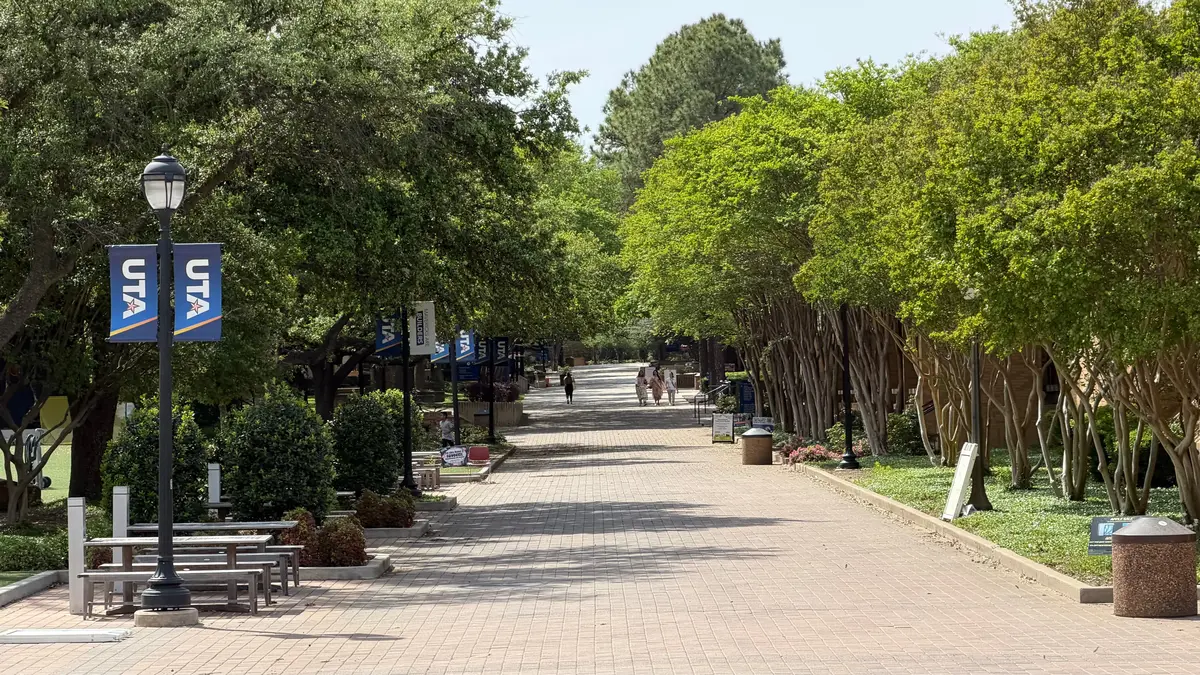
The University of Texas at Arlington, sitting inside city limits, also creates informal exposure that most suburban districts can't replicate: university performances, public lectures, and cultural programming are a short drive from anywhere in the city, and the STEM Academy partnership means some high schoolers are already physically on that campus.
Who Arlington ISD Is — and Is Not — the Right Fit For
This section is worth reading before you make an offer. The district's C rating and its proficiency numbers are not a reason to avoid Arlington, but they are a reason to go in clear-eyed about what you're choosing and why.
Arlington ISD Is a Strong Fit If...
You have a child who qualifies for and will pursue a specialized program. The STEM academies, the IB schools, the early college pathways, and the district's career and technical center are legitimately strong offerings that can rival or exceed what a higher-rated suburban district provides in those specific tracks. A motivated middle or high schooler who wants college credit, a technical certification, or an IB diploma can build a remarkable four years here.
You value arts and activities alongside academics. Seventeen consecutive years of music education recognition, and a district that absorbs the cost of instruments and uniforms, is not generic programming. If your household has a musician, an artist, or a kid who thrives in the full UIL ecosystem of sports and fine arts, Arlington ISD feeds that culture well.
You're coming from a large urban district and know how to navigate a system of schools rather than expecting one uniform experience. Parents who are accustomed to researching magnet programs, applying to specialized schools, and being proactive about their child's placement will find the district manageable. Parents who expect the neighborhood school to simply be excellent without that effort may be disappointed.
Arlington ISD Is Not the Right Fit If...
Your top priority is a high aggregate academic rating and you want it at the neighborhood school level, without applying to a specialized program. If you're comparing Arlington ISD to Mansfield ISD or Carroll ISD in Southlake — the latter being a significantly higher-rated system though in a very different price range — the district-wide academic profile is not competitive on that measure.
Your child has limited interest in specialized programs and will attend the zoned neighborhood school. The district's proficiency figures — 36% in math and 43% in reading on 2024-25 state assessments — are the honest baseline for that experience. That is not a failure unique to Arlington; many urban Texas districts operate in this range. But it is the reality, and a family optimizing purely for standardized academic outcomes should weigh it seriously.
You are expecting the district's entertainment-district energy to translate into educational resources. AT&T Stadium and Globe Life Field are civic draws, not school funding. The district's per-pupil situation reflects a city whose cost of living and tax base differ meaningfully from the wealthier suburbs to its north. That gap shows up in aggregate outcomes even when individual programs are strong.
One friction point that surprises families after six months: the specialized programs require transportation planning that the district may not fully provide. If you enroll your child in Pearcy STEM Academy or an early college high school, you may be responsible for getting them there. Factor that in before assuming a specialized program is accessible from your specific address.
Practical Considerations for Families Choosing Arlington
A few things parents don't figure out until after they've moved in.
The Application Timeline Is Real
Most specialized programs in Arlington ISD operate on an application cycle that runs in late winter or early spring for the following school year. If you're planning a summer move to Arlington, that window may have already closed. Contact the district's specialized programs office before your lease or closing date — not after — to understand whether your child can enter the program mid-year, join a waitlist, or needs to wait a full cycle. Missing the window means a year at the neighborhood school while you wait, which is not a disaster but is worth knowing in advance.
North Arlington vs. South and East Arlington Schools
The geographic divide in Arlington's school experience is real. Families in North Arlington — which runs above the city median in home prices, as the neighborhoods guide covers — are generally zoned to schools with higher aggregate performance. Families in East Arlington and parts of South Arlington are zoned to schools that reflect a more economically mixed student body. This is not a unique dynamic in Texas urban districts, but it is a meaningful one when you're choosing where to buy. Your address determines your zone; your zone shapes your starting point before you factor in specialized programs.
The UIL Calendar Is a Lifestyle Commitment
If your child participates in UIL athletics or fine arts, the calendar from September through spring is dense. Texas takes UIL seriously in a way that surprises families coming from states with lighter extracurricular involvement. Budget weekend time from September onward, and understand that the community culture around Friday night football and the spring fine arts season is part of what makes Arlington feel like Arlington to the people who've been here longest.
College Credit as a Financial Strategy
The early college high school pathway — up to 60 hours of free college credit at no cost — is worth running actual numbers on before you dismiss it as a niche option. For a family planning to pay for a four-year university without significant financial aid, 60 credit hours represents roughly two years of tuition saved. At current Texas public university tuition rates, that's a meaningful financial outcome. The programs have admission requirements, and not every student is suited to a college-paced curriculum in high school. But families who are considering the cost of college when choosing a school district should put these programs on the list before ruling them out.
For a fuller picture of what daily life and commuting look like once you're here, the living in Arlington guide covers the employer landscape, commute patterns, and who the city tends to attract.
Local Expert Takeaway: Arlington ISD's C rating from the Texas Education Agency is the right starting point, not the ending point. The district's specialized programs — the STEM Academy at Martin High School with its UTA partnership, the two early college high schools where students can earn up to 60 free college credit hours, and Pearcy STEM Academy at the elementary level — are legitimately strong options that families in higher-rated districts often can't access. The catch is that none of this is automatic: you apply, you plan transportation, and you engage with the system. Families who arrive expecting the neighborhood school to carry the weight of the district's best offerings will be underwhelmed. Families who arrive with a clear pathway in mind — STEM, IB, CTE, early college — will find Arlington ISD delivers more than the headline grade suggests.
Quick Takeaways & FAQs
✅ Arlington ISD operates 14 signature specialized programs including STEM academies, IB schools at four high schools, two early college pathways, and a 169,800-square-foot career and technical center — meaningful options inside a C-rated district.
⚠️ On 2024-25 state assessments, 36% of students reached math proficiency and 43% reached reading proficiency — district-wide averages that families should understand before banking on the neighborhood school alone.
📍 The Arlington-Mansfield Area YMCA, the Arlington Steelers club organization, and the city's own Parks and Recreation leagues collectively cover youth sports from age 3 through high school, with the FIFA World Cup coming to DFW adding an unusual boost to youth soccer culture in the near term.
What rating does Arlington ISD have, and what does it mean for my family?
How do I get my child into a specialized program in Arlington ISD?
What youth sports leagues are available in Arlington for young kids?
Can my child really graduate from Arlington ISD with a college degree?
How do Arlington ISD schools compare between North Arlington and East Arlington?
Moving to Texas?
Tell us what you need help with and we'll connect you with local resources.
