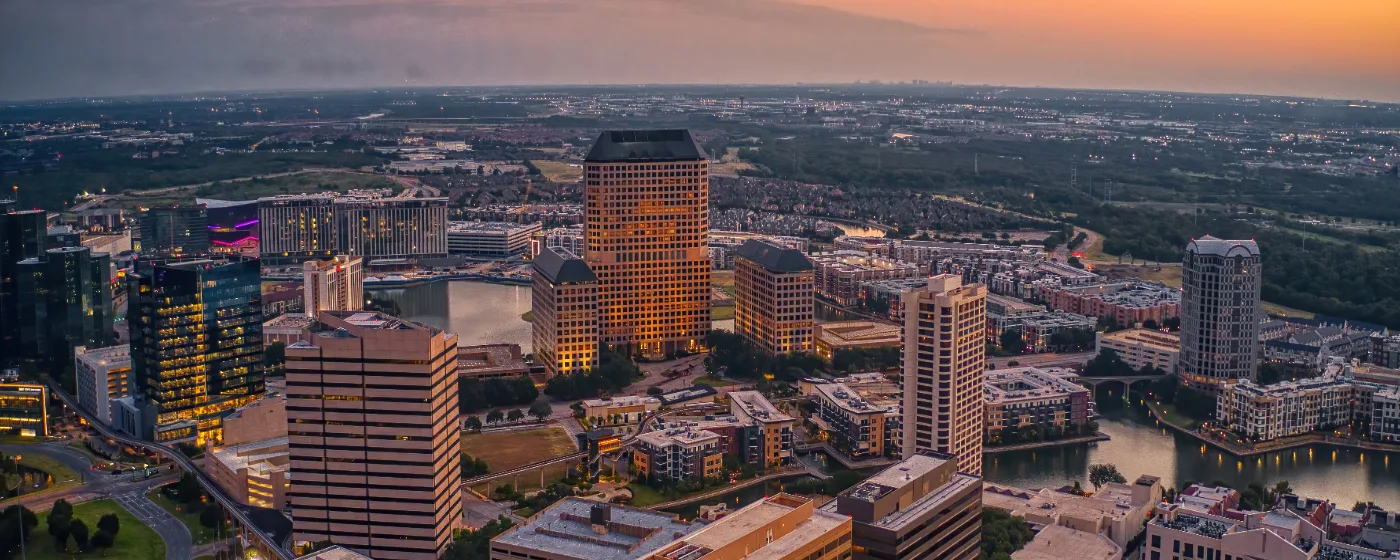
Irving sometimes gets dismissed as the city you fly over — a place between DFW Airport and Dallas that people pass through rather than choose. That misreads it badly. With a population of 257,076 and a geography that spans everything from guard-gated golf enclaves to one of Texas's oldest freedmen communities, Irving is genuinely plural in a way few mid-size Texas cities are. What actually shapes daily life here is not the airport but the planned-community divide: the polished, corporate-built world of Las Colinas on the west side versus the older, more working-class fabric of central and southwest Irving. Buying without understanding that divide is the most common mistake newcomers make.
The economic backbone is substantial. Fluor Corporation, Caterpillar, and Kimberly-Clark all have a presence here, and the Irving Independent School District — with 29,212 students enrolled in 2025-26 — is one of the city's largest employers. The district holds a C rating, according to the Texas Education Agency, which is a real consideration for families with school-age children. That said, a significant number of residents here work at Dallas/Fort Worth International Airport, commute to corporate campuses in Las Colinas, or drive about 20 minutes to Downtown Dallas for work — so the school district rating matters differently depending on your situation.
The typical home price sits at $343,364 (Zillow Home Value Index, July 2026), which runs noticeably below nearby Coppell and Grapevine, and somewhat above Dallas itself. That spread is what draws buyers who've been priced out of the northern suburbs but still want a Dallas-area address with legitimate amenities. The Campion Trail runs along the Trinity River, Lake Carolyn anchors the Las Colinas urban core, and the Toyota Music Factory brings a real entertainment district within city limits — details that matter when you're deciding whether Irving is actually livable or just affordable.
Whether you're weighing a specific neighborhood, trying to understand school boundaries, or figuring out where renters get the most for their money, the sections below break down Irving's eight key neighborhoods, the most common buyer mistakes, and honest trade-offs across the city.

The Irving Reality
The divide that shapes every Irving purchase runs roughly along SH-183 (Airport Freeway / John W. Carpenter Freeway) and I-635: north and west of those corridors sits the planned, corporate-funded world of Las Colinas and Valley Ranch, while the older, denser fabric of central and southwest Irving — the Heritage District, Hospital District, Bear Creek — occupies a fundamentally different price tier and character. These aren't just different vibes; they reflect decades of different investment, different infrastructure, and in some cases, different school districts entirely.
That last point matters more than most buyers realize before they start shopping. Hackberry Creek, despite sitting inside what many buyers casually call "Las Colinas," is served by Carrollton-Farmers Branch ISD, not Irving ISD. That single boundary quirk changes the school-district calculation completely, and it catches buyers who assume all of the Las Colinas area falls under the same district. Always verify the school boundary for a specific address, not just the neighborhood name.
The second reality is highway access. Irving's grid of I-635, SH-114, SH-183, and SH-161 means commute times vary dramatically by where you live within the city — not just where you're going. A home in Valley Ranch near the SH-190 (President George Bush Turnpike) interchange feels like a different city from one in the Heritage District near Loop 12 (Walton Walker Boulevard). Buyers who treat Irving as a single commuter market and shop purely on price often end up in the wrong corner of a city that is larger and more internally varied than it looks on a map.
Neighborhoods at a Glance
| Neighborhood | Best For | Vibe |
|---|---|---|
| Las Colinas | Walkable Luxury Transit | Planned urban core with Fortune 500 neighbors, Lake Carolyn, and a light rail stop — feels more like a city district than a suburb |
| Valley Ranch | Families Commuter Value | Canal-lined master-planned community with established feel, Cimarron Park, and easy turnpike access — the "move-up" side of Irving's north end |
| Hackberry Creek | Luxury Privacy | Guard-gated golf enclave with a Byron Nelson-designed course — quiet, insular, and not served by Irving ISD |
| Heritage District | First-Time Walkable | Historic Main Street core with early-20th-century architecture and an active city redevelopment push — the most interesting neighborhood for buyers who like upside |
| University Hills | Quiet Families | Custom-built mid-century homes on curving streets near the University of Dallas — low through-traffic, established trees, close to the Campion Trail |
| Hospital District | Commuter First-Time | Older ranch homes with strong neighborhood-association culture and fast SH-183 access — community cohesion sets it apart from comparably priced areas |
| Northgate Heights | Families School | HOA-governed, well-maintained central Irving neighborhood — understated and consistent, the kind of place where neighbors actually know each other |
| Bear Creek | First-Time Renter | One of Texas's oldest freedmen communities, now a mixed residential area in west Irving — significant history, the Jackie Townsell Bear Creek Heritage Center, and entry-level pricing |
Irving typical home price: $343,364 (Zillow ZHVI, July 2026). Typical rent: $1,611/mo (Zillow ZORI, July 2026). Neighborhood tiers on this page are relative to these figures.
Best Neighborhood by Buyer Type
| Buyer Type | Best Neighborhood | Why |
|---|---|---|
| First-Time Buyer | Heritage District | The city's active redevelopment plan and relatively accessible pricing make this the neighborhood with the most upside for buyers willing to bet on the direction the city is heading. |
| Luxury Buyer | Hackberry Creek | Four staffed guard gates, an 18-hole Byron Nelson-designed course, and a gated HOA structure give this enclave an exclusivity that nothing else in Irving matches. |
| Walkability Seeker | Las Colinas | Lake Carolyn, the Toyota Music Factory, the Irving Convention Center, and a light rail connection give this the only genuinely walkable urban-core experience in the city. |
| Families with Kids | Valley Ranch | More than five miles of canal trails, Cimarron Park's recreation facilities, a master-planned layout that keeps cut-through traffic out, and above-median home sizes make this the practical family choice. |
| Commuter | Valley Ranch | Positioned at I-635 and SH-190 (President George Bush Turnpike), Valley Ranch puts major freeway interchanges within minutes of most front doors — and DFW Airport is roughly 10 miles away. |
| Large-Lot Buyer | University Hills | Custom-built homes on cul-de-sac streets from the 1960s through 1980s sit on generous lots with mature tree cover that newer Las Colinas-area developments simply don't have. |
| Renter | Las Colinas | The highest concentration of professionally managed apartment communities, walkable dining and entertainment, and a light rail connection make Las Colinas the most practical rental base in the city. |
Looking to buy in Irving? Estimate your payment.
Enter your numbers to see an estimated monthly mortgage payment.
Estimate only. Excludes HOA fees and mortgage insurance. The interest rate above is a starting point, not a quoted rate — replace it with your own to see real numbers. Insurance is a flat placeholder, not a Irving quote.
Most Popular Neighborhoods
Las Colinas
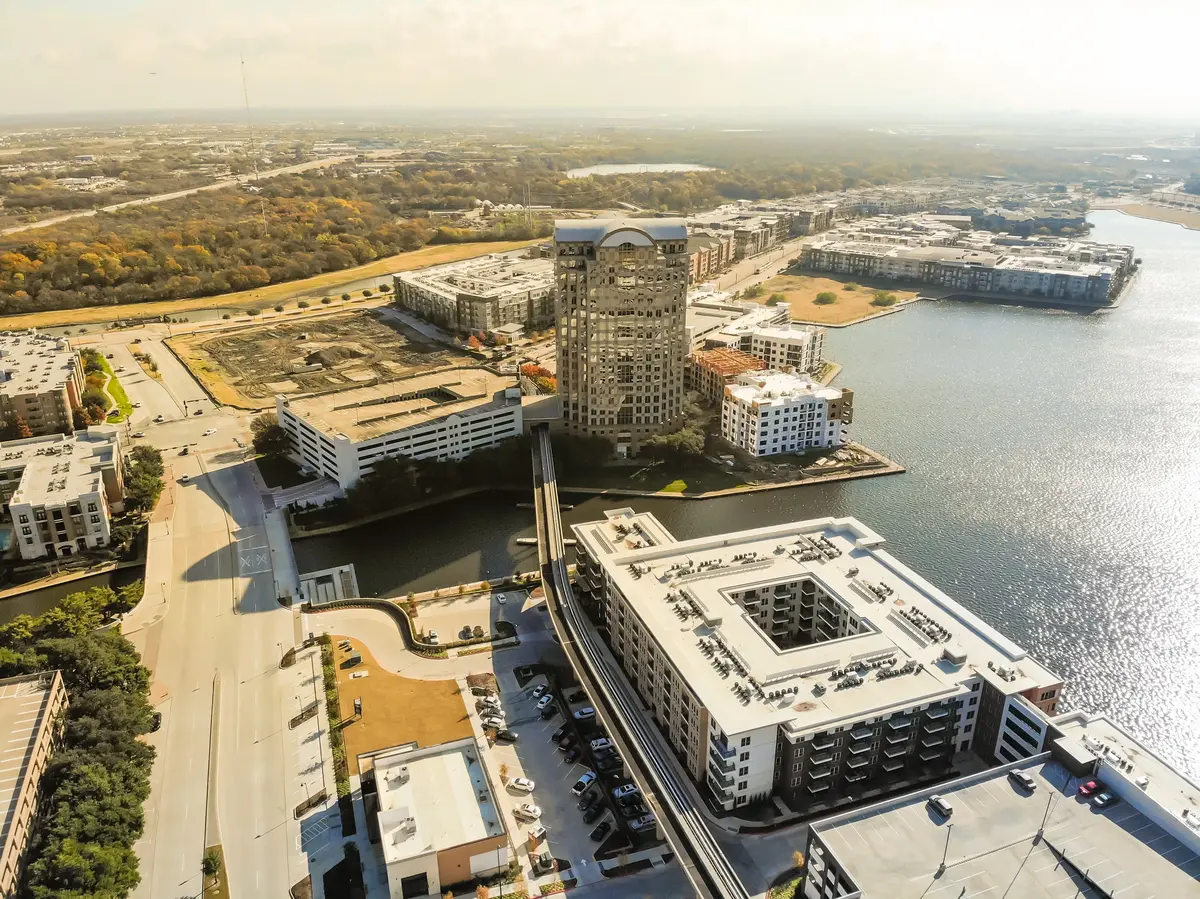
Las Colinas is Irving's signature address — a 12,000-plus-acre planned community designed in the 1970s as a live-work-play district, and one of the few places in the Dallas-Fort Worth area where you can walk from a Fortune 500 lobby to a waterfront restaurant without getting in a car. The Mustangs of Las Colinas sculpture, Lake Carolyn, and the Toyota Music Factory are the anchors; a light rail line adds genuine transit access toward Downtown Dallas and DFW Airport. Homes here run above the city median, and buyers should understand that Las Colinas is large enough internally that "Las Colinas" on a listing can mean very different things depending on exactly where a home sits.
Best for: professionals who want walkable streets, renters who want amenities without a car, and buyers who prioritize transit access over square footage.
Valley Ranch
Valley Ranch occupies the northernmost corner of Irving — north of I-635, bordered by SH-190 (President George Bush Turnpike) — and it feels like it was designed to keep chaos out: more than five miles of landscaped canal walkways, roughly 4,000 single-family homes, and a layout that routes traffic around rather than through. Cimarron Park, within the community, offers a resort-style pool with a water slide, basketball courts, tennis courts, and a recreation center. Homes here run above the city median, and the catch is that the neighborhood's polish and HOA structure come with real price tags and HOA dues that some buyers underestimate when running their initial numbers.
Best for: families with kids, buyers who commute north toward DFW Airport or the turnpike, and anyone who wants an established master-planned feel at an Irving price point.
Hackberry Creek
Hackberry Creek is the most private address in Irving — a guard-gated golf community anchored by the Hackberry Creek Country Club, whose 18-hole course was designed by Byron Nelson, and protected by four staffed gates with biking and jogging trails woven throughout. Most homes date from the mid-1980s onward, which means buyers get mature landscaping and established lot sizes that newer developments can't replicate. The one detail that surprises buyers: Hackberry Creek falls under Carrollton-Farmers Branch ISD, not Irving ISD — a boundary fact that changes the school calculation entirely and is worth confirming before you make an offer.
Best for: luxury buyers who prioritize security and golf-course living, and buyers who are either remote workers or commute to employers outside Irving ISD's footprint.
Heritage District
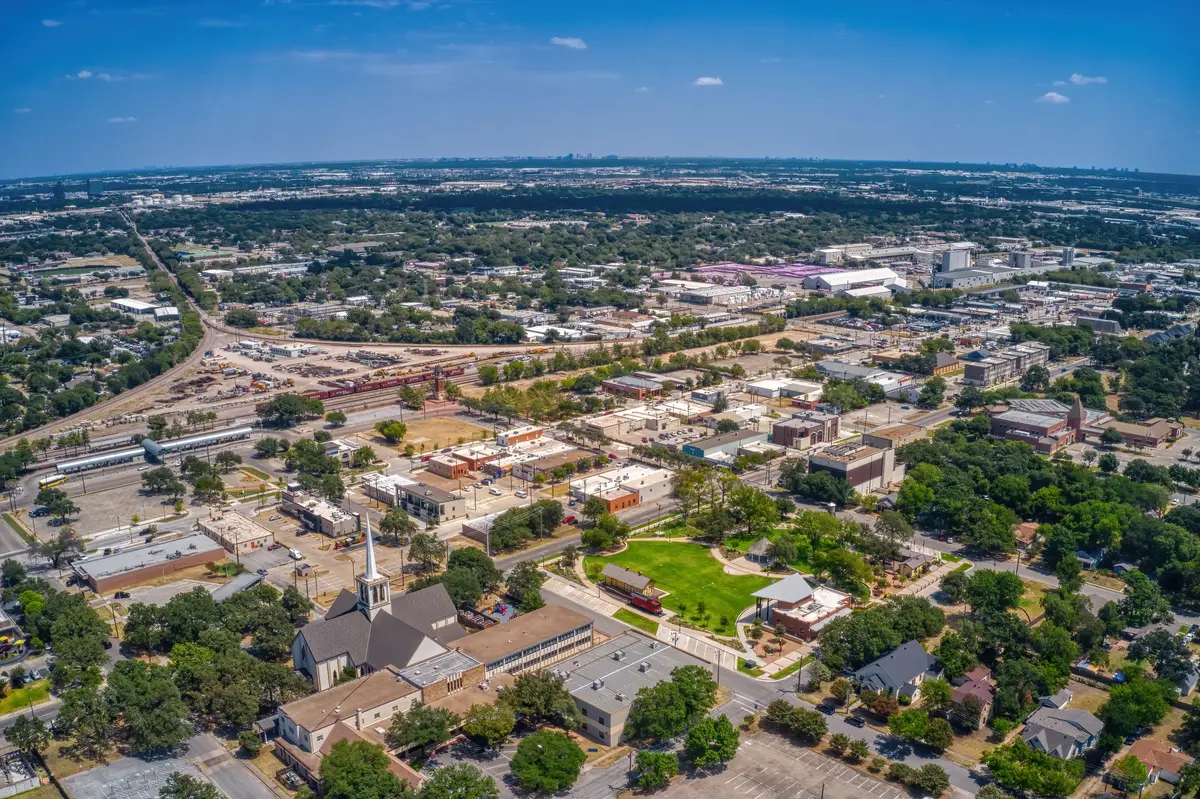
The Heritage District is Irving's historic core — once called Old Town — centered on a Main Street that still carries early-20th-century commercial architecture in a metro region that tears down and rebuilds everything. Heritage Park preserves the city's first water tower, windmill, and library alongside the Caster Cabin (built 1887) and a replica of the 1903 Rock Island Depot. A major mural project completed in April 2025 transformed more than 5,000 square feet of wall space, and the city is actively pursuing a broader redevelopment plan. The honest trade-off is that "actively pursuing" means this neighborhood is still in transition — buyers who want a polished product today may find themselves waiting for the investment to arrive.
Best for: buyers who want character over polish and are comfortable with a neighborhood that is still finding its footing.
University Hills
University Hills is the kind of neighborhood that doesn't announce itself — custom-built single-family homes from the late 1960s through the 1980s, curving streets and cul-de-sacs that naturally limit through-traffic, mature trees, and proximity to the Campion Trail along the Trinity River. The University of Dallas sits nearby, lending the area a quieter intellectual character without the rental-market volatility that typically accompanies a large university. The trade-off is age: many homes in this vintage require updates to kitchens and systems, and buyers expecting move-in condition at a competitive price will need to budget accordingly.
Best for: buyers who value established lots and architectural character over new construction, and families who want low cut-through traffic.
Hospital District
The Hospital District is one of Irving's older residential pockets — most homes date to the 1970s and 1980s — positioned close to a regional medical center and with fast access to SH-183 (Airport Freeway). What sets it apart from comparably priced Irving neighborhoods is community texture: the neighborhood association runs progressive dinners and annual block parties that give this area a cohesion unusual in a city of 257,076. The downside is honestly about housing stock — these are older homes, and deferred maintenance is common enough that inspection findings can be significant; budget for it before you fall in love with a listing.
Best for: buyers who want an established community feel, healthcare workers at nearby medical facilities, and first-time buyers who can handle a renovation project.
Northgate Heights
Northgate Heights sits in central Irving as one of the city's quietly consistent neighborhoods — HOA-governed, well-maintained, and close enough to schools and shopping to handle most daily errands without a long drive. The researched data on this neighborhood is thinner than for the city's showcase areas, which itself tells you something: this is a place where people buy, stay, and don't generate much churn or controversy. The practical trade-off is that central Irving lacks the canal trails of Valley Ranch and the urban energy of Las Colinas, so buyers who want lifestyle amenities rather than just a solid house in a stable block should temper expectations.
Best for: families who want a steady, low-drama neighborhood with HOA accountability and easy access to central Irving's schools and parks.
Bear Creek
Bear Creek carries more history than almost any neighborhood in the Dallas-Fort Worth area — one of Texas's oldest freedmen communities, tracing its roots to the late 1850s, with the Jackie Townsell Bear Creek Heritage Center's three museums preserving the story from emancipation through the Civil Rights era. Today the neighborhood in west Irving is a mix of homes and apartment complexes near SH-183 (Airport Freeway), with West Park and its inclusive playground serving as a recreational anchor. Homes here sit at the city median, making Bear Creek the most accessible entry point into Irving ownership — the honest trade-off is that west Irving's infrastructure and commercial investment lag the north and east sides of the city.
Best for: first-time buyers who want Irving's most accessible price point, renters looking for apartment options in west Irving, and anyone drawn to living in a neighborhood with genuine historical significance.
Common Mistakes Buyers Make in Irving
Assuming All of Las Colinas Is the Same
Las Colinas covers more than 12,000 acres. A listing that says "Las Colinas" might be a walkable urban condo steps from Lake Carolyn and the light rail — or a house well outside that core, closer to a freeway interchange than any amenity. Buyers who shop on the neighborhood label rather than the specific location within it routinely end up disappointed when the walkable lifestyle they expected requires a car for every errand.
Missing the Hackberry Creek School District Boundary
This is the single most consequential boundary mistake in Irving. Hackberry Creek sits inside what most people think of as the Las Colinas area, which falls under Irving ISD. Hackberry Creek itself is served by Carrollton-Farmers Branch ISD. Buyers who assume the guard-gated Las Colinas feel means Irving ISD schools have made an offer before discovering the boundary. Always look up the district for the specific address — not the neighborhood name, not the zip code.
Underestimating the Internal Commute
Irving's freeway grid — I-635, SH-183, SH-114, SH-161, SH-190 (President George Bush Turnpike) — looks comprehensive on a map, but the morning merge points between them create bottlenecks that vary sharply by origin. A buyer in Valley Ranch heading toward Downtown Dallas faces a different morning than one in the Heritage District heading the same direction. Buyers who tour neighborhoods on a weekend and assume the drive will feel the same on a Tuesday at 7:30 a.m. are consistently surprised. Test the actual commute at actual commute time before committing to a specific part of the city.
Chasing Square Footage in the Heritage District Without Pricing the Work
The Heritage District offers the most architectural character per dollar in Irving right now, and the city's redevelopment plan makes it genuinely interesting for buyers who can tolerate some uncertainty. The mistake is paying for the upside without accounting for the deferred maintenance. Many Heritage District homes predate 1980, and inspection findings on older plumbing, electrical panels, and roof conditions can run significantly. Buyers who stretch to the top of their budget for the purchase price sometimes have nothing left for the work the house actually needs.
Best Areas to Rent in Irving
| Area | Ideal For | Trade-off |
|---|---|---|
| Las Colinas Urban Core | Young professionals, transit riders, anyone who wants walkable amenities and light rail access | The highest rents in the city and the most competition for available units — do not expect to negotiate much in the core |
| Valley Ranch | Families who want a master-planned feel, canal trails, and Cimarron Park without buying in | Most rental inventory here is in multi-family complexes rather than single-family rentals, and HOA rules can limit flexibility for tenants |
| Hospital District / SH-183 Corridor | Healthcare workers, budget-conscious renters who still want quick freeway access | Older apartment stock means more maintenance calls; unit finishes vary more than in newer complexes elsewhere in the city |
| Heritage District | Renters who want Irving's most interesting streetscape and proximity to Heritage Park while the neighborhood is still in transition | Retail and dining density is still catching up to the city's redevelopment ambitions — you may need to drive for daily needs |
| Bear Creek / West Irving | Renters seeking the city's most accessible price point with SH-183 freeway access | West Irving has fewer commercial amenities than the north and east sides; most serious shopping requires a drive |
The city-wide typical rent is $1,611 per month (Zillow, July 2026), which is the benchmark — see the full cost breakdown at Irving's cost-of-living page. Renters who want the Las Colinas urban experience should budget meaningfully above that figure; renters in Bear Creek or the Hospital District corridor can expect to find options closer to or below it.
Local Expert Takeaway: Irving is not one neighborhood market — it's at least three, and the divide between them is sharper than the city map suggests. If you want walkable streets, transit access, and a live-work-play environment, Las Colinas is genuinely that, with Lake Carolyn and the Toyota Music Factory as real anchors. If you want a family-focused, master-planned neighborhood with canal trails and Cimarron Park, Valley Ranch delivers it at an above-median price point. And if you want the most interesting upside play in the city — early-20th-century architecture, an active city investment plan, and room to negotiate — the Heritage District is worth a serious look before prices reflect what the redevelopment will eventually bring. Just don't buy in Hackberry Creek assuming you're in Irving ISD. That boundary mistake costs buyers every year.
Quick Takeaways & FAQs
✅ Las Colinas is one of the only neighborhoods in the Dallas-Fort Worth area where you can walk from a corporate campus to a waterfront restaurant to a light rail stop — a genuinely urban experience inside city limits.
⚠️ Hackberry Creek's guard-gated golf-course lifestyle comes with a school-district boundary catch: it falls under Carrollton-Farmers Branch ISD, not Irving ISD, which surprises buyers who assume the Las Colinas area is uniform.
📍 Bear Creek in west Irving carries the weight of being one of Texas's oldest freedmen communities, with the Jackie Townsell Bear Creek Heritage Center preserving that history — a meaningful distinction for buyers who care about where they live, not just what they pay.
Which Irving neighborhood is best for families with school-age children?
Is Las Colinas a good place to live, or is it just a business district?
What is the most affordable neighborhood to buy a home in Irving?
Does Irving have good public transit for commuters?
What should I know about Bear Creek before buying there?
Moving to Texas?
Tell us what you need help with and we'll connect you with local resources.
