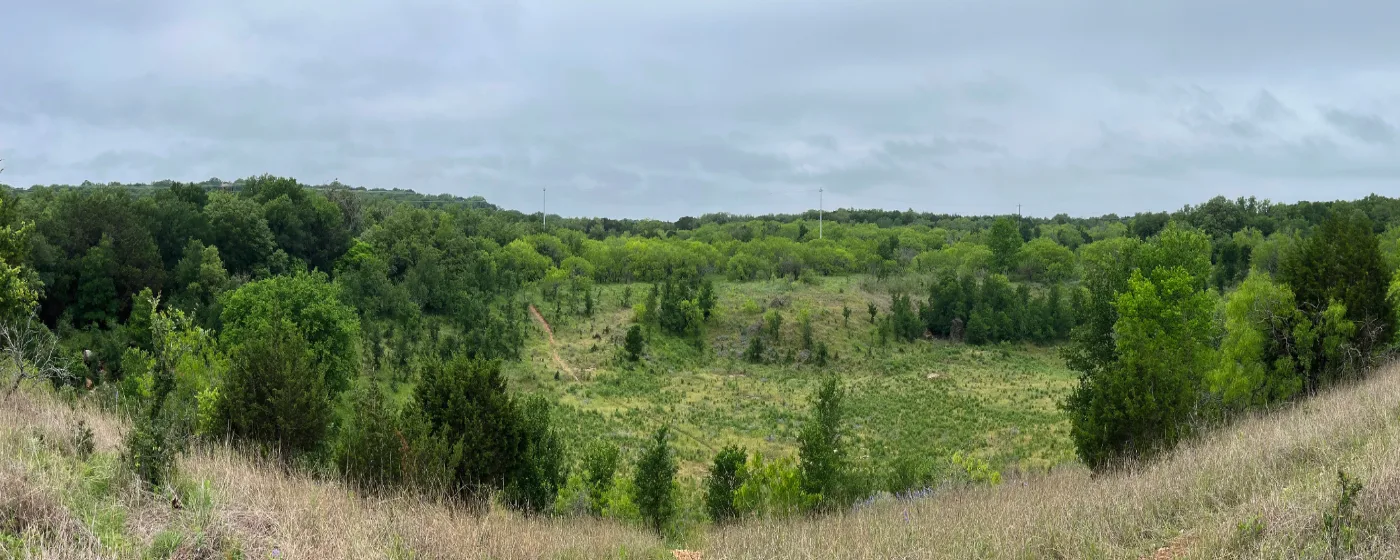
What Is Living in San Marcos, Texas Like?
San Marcos pulls off something unusual for a Texas city its size: it sits squarely on I-35 between two major metros, has one of the fastest-growing universities in the country, and still manages to feel like a river town where people actually swim at lunch. The city is the county seat of Hays County, with 77,830 residents by Census count — though the city's own Housing Unit Method puts the January 1, 2026 figure closer to 91,082, a gap that tells you something about how quickly San Marcos is outpacing its own data. Indigenous communities gathered at the springs here for approximately 20,000 years, and you still feel the pull of that geography: the San Marcos River is the organizing fact of the place, spring-fed to a steady 72°F, winding through more than 130 acres of city parkland.
Texas State University is the single largest force shaping daily life here. With one of the largest enrollments in Texas, the university drives the local economy, sets the city's median age at 25.5 years, and explains why the vibe downtown skews younger and louder than most Central Texas county seats. Texas State is an R2 doctoral university and a federally designated Hispanic-Serving Institution with more than 200 degree programs; Lyndon B. Johnson is among its alumni. Beyond the university, the major employers include the San Marcos Consolidated Independent School District, the City of San Marcos itself, a major regional hospital, Thermon Manufacturing, and San Marcos Premium Outlets — one of the highest-volume outlet centers in the state. The district has 8,144 students enrolled in 2025-26 and holds a C rating, according to the Texas Education Agency, which is worth weighing honestly if schools are a deciding factor for your household.
Housing here is genuinely accessible by Austin-metro standards. The typical home price sat at $310,480 as of July 2026 — noticeably below what you would pay in Buda or New Braunfels, and a fraction of what comparable square footage costs closer to Austin. The effective property tax rate runs approximately 1.70%, which is typical for the region but worth factoring carefully: the median household income of $51,281 reflects the student population's weight on the data, and the gap between that income and what it actually takes to carry a home here is real. For renters, the city-wide typical rent runs $1,404 per month as of July 2026. Day-to-day life leans outdoor and active — the river, Purgatory Creek Natural Area, and Sewell Park are woven into how people spend free time — and Austin-Bergstrom International Airport is the nearest major airport, about 35 minutes away by way of I-35.
Whether you're relocating for work, following the university, or simply priced out of the Austin core, the sections below break down San Marcos's neighborhoods, housing market, commute patterns, schools, local culture, and what life here actually looks and feels like once you're in it.
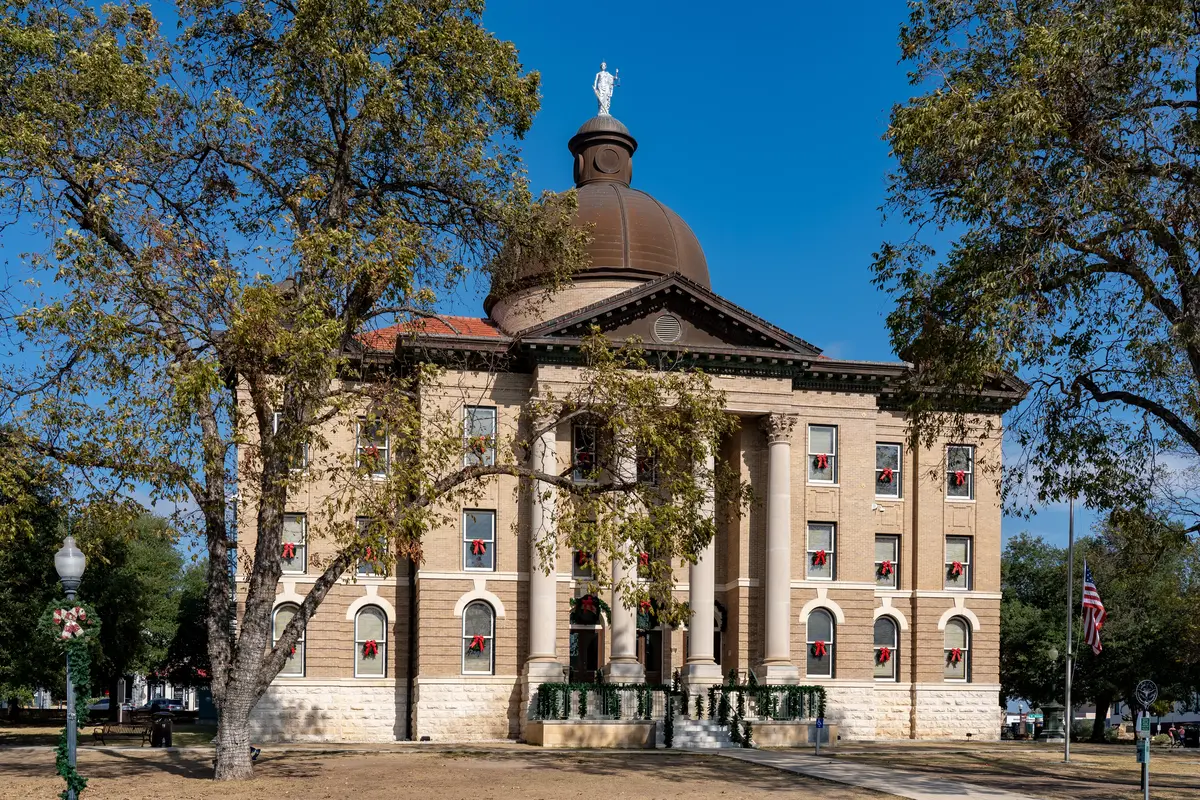
San Marcos at a Glance
Looking to buy in San Marcos? Estimate your payment.
Enter your numbers to see an estimated monthly mortgage payment.
Estimate only. Excludes HOA fees and mortgage insurance. The interest rate above is a starting point, not a quoted rate — replace it with your own to see real numbers. Insurance is a flat placeholder, not a San Marcos quote.
Why Are People Moving to San Marcos?
The case for San Marcos is easy to make. Access to two metros. A river in the middle of town. Home prices that don't require a six-figure household income just to get in the door. The case against it is shorter but real: a poverty rate of 26.93%, a school district that struggles on state assessments, and a city whose infrastructure is playing catch-up with growth that has outpaced nearly every projection made for it.
Most people arriving right now fall into a few clear categories. Remote workers who want Austin proximity without Austin prices are the most visible new wave — I-35 makes the commute manageable on days when a physical presence is required, and the river lifestyle is a genuine draw that shows up in conversations about why someone chose San Marcos over Kyle or Buda. Graduate students and faculty connected to Texas State make up another consistent cohort. And then there's the retiree track: Kissing Tree, the city's dedicated 55+ community, has pulled in buyers from across the state who want a Central Texas address with built-in amenities and a quieter pace than Austin offers.
The University Effect
Texas State's enrollment has surged to become one of the largest in Texas, and that scale reshapes everything from rental demand to traffic patterns to where restaurants open. That growth is a genuine economic engine. It also means downtown on a Thursday night feels different from downtown on a Tuesday in June, and buyers who don't account for the student-population rhythm sometimes find the adjustment sharper than expected.
The Income-to-Price Tension
The median household income in San Marcos sits at $51,281 — a number weighted down by tens of thousands of students who earn very little. For working families, the real household incomes are often higher, but the city-wide figure still signals something important: this is not a place where the typical resident is easily absorbing homeownership costs. The gap between median income and what it takes to carry a home here runs to roughly $43,000 annually. Families moving in from higher-income metro markets tend to handle this more comfortably; buyers coming from within the region should run the numbers carefully. See the full breakdown on the cost of living page.
Crime is worth addressing plainly. San Marcos carries a violent crime rate of 3.59 per 1,000 residents and a property crime rate of 22.58 per 1,000 residents. The violent crime figure is modestly below both the state rate of 4 per 1,000 and the national rate of 3.7 per 1,000. Property crime runs higher than the state average of 20.7 per 1,000 and the national figure of 18.4 per 1,000 — partly a function of the transient student population and the outlet mall drawing high traffic. The safety page has the full breakdown by area.
What Draws Families Specifically
Parents with school-age children tend to research the district carefully before committing. San Marcos CISD holds a C rating, according to the Texas Education Agency — a candid number that earns some families' hesitation and pushes others toward private or charter options. On 2024-25 state assessments, 34% of students reached math proficiency and 44% reached reading proficiency, which are figures that matter and shouldn't be glossed over. The district does offer active UIL athletics programs, and Friday nights during football season fill the stands in a way that still feels genuinely community-rooted rather than performative. Full school details live on the schools page.
What Daily Life Feels Like in San Marcos
The river is not an amenity here — it is the organizing principle of the city's social life. On a summer weekday, you'll find people tubing from Rio Vista Park, paddleboarding near City Park, and cooling off in the spring-fed current that holds at 72°F regardless of what the air temperature is doing. This is not recreational infrastructure built for tourists, even though tourists use it heavily; it's where residents actually spend weekend afternoons, where families with kids show up with inner tubes, and where the Texas State crowd congregates when the semester is in session.
The Seasonal Rhythm Newcomers Miss
What surprises people after six months is the degree to which the university calendar governs the city's pace. Summer is genuinely quieter — traffic eases, restaurant wait times drop, and the downtown feels different in a way that first-time residents often describe as relief. Then August arrives and tens of thousands of students return, rental demand surges, and I-35 through the city center backs up in ways that feel sudden if you moved here in May. If you're buying a home and you've only visited in summer, make a point of spending a weekend here in October before you close.
A Walkable Core with Car-Dependent Edges
The area immediately around the Texas State campus and the downtown square — the LBJ Drive corridor and the streets around the historic central district — is genuinely walkable by Texas standards. Independent coffee shops, casual restaurants, and student-facing retail cluster close enough together that residents who live nearby can handle a meaningful chunk of daily errands on foot or by scooter. The city approved a dockless electric scooter program in August 2026 in partnership with Texas State, adding another layer to that core mobility picture.
Outside the core, a car is simply necessary. The neighborhoods spreading south and east toward the outlet corridor are suburban in character: well-designed, comfortable, and oriented entirely around driving. SMTX The Bus provides free, fixed-route local service covering the Premium Outlets and major retail corridors along I-35. A weekday commuter coach connects San Marcos and the Texas State campus to Austin with Capital Metro connections. For rail travel, Amtrak's Texas Eagle makes a stop at the San Marcos station, serving a meaningful number of passengers each year.
The Poverty Rate Is Real
A poverty rate of 26.93% is not just a demographic statistic — it shows up in the patchwork quality of services across different parts of the city, in the degree to which the school district is stretched, and in the economic reality of many long-term residents who have watched housing costs rise faster than local wages. Newcomers arriving with professional incomes often feel insulated from this, and many are. But buyers choosing between San Marcos and a comparably priced suburb in another part of the metro should factor in what that gap means for the civic fabric over the long run.
The San Marcos Housing Market Right Now
The typical home price in San Marcos sat at $310,480 as of July 2026 (Zillow Home Value Index), making it noticeably more accessible than Buda or New Braunfels, and well below what the Austin core commands. Entry-level options exist — older construction in established areas, townhomes targeting the student-adjacent rental market that trade hands when investors sell — though the gap between what the city's median household earns and what a mortgage at current rates actually requires is a real constraint for buyers working without equity from a previous home or a down-payment assist.
The typical city-wide rent runs $1,404 per month as of July 2026. That figure is shaped in part by a rental market that serves tens of thousands of students, which keeps a meaningful inventory of smaller units at the lower end and exerts consistent upward pressure on anything in the walkable core. For more on rent trends and affordability math, see the cost of living page.
What the Neighborhoods Look Like at a Glance
San Marcos's neighborhoods range meaningfully in character and in how they sit relative to the city-wide price point. The details are covered thoroughly on the best neighborhoods page, but at a high level: the planned communities spreading south — Blanco Vista, La Cima, Trace — offer newer construction and family-oriented street layouts. Kissing Tree is the dedicated 55+ community with its own amenity set. The downtown-adjacent areas and historic Dunbar and Heritage districts carry older housing stock with more character and more variability. Cottonwood Creek sits below the city-wide price point; Willow Creek and Hunter's Hill run above it.
| Neighborhood | Character | Housing Type | Best For |
|---|---|---|---|
| Blanco Vista | Planned, family-oriented, southern edge | New & newer single-family | Families |
| Cottonwood Creek | Established, more affordable entry point | Single-family, mix of ages | First-Time Buyers Value |
| La Cima | Master-planned, Hill Country edge | New construction | Families Views |
| Trace | Contemporary planned community | New single-family | Families Commuters |
| Kissing Tree | Active adult, resort-style amenities | Single-family, 55+ gated | 55+ / Retirees |
| Downtown / Dunbar / Heritage | Historic, walkable, eclectic | Older single-family, some mixed-use | Walkable Transit Access |
| Willow Creek | Established, above city median | Single-family | Families |
| Hunter's Hill | Above median, quieter feel | Single-family | Privacy Move-Up |
The effective property tax rate runs approximately 1.70% — consistent with the broader Hays County area and something to model carefully alongside your purchase price when comparing total monthly costs.
San Marcos Neighborhoods
San Marcos has several distinct areas — each with its own character and appeal. Here’s a breakdown to help you narrow down where to focus your home search.
🏡 Blanco Vista
A planned community on the southern edge of San Marcos built around family-oriented street layouts and newer single-family construction, with access to the Blanco River corridor that gives the neighborhood a natural boundary and a recreational draw.
🏠 Cottonwood Creek
One of the more accessible entry points into San Marcos homeownership, Cottonwood Creek is an established area with a mix of housing ages that suits first-time buyers and those looking for more square footage at a lower relative price point.
🌳 La Cima
A master-planned community on the Hill Country edge of San Marcos with newer construction and elevated terrain that gives some lots genuine views — a good fit for families who want new-build quality with a sense of the Central Texas landscape.
🏘 Trace
A contemporary planned development with clean street design and newer homes that appeals to commuter households looking for move-in-ready construction and easy I-35 access without the density of the university core.
🏔 Kissing Tree
San Marcos's only dedicated 55+ community, Kissing Tree is a gated, resort-style active adult development with its own amenity infrastructure — built specifically for buyers who want a Central Texas lifestyle at a price point well below comparable communities closer to Austin.
🌆 Downtown San Marcos / Dunbar / Heritage
The most walkable part of San Marcos, anchored by the historic central square and the Texas State campus, with older housing stock ranging from historic bungalows to eclectic mixed-use — best suited to buyers who want urban texture, on-foot access, and don't mind trading yard size for location.
Pros & Cons of Living in San Marcos
The Pros
- Home to Texas State University, giving the city a youthful, college-town energy
- The spring-fed San Marcos River offers tubing, kayaking, and swimming right in town
- More affordable housing than nearby Austin while still sitting on the I-35 growth corridor
- Strong retail draw from San Marcos Premium Outlets and a walkable historic downtown
The Cons
- Property crime runs above the national average, particularly around retail and high-traffic areas
- A large student rental population can mean transient neighborhoods and noise near campus
- Commuting to Austin or San Antonio jobs still requires a 30-50 minute drive on a congested I-35
Getting Around & Commuting in San Marcos
San Marcos is built around I-35, which is both its greatest asset and its most persistent frustration. The interstate is the spine of daily life: it connects the city to Austin in about 35 minutes under reasonable conditions, provides access to San Antonio to the south, and carries the bulk of the commercial and commuter traffic that defines the city's economic geography. What I-35 does not do is move gracefully when the Texas State semester is in full swing, a Bobcat home game is scheduled, or a weekend sale event at the Premium Outlets draws regional traffic. The segment through downtown San Marcos is a genuine pressure point.
Commuter Options Beyond the Car
For Austin commuters who want an alternative to driving, the CARTS Interurban Coach Route 1517 — the Express Gold — runs weekday service connecting San Marcos and the Texas State campus to Austin with Capital Metro connections. It is not a substitute for a car-centric lifestyle, but it is a real option for those who can structure their week around it. SMTX The Bus provides free, fixed-route local service across the city, covering the retail corridors along I-35 and the Premium Outlets. The Texas State University Bobcat Shuttle extends free rides to the general public — not just students — across campus and the broader service area. Amtrak's Texas Eagle stops in San Marcos; Greyhound and CARTS also serve the station.
The Employers and Where They Sit
Texas State University is the anchor — its campus sits at the northern edge of downtown, directly accessible on foot or by shuttle from the core residential areas. San Marcos CISD schools are distributed across the city. The City of San Marcos municipal operations are downtown. Thermon Manufacturing operates on the industrial side of the city. San Marcos Premium Outlets draws from a wide radius and sits along the I-35 corridor. For healthcare, a major regional hospital operates within city limits. Many residents also commute to employers in Austin, Austin's tech corridor, and the broader metro — and that 35-minute I-35 run is the number most buyers underestimate on bad days versus a clear mid-morning drive.
The I-35 Divide in Practice
The freeway doesn't just carry traffic — it creates a real east-west distinction in how neighborhoods feel and how commute access works. Buyers who haven't spent time on both sides of I-35 sometimes discover that the neighborhood that looked convenient on a map adds meaningful time to their actual morning drive depending on which direction they're heading and which interchange they depend on. SH-80, SH-21, SH-123, SH-142, and Loop 82 all move traffic across and around the city, but I-35 is the trunk line, and proximity to it shapes daily life in ways the neighborhood pages can only partly convey. Austin-Bergstrom International Airport is the nearest major airport, about 35 minutes away by I-35.
What Locals Know About Timing
The I-35 run to Austin is genuinely manageable at 7 a.m. or after 9 a.m. — the window in between is where the trouble lives. Longtime residents who commute to Austin regularly tend to leave early, work the commuter bus when they can, or have quietly restructured their schedules around remote days. Buyers evaluating the drive should make that run twice: once on a Tuesday morning in September and once on a game day weekend, because those two experiences describe different cities.
Schools in San Marcos
Families relocating to San Marcos have public, private, and higher-education options nearby. Here’s a quick overview.
🎓 School District
San Marcos Consolidated Independent School District serves K–12 students across San Marcos and the surrounding area. Rated C (source: Texas Education Agency, 2025 A-F accountability rating (2024-25 school year)).
🏆 Graduation Rate
The 4-year high-school graduation rate here is approximately 87.5%.
📚 Higher Education
Texas’s public universities — the University of Texas at Austin, Texas A&M University, and the University of Houston — offer four-year degrees statewide, with one of the largest community college systems in the country (50+ public community college districts) providing two-year and workforce programs.
🌐 Online Learning
UT Austin Online and Texas A&M University Online offer fully accredited online degrees for remote learners across the state.
Safety in San Marcos
A quick look at how San Marcos compares on the numbers that matter most when weighing a neighborhood or a move.
🛡 Violent Crime
Approximately 3.59 per 1,000 residents.
🔒 Property Crime
Approximately 22.58 per 1,000 residents.
Compared to the most recent national figures from the Bureau of Justice Statistics (2024), San Marcos’s violent crime is about the same as the national average (about 3.7 per 1,000), and property crime is above the national average (about 18.4 per 1,000).
Against Texas as a whole, San Marcos’s violent crime is about the same as the state average, and property crime is about the same as the state average (Bureau of Justice Statistics, Crime Known to Law Enforcement, 2024 (tables 2 and 3)).
Crime rates can vary a lot within a single city, so the citywide numbers above are only a starting point. Some neighborhoods in San Marcos run well below these averages, while others run higher — the kind of block-by-block detail that matters most when you’re actually choosing where to live. The full guide below breaks it down neighborhood by neighborhood.
Working in San Marcos
San Marcos’s largest employers span several industries — here are some of the anchors of the local job market.
🎓 Texas State University
Higher education
🎓 San Marcos Consolidated Independent School District
Public education
🏛 City of San Marcos
Municipal government
🏥 CHRISTUS Santa Rosa Hospital – San Marcos
Healthcare
🏭 Thermon Manufacturing
Industrial manufacturing
🛒 San Marcos Premium Outlets
Retail
Parks & Recreation in San Marcos
Some of the outdoor spaces that shape everyday life in San Marcos.
🌱 San Marcos River & Rio Vista Park
🌱 Wonder World Cave & Adventure Park
🌱 Spring Lake / The Meadows Center for Water and the Environment
🌱 Sewell Park
San Marcos residents don’t have to go far for green space — spots like San Marcos River & Rio Vista Park and Wonder World Cave & Adventure Park are part of everyday life here, whether that’s a morning walk, a weekend hike, or just somewhere to unwind outside. The full guide below covers more of what San Marcos has to offer for parks and outdoor recreation.
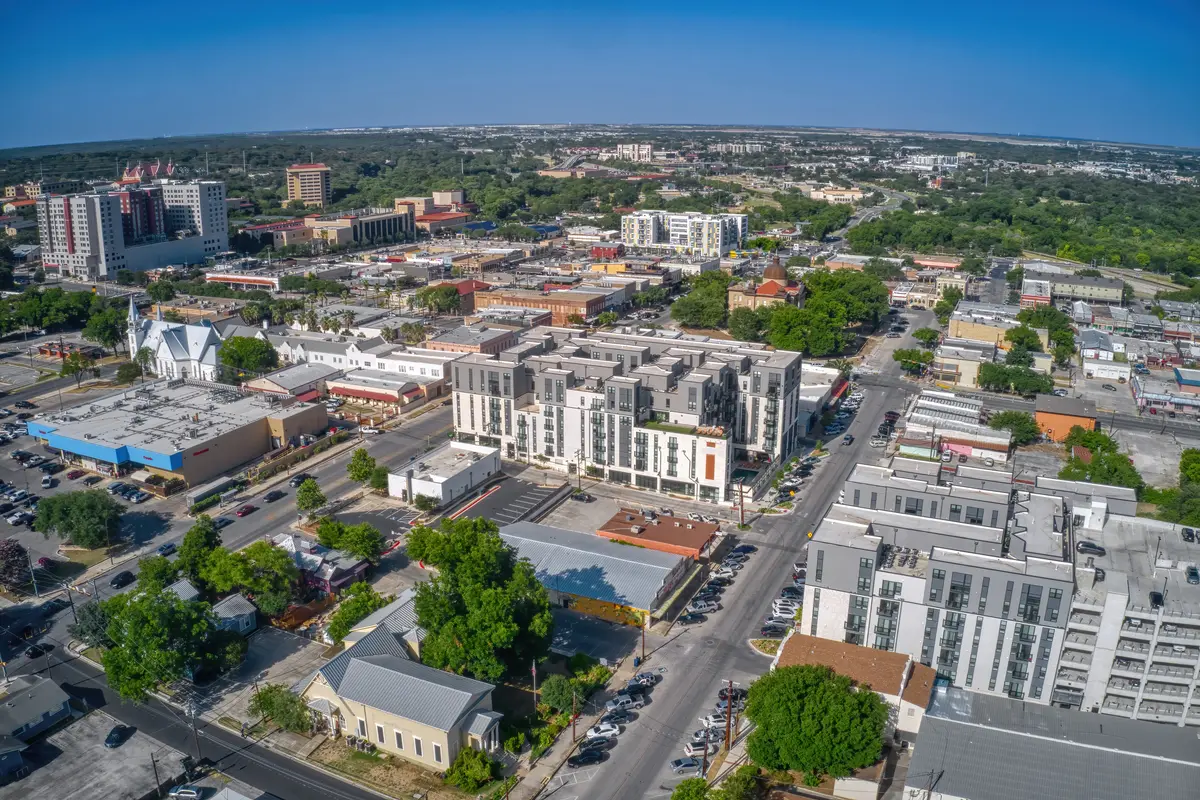
Retiring in San Marcos
San Marcos draws retirees for its balance of amenities, outdoor access, and cost. Here’s what to weigh.
🌤 Climate
San Marcos averages 232 sunny days a year, with hot summers that regularly push into the mid-90s and mild winters that rarely see more than a brief freeze. Spring and fall are the standout seasons — warm, clear, and well-suited to the outdoor lifestyle the city is built around.
🍴 Lifestyle
The river, the Hill Country trail system at Purgatory Creek Natural Area, and a dining scene that runs deeper than you'd expect from a city this size give retirees genuine daily texture. The university presence keeps cultural programming, lectures, and live music accessible, and the pace outside the student core is comfortable without being sleepy.
🏚 55+ Communities
Kissing Tree is the dedicated 55+ community within San Marcos, offering a resort-style active adult environment with built-in amenities. It is the only purpose-built 55+ community the guide covers within city limits, and it has attracted buyers from across the state seeking Central Texas living at a price point noticeably below what comparable communities cost closer to Austin.
✈ Getting Around
A car is essential for most daily needs, though the downtown and university core offer genuine on-foot and scooter-accessible options. Austin-Bergstrom International Airport is the nearest major airport, about 35 minutes away by I-35. The CARTS commuter coach provides a weekday connection to Austin for residents who want a car-free option on selected days.
🏛 Texas Taxes for Retirees — What to Know
- No state income tax — Texas has no personal income tax — constitutionally protected under Article VIII, Section 24. Social Security, pensions, 401(k)/IRA withdrawals, and annuity payments are all untaxed at the state level, with no state return to file.
- Sales tax is the tradeoff — The state sales tax is 6.25%, and local add-ons bring the combined rate in San Marcos to 8.25% (Texas Comptroller of Public Accounts, city sales and use tax rates, July 2026). Groceries and prescription drugs are exempt.
- Property taxes — the real tradeoff — Texas’s effective property tax rate averages about 1.40%, among the highest in the country, since property tax (not income tax) funds most local government and schools.
- Over-65 homestead exemption and school-tax freeze — Homeowners 65+ (or disabled) get an additional $60,000 exemption from their home’s value for school district taxes, on top of the general homestead exemption — $200,000 off school taxable value combined, following November 2025’s Proposition 11 (SB 23), which raised the over-65 exemption to $60,000, and Proposition 13 (SB 4), which raised the general homestead exemption to $140,000. Once claimed, your school district tax bill is frozen at that year’s amount and cannot increase as home values rise, and the ceiling can transfer if you move to a new home within Texas.
- Deferral option if cash is tight — Homeowners 65+ can defer property tax payment entirely for as long as they live in the home, rather than paying it currently — interest accrues, but no forced sale.
- No estate or inheritance tax — Texas has no estate tax, no inheritance tax, and no gift tax.
- No separate capital gains tax — Because Texas has no state income tax, capital gains — including on investments and home sales — are not taxed at the state level at all, unlike states such as Washington that tax capital gains separately from income.
Tax laws change frequently and individual situations vary. This is general information, not tax advice — always consult a qualified Texas tax professional or CPA for personalized retirement tax planning.
Weekends & Local Favorites in San Marcos
San Marcos on a weekend is about the river first and everything else second. The San Marcos River flows spring-fed through the heart of the city, and the system of parks built around it — Rio Vista Park, Sewell Park, San Marcos City Park — is where the city actually gathers when the weather allows. The river stays 72°F year-round, which means tubing season runs longer here than anywhere else in Central Texas. Rio Vista Park in particular draws consistent crowds for swimming and tubing, with the chute at the dam adding some character to the run. Purgatory Creek Natural Area offers a quieter counterpoint: a network of trails through limestone terrain that gives a glimpse of the Hill Country edge that defines the city's western geography. The Blanco River access at Five Mile Dam is worth knowing — a less-trafficked spot that longtime residents tend to reach for when the river gets crowded in summer.
Spring Lake and the Meadows Center
Spring Lake, the headwaters source for the river, sits at the Texas State campus and is managed through The Meadows Center for Water and the Environment. The archaeology and ecology of the site run deep — indigenous peoples gathered at these springs for approximately 20,000 years, and the water quality here is monitored as carefully as anywhere in the state. Wonder World Cave & Adventure Park adds a geological dimension to the outdoor picture that surprises newcomers: the cave system was formed by a major fault system running through the Texas Hill Country limestone in a way that doesn't look quite like anywhere else in Texas.
The Food and Coffee Scene
The dining scene skews toward casual, independent, and student-friendly — which means good value and a lot of personality. Black's Barbecue San Marcos brings serious Central Texas pit tradition. Casa Maria Restaurant & Bakery is a longtime local anchor for Tex-Mex and Mexican baking. Ivar's River Pub has the outdoor, river-adjacent energy that the location demands. Grins Restaurant is a campus-area institution that has outlasted many of its peers. The Root Cellar Cafe offers a more eclectic, produce-forward direction that fits the city's environmental consciousness.
On the coffee side, Wake the Dead Coffee House has the kind of lived-in, independent energy that doesn't get manufactured — it's a genuine gathering spot. Tantra SMTX and Mochas & Javas each carry loyal regulars. Triple Six Social and The Coffee Bar round out a scene that is stronger than you might expect for a city this size, with each spot drawing a slightly different crowd from the Texas State orbit.
Shopping and the Outlet Effect
San Marcos Premium Outlets is one of the highest-traffic retail destinations in Central Texas, drawing visitors from Austin, San Antonio, and across the region on weekends. That's good for the local economy and occasionally inconvenient for residents who need to cross the I-35 corridor on a Saturday. For everyday groceries and household needs, the city is adequately served, though a serious shopping run for specialty items often still means driving out of town or ordering online.
Local favorites in San Marcos
Restaurants
- Black's Barbecue San Marcos
- Casa Maria Restaurant & Bakery - San Marcos
- Ivar's River Pub
- Grins Restaurant
- The Root Cellar Cafe
Outdoors
- San Marcos River / Rio Vista Park
- Sewell Park
- Purgatory Creek Natural Area
- San Marcos City Park
- Blanco River access at Five Mile Dam
Coffee
- Wake the Dead Coffee House
- Tantra SMTX
- Mochas & Javas
- Triple Six Social
- The Coffee Bar
Top Things Locals Say About San Marcos
The best intel about a city comes from the people who actually live there. Here’s what San Marcos residents say when newcomers ask the questions everyone’s thinking.
“I thought I had accounted for the commute, but I hadn't accounted for the university calendar. The first September after we moved in, I spent an extra 40 minutes sitting on I-35 that I hadn't budgeted for. Now I just leave before 7 or work from home on Tuesdays — the river makes it easy to stay home when you can.”
— Recent San Marcos home buyer
“What's the most surprising thing about living in San Marcos?”
How much the river actually gets used — not just by tourists, but by people who have lived here for twenty years. You stop thinking of it as an attraction and start treating it like your backyard. The other surprise is how dramatically the city's energy shifts between summer and the fall semester. New residents who arrive in July genuinely think they've moved to a sleepy small town. Then August happens.
“What do locals love most about San Marcos?”
The combination of an affordable mortgage and a lifestyle that feels expensive. You can buy a decent house at a price that doesn't swallow every paycheck, and then spend your weekends on the river or on the trails at Purgatory Creek Natural Area for free. The food and coffee scene around the university holds its own — there's genuine personality in the independent spots that you wouldn't expect for a city this size.
“What should newcomers to San Marcos know?”
The school district numbers are real and worth researching before you assume the ratings will work for your family. A lot of people move here and then figure out the school picture after the fact, which makes for a stressful first year. Also: I-35 through downtown is a genuine choke point, not just during peak hours. Loop 82 is local knowledge — if you're trying to get across town without sitting on the main corridor, that's your move.
“How much do you need a car in San Marcos?”
Essentially everyone needs a car unless you live right on the Texas State campus. The walkable core around the university and downtown is real — the scooter program and the Bobcat Shuttle help there — but the residential neighborhoods south and east of downtown are suburban in the full Texas sense. SMTX The Bus covers the main corridors for free, and the Austin commuter coach is worth knowing, but for grocery runs, kids' activities, and anything outside the downtown core, you're driving.
Cities Near San Marcos
Other communities near San Marcos worth a look — each with its own character and price point.
| City | Distance | Best For | Vibe | Median Rent | Median Buy |
|---|---|---|---|---|---|
| Kyle | 10 mi | Families, new construction buyers | Fast-growing, suburban, I-35 adjacent | $1,566 | $299,223 |
| Buda | 15 mi | Families seeking quiet suburbs | Small-town feel, established neighborhoods | $1,683 | $355,320 |
| New Braunfels | 17 mi | River culture, retirees, families | German heritage, Comal River, scenic | $1,566 | $351,190 |
More Helpful Guides for San Marcos
Going deeper on San Marcos? Our blog series covers everything from first-time buying to retiring here — explore the guides below.
Local Expert Takeaway: San Marcos is genuinely affordable by Austin-metro standards, and the river lifestyle is real — not a marketing angle. The thing to size up honestly before you buy is the school district: the C rating from the Texas Education Agency and the proficiency numbers on state assessments are a legitimate factor for families with school-age children, and the city's high student-population poverty rate shapes the district's resource picture in ways that don't resolve quickly. For remote workers, retirees at Kissing Tree, and buyers who can absorb the school trade-off, San Marcos offers a quality of life that is hard to replicate at this price point anywhere else between Austin and San Antonio.
Quick Takeaways & FAQs
✅ The San Marcos River — spring-fed, 72°F year-round, running through 130-plus acres of city parkland — is a genuine day-to-day amenity, not a weekend novelty.
⚠️ The school district holds a C rating from the Texas Education Agency, and state assessment proficiency rates are below state averages — a real consideration for families with school-age children.
📍 Texas State's enrollment is among the largest in Texas and shapes everything from traffic and rental demand to the downtown vibe — visit during the semester, not just in summer, before you commit.
Is San Marcos a good place to live if you commute to Austin?
How are the schools in San Marcos?
What is the typical home price in San Marcos?
What is it really like living next to Texas State University?
Are there 55+ communities in San Marcos?
Helpful Links for Moving to San Marcos
Moving to Texas?
Tell us what you need help with and we'll connect you with local resources.
