
What Is Living in Buda, Texas Like?
Most people who end up in Buda didn't set out looking for Buda. They were priced out of Austin, or they drew a circle on a map and asked what was within a half hour of downtown that still had new construction, good schools, and a real neighborhood feel. Buda kept coming up. What surprises them once they arrive is that this isn't just a suburb filling space between Austin and San Marcos — it's a city of 16,166 with its own downtown, its own civic identity, and a claim to fame that most Texas cities twice its size can't match: the Texas Legislature officially designated Buda the Outdoor Capital of Texas in 2005, because it has more parkland per capita than any other city in the state. Thirteen public parks covering more than 268 acres for a city this size is a genuine rarity.
The economic backbone here has evolved quickly. Hays Consolidated Independent School District is the largest employer, with 25,049 students enrolled in 2025-26 and a footprint that reaches well beyond Buda's city limits. The district holds a B rating, according to the Texas Education Agency. Beyond education, Amazon operates a 300,000-square-foot fulfillment center that helped transform Buda from a pure commuter town into a city with local employment — and Deep Eddy Vodka, Four Hands wholesale distribution, and a major regional health system round out the commercial base. The median household income of $123,766 reflects a workforce that skews toward working-age professionals and dual-income families, and nearly 35% of residents are under age 17, which tells you a great deal about who is moving here and why.
On price, Buda sits noticeably below Austin and is meaningfully more affordable than most of the metro's inner-ring suburbs — the cost of living page breaks down housing, taxes, and what the effective 1.49% property tax rate means in practice. What you get for that price point is newer construction with four bedrooms, a two-car garage, and a community pool or trail system included in the HOA. The tradeoff is a real one: most of your daily errands require a car, and I-35 is the artery that connects nearly everything. Those 225 sunny days a year make that driving life more tolerable, but anyone expecting walkable streets and an urban grid will need to recalibrate.
Whether you're weighing a move or just starting to research the area, the sections below cover Buda's neighborhoods, housing market, schools, daily life, commute realities, and the local spots that give this city its character.

Buda at a Glance
Looking to buy in Buda? Estimate your payment.
Enter your numbers to see an estimated monthly mortgage payment.
Estimate only. Excludes HOA fees and mortgage insurance. The interest rate above is a starting point, not a quoted rate — replace it with your own to see real numbers. Insurance is a flat placeholder, not a Buda quote.
Why Are People Moving to Buda?
The case for Buda is easy to make: Austin access, newer construction, strong schools, and a price point that still makes sense for a household budget. The case against it is shorter but worth reading — and it starts with I-35.
The Price Equation
Buda delivers something increasingly rare in the Austin metro: a city where the median household income is at or above what it takes to buy the typical home. That affordability gap, which has closed in most of Central Texas, still exists here. Kyle sits noticeably lower on price; Austin runs noticeably higher. Buda lands in a middle band that suits buyers who want new construction without paying Austin prices but still want the infrastructure and amenities of a growing city.
The Family Gravity
Nearly 35% of Buda's population is under age 17. That's not an accident — it's the result of a decade of master-planned communities designed specifically around families with school-age children, with trail systems, community pools, and elementary school access built into the development plan. Sunfield alone is planned for more than 3,000 lots at full buildout, and the Hays CISD feeds students from Buda's neighborhoods into a district that holds a B rating, according to the Texas Education Agency.
Real Local Employment, Not Just Commuter Housing
Buda no longer depends entirely on Austin for jobs. Amazon's fulfillment center, Deep Eddy Vodka's manufacturing operation, and Four Hands wholesale distribution have created meaningful local employment that didn't exist a decade ago. That shift matters for household commute patterns and for the city's long-term stability as a place to own property.
The Honest Tradeoffs
What people don't always tell you before you sign: Buda is still building its identity. Downtown is genuinely historic — the 1881 limestone storefronts on Main Street are listed on the National Register of Historic Places — but it's compact, and the surrounding commercial fabric is still catching up to the population. The city's 2025 Strategic Plan explicitly prioritizes redeveloping the I-35 corridor and building out a cultural arts program, which is candid acknowledgment that the infrastructure lags the growth.
The other honest answer is that major highway construction was underway through central Austin as of late 2025, and lane closures along the corridor have been a recurring reality for anyone commuting north. Buda commuters have learned to treat departure time as a strategic decision rather than a routine one.
What Daily Life Feels Like in Buda
The Morning Rhythm
Daily life in Buda runs on a car-first model. Most residents drive to school drop-off, drive to the grocery store, and drive to work — whether that's in Buda itself or up I-35 toward Austin. That's not a knock; it's the lived reality of a fast-growing city where the residential development has outpaced the walkable commercial core. The upside is that most of those drives are short, and the newer neighborhoods come with amenities built in: trails, community green spaces, and parks within walking distance of front doors.
The Community Feel
Buda has an unusually active civic calendar for a city its size. The Wiener Dog Races each spring, organized by the Buda Lions Club, draw visitors from across the state and feel genuinely homegrown rather than corporate-sponsored. Buda Crawfest at the Buda Amphitheater, Red White & Buda on the Fourth of July, Boo-da Halloween on Main Street in October, and BudaFest in December give the calendar a rhythm that keeps people engaged with the downtown even when the commercial offerings are still growing. The Budaful Farmers' Market at Buda City Park brings the community together regularly through the warmer months.
The Seasonal Surprise
Summer in Buda is serious Central Texas heat — high humidity and temperatures regularly above 100°F through July and August. Newcomers from other parts of the country consistently underestimate this. The parks and trail systems that make Buda the Outdoor Capital of Texas are genuinely useful from October through May and again from late September; the summer months push most outdoor activity to early mornings.
Where Families Actually Gather
The neighborhood trail systems — particularly in Sunfield and along the Onion Creek greenbelt — are where you see Buda's family demographic most clearly on weekend mornings. Buda City Park and the Buda Amphitheater anchor the civic gathering spaces downtown. For youth sports and activities, the Hays CISD and the city's parks department run active UIL athletics programs, and weekend games are a reliable community fixture.
Six Months In
What longtime residents consistently mention after their first year: they didn't expect to feel as rooted as they do. Buda has enough of its own identity — the historic Main Street, the event calendar, the outdoor designation — that it doesn't feel like a generic Austin suburb. What they also didn't expect was how much the construction traffic on I-35 would shape their weekly routine. Adjusting departure times by 20 minutes on bad days becomes second nature.
The Buda Housing Market Right Now
The typical home in Buda is priced at $355,320 (Zillow Home Value Index, July 2026), a figure that reflects the city's newer construction stock — mostly single-family homes built in the last 15 years, with four bedrooms, open floor plans, and subdivision amenities. Entry-level options in Buda's older neighborhoods start below that figure; newer master-planned communities on the city's edges can push above it depending on the builder and the lot.
On the rental side, the city-wide typical rent is $1,683 per month (Zillow ZORI, July 2026). Most of the rental stock consists of single-family homes rather than apartment complexes, which gives the rental market a different character than you'd find closer to Austin. For a deeper breakdown of housing costs alongside taxes and everyday expenses, the cost of living page covers the full picture.
What the Market Looks Like on the Ground
Buda is actively building. Approximately 380 single-family permits and 120 townhome permits were issued in 2025, and communities like Sunfield continue expanding toward their multi-thousand-lot buildout. That new supply keeps prices more stable than in tighter markets, but well-priced homes in established neighborhoods don't sit for long.
The $27 million mixed-use development called The Roundabout broke ground in November 2025, designed to add local shops, dining, trail connections, and community gathering spaces. When complete, it will be the clearest signal yet that Buda's commercial core is catching up to its residential one.
Who Buys Here
The buyer profile in Buda tilts heavily toward parents with school-age children relocating from Austin or from out of state — particularly California, where the price difference remains significant. For the California-to-Buda comparison, the gap in home prices, tax structure, and overall cost of living is the central story. First-time buyers find Buda accessible relative to the metro; for the mechanics of financing and what the buying process looks like in this market, the first-time homebuyer page has the full walkthrough.
For neighborhood character and how the individual communities compare in feel and housing type, the best neighborhoods page breaks down Sunfield, Garlic Creek, Ruby Ranch, and the rest in detail.
Buda Neighborhoods
Buda has several distinct areas — each with its own character and appeal. Here’s a breakdown to help you narrow down where to focus your home search.
🏡 Sunfield
Sunfield is Buda's largest master-planned community, designed for more than 3,000 lots at full buildout, with an extensive internal hike-and-bike trail network and community amenities built into the development. It suits parents with school-age children who want new construction and a neighborhood ecosystem rather than a standalone home.
🏠 Shadow Creek
Shadow Creek is an established family neighborhood with a quieter, more settled feel than the city's newer developments, appealing to buyers who want to avoid the active construction environment of Buda's growth edges. The housing stock is slightly older and the community feel is well-rooted.
🌳 Garlic Creek
Garlic Creek is a well-regarded family subdivision with trail connections and a community pool, popular with parents who value neighborhood amenities within the development itself. It sits in a part of Buda that feels established without being the city's oldest area.
🏘 Whispering Hollow
Whispering Hollow offers a more intimate subdivision scale compared to Buda's larger master-planned communities, appealing to buyers who want neighborhood cohesion without the scale of a 3,000-lot development. The housing mix leans toward traditional single-family homes.
🏔 Ruby Ranch
Ruby Ranch is one of Buda's more distinctive areas, with larger lots and a semi-rural character that stands apart from the city's denser subdivisions. It suits buyers who want more space between neighbors and a quieter setting while still being within Buda's city limits.
🌆 Elliott Ranch
Elliott Ranch is a newer single-family neighborhood with a straightforward subdivision layout, attracting buyers looking for newer construction at an accessible price point within Buda's growth corridor. It has the clean, well-maintained feel of a community still in its early years.
Pros & Cons of Living in Buda
The Pros
- Significantly more affordable than central Austin while still commutable
- Walkable historic downtown with local shops and restaurants
- Abundant parkland and hike-and-bike trails ('Outdoor Capital of Texas')
- Strong, family-oriented master-planned communities like Sunfield
The Cons
- Home prices and property taxes have risen quickly amid rapid growth
- I-35 commute traffic to Austin can be heavy during rush hour
- Infrastructure and schools are still catching up to the population boom
Getting Around & Commuting in Buda
The I-35 Reality
I-35 is how Buda connects to everything north. The commute to downtown Austin is about 30 minutes under normal conditions — but normal conditions on I-35 are not guaranteed, especially during peak morning and afternoon hours. Major highway construction was underway through central Austin as of late 2025, and Buda commuters have learned to treat departure time as a strategic decision rather than a routine one.
Anyone factoring the Buda commute into a home purchase decision should spend time on I-35 during actual rush hour before signing — not on a Saturday afternoon, not at midday. The experience is materially different.
Transit Options
A CapMetro Park & Ride is located 7.6 miles north of Buda, with bus service into the Austin metro area. Rideshare through Uber and Lyft is available locally, though service density is lower than you'd find inside Austin proper. For daily commuting, the vast majority of Buda residents drive.
Local Driving
Inside Buda, the car is essential. The newer subdivisions are well-connected to each other by trail systems and neighborhood roads, but a trip to the grocery store, a school run, or a visit to the Main Street area means getting in the car. The city's growth has brought more retail and service options within Buda's limits, which reduces the frequency of longer Austin drives for routine errands.
The Airport
Austin-Bergstrom International Airport (AUS) is approximately 18 miles from Buda — a reasonable drive that avoids the densest parts of Austin traffic if you time it right. For frequent travelers, the airport's proximity is one of the underappreciated advantages of a south-corridor location.
Who the Commute Works For
Buda's commute profile suits people who work locally, work remotely, or have flexible schedules that let them shift their Austin-bound drive outside the peak window. For someone with a rigid 9-to-5 office schedule in central Austin, the daily I-35 grind is a real consideration — not a dealbreaker, but something to price honestly against the savings on the home.
Schools in Buda
Families relocating to Buda have public, private, and higher-education options nearby. Here’s a quick overview.
🎓 School District
Hays Consolidated Independent School District serves K–12 students across Buda and the surrounding area. Rated B (source: Texas Education Agency, 2025 A-F accountability rating (2024-25 school year)).
🏆 Graduation Rate
The 4-year high-school graduation rate here is approximately 91.9%.
📚 Higher Education
Texas’s public universities — the University of Texas at Austin, Texas A&M University, and the University of Houston — offer four-year degrees statewide, with one of the largest community college systems in the country (50+ public community college districts) providing two-year and workforce programs.
🌐 Online Learning
UT Austin Online and Texas A&M University Online offer fully accredited online degrees for remote learners across the state.
Safety in Buda
A quick look at how Buda compares on the numbers that matter most when weighing a neighborhood or a move.
🛡 Violent Crime
Approximately 1 per 1,000 residents.
🔒 Property Crime
Approximately 21 per 1,000 residents.
Compared to the most recent national figures from the Bureau of Justice Statistics (2024), Buda’s violent crime is below the national average (about 3.7 per 1,000), and property crime is above the national average (about 18.4 per 1,000).
Against Texas as a whole, Buda’s violent crime is roughly a quarter of the state average, and property crime is about the same as the state average (Bureau of Justice Statistics, Crime Known to Law Enforcement, 2024 (tables 2 and 3)).
Crime rates can vary a lot within a single city, so the citywide numbers above are only a starting point. Some neighborhoods in Buda run well below these averages, while others run higher — the kind of block-by-block detail that matters most when you’re actually choosing where to live. The full guide below breaks it down neighborhood by neighborhood.
Working in Buda
Buda’s largest employers span several industries — here are some of the anchors of the local job market.
🎓 Hays Consolidated Independent School District
Education
🏛 City of Buda
Municipal government
🏥 Baylor Scott & White Medical Center – Buda
Healthcare
💼 Four Hands
Wholesale distribution
💼 Amazon
Logistics
🏭 Deep Eddy Vodka
Beverage manufacturing
Parks & Recreation in Buda
Some of the outdoor spaces that shape everyday life in Buda.
🌱 Historic Stagecoach Park
🌱 Buda City Park
Buda residents don’t have to go far for green space — spots like Historic Stagecoach Park and Buda City Park are part of everyday life here, whether that’s a morning walk, a weekend hike, or just somewhere to unwind outside. The full guide below covers more of what Buda has to offer for parks and outdoor recreation.
Retiring in Buda
Buda draws retirees for its balance of amenities, outdoor access, and cost. Here’s what to weigh.
🌤 Climate
Buda gets 225 sunny days a year and mild winters that make outdoor activity comfortable from October through April. Summers are intense — extended stretches above 100°F with humidity are the norm in July and August. For retirees who prefer year-round warmth and don't mind a hot summer, the climate is generally favorable.
🍴 Lifestyle
Downtown Buda's historic Main Street, the Budaful Farmers' Market, and an active annual events calendar give retirees genuine community touchpoints. The extensive parks system — 13 parks across more than 268 acres — supports walking, hiking, and outdoor recreation year-round outside the peak summer months. Austin's cultural amenities are about 30 minutes away for those who want theater, museums, or major dining.
🏚 55+ Communities
No 55+ communities were found in Buda. Retirees interested in the area typically purchase in standard single-family neighborhoods or look toward nearby communities in the broader Austin metro. For the full picture on retiring in Buda, see the retiring page.
✈ Getting Around
A car is essential for daily life in Buda. Most errands, medical appointments, and dining options require driving, though distances within the city are short. Austin-Bergstrom International Airport (AUS) is approximately 18 miles away, making air travel reasonably convenient for retirees who travel frequently.
🏛 Texas Taxes for Retirees — What to Know
- No state income tax — Texas has no personal income tax — constitutionally protected under Article VIII, Section 24. Social Security, pensions, 401(k)/IRA withdrawals, and annuity payments are all untaxed at the state level, with no state return to file.
- Sales tax is the tradeoff — The state sales tax is 6.25%, and local add-ons bring the combined rate in Buda to 8.25% (Texas Comptroller of Public Accounts, city sales and use tax rates, July 2026). Groceries and prescription drugs are exempt.
- Property taxes — the real tradeoff — Texas’s effective property tax rate averages about 1.40%, among the highest in the country, since property tax (not income tax) funds most local government and schools.
- Over-65 homestead exemption and school-tax freeze — Homeowners 65+ (or disabled) get an additional $60,000 exemption from their home’s value for school district taxes, on top of the general homestead exemption — $200,000 off school taxable value combined, following November 2025’s Proposition 11 (SB 23), which raised the over-65 exemption to $60,000, and Proposition 13 (SB 4), which raised the general homestead exemption to $140,000. Once claimed, your school district tax bill is frozen at that year’s amount and cannot increase as home values rise, and the ceiling can transfer if you move to a new home within Texas.
- Deferral option if cash is tight — Homeowners 65+ can defer property tax payment entirely for as long as they live in the home, rather than paying it currently — interest accrues, but no forced sale.
- No estate or inheritance tax — Texas has no estate tax, no inheritance tax, and no gift tax.
- No separate capital gains tax — Because Texas has no state income tax, capital gains — including on investments and home sales — are not taxed at the state level at all, unlike states such as Washington that tax capital gains separately from income.
Tax laws change frequently and individual situations vary. This is general information, not tax advice — always consult a qualified Texas tax professional or CPA for personalized retirement tax planning.
Weekends & Local Favorites in Buda
The Outdoor Life
Buda earned the Outdoor Capital of Texas designation from the Texas Legislature in 2005, and the parks system backs it up. The Onion Creek greenbelt, Sunfield hike-and-bike trails, and Green Meadows Nature Preserve give residents trail access that most cities this size can't offer. Historic Stagecoach Park preserves a slice of the city's 1881 railroad heritage, and Buda City Park with the adjacent Buda Amphitheater is where the community gathers for the event calendar that runs most of the year.
Downtown and the Historic District
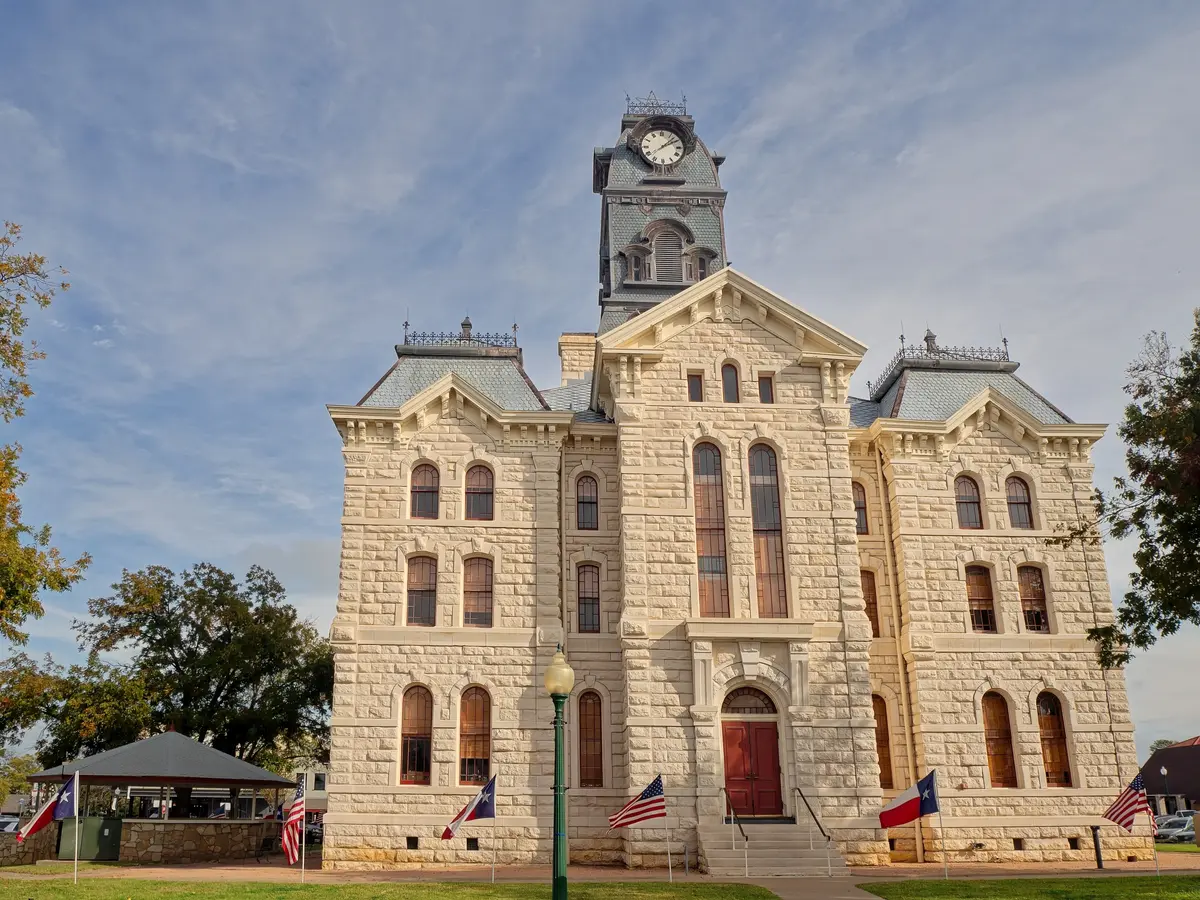
The downtown Historic District along Main Street is compact but genuine. The 1898 limestone commercial building anchors a block of storefronts that have been in continuous use since the town's railroad days, and the Old Town Buda Antique Mall draws collectors from across the region. The first-Saturday downtown market series brings live music, food, and local vendors to Main Street each month, and it's become one of the more reliable community gathering points.
Where to Eat and Drink
Brooklyn's Down South, Buck's Backyard, and Willie's Joint BAR and GRILL represent Buda's casual dining anchors — the kind of spots where residents go without planning. Pinballz Kingdom doubles as an entertainment venue and gathering place for families and adults alike. Nate's Coffee & Cocktails covers both ends of the day.
On the coffee side, Meridian, Buda Soda Fountain, Embrace The Grind BTX, Teal House Coffee & Bakery, and Abuelita's Bakery Spot give residents genuine independent options rather than a chain-only landscape. The Budaful Farmers' Market at Buda City Park is the weekly produce and local goods stop for residents who want something beyond a grocery run.
The Annual Events Calendar
Buda's event calendar is the most reliable sign that this city has developed a civic identity beyond its zip code. The Wiener Dog Races each spring are genuinely beloved — the Buda Lions Club has been running them long enough that people plan travel around them. Buda Crawfest, Red White & Buda in July, Boo-da Halloween on Main Street, and the Buda Trail of Lights paired with BudaFest in December give the year a rhythm that keeps downtown relevant even as the city's population center has shifted toward the newer developments on its edges.
Day Trips and the Region
Wimberley and Dripping Springs are within easy driving distance for weekend hill country exploration. San Marcos offers shopping and the university scene. Austin, about 30 minutes up I-35, remains the anchor for concerts, major dining, professional sports, and everything a city of 16,166 can't yet support on its own.
Local favorites in Buda
Restaurants
- Pinballz Kingdom
- Brooklyn's Down South
- Buck's Backyard
- Willie's Joint BAR and GRILL
- Nate's Coffee & Cocktails
Outdoors
- Historic Stagecoach Park
- Buda Amphitheater & City Park
- Green Meadows Nature Preserve
- Sunfield hike-and-bike trails
- Onion Creek greenbelt
Coffee
- Meridian
- Buda Soda Fountain
- Embrace The Grind BTX
- Teal House Coffee & Bakery
- Abuelita's Bakery Spot
Farmers Markets
- Budaful Farmers' Market
Top Things Locals Say About Buda
The best intel about a city comes from the people who actually live there. Here’s what Buda residents say when newcomers ask the questions everyone’s thinking.
“I knew the commute would be part of the deal, but I didn't realize how much I'd actually love being home. The trail behind our neighborhood, the farmers market, the Wiener Dog Races in the spring — I stopped feeling like I was living outside Austin within about three months. Now I just feel like I live in Buda.”
— Recent Buda home buyer
“What's the most surprising thing about living in Buda?”
How much the city actually has going on. Most people moving here expect a quiet commuter suburb with nothing to do locally, and then the event calendar hits — the Wiener Dog Races, Crawfest, Boo-da Halloween on Main Street — and you realize Buda has a civic identity that's entirely its own. The downtown Historic District is small, but it's real limestone and a real neighborhood, not a manufactured town center.
“What do locals love most about Buda?”
The parks. Buda is the Outdoor Capital of Texas for a reason — the trail systems in Sunfield, the Onion Creek greenbelt, Green Meadows Nature Preserve — these are genuinely good outdoor amenities for a city this size. On a fall or spring morning, you can be on a trail in five minutes from almost any neighborhood. That's not something you can say about most cities in Central Texas.
“What should newcomers to Buda know?”
Learn I-35's rhythms before you set your alarm. The 30-minute drive to Austin can double on a bad morning, especially with ongoing highway construction through central Austin. Most veteran Buda commuters either leave early, leave late, or work remotely a few days a week. Also: the summer heat is serious. The outdoor lifestyle Buda markets itself on is genuinely true from October through May — plan accordingly for July and August.
“How much do you need a car in Buda?”
Completely. A car is the baseline for daily life here. Grocery runs, school drop-off, most restaurants, and any trip outside the immediate neighborhood all require driving. The newer subdivisions have good internal trail networks, so walking within a neighborhood is pleasant, but connecting between areas or reaching commercial corridors means getting in the car. A CapMetro Park & Ride about 7.6 miles north of Buda provides bus service into Austin, but the vast majority of residents drive for everything.
Cities Near Buda
Other communities near Buda worth a look — each with its own character and price point.
| City | Distance | Best For | Vibe | Median Rent | Median Buy |
|---|---|---|---|---|---|
| Kyle | 5 mi | Budget-conscious buyers, first-timers | Fast-growing, value-focused, suburban | $1,566 | $299,223 |
| San Marcos | 12 mi | University families, young professionals | College town, river access, lively | $1,404 | $310,480 |
| Austin | 15 mi | Urban professionals, culture seekers | Dense, walkable cores, high-energy | $1,610 | $504,148 |
More Helpful Guides for Buda
Going deeper on Buda? Our blog series covers everything from first-time buying to retiring here — explore the guides below.
Local Expert Takeaway: Buda is a genuine buy for families who want Austin proximity without Austin prices — but you need to be honest with yourself about the I-35 commute, especially while highway construction through central Austin continues to affect the corridor. The city's outdoor designation isn't marketing fluff: the parks system, the Onion Creek greenbelt, and the Sunfield trail network are real and well-maintained. Downtown is small but authentic, and the annual events — the Wiener Dog Races, Buda Crawfest, BudaFest — give the city a community texture that surprises most people who assumed they were moving to a generic suburb. The housing market sits in a range that still works for the median income here, which is increasingly rare in this corridor.
Quick Takeaways & FAQs
✅ Buda is the Texas Legislature's designated Outdoor Capital of Texas, with more parkland per capita than any other city in the state — 13 parks across more than 268 acres for a city of 16,166.
⚠️ I-35 is the main route north, and highway construction through central Austin was actively underway as of late 2025 — the 30-minute commute to downtown can stretch significantly on weekday mornings.
📍 The downtown Historic District dates to 1881 and is listed on the National Register of Historic Places — the limestone storefronts on Main Street are in active use, not preserved behind velvet ropes.
Is Buda a good place to raise a family?
How long is the commute from Buda to downtown Austin?
What is the typical home price in Buda, TX?
What is the crime rate in Buda, TX?
Are there 55+ or active adult communities in Buda?
Helpful Links for Moving to Buda
Moving to Texas?
Tell us what you need help with and we'll connect you with local resources.
