
What Is Living in Dripping Springs, Texas Like?
You've probably been priced out of Austin, or you've done the math and realized that the same budget that gets you a townhouse inside Loop 360 buys you a four-bedroom on a limestone lot out here. But Dripping Springs isn't just a cheaper Austin suburb — it's a small city of 11,167 people with its own identity, sitting at 1,168 feet of elevation along US-290 in Hays County, about 28 minutes to Austin on a clear morning. The Hill Country starts right at your back door. The city even carries an official nickname — the Gateway to the Hill Country — and it earns it. What drives daily life here is a mix of that proximity to Austin's job market and a deliberate, enforced sense of small-town character that the city has worked hard to protect.
The Dripping Springs Independent School District is the clearest reason families move here. With 8,808 students enrolled in 2025-26, it's a district large enough to offer strong programming but connected enough that it still feels community-oriented — the district holds a B rating, according to the Texas Education Agency, and the school calendar shapes the rhythms of the whole town. The major employers are the school district itself, the City of Dripping Springs, and the State of Texas — Austin's tech, pharma, and biotech economy is what most working-age residents actually commute to or log into remotely. The people who move here are, broadly, families with school-age children, remote workers who want acreage and Hill Country air, and Austin professionals who've decided the commute is worth the trade.
Housing in Dripping Springs runs noticeably above what most people expect when they leave Austin. The typical home price sits at $697,226 (Zillow Home Value Index, July 2026), and the median household income of $109,364 falls short of what's needed to buy at that level — so this is a city where most buyers are stretching, or coming in with equity from a previous sale. For more detail on costs, taxes, and rent, the cost of living page breaks it all down. On the lifestyle side, Dripping Springs has 226 sunny days a year, direct access to Pedernales Falls State Park and Hamilton Pool Preserve, a weekly farmers market, and a concentration of wineries, distilleries, and craft breweries along the US-290 corridor that draws visitors from across the metro every weekend.
Whether you're considering a move or just starting to research the area, the sections below break down Dripping Springs' neighborhoods, housing market, commute realities, local favorites, and what daily life here is really like.

Dripping Springs at a Glance
Looking to buy in Dripping Springs? Estimate your payment.
Enter your numbers to see an estimated monthly mortgage payment.
Estimate only. Excludes HOA fees and mortgage insurance. The interest rate above is a starting point, not a quoted rate — replace it with your own to see real numbers. Insurance is a flat placeholder, not a Dripping Springs quote.
Why Are People Moving to Dripping Springs?
The story usually starts with the schools. Parents with school-age children drive out here, tour the campuses, and make a decision within a week. The Dripping Springs ISD — which holds a B rating, according to the Texas Education Agency — has built a reputation that carries real weight in the Austin metro, and families are paying a premium to live inside its boundaries. For a closer look at individual campuses and boundary details, see the schools page.
The second driver is space. Dripping Springs sits inside only 8.80 square miles of incorporated area, but the surrounding county is full of acreage lots, ranchettes, and Hill Country terrain that you simply cannot find closer to Austin. People come here for the land — for the idea of a front porch facing a cedar ridge, a dark sky at night, and some distance from the density of the metro.
That dark sky is not a marketing phrase. Dripping Springs was the first city in Texas — and the sixth in the world — to earn International Dark Sky Community designation from the International Dark-Sky Association, awarded in January 2014. The city actively enforces lighting ordinances to maintain it. On a clear night, the stars over the Hill Country are genuinely different here than what you see thirty minutes east.
Remote workers have found this city particularly well-suited to their situation. Austin's major employers — in technology, pharmaceuticals, and biotechnology — are close enough for occasional office days without requiring a daily commute. Many residents work entirely from home, logging into the broader Austin economy while living in a place that feels nothing like it. The city's 'Reimagine Dripping Springs' comprehensive plan, released in 2024, is a 20-year growth roadmap built around input from thousands of residents — a signal that the community is paying close attention to what it becomes.
What You Give Up
Dripping Springs rewards patience with errands. There is no dense commercial core, and a serious shopping trip means driving — either back toward Austin or out to nearby communities. The city is growing fast, with new retail and office space taking shape along the US-290 corridor, but it is not there yet for everyday urban convenience.
The affordability picture is honest: at $697,226 (July 2026), the typical home price here sits well above what the median household income can comfortably carry. Most buyers arriving from Austin are bringing equity. First-time buyers should read the first-time homebuyer page carefully before making offers in this market.
Safety is a genuine strength. The city posts a violent crime rate of 0 per 1,000 residents and a property crime rate of 3 per 1,000 residents — well below the state violent rate of 4 per 1,000 and the state property rate of 20.7 per 1,000, and below national figures on both counts. Full context is on the safety page.
What Daily Life Feels Like in Dripping Springs
The mornings here are quiet in a way that surprises people who moved from Austin proper. The Hill Country terrain means the sound travels differently — birds and wind before traffic, most days. You will almost certainly start your morning with a drive rather than a walk, but it's a short one, and the landscape makes it pleasant.
The Dripping Springs Farmers Market is a genuine gathering point for the community, running through the warm months with local produce, food vendors, and the kind of casual neighbor-to-neighbor conversation that most Austin neighborhoods lost a decade ago. Founders Memorial Park anchors the center of town and is where the city gathers for events — it's a modest but well-used green space that punches above its size.
Families with school-age children structure their week around the district's calendar and the active UIL athletics programs that fill Friday nights. The community investment in youth sports and extracurricular activities is visible and genuine — parents here show up. For specifics on activities and programs, the schools page goes deeper.
The Six-Month Surprise
People who move here from denser cities are often surprised, six months in, by how dependent they become on a specific few spots — the same coffee shop, the same school pickup route, the same Saturday routine. Dripping Springs is not a city where you browse neighborhoods on foot; it's one where you find your rhythm and settle into it.
The other surprise is the Hill Country itself. Residents who drove through Dripping Springs on their way to Fredericksburg often didn't fully register the landscape until they lived inside it. The cedar and limestone, the seasonal wildflower corridors along US-290 in March and April, the way the temperature drops a few degrees as you gain elevation — it accumulates into something that residents cite as the reason they stay even when the commute gets long.
The Social Infrastructure
Dripping Springs has a genuine independent food scene for a city its size — a mix of Hill Country-influenced dining, casual barbecue, and local coffee culture. The concentration of wineries, distilleries, and craft breweries along the corridor between Austin and Fredericksburg means weekends are rarely empty of options. The Dripping Springs Ranch Park and Event Center hosts the events and markets that give the community its shared calendar, and it anchors a social life that doesn't require driving back into Austin to participate.
The Dripping Springs Housing Market Right Now
The typical home price in Dripping Springs sits at $697,226 (Zillow Home Value Index, July 2026). That figure reflects a market shaped by new construction pressure — annual new-home completions have ranged from 444 to 928 over the past six years, with an estimated 469 homes built in 2025. The supply of new homes has kept prices from spiking the way some Hill Country markets have, but it hasn't brought them down either.
Entry-level inventory is limited. Most of what sells below $600,000 is older construction, smaller lots, or properties that need work. The planned communities — Belterra, Headwaters, Caliterra, Highpointe, and Arrowhead Ranch — tend to run at or above the city-wide figure, with newer builds and master-planned amenities factored into the price. Some areas of the city run noticeably above the median, particularly on larger lots with Hill Country views. The neighborhoods page breaks down the character and price tier of each area in detail.
For renters, the city-wide typical rent runs $2,405 per month (Zillow, July 2026) — a figure that reflects both the newer apartment stock coming online and the relative scarcity of rental product in a city built around ownership. Full rent and cost context lives on the cost of living page.
The Infrastructure Reality
One thing buyers in Dripping Springs need to understand: the city's wastewater infrastructure has been a constraint on growth for years. In 2025, the Texas Supreme Court ruled in the city's favor on a long-contested wastewater permit, and construction of line extensions has begun. Significant additional funding is still being sought to complete the project. For buyers in areas currently on septic systems, this is worth asking about — it affects what future development around your property will look like.
New commercial development is following the residential growth, with shopping centers and office buildings taking shape along the US-290 corridor. The school district is expanding capacity alongside it, with additional elementary campuses under construction or planned and discussions underway about a second high school. Dripping Springs is a city that is actively building itself in real time.
Dripping Springs Neighborhoods
Dripping Springs has several distinct areas — each with its own character and appeal. Here’s a breakdown to help you narrow down where to focus your home search.
🏡 Belterra
One of the city's most established master-planned communities, Belterra draws families with its extensive trail system and on-site elementary school — a rare convenience in a city where most school commutes involve a drive.
🏠 Headwaters
A newer master-planned community with a strong sense of design cohesion, Headwaters attracts buyers who want Hill Country aesthetics alongside modern amenities and proximity to the US-290 corridor.
🌳 Sunset Canyon
An older, more established area with larger lots and a quieter feel — Sunset Canyon suits buyers who want space and Hill Country character without the structure of a planned community.
🏘 Highpointe
A gated community with Hill Country views that has become a draw for buyers seeking privacy and a higher-end finish level — the terrain here lives up to the name.
🏔 Caliterra
Built around a river corridor and natural open space, Caliterra is designed around outdoor living — the community's green infrastructure is its defining feature and primary draw for nature-oriented buyers.
🌆 Arrowhead Ranch
A growing community that offers new construction at a range of scales, Arrowhead Ranch appeals to families who want a newer home in a neighborhood that still has room to develop around them.
Read the full Best Neighborhoods guide for Dripping Springs →
Pros & Cons of Living in Dripping Springs
The Pros
- Top-rated Dripping Springs ISD (Niche grade A, TEA score 89/B)
- Scenic Texas Hill Country setting with an International Dark Sky Community designation
- Thriving wineries, breweries, and distilleries as the self-styled “Wedding Capital of Texas”
- Low crime compared to national and Texas averages
- Roughly 25-30 minutes from downtown Austin's job market
The Cons
- Home prices well above the Texas and national medians, with a wave of new luxury construction still working through the market
- Property tax rates and city services under pressure from rapid population growth
- Hot, humid summers with highs regularly in the mid-90s°F
- Essentially car-dependent with limited public transit
- Worsening commute traffic on US-290 as the area grows
Getting Around & Commuting in Dripping Springs
US-290 is the spine of daily life here. It runs east toward Austin and west toward the Hill Country, and virtually every commute, errand, and road trip starts on it. The drive into Austin is about 28 minutes under normal conditions — but that number deserves honest context.
Rush-hour conditions on US-290 are a different experience. The corridor through Oak Hill has historically been one of the more congested stretches in the metro, and it shaped commute decisions for years. A $677 million Oak Hill Parkway reconstruction — converting the existing four-lane undivided roadway to a six-lane divided highway with new frontage roads — has been underway since 2021 and is changing that stretch meaningfully. Separately, TxDOT is conducting an environmental study for longer-term safety and mobility improvements along US-290 from southwest Austin all the way to Dripping Springs. Both projects matter for anyone whose job requires regular in-person time in Austin.
What Commuters Know
The people who make this commute successfully usually have one of a few things working for them: flexible hours that let them avoid peak traffic, a hybrid schedule that means two or three days in the office rather than five, or a job in a part of Austin that's closer to the western edge. Tech workers commuting toward the Domain or the northwestern campuses have a shorter effective journey than those headed downtown or to the medical district.
A car is necessary for every aspect of daily life here — errands, school pickup, work, and weekend activities all require one. Residents who work entirely remotely find this a non-issue; those who commute daily should drive the route at 8 a.m. on a Tuesday before making an offer.
Local Circulation
Within the city itself, most neighborhoods are connected to US-290 but not to each other by walkable routes. The planned communities tend to have internal trail networks and sidewalks, but getting from one neighborhood to another means driving. Dripping Springs Ranch Park and Founders Memorial Park are reachable on foot from nearby streets, but the city's geography — spread across limestone terrain with significant elevation changes — makes walking a recreational activity rather than a practical transportation mode.
Austin-Bergstrom International Airport is 30 miles away, a straightforward drive that most residents make several times a year without much drama outside of peak holiday periods.
Schools in Dripping Springs
Families relocating to Dripping Springs have public, private, and higher-education options nearby. Here’s a quick overview.
🎓 School District
Dripping Springs Independent School District serves K–12 students across Dripping Springs and the surrounding area. Rated B (source: Texas Education Agency, 2025 A-F accountability rating (2024-25 school year)).
🏆 Graduation Rate
The 4-year high-school graduation rate here is approximately 98.2%.
📚 Higher Education
Texas’s public universities — the University of Texas at Austin, Texas A&M University, and the University of Houston — offer four-year degrees statewide, with one of the largest community college systems in the country (50+ public community college districts) providing two-year and workforce programs.
🌐 Online Learning
UT Austin Online and Texas A&M University Online offer fully accredited online degrees for remote learners across the state.
Safety in Dripping Springs
A quick look at how Dripping Springs compares on the numbers that matter most when weighing a neighborhood or a move.
🛡 Violent Crime
Approximately 0 per 1,000 residents.
🔒 Property Crime
Approximately 3 per 1,000 residents.
Compared to the most recent national figures from the Bureau of Justice Statistics (2024), Dripping Springs’s violent crime is below the national average (about 3.7 per 1,000), and property crime is below the national average (about 18.4 per 1,000).
Against Texas as a whole, Dripping Springs’s property crime is a small fraction of the state average (Bureau of Justice Statistics, Crime Known to Law Enforcement, 2024 (tables 2 and 3)).
Crime rates can vary a lot within a single city, so the citywide numbers above are only a starting point. Some neighborhoods in Dripping Springs run well below these averages, while others run higher — the kind of block-by-block detail that matters most when you’re actually choosing where to live. The full guide below breaks it down neighborhood by neighborhood.
Working in Dripping Springs
Dripping Springs’s largest employers span several industries — here are some of the anchors of the local job market.
🎓 Dripping Springs Independent School District
Education
🏛 City of Dripping Springs
Municipal government
🏛 State of Texas
State government, located in Austin
Parks & Recreation in Dripping Springs
Some of the outdoor spaces that shape everyday life in Dripping Springs.
🌱 Dripping Springs Ranch Park & Event Center
🌱 Founders Memorial Park
Dripping Springs residents don’t have to go far for green space — spots like Dripping Springs Ranch Park & Event Center and Founders Memorial Park are part of everyday life here, whether that’s a morning walk, a weekend hike, or just somewhere to unwind outside. The full guide below covers more of what Dripping Springs has to offer for parks and outdoor recreation.
Read the full Parks & Recreation guide for Dripping Springs →
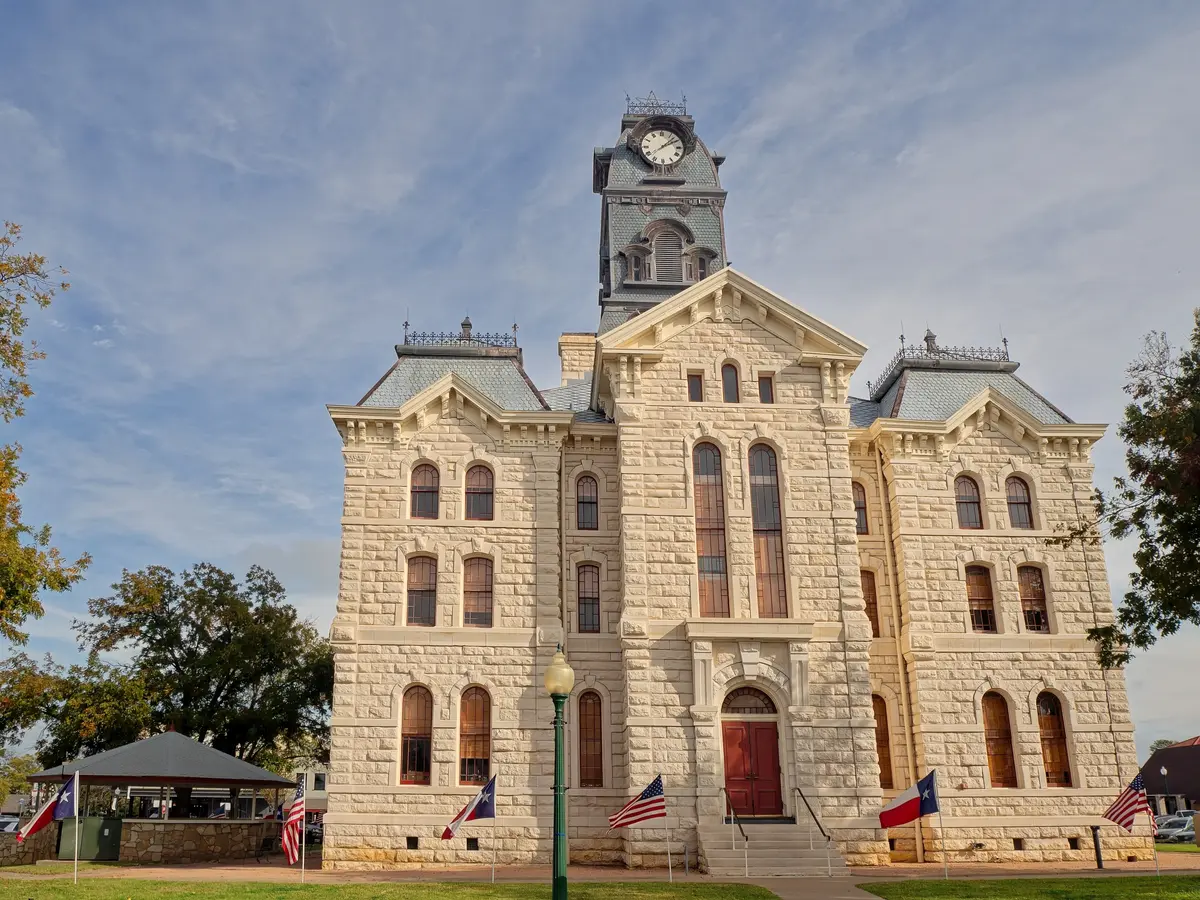
Retiring in Dripping Springs
Dripping Springs draws retirees for its balance of amenities, outdoor access, and cost. Here’s what to weigh.
🌤 Climate
Dripping Springs averages 226 sunny days a year, with mild winters and hot summers that are moderated slightly by the Hill Country elevation. Spring and fall are genuinely pleasant — warm afternoons, cool evenings — and the wildflower season in March and April is a recurring highlight for longtime residents.
🍴 Lifestyle
The city has a well-developed food and drink scene anchored by a concentration of local restaurants, distilleries, and wineries along the US-290 corridor. The Dripping Springs Farmers Market, Founders Memorial Park, and the Ranch Park and Event Center provide a steady community calendar, and Pedernales Falls State Park and Hamilton Pool Preserve are both within easy reach for outdoor pursuits.
🏚 55+ Communities
No 55+ communities were found in Dripping Springs. Retirees who choose the city typically do so for the Hill Country setting, the safety profile, and the proximity to Austin's healthcare and cultural amenities rather than for age-targeted housing.
✈ Getting Around
A car is essential for all daily activity in Dripping Springs. Most errands and services are accessible along the US-290 corridor, and Austin-Bergstrom International Airport is 30 miles away — a manageable drive for travelers. The terrain is not pedestrian-friendly for practical transportation, though the planned neighborhoods offer internal walking trails.
🏛 Texas Taxes for Retirees — What to Know
- No state income tax — Texas has no personal income tax — constitutionally protected under Article VIII, Section 24. Social Security, pensions, 401(k)/IRA withdrawals, and annuity payments are all untaxed at the state level, with no state return to file.
- Sales tax is the tradeoff — The state sales tax is 6.25%, and local add-ons bring the combined rate in Dripping Springs to 8.25% (Texas Comptroller of Public Accounts, city sales and use tax rates, July 2026). Groceries and prescription drugs are exempt.
- Property taxes — the real tradeoff — Texas’s effective property tax rate averages about 1.40%, among the highest in the country, since property tax (not income tax) funds most local government and schools.
- Over-65 homestead exemption and school-tax freeze — Homeowners 65+ (or disabled) get an additional $60,000 exemption from their home’s value for school district taxes, on top of the general homestead exemption — $200,000 off school taxable value combined, following November 2025’s Proposition 11 (SB 23), which raised the over-65 exemption to $60,000, and Proposition 13 (SB 4), which raised the general homestead exemption to $140,000. Once claimed, your school district tax bill is frozen at that year’s amount and cannot increase as home values rise, and the ceiling can transfer if you move to a new home within Texas.
- Deferral option if cash is tight — Homeowners 65+ can defer property tax payment entirely for as long as they live in the home, rather than paying it currently — interest accrues, but no forced sale.
- No estate or inheritance tax — Texas has no estate tax, no inheritance tax, and no gift tax.
- No separate capital gains tax — Because Texas has no state income tax, capital gains — including on investments and home sales — are not taxed at the state level at all, unlike states such as Washington that tax capital gains separately from income.
Tax laws change frequently and individual situations vary. This is general information, not tax advice — always consult a qualified Texas tax professional or CPA for personalized retirement tax planning.
Weekends & Local Favorites in Dripping Springs
The weekend pattern for most Dripping Springs residents involves some combination of the outdoors, the local food scene, and the Hill Country's broader draw. Hamilton Pool Preserve — a short drive from town — features a 50-foot waterfall cascading into a natural limestone grotto. Reservations are required and swimming depends on water-quality conditions, so planning ahead is essential, especially in summer. Pedernales Falls State Park encompasses more than 5,000 acres and supports hiking, mountain biking, tubing, fishing, and birdwatching; it's the kind of place that residents visit repeatedly across seasons rather than checking off once.
Dripping Springs Ranch Park and Event Center is the community's main gathering venue — the farmers market, seasonal festivals, and community events rotate through it across the year. The Dripping Springs Farmers Market draws a loyal crowd and is worth building into a Saturday routine.
Where to Eat and Drink
Homespun Kitchen and Bar has become a local anchor for the kind of comfortable, Hill Country-inflected meal that fits the pace of the place. Pig Pen BBQ handles the smoked-meat end of things with the seriousness the region demands. Tillie's offers a more refined option when the occasion calls for it. Rolling in Thyme & Dough is the spot locals point newcomers toward for baked goods and café fare, and Oak Creek Cafe fills the casual everyday-dining role with consistency.
For coffee, Mazama Coffee Co. draws a dedicated following. Abby Jane Bakeshop handles the pastry-and-coffee overlap with a Hill Country sensibility. The Great British Baking Company is a genuinely local curiosity — proper British-style baked goods, and residents treat it as a weekly habit. Lucky Lab Coffee Co. and Dutch Bros Coffee cover the drive-through-and-go end of the morning routine.
The Distillery and Winery Belt
The corridor running through and around Dripping Springs has developed into one of the more concentrated food-and-drink destinations in Central Texas. Eight distilleries and dozens of breweries and wineries operate within reach, and the area draws visitors from across the metro on weekends. For residents, this means there is almost always something to discover within a short drive — a new tasting room, a winery with Hill Country views, a craft brewery tucked into the cedar. Jester King Brewery, nearby in the Hill Country, has built a national reputation and is a frequent first stop for guests visiting from out of town. Camp Lucy is another landmark in the area — an event venue and inn that reflects the upscale rural character the region has developed.
The outdoor recreation calendar fills out across all four seasons. Spring brings the wildflower bloom along US-290 — bluebonnets in the median and on the roadsides — that draws photographers and road-trippers from across Texas. Summer means Hamilton Pool and the Pedernales River. Fall and winter are when the Hill Country feels most like itself: clear, cool, and quiet.
Local favorites in Dripping Springs
Restaurants
- Homespun Kitchen and Bar
- Pig Pen BBQ
- Tillie's
- Rolling in Thyme & Dough
- Oak Creek Cafe
Outdoors
- Dripping Springs Ranch Park
- Founders Memorial Park
- Pedernales Falls State Park (nearby)
- Hamilton Pool Preserve (nearby)
Coffee
- Mazama Coffee Co
- Abby Jane Bakeshop
- The Great British Baking Company
- Lucky Lab Coffee Co.
- Dutch Bros Coffee
Farmers Markets
- Dripping Springs Farmers Market
Top Things Locals Say About Dripping Springs
The best intel about a city comes from the people who actually live there. Here’s what Dripping Springs residents say when newcomers ask the questions everyone’s thinking.
“I knew the commute would add time, but I didn't realize how much the dark sky and the quiet would shift my baseline for what home feels like. Six months in, I stopped noticing the drive and started noticing the stars.”
— Recent Dripping Springs home buyer
“What's the most surprising thing about living in Dripping Springs?”
How quickly you stop thinking of yourself as an Austin person. The Hill Country pulls you into its own rhythm — the wildflowers in spring along US-290, the cooler evenings, the way everyone at the farmers market seems to know each other. It sneaks up on you after a few months.
“What do locals love most about Dripping Springs?”
The schools, the space, and the night sky — in roughly that order. Parents are here for DSISD, full stop. But once you're here, the combination of Hill Country access and a community that's still small enough to feel cohesive is what makes people stay longer than they planned.
“What should newcomers to Dripping Springs know?”
Drive US-290 at 8 a.m. before you sign anything. The commute is genuinely manageable on a flexible schedule, but it can be punishing if you're locked into a downtown Austin office five days a week. Also: plan your Hamilton Pool visits well in advance — the reservation system fills up fast, especially on weekends from April through September.
“How much do you need a car in Dripping Springs?”
For everything. Every errand, school pickup, and social outing involves driving. The planned neighborhoods like Belterra and Headwaters have internal trails that are great for an evening walk, but getting anywhere outside your neighborhood means getting behind the wheel. Most residents treat it as given and plan accordingly.
Cities Near Dripping Springs
Other communities near Dripping Springs worth a look — each with its own character and price point.
| City | Distance | Best For | Vibe | Median Rent | Median Buy |
|---|---|---|---|---|---|
| Wimberley | 14 mi | Artists, remote workers, Hill Country lifestyle | Artsy, laid-back, small-town | $1,915 | $604,777 |
| Buda | 15 mi | First-time buyers, commuter families | Fast-growing, suburban, affordable | $1,683 | $355,320 |
| Kyle | 19 mi | Value-focused buyers, new construction | Booming, practical, family-oriented | $1,566 | $299,223 |
More Helpful Guides for Dripping Springs
Going deeper on Dripping Springs? Our blog series covers everything from first-time buying to retiring here — explore the guides below.
Local Expert Takeaway: Dripping Springs is one of the few places in the Austin metro where you can still find new construction, Hill Country space, and a school district that consistently performs — but the price tag reflects all of that, and the US-290 commute at 8 a.m. is the variable most people underestimate. Drive it on a Tuesday before you make an offer. If the commute works for your schedule and the schools are your priority, there is not a better option at this distance from Austin.
Quick Takeaways & FAQs
✅ Dripping Springs ISD holds a B rating from the Texas Education Agency and is actively expanding campus capacity — it's the primary reason most families choose this city over nearby alternatives.
⚠️ The typical home price of $697,226 (July 2026) sits above what the median household income can comfortably carry, meaning most buyers are coming in with equity or stretching their budget.
📍 Dripping Springs was the first city in Texas to earn International Dark Sky Community designation — the city enforces lighting ordinances to maintain it, and the night sky here is genuinely different from anywhere in the metro.
How far is Dripping Springs from Austin?
What are the schools like in Dripping Springs?
Is Dripping Springs affordable compared to Austin?
What is there to do outdoors in Dripping Springs?
Do you need a car to live in Dripping Springs?
Helpful Links for Moving to Dripping Springs
Moving to Texas?
Tell us what you need help with and we'll connect you with local resources.
