
What Is Living in Kyle, Texas Like?
Twenty-five years ago, Kyle was a quiet I-35 town of about 5,000 people that most Austin commuters blew past without a second glance. Today, 69,917 people call it home — a more-than-tenfold increase driven by a simple proposition: Austin proximity at a fraction of Austin prices. The city sits in Hays County along I-35, roughly midway between Austin and San Marcos, and that corridor is the spine of daily life here. The real tension for anyone considering a move is this: Kyle is still mid-transformation. Parts of it feel like a fully formed city with local jobs, local restaurants, and real civic identity. Other parts still feel like a construction site surrounded by big-box retail. Where you land in that transition shapes everything.
The economic base has shifted dramatically. Hays Consolidated Independent School District — one of the largest and fastest-growing districts in the state — is the city's largest employer and an anchor for the families who come here for exactly the reason school districts matter. The City of Kyle itself employs a growing municipal workforce. Amazon and a Lowe's Distribution Center have brought logistics jobs to a growing industrial corridor. A major regional health system operates within city limits, and over the past nine years, roughly one million square feet of new medical facilities have been added, cementing Kyle's status as a healthcare hub for Hays County. Texas State University, a short drive to San Marcos, brings additional employment connections for residents who work in higher education. The median age here is 34.1 years — this is a city of young families and working adults, and that shapes everything from the school district's growth to the pace of weekend soccer leagues.
On cost of living, Kyle's typical home price stands at $299,223 (July 2026 Zillow Home Value Index), which runs noticeably below Austin and is roughly comparable to San Marcos — though it is worth knowing that the median household income of $90,323 falls just below what's needed to carry the typical home here comfortably, so affordability is real but not automatic. The city logs 224 sunny days a year, summer highs that regularly push into the mid-90s, and winters mild enough that January lows average around 38°F. Parks, a growing restaurant scene, and community events give daily life more texture than you'd expect from a city this young. For a full breakdown of taxes, utilities, and the cost comparison with nearby cities, see the Kyle cost-of-living page.
Whether you're being relocated here by an employer, priced out of Austin, or choosing between Kyle and Buda for your family's next chapter, the sections below cover the neighborhoods, job market, housing conditions, commute realities, and weekend life that define what living in Kyle is actually like.

Kyle at a Glance
Looking to buy in Kyle? Estimate your payment.
Enter your numbers to see an estimated monthly mortgage payment.
Estimate only. Excludes HOA fees and mortgage insurance. The interest rate above is a starting point, not a quoted rate — replace it with your own to see real numbers. Insurance is a flat placeholder, not a Kyle quote.
Why Are People Moving to Kyle?
The case for Kyle starts with one word: value. In a metro where Austin's typical home price runs noticeably higher, Kyle offers a realistic entry point into the same regional job market, the same school system reputation, and the same Central Texas lifestyle — without the price tag that now prices out many working households in Travis County.
The city posted a 9.1% annual growth rate between July 2022 and July 2023, ranking among the two fastest-growing U.S. cities with populations above 50,000. That's not a fluke — it's the compounding result of affordability, interstate access, and local job creation happening simultaneously.
The Local Job Base Is Finally Catching Up
Less than a decade ago, roughly 80% of Kyle's working population commuted daily to Austin. That number has shifted meaningfully. The Kyle Economic Development Corporation has overseen the absorption of approximately 3.5 million square feet of industrial and commercial space, drawing employers like Amazon and Lowe's Distribution Center alongside the city's growing healthcare sector. More residents now work inside city limits than at any point in Kyle's history.
Hays County — the nation's fastest-growing county by some measures — frames itself as the southern anchor of the Texas Innovation Corridor. For buyers who want to get ahead of the next wave rather than follow it, that framing is doing real work.
Who Actually Moves Here
| Buyer Type | Why Kyle Works | Best Fit |
|---|---|---|
| Families with kids | Hays CISD growth, new construction, community parks | Families School |
| Austin transplants | Same commute corridor, significantly lower home prices | Value Commuter |
| Remote workers | Texas Hill Country setting, no state income tax, space | Nature Quiet |
| First-time buyers | Entry-level new construction, lower price point than Austin or Buda | First-Time Value |
| Logistics & trades workers | Industrial employment base growing along I-35 corridor | Commuter |
| Healthcare professionals | Major regional health system and expanding medical sector | Families |
The median age of 34.1 years says it plainly: this is where young households plant roots. You won't find the same energy in a city that's been settled for generations — which is exactly the draw for people who want to grow with a place rather than move into one that's already peaked.
The honest downside: Kyle is still building its identity. The best neighborhoods page breaks down which parts of the city feel most established and which are still very much works in progress. Where you buy within Kyle matters more than you might assume from the outside.
What Daily Life Feels Like in Kyle
Life in Kyle runs on a suburban rhythm — early mornings, school drop-offs, commutes, and weekends centered around parks and community events. That's not a criticism. For the families who've chosen it deliberately, it's exactly the point.
The Community Texture
The young demographic profile shows up everywhere: youth sports leagues that fill weekends, a school district that dominates local conversation, and community events designed around families rather than nightlife. Heroes Memorial Park anchors one side of civic life. Gregg-Clarke Park — the city's most active community hub — has the James Adkins Pool, a splash pad, baseball and softball fields, tennis courts, and roller hockey at Ash Pavilion. A skatepark funded as part of a capital improvement initiative broke ground as part of the park's ongoing expansion.
Kyle Market Days runs monthly at Gregg-Clarke Park, drawing local vendors, fresh produce, baked goods, live music, and food trucks. The Kyle Annual Fair — known locally as "A Textravaganza" — brings live music, rib and fajita competitions, carnival rides, and a genuine small-town-meets-growing-city vibe. Movies in the Park runs at Mary Kyle Hartson Park during the warmer months.
What People Don't See Coming
Six months in, most newcomers say the same thing about the summer: they underestimated it. With an average July high of 96°F, the window for comfortable outdoor activity narrows fast — early mornings and evenings carry the day from June through September. Air conditioning isn't optional. The flip side is a mild winter that rarely requires more than a light jacket, with January lows around 38°F.
The second surprise is how much is still missing in terms of walkable retail and dining density. Kyle has a growing restaurant scene and enough coffee options to start a morning well, but this is unambiguously a car-dependent city. Most errands require a drive, and anyone coming from a walkable urban neighborhood should calibrate expectations before signing a contract.
Schools & Community
Hays Consolidated Independent School District holds a B rating, according to the Texas Education Agency. It is one of the larger and faster-growing districts in the state, and the growth pressure shows in assessment results: on 2024-25 state assessments, 44% of students reached math proficiency and 57% reached reading proficiency — figures consistent with a district absorbing significant enrollment growth rather than one that has stabilized. The district runs active UIL athletics programs, and Friday night football at Hays High fills the stands reliably. For the full picture on schools, boundaries, and individual campuses, see the Kyle schools page.
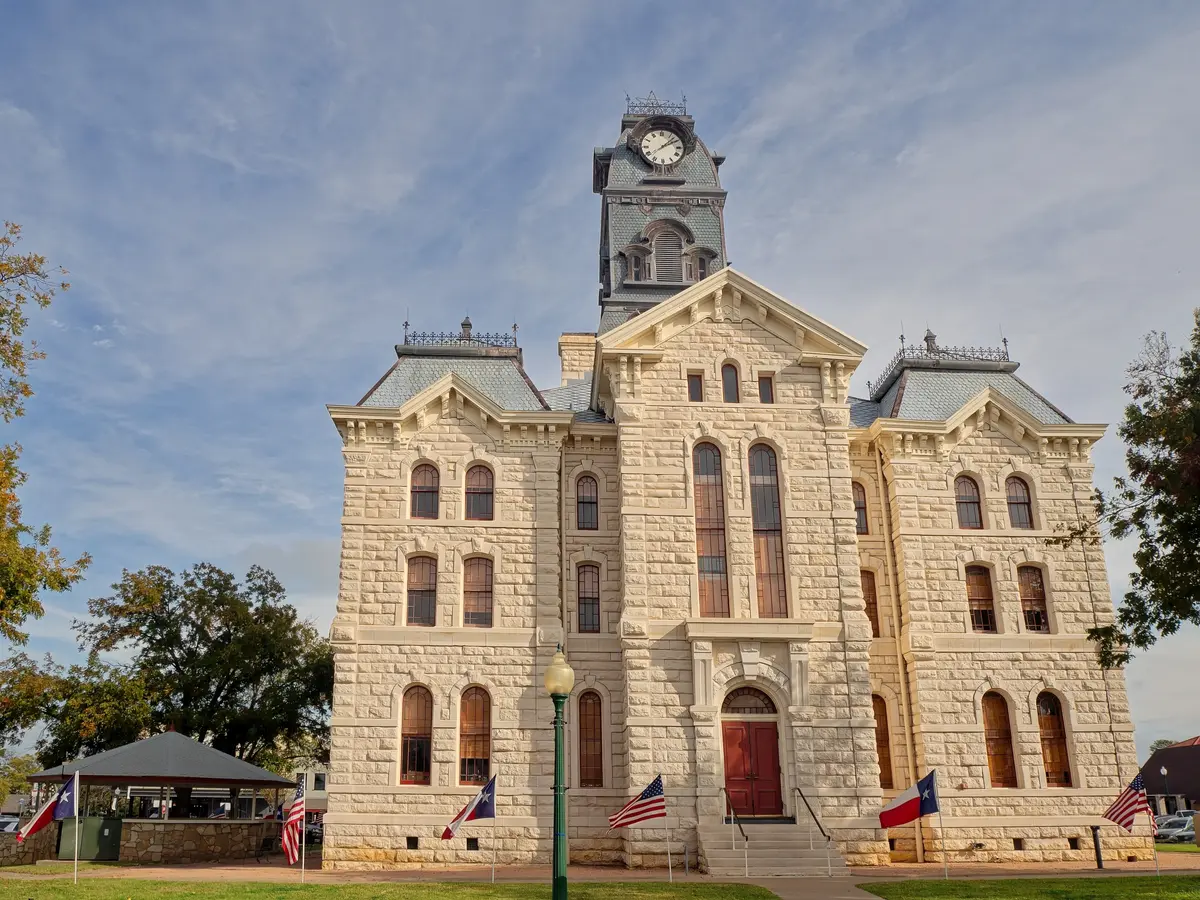
One cultural detail worth knowing: the Katherine Anne Porter House — built in 1890 and the childhood home of the Pulitzer Prize-winning author — is a National Literary Landmark and sits inside the Downtown Kyle Historic District. Texas State University leases it for its MFA creative writing program, hosting readings and writer-in-residence events. It's a small but genuine thread of history in a city that can otherwise feel brand-new.
The Kyle Housing Market Right Now
Kyle's typical home price sits at $299,223 (July 2026 Zillow Home Value Index), which represents a meaningful discount compared to Austin and runs roughly even with San Marcos. For buyers coming out of California or out of Travis County, it often reads as a genuinely different number — not a rounding error but a structural difference in what a dollar buys.
The entry point into Kyle's market is predominantly new construction. The city has absorbed enormous amounts of single-family development across its newer subdivisions, and most of what sells here is builder product from the last decade rather than older resale inventory. That shapes both the buying experience and what buyers get: larger homes, open floor plans, and HOA-governed communities are the norm rather than the exception.
What the Price Means in Practice
The effective property tax rate of 1.49% is the number Austin-area buyers often don't fully price in until after closing. Texas has no state income tax, but property taxes carry the load — and in a city with significant bond debt from rapid infrastructure investment, that rate is real. Pair it with the purchase price and run the actual monthly number before you fall in love with a floor plan.
It is also worth noting that the median household income of $90,323 falls just below the threshold needed to carry the typical home comfortably at current rates. That doesn't mean buying is impossible — it means the math is tight for a household buying at the median, and many buyers here are either bringing equity from a prior sale or stretching the budget. For first-time buyers navigating this, the first-time homebuyer page covers loan programs and practical steps specific to this market.
Rent as an Alternative
The city-wide typical rent runs $1,566 per month (Zillow ZORI, July 2026), which gives renters a workable option in a market where buying requires either meaningful down payment resources or a household income above the median. Renting while watching the market, especially in a city growing this fast, is a reasonable strategy rather than a fallback. The full cost-of-living breakdown — utilities, groceries, and how Kyle compares to the broader metro — lives on the cost-of-living page.
Some areas of the city command prices above the typical figure, and others sit closer to it or below — the geographic and character differences between established neighborhoods like Plum Creek and newer subdivisions on the city's edges are real. The neighborhoods page maps those distinctions in detail.
Kyle Neighborhoods
Kyle has several distinct areas — each with its own character and appeal. Here’s a breakdown to help you narrow down where to focus your home search.
🏡 Plum Creek
The most established neighborhood in Kyle, with mature trees, a golf course, and a strong sense of community identity — it's where buyers who want roots rather than raw newness tend to land. The mix of cottage-style and traditional homes gives it more visual variety than most of Kyle's newer subdivisions.
🏠 Crosswinds
A family-oriented neighborhood with newer construction and an active community feel that suits parents with school-age children looking for neighbors at the same life stage. The layout is built around connected streets and open common spaces.
🌳 6 Creeks
One of Kyle's newer master-planned communities, appealing to buyers who want a fresh build with modern floor plans and community amenities in a city that's still actively growing around them. It draws a mix of young families and remote workers who prioritize space over urban access.
🏘 Hometown Kyle
Positioned closest to the Downtown Kyle Historic District, Hometown Kyle offers a connection to the city's older character and walkable proximity to local events at Gregg-Clarke Park. It suits buyers who want to feel embedded in the city's civic life rather than its suburban edges.
🏔 Waterleaf
A well-maintained subdivision with larger lots and a quieter residential atmosphere, drawing buyers — often relocating from out of state — who want more space and a settled neighborhood feel without paying Austin prices. The community has a distinct identity built around its park and greenway connections.
🌆 Steeplechase
Steeplechase appeals to buyers looking for newer homes in a neighborhood that has filled in enough to feel complete while still offering competitive pricing relative to more established areas. It's a practical, family-forward choice on the developing side of the city.
Pros & Cons of Living in Kyle
The Pros
- More affordable housing than nearby Austin
- Strong job growth from distribution and logistics investment
- Family-oriented master-planned communities with parks and golf
- Short drive to Austin and the Texas Hill Country
The Cons
- I-35 traffic and long commute times into Austin
- Rapid population growth straining schools and infrastructure
- Relatively high combined Hays County property tax rate
Getting Around & Commuting in Kyle
I-35 is the city's main artery — the road that made Kyle's growth possible and the road that makes its daily commute complicated. Every resident heading to Austin uses it, and so does every long-haul truck moving freight between San Antonio and Dallas. The result is a corridor that works smoothly at 6 a.m. and grinds to a near-halt by 7:30.
The Austin Commute Reality
The drive is about 35 minutes to Austin under reasonable conditions. That's the number people cite when they choose Kyle. What they don't always account for is the variance — a clean 35-minute morning can stretch to an hour or more when an incident hits I-35. The I-35 Capital Express Central project broke ground in 2024, and active lane closures and shifting patterns have made the corridor less predictable than the headline commute time suggests.
This is the single most important factor in the Kyle decision that spreadsheets undersell. If your job requires daily presence in Austin and you're not flexible on hours, living at the far end of an active construction zone on the busiest highway in Texas is a different proposition than living in Cedar Park or Round Rock.
Local Routes & Alternatives
RM-150 and FM-1626 serve as alternate surface routes for residents who want to avoid the worst of I-35, particularly for trips within Hays County rather than into central Austin. Neither is a true freeway alternative for Austin commuters, but both are useful for navigating to other parts of Kyle and the surrounding area without touching the interstate.
Public transit exists but is limited. The Capital Area Rural Transportation System (CARTS) connects Kyle residents to Austin's CapMetro network at Southpark Meadows Station — a useful option for commuters willing to build their schedule around it, but not a substitute for a car in most daily situations. Kyle is a driving city, full stop.
Local Employment Reduces the Need
The growth of local employers — the school district, the city, the healthcare sector, Amazon, and Lowe's Distribution Center — means a meaningful share of Kyle residents no longer commute to Austin at all. If your employer is local or your work is remote, the commute question largely disappears, and Kyle's position along the I-35 corridor becomes pure upside rather than a daily negotiation.
| Destination | Primary Route | Typical Commute | Notes |
|---|---|---|---|
| Austin (general) | I-35 | About 35 minutes | Active construction underway; variable conditions |
| San Marcos | I-35 | Short drive south | Texas State University, healthcare, retail |
| Buda | I-35 / RM-150 | Short drive north | Adjacent city, quick trip |
| Austin-Bergstrom Airport | I-35 | 22 miles | Nearest major airport |
| Kyle (local errands) | RM-150 / FM-1626 | Minutes | Car required for most trips |
Austin-Bergstrom International Airport is 22 miles from Kyle — close enough that most residents drive themselves rather than treating it as a distant regional hub.
Schools in Kyle
Families relocating to Kyle have public, private, and higher-education options nearby. Here’s a quick overview.
🎓 School District
Hays Consolidated Independent School District serves K–12 students across Kyle and the surrounding area. Rated B (source: Texas Education Agency, 2025 A-F accountability rating (2024-25 school year)).
🏆 Graduation Rate
The 4-year high-school graduation rate here is approximately 91.9%.
📚 Higher Education
Texas’s public universities — the University of Texas at Austin, Texas A&M University, and the University of Houston — offer four-year degrees statewide, with one of the largest community college systems in the country (50+ public community college districts) providing two-year and workforce programs.
🌐 Online Learning
UT Austin Online and Texas A&M University Online offer fully accredited online degrees for remote learners across the state.
Safety in Kyle
A quick look at how Kyle compares on the numbers that matter most when weighing a neighborhood or a move.
🛡 Violent Crime
Approximately 2 per 1,000 residents.
🔒 Property Crime
Approximately 9 per 1,000 residents.
Compared to the most recent national figures from the Bureau of Justice Statistics (2024), Kyle’s violent crime is below the national average (about 3.7 per 1,000), and property crime is below the national average (about 18.4 per 1,000).
Against Texas as a whole, Kyle’s violent crime is roughly half the state average, and property crime is roughly half the state average (Bureau of Justice Statistics, Crime Known to Law Enforcement, 2024 (tables 2 and 3)).
Crime rates can vary a lot within a single city, so the citywide numbers above are only a starting point. Some neighborhoods in Kyle run well below these averages, while others run higher — the kind of block-by-block detail that matters most when you’re actually choosing where to live. The full guide below breaks it down neighborhood by neighborhood.
Working in Kyle
Kyle’s largest employers span several industries — here are some of the anchors of the local job market.
🎓 Hays Consolidated Independent School District
Education
🏛 City of Kyle
Municipal government
🏥 Ascension Seton Hays
Healthcare
💼 Amazon
Logistics
🛒 Lowe's Distribution Center
Retail logistics
🎓 Texas State University
Higher education, located in San Marcos
Parks & Recreation in Kyle
Some of the outdoor spaces that shape everyday life in Kyle.
🌱 Heroes Memorial Park
Kyle residents don’t have to go far for green space — spots like Heroes Memorial Park are part of everyday life here, whether that’s a morning walk, a weekend hike, or just somewhere to unwind outside. The full guide below covers more of what Kyle has to offer for parks and outdoor recreation.
Retiring in Kyle
Kyle draws retirees for its balance of amenities, outdoor access, and cost. Here’s what to weigh.
🌤 Climate
Kyle gets 224 sunny days a year with mild winters — January lows average around 38°F, which means cold snaps but rarely extended freezes. Summers are genuinely hot, with July highs averaging 96°F, and the city gets about 35 inches of rain annually, keeping the Hill Country landscape green through spring. The shoulder seasons — March through May and October through November — are as good as Central Texas weather gets.
🍴 Lifestyle
Kyle leans young and family-oriented, with a median age of 34.1, so the social energy here is built around kids' activities, community parks, and growing restaurant and coffee scenes rather than a robust arts or senior programming calendar. The Katherine Anne Porter House hosts literary events through Texas State University, and the Downtown Kyle Historic District has local character worth exploring. For a broader cultural and dining range, Austin is about 35 minutes up I-35.
🏚 55+ Communities
No 55+ communities were found in Kyle. Retirees drawn to the area's affordability and Central Texas climate typically look at nearby communities or explore established neighborhoods like Plum Creek for their mix of single-story options and community infrastructure. The retiring page covers lifestyle options for this stage of life in more detail.
✈ Getting Around
Kyle is a car-dependent city — a vehicle is needed for virtually all daily errands and most social activities. The CARTS transit service connects to Austin's CapMetro network for those willing to work around a schedule. Austin-Bergstrom International Airport is 22 miles away, making air travel more accessible than many suburbs its size. For healthcare, a major regional health system operates within city limits, reducing the need for out-of-city medical trips for most routine and specialty care.
🏛 Texas Taxes for Retirees — What to Know
- No state income tax — Texas has no personal income tax — constitutionally protected under Article VIII, Section 24. Social Security, pensions, 401(k)/IRA withdrawals, and annuity payments are all untaxed at the state level, with no state return to file.
- Sales tax is the tradeoff — The state sales tax is 6.25%, and local add-ons bring the combined rate in Kyle to 8.25% (Texas Comptroller of Public Accounts, city sales and use tax rates, July 2026). Groceries and prescription drugs are exempt.
- Property taxes — the real tradeoff — Texas’s effective property tax rate averages about 1.40%, among the highest in the country, since property tax (not income tax) funds most local government and schools.
- Over-65 homestead exemption and school-tax freeze — Homeowners 65+ (or disabled) get an additional $60,000 exemption from their home’s value for school district taxes, on top of the general homestead exemption — $200,000 off school taxable value combined, following November 2025’s Proposition 11 (SB 23), which raised the over-65 exemption to $60,000, and Proposition 13 (SB 4), which raised the general homestead exemption to $140,000. Once claimed, your school district tax bill is frozen at that year’s amount and cannot increase as home values rise, and the ceiling can transfer if you move to a new home within Texas.
- Deferral option if cash is tight — Homeowners 65+ can defer property tax payment entirely for as long as they live in the home, rather than paying it currently — interest accrues, but no forced sale.
- No estate or inheritance tax — Texas has no estate tax, no inheritance tax, and no gift tax.
- No separate capital gains tax — Because Texas has no state income tax, capital gains — including on investments and home sales — are not taxed at the state level at all, unlike states such as Washington that tax capital gains separately from income.
Tax laws change frequently and individual situations vary. This is general information, not tax advice — always consult a qualified Texas tax professional or CPA for personalized retirement tax planning.
Weekends & Local Favorites in Kyle
Kyle's weekend life is shaped by its demographics: a young city with a lot of families means community parks are genuinely used, local events draw real crowds, and the food scene is growing faster than most people expect from a city this new.
Coffee & Morning Spots
Kyle's Daily Grind has earned a loyal following among locals who want a neighborhood coffee shop rather than a drive-through chain. Abuelita's Bakery Spot brings a warm, family-run feel with baked goods that draw weekend regulars. Hays City Hideout Coffee House has the kind of relaxed atmosphere that makes you stay longer than planned. Holy Grounds Coffee and Ly's Donuts round out a morning scene that punches above Kyle's size for a city this young.
Food & Drink
Willie's Grill & Icehouse is the kind of Texas institution that anchors a city's dining identity — cold beer, straightforward food, and a patio culture that suits the climate for most of the year. Ilario's Italian Cuisine And Catering is a local favorite for a sit-down dinner without driving to Austin. Via 313 Pizza brings Detroit-style pies that have developed a following across the broader metro. THE RAILHOUSE leans into the city's railroad history with a bar and grill atmosphere. EVO Entertainment — which includes EVX and an IMAX® theater — means Kyle residents have a genuine entertainment complex for movies, bowling, and laser tag without leaving city limits.
Outdoors & Local Color
Plum Creek Golf Course gives golfers a well-maintained local option. Lake Kyle Park draws anglers, hikers, and birders — the lake is stocked, the surrounding park has picnic tables and grills, and it's the kind of easy weekend escape that doesn't require a road trip. Heroes Memorial Park carries real civic weight as a tribute space and community gathering point.
The Katherine Anne Porter House — a National Literary Landmark tied to one of America's most decorated writers — sits in the Downtown Kyle Historic District and hosts readings and writer-in-residence events through Texas State University. It's a reminder that Kyle had a real history long before the subdivisions arrived.
Kyle Market Days at Gregg-Clarke Park runs monthly, featuring local vendors, fresh produce, baked goods, live music, and food trucks — the kind of recurring event that builds neighborhood familiarity faster than any planned amenity. For a deeper look at parks and recreation across the city, the parks page covers trails, pools, and green space in detail.
Local favorites in Kyle
Restaurants
- EVO Entertainment + EVX + IMAX® - Kyle
- Willie's Grill & Icehouse
- Ilario's Italian Cuisine And Catering
- THE RAILHOUSE
- Via 313 Pizza
Outdoors
- Plum Creek Golf Course
- Lake Kyle Park
- Heroes Memorial Park
Coffee
- Kyle's Daily Grind
- Abuelita’s Bakery Spot
- Hays City Hideout Coffee House
- Holy Grounds Coffee
- Ly's Donuts
Top Things Locals Say About Kyle
The best intel about a city comes from the people who actually live there. Here’s what Kyle residents say when newcomers ask the questions everyone’s thinking.
“We knew the commute would be longer than Austin, but we didn't expect I-35 to be actively under construction for the first two years we lived here. Some mornings it's fine; others it's a completely different drive. We've adjusted our hours and it works, but that's the thing nobody told us upfront.”
— Recent Kyle home buyer
“What's the most surprising thing about living in Kyle?”
How fast it changes. You buy a house in a neighborhood that feels like the edge of town, and two years later there's a subdivision behind you and a new school being announced down the road. Plum Creek felt established when we moved in, but even there the surrounding area keeps shifting. Kyle is not a city that stands still.
“What do locals love most about Kyle?”
The sense of community for a city this size is genuinely surprising. Kyle Market Days at Gregg-Clarke Park draws a real crowd every month — it's not a tourist thing, it's a neighborhood thing. Heroes Memorial Park is where families end up on weekend afternoons. There's a small-town feeling in pockets of the city that you don't expect when you look at the growth numbers.
“What should newcomers to Kyle know?”
Build your I-35 commute window around real conditions, not the map's estimate. On a clear morning it's smooth; on a morning with a stalled truck or active construction work, you can lose 30 minutes you didn't plan for. Also: summer in Central Texas hits harder than most people from out of state anticipate. The 224 sunny days a year sound great until July, when the average high is 96°F and outdoor plans shift to early morning or evening.
“How much do you need a car in Kyle?”
A car is essential for daily life in Kyle. Most grocery runs, errands, and restaurant trips require driving — the city is primarily suburban in layout, and while individual neighborhoods like Plum Creek have a walkable internal feel, you'll be driving to get anywhere beyond your immediate block. The CARTS transit connection to Austin's CapMetro network exists for commuters willing to plan around it, but it does not replace a vehicle for day-to-day living.
Cities Near Kyle
Other communities near Kyle worth a look — each with its own character and price point.
| City | Distance | Best For | Vibe | Median Rent | Median Buy |
|---|---|---|---|---|---|
| Buda | 6 mi | Established feel, slightly quieter pace | Settled, small-town, walkable historic core | $1,683 | $355,320 |
| San Marcos | 10 mi | University town energy, renters & students | Youthful, river-town, college-city mix | $1,404 | $310,480 |
| Austin | 20 mi | Urban lifestyle, tech jobs, cultural depth | Dense, walkable pockets, fast-paced | $1,610 | $504,148 |
More Helpful Guides for Kyle
Going deeper on Kyle? Our blog series covers everything from first-time buying to retiring here — explore the guides below.
Local Expert Takeaway: Kyle is the Austin metro's most compelling value play for families who don't need to be inside Austin every day. The $299,223 typical home price, local jobs at Hays CISD, Amazon, and a growing healthcare sector, and a community of neighbors with kids the same age as yours — that combination is hard to replicate. The catch is I-35: if you're commuting daily to Austin through an active construction project that broke ground in 2024, budget your time honestly before you budget your mortgage. Buy in an established neighborhood like Plum Creek if roots matter to you; buy on the city's expanding edge if upside matters more. Either way, Kyle rewards buyers who understand what it is right now rather than what it will eventually become.
Quick Takeaways & FAQs
✅ Kyle's typical home price of $299,223 (July 2026) sits noticeably below Austin's, with local employers like Amazon, Hays CISD, and a major regional health system reducing the need to commute.
⚠️ The I-35 Capital Express Central project broke ground in 2024, making the daily commute to Austin more variable than the headline '35 minutes' suggests — this is the single biggest trade-off for daily Austin commuters.
📍 With a median age of 34.1 and one of Texas's fastest-growing school districts, Kyle skews young and family-oriented — Gregg-Clarke Park and Kyle Market Days are where community life actually happens.
Is Kyle TX a good place to live?
How long is the commute from Kyle to Austin?
What are the best neighborhoods in Kyle TX?
How are the schools in Kyle TX?
Is Kyle TX safe?
Helpful Links for Moving to Kyle
Moving to Texas?
Tell us what you need help with and we'll connect you with local resources.
