What Is Living in New Braunfels, Texas Like?
Maybe you've been priced out of Austin or San Antonio and someone mentioned New Braunfels. Maybe your company is somewhere along I-35 and you want more land for your money. Either way, you'll hit this realization quickly: New Braunfels isn't a suburb that's trying to become a city — it's a city that got here faster than anyone planned. That pace of growth shapes everything: the traffic on I-35, the new subdivisions pushing into the Hill Country, the wait at the boat launch on a July weekend, and the school district scrambling to keep up with enrollment.
The economic foundation is more layered than the river-town image suggests. Tourism is genuinely massive here — nearly six million visitors a year, generating over a billion dollars in annual economic impact and supporting thousands of local jobs — but the city's largest institutional employers are the New Braunfels and Comal independent school districts, the City of New Braunfels itself, and a major regional health system. AUMOVIO, formerly Continental's Automotive Group, has committed to a $110 million expansion adding advanced manufacturing jobs locally. And a significant share of the workforce drives or works remotely for San Antonio employers. The demographic pulling this growth is telling: mid-career parents who want Hill Country living without a Hill Country commute.
On cost, New Braunfels sits at a genuine sweet spot compared with Austin, though the math has tightened. The typical home price — $351,190 as of July 2026 (Zillow Home Value Index) — is meaningfully below what comparable square footage runs in the Austin metro, and well below the San Antonio suburbs like Schertz. The trade-off is that the median household income of $86,021 stretches to cover the mortgage here but not comfortably; the income needed to buy at the typical price runs above what the median household earns. Texas's effective property tax rate of approximately 1.46% in Comal County is the lever many buyers overlook when they're focused on the sticker price. The upside: 226 sunny days a year, two rivers you can tube on a Tuesday, Landa Park in your backyard, and a Hill Country landscape that makes the drive home feel earned.
Whether you're comparing neighborhoods, sizing up the school district, figuring out the I-35 commute, or trying to understand what daily life actually looks like here, the sections below cover New Braunfels's housing market, neighborhoods, employers, local favorites, and the honest trade-offs that matter before you make an offer.
New Braunfels at a Glance
Looking to buy in New Braunfels? Estimate your payment.
Enter your numbers to see an estimated monthly mortgage payment.
Estimate only. Excludes HOA fees and mortgage insurance. The interest rate above is a starting point, not a quoted rate — replace it with your own to see real numbers. Insurance is a flat placeholder, not a New Braunfels quote.
Why Are People Moving to New Braunfels?
The short answer is: San Antonio is too expensive for what they want, Austin is impossible, and New Braunfels sits in between with rivers, Hill Country topography, and enough city infrastructure to make life work. But the longer answer involves something you can't put in a spreadsheet — there's a physical sense of place here that most Texas suburbs don't have.
The German-Town Foundation
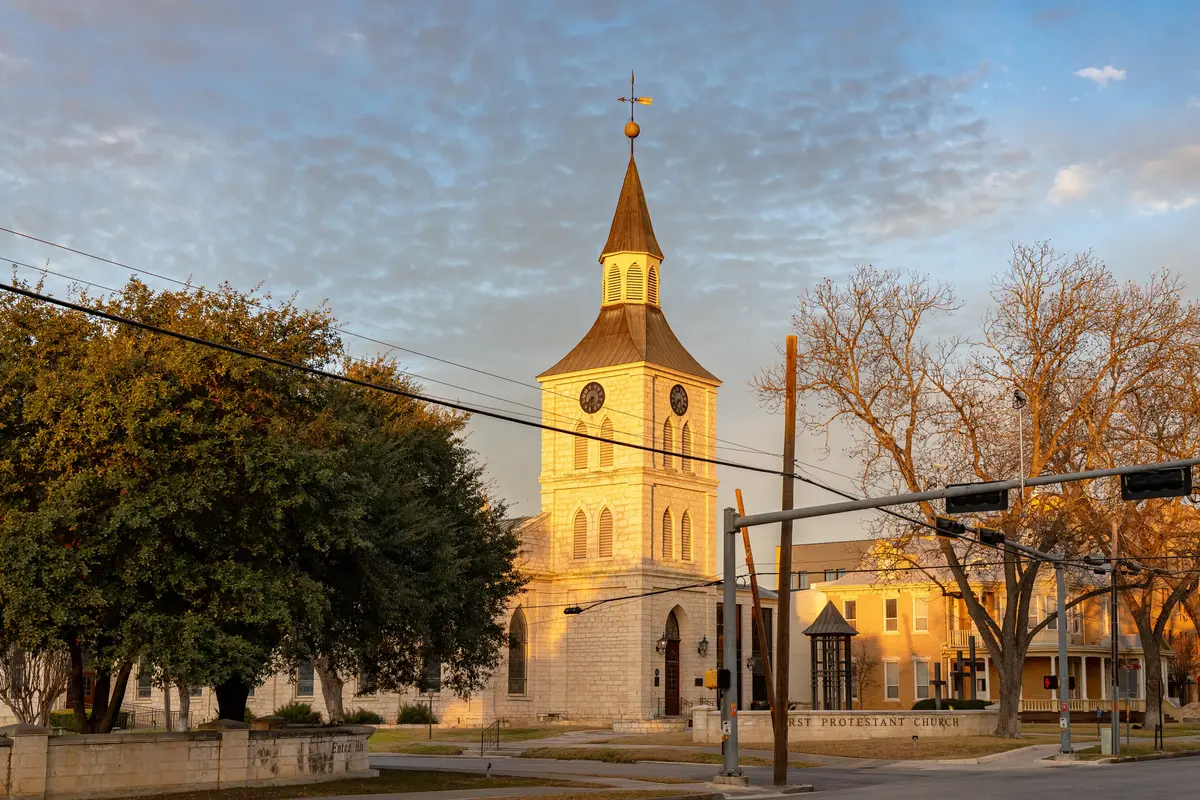
New Braunfels was founded in 1845 by Prince Carl of Solms-Braunfels, leading German immigrants sponsored by the Adelsverein. That origin isn't just history-book material — it's still visible in the street layout, the surnames on local businesses, the Sophienburg Museum & Archives with its collection of over one million artifacts, and a 700-member German American Society that throws Maskenball and Weihnachtsfest every year. Wurstfest, a ten-day November festival celebrating that heritage with sausage and polka, draws crowds that fill every hotel room in a 30-mile radius. Newcomers sometimes underestimate how seriously this city takes its identity.
Who's Actually Moving Here
The dominant buyer profile isn't retirees — it's parents with school-age children in the middle of their careers. That shapes the housing stock being built (four-bedroom houses with yards), the school district's pressure points, and the social texture of new subdivisions like Veramendi and Voss Farms. Remote workers from Austin tech companies and San Antonio defense contractors have made up a significant slice of recent growth.
The Economy Beyond the River Tubes
Tourism employs a large portion of the local workforce and pays real wages — hospitality-related jobs are a substantial piece of total city employment, funded by the visitors who fill Schlitterbahn and tube the Comal. But the city's institutional anchors — the school districts, city government, and a major regional health system — provide stable public-sector employment. Manufacturing is expanding: AUMOVIO's $110 million local investment adds high-technology production jobs that don't go away when September ends and the rivers slow down. The New Braunfels Independent School District holds a B rating, according to the Texas Education Agency — enrollment keeps growing alongside the subdivisions. For a fuller look at the district's performance, see the New Braunfels schools page.
The Honest Trade-Off
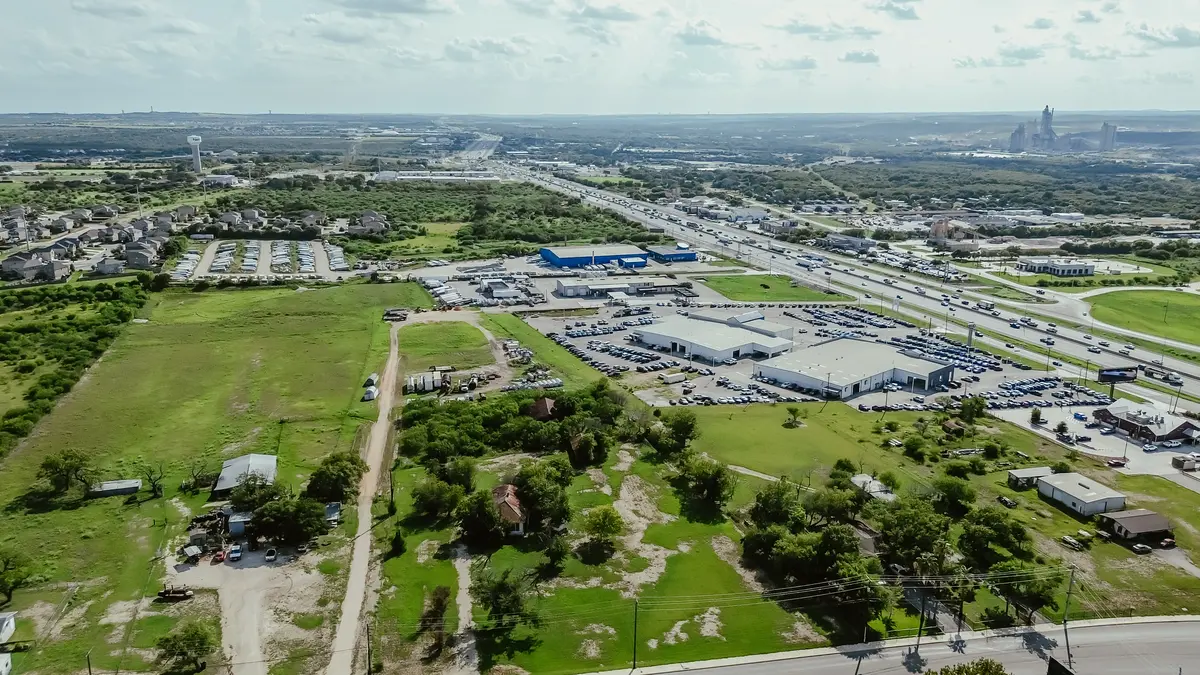
Growth this fast creates friction. I-35 through the city can feel like a parking lot during peak hours, and the infrastructure — roads, parks, utilities — is perpetually playing catch-up with the rooftops. People who move here expecting a quiet small town often find themselves living in a fast-moving construction zone. That's not a reason to stay away, but it's worth knowing before you fall in love with the listing photos.
What Daily Life Feels Like in New Braunfels
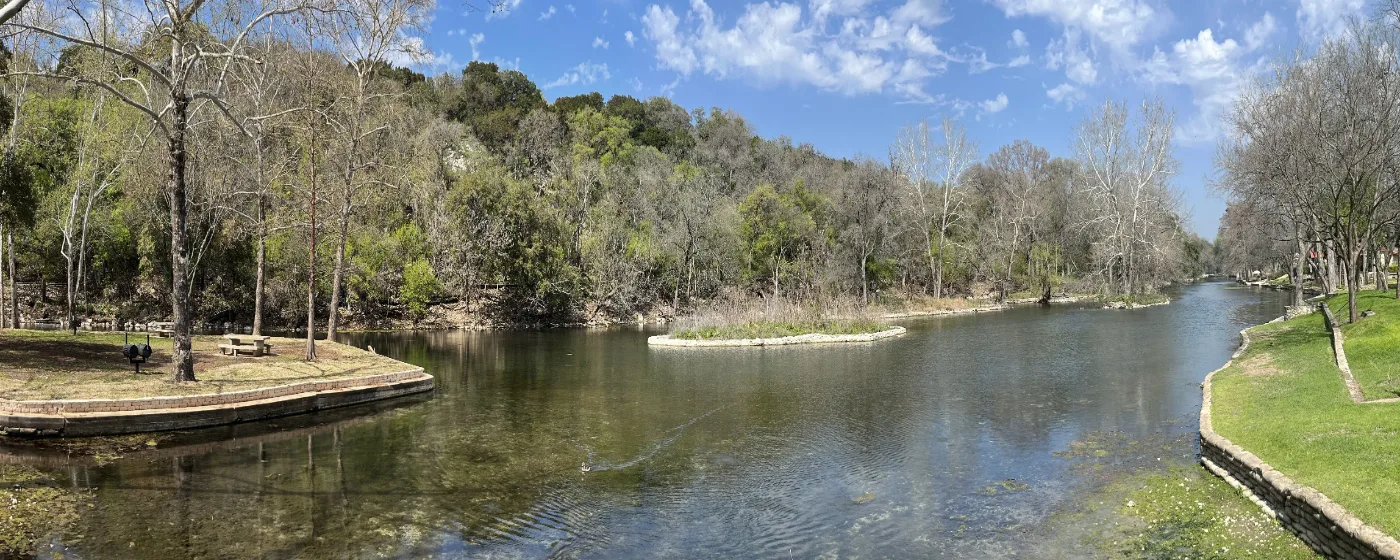
Six months after moving here, most people say the same thing: they didn't expect the water to be such a genuine part of everyday life. Not a weekend drive-to destination — an actual Tuesday-afternoon option. The Comal River originates at Comal Springs inside Landa Park, flows at a constant 72°F, and stretches about 2.5 miles before meeting the Guadalupe. On a hot afternoon you can be in the water twenty minutes after leaving your kitchen.
The Geographic Reality
New Braunfels has a natural east-west split. The older, more established parts of the city — the Gruene Historic District, the Downtown and Landa Park area, the Comal River corridor — have character, walkable streets, and decades of mature trees. The newer growth is pushing north and west: master-planned communities with wide streets, HOA amenity centers, and houses that look like they were delivered from a catalog. Both are legitimate choices, but they feel fundamentally different, and buyers who end up in the wrong half for their personality tend to notice it within a year. The neighborhood guide breaks this down in detail.
What Locals Know
Summer weekends bring serious tourist traffic. If you live near the river corridors or Gruene, expect traffic that makes a simple errand feel like a project from Memorial Day through Labor Day. Longtime residents plan their grocery runs accordingly, or make peace with the crowds as the price of living somewhere genuinely worth visiting. The flip side: the same tourism economy that creates traffic also keeps local property taxes lower than they'd otherwise be — visitor spending generated $57.4 million in local tax revenue, saving each homeowner an estimated $725 annually.
Community Texture
The city carries its German heritage into the present in ways that aren't performative. The New Braunfels Farmers Market draws regulars who treat it as a social event, not just a produce run. Landa Park — the 51-acre green space fed by Comal Springs — is where families actually gather: paddleboats, a miniature train, playgrounds, and the spring-fed pool that generations of New Braunfels kids have grown up in. The Gruene Historic District, with Gruene Hall as the oldest continuously operating dance hall in Texas, gives the city a cultural anchor that no amount of subdivision development has managed to overshadow.
The school district runs active UIL athletics programs, the Unicorns mascot is a point of genuine local pride, and Friday night football fills the stands reliably. For families with school-age children, that community infrastructure around kids' activities is one of the most consistent things people mention when asked why they stayed. More on youth programs at the schools page.
The New Braunfels Housing Market Right Now
The typical home price in New Braunfels is $351,190 (Zillow Home Value Index, July 2026). That figure has held New Braunfels at a meaningful discount compared with Austin-area markets, and still comes in noticeably below comparable homes in much of the San Antonio metro's more established suburbs. But it's not the bargain it was four years ago, and the income math is tighter than it looks. The cost of living page has the full breakdown on property taxes, typical rent, and how the numbers stack up.
What the Market Actually Looks Like
The housing stock ranges from 1940s craftsman bungalows near downtown to brand-new construction in master-planned communities on the city's edges. Entry-level buyers are largely competing in the newer subdivisions, where builder incentive programs and price points make ownership accessible. The older, established neighborhoods closer to the rivers and Gruene command premiums that reflect the land, the character, and the fact that they aren't making more of it.
Typical city-wide rent runs $1,566 per month (Zillow ZORI, July 2026) — a figure that reflects the mix of older apartment stock near downtown and newer complexes in the growth corridors. Some areas run meaningfully above that; the neighborhoods page gives a fuller read on which parts of the city lean higher.
The Tax Reality
Comal County's effective property tax rate is approximately 1.46%. On the typical home, that adds up to a real annual number — one worth running through the calculator on this page rather than treating as a footnote. Texas has no state income tax, which partially offsets the property tax load, but buyers coming from lower-tax states occasionally underestimate what the annual property tax bill will look like at closing.
The Supply Pressure
New Braunfels is still building, and builders are active across multiple price tiers. That supply is one reason prices haven't spiked as aggressively as some comparable Texas cities. But the land closest to the rivers and the established neighborhoods is finite, and anything in that corridor is genuinely competitive when it comes to market at the right price.
New Braunfels Neighborhoods
New Braunfels has several distinct areas — each with its own character and appeal. Here’s a breakdown to help you narrow down where to focus your home search.
🏡 Gruene
New Braunfels's most storied neighborhood, anchored by the oldest dance hall in Texas and bordered by the Guadalupe River. It suits buyers who want walkable access to live music, restaurants, and Hill Country character, and who don't mind weekend tourist traffic as the trade-off for living somewhere genuinely worth visiting.
🏠 Veramendi
One of the city's larger master-planned growth communities, built for the wave of families arriving after 2020. It offers newer construction with amenity centers and a highly organized neighborhood feel — a strong fit for parents with young children who want a community-focused environment with room to grow.
🌳 River Chase
A Hill Country community with larger lots and an emphasis on natural landscape, appealing to buyers who want space and a quieter residential feel without being far from city amenities. The Guadalupe River corridor makes outdoor access a realistic part of daily life here.
🏘 Vintage Oaks at the Vineyard
A Hill Country acreage community with custom homes on larger parcels, drawing buyers who want privacy and open sky without sacrificing proximity to New Braunfels's amenities. It's a strong fit for remote workers and buyers who prioritize land over neighborhood density.
🏔 Havenwood at Hunters Crossing
An established residential community with a suburban feel and convenient access to the city's main commercial corridors. It suits families and commuters who want a well-maintained neighborhood without the price premium of the river-adjacent areas.
🌆 Copper Ridge
A newer community on the city's growth edge, with entry-level and mid-tier construction that appeals to first-time buyers and young families. The neighborhood sits within the New Braunfels ISD boundary and is representative of the current wave of development expanding the city's footprint.
Pros & Cons of Living in New Braunfels
The Pros
- Two spring-fed rivers (Comal & Guadalupe) for tubing, kayaking and swimming right in town
- Historic German-heritage downtown and Gruene district
- No Texas state income tax with lower housing costs than Austin or San Antonio
- Strong, well-regarded local school options across NBISD and Comal ISD
The Cons
- Rapid population growth (up roughly 35% since 2020) straining roads like Loop 337
- Property taxes are above the national average
- Heavy seasonal tourist traffic around the rivers and Schlitterbahn in summer
Getting Around & Commuting in New Braunfels
New Braunfels is a car city. Most daily errands, school pickups, and commutes require a vehicle, and the city's layout — spread across rolling Hill Country terrain with the rivers creating natural breaks — doesn't lend itself to on-foot access outside of downtown and the Gruene corridor. That said, the highway access is genuinely good, and it's the primary reason the city attracts San Antonio commuters.
The I-35 Reality
I-35 is the spine of daily life here. The commute to San Antonio runs about 35 minutes under normal conditions — but "normal conditions" on I-35 have become increasingly rare during morning and evening peaks. The corridor carries the traffic of one of the fastest-growing counties in the country, and the road hasn't kept up. Buyers who plan to commute daily should drive the route at their actual commute time before making an offer. The difference between a house with direct access to the freeway and one that requires navigating local streets to reach it is a meaningful daily quality-of-life variable.
SH-46 and Loop 337
SH-46 carries traffic east toward Seguin and west toward the Hill Country, and serves as a secondary corridor for residents in the city's newer growth areas. Loop 337 rings the city and gives local drivers a way to move around without touching I-35 — a bypass that longtime residents use instinctively when the freeway is backed up. Figuring out when to use the loop is one of the first habits new residents develop.
Transit Options
VIA Metropolitan Transit operates bus service connecting New Braunfels to San Antonio. A regional study released in July 2026 is exploring dedicated commuter bus service along the I-35 corridor as the population grows, though no funding or timeline has been approved. For most residents today, the car is the practical answer for anything beyond a walkable downtown errand.
The Airport
San Antonio International Airport (SAT) is 27 miles away — close enough that most residents use it without treating the drive as a trip in itself. For anyone flying regularly, that proximity is one of the genuine practical advantages of the I-35 location over more remote Hill Country towns.
Working Remotely
A significant share of New Braunfels residents work fully or partially remote — it's part of what made the city attractive during the growth wave that followed 2020. For that group, the commute calculus flips: the question isn't how often you fight I-35, it's how livable the city is on the days you don't leave. The answer is quite livable, particularly if you're in a neighborhood with good walkable access to the river or the park system. See the full neighborhood breakdown to match location to lifestyle.
Schools in New Braunfels
Families relocating to New Braunfels have public, private, and higher-education options nearby. Here’s a quick overview.
🎓 School District
New Braunfels Independent School District serves K–12 students across New Braunfels and the surrounding area. Rated B (source: Texas Education Agency, 2025 A-F accountability rating (2024-25 school year)).
🏆 Graduation Rate
The 4-year high-school graduation rate here is approximately 96%.
📚 Higher Education
Texas’s public universities — the University of Texas at Austin, Texas A&M University, and the University of Houston — offer four-year degrees statewide, with one of the largest community college systems in the country (50+ public community college districts) providing two-year and workforce programs.
🌐 Online Learning
UT Austin Online and Texas A&M University Online offer fully accredited online degrees for remote learners across the state.
Safety in New Braunfels
A quick look at how New Braunfels compares on the numbers that matter most when weighing a neighborhood or a move.
🛡 Violent Crime
Approximately 2 per 1,000 residents.
🔒 Property Crime
Approximately 13 per 1,000 residents.
Compared to the most recent national figures from the Bureau of Justice Statistics (2024), New Braunfels’s violent crime is below the national average (about 3.7 per 1,000), and property crime is below the national average (about 18.4 per 1,000).
Against Texas as a whole, New Braunfels’s violent crime is roughly half the state average, and property crime is roughly two-thirds of the state average (Bureau of Justice Statistics, Crime Known to Law Enforcement, 2024 (tables 2 and 3)).
Crime rates can vary a lot within a single city, so the citywide numbers above are only a starting point. Some neighborhoods in New Braunfels run well below these averages, while others run higher — the kind of block-by-block detail that matters most when you’re actually choosing where to live. The full guide below breaks it down neighborhood by neighborhood.
Working in New Braunfels
New Braunfels’s largest employers span several industries — here are some of the anchors of the local job market.
🎓 New Braunfels Independent School District
Education
🎓 Comal Independent School District
Education
🏛 City of New Braunfels
Municipal government
🏥 Resolute Baptist Hospital
Healthcare
🏥 Schlitterbahn New Braunfels Waterpark
Tourism, hospitality
🎓 Texas State University
Higher education, located in San Marcos
Parks & Recreation in New Braunfels
Some of the outdoor spaces that shape everyday life in New Braunfels.
🌱 Landa Park
🌱 Comal River
🌱 Guadalupe River
New Braunfels residents don’t have to go far for green space — spots like Landa Park and Comal River are part of everyday life here, whether that’s a morning walk, a weekend hike, or just somewhere to unwind outside. The full guide below covers more of what New Braunfels has to offer for parks and outdoor recreation.
Retiring in New Braunfels
New Braunfels draws retirees for its balance of amenities, outdoor access, and cost. Here’s what to weigh.
🌤 Climate
New Braunfels averages 226 sunny days a year, with hot summers regularly pushing into the high 90s and mild winters that rarely see freezing temperatures. Spring and fall are genuinely pleasant — the kind of weather that makes outdoor living easy from March through November. Summers require either air conditioning or a river nearby, and fortunately this city provides both.
🍴 Lifestyle
The city's food and culture scene is rooted in its German heritage — Wurstfest, the Sophienburg Museum & Archives, and the Gruene Historic District give retirees a cultural calendar that feels authentically local rather than imported. The river access at Landa Park, Canyon Lake, and Cypress Bend Park provides low-impact outdoor options year-round. For a fuller picture of healthcare options and retirement living, the retiring in New Braunfels page covers it in detail.
🏚 55+ Communities
No 55+ communities were found in New Braunfels. Retirees here typically buy in established single-family neighborhoods close to the rivers or downtown, where the lot sizes are smaller and the walkability to parks and dining is highest.
✈ Getting Around
A car is essential for most daily life in New Braunfels. San Antonio International Airport (SAT) is 27 miles away — a manageable drive for regular travelers. The city's terrain is rolling but navigable, and most of the amenities retirees rely on are concentrated in the older core of the city near Landa Park and downtown.
🏛 Texas Taxes for Retirees — What to Know
- No state income tax — Texas has no personal income tax — constitutionally protected under Article VIII, Section 24. Social Security, pensions, 401(k)/IRA withdrawals, and annuity payments are all untaxed at the state level, with no state return to file.
- Sales tax is the tradeoff — The state sales tax is 6.25%, and local add-ons bring the combined rate in New Braunfels to 8.25% (Texas Comptroller of Public Accounts, city sales and use tax rates, July 2026). Groceries and prescription drugs are exempt.
- Property taxes — the real tradeoff — Texas’s effective property tax rate averages about 1.40%, among the highest in the country, since property tax (not income tax) funds most local government and schools.
- Over-65 homestead exemption and school-tax freeze — Homeowners 65+ (or disabled) get an additional $60,000 exemption from their home’s value for school district taxes, on top of the general homestead exemption — $200,000 off school taxable value combined, following November 2025’s Proposition 11 (SB 23), which raised the over-65 exemption to $60,000, and Proposition 13 (SB 4), which raised the general homestead exemption to $140,000. Once claimed, your school district tax bill is frozen at that year’s amount and cannot increase as home values rise, and the ceiling can transfer if you move to a new home within Texas.
- Deferral option if cash is tight — Homeowners 65+ can defer property tax payment entirely for as long as they live in the home, rather than paying it currently — interest accrues, but no forced sale.
- No estate or inheritance tax — Texas has no estate tax, no inheritance tax, and no gift tax.
- No separate capital gains tax — Because Texas has no state income tax, capital gains — including on investments and home sales — are not taxed at the state level at all, unlike states such as Washington that tax capital gains separately from income.
Tax laws change frequently and individual situations vary. This is general information, not tax advice — always consult a qualified Texas tax professional or CPA for personalized retirement tax planning.
Weekends & Local Favorites in New Braunfels
The Comal and Guadalupe rivers define the social calendar for a large portion of the year. Tubing the Comal via the Tube Chute, kayaking the Guadalupe, and spending a full Saturday at Canyon Lake are the activities that newcomers discover in their first summer and return to every year after. Cypress Bend Park along the Guadalupe offers a quieter stretch for fishing and picnicking without the full commercial tubing scene.
Gruene and the Historic District
The Gruene Historic District is where the city's identity crystallizes. Buildings dating to the 1840s house a dense cluster of restaurants, coffee houses, shops, and music venues. Gruene Hall — the oldest continuously operating dance hall in Texas — books live music with a regularity that makes it a genuine weekly option, not just a tourist stop. The district draws visitors, but residents use it too, and the coffee houses and smaller dining spots fill with locals on weekday mornings when the crowds thin out.
Where to Eat and Drink
The local dining scene skews toward Texas comfort and German heritage, with enough variety to keep regulars satisfied. Gristmill River Restaurant & Bar sits along the Guadalupe and is the kind of place out-of-town guests always want to go — expect a wait on weekends. Black's Barbecue New Braunfels is the local outpost of the legendary Lockhart institution and draws serious barbecue fans. Krause's Cafe leans into the German-American heritage with a beer garden and schnitzel that feels appropriate for a city founded by the Adelsverein. Clear Springs Restaurant has been feeding catfish and fried shrimp to locals long enough that it's become part of the institutional fabric. Muck & Fuss handles the more casual, burger-and-beer end of the spectrum.
Coffee and Bakeries
The coffee culture punches above the city's weight. 2tarts Bakery is the place serious bakers talk about — pastries and custom cakes that have a genuine following. Gruene Coffee Haus sits in the historic district and handles the morning crowd that wants atmosphere with their espresso. NEW BRAUNFELS COFFEE keeps things focused and quality-forward. Wicked Voodoo Espresso - Creekside Crossing and Laika Cheesecake & Espresso round out a scene that doesn't require driving to San Antonio for a good cup.
Markets and Cultural Anchors
The New Braunfels Farmers Market gives the community a weekly gathering point with local produce, prepared food, and artisan goods. The Sophienburg Museum & Archives — with its collection of over one million artifacts from the city's German immigrant founders — is the kind of place residents walk past for years before finally going in, and then feel embarrassed they waited so long. Wurstfest in November is a full ten-day event that shuts down half the city's social calendar in the best possible way: sausage, polka, and crowds that come from across Texas to celebrate something New Braunfels has been doing since before most Texas cities existed.
Local favorites in New Braunfels
Restaurants
- Gristmill River Restaurant & Bar
- Black's Barbecue New Braunfels
- Krause's Cafe
- Clear Springs Restaurant
- Muck & Fuss
Outdoors
- Landa Park
- Tube Chute
- Guadalupe River
- Canyon Lake
- Cypress Bend Park
Coffee
- 2tarts Bakery
- Gruene Coffee Haus
- NEW BRAUNFELS COFFEE
- Wicked Voodoo Espresso - Creekside Crossing
- Laika Cheesecake & Espresso
Farmers Markets
- New Braunfels Farmers Market
Top Things Locals Say About New Braunfels
The best intel about a city comes from the people who actually live there. Here’s what New Braunfels residents say when newcomers ask the questions everyone’s thinking.
“I knew it would be busy in summer, but I didn't expect the tourist traffic to affect my grocery run in June. The first time I sat in traffic for twenty minutes on a Tuesday, I started planning my errands around the river crowd — and honestly, once you figure that out, the city just works.”
— Recent New Braunfels home buyer
“What's the most surprising thing about living in New Braunfels?”
How much the river actually becomes part of your routine. You hear about the tubing before you move here, and you think it sounds fun but touristy. Then you live here for a month in July and you realize the Comal is legitimately where you go after work on a Thursday. It's not a vacation thing — it's just what you do.
“What do locals love most about New Braunfels?”
The combination of identity and infrastructure. This isn't a city that feels like it was built yesterday — there's Gruene Hall, Landa Park, the Sophienburg Museum, Wurstfest, and a real downtown that's been here for generations. But you also have decent grocery options, good schools, and a hospital in the city limits. Most small towns with this much character don't have the infrastructure, and most cities with this infrastructure don't have the character.
“What should newcomers to New Braunfels know?”
Learn the city bypass route immediately — it keeps you off I-35 when the freeway backs up, and it will save you significant time once you know when to use it. Also, summer weekends in the Gruene and river area are not the time for casual errands near the water. Build your shopping and weekend logistics around the tourist calendar and you'll be fine; fight it and you'll be frustrated.
“How much do you need a car in New Braunfels?”
Almost completely. The downtown core and Gruene are manageable on foot once you're there, but getting there from most residential neighborhoods means driving. Most daily errands, school pickups, and commutes require a vehicle. A serious shopping trip of any kind means getting in the car — the local retail footprint is growing but still limited for a city this size.
Cities Near New Braunfels
Other communities near New Braunfels worth a look — each with its own character and price point.
| City | Distance | Best For | Vibe | Median Rent | Median Buy |
|---|---|---|---|---|---|
| San Marcos | 16 mi | Budget buyers, Texas State students | College-town energy, river access | $1,404 | $310,480 |
| Seguin | 18 mi | Value-focused buyers, rural feel | Quiet, small-town, historic square | $1,506 | $274,107 |
| Schertz | 24 mi | San Antonio commuters, families | Suburban, established, family-friendly | $1,942 | $315,578 |
More Helpful Guides for New Braunfels
Going deeper on New Braunfels? Our blog series covers everything from first-time buying to retiring here — explore the guides below.
Local Expert Takeaway: New Braunfels rewards buyers who understand the I-35 divide: neighborhoods close to the Comal River, Landa Park, and the Gruene Historic District offer a sense of place that no master-planned subdivision can replicate, but they come at a premium and move fast. If your budget lands in the newer growth corridors, you're buying into a comfortable, well-amenitized city — just one that requires a car for nearly everything and some patience with the traffic on I-35 during peak hours. The river access, the German heritage events, and the 226 sunny days a year are the variables that keep people here long after the novelty wears off.
Quick Takeaways & FAQs
✅ New Braunfels offers genuine Hill Country character — rivers, historic architecture, and a cultural identity rooted in 1845 German settlement — at a price point meaningfully below comparable Austin-area markets.
⚠️ I-35 commuter traffic is a real daily friction point; buyers who drive the route at their actual commute time before making an offer rarely regret it.
📍 The Tube Chute on the Comal River is a short drive from most of the city — that kind of mid-week outdoor access is the detail that makes longtime residents say they'll never leave.
Is New Braunfels a good place to raise a family?
How bad is the commute from New Braunfels to San Antonio?
What is the typical home price in New Braunfels?
What is the Gruene Historic District and is it worth living near?
Does New Braunfels flood?
Helpful Links for Moving to New Braunfels
Moving to Texas?
Tell us what you need help with and we'll connect you with local resources.
