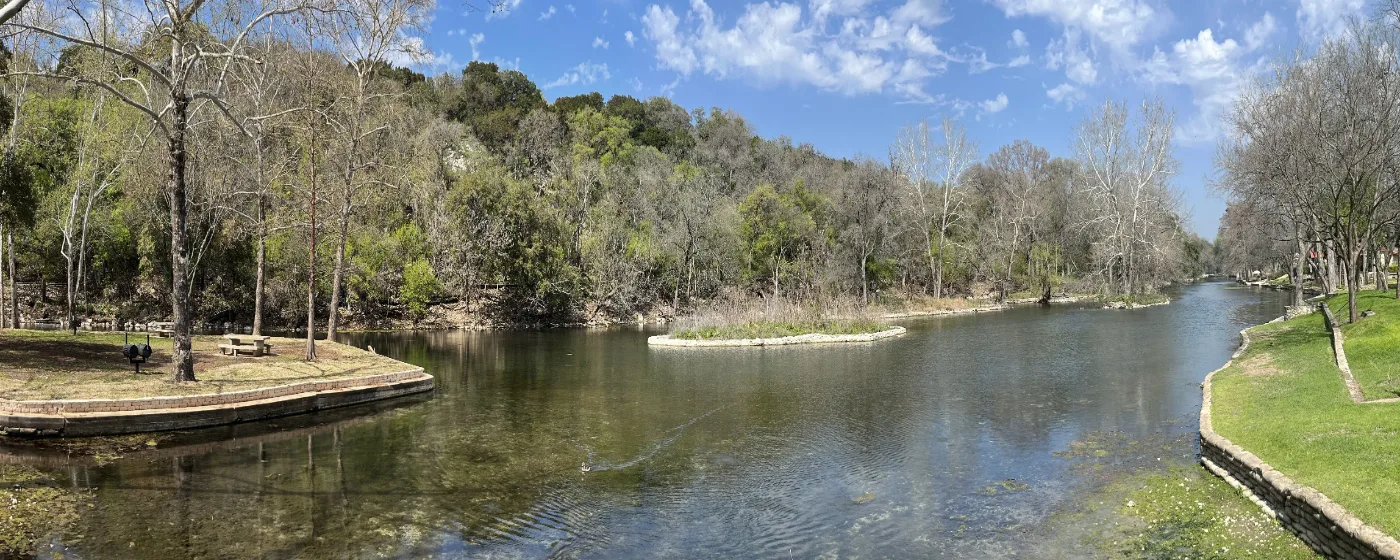
Maybe your company went remote and you realized you could stop paying California prices for a lifestyle you could replicate for a fraction of the cost. Maybe you've watched your rent absorb your raises for five years straight. Whatever got you researching New Braunfels, here is what most people don't expect: this isn't a sleepy small town waiting to be discovered. With a population of 122,492, New Braunfels grew roughly 35% since 2020 — one of the fastest growth rates of any U.S. city its size — and in 2025 it ranked as the second-most moved-to ZIP code in the country. The people moving here already know something. The question is whether it's the right fit for you specifically.
New Braunfels sits between San Antonio and Austin along I-35, which means it draws from two serious job markets without fully belonging to either one. The school district that serves most of the city — New Braunfels ISD, with 9,746 students enrolled in 2025-26 — holds a B rating, according to the Texas Education Agency, which is a real data point, not marketing copy. The city's employer base includes the school district itself, Comal ISD, the city government, Schlitterbahn New Braunfels Waterpark, and a growing number of companies attracted by the metro's mix of manufacturing, technology, and tourism infrastructure. The share of adults holding a bachelor's degree jumped more than 13 percentage points in five years, reflecting how quickly the resident profile has shifted.
The cost picture is the part Californians tend to fixate on first, and reasonably so. The typical home price here stands at $351,190 (Zillow ZHVI, July 2026), which sits well below California's statewide typical home value of $773,735 (Zillow ZHVI). Texas levies no state income tax — it is constitutionally prohibited — while California's top state income tax rate of 13.3% applies to the state's highest earners and a progressive bracket system applies to most everyone else. Those two facts alone shift the math dramatically for most California households. Utilities, groceries, and transportation all run below the national average here; housing is the one category that nudges the overall cost index slightly above it. Health insurance premiums tend to run noticeably below what most Californians were paying, though the trade-off is that advanced specialist care may require a drive to San Antonio.
Whether you're considering a move or still in the spreadsheet phase, the sections below break down the California-to-New Braunfels financial comparison, what the tax picture really looks like, how daily life here compares to what you left behind, the neighborhoods worth knowing, and a few honest things nobody tells you before you sign.
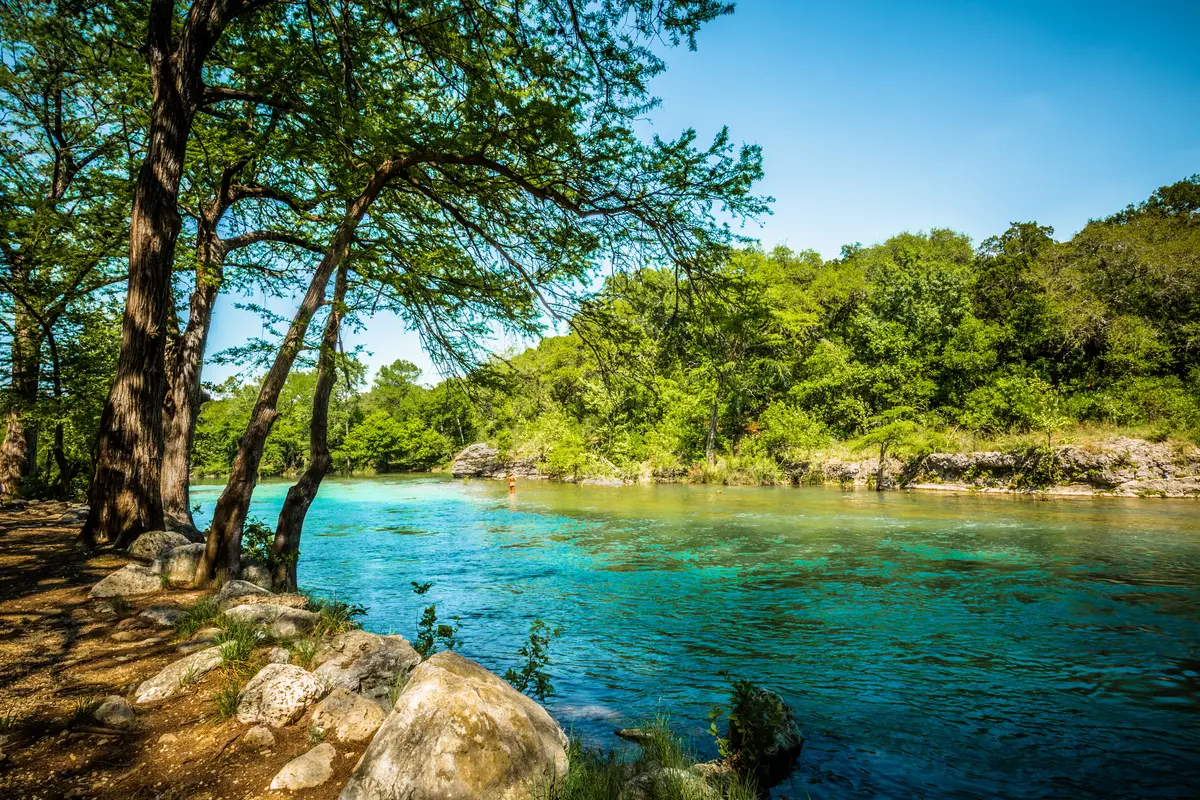
The Home Price Reality: What Your California Equity Buys Here
California's statewide typical home value of $773,735 (Zillow ZHVI) is not a Bay Area premium or a Southern California anomaly — that is the statewide number. In New Braunfels, the typical home sits at $351,190 (Zillow ZHVI, July 2026). The gap is substantial enough to reshape what you can realistically buy, not just what you can technically afford.
Most Californians arriving with equity from a sale are looking at a meaningful down payment by local standards — often enough to eliminate the need for mortgage insurance entirely, or to buy well under asking and have funds left over. That is a position most local first-time buyers cannot compete with, which is part of why the California transplant profile here skews toward buyers who move quickly and transact confidently.
What the Price Tier Looks Like on the Ground
Entry-level inventory in New Braunfels — older construction, smaller lots, established neighborhoods — starts meaningfully below the city-wide typical. The newer master-planned communities like Veramendi, Vintage Oaks at the Vineyard, and River Chase carry prices closer to or above the city typical, reflecting modern builds, larger lots, and community amenities. The neighborhoods page breaks down the character of each area in detail.
One number that surprises Californians: New Braunfels's effective property tax rate of 1.46% is noticeably higher than California's effective property tax rate of 0.71% (Tax Foundation). That gap matters on paper. What the math also shows is that 1.46% applied to $351,190 produces a substantially different annual figure than 0.71% applied to California's statewide typical. The rate is higher; the bill is lower for most buyers coming from high-cost California markets. See the cost-of-living page for the full tax and expense breakdown.
The Affordability Tension Worth Knowing
New Braunfels is not uniformly affordable for local buyers. The median household income of $86,021 sits below what is needed to comfortably carry the typical home here. That context matters: the market is pricing at levels that make sense for in-migrants with California equity or dual professional incomes, not necessarily for long-term residents on local wages. It's a real tension in the community, and worth understanding before you form opinions about the local housing culture.
The Tax Comparison: California vs. Texas, Line by Line
The income tax difference is the headline, and it's earned. Texas has no state income tax — it is constitutionally prohibited. California's top state income tax rate of 13.3% is the highest in the United States (California Franchise Tax Board), and while that rate applies only to the highest earners, the bracket below it hits at 12.3%, and most professionals earning above $67,000 are already in the 9.3% bracket.
At $100,000 of income, the difference between a California and Texas tax bill is roughly $5,055 per year for a single filer using the standard deduction — about $421 per month back in your pocket, just from crossing the state line.
Sales Tax: The One Number That Goes the Other Way
California's statewide base sales tax rate of 7.25% is the highest state-level rate in the U.S. (California Department of Tax and Fee Administration), but many California cities and counties stack local rates on top, pushing combined totals to 9.5%–10.25% or higher in major metro areas. New Braunfels's combined rate is 8.25% — Texas's 6.25% state base plus 2% local. For most California transplants, the sales tax bill in New Braunfels is actually lower than what they were paying at home, even though the combined Texas rate looks higher than the bare California state figure.
Property Tax: Higher Rate, Different Math
California's effective property tax rate of 0.71% (Tax Foundation) is held down by Proposition 13, which caps assessed value growth and produces very low effective rates for long-term owners. New Braunfels's 1.46% effective rate is roughly double that percentage — but it applies to a home price that, for most California sellers, is a fraction of what they sold. The dollar-denominated annual tax on a typical New Braunfels home is lower than what many California owners paid on a home worth twice as much. That said, if you're buying at the higher end of the New Braunfels market, the rate is real and should be factored into your monthly budget. The cost-of-living page has the full expense picture.
What the Overall Cost Index Says
New Braunfels's overall cost of living sits close to the national average, with housing as the one category running slightly above it. Utilities, groceries, and transportation all come in below average. For most Californians, the composite is a material improvement — the income tax savings alone typically outrun any grocery or utility differences many times over.
Daily Life: What Changes and What Stays the Same
The adjustment Californians most consistently underestimate is the car dependence. New Braunfels is not a city you walk or bike through for most errands. The commercial arteries along Loop 337 and the I-35 corridor are built for vehicles, and the neighborhoods — even the well-planned newer ones — assume a car in the driveway. If walkable streets and on-foot access were part of your California lifestyle, that is the honest trade-off here.
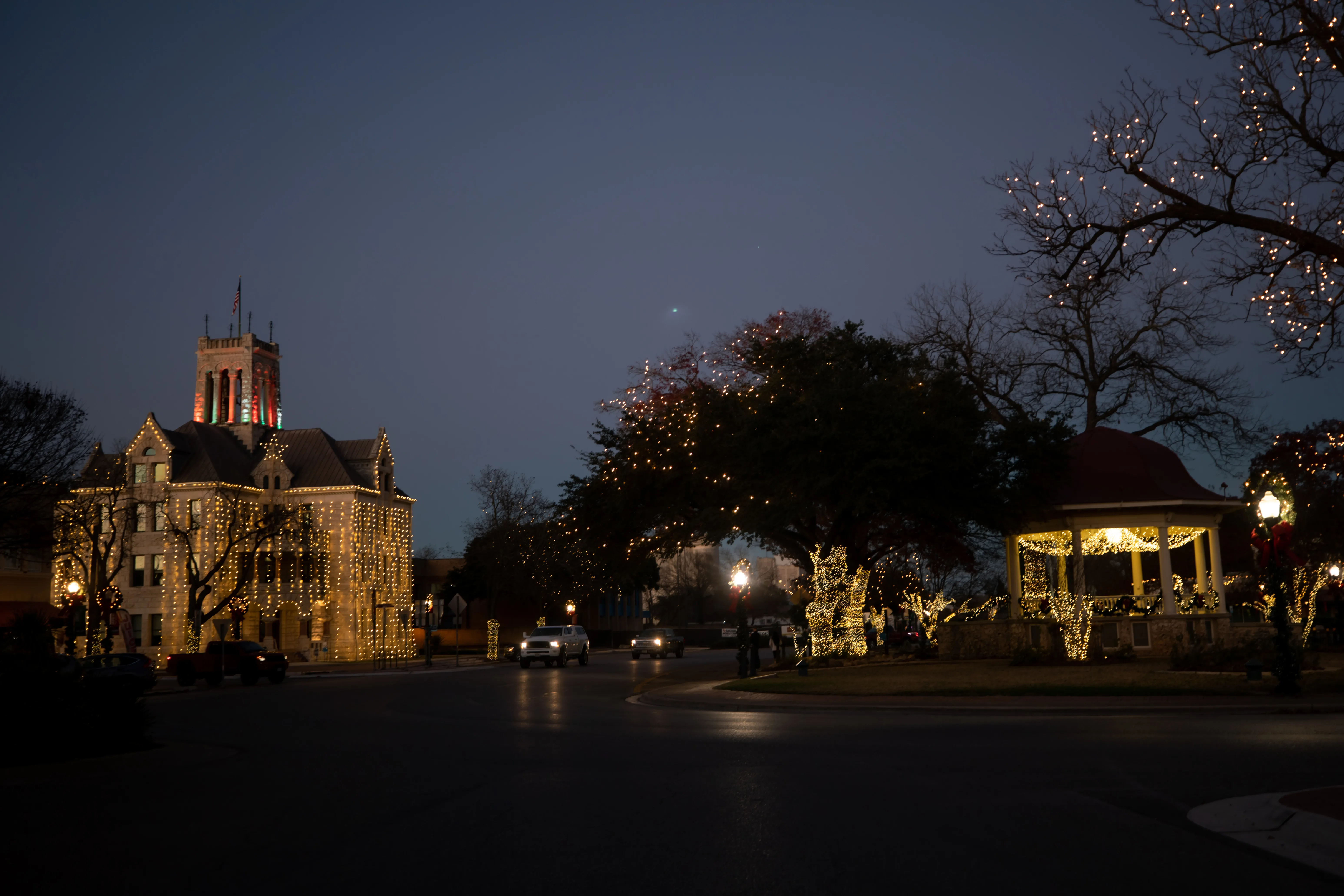
What replaces it is outdoor access of a different kind. The Comal River runs through the middle of the city, and tubing it in summer is not a tourist activity — it's what residents do. Landa Park sits at the headwaters of the Comal and anchors the city's green space in a way few parks do in Texas cities this size. The Guadalupe River adds another dimension for kayaking and fishing. Canyon Lake is a short drive out. The outdoor calendar here is genuinely built around water, which is a different kind of lifestyle than a California coastal city but not a lesser one — just specific.
The Summer Reality
New Braunfels gets 226 sunny days a year, and a meaningful stretch of them are hot in ways that shape behavior. Summer weekends on the Comal bring serious visitor traffic — Schlitterbahn and the river tubing draws over one million visitors annually. Local residents learn to time their errands and outdoor time around the tourist peak, which runs roughly Memorial Day through Labor Day. It's a seasonal quirk nobody mentions in the relocation pitch: you chose a city with a river and a waterpark, and in July, so did everyone within a two-hour radius.
The Commute Math
San Antonio is about 35 minutes away via the interstate, which puts the full depth of that metro's job market, dining, and professional services within a reasonable daily drive. Austin is farther but reachable. For the commute and employment picture in more detail, that page covers the full picture.
The food and coffee scene has grown substantially as the city has. Independent cafés and local restaurants have followed the population surge, and the Gruene Historic District adds a distinct dining and entertainment node that doesn't feel like suburban Texas. The pace here is genuinely slower than most California metros — that's a feature for some buyers and an adjustment for others.
Looking to buy in New Braunfels? Estimate your payment.
Enter your numbers to see an estimated monthly mortgage payment.
Estimate only. Excludes HOA fees and mortgage insurance. The interest rate above is a starting point, not a quoted rate — replace it with your own to see real numbers. Insurance is a flat placeholder, not a New Braunfels quote.
Neighborhoods: A California Buyer's Orientation
New Braunfels doesn't have one dominant neighborhood type — it has distinct pockets with meaningfully different characters, and the right one depends on what you're optimizing for. See the full neighborhoods guide for detailed profiles; what follows is an orientation for buyers coming from California who need a starting frame.
| Neighborhood | Character | Best For |
|---|---|---|
| Gruene | Historic district feel, older homes, walkable to the Guadalupe, distinct identity within the city | Walkable Character |
| Veramendi | Large master-planned community, modern builds, mix of housing types and price points | Families First-Time |
| Vintage Oaks at the Vineyard | Hill Country acreage lots, custom homes, more space and privacy than most Texas suburbs offer | Luxury Privacy |
| River Chase | Established community with Guadalupe River access, larger lots | Nature Families |
| Downtown / Landa Park Area | Closest thing to urban walkability in the city, near the park headwaters and historic core | Walkable Local Feel |
| Havenwood at Hunters Crossing | Established subdivision, mature landscaping, close to retail and services on the north side | Families Commuters |
| Copper Ridge | Newer construction, accessible price point, growing area with community amenities | First-Time Value |
| Voss Farms | Newer master-planned community, family-oriented, modern infrastructure | Families Schools |
California buyers with equity often land in Vintage Oaks or River Chase, where the lot sizes and custom-build culture feel more analogous to premium California suburbs than a standard Texas tract development does. Buyers optimizing for proximity to the historic city character typically gravitate toward Gruene or the Downtown/Landa Park corridor.
What Californians Often Get Wrong
The instinct to buy in the newest, largest master-planned community is understandable — the amenities are visible, the builds are modern, and the price points can still feel low by California standards. What some buyers discover after six months is that living inside a large planned community means the Gruene Historic District, the river access, and the city's actual personality are a drive away rather than part of daily life. Neither choice is wrong, but they produce genuinely different experiences of the city.
Weekends, Local Favorites, and the New Braunfels Social Life
New Braunfels has a distinct local culture that doesn't fit neatly into the Texas suburb category. The German heritage is real — the city was founded by German settlers in 1845 — and it shows up in the Sophienburg Museum & Archives, in the architecture of the Gruene Historic District, and in a food culture that has actual roots rather than just branding.
Where to Eat and Drink
The verified local anchors worth knowing: Gristmill River Restaurant & Bar in Gruene occupies a converted 1878 cotton gin with views of the Guadalupe — the building is the experience as much as the menu. Black's Barbecue New Braunfels is part of the legendary Lockhart-origin Black's family, serious Central Texas barbecue. Krause's Cafe is a long-standing local institution with a beer garden. Clear Springs Restaurant has been serving catfish and Gulf seafood since the 1970s. Muck & Fuss rounds out the local dining scene with a more casual, craft-focused approach.
For coffee: 2tarts Bakery, Gruene Coffee Haus, NEW BRAUNFELS COFFEE, Wicked Voodoo Espresso - Creekside Crossing, and Laika Cheesecake & Espresso are the independent options locals actually use. The coffee scene has grown with the population — this is no longer a one-option town.
What People Actually Do
The Tube Chute at Landa Park is where locals tube the Comal springs — calmer than the Guadalupe sections and right in the city. The New Braunfels Farmers Market is a genuine local gathering point rather than a tourist attraction. Cypress Bend Park along the Guadalupe adds another access point for swimming and river time. Canyon Lake is the weekend destination for boating, fishing, and camping when residents want more space than the city rivers provide.
The Gruene Historic District functions as the city's entertainment district — live music, the dance hall, restaurants, and shops concentrated in a walkable few blocks. On weekends it draws visitors from San Antonio, which means it's simultaneously the best and most crowded version of itself depending on when you show up. Californians used to avoiding tourist-heavy spots on peak days will recognize the dynamic immediately.
The Six-Month Surprise
Most California transplants report the same thing: the pace adjustment takes longer than expected. New Braunfels moves at a different speed — not rural, but not the ambient urgency of a California metro either. The interstate corridor has grown congested as the city has expanded, and peak-hour drives are a real part of daily life. The social texture here is genuinely unhurried in a way that some people find disorienting before they find it restorative. The schools are present and the district is worth researching in detail before you finalize a neighborhood, because attendance boundaries here matter more than many buyers expect.
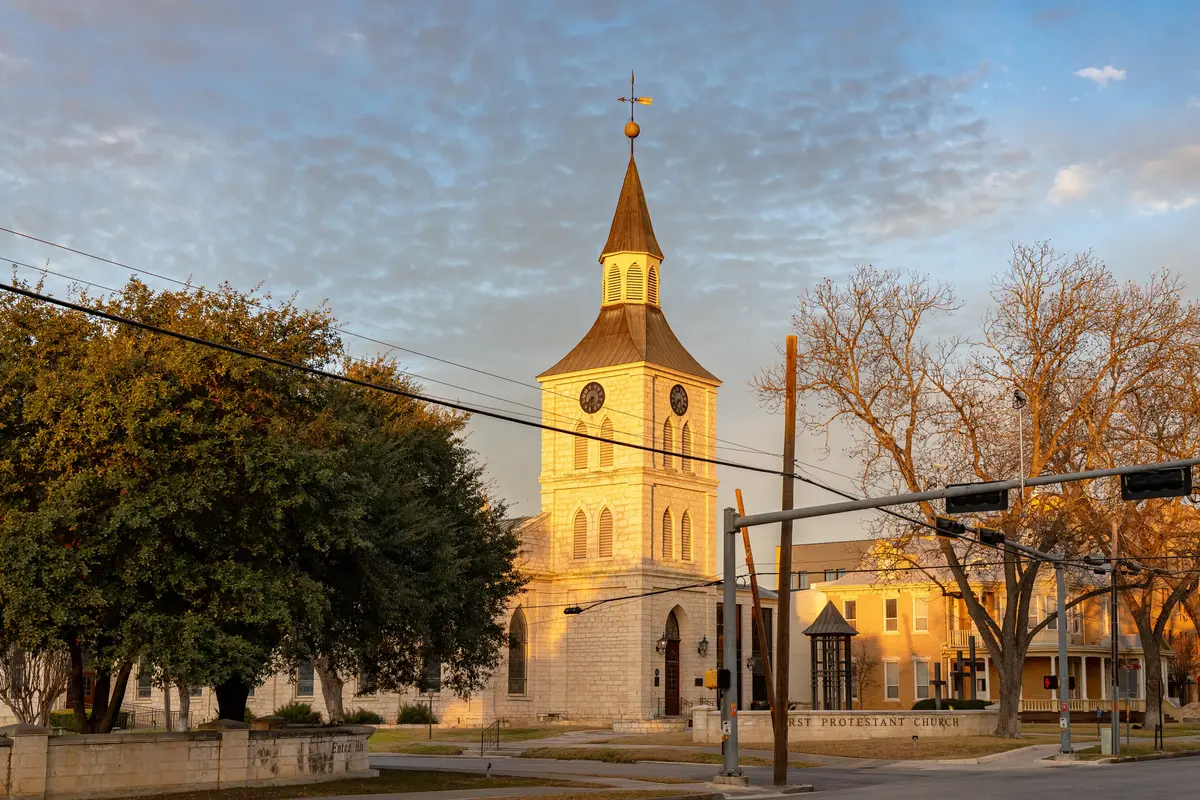
Local Expert Takeaway: New Braunfels is the most financially compelling move most Californians can make without giving up a real city's infrastructure. The income tax savings are immediate and compounding, the home prices make equity go further than anywhere in California, and the Comal River, Gruene Historic District, and the corridor to San Antonio give daily life genuine texture. The honest friction points are the property tax rate (real, even if the dollar bill is lower), the summer tourist traffic, the car dependence, and a housing market that has priced past local incomes. Come knowing those, and the trade-offs are manageable. Ignore them, and the six-month reality check will find you.
Quick Takeaways & FAQs
✅ Texas's constitutional prohibition on state income tax is an immediate financial win for nearly every California earner, typically worth several thousand dollars per year.
⚠️ New Braunfels's effective property tax rate of 1.46% is roughly double California's, and summer tourist traffic on the Comal and Guadalupe rivers is heavier than most relocating buyers anticipate.
📍 The Gruene Historic District — a walkable cluster of live music venues, restaurants, and the legendary Gruene Hall dance hall — gives New Braunfels a distinct local identity that most Texas suburbs its size simply don't have.
Is New Braunfels actually cheaper than California after accounting for property taxes?
Do Californians actually fit in socially in New Braunfels?
How does the New Braunfels school district compare to what I was used to in California?
What is the sales tax rate in New Braunfels compared to California?
Is it realistic to commute from New Braunfels to San Antonio for work?
Moving to Texas?
Tell us what you need help with and we'll connect you with local resources.
