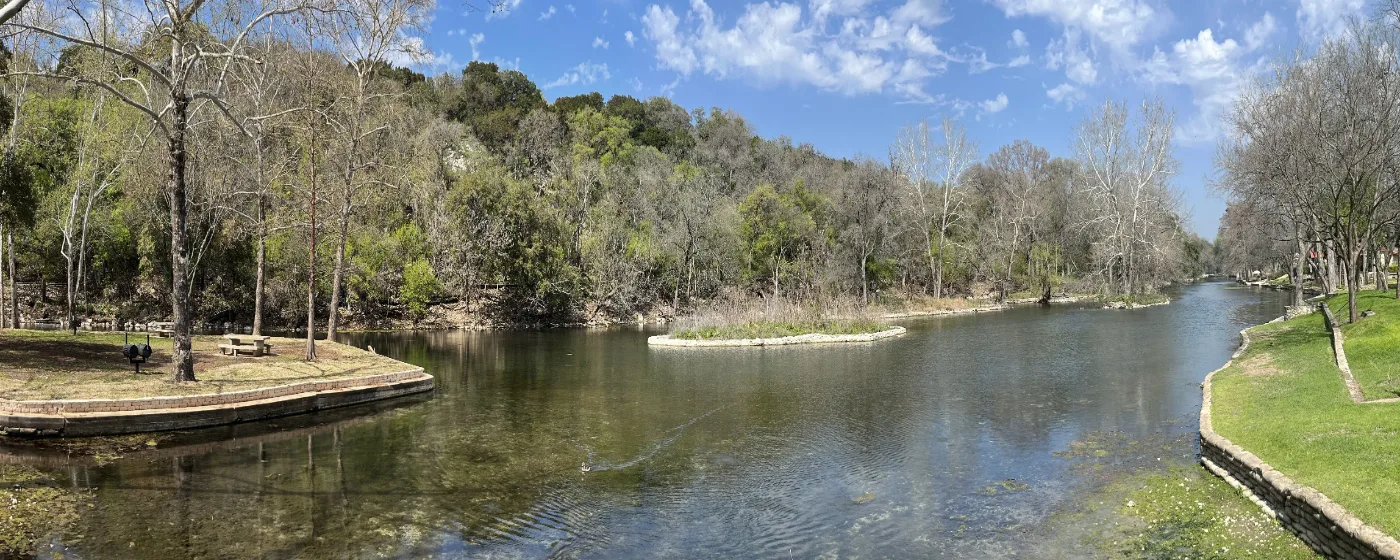
You've probably heard New Braunfels described as a fast-growing Hill Country town on the San Antonio metro's northern edge — and that's true, but it undersells what the city actually offers retirees. The German heritage runs deep, the Comal and Guadalupe rivers run cold, and a growing city of 122,492 residents has attracted enough medical infrastructure, cultural texture, and outdoor amenity to make it a genuinely competitive retirement destination. The tension retirees face here isn't whether the city is livable — it clearly is — it's whether they can tolerate a car-dependent lifestyle and a property tax bill that requires some active management to keep reasonable.
The economic picture is a mixed signal worth reading carefully. The typical home price sits at $351,190 (Zillow Home Value Index, July 2026), which is accessible by Texas metro standards but sits above what the city's median household income can comfortably carry without financial planning. That said, Texas's zero state income tax means Social Security and retirement distributions land differently here than in California or Colorado. For retirees arriving with equity from a higher-priced market, the math often works out well. For those stretching a fixed income from scratch, the effective property tax rate and the cost of car ownership deserve a hard look before the offer goes in.
Day-to-day life in New Braunfels rewards people who enjoy being outdoors. Landa Park anchors the city's green core, Canyon Lake sits a short drive away, and the Gruene Historic District gives retirees a genuinely walkable enclave of shops, live music venues, and dining set in late-19th-century cotton-gin buildings. The annual Wurstfest donates proceeds to more than 20 local nonprofits and draws crowds from across the region every fall — it's not just a tourist event, it's the city's civic rhythm. With 226 sunny days a year, the outdoor window is long, and for retirees who want to stay active, that matters.
Whether you're narrowing a short list or doing serious due diligence, the sections below walk through New Braunfels's healthcare access, the retiree tax picture, walkability and community life, downsizing options, and how the city stacks up against San Marcos, Seguin, and San Antonio as nearby retirement alternatives.
Why Retirees Are Choosing New Braunfels
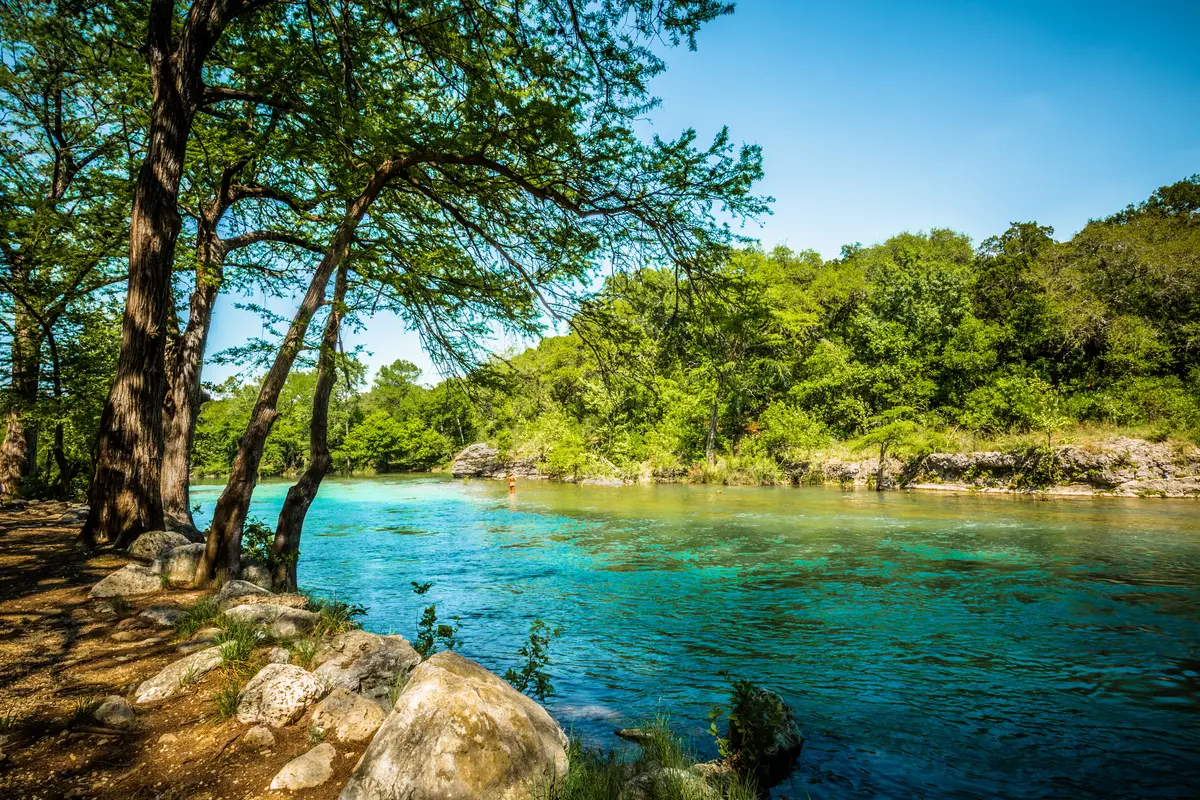
The honest case for retiring here starts with momentum. New Braunfels has been one of the fastest-growing cities its size in the country — a five-year population growth rate of 31.7% — and growth at that pace tends to bring services that matter to retirees: more medical specialists, more dining options, more direct flights out of nearby San Antonio International Airport, which is about 35 minutes away. The Hill Country setting means mild winters, river access, and a cultural calendar anchored by the Gruene Historic District and Wurstfest that keeps the city feeling alive rather than sleepy.
The fit is strongest for retirees who drive — this is not a city where you park the car permanently — and who value outdoor access over urban density. If you've spent decades in a car-centric Texas or Sunbelt suburb, New Braunfels will feel immediately comfortable. If you're moving from a walkable city and hoping to replicate that lifestyle, you'll find pockets of it in the Gruene and Downtown areas, but they're pockets, not the whole picture. The same applies to buyers arriving with significant equity: the typical home price of $351,190 (July 2026) offers real value compared to Austin, and the Texas tax structure adds to that advantage. Retirees on a genuinely tight fixed income, however, should run the property-tax numbers carefully before committing.
Who should look elsewhere? Buyers who need immediate access to Level I trauma care or major academic medical centers without a drive. Buyers who want a walkable, transit-connected urban core. And buyers who want an established 55+ community with shared amenities and age-restricted neighbors — that specific product does not yet exist here.
Healthcare & Medical Access in New Braunfels
New Braunfels has more in-city medical infrastructure than most comparably sized Texas cities, and that matters enormously at the retirement stage.
CHRISTUS Santa Rosa Hospital – New Braunfels is the closest hospital, located inside city limits. It operates as a full-service facility with general medical and surgical care, a general intensive care unit, neurology, orthopedics, oncology, palliative care, and psychiatric emergency services. Critically for retirees, it also holds an AACVPR-certified Cardiac Rehabilitation program and provides outpatient orthopedic therapy — the two services most frequently needed after a cardiac event or joint procedure.
Resolute Baptist Hospital is also located in New Braunfels and offers a meaningful complement to the CHRISTUS campus. It uses robotic-assisted technology for joint replacement surgery — a detail worth knowing if a knee or hip replacement is anywhere on your horizon.
The honest limitation: major academic medical centers, Level I trauma centers, and subspecialty services like complex cardiothoracic surgery or organ transplantation require the drive to San Antonio. For retirees with stable, manageable conditions, the in-city options are genuinely strong. For anyone managing a complex or high-acuity chronic illness, the calculus is different — you'll be making that drive regularly, and that reality should factor into where in the metro you buy.
The senior care continuum is well-developed. EdenHill Communities is the city's only Continuing Care Retirement Community, operating on a 27-acre Hill Country campus with over a century of continuous operation and a full range from independent living through skilled nursing and hospice. As of late 2025, at least 23 senior living communities — spanning independent living, assisted living, and memory care — were operating in the New Braunfels area, with additional facilities in development.
The Retiree Budget in New Braunfels
Texas's most retiree-friendly fiscal fact is the one that often surprises out-of-state buyers: no state income tax. Social Security benefits, pension income, IRA distributions, and investment gains are all untouched at the state level. For retirees who spent their careers in a high-income-tax state, this alone can represent a meaningful shift in take-home income.
Property taxes are the counterweight, and in New Braunfels they deserve a candid look. The effective property tax rate is approximately 1.46% — on the higher end for a Texas city of this size, though not unusual in a fast-growing county where infrastructure spending is heavy. The good news for homeowners 65 and older is substantial. Following voter approval of Proposition 11 in November 2025, Texas seniors now receive a combined school district homestead exemption of up to $200,000 — a $140,000 general exemption plus an additional $60,000 senior exemption. On top of that, a permanent school tax ceiling freezes the school portion of the property tax bill at the level set the year the homeowner turns 65. For a household on a fixed income, that ceiling is one of the most valuable protections the state offers. See the cost of living page for the full tax breakdown.
Daily cost of living on a fixed income in New Braunfels is manageable but not low. Groceries and utilities run close to national averages. The budget line that catches retirees off guard is transportation: this is a car-dependent city, so maintaining one or two vehicles — insurance, fuel, maintenance — is a non-negotiable expense for virtually every household. Those arriving from denser cities sometimes underestimate this. Typical city-wide rent runs $1,566 per month (Zillow, July 2026) for those not yet buying or downsizing into a purchase, though rental options at the lower end of that range are limited.
Looking to buy in New Braunfels? Estimate your payment.
Enter your numbers to see an estimated monthly mortgage payment.
Estimate only. Excludes HOA fees and mortgage insurance. The interest rate above is a starting point, not a quoted rate — replace it with your own to see real numbers. Insurance is a flat placeholder, not a New Braunfels quote.
Walkability, Community & Staying Active in New Braunfels
Most errands in New Braunfels require a car. That's not a knock on the city — it's the honest baseline retirees need to plan around. The street grid between neighborhoods is not pedestrian-friendly, and the interstate and its frontage roads create the kind of barrier that makes crossing on foot impractical. If giving up driving is a near-term consideration, this city's layout should be a serious factor in your decision.
That said, there is one genuinely walkable enclave worth knowing about: the Gruene Historic District. The late-19th-century cotton-gin buildings have been converted into a dense cluster of shops, dining, and live music venues set along the river. It's the part of New Braunfels where retirees who want a pedestrian afternoon — a slow lunch, a wander through a gallery, a stop at an independent coffee shop — will find it. The Downtown and Landa Park area offers a similar, if smaller, version of that experience, with Landa Park's greenways providing flat, accessible walking paths along the Comal River.
The Comal County Senior Citizens Foundation runs a senior center in the city and in 2025 served over 777 seniors, veterans, and disabled adults through Meals on Wheels and congregate meal programs, delivering 79,043 meals at no cost to recipients. For retirees who want a social infrastructure beyond passive recreation, this organization represents a real entry point into the community.
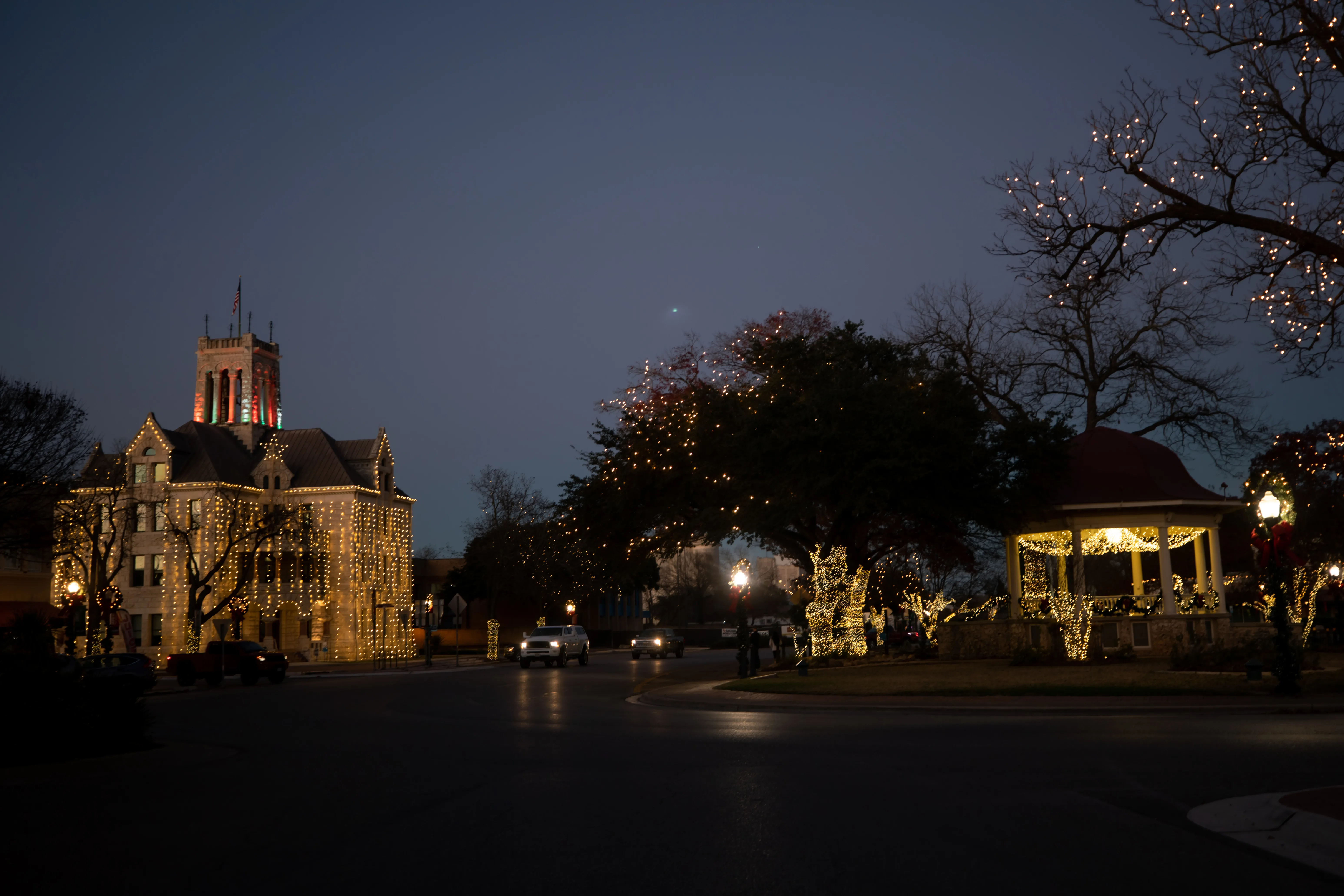
The wider community calendar is rich in ways that reward participation. Wurstfest — the annual ten-day festival near Landa Park on the Comal River — has run since 1961 and donates proceeds to more than 20 local nonprofits. Volunteering with those nonprofits is a genuine way to build community here fast. The New Braunfels Farmers Market draws regulars year-round. And for retirees whose idea of active means getting on the water, the Guadalupe River, Comal River, and Canyon Lake are all within easy reach — flat-water tubing on the Comal is as low-impact as outdoor recreation gets, and it's a city institution.
The seasonal quirk worth knowing before you move: summer in New Braunfels brings serious tourist volume. Schlitterbahn and the rivers draw visitors from across Texas, and from roughly Memorial Day through Labor Day the city feels considerably larger than 122,492 people. Traffic backs up on the main routes into town, river access gets crowded, and the restaurants that felt easy in October are suddenly running waits. Long-term residents build their summer routines around this reality. New arrivals, especially those used to quieter retirement communities, sometimes find it harder to adjust than they expected.
Right-Sizing: Downsizing in New Braunfels
The 55+ active-adult community product — age-restricted neighbors, a clubhouse, a built-in social calendar — is not available in New Braunfels yet, despite the pace of growth. For retirees whose first instinct is that kind of community, this is the city's most meaningful gap.
What IS here is a growing inventory of senior living options on the care-services side. EdenHill Communities operates the city's only full Continuing Care Retirement Community — a 27-acre campus with independent living, assisted living, memory care, skilled nursing, and hospice care, all under one organizational umbrella. For retirees who want to age in place through multiple care levels without relocating again, a CCRC model is worth understanding carefully, and EdenHill is the established option in New Braunfels for that conversation.
For buyers who want to own but downsize from a large family home, the practical question is single-level inventory. New Braunfels has produced significant new construction in recent years — master-planned developments include patio homes and smaller single-story plans that appeal to retirees. The challenge is that demand has kept prices for newer single-level builds at or above the city-wide typical home price. Older stock in the Downtown and Landa Park area tends to be more affordable but may require renovation to meet accessibility needs.
Condos are a relatively thin slice of the market here. The city's development pattern has been suburban and horizontal rather than vertical, so buyers hoping to trade a house for a low-maintenance condo in a walkable building will find limited options. A better strategy for many retirees is a newer patio home in one of the master-planned communities, where exterior maintenance is often handled by an HOA. See the neighborhoods page for a full look at the communities and housing stock types across the city.
New Braunfels vs Nearby Retirement Destinations
| City | Cost vs New Braunfels | Hospital Access | Walkability | Senior Living Depth | Overall Retirement Fit |
|---|---|---|---|---|---|
| New Braunfels | Anchor | Two in-city hospitals; San Antonio for subspecialty | Car-dependent; Gruene walkable enclave | 23+ communities; one CCRC; no 55+ | Strong for active, car-comfortable retirees |
| San Marcos | Somewhat lower | Regional hospital; San Antonio for subspecialty | Walkable near Texas State campus; car-dependent elsewhere | Growing but thinner than New Braunfels | Good fit for budget-conscious retirees who want a college-town feel |
| Seguin | Noticeably lower | Regional medical center in-city; San Antonio for subspecialty | Car-dependent; smaller downtown | Limited depth; fewer options overall | Best for retirees who prioritize cost above other factors |
| Schertz | Somewhat lower | Close to San Antonio medical corridor | Suburban; car-dependent | Growing suburb; options increasing | Suits retirees who want metro access with lower price point |
| Canyon Lake | About the same | Most medical needs mean a drive to New Braunfels or San Antonio | Very limited; rural setting | Minimal organized senior living | Best for retirees prioritizing scenery and quiet over services |
| San Antonio | Pricier overall; varies widely by neighborhood | Multiple major health systems; academic medical centers | Varies; some walkable urban neighborhoods | Deep; widest range of options in the region | Best for retirees who need top-tier subspecialty care or prefer urban amenity |
Seguin is the clearest win on cost, and it has its own in-city regional medical center — a meaningful advantage for retirees who want nearby hospital access without the full San Antonio commute. Canyon Lake offers remarkable scenery but most medical appointments mean a drive. San Marcos offers a similar price advantage over New Braunfels with the energy of a university town, but its senior living infrastructure is thinner. San Antonio is the right call for retirees managing complex medical conditions — the depth of subspecialty care there is simply unavailable closer — but buyers pay more for it. New Braunfels threads the needle reasonably well: two in-city hospitals, a growing senior care sector, strong outdoor amenity, and a price point that still works for retirees arriving with equity from a higher-cost market.
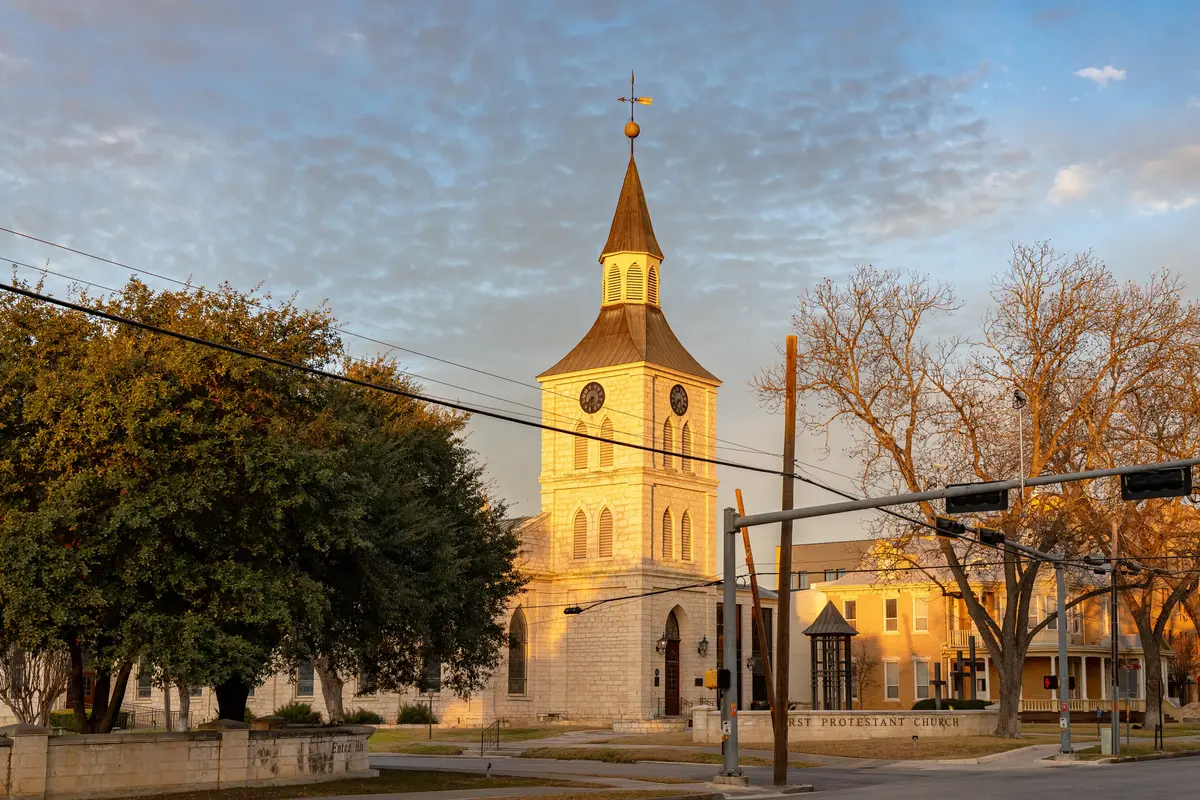
Local Expert Takeaway: New Braunfels earns its reputation as a retirement destination not through a single standout feature but through a combination that's genuinely hard to find in one place: two hospitals inside city limits (CHRISTUS Santa Rosa and Resolute Baptist), a Hill Country setting with year-round outdoor access along the Comal and Guadalupe rivers, Texas's zero state income tax, and a senior tax exemption that freezes your school property tax bill the year you turn 65. The real trade-off is mobility — you will own and depend on a car here, the tourist summers are intense, and the 55+ community product retirees often expect simply doesn't exist yet. If you can plan around those gaps, New Braunfels is one of the more substantive retirement options in the San Antonio corridor.
Quick Takeaways & FAQs
✅ New Braunfels has two in-city hospitals — CHRISTUS Santa Rosa and Resolute Baptist — giving retirees strong access to primary care, cardiac rehab, and orthopedic services without leaving town.
⚠️ No 55+ communities exist in New Braunfels, and the city is car-dependent for daily errands — retirees expecting a walkable, age-restricted community lifestyle will need to adjust expectations.
📍 Texas homeowners 65 and older now qualify for a combined school district homestead exemption of up to $200,000 and a permanent school tax ceiling — one of the strongest senior property tax protections in the state.
Is New Braunfels a good place to retire?
What hospitals are in New Braunfels for retirees?
Are there 55+ communities in New Braunfels?
What are the property tax benefits for retirees in Texas?
How does New Braunfels compare to San Antonio for retirement?
Moving to Texas?
Tell us what you need help with and we'll connect you with local resources.
