
You've probably done the math on Houston and found it unworkable, or you've compared Katy to Fulshear and Sugar Land and noticed Katy keeps coming out ahead on price. That instinct is basically right. Katy's overall cost of living sits noticeably below what comparable suburban markets near Dallas or Austin would run, and it lands well within reach for a city with the school reputation, the retail density, and the freeway access it offers. For families shopping the western Houston suburbs, the price is genuinely competitive.
The economic engine here is real and diversified. Katy Independent School District — with 95,295 students enrolled in 2025-26 — is one of the largest employers in the area, and the city's location along I-10 (Katy Freeway) puts residents about 40 minutes to Downtown Houston, where most high-income jobs actually sit. That commute dynamic shapes everything about cost here: Katy is a place where families trade some drive time for significantly more house, a better-rated school district, and a quieter daily rhythm than Houston's inner loop can offer. The median household income of $107,332 reflects the professional household profile that's drawn here.
Where Katy is genuinely affordable — groceries, gas, transportation — the savings add up faster than most people expect. Where it stings — and it does sting — is property taxes. Texas funds its schools and local services through property levies rather than income taxes, and Katy's effective rate of approximately 2.09% is one of the things no spreadsheet should gloss over. Grocery prices run below the national average, transportation costs run well below average, and the deregulated electricity market is competitive enough to keep utility bills manageable. The tax picture is the honest asterisk.
Whether you're comparing Katy to Houston, weighing it against Cypress or Fulshear, or trying to figure out what a $337,000 home actually costs to own here month to month, the sections below break down housing, everyday expenses, the local tax structure, and how Katy stacks up against the nearby cities most buyers are cross-shopping.
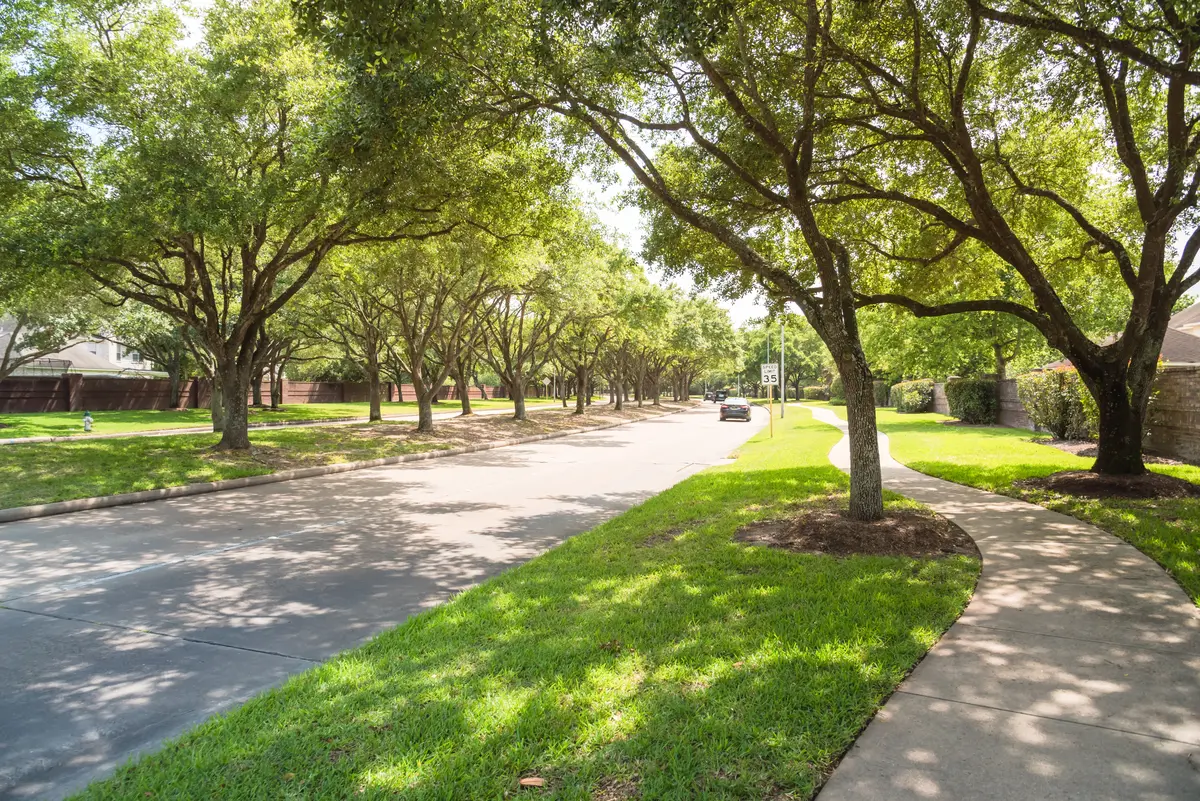
What It Really Costs to Live in Katy
Katy is not a cheap suburb — but it is a reasonably priced one, and that distinction matters. Fulshear, Cypress, and Sugar Land all run noticeably higher on housing costs alone, which makes Katy the value play among comparable western Houston suburbs without meaningfully sacrificing schools, safety, or amenities.
The typical home price of $337,000 (Zillow Home Value Index, July 2026) is what anchors the entire budget conversation. That figure is achievable on one professional income in a way that Fulshear or Sugar Land simply are not for most households. The catch is that Texas's property tax structure means the monthly cost of owning that home runs higher than the sticker price implies — an important adjustment anyone moving from a low-tax state will need to make in their calculations.
Non-housing costs actually tilt in Katy's favor. Grocery competition is fierce, gas is cheap by national standards, and the deregulated electricity market gives residents real options on their power bill. The overall picture is a city where the headline number is competitive, the tax line requires attention, and everything else is a relative bargain. For families who need the school district and want a house with a yard, the math tends to work — but it works better when you go in knowing where the costs hide.
Housing: Rent vs Buy in Katy
The typical home in Katy is priced at $337,000 as of July 2026, and entry-level options — older construction, smaller footprints — start meaningfully below that figure, while newer master-planned communities push the ceiling well above it. Neighborhoods like Cane Island and Elyson both track above the city median, which tells you where the premium product lives; the Best Neighborhoods guide breaks those distinctions down specifically.
One number every buyer here needs to internalize: the effective property tax rate is approximately 2.09%. Katy straddles Harris, Fort Bend, and Waller counties, each with its own appraisal district and rate stack, so the precise bill varies by which side of a county line your address falls on — but 2.09% is the right planning figure. On the positive side, Texas's $140,000 school-district homestead exemption reduces the taxable value for owner-occupants on the school-district portion of the bill, and the City of Katy layers on an additional 20% homestead exemption (minimum $5,000) on its own levy. Those exemptions are not automatic — you apply for them — but they meaningfully reduce the effective burden for primary residents.
Renting in Katy runs at a city-wide typical rate of $1,999 per month (Zillow ZORI, July 2026). That figure reflects a well-supplied rental market: the volume of new construction in the master-planned communities keeps inventory from tightening the way it does in land-constrained suburbs. Renting makes most sense here for people on a one-to-two-year timeline — relocations, job transitions, people still deciding whether the commute to Houston works for their situation. For anyone planning to stay three or more years, the math usually tips toward buying, particularly given the income-tax savings Texas offers. The interactive calculator below this section will give you the real monthly ownership picture at current rates.
One honest note on affordability: the median household income in Katy sits just below the income level needed to comfortably carry the typical home at current prices and rates. That gap is not large, but it does mean buyers at the median income are stretching. Dual-income households and buyers bringing equity from a prior sale tend to find the numbers comfortable; single-income buyers at the midpoint need to run the calculator carefully before assuming the city-wide median is within reach.

Everyday Costs Beyond Housing in Katy
| Category | Typical Monthly Cost | Notes |
|---|---|---|
| Housing (typical rent) | $1,999/mo | City-wide typical rent. Buying? Use the calculator above for a mortgage estimate. |
| Utilities | $190–$290/mo | Electricity, gas, water, sewer, trash |
| Groceries | $520–$720/mo | Food at home, household of 2–3 |
| Transportation & Gas | $220–$380/mo | Fuel, and transit where it is a real option |
| Phone & Internet | $110–$180/mo | Mobile plan plus home broadband |
| Misc / Discretionary | $250–$480/mo | Dining out, entertainment, subscriptions |
Non-housing figures are estimates for a household of two to three, not a sourced index; housing is the city-wide typical rent (Zillow ZORI, July 2026). Refreshed with the rest of the city data.
Groceries are one of Katy's quiet advantages. The retail competition here is genuinely unusual for a city of 28,373 — H-E-B, Kroger, Whole Foods, 99 Ranch Market, and H Mart all operate in the broader trade area, which keeps prices roughly 3 to 4% below the national average and gives households real options across price points and cuisine preferences. For anyone moving from a market where one or two chains dominate, the selection is a legitimate quality-of-life upgrade.
Utilities run in a manageable range. Katy's deregulated electricity market — Texas allows residential customers to choose their power provider — means a motivated household can shop for a better rate rather than accepting whatever a monopoly utility charges. The typical monthly utility bundle comes in noticeably below what residents of comparable Sunbelt suburbs report paying. Transportation costs are also a relative strength: gas prices in Harris County run well below the national average, and car ownership overall costs roughly 12% less here than the U.S. norm, partly because Texas carries no local fuel tax. For commuters who prefer to skip the drive, Houston METRO runs park-and-ride bus service along I-10 into downtown Houston, which is worth knowing even if most Katy residents still rely on a personal vehicle for daily errands. The sample monthly budget figures appear in the breakdown below.
Looking to buy in Katy? Estimate your payment.
Enter your numbers to see an estimated monthly mortgage payment.
Estimate only. Excludes HOA fees and mortgage insurance. The interest rate above is a starting point, not a quoted rate — replace it with your own to see real numbers. Insurance is a flat placeholder, not a Katy quote.
Katy vs Nearby Cities: Cost Comparison
| City | Typical Home Price | Typical Rent | Cost vs Katy |
|---|---|---|---|
| Katy (this city) | $337,000 | $1,999/mo | — |
| Fulshear | $504,786 | $2,159/mo | 50% higher |
| Cypress | $407,233 | $2,052/mo | 21% higher |
| Sugar Land | $449,277 | $2,068/mo | 33% higher |
Source — home prices: Zillow ZHVI, July 2026; rent: Zillow ZORI, July 2026. Nearby-city figures are the same series, refreshed together.
Katy's home prices and rents sit noticeably below those of Fulshear, Cypress, and Sugar Land — the western Houston suburbs most buyers cross-shop against it — which makes it the most accessible entry point among comparable communities in this corridor. The full side-by-side comparison, including home prices, typical rents, and cost differentials, is in the table below.
Taxes & the Bottom Line for Katy
Texas levies no personal state income tax, and there is no local income tax in Katy. For a household earning $107,332 — the city's median — the absence of state income tax represents real annual savings compared to what the same income would cost in California, Oregon, New York, or most other high-income-tax states. That savings is genuine, and it's one of the primary reasons high-income households keep choosing Texas suburbs over comparable markets elsewhere.
The trade-off is property taxes. At approximately 2.09% effective rate, Katy's property levy is one of the higher ones in the country and the number that surprises most out-of-state buyers most sharply. Apply that rate to the typical home price described in the housing section above and the annual bill is significant — the interactive calculator above will run the precise figure for any purchase price you enter. Homestead exemptions reduce that burden for owner-occupants, and the 2025 increase to the state's school-district exemption ($140,000, up from $100,000) made a meaningful dent for many existing owners.
The combined sales tax rate sits at 8.25% — the 6.25% Texas state rate, plus a 1% city levy, plus a 1% special-district tax. That is a full percentage point above what Houston proper charges on most purchases, a detail worth noting for households that do most of their shopping in Katy rather than heading into the city.
Who the Budget Works For
Katy's full cost picture fits dual-income professional households well — people who can absorb a property tax bill, value the school district, and treat the I-10 commute as an acceptable trade for significantly more house than Houston's inner suburbs offer. It tends to be a stretch for single-income households at the area median, and it is genuinely difficult for households much below the median who are also trying to carry the effective property tax rate on the typical home price. Buyers coming from Fulshear or Sugar Land will find prices noticeably more accessible here; buyers coming from within Houston will face higher taxes in exchange for the school district and the space. For a detailed look at how Katy compares to Houston specifically, see the moving guide and the living in Katy overview.

Local Expert Takeaway: The single most important thing to understand about Katy's cost of living is the gap between the purchase price and the true monthly cost. The typical home at $337,000 (July 2026) is genuinely competitive for what you get — the school district, the square footage, the retail access along the Grand Parkway corridor — but the approximately 2.09% effective property tax rate adds a substantial line to the monthly budget that buyers from low-tax states routinely underestimate. Run the full ownership cost before you compare Katy to a Houston neighborhood on price alone. The grocery competition, cheap gas, and no state income tax help on the other side of the ledger, but the property tax is the number that determines whether Katy's budget math works for your household.
Quick Takeaways & FAQs
✅ Katy's grocery prices run 3 to 4% below the national average thanks to genuine retail competition — H-E-B, Kroger, Whole Foods, 99 Ranch Market, and H Mart all serve the area.
⚠️ The effective property tax rate of approximately 2.09% is the cost that most surprises buyers moving from out of state — it meaningfully raises the true monthly cost of the typical home above what the purchase price alone suggests.
📍 Katy straddles Harris, Fort Bend, and Waller counties, so the exact property tax bill depends on which county line your address falls on — worth verifying before you make an offer.
What is the typical home price in Katy, TX right now?
How high are property taxes in Katy, TX?
Does Texas have a state income tax?
What is the sales tax rate in Katy, TX?
Is it cheaper to live in Katy than in Houston or nearby suburbs?
Moving to Texas?
Tell us what you need help with and we'll connect you with local resources.
