
What Is Living in Waller, Texas Like?
Maybe you were priced out of Katy or Cypress, or someone in your office mentioned that land west of Houston is still genuinely affordable. Maybe your company has a connection to the US-290 corridor and Waller suddenly appeared on your shortlist. Whatever brought you here, the first thing to know is that Waller is not a suburb in the conventional sense — it is a small city of 5,380 people sitting about 41 miles northwest of downtown Houston, split between Harris and Waller counties, where the road opens up and the sky gets wide. The central tension is this: Waller is growing fast enough to feel like a different city every eighteen months, but the infrastructure — roads, services, retail — is still catching up. Buying here is a bet on where the corridor is going, not where it already is.
The economic backbone of Waller is anchored by two very different institutions. Waller Independent School District, which has 10,869 students enrolled in 2025-26, is the city's largest employer and the reason many parents with school-age children first look here. The other anchor is private manufacturing: the Daikin Texas Technology Park, one of the largest factories in the United States at approximately 4.23 million square feet, produces HVAC equipment under the Goodman, Amana, and Daikin brand names, and in June 2026 announced plans to hire roughly 400 additional production workers. Add Alegacy Equipment, Buc-ee's, and Love's Travel Stop, and you have a local job base that skews toward manufacturing, logistics, and retail — with many residents also commuting outbound to Houston's energy and medical corridors.
The Waller County growth story is real and measurable. The county's population growth rate has been cited as the second-fastest in the country, and the county approved an $89 million budget in 2026 specifically to address infrastructure demands — alongside a $258 million mobility bond passed to improve roads across the region. For buyers, that translates into master-planned communities rising fast: Wildrye, a 1,400-home community, and Attwater, a 470-acre development that began welcoming residents in 2025, are among the largest. The typical home price sits at $284,351 (Zillow Home Value Index, July 2026) — noticeably below what you would pay in Magnolia to the north, and meaningfully below the broader Houston metro median — which is what draws buyers willing to trade proximity for affordability. For a full breakdown of taxes and cost of living, see the cost of living page.
Whether you are considering a first home, a manufacturing job close to a new plant, or simply room to breathe outside the Loop, the sections below break down Waller's neighborhoods, housing market, commute realities, schools, and what daily life here actually looks like once you unpack.

Waller at a Glance
Looking to buy in Waller? Estimate your payment.
Enter your numbers to see an estimated monthly mortgage payment.
Estimate only. Excludes HOA fees and mortgage insurance. The interest rate above is a starting point, not a quoted rate — replace it with your own to see real numbers. Insurance is a flat placeholder, not a Waller quote.
Why Are People Moving to Waller?
The honest answer is price and space. Waller gives buyers a foothold in the Houston metro at a price point that has largely disappeared from communities closer to the Beltway. That calculation is drawing a steady stream of first-time buyers, manufacturing workers tied to the US-290 corridor, and remote workers who need acreage more than they need an easy lunch commute.
The Growth Is Structural, Not Speculative
Waller County's growth rate has been called the fastest in Texas and the second-fastest in the country. That is a county-level figure — the city itself is smaller, at 5,380 people — but it describes the same geography buyers are choosing. In 2025, Waller's city planning meetings logged 264 projects with decisions, with 274 individual actions approved. That pace of land-use activity is the clearest signal that developers and homebuilders have already made their bet.
Master-planned communities are the primary vehicle for that growth. Wildrye, a 1,400-home community along the US-290 corridor, and Attwater, a 470-acre development that welcomed its first residents in 2025, represent the leading edge of what county planners project could quadruple the local population within the decade. If you are buying in Waller now, you are early in that story — which is an opportunity and a patience test in equal measure.
The Employment Pull
Daikin Comfort Technologies is the defining private employer along this stretch. The Daikin Texas Technology Park is among the largest manufacturing facilities in the country, and its June 2026 announcement of roughly 400 additional production hires signals that the campus is still expanding. Alegacy Equipment adds another manufacturing layer. For workers tied to one of those plants, living in Waller eliminates a long outbound commute entirely.
For everyone else, the commute math runs the other way — outbound to Houston. That is the honest trade-off here, and it is covered in detail in the commuting section below. What keeps people choosing Waller anyway is that the home they can afford here is simply in a different category than what the same money buys closer in.
Who Tends to Land Here
| Buyer Type | What Draws Them | Best Fit |
|---|---|---|
| Manufacturing & trades workers | Proximity to Daikin, Alegacy, and corridor employers | Commuter |
| First-time buyers priced out of Cypress/Katy | New construction at a lower price point | First-Time Value |
| Remote workers wanting land | Acreage, space, quiet — Houston still reachable | Nature Privacy |
| Families with school-age children | Waller ISD, new construction, master-planned amenities | Families School |
| Investors in corridor growth | Early-stage pricing in a fast-growing county | Value |
| Retirees on a fixed budget | Lower price point and quiet pace suit some buyers | Quiet |
The buyer who tends to be disappointed here is the one who expects walkable retail, a developed downtown dining scene, or urban convenience at a rural price. That version of Waller does not exist yet, and it may not for years.
What Daily Life Feels Like in Waller
Life in Waller runs at a slower register than the Houston suburbs most people move from. The city covers just 3.72 square miles, which means the distance between anything local is short — but the list of what is local is also short. Most serious shopping and most sit-down dining means a drive, either deeper into the city's modest commercial strip or outbound toward the Houston metro.
The Rhythm of a Small Texas City
Mornings in Waller tend to start early, because a lot of residents are either heading to a shift at one of the corridor manufacturers or beginning a commute toward Houston. The Buc-ee's on US-290 functions as something between a landmark and a community hub — it is where you stop for coffee, where out-of-town visitors orient themselves, and where the local fabric briefly intersects with the highway traveler population.
Evenings and weekends have a different texture. Friday night football at the 10,000-seat Daikin Stadium — adjacent to Waller High School — is a genuine community event, the kind where people show up whether or not they have a student on the field. The Bulldogs' home games are among the most reliably attended things in the city's social calendar.
What Newcomers Don't Expect
The construction activity catches people off guard in the first months. If you are buying in one of the new master-planned communities, you are almost certainly living next to an active construction zone while additional phases go up. The infrastructure — roads especially — does not always keep pace with the new homes, and a road that was manageable in one season can become a bottleneck the next as another subdivision opens nearby.
The other surprise is how genuinely dark and quiet it gets at night. Residents who moved from Cypress or the Energy Corridor describe this as either a revelation or an adjustment, depending on their disposition. The light pollution is low, the noise floor drops fast after dark, and the stars are actually visible — something most of metro Houston cannot say.
Schools, Safety, and the Basics
Waller ISD holds a C rating, according to the Texas Education Agency, for the 2024-25 school year. On 2024-25 state assessments, 37% of students reached math proficiency and 50% reached reading proficiency. The district has active UIL athletics programs and the Bulldogs mascot carries real local pride; for a deeper look at schools, the schools page covers the full picture. On safety, Waller carries a violent crime rate of 2.4 per 1,000 residents and a property crime rate of 19.2 per 1,000 residents — the safety page puts those numbers in context against state and national benchmarks.
The Waller Housing Market Right Now
The typical home price in Waller is $284,351 (Zillow Home Value Index, July 2026). That figure reflects a market where new construction dominates the conversation — most of what is selling here is part of a master-planned community, not an older resale on a rural lot, though both exist.
What the Market Actually Looks Like
New construction from national and regional builders is the primary inventory driver. Buyers in communities like Wildrye, Attwater, Stone Creek Ranch, and Mallard Crossing are largely choosing between floor plans and upgrade packages rather than competing for a scarce resale. That dynamic gives buyers more negotiating surface than you would find in an established Houston suburb, though builder incentives vary considerably by phase and by how quickly a section is selling.
Resale inventory is thinner and sits in a wider price band. Older homes on larger lots — particularly anything with acreage along FM-362 or FM-2920 — can price well below or above the city-wide figure depending on land and condition. The honest caveat is that the city-wide typical price reflects the full mix; some areas run notably above it. For neighborhood character and how different parts of Waller compare, see the neighborhoods page.
Affordability in Context
The median household income in Waller is $39,969. The typical home price sits well above what that income alone can carry at current rates — the gap between median income and what it takes to qualify for the typical home here runs roughly $64,000. That is a real affordability constraint, and it explains why dual-income households and buyers with equity from a previous sale make up a large share of the market. It also explains why the rental market exists here: the typical city-wide rent runs at $1,329 per month (Zillow, July 2026), which for some households is the more realistic entry point. The effective property tax rate is 1.72%, which is worth factoring into any monthly budget calculation alongside the purchase price — the cost of living page walks through the full tax picture.
Compared with neighboring communities, Waller prices sit noticeably below Magnolia to the north and somewhat above Hempstead and Prairie View. For buyers coming from the closer-in Houston suburbs, the price difference is the whole reason to look here.
Waller Neighborhoods
Waller has several distinct areas — each with its own character and appeal. Here’s a breakdown to help you narrow down where to focus your home search.
🏡 Attwater
One of Waller's newest master-planned communities, Attwater spans 470 acres and began welcoming residents in 2025 — making it a strong fit for buyers who want brand-new construction and neighborhood amenities still taking shape around them.
🏠 Beacon Hill
Beacon Hill has an established residential feel relative to some of Waller's newer additions, with a mix of housing styles that suits families looking for a settled neighborhood rather than an active construction site.
🌳 Oakwood Estates
Oakwood Estates offers a quieter, more spread-out character with larger lot sizes — a good fit for buyers who want a little distance between neighbors and a more rural pace within reach of US-290.
🏘 Wildrye
Wildrye is Waller's largest master-planned community currently under development, with 1,400 homes planned along the US-290 corridor — well suited to buyers who want new construction in a community that is scaling up quickly.
🏔 Mallard Crossing
Mallard Crossing has a family-oriented feel, with newer homes and a neighborhood layout designed for everyday livability — parents with school-age children tend to find it a practical fit within Waller ISD boundaries.
🌆 Stone Creek Ranch
Stone Creek Ranch brings a ranch-style character to master-planned living, with larger parcels and a natural landscape feel that appeals to buyers who want space and a quieter aesthetic without fully leaving the city.
Pros & Cons of Living in Waller
The Pros
- Small-town, farming-community feel with strong neighbor bonds
- New-construction homes and larger acreage lots at prices below closer-in Houston suburbs
- Quick access to US-290 for regional travel
- Growing retail base anchored by Buc-ee's
The Cons
- Long commute (40-50+ minutes) to most Houston job centers
- No full-service hospital inside city limits
- STAAR test proficiency lags state averages despite a high graduation rate
Getting Around & Commuting in Waller
A car is the entire transportation system in Waller. Distances between neighborhoods and services make most errands a drive, and the US-290 corridor at this distance from Houston was built around the automobile. Buyers who know that going in adjust without much friction.
The Commute to Houston
The primary route out of Waller is US-290, which carries the bulk of the outbound commuter traffic toward Houston's Energy Corridor and Downtown. The drive is about 45 minutes to Houston under reasonable conditions. The critical phrase there is "reasonable conditions" — US-290 is a busy corridor, and the segment between Waller and the Beltway can add significant time during peak hours.
FM-362 and FM-2920 (Waller-Tomball Road) provide the secondary network, connecting residents to Tomball, Hockley, and communities to the south. FM-2920 in particular is a useful route for workers heading to employers along the Tomball corridor without running all the way into Houston. These farm-to-market roads are functional but narrow in places, and they carry real traffic as new subdivisions feed onto them.
What Experienced Commuters Know
Residents who make the Houston run daily tend to leave early — well before the 7:30 a.m. buildup on US-290 — or time their return for after the worst of the afternoon push. The commute is manageable with that discipline; it becomes genuinely punishing if you are running a standard 9-to-5 schedule without adjustment. Working from home even two or three days a week changes the calculus dramatically, which is one reason remote-hybrid households are drawn to Waller's price point.
George Bush Intercontinental Airport is the nearest major airport, approximately 50 miles away. That is a meaningful drive for business travelers, and it is worth factoring into any relocation decision that involves regular flights.
Growth and Infrastructure Catching Up
Waller County passed a $258 million mobility bond to address the transportation demands of the corridor's growth. Road improvements are funded and planned — but bond-funded infrastructure moves on its own timeline, and the new subdivisions are filling up faster than the road network is widening. That gap is the most common friction point residents name after the first year here.
Schools in Waller
Families relocating to Waller have public, private, and higher-education options nearby. Here’s a quick overview.
🎓 School District
Waller Independent School District serves K–12 students across Waller and the surrounding area. Rated C (source: Texas Education Agency, 2025 A-F accountability rating (2024-25 school year)).
🏆 Graduation Rate
The 4-year high-school graduation rate here is approximately 94.8%.
📚 Higher Education
Texas’s public universities — the University of Texas at Austin, Texas A&M University, and the University of Houston — offer four-year degrees statewide, with one of the largest community college systems in the country (50+ public community college districts) providing two-year and workforce programs.
🌐 Online Learning
UT Austin Online and Texas A&M University Online offer fully accredited online degrees for remote learners across the state.
Safety in Waller
A quick look at how Waller compares on the numbers that matter most when weighing a neighborhood or a move.
🛡 Violent Crime
Approximately 2.4 per 1,000 residents.
🔒 Property Crime
Approximately 19.2 per 1,000 residents.
Compared to the most recent national figures from the Bureau of Justice Statistics (2024), Waller’s violent crime is below the national average (about 3.7 per 1,000), and property crime is about the same as the national average (about 18.4 per 1,000).
Against Texas as a whole, Waller’s violent crime is roughly half the state average, and property crime is about the same as the state average (Bureau of Justice Statistics, Crime Known to Law Enforcement, 2024 (tables 2 and 3)).
Crime rates can vary a lot within a single city, so the citywide numbers above are only a starting point. Some neighborhoods in Waller run well below these averages, while others run higher — the kind of block-by-block detail that matters most when you’re actually choosing where to live. The full guide below breaks it down neighborhood by neighborhood.
Working in Waller
Waller’s largest employers span several industries — here are some of the anchors of the local job market.
🎓 Waller Independent School District
Education
🏛 City of Waller
Municipal government
🏭 Daikin Comfort Technologies
Manufacturing
🏭 Alegacy Equipment
Manufacturing
🛒 Buc-ee's
Retail
🛒 Love's Travel Stop
Retail
Parks & Recreation in Waller
Some of the outdoor spaces that shape everyday life in Waller.
🌱 Zube Park
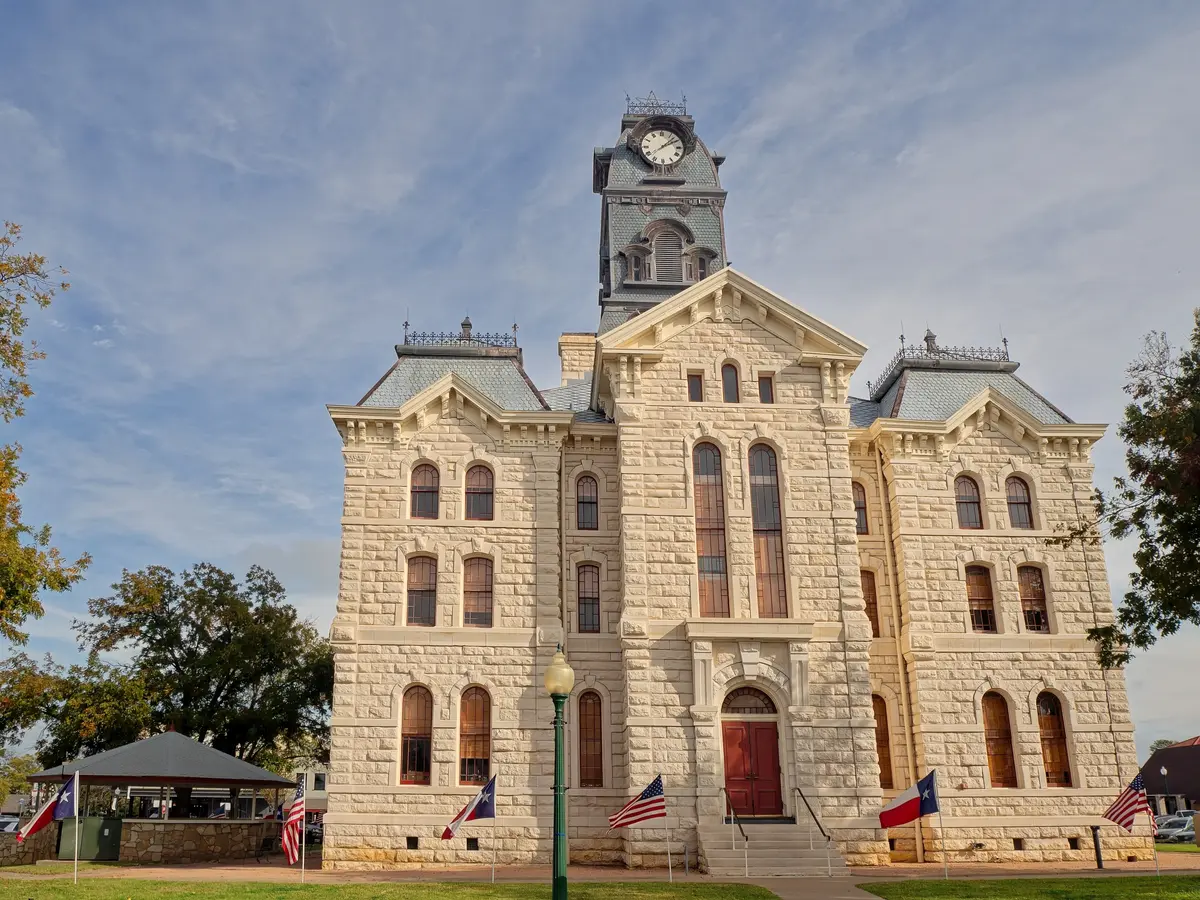
Waller residents don’t have to go far for green space — spots like Zube Park are part of everyday life here, whether that’s a morning walk, a weekend hike, or just somewhere to unwind outside. The full guide below covers more of what Waller has to offer for parks and outdoor recreation.
Retiring in Waller
Waller draws retirees for its balance of amenities, outdoor access, and cost. Here’s what to weigh.
🌤 Climate
Waller gets 208 sunny days a year, with hot, humid summers that run long and mild winters that rarely bring hard freezes. Spring and fall are genuinely pleasant, with low humidity and warm afternoons. Summers demand air conditioning and shade; outdoor plans work best early in the morning or after sundown.
🍴 Lifestyle
Daily life here is quiet and spread out. Independent restaurants, a local barbecue scene, and the open space at Zube Park provide the most consistent reasons to get out of the house. A serious shopping trip or a medical appointment typically means driving toward the Houston metro.
🏚 55+ Communities
No 55+ communities were found in Waller. Retirees who choose this area typically do so for the space, the lower price point, and the rural character rather than for age-restricted amenities. The retiring page covers healthcare access and lifestyle options in more detail.
✈ Getting Around
A car is essential for every errand and appointment in Waller. US-290 is the main artery connecting residents to services, healthcare, and Houston's broader amenities. George Bush Intercontinental Airport is approximately 50 miles away, which is a meaningful drive for frequent flyers.
🏛 Texas Taxes for Retirees — What to Know
- No state income tax — Texas has no personal income tax — constitutionally protected under Article VIII, Section 24. Social Security, pensions, 401(k)/IRA withdrawals, and annuity payments are all untaxed at the state level, with no state return to file.
- Sales tax is the tradeoff — The state sales tax is 6.25%, and local add-ons bring the combined rate in Waller to 8.25% (Texas Comptroller of Public Accounts, city sales and use tax rates, July 2026). Groceries and prescription drugs are exempt.
- Property taxes — the real tradeoff — Texas’s effective property tax rate averages about 1.40%, among the highest in the country, since property tax (not income tax) funds most local government and schools.
- Over-65 homestead exemption and school-tax freeze — Homeowners 65+ (or disabled) get an additional $60,000 exemption from their home’s value for school district taxes, on top of the general homestead exemption — $200,000 off school taxable value combined, following November 2025’s Proposition 11 (SB 23), which raised the over-65 exemption to $60,000, and Proposition 13 (SB 4), which raised the general homestead exemption to $140,000. Once claimed, your school district tax bill is frozen at that year’s amount and cannot increase as home values rise, and the ceiling can transfer if you move to a new home within Texas.
- Deferral option if cash is tight — Homeowners 65+ can defer property tax payment entirely for as long as they live in the home, rather than paying it currently — interest accrues, but no forced sale.
- No estate or inheritance tax — Texas has no estate tax, no inheritance tax, and no gift tax.
- No separate capital gains tax — Because Texas has no state income tax, capital gains — including on investments and home sales — are not taxed at the state level at all, unlike states such as Washington that tax capital gains separately from income.
Tax laws change frequently and individual situations vary. This is general information, not tax advice — always consult a qualified Texas tax professional or CPA for personalized retirement tax planning.
Weekends & Local Favorites in Waller
Waller's weekend scene is not built around a walkable downtown or a restaurant row — it is built around space, outdoor activity, and a handful of genuinely local spots that residents return to consistently. Once you understand the geography, the weekend options here are more substantive than the city's size would suggest.
Zube Park and the Outdoors
Zube Park is the outdoor anchor for families in this part of Harris County. The park features approximately 2.96 miles of hike-and-bike trail with exercise stations, a disc golf course, six soccer fields, a seasonal splash pad, picnic areas, a playground, and two reservable pavilions. The miniature railroad operated by the Houston Area Live Steamers on select weekends is a genuine draw for families — not a gimmick, but an actual hobby railroad with real steam equipment that pulls passengers around the grounds. It is the kind of thing that becomes a family tradition quickly.
For a different outdoor experience, Yogi Bear's Jellystone Park in Waller offers a water park with slides and a lazy river, mini golf, and a splash pad — a full-day destination for families with younger kids, with day passes available for residents who are not camping overnight.
Food and Coffee Worth Knowing
Waller County Line BBQ is the local institution — the kind of place where the smoke smell follows you back to the car, and where regulars have a standing order. Fields Store Pit BBQ offers another serious option for smoked meats, drawing from a tradition that runs deep in this part of Texas.
For Tex-Mex, Gabby's Grill Tex-Mex & Seafood is a reliable local choice with a menu that goes beyond the standard combo plates. Waller Feed Store occupies its own category — part of the city's agricultural character, worth knowing about for its atmosphere as much as its food.
On the coffee side, 12:4 Bakery & Coffee is where a lot of residents start the morning, with baked goods that make the drive worthwhile on their own. Coffee & Thangz provides another local option, and PJ's Coffee rounds out the choices for anyone who wants variety without driving to Cypress.
The Waller County Fairgrounds — in nearby Hempstead — hosts the annual county fair and is worth a trip when it is running. It is the kind of event that reminds you this part of Texas has agricultural roots that the master-planned communities are only starting to layer over. For a full picture of parks and trails in the area, see the parks and recreation page.
Local favorites in Waller
Restaurants
- Waller County Line BBQ
- Buc-ee's
- Gabby's Grill Tex-Mex & Seafood
- Waller Feed Store
- Fields Store Pit BBQ
Outdoors
- Yogi Bear's Jellystone Park
Coffee
- 12:4 Bakery & Coffee - Waller
- Coffee & Thangz
- PJ's Coffee
Top Things Locals Say About Waller
The best intel about a city comes from the people who actually live there. Here’s what Waller residents say when newcomers ask the questions everyone’s thinking.
“I knew the commute would be long, but I didn't expect how much the construction noise would follow us into the neighborhood — they were still building three streets over when we moved in. Six months later it doesn't bother us, and on a clear night the stars are something we never had in Cypress.”
— Recent Waller home buyer
“What's the most surprising thing about living in Waller?”
How fast it changes. A neighborhood that was open fields when you signed your contract can have fifty new homes behind it by the time you close. The pace of construction along the US-290 corridor is something you see but don't quite believe until you're living inside it.
“What do locals love most about Waller?”
The space and the quiet. You get a real yard, real sky, and neighbors who wave. Zube Park is genuinely great for families — the miniature railroad alone makes it worth the Saturday trip — and Daikin Stadium on a Friday night has an energy that you don't find in a lot of places this size.
“What should newcomers to Waller know?”
Leave earlier than you think you need to if you're heading into Houston. US-290 has bad mornings and worse afternoons, and the window of easy driving is shorter than the drive time suggests. Also: get to know your neighbors early. In the newer subdivisions, everyone is new at the same time, which actually makes it easier to build a community quickly.
“How much do you need a car in Waller?”
You need a car for everything. Most daily needs mean a drive: groceries, appointments, school pickup. For anything beyond the basics, you're looking at a trip toward Cypress, Tomball, or Houston. Build your week around that reality and it stops feeling like a constraint.
Cities Near Waller
Other communities near Waller worth a look — each with its own character and price point.
| City | Distance | Best For | Vibe | Median Rent | Median Buy |
|---|---|---|---|---|---|
| Prairie View | 4 mi | Budget buyers and university families | Small-town, campus-adjacent, affordable | $1,200 | $220,000 |
| Hempstead | 10 mi | Rural character on a budget | Quiet, historic, agricultural feel | $1,300 | $260,000 |
| Magnolia | 15 mi | Established suburbs with more amenities | Growing, polished, higher price point | $1,884 | $364,817 |
More Helpful Guides for Waller
Going deeper on Waller? Our blog series covers everything from first-time buying to retiring here — explore the guides below.
Local Expert Takeaway: Waller is a genuine opportunity for buyers who can handle a 45-minute US-290 commute and are willing to bet on where the corridor is heading. The typical home price of $284,351 (July 2026) is a real number in a market where new construction is the primary story — Wildrye, Attwater, and Stone Creek Ranch are growing fast, and the infrastructure is following, if not always at the same pace. The reward is space, quiet, and a foothold in one of the fastest-growing counties in the country. The honest cost is that Waller is still becoming the city it is being built to be.
Quick Takeaways & FAQs
✅ Waller's typical home price of $284,351 (July 2026) gives buyers meaningful purchasing power compared with closer-in Houston suburbs like Cypress or Katy.
⚠️ The US-290 commute is the defining trade-off — about 45 minutes to Houston under normal conditions, but mornings can stretch considerably longer during peak-hour congestion.
📍 The Daikin Texas Technology Park near Waller is one of the largest manufacturing facilities in the United States and the city's largest private employer, with active hiring through mid-2026.
What is the typical home price in Waller, TX?
How long is the commute from Waller to Houston?
How are the schools in Waller, TX?
Is Waller, TX a safe place to live?
What is Waller County's growth like, and does it affect buying there?
Helpful Links for Moving to Waller
Moving to Texas?
Tell us what you need help with and we'll connect you with local resources.
