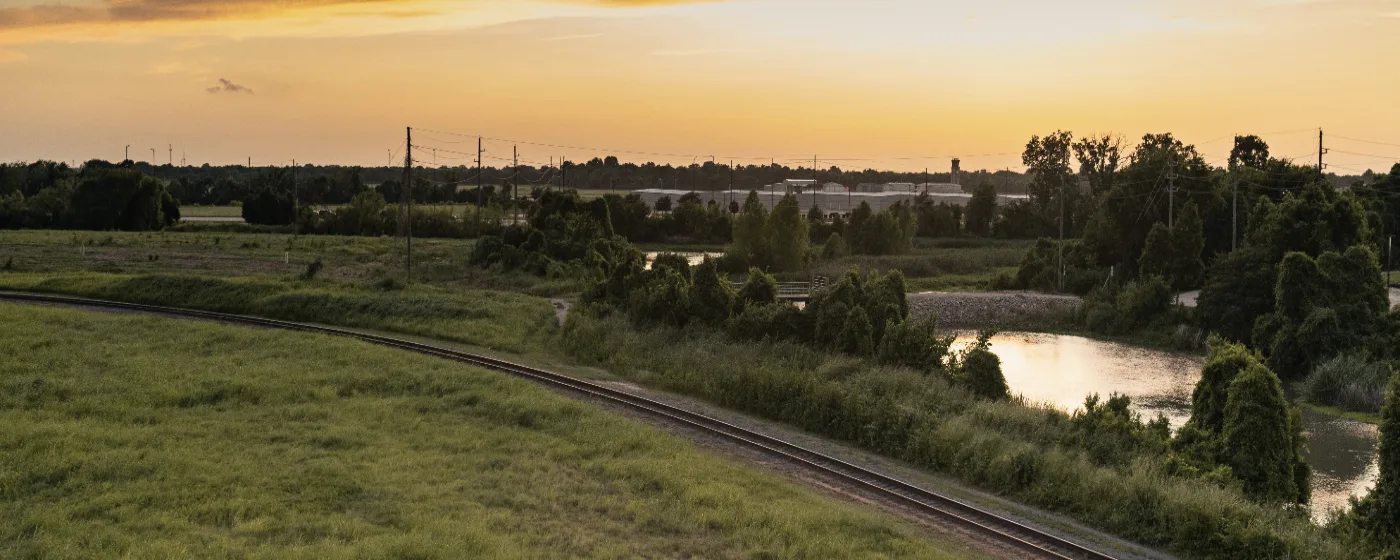
What Is Living in Sugar Land, Texas Like?
You've done the spreadsheet. Sugar Land checks the boxes — good schools, low crime, prices well below comparable suburbs in other major metros, and a straight shot to Downtown Houston. But the spreadsheet doesn't tell you about the humidity that hits in May and doesn't really lift until October, or the fact that I-69 can turn a 19-mile commute into a 45-minute grind on a Tuesday morning. It doesn't tell you that Sugar Land has 13 master-planned communities in a county that leads the entire country in that category — which means amenities that rival small resort towns, but also an HOA reality you should understand before you buy. This is one of the most carefully built-out suburbs in Texas, and that intentionality shows in both the good ways and the occasionally over-managed ones.
The economic foundation here is genuinely diverse. The Fort Bend Independent School District — one of the largest in Texas — is the city's anchor employer and also its biggest draw for families with school-age children. The district holds a B rating, according to the Texas Education Agency. SLB (formerly Schlumberger) and ChampionX give the city a strong energy-sector backbone, while a major regional health system anchors healthcare employment. Applied Optoelectronics announced a major expansion in Sugar Land in 2025 aimed at semiconductor and photonics manufacturing, adding another layer to a job base that also includes professional services and education. Over 62% of residents hold a bachelor's degree or higher — the workforce here skews toward engineers, healthcare professionals, and corporate managers, many of whom came from Houston proper and decided the commute was worth the upgrade in space and schools.
Prices are meaningfully lower than comparable suburbs in the Dallas-Fort Worth metro and a fraction of what similar neighborhoods cost on either U.S. coast. The typical home price sits at $449,277 (July 2026), which sounds approachable until you factor in the effective property tax rate of 1.64% — a real line item in your monthly budget. The median household income of $110,028 runs below what's needed to comfortably carry the typical home here, so buyers often bring equity from a previous sale or a larger-than-minimum down payment. On the parks and outdoors side, the city maintains 27 parks covering 1,174 acres of developed parkland and over 35 miles of trails — more than most cities this size, and genuinely used by residents, not just listed on a brochure.
Whether you're considering a move or just researching the area, the sections below break down Sugar Land's neighborhoods, cost of living, schools, local favorites, commute patterns, and what daily life here is really like.
Sugar Land at a Glance
Looking to buy in Sugar Land? Estimate your payment.
Enter your numbers to see an estimated monthly mortgage payment.
Estimate only. Excludes HOA fees and mortgage insurance. The interest rate above is a starting point, not a quoted rate — replace it with your own to see real numbers. Insurance is a flat placeholder, not a Sugar Land quote.
Why Are People Moving to Sugar Land?
Sugar Land is the largest city in Fort Bend County, and people move here for a specific combination that's harder to find than it sounds: a real suburban city — not a bedroom community — with its own employers, its own entertainment venues, and schools that draw families away from Houston proper rather than just serving whoever was already here.
The Safety Picture
Crime is a legitimate factor in why people choose Sugar Land over closer-in Houston neighborhoods. The city posts a violent crime rate of 1 per 1,000 residents and a property crime rate of 14 per 1,000 residents — noticeably below the Texas statewide figures and well below national benchmarks. That gap is real and it shows up in how residents talk about the city.
Who Actually Moves Here
The profile is consistent: dual-income households, often with children in or approaching school age, who've been priced out of the Inner Loop or are leaving a city like Austin, Dallas, or a coastal market entirely. A significant share of newer residents come from South Asian backgrounds — Sugar Land has one of the most substantial South Asian communities in Texas, which shapes everything from the restaurant scene to the cultural calendar in ways that feel organic rather than token.
The city's high school completion rate of 96.1% compared to a Texas average of 86.7% tells you something about who settles here and what they prioritize. These are households that chose Sugar Land partly because of what the schools represent, and they stay involved enough to keep it that way.
What's Driving New Investment
The city approved a $12.5 million revitalization of Sugar Land Town Square — the 33-acre mixed-use center of the city — covering streetscapes, retail fronts, and public gathering spaces. That kind of investment in a place that already works is worth noticing: it signals a city that isn't coasting. The AOI semiconductor and photonics expansion announced in 2025 adds a tech-manufacturing thread to an economy that was already anchored in energy and professional services.
For a full picture of safety statistics and how Sugar Land compares to Fort Bend County as a whole, see the Sugar Land safety page.
What Daily Life Feels Like in Sugar Land
The master-planned community structure shapes daily life here more than any single amenity does. In First Colony, Telfair, or Riverstone, your immediate neighborhood has trails, a community pool, and a park within a reasonable walk. The tradeoff is that the city's commercial life is spread across a wide, car-dependent grid — you're not running errands on foot, you're running them on US-90A or SH-6.
The Summer Question
Nobody who moves here from a northern state or a drier climate is fully prepared for July and August. Sugar Land averages 208 sunny days a year, but summer heat and humidity are genuine and persistent — outdoor plans shift accordingly, and the well-used trail and park system becomes a morning-only proposition from June through September. Residents adapt quickly, but it's worth knowing before you commit to a home without shade trees or a pool.
Where the City Gathers
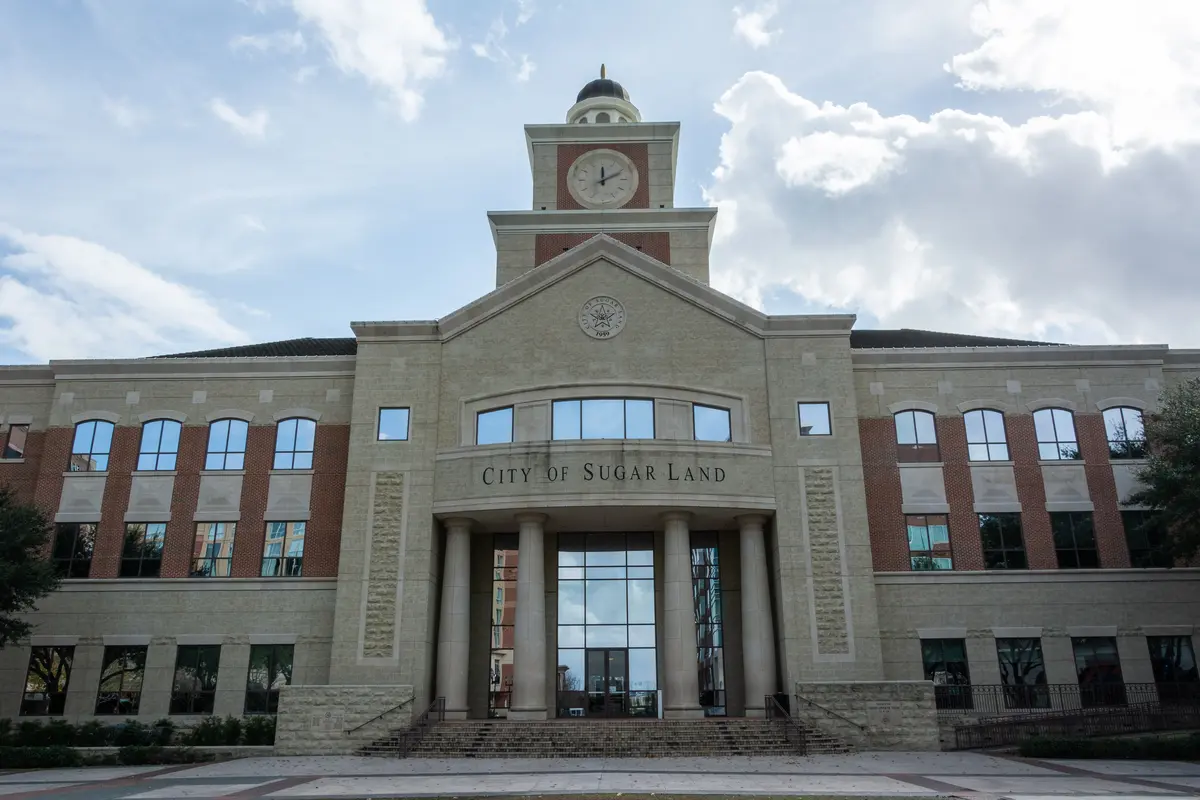
Sugar Land Town Square functions as the city's civic center — outdoor concerts, festivals, and everyday foot traffic from the surrounding restaurants and shops. Constellation Field, home of the Sugar Land Space Cowboys (the Triple-A affiliate of the Houston Astros), draws a regular crowd through the season and doubles as an event venue. Smart Financial Centre handles the larger touring acts and comedy shows that used to require a trip into Houston.
The cultural texture is genuinely diverse in a way that shows up at street level. The weekly farmers markets at Imperial and across the city reflect a mix of produce, prepared foods, and vendors that mirrors the community's international makeup. Independent coffee shops, South Asian grocery options, and a restaurant scene that goes well beyond Tex-Mex are all part of ordinary weekly life here.
The Friction Newcomers Don't Expect
Six months in, many newcomers discover that Sugar Land's amenities are excellent but spread far enough apart that every outing requires a drive. There's no neighborhood where you park once and handle everything on foot. Residents who moved from walkable urban neighborhoods often describe this as the adjustment that takes longest — not the commute, not the heat, but the car-dependency of even simple errands. The payoff is space, quiet, and genuinely good infrastructure, but it's a real trade.
For a deeper look at parks, trails, and outdoor recreation, the parks and recreation page covers what's available across all 27 parks.
The Sugar Land Housing Market Right Now
The typical home price in Sugar Land is $449,277 (July 2026), with city-wide typical rent running at $2,068 per month. Those figures sit noticeably above neighboring Missouri City, Stafford, and Richmond — all of which offer lower price points for buyers who want Fort Bend County schools and access without paying the Sugar Land premium.
What the Market Actually Looks Like
Sugar Land's housing stock is dominated by single-family homes in master-planned subdivisions — most built between the mid-1980s and 2010s, with newer construction concentrated in communities like Riverstone and Telfair. Entry-level inventory is tighter than it was a few years ago; buyers looking for the least expensive way into the city are often shopping older sections of First Colony or New Territory, where the housing stock is more dated but the community infrastructure is fully mature.
Some areas of the city carry prices noticeably above the citywide figure — Greatwood, Telfair, Riverstone, Sugar Creek, Sweetwater, and Avalon all run above the city median. For a full breakdown of which neighborhoods suit which budget and lifestyle, the best neighborhoods page goes deeper. For the full cost picture including property taxes and rent comparisons, see the cost of living page.
The Income-to-Price Reality
The median household income of $110,028 runs short of what's needed to comfortably carry the typical home here — the gap is real and worth building into your planning. Most buyers in this market are coming in with meaningful down payments, often from equity in a previous home. First-time buyers stretching into Sugar Land should read the first-time homebuyer page before making offers.
The effective property tax rate of 1.64% adds up on a $449,000 home. Texas has no state income tax, which offsets the property tax burden in annual terms — but buyers used to lower-tax states are sometimes caught off guard by how that line item lands in the monthly budget.
Sugar Land Neighborhoods
Sugar Land has several distinct areas — each with its own character and appeal. Here’s a breakdown to help you narrow down where to focus your home search.
🏡 First Colony
The original master-planned anchor of Sugar Land, with mature trees, an established community center, and a mix of housing styles built across several decades. It suits buyers who want proven infrastructure and a neighborhood that doesn't feel like it's still finding itself.
🏠 New Territory
A large, well-rounded master-planned community that sits right at the city-wide typical price point, making it one of the more accessible entry points into Sugar Land's master-planned lifestyle. The community's trail connections and recreational amenities are fully built out.
🌳 Greatwood
Greatwood sits above the city median and draws buyers who want slightly more breathing room and a quieter, more residential feel. The community's golf course and mature landscaping give it a polished character that appeals to established households.
🏘 Telfair
One of Sugar Land's newer master-planned communities, Telfair runs above the city median and attracts a diverse, professionally oriented household mix. The community's design emphasizes walkable internal connections and a genuine sense of neighborhood cohesion.
🏔 Riverstone
Among the most recently developed communities in Sugar Land, Riverstone carries prices above the city median and appeals to buyers looking for newer construction and modern community amenities. It sits at the southern edge of the city with easy access to SH-6.
🌆 Sugar Creek
An established community running above the city median, Sugar Creek has a golf course at its center and a more settled, less frenetic character than some of the city's newer developments. It suits buyers who want a proven community with a distinct identity.
Pros & Cons of Living in Sugar Land
The Pros
- Highly rated Fort Bend ISD schools
- Low violent crime and strong public safety
- Deep corporate job base reducing reliance on a Houston commute
- Diverse, highly educated population with a broad dining scene
The Cons
- High effective property tax rate compared to national average
- Long, hot and humid summers
- Peak-hour traffic congestion on US-59/I-69 and the Grand Parkway
Getting Around & Commuting in Sugar Land
Sugar Land's position along I-69 and US-59 — the Southwest Freeway corridor — is the single most important geographic fact for anyone buying here. The drive to Downtown Houston is about 35 minutes under normal conditions. Under peak rush hour conditions on a weekday morning, that same 19-mile stretch can stretch well past that — and it does, reliably, from roughly 7 to 9 a.m. inbound and 4:30 to 6:30 p.m. outbound.
The Route Reality
I-69 and US-59 carry most of the commuter load. SH-99 (the Grand Parkway) gives residents in western Sugar Land a useful bypass that connects north toward Katy and the Energy Corridor without touching the Southwest Freeway — a real advantage for households with jobs in that direction. US-90A is a slower surface alternative through Missouri City that some commuters use when the freeway is at a standstill. SH-6 handles the north-south traffic within and around the city.
Within the City
Inside Sugar Land, a car is essential. The city's commercial and residential uses are spread across a wide footprint, and while the trail system connects neighborhoods internally, routine errands require driving. William P. Hobby Airport (HOU) is 28 miles from the city — a realistic option for frequent flyers that avoids the longer haul to George Bush Intercontinental.
Who the Commute Works For
The commute profile here suits households where at least one person works in the Energy Corridor, Westchase, or Downtown Houston — all of which are reachable on the Southwest Freeway corridor. Remote workers and hybrid employees who commute two or three days a week find the trade particularly favorable: more house, better schools, and a commute that's manageable when it's not daily. People who need to be in Downtown Houston five days a week, door to door, by 8 a.m. — that's the profile that tends to eventually reconsider.
| Destination | Primary Route | Typical Commute |
|---|---|---|
| Downtown Houston | I-69 / US-59 | About 35 minutes |
| Energy Corridor | SH-99 (Grand Parkway) or US-90A | Under 30 minutes in off-peak |
| Texas Medical Center | I-69 / US-59 to US-90A | Roughly 30–40 minutes |
| Hobby Airport (HOU) | US-90A / I-69 | 28 miles; varies by time of day |
| Stafford / Missouri City | US-90A or SH-6 | 10–20 minutes |
| Rosenberg / Richmond | US-90A west | 20–30 minutes |
Schools in Sugar Land
Families relocating to Sugar Land have public, private, and higher-education options nearby. Here’s a quick overview.
🎓 School District
Fort Bend Independent School District serves K–12 students across Sugar Land and the surrounding area. Rated B (source: Texas Education Agency, 2025 A-F accountability rating (2024-25 school year)).
🏆 Graduation Rate
The 4-year high-school graduation rate here is approximately 92.5%.
📚 Higher Education
Texas’s public universities — the University of Texas at Austin, Texas A&M University, and the University of Houston — offer four-year degrees statewide, with one of the largest community college systems in the country (50+ public community college districts) providing two-year and workforce programs.
🌐 Online Learning
UT Austin Online and Texas A&M University Online offer fully accredited online degrees for remote learners across the state.
Safety in Sugar Land
A quick look at how Sugar Land compares on the numbers that matter most when weighing a neighborhood or a move.
🛡 Violent Crime
Approximately 1 per 1,000 residents.
🔒 Property Crime
Approximately 14 per 1,000 residents.
Compared to the most recent national figures from the Bureau of Justice Statistics (2024), Sugar Land’s violent crime is below the national average (about 3.7 per 1,000), and property crime is below the national average (about 18.4 per 1,000).
Against Texas as a whole, Sugar Land’s violent crime is roughly a quarter of the state average, and property crime is roughly two-thirds of the state average (Bureau of Justice Statistics, Crime Known to Law Enforcement, 2024 (tables 2 and 3)).
Crime rates can vary a lot within a single city, so the citywide numbers above are only a starting point. Some neighborhoods in Sugar Land run well below these averages, while others run higher — the kind of block-by-block detail that matters most when you’re actually choosing where to live. The full guide below breaks it down neighborhood by neighborhood.
Working in Sugar Land
Sugar Land’s largest employers span several industries — here are some of the anchors of the local job market.
🎓 Fort Bend Independent School District
Education
🏛 City of Sugar Land
Municipal government
💻 SLB
Oilfield technology
🏥 Houston Methodist Sugar Land Hospital
Healthcare
💼 ChampionX
Specialty chemicals
💼 CVR Energy
Petroleum refining
Parks & Recreation in Sugar Land
Some of the outdoor spaces that shape everyday life in Sugar Land.
🌱 Oyster Creek Park
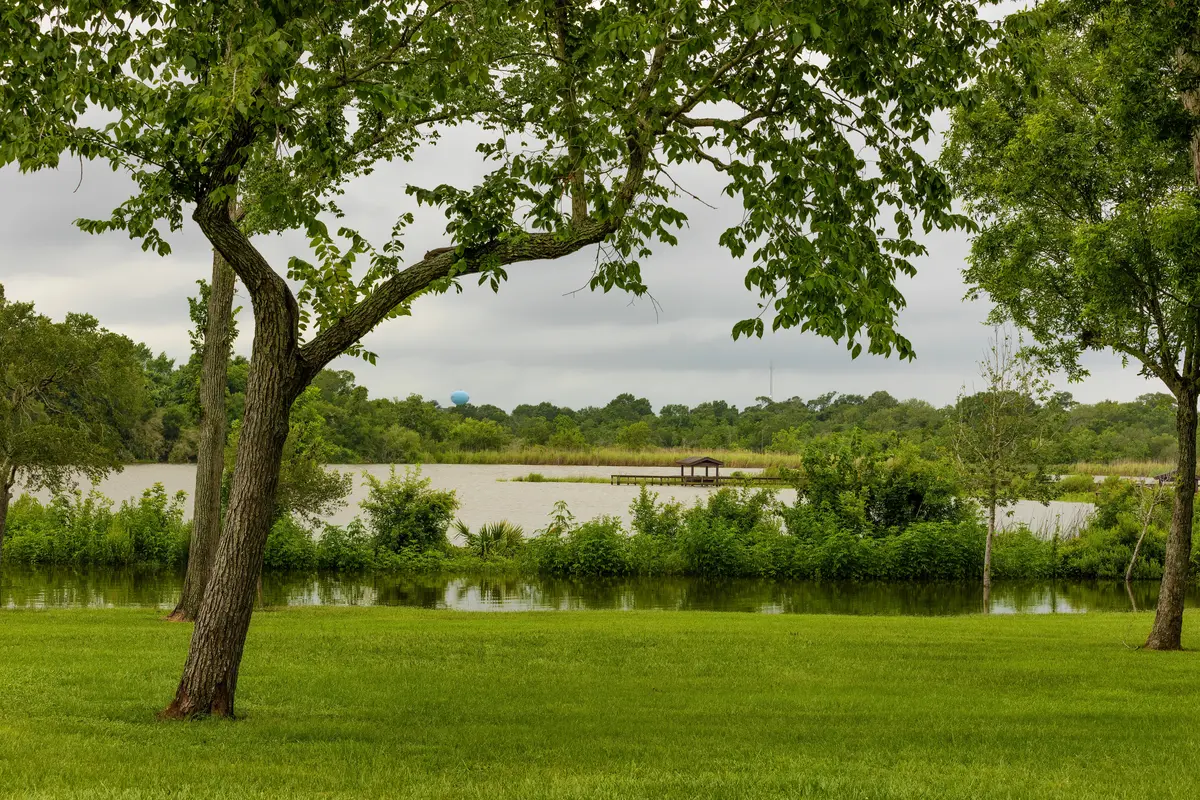
Sugar Land residents don’t have to go far for green space — spots like Oyster Creek Park are part of everyday life here, whether that’s a morning walk, a weekend hike, or just somewhere to unwind outside. The full guide below covers more of what Sugar Land has to offer for parks and outdoor recreation.
Retiring in Sugar Land
Sugar Land draws retirees for its balance of amenities, outdoor access, and cost. Here’s what to weigh.
🌤 Climate
Sugar Land averages 208 sunny days a year, with mild winters that rarely dip below freezing for more than a few days. Summer heat and humidity are significant — July and August run hot and sticky, which pushes most outdoor activity to early mornings. Fall and spring are genuinely pleasant and long, which is when the trail system and parks get their heaviest use.
🍴 Lifestyle
The city has a full complement of restaurants, shops, and entertainment without requiring a Houston drive for most needs. Smart Financial Centre brings touring acts and performances regularly. Constellation Field offers an accessible, low-key evening option. The weekly farmers markets add a community-gathering rhythm that many retirees appreciate. The pace feels suburban without feeling sleepy.
🏚 55+ Communities
No 55+ communities were found in Sugar Land. Retirees who move here typically do so into the general single-family housing stock — often downsizing within the city or relocating from Houston proper. The retiring page has more detail on what the city offers for older residents.
✈ Getting Around
A car is essential for daily life in Sugar Land. The trail system is excellent for recreation but doesn't connect to commercial destinations in a practical way. William P. Hobby Airport (HOU) is 28 miles away and serves as the most convenient air travel option for most residents. A major regional health system operates within city limits, keeping routine medical care local.
🏛 Texas Taxes for Retirees — What to Know
- No state income tax — Texas has no personal income tax — constitutionally protected under Article VIII, Section 24. Social Security, pensions, 401(k)/IRA withdrawals, and annuity payments are all untaxed at the state level, with no state return to file.
- Sales tax is the tradeoff — The state sales tax is 6.25%, and local add-ons bring the combined rate in Sugar Land to 8.25% (Texas Comptroller of Public Accounts, city sales and use tax rates, July 2026). Groceries and prescription drugs are exempt.
- Property taxes — the real tradeoff — Texas’s effective property tax rate averages about 1.40%, among the highest in the country, since property tax (not income tax) funds most local government and schools.
- Over-65 homestead exemption and school-tax freeze — Homeowners 65+ (or disabled) get an additional $60,000 exemption from their home’s value for school district taxes, on top of the general homestead exemption — $200,000 off school taxable value combined, following November 2025’s Proposition 11 (SB 23), which raised the over-65 exemption to $60,000, and Proposition 13 (SB 4), which raised the general homestead exemption to $140,000. Once claimed, your school district tax bill is frozen at that year’s amount and cannot increase as home values rise, and the ceiling can transfer if you move to a new home within Texas.
- Deferral option if cash is tight — Homeowners 65+ can defer property tax payment entirely for as long as they live in the home, rather than paying it currently — interest accrues, but no forced sale.
- No estate or inheritance tax — Texas has no estate tax, no inheritance tax, and no gift tax.
- No separate capital gains tax — Because Texas has no state income tax, capital gains — including on investments and home sales — are not taxed at the state level at all, unlike states such as Washington that tax capital gains separately from income.
Tax laws change frequently and individual situations vary. This is general information, not tax advice — always consult a qualified Texas tax professional or CPA for personalized retirement tax planning.
Weekends & Local Favorites in Sugar Land
Sugar Land's weekend life is built around the Town Square corridor, the ball park, and an outdoor trail system that's genuinely extensive for a city of 107,726. Residents don't need to drive into Houston for a full weekend — though many do, and the 35-minute trip makes it easy.
Food and Coffee
The dining scene in Sugar Land reflects the city's demographics in the best possible way. Gyu-Kaku Japanese BBQ draws regulars for its tabletop grilling format. Pappasitos Cantina is a Texas institution with a Sugar Land location that pulls a consistent crowd. JINYA Ramen Bar handles the ramen fix reliably, and Fadi's Mediterranean Grill is a go-to for Middle Eastern and Mediterranean food that goes well beyond the typical suburban options.
On the coffee side, BlendIn Coffee Club has built a following for specialty drinks and a welcoming atmosphere. FiLLi Cafe brings an Emirati-style tea and coffee culture that feels genuinely different from the standard suburban coffee shop. Qahwah House serves Yemeni coffee and has become a neighborhood anchor. Mood Coffee and BakerLand Cafe round out a local coffee scene that's more interesting than most cities this size can claim.
Farmers Markets
The Farmers Market at Imperial runs weekly and draws a mix of local produce, prepared foods, and a vendor community that reflects the city's diversity. The Sugar Land Community Farmers Market offers another weekly option for residents who want fresh produce and local goods without a long drive.
Outdoors
Oyster Creek Park is the most-used outdoor space in the city — trails along the creek, open lawn, and enough tree canopy to make a morning walk genuinely comfortable even in warmer months. Cullinan Park offers more than 700 acres of native Texas prairie and wetlands, with birdwatching and hiking trails that feel nothing like a manicured suburb. Sugar Land Memorial Park and First Colony Community Park handle the more active recreational uses — disc golf, sports fields, and the kind of open space that makes the trail system actually connective. Eldridge Park is a quieter green space on the city's periphery that gets less traffic and more wildlife.
Entertainment
Constellation Field, home of the Space Cowboys, is where Sugar Land does its best collective-experience thing. A summer evening game at a 7,500-seat ballpark, with the Astros' top prospects on the field, is exactly the kind of thing that makes the suburbs feel less like a compromise. Smart Financial Centre handles the larger touring acts and keeps most concert needs local. Imperial Market at Sugar Land — the redeveloped historic sugar refinery site — has become a destination for events, dining, and the farmers market, giving the city a genuine sense of place that purely residential suburbs often lack.
Local favorites in Sugar Land
Restaurants
- Sugar Land Town Square
- Gyu-Kaku Japanese BBQ
- Pappasitos Cantina
- JINYA Ramen Bar - Sugar Land
- Fadi’s Mediterranean Grill - Sugar Land
Outdoors
- Oyster Creek Park
- Sugar Land Memorial Park
- First Colony Community Park
- Cullinan Park
- Eldridge Park
Coffee
- BlendIn Coffee Club
- FiLLi Cafe Sugar Land - TX
- Qahwah House
- Mood Coffee
- BakerLand Cafe
Farmers Markets
- Farmers Market at Imperial
- Sugar Land Community Farmers Market
Top Things Locals Say About Sugar Land
The best intel about a city comes from the people who actually live there. Here’s what Sugar Land residents say when newcomers ask the questions everyone’s thinking.
“I knew the commute would be real, but what I didn't expect was how much of our social life would just happen within a mile of the house. Between the trail, the market, and the ballpark, we've barely driven into Houston on weekends since we moved.”
— Recent Sugar Land home buyer
“What's the most surprising thing about living in Sugar Land?”
How genuinely international it feels. The restaurant options, the farmers markets, the cultural events — it's not a monoculture suburb. Telfair in particular has a diverse mix of households that shows up at school events and neighborhood gatherings in a way that feels real, not like a marketing talking point.
“What do locals love most about Sugar Land?”
The combination of the trail system, the Space Cowboys games at Constellation Field, and the fact that the city actually invests in its public spaces. Oyster Creek Park on a cool November morning is one of those places that reminds you why you moved here. The schools matter enormously to most families, and they hold up when you actually look at what the district produces.
“What should newcomers to Sugar Land know?”
Plan your schedule around the Southwest Freeway. The 7 to 9 a.m. inbound window and the 4:30 to 6:30 p.m. outbound window are not suggestions — they're real. Residents who need to be somewhere by 8 a.m. leave by 6:30 or they don't make it. Also: get a house with a pool or live near the community pool, because July and August will reorganize your outdoor life completely.
“How much do you need a car in Sugar Land?”
You need a car for essentially everything outside your immediate neighborhood. The trail system is excellent for recreation and connects communities internally, but grocery runs, restaurants, and any commercial errand require driving. Most households here are two-car by necessity rather than preference. The upside is that parking is plentiful and most destinations are within 10 to 15 minutes of any neighborhood in the city.
Cities Near Sugar Land
Other communities near Sugar Land worth a look — each with its own character and price point.
| City | Distance | Best For | Vibe | Median Rent | Median Buy |
|---|---|---|---|---|---|
| Missouri City | 8 mi | Budget-conscious families, value buyers | Established, quieter, lower price point | $2,132 | $336,838 |
| Stafford | 5 mi | Renters, first-time buyers, commuters | Commercial, affordable, no city property tax | $1,578 | $301,545 |
| Richmond | 10 mi | Entry-level buyers, growing families | Historic core, newer growth on edges | $1,833 | $380,221 |
More Helpful Guides for Sugar Land
Going deeper on Sugar Land? Our blog series covers everything from first-time buying to retiring here — explore the guides below.
Local Expert Takeaway: Sugar Land delivers on the master-planned promise better than almost any comparable suburb in Texas — the trails, the parks, the school district, and the safety numbers are all real. The honest counterpoint: property taxes at 1.64% are a line item that compounds every year, the Southwest Freeway corridor is genuinely congested at peak hours, and the car-dependency of daily life is not something you negotiate around. Buyers who come in with realistic expectations about those three things tend to stay. Buyers who assume they're getting Houston's suburbs at a fraction of the friction often recalibrate.
Quick Takeaways & FAQs
✅ Fort Bend ISD holds a B rating from the Texas Education Agency, making it a reliable anchor for families choosing Sugar Land over closer-in Houston neighborhoods.
⚠️ The effective property tax rate of 1.64% is a real cost that adds meaningfully to monthly housing expenses — budget for it before you fall in love with a specific price point.
📍 Sugar Land is an official Host City Supporter for FIFA World Cup 2026, reflecting both its international community and its growing presence as a regional destination, not just a bedroom suburb.
Is Sugar Land a good place to raise a family?
How far is Sugar Land from Downtown Houston?
What is the cost of living like in Sugar Land compared to Houston?
What are the best neighborhoods in Sugar Land?
Does Sugar Land have good parks and outdoor recreation?
Helpful Links for Moving to Sugar Land
Moving to Texas?
Tell us what you need help with and we'll connect you with local resources.
