
Maybe you've been renting in the Houston suburbs and watching Sugar Land's prices from a distance, waiting for the right moment to buy. Maybe you've been priced out of closer-in neighborhoods and someone suggested Fort Bend County as the move. Either way, here's the honest version: Sugar Land is a well-run, master-planned city of 107,726 people that consistently attracts high-income, highly educated buyers — about 64% of residents hold a bachelor's degree or higher — which means demand here doesn't soften the way it does in markets driven by speculation. The city sits roughly 35 minutes to Downtown Houston, with I-69 (Southwest Freeway) as its main arterial connection to the broader metro. That access is part of what keeps prices firm.
The economic base here is genuinely diverse: Fort Bend Independent School District, the City of Sugar Land, SLB in oilfield technology, a regional health system, ChampionX in specialty chemicals, and CVR Energy in petroleum refining all have significant footprints. Fort Bend ISD holds a B rating, according to the Texas Education Agency, and serves one of the fastest-growing student populations in Texas. Families buying here are often specifically buying into that school district, which matters for how competitive certain price bands get and which neighborhoods draw the most attention from other first-timers.
The cost picture is honest rather than discouraging. The typical home in Sugar Land sits at $449,277 (Zillow Home Value Index, July 2026) — above what the median household income here can comfortably carry, which means first-time buyers almost always need to think carefully about down payment size, HOA obligations, and closing cash before they ever step inside a house. For a full breakdown of ongoing costs including property taxes and utilities, see the cost-of-living page. Compared to Houston's inner-loop neighborhoods, Sugar Land prices are noticeably lower for the square footage and school quality you get — but compared to Richmond or Stafford, you're paying a meaningful premium for the master-planned infrastructure and the Fort Bend ISD address.
Whether you're starting from scratch or you've done a few rounds of Zillow browsing, the sections below break down what a first-timer's budget actually buys in Sugar Land, how the local buying process works step by step, what the cash requirements look like in a realistic budget table, and the four mistakes that trip up first-time buyers here more than anywhere else in the Houston suburbs.

The Sugar Land First-Time Buyer Reality
The typical home price in Sugar Land is $449,277 as of July 2026 — and that number deserves a closer look before you start touring. The median household income here is $110,028, which sounds comfortable until you run the math: that income lands roughly $25,000 short of what it takes to qualify for a mortgage on the typical home at today's rates without stretching the debt-to-income ratio. First-time buyers in Sugar Land are not buying on the median — they're buying below it, which means targeting the entry tier of the market, where the price floor is meaningfully lower than the city-wide figure.
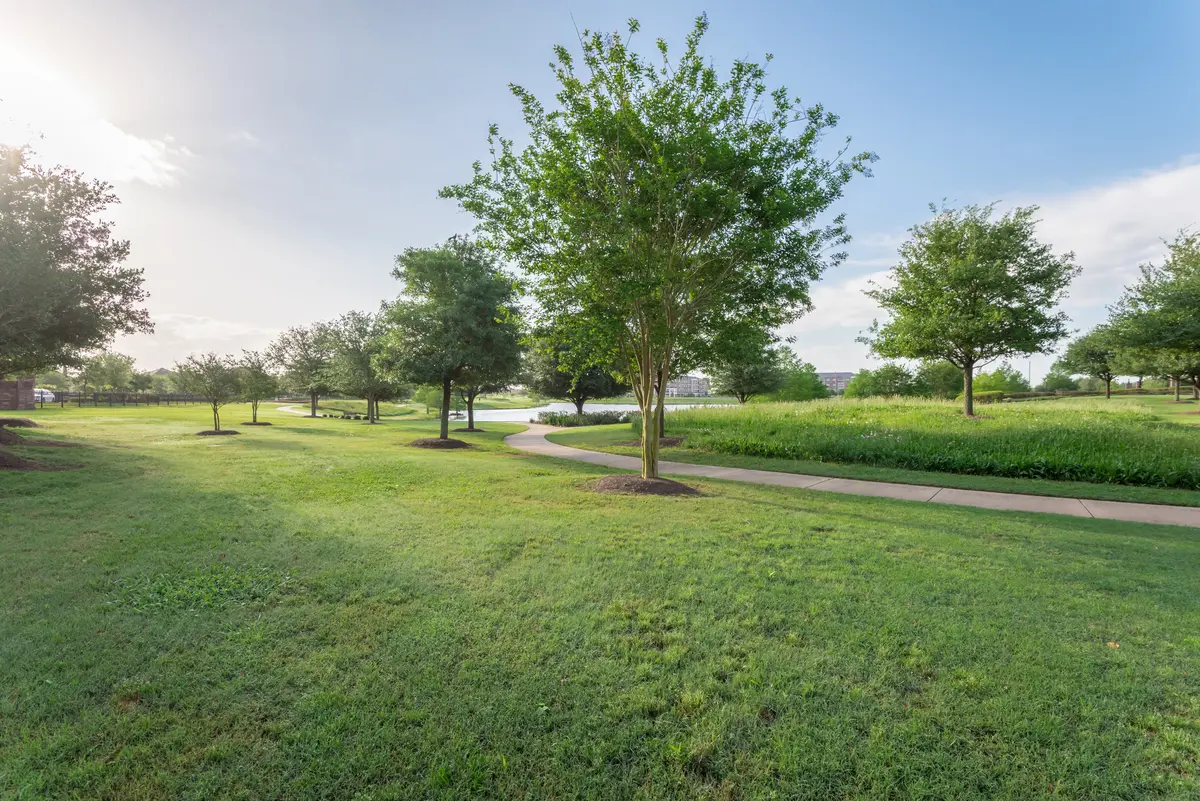
New Territory's 40-plus sub-divisions, priced at roughly the city median, offer genuine entry points for buyers who want master-planned infrastructure and strong community amenities. The neighborhood spans 450-plus acres of parks woven through the community. First Colony — more than 9,700 acres with a genuine mix of home types — offers a range of price points across its many sub-divisions; its older sections can bring buyers into the market without necessarily carrying the premium of newer construction elsewhere in the city.
HOA fees are not a footnote in Sugar Land — they're a structural part of nearly every master-planned community's finances, and a $200-per-month HOA can reduce a buyer's purchasing power by roughly $35,000 to $40,000 compared to a community with a $60-per-month fee. That's not a hypothetical. Every master-planned neighborhood in Sugar Land carries one. Look up the HOA fee schedule for any neighborhood you're seriously considering before you fall in love with the house. Since September 2025, Texas law (SB 711) requires HOAs managing 60 or more units to post their governing documents, rules, and fees on an accessible website — so that research is easier than it used to be. For a broader look at how neighborhoods compare by character and price tier, see the neighborhoods guide.
The Homebuying Process in Sugar Land, Step by Step
Step 1: Get Pre-Approved Before You Do Anything Else
In Sugar Land's market, showing up to a tour without a pre-approval letter is the single fastest way to lose a home you want. Sellers in master-planned communities — especially in Telfair and Riverstone, which run above the city median — routinely receive multiple offers, and agents here will tell you plainly: an unverified buyer is not a serious buyer. Pre-approval is not pre-qualification. Pre-qualification is a five-minute estimate based on self-reported numbers. Pre-approval means a lender has verified your income, assets, credit, and employment, and has issued a conditional commitment. Get the real one.
Step 2: Understand Your Loan Options Before You Set a Budget
Most first-time buyers in Sugar Land are choosing between FHA financing (3.5% down, more flexible credit requirements, mandatory mortgage insurance) and conventional financing (as low as 3% down for qualified buyers, private mortgage insurance that drops off at 20% equity). The right choice depends on your credit score, your savings, and how long you plan to stay — not on which one sounds simpler. Ask your lender to model both side by side before you commit to a structure. Do not set a purchase price target until you have run those numbers with a real lender, because the monthly payment gap between FHA and conventional on a $400,000 home is not trivial.
Step 3: Shop With a Clear Geographic Strategy
Sugar Land's master-planned neighborhoods each have their own HOA structure, flood risk profile, and price tier. Telfair and Riverstone were built with modern drainage and detention infrastructure — a meaningful distinction after Hurricane Harvey, when some sections of First Colony near Oyster Creek experienced flooding. Before you tour any property, verify its flood zone status using the City of Sugar Land's parcel-by-parcel floodplain map. The city's Floodplain Administrator can issue a written confirmation letter for a specific address — a step local agents recommend before you negotiate flood-insurance contingencies. Standard homeowners insurance does not cover flood damage, and Sugar Land's Class 6 rating in FEMA's Community Rating System means National Flood Insurance Program policyholders in higher-risk areas may qualify for a discount — but that discount only helps if you've already verified whether the property requires coverage.
Step 4: Make the Offer, Then Protect Yourself With Inspections
Texas is a non-attorney closing state, meaning a title company typically handles the transaction rather than a lawyer. The option period — usually three to ten days, purchased for a negotiated fee — gives you the right to walk away for any reason. Do not waive the option period, and do not schedule your inspection for the final day of it. Use the full window. Get the general inspection done first, then decide whether a sewer scope, foundation evaluation, or mold test is warranted based on what the inspector finds. Skipping the second-layer inspection to save time is one of the most common and expensive mistakes first-time buyers make here.
Step 5: Prepare for Closing
Texas closing costs for buyers typically run 2–5% of the purchase price, covering loan origination, title and escrow fees, and prepaid items like homeowners insurance and property tax escrows. Statewide averages from 2025 data put the all-in figure noticeably below the national average — but on a $450,000 purchase, even the low end of that range means $9,000 in cash at the table on top of your down payment. Wire your funds early, bring your ID, and budget for the property tax escrow requirement — lenders routinely collect several months upfront given Fort Bend County's effective property tax rate of approximately 1.64%. Full details on ongoing tax and cost figures are on the cost-of-living page.
How Much Home Can You Afford in Sugar Land
The table below shows approximate cash requirements at different purchase price points using FHA and conventional loan structures. All figures are estimates based on typical Texas closing cost ranges (2–5% of purchase price) and standard down payment percentages. The engine's mortgage calculator immediately below will let you model monthly payments at current rates — use that tool rather than any number in this table for monthly cost planning.
| Scenario | Purchase Price | Down Payment | Est. Closing Costs | Cash Needed at Table |
|---|---|---|---|---|
| FHA (3.5% down) — entry tier | $320,000 | ~$11,200 (3.5%) | ~$6,400–$16,000 (2–5%) | ~$17,600–$27,200 |
| Conventional (3% down) — entry tier | $320,000 | ~$9,600 (3%) | ~$6,400–$16,000 (2–5%) | ~$16,000–$25,600 |
| FHA (3.5% down) — near city median | $449,277 | ~$15,725 (3.5%) | ~$8,986–$22,464 (2–5%) | ~$24,711–$38,189 |
| Conventional (3% down) — near city median | $449,277 | ~$13,478 (3%) | ~$8,986–$22,464 (2–5%) | ~$22,464–$35,942 |
| Conventional (5% down) — mid-range | $500,000 | ~$25,000 (5%) | ~$10,000–$25,000 (2–5%) | ~$35,000–$50,000 |
| Conventional (10% down) — above-median neighborhood | $550,000 | ~$55,000 (10%) | ~$11,000–$27,500 (2–5%) | ~$66,000–$82,500 |
A few things the table doesn't capture: HOA fees reduce the loan amount a lender will approve at a given income level, so budget for those independently before you set your purchase price target. Flood insurance, if required for your specific parcel, adds to your monthly carrying cost — verify flood zone status for any property before you make an offer.
Looking to buy in Sugar Land? Estimate your payment.
Enter your numbers to see an estimated monthly mortgage payment.
Estimate only. Excludes HOA fees and mortgage insurance. The interest rate above is a starting point, not a quoted rate — replace it with your own to see real numbers. Insurance is a flat placeholder, not a Sugar Land quote.
Common First-Time Buyer Mistakes in Sugar Land
Mistake 1: Touring Before You Have a Pre-Approval Letter
Sugar Land's master-planned neighborhoods attract buyers who are financially prepared and move quickly when the right home appears. Walking through a home in Telfair or Riverstone without pre-approval isn't just awkward — it's a setup for losing the property to the next buyer who arrived with paperwork. Get fully pre-approved before you schedule a single showing. That means submitting your W-2s, tax returns, pay stubs, and bank statements to a lender, not just entering income estimates into an online calculator.
Mistake 2: Ignoring HOA Fees When Setting Your Budget
Nearly every home in Sugar Land sits inside a master-planned community with an HOA. That fee is not optional, it does not disappear after a few years, and — critically — it counts directly against your debt-to-income ratio during loan qualification. A buyer approved for a $450,000 home with a $60-per-month HOA may only qualify for roughly $410,000 to $415,000 in a community with a $200-per-month HOA. Find the specific HOA fee schedule for every neighborhood you're seriously considering, and give that number to your lender before you start making offers. Since September 2025, Texas law requires HOAs managing 60 or more units to post their fee schedules online — use that.
Mistake 3: Skipping the Flood Zone Check
Flood risk in Sugar Land is hyperlocal — it varies not just by neighborhood but by street and sometimes by individual lot. Newer communities like Telfair and Riverstone were built with detention lakes and modern drainage systems designed to reduce that risk. Parts of First Colony near Oyster Creek do not have the same infrastructure. Standard homeowners insurance covers fire, wind, and most weather damage — it does not cover flooding. Before you make an offer on any property here, look up the parcel on the City of Sugar Land's online floodplain map. If there's any ambiguity, request a written confirmation letter from the city's Floodplain Administrator. Don't rely on what the seller's agent tells you about flood history.
Mistake 4: Underestimating Closing Cash and Timing
First-time buyers routinely undercount what they'll need at the closing table by focusing only on the down payment. In Texas, buyer closing costs typically run 2–5% of the purchase price on top of your down payment — covering loan fees, title and escrow, prepaid homeowners insurance, and several months of property tax escrow that lenders require upfront given Fort Bend County's tax rate. On a purchase near the city-wide typical price, that means potentially $25,000 to $40,000 in total cash needed, not just the down payment figure you've been saving toward. Plan for the full number, and have it liquid — in a checking or savings account, not a brokerage account that requires a few days to settle — well before your closing date. Wiring funds late is one of the most common reasons closings get pushed by 24 to 48 hours.

Local Expert Takeaway: Sugar Land rewards buyers who do the homework before they fall in love with a house. The flood zone check, the HOA fee, and the full pre-approval are not optional steps you can circle back to — they each directly affect either what you can buy or what you'll pay to own it. New Territory sits at roughly the city-wide typical price of $449,277 (July 2026), while First Colony's range of sub-divisions offers buyers a variety of entry points depending on age of construction and specific location. Run the total cash number — down payment plus closing costs plus the HOA's effect on your qualifying loan amount — before you set foot in a showroom. Buyers who skip that math end up surprised at the table.
Quick Takeaways & FAQs
✅ Sugar Land's master-planned communities offer some of the Houston metro's best school-district access and infrastructure quality at a price point noticeably below Houston's inner-loop neighborhoods.
⚠️ The typical home price of $449,277 (July 2026) exceeds what the median household income here can comfortably carry, meaning first-time buyers need to budget honestly for down payment, HOA fees, and closing costs — all three, not just one.
📍 Flood zone verification is parcel-specific in Sugar Land: use the city's online floodplain map or request a written letter from the Floodplain Administrator before waiving any flood-related contingency.
What credit score do I need to buy a home in Sugar Land, TX?
How much should I budget for closing costs in Sugar Land?
Do I need flood insurance to buy a home in Sugar Land?
How do HOA fees affect my mortgage qualification in Sugar Land?
Is Sugar Land affordable for first-time homebuyers compared to nearby cities?
Moving to Texas?
Tell us what you need help with and we'll connect you with local resources.
