
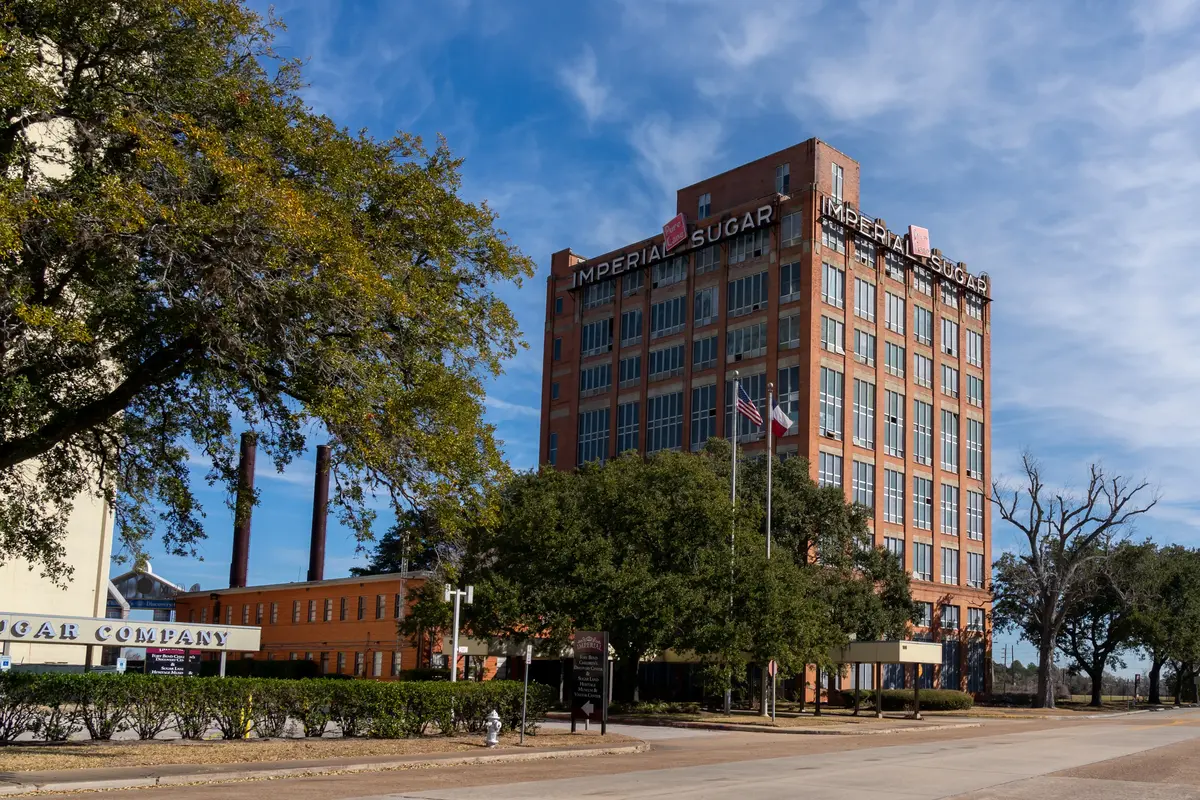
People who land in Sugar Land go through the same moment — standing in a master-planned neighborhood in Fort Bend County, staring at a home nearly twice the size of what they left behind, for a fraction of the price. It is not a trick. Sugar Land, a city of 107,726 southwest of Houston, sits along I-69 (Southwest Freeway), about 35 minutes to Downtown Houston on a clear morning. The city grew up around a sugar refinery and has since become one of the most consistently well-regarded suburbs in the Houston metro, built almost entirely on a master-planned model: manicured HOA communities, trail systems winding past retention lakes, and school campuses that draw families from across Texas and well beyond it.
The economic case is built on real pillars. Fort Bend Independent School District, which holds a B rating, according to the Texas Education Agency, anchors the city's family appeal. Major employers — from SLB in oilfield technology to ChampionX in specialty chemicals — keep professional incomes competitive. Fort Bend County is one of the most ethnically diverse counties in the country, and Sugar Land reflects that directly: roughly 35.6% of residents were born outside the United States. The dining and grocery scene tracks that diversity — Southeast Asian, South Asian, Latin American, and Mediterranean options spread across the city in a way that many California transplants find genuinely familiar rather than a downgrade.
On cost of living, Sugar Land runs broadly at or slightly below the U.S. national average — a meaningful shift for anyone coming from the Bay Area or Los Angeles, where the baseline is set by housing costs that distort everything else. The city's typical home price of $449,277 (Zillow Home Value Index, July 2026) sits well below what the statewide figures show for California. You will encounter higher summer utility bills, and every master-planned section carries HOA dues that vary by community — confirm the figure for any specific address, as they differ by sub-neighborhood and reset on each association's own schedule.
Whether you are relocating for a job, chasing school options, or simply watching your California equity and doing the math, this guide covers the specific trade-offs that define a Sugar Land move: home prices and tax structure against what you left, what master-planned community life actually looks and feels like, the school picture, the cultural fit, and the honest downsides that come with the territory.
The Home Price Gap Is Real — So Is the Property Tax
The headline number lands immediately. California's statewide typical home value of $773,735 (Zillow Home Value Index) is the benchmark most California buyers carry in their heads. Sugar Land's typical comes in at $449,277 (Zillow Home Value Index, July 2026) — a substantial gap that compounds when you consider what a California down payment already in hand can do in a Fort Bend County market.
But the property tax conversation matters just as much, and California buyers are often unprepared for it. Sugar Land's effective property tax rate sits at 1.64%. That is noticeably higher than what most California homeowners have been paying — Proposition 13 has kept assessed values, and therefore tax bills, anchored to purchase price for long-term owners in a way that Texas does not replicate. In Texas, your assessed value resets closer to market reality each year, and the rate applies to that figure. The result is that even with a lower purchase price, your annual tax bill will likely feel higher than what you paid in California if you have owned your California home for several years.
The honest picture for a California buyer is this: the purchase price relief is real and large. The ongoing property tax obligation is real and higher than you are probably accustomed to. Those two things are both true at the same time, and running both numbers before you make an offer matters. A broader breakdown of what carrying costs look like in Sugar Land is on the cost of living page.
What the HOA Adds
Master-planned communities dominate Sugar Land's housing stock — First Colony, Riverstone, Telfair, Greatwood, and the rest operate under HOA governance. Every section carries HOA dues, and they vary by community and sub-neighborhood, so confirm the figure for any specific address before budgeting. That line item does not appear in a California mortgage payment comparison and should not be overlooked. It funds the maintained common areas, resort-style pools, and trail systems that define the neighborhood experience here, but it is a real and recurring cost.
Neighborhoods running above the city median include Greatwood, Telfair, Riverstone, Sugar Creek, Sweetwater, and Avalon. New Territory tracks at roughly the city median. For buyers drawn to the city's top school attendance zones, the premium neighborhoods tend to carry both higher purchase prices and higher HOA fees — the two costs move together. See the neighborhoods page for a full breakdown of what each community offers.
The Income Tax Math: Texas Has None
California's top state income tax rate of 13.3%, per the California Franchise Tax Board, applies only to the highest earners — but the rate kicks in progressively well below the top bracket, and most professional-income households in a city like Sugar Land are earning in ranges where the California burden is substantial. Texas levies no state income tax at all. That is not a marginal difference; for a household earning in the mid-to-upper six figures, it restructures the monthly budget.
To put a number on it: a single filer earning $150,000 saves roughly $9,500 in state income tax annually by moving from California to Texas. At $100,000, the gap is approximately $5,055 per year — about $421 per month that stays in your account rather than going to Sacramento. These figures (USTax.tools, August 2026) are illustrative, not tax advice, but they give a realistic sense of scale for households considering the move.
Sales Tax: The One Area Where Texas Doesn't Clearly Win
California's statewide base sales tax rate of 7.25%, per the California Department of Tax and Fee Administration, is the highest state-level rate in the country — but local district additions in many California cities push combined rates to 10.75% or above. Texas's combined state-and-local rate is 8.25%, and Sugar Land sits at that ceiling. If you have been living in a California city with combined rates above 10%, you will notice a modest improvement. If you were in a lower-tax California jurisdiction, the difference is smaller.
The practical takeaway on taxes is that the income tax elimination is, for most professional households, the dominant number in the comparison — and it more than offsets the higher property tax rate on Sugar Land homes. A full picture of the tax structure is on the cost of living page.
| Tax Category | California | Sugar Land, TX |
|---|---|---|
| State income tax | California's top state income tax rate of 13.3% (California Franchise Tax Board); progressive from 1% | None |
| Effective property tax rate | California's effective property tax rate of 0.71% (Prop 13 keeps many long-term owners below this) | 1.64% |
| Statewide base sales tax | California's statewide base sales tax rate of 7.25% (California Dept. of Tax and Fee Administration) | 8.25% combined (state + local) |
| Typical home price | California's statewide typical home value of $773,735 (Zillow Home Value Index) | $449,277 (Zillow Home Value Index, July 2026) |
| HOA fees | Varies; common in managed communities | Varies by community and sub-neighborhood; confirm for each address |
| State income tax on $150K income | Approximately $9,500 owed annually (USTax.tools, Aug 2026) | $0 |
What California Transplants Actually Notice After Six Months
The financial spreadsheet is one thing. Month six in Sugar Land is another. Here is what comes up consistently among people who have made this move.
The Heat Is Not Negotiable
Sugar Land records 208 sunny days a year — but the summers here are not the mild coastal sunshine that number might suggest to someone from San Diego or the Bay Area. June through September brings humidity that makes 95°F feel categorically different from a dry California 95°F. Air conditioning is not optional, and larger homes can see electric bills climb substantially through those four months. Californians from inland valleys or the Inland Empire adapt more readily; those from the coast find the first Texas summer the sharpest adjustment of the entire move.
The Dining Scene Holds Up
This is the surprise that catches most California transplants off guard in a positive direction. Sugar Land's population — with roughly 35.6% of residents born outside the country — supports a restaurant and grocery landscape that is genuinely diverse. Southeast Asian, South Asian, Latin American, and Mediterranean options exist at a level most Texas suburbs do not approach. California transplants accustomed to multicultural food access tend to find this easier than expected.
Car Dependency Is Total
There is no softening this. Sugar Land is not a walkable city in any meaningful sense — most daily errands require a car, and the city's master-planned geography, while beautiful to drive through, is not designed for on-foot access. If you have been living in a California neighborhood where you could walk to a coffee shop or farmers market, that changes here. Local markets and weekly outdoor markets are worth the drive, but they are still a drive.
Insurance Premiums Run in Both Directions
Health insurance premiums in Texas run noticeably below what most California residents paid — a genuine savings for households moving off employer plans or managing their own coverage. The trade-off is access to specialist care: while routine care is well covered locally, advanced specialty treatment may involve longer travel than you were accustomed to in a larger California metro.
Homeowners insurance is an entirely different story. Texas wind, hail, and flood risk — Fort Bend County has experienced significant flood events — means premiums that can genuinely surprise California buyers who have only ever priced policies for earthquake-prone markets. Get a quote early and budget accordingly.
Looking to buy in Sugar Land? Estimate your payment.
Enter your numbers to see an estimated monthly mortgage payment.
Estimate only. Excludes HOA fees and mortgage insurance. The interest rate above is a starting point, not a quoted rate — replace it with your own to see real numbers. Insurance is a flat placeholder, not a Sugar Land quote.
Schools, Community, and What Families Actually Find Here
Fort Bend ISD, which holds a B rating, according to the Texas Education Agency, is the primary draw for families with school-age children. It is one of the larger districts in the Houston metro, and its diverse student body reflects Fort Bend County's demographics directly. On 2024-25 state assessments, 53% of students reached math proficiency and 63% reached reading proficiency — figures that are worth putting in context rather than reading in isolation.
The district runs active UIL athletics programs, and Friday night football fills the stands in a way that is genuinely different from most California school cultures. For families coming from California who are used to competitive high school athletics and activities, Fort Bend ISD's scale means those programs exist and are well-resourced. A deeper look at the schools is on the schools page.
The Community Texture
Sugar Land Town Square functions as the city's civic center — a mixed-use plaza with restaurants, a splash of urban design, and Constellation Field nearby, where minor-league baseball draws summer crowds. Smart Financial Centre, with 6,400 seats, brings live entertainment to a suburb that would otherwise require a Houston drive for a major show. These are real amenities that matter to quality of life, not marketing copy.
The master-planned community model means most social life anchors in the neighborhood itself — pool gatherings, HOA events, trail runs around the retention lakes. It is a specific kind of suburban living that suits some households very well and leaves others feeling like something is missing. Californians from dense urban neighborhoods tend to feel that gap more acutely than those coming from comparable California master-planned communities in the Inland Empire or parts of the South Bay.
Fort Bend County's diversity shows up in the schools, the places of worship, and the cultural associations that run through the city. For California families accustomed to that mix, it is one of the less obvious but more important reasons Sugar Land consistently feels like a livable landing spot rather than a culture shock.
The Honest Trade-Offs: What You Give Up and What You Gain
Sugar Land rewards a clear-eyed accounting. Here is what the move actually costs and delivers beyond the tax numbers.
What You Gain
The income tax elimination is the most structurally significant financial change for most professional households. Combined with a home price well below California's statewide typical, the purchasing power shift is real. More square footage, a larger lot, and master-planned amenities — trails, pools, lakes — at a price that California equity can often fund in cash or with a substantially reduced mortgage. The buying process page covers financing mechanics for buyers entering the Texas market for the first time.
Fort Bend County's diversity is a genuine quality-of-life asset, not a talking point. The cultural and culinary variety here is meaningful, and it compounds the livability argument for California families who assumed suburban Texas would feel culturally thin.
What You Give Up
The commute on US-59/I-69 toward Houston is real congestion, not theoretical. Rush-hour traffic on that corridor is a consistent trade-off residents talk about openly. The drive to Downtown Houston is about 35 minutes under normal conditions — that qualifier matters on a Friday afternoon.
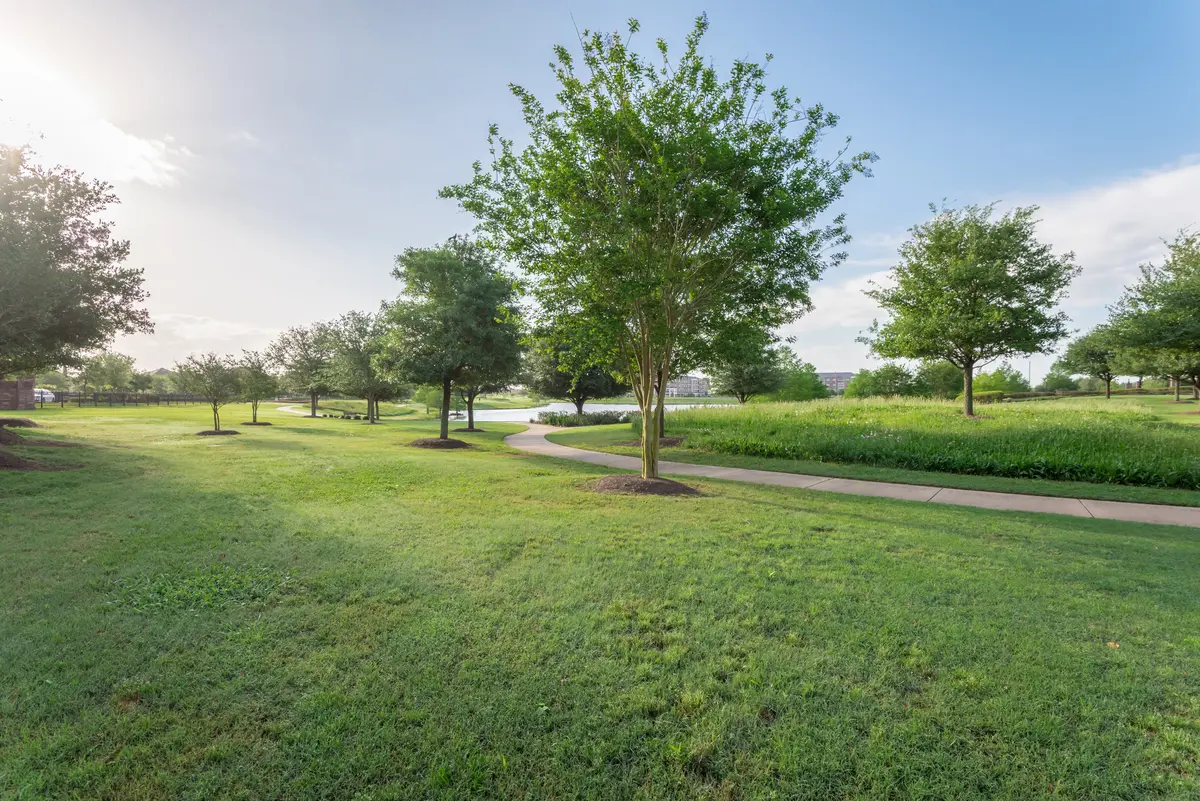
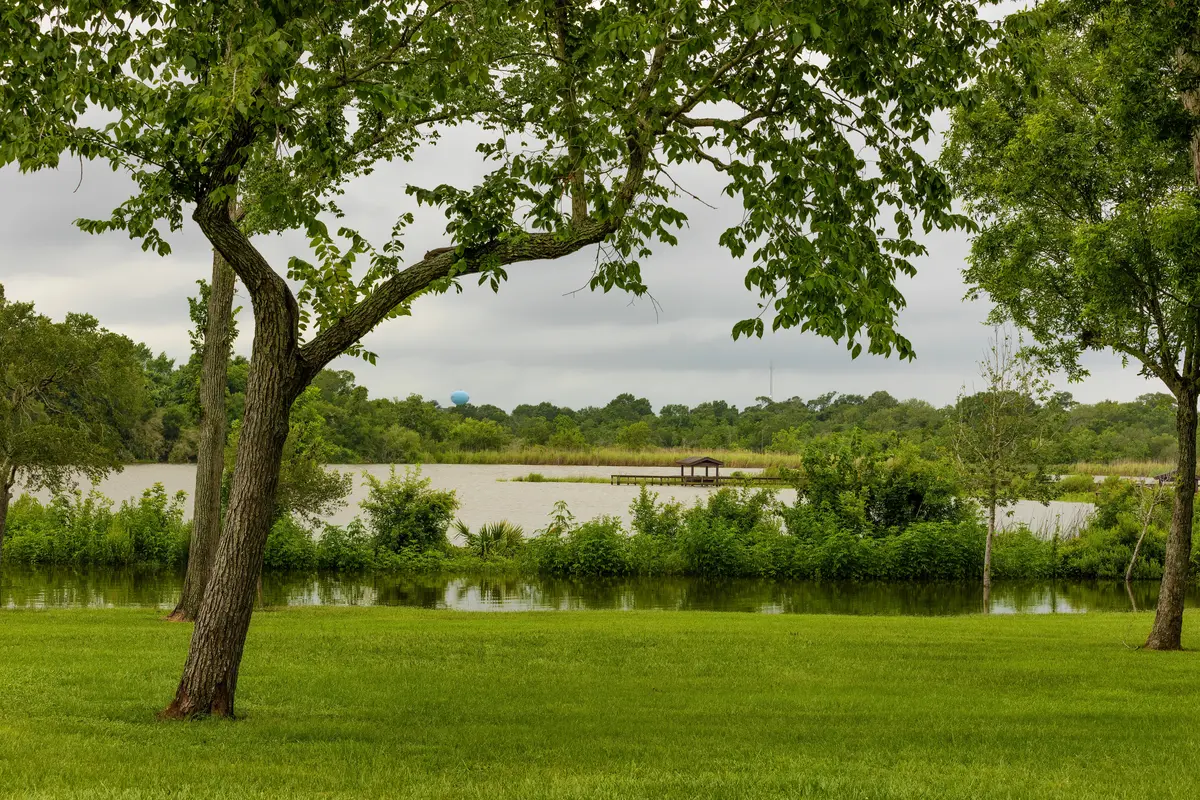
California's mild coastal climate does not have a Texas equivalent. The summers here are long and humid, and the heat is not just a temperature number. Outdoor life in Sugar Land is genuinely active — Oyster Creek Park, Cullinan Park, and the trail networks get real use — but the window for comfortable outdoor time is shorter than what most Californians are accustomed to, concentrated in fall and spring.
The retiring page covers what the retiree housing landscape looks like for California buyers in that segment specifically.
The sprawl is real and car-dependent in a way that is structural, not fixable by choosing the right neighborhood. If on-foot access and transit were core to your California life, Sugar Land will ask you to recalibrate what daily life looks and feels like. That is not a small adjustment for everyone, and it is worth naming honestly rather than discovering in month three.
| Factor | What You Left in California | What Sugar Land Offers |
|---|---|---|
| State income tax | Progressive, up to 13.3% | None |
| Home purchasing power | Constrained by California's statewide typical home value of $773,735 (Zillow Home Value Index) | Typical home $449,277, July 2026 |
| Property tax rate | Often well below 1% for long-term owners (Prop 13) | 1.64% effective rate, resets closer to market value |
| Cultural diversity | Strong, particularly in major metros | Equally strong — Fort Bend among most diverse U.S. counties |
| Summer climate | Mild to dry, depending on region | Hot, humid June–September; 208 sunny days a year |
| School district | Varies widely by district | Fort Bend ISD, B rating (Texas Education Agency) |
| Walkability | Strong in urban/suburban cores | Car-dependent; most daily errands require driving |
| HOA fees | Common but variable | Standard in master-planned neighborhoods; varies by community — confirm for each address |
Local Expert Takeaway: Sugar Land is a genuine relocation win for California households whose math is driven by income tax savings and home purchasing power — but the property tax rate will reset your expectations, and HOA dues in neighborhoods like Riverstone, Telfair, and Greatwood add a real monthly line item that varies by sub-neighborhood and should be confirmed before you close. The diversity here, the quality of Fort Bend ISD, and the entertainment anchor of Sugar Land Town Square and Smart Financial Centre make for a suburban life that holds up. The summers and the car dependency are the honest costs, and neither one gets easier to ignore after you sign.
Quick Takeaways & FAQs
✅ Texas has no state income tax, and a household earning $150,000 can expect to save roughly $9,500 annually compared with California — the single largest financial shift of the move.
⚠️ Sugar Land's effective property tax rate of 1.64% will likely feel higher than what California Prop 13 owners have been paying, even on a lower purchase price — run both numbers before you make an offer.
📍 Fort Bend County is one of the most ethnically diverse counties in the United States, and Sugar Land's dining and cultural scene reflects that directly — a detail that catches many California transplants off guard in the best way.
How does Sugar Land's home price compare to California?
Does Texas really have no state income tax, and how much does that save me?
Is Sugar Land's property tax rate higher than what I paid in California?
Will I be able to find diverse food options and cultural amenities in Sugar Land?
What should I budget beyond the mortgage payment when buying in Sugar Land?
Moving to Texas?
Tell us what you need help with and we'll connect you with local resources.
