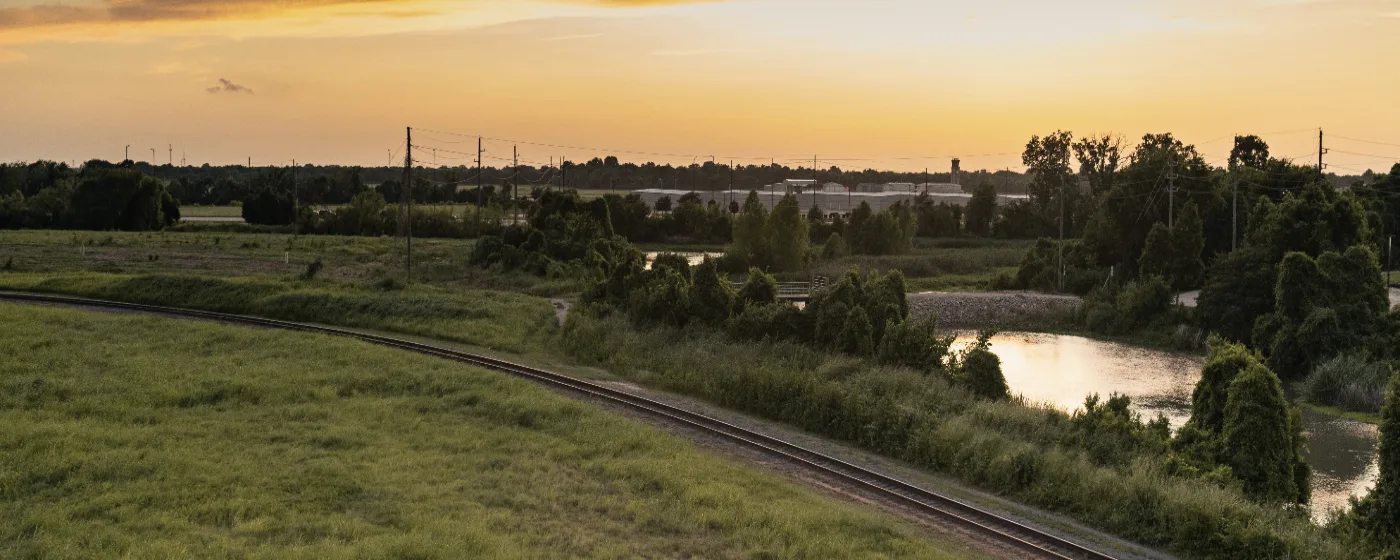
Sugar Land gets asked the safety question a lot — usually by people moving from outside Texas who assume a Houston suburb this close to a major metro must have real crime problems. The numbers tell a different story. With a population of 107,726, Sugar Land posts a violent crime rate of 1 per 1,000 residents, a figure that sits dramatically below both the Texas state rate and the national average. That alone puts it in a different category from most comparably sized cities in the South.
What actually drives that outcome isn't luck or geography — it's structure. Sugar Land holds more master-planned communities than any other city in Fort Bend County, and Fort Bend County leads the nation in master-planned communities overall. Every major neighborhood — First Colony, Riverstone, Telfair, New Territory, Greatwood, Sweetwater, Avalon, Sugar Creek — operates under HOA oversight with private amenity infrastructure. That layered management creates a baseline of physical maintenance and community accountability that measurably affects resident safety surveys. The city also backs this up institutionally: in 2024, the Sugar Land City Council approved an $8.8 million compensation overhaul with a tenure-driven step-pay scale specifically designed to retain experienced police and fire personnel.
The honest caveat isn't crime — it's weather risk. Fort Bend County has been included in 18 federal disaster declarations for flooding, hurricanes, or severe storms, the most recent being Hurricane Beryl in 2024. A 2026 third-party safety study that evaluated midsize U.S. cities on violent crime, property crime, traffic fatality rates, and natural disaster risk found Sugar Land competitive on crime but noted that the county's natural disaster risk score tempered its overall placement. For anyone relocating from a region where flood insurance is an afterthought, this is the detail worth sitting with before choosing a neighborhood. Sugar Land's cost of living page covers the financial side of that equation.
This guide works through the crime data in full — how Sugar Land compares to state and national benchmarks, what the numbers look like at the neighborhood level, how the city's police department is structured, and what the flood risk picture means practically for someone picking a street over another. Whether you're zeroing in on a specific neighborhood or still deciding whether Sugar Land belongs on your list at all, the sections below give you the clearest picture the current data supports.
Sugar Land Crime Rates vs. Texas and the Nation
Sugar Land posts a violent crime rate of 1 per 1,000 residents, according to Bureau of Justice Statistics, Crime Known to Law Enforcement, 2024 (tables 2 and 3). The Texas state rate runs at 4 per 1,000 and the national rate sits at 3.7 per 1,000 — meaning Sugar Land's violent crime rate is roughly one-quarter of both benchmarks. For a city of 107,726 people, that gap is meaningful, not marginal.
Property crime tells a similar story. Sugar Land posts a property crime rate of 14 per 1,000 residents, which compares favorably against the state figure of 20.7 per 1,000 and the national figure of 18.4 per 1,000 (Bureau of Justice Statistics, Crime Known to Law Enforcement, 2024, tables 2 and 3). These are the figures worth anchoring to, because they come from a consistent reporting series and refresh annually from the same source.
When you look at what actually makes up the property crime category here, FBI 2024 data shows larceny-theft, aggravated assault, and burglary as the most commonly reported incidents — and property crime accounts for the large majority of all incidents in the city. That composition matters: a property-crime-heavy profile looks very different from one driven by violent encounters, and Sugar Land's profile is firmly in the former.
A 2026 third-party safety study evaluating midsize U.S. cities on violent crime, property crime, traffic fatality rates, and natural disaster risk placed Sugar Land among the safest midsize cities in Texas on the crime component. The natural disaster risk score pulled the overall ranking down — a point worth returning to in detail — but the crime component of that score was solidly competitive.
Neighborhood-Level Safety: Where the Differences Actually Are
Sugar Land's neighborhood safety picture is more uniform than most cities its size, which is a direct consequence of the master-planned structure. HOA-governed communities maintain physical infrastructure — lighting, landscaping, restricted access points — in ways that correlate with lower opportunistic crime. That baseline holds across the city, but there are still meaningful differences within it.
According to 2026 neighborhood-level crime data, the highest-rated neighborhoods in Sugar Land are New Territory, Riverstone, Telfair, Avalon, Sweetwater, and Greatwood. These communities sit at the top of the in-city spectrum and, combined with their position above the city-wide typical home price, attract a buyer profile that values both safety and long-term stability. For more on how these neighborhoods compare on character and housing stock, the best neighborhoods page goes deeper.
Sugar Creek and First Colony rank toward the lower end of the in-city safety spectrum, but the operative phrase is still lower end of Sugar Land — both carry above-average safety grades compared to most Texas suburbs. First Colony is the city's oldest master-planned community, and its age means more varied housing stock and a somewhat more accessible entry point into the city. That mix of older construction and higher foot traffic contributes to a slightly different crime profile than the newer, more insular communities to the south and west.
What Locals Notice After Six Months
Newcomers from outside Texas are often surprised that the safety conversation here isn't really about violent crime at all — it pivots quickly to package theft and car break-ins in driveways. Leaving a garage door open overnight or valuables visible in a parked car gets noticed by neighbors in a community this tightly organized, and the loss reports that do come in tend to cluster around those scenarios rather than anything more serious.
The other thing residents mention: knowing your neighbors happens faster here than in most large-suburb contexts, partly because National Night Out and HOA-organized events create consistent touchpoints. That social density is its own form of neighborhood safety infrastructure.
How Sugar Land's Police Department Is Built
The Sugar Land Police Department (SLPD) is not a thin operation stretched across a fast-growing suburb. In September 2025, the city opened a dedicated Public Safety Training Complex — a full campus for police, fire, and EMS personnel — and the department earned designation as a Texas Commission on Law Enforcement (TCOLE) training provider in the same period. SLPD consistently provides more than twice the annual training mandated by the state of Texas.
That investment in officer development is backed by the retention side of the equation. The 2024 City Council vote to approve an $8.8 million compensation overhaul, including a tenure-driven step-pay scale for public safety employees, was explicitly about keeping experienced officers rather than cycling through recruits. Staffing continuity matters for neighborhood-level policing in ways that raw officer counts don't capture.
Beyond enforcement, the department runs a portfolio of community programs that are worth knowing about before you decide on an area. The Citizens Police Academy is the adult-facing version — a multi-week immersive look at how the department operates. The Teen Academy, a two-week program pairing officers with teens, builds relationships across age groups that make subsequent community policing more effective. The department also operates a Crisis Intervention Team (CIT) specifically trained to respond to mental health crises, bridging the gap between law enforcement response and community care. All of these programs feed into National Night Out participation citywide.
For context on how policing infrastructure fits into the broader picture of living here, the living in Sugar Land hub covers daily life and community character in more depth.
Looking to buy in Sugar Land? Estimate your payment.
Enter your numbers to see an estimated monthly mortgage payment.
Estimate only. Excludes HOA fees and mortgage insurance. The interest rate above is a starting point, not a quoted rate — replace it with your own to see real numbers. Insurance is a flat placeholder, not a Sugar Land quote.
The Flood Risk Conversation You Need to Have Before Choosing a Street
Low crime does not mean zero risk in Sugar Land — it means the primary risk category shifts. Fort Bend County has been included in 18 federal disaster declarations for flooding, hurricanes, or severe storms, with Hurricane Beryl in 2024 as the most recent. That history is not incidental; it shapes the practical calculus of choosing a neighborhood here.
The city's own flood-protection guidance warns that areas inside current federal floodplain boundaries, and areas protected by levees, may see increased risk of street ponding. The city advises residents to carry flood insurance and maintain a flood safety plan — and that advice is not boilerplate. Areas that flooded during Harvey in 2017 and Imelda in 2019 are known quantities to local residents, and the specific streets and subdivisions that took water are documented in ways that matter for neighborhood research.
What This Means Before You Choose a Neighborhood
Before settling on an area, pull the federal flood map records for any specific address you're considering. Riverstone and Telfair were developed with post-Harvey drainage improvements in mind; older sections of First Colony and Sugar Creek sit closer to Oyster Creek and carry more exposure. That distinction does not make those neighborhoods unsafe in a crime sense — it adds a separate layer of environmental risk that deserves equal weight in the decision.
Residents who moved here without checking flood zone designations first consistently name it as the thing they wish they had done differently. A house that feels like a deal in Sugar Land's market sometimes carries a high-risk flood designation that changes the insurance math considerably. The city's flood-protection portal is the starting point; a local inspector familiar with Fort Bend drainage history is the follow-up.
A 2026 third-party safety study that evaluated midsize U.S. cities scored Sugar Land's natural disaster risk as relatively high at the county level — a finding that tempered the city's overall safety ranking even as its crime figures remained competitive. Understanding this two-part picture is the honest version of answering the safety question here.
Practical Safety Research: What to Check Before You Decide on a Neighborhood
Sugar Land's safety story is genuinely strong on crime — a violent crime rate of 1 per 1,000 residents and a property crime rate of 14 per 1,000 residents are figures most Texas suburbs cannot match at this population size. But knowing the city-wide numbers is just the starting point. The neighborhood-level differences, the flood zone overlay, and the age of the specific street you're considering all add texture that the aggregate can't give you.
The Research Checklist That Separates Informed Decisions from Assumptions
- Check the federal flood zone designation for any specific address before anything else. A minimal-hazard designation means very different insurance implications than a base-floodplain designation. The city's flood-protection page and the federal Flood Map Service Center both support address-level lookups.
- Note the neighborhood tier. New Territory, Riverstone, Telfair, Avalon, Sweetwater, and Greatwood top the in-city safety rankings. Sugar Creek and First Colony are still above average for Texas, but the gap exists and is worth factoring in.
- Visit during a weeknight and a weekend. The social character of a master-planned community differs between those two windows — HOA events, traffic patterns, and the level of street activity all shift. What feels quiet on a Tuesday morning reads differently on a Saturday afternoon.
- Ask specifically about Harvey and Beryl impact on any block you're seriously considering. Neighbors and local community groups carry institutional memory that a flood zone map alone doesn't convey — some streets in lower-risk zones still took water in 2017 due to upstream drainage decisions.
- Look at the nearest park infrastructure. Oyster Creek Park and Sugar Land Memorial Park are genuine community gathering points, and the neighborhoods closest to maintained green corridors tend to show stronger resident engagement — which itself correlates with lower opportunistic crime.
The master-planned structure of Sugar Land works in your favor as a researcher: HOA records, community association meeting notes, and neighborhood Facebook groups are unusually active here compared to unplanned suburbs of similar size. That information density is a resource. Use it before you decide on a street, not after.
For a fuller look at how the neighborhoods compare on character, housing stock, and what each area suits, see the best neighborhoods in Sugar Land guide.
Local Expert Takeaway: Sugar Land's crime numbers are among the strongest in suburban Texas — a violent crime rate of 1 per 1,000 residents is not a marketing claim, it's what the Bureau of Justice Statistics data shows. The real research work before choosing a neighborhood here isn't about crime at all; it's about flood zone designation. Pulling the federal flood map for a specific address, asking neighbors which streets took water during Beryl or Harvey, and understanding whether a neighborhood like Riverstone or Telfair sits in a post-Harvey-improved drainage basin versus an older Oyster Creek corridor — that's the homework that separates a confident decision from an expensive surprise. The HOA infrastructure and the Police Department's training investment are both real and durable. The flood history of Fort Bend County is equally real. Know both sides before you settle on an area.
Quick Takeaways & FAQs
✅ Sugar Land posts a violent crime rate of 1 per 1,000 residents — roughly one-quarter of both the Texas state rate and the national average, a genuine outlier for a city of 107,726.
⚠️ Flood risk is the safety variable that crime statistics don't capture: Fort Bend County has 18 federal disaster declarations, and checking the federal flood zone designation for any specific address is essential before deciding on a neighborhood.
📍 New Territory, Riverstone, Telfair, Avalon, Sweetwater, and Greatwood rank at the top of the in-city safety spectrum; Sugar Creek and First Colony sit lower but still above average for suburban Texas.
What is Sugar Land's crime rate compared to the rest of Texas?
Which Sugar Land neighborhoods are the safest?
Is flooding a safety concern in Sugar Land?
How does Sugar Land compare to neighboring cities on safety?
What type of crime is most common in Sugar Land?
Moving to Texas?
Tell us what you need help with and we'll connect you with local resources.
