
What Is Living in Missouri City, Texas Like?
If you've been watching Houston's housing market and someone mentioned Missouri City as a place where you can still buy a real house at a reasonable price while keeping a manageable commute to the Texas Medical Center or Downtown, they weren't wrong — but they probably undersold the diversity piece. Missouri City, about 20 miles southwest of Downtown Houston in northeast Fort Bend County, has no racial majority. Black or African American residents make up roughly 38 to 39 percent of the population, Hispanic residents around 20 to 21 percent, and Asian residents around 18 to 19 percent, with nearly a quarter of the city's 77,327 residents born outside the United States. That demographic reality shapes everything from the restaurant scene to the school culture, and it's one of the first things newcomers mention when they talk about what surprised them most.
The economic backbone here is institutional. The Fort Bend Independent School District — one of the largest in the Houston area — is one of the city's largest employers and drives a great deal of household decision-making. The district holds a B rating, according to the Texas Education Agency, and families with school-age children consistently rank it as a reason they chose Fort Bend County over other Houston-area options. Amazon's 1-million-square-foot fulfillment center along the Fort Bend Tollway, operational since 2021, has anchored logistics and warehousing employment in industrial parks across the city. Most white-collar residents, however, commute out — the Texas Medical Center, the Houston Energy Corridor, and Downtown Houston are the dominant job anchors, all reachable in about 30 minutes to Downtown Houston under typical conditions.
Housing here sits noticeably below Sugar Land next door, with a typical home price of $336,838 (Zillow Home Value Index, July 2026). The effective property tax rate sits at approximately 1.87%, typical for the region. Daily life has a suburban feel that leans heavily on the car, though the city's trail network — including the Mustang Bayou Greenway connecting Buffalo Run Park to neighborhoods like Quail Valley — gives residents genuine outdoor options without leaving city limits. The city is actively investing in corridors like Texas Parkway, Cartwright Road, and the Fort Bend Pkwy to add the kind of walkable commercial density that most suburbs of this size still lack.
Whether you're weighing a move from inside the Houston metro or relocating to the area for the first time, the sections below break down Missouri City's neighborhoods, housing market, commute patterns, schools, local favorites, and what daily life here is actually like.

Missouri City at a Glance
Looking to buy in Missouri City? Estimate your payment.
Enter your numbers to see an estimated monthly mortgage payment.
Estimate only. Excludes HOA fees and mortgage insurance. The interest rate above is a starting point, not a quoted rate — replace it with your own to see real numbers. Insurance is a flat placeholder, not a Missouri City quote.
Why Are People Moving to Missouri City?
The honest case for Missouri City starts with value and ends with community. Buyers priced out of Sugar Land — where prices run noticeably higher — often land here and find that the gap buys them a larger lot, a newer roof, and a neighborhood with a pool. That calculation drives a steady stream of relocating families, Houston Medical Center professionals, and corporate transferees into the city every year.
Missouri City is the 56th-largest incorporated city in Texas, and Fort Bend County is among the fastest-growing counties in the country. That growth shows up in the form of new infrastructure investment, a $5 million state allocation secured in October 2025 for flood mitigation and drainage improvements, and a City Council that voted unanimously to update its economic development incentive programs to attract new restaurants and businesses to key corridors.
Who Actually Moves Here
Families with school-age children are drawn by Fort Bend ISD, which on 2024-25 state assessments showed 53% of students reaching math proficiency and 63% reaching reading proficiency — numbers that track close to the state average, with the district's overall B rating from the Texas Education Agency carrying weight with buyers who cross-reference before making an offer. The district's scale means strong extracurricular options and active UIL athletics programs at every level.
The diversity here is a genuine draw for many households. Newcomers from major metros — particularly those accustomed to a multicultural environment — often describe Missouri City as one of the few Houston-area suburbs that doesn't feel culturally homogeneous. That's not marketing language; it shows up in the grocery stores, the restaurants, and the Friday night crowd at a high school football game.
Remote workers and hybrid commuters have also found the city's location practical. The park-and-ride express service to the Texas Medical Center gives non-drivers a real option, and the highway network via US-90A, TX-6, and Beltway 8 (Sam Houston Tollway) gives drivers flexibility that a single-corridor suburb can't match. For the full picture on schools, see the Missouri City schools guide; for crime and safety context, see the safety page.
What People Don't Expect
Six months in, the thing that catches newcomers off guard isn't the commute — it's how much the city is still building its own identity. Missouri City has operated as a bedroom community for decades, and the retail and dining infrastructure hasn't caught up to the residential base. The city's economic development plan explicitly frames the goal as transitioning from a bedroom community to an employment center, with investment focused on Texas Parkway, Cartwright Road, FM-1092 (Murphy Road), and the Fort Bend Pkwy corridor.
That gap between residential quality and commercial density is the central friction point. The neighborhoods are well-maintained and the parks are genuinely good — but if you're expecting the walkable commercial energy of a mature suburban town center, you'll be waiting a few years for Missouri City's version to arrive.
What Daily Life Feels Like in Missouri City
Missouri City is a car-dependent city, full stop. Most daily errands — groceries, school drop-off, a quick lunch — require a drive, and the city's commercial strips along US-90A and TX-6 are built around that reality. That's not unusual for this part of the Houston metro, but it's worth naming plainly before you fall in love with a house in Sienna Plantation and assume the coffee shop is walkable.
The Neighborhood Feel
The city's southwest quadrant, anchored by Sienna — a large master-planned community with its own trail system — feels polished and self-contained. Residents there tend to socialize within the community itself, at the amenity centers, on the trails, and at the neighborhood pools. Quail Valley, one of the older sections of the city, has a different character: established trees, a public 36-hole golf course, and a neighborhood feel that's less HOA-regulated and more lived-in.
The mix of established neighborhoods and new development gives Missouri City a layered quality that newer suburbs lack. You can buy a house built in the 1980s in Quail Valley and live a mile from a brand-new construction community in Lakes of Brightwater. That variety is useful if you're not sure which phase of life you're buying for.
Weather and Seasons
Missouri City gets 207 sunny days a year, which sounds generous until August arrives. The heat here is serious — sustained, humid, and often oppressive from June through September. Newcomers from drier climates consistently underestimate it. The flip side is a genuinely mild winter; hard freezes are rare enough that a cold snap becomes a local event. Snow Day, the city's December winter festival at Buffalo Run Park, draws a crowd partly because actual snow is memorable here.
Flooding is worth understanding before you buy. Missouri City secured $5 million in state funding in October 2025 specifically for flood mitigation — a sign that the city takes the issue seriously, and also a signal that buyers should ask detailed questions about any specific property's drainage and flood zone status. Some neighborhoods handle heavy rain without issue; others have a history worth investigating. This is one area where skipping a thorough inspection is a real mistake.
Where Families Actually Gather
Buffalo Run Park is the civic center of Missouri City's outdoor life. It's large enough to host the city's Fourth of July fireworks, the Juneteenth Celebration, and the Snow Day festival, with over 5 miles of trails, lake views, fishing, and canoe and kayak access. On a weekend morning, this is where you see the city's full demographic mix in one place — strollers, fishing poles, and trail runners, all at once. The Mustang Bayou Greenway connects the park to other parts of the city, and the Missouri City Trail Master Plan continues to extend the network. The Missouri City Recreation and Tennis Complex rounds out the city's organized recreation options for residents who want structured programming beyond the parks.
For more on parks, trails, and outdoor recreation, the parks and recreation page goes deeper on what's available and where.
The Missouri City Housing Market Right Now
The typical home price in Missouri City sits at $336,838 (Zillow Home Value Index, July 2026), which puts it noticeably below Sugar Land and noticeably lower than much of what Houston proper offers in comparable school districts. That relative affordability is real, though it comes with context: the median household income of $90,271 runs below the income needed to comfortably carry the typical home here, which means buyers in the mid-range of the market are stretching.
The city-wide typical rent runs $2,132 per month (Zillow ZORI, July 2026), a figure that reflects the suburban character of the housing stock — mostly single-family homes rather than apartment density, though that is beginning to shift. In June 2025, Sueba USA broke ground on a 346-unit luxury apartment complex at the Fort Bend Town Center, the first multifamily development in that 144-acre mixed-use district. It's an early signal that the rental market here is evolving. For a fuller breakdown of costs — property taxes, utilities, and groceries — the cost of living page has the detail.
What the Housing Stock Actually Looks Like
Missouri City's neighborhoods span several decades of construction, and the price spread between them is real. Quail Valley sits below the city median — older homes, larger lots, and a more established feel. Neighborhoods like Lake Olympia, Riverstone, Colony Lakes, and Lakes of Brightwater run above the city median, with newer construction, master-planned amenities, and HOA structures that maintain consistency. Vicksburg Village and Olympia Estates track close to the city median, offering a middle path for buyers who want newer bones without the premium pricing of the most sought-after master-planned areas.
The city's effective property tax rate of approximately 1.87% is in line with Fort Bend County norms — not low, but predictable. First-time buyers and those weighing the buying process in detail will find the first-time homebuyer page useful for navigating what comes next. For neighborhood-level character and which areas suit different buyer profiles, the best neighborhoods guide goes deeper.
The broader Fort Bend Town Center development — 144 acres anchored at TX-6 and the Fort Bend Pkwy — is the most significant near-term signal of where the city's commercial and residential density is heading.
Missouri City Neighborhoods
Missouri City has several distinct areas — each with its own character and appeal. Here’s a breakdown to help you narrow down where to focus your home search.
🏡 Sienna Plantation
The city's largest master-planned community, Sienna occupies the southwest corner of Missouri City with its own trail network, multiple amenity centers, and a range of housing styles from townhomes to large single-family homes. It suits families who want a self-contained community feel with strong HOA maintenance.
🏠 Quail Valley
One of Missouri City's oldest and most established neighborhoods, Quail Valley has mature trees, larger lots, and sits adjacent to the public Quail Valley Golf Course — a combination that draws buyers who want character over new construction.
🌳 Lake Olympia
Lake Olympia offers a lake-adjacent residential feel with a mix of housing styles that runs above the city median in price — it suits buyers who want a slightly more upscale address and proximity to the activity along FM-1092.
🏘 Riverstone
Riverstone is a well-regarded master-planned community in the city's southern section, with newer construction, manicured common areas, and a pricing tier above the city median — appealing to buyers coming from Sugar Land who want comparable polish at a somewhat lower entry point.
🏔 Colony Lakes
Colony Lakes is a gated master-planned community with lake views throughout and above-median pricing — it draws buyers looking for a quieter, more private community feel within Missouri City's broader suburban landscape.
🌆 Lakes of Brightwater
Lakes of Brightwater is a newer residential community with above-median pricing and a master-planned character that suits families with school-age children looking for updated construction and neighborhood amenities.
Pros & Cons of Living in Missouri City
The Pros
- Master-planned communities with lakes, trails and golf courses
- Highly diverse population with above-average household incomes
- Convenient highway access (Hwy 6, Fort Bend Parkway, US-90A) to Houston job centers
- More affordable than many nearby Fort Bend suburbs
The Cons
- Long, car-dependent commutes into Houston during peak hours
- Fort Bend County property tax rates run well above the national average
- No full-service hospital located within city limits
Getting Around & Commuting in Missouri City
Missouri City's highway network is one of its genuine strengths. US-90A runs through the northern portion of the city; TX-6 serves the southern and southwestern sections, including Sienna; and Beltway 8 (Sam Houston Tollway) cuts through the northeast corner, connecting to US-59, I-10, and TX-288. The Fort Bend Pkwy (Fort Bend Parkway) links Beltway 8 to TX-6 along the city's east side, giving drivers multiple corridor options depending on where they live and where they're headed.
The Commute Reality
The drive to Downtown Houston, the Houston Energy Corridor, and the Texas Medical Center runs about 30 minutes under normal conditions — and that qualifier matters. Morning rush hour on the routes heading into Houston can stretch that window meaningfully, particularly when an incident affects Beltway 8 or US-59. Buyers who work regular office hours and live in the southern reaches of Sienna or along TX-6 should plan their commute during actual peak hours before committing to a specific neighborhood.
The distance from Downtown Houston is approximately 20 miles, which sounds manageable on paper. In practice, the commute experience varies significantly by which part of Missouri City you live in and which employment center you're heading toward. The Texas Medical Center and the Energy Corridor draw the largest share of working commuters.
Transit Options
For drivers who want to leave the car at home on some days, the Missouri City Park & Ride offers express bus service to the Texas Medical Center. METRO's Curb2Curb on-demand shared ride service (route 363) covers the city for local trips, and Fort Bend Transit provides additional park-and-ride commuter service. These options are meaningful for Medical Center commuters in particular — less so for those heading to suburban employment centers that aren't served by transit corridors.
William P. Hobby Airport is the nearest major airport at 24 miles, a practical choice for regional and domestic travel. The car-dependent nature of daily life here means that most residents' weekly routine involves multiple drives, and the absence of walkable commercial density in most neighborhoods makes that a year-round reality rather than just a commute issue.
A Note on Traffic Timing
The intersection of TX-6 and Fort Bend Pkwy is becoming a more active commercial node as the Fort Bend Town Center development progresses, and traffic patterns in that area are shifting. Residents of Riverstone and the southern Sienna communities already cite TX-6 as the primary variable in their daily commute. Building in buffer time during school year mornings is a habit that longtime residents adopt quickly.
Schools in Missouri City
Families relocating to Missouri City have public, private, and higher-education options nearby. Here’s a quick overview.
🎓 School District
Fort Bend Independent School District serves K–12 students across Missouri City and the surrounding area. Rated B (source: Texas Education Agency, 2025 A-F accountability rating (2024-25 school year)).
🏆 Graduation Rate
The 4-year high-school graduation rate here is approximately 92.5%.
📚 Higher Education
Texas’s public universities — the University of Texas at Austin, Texas A&M University, and the University of Houston — offer four-year degrees statewide, with one of the largest community college systems in the country (50+ public community college districts) providing two-year and workforce programs.
🌐 Online Learning
UT Austin Online and Texas A&M University Online offer fully accredited online degrees for remote learners across the state.
Safety in Missouri City
A quick look at how Missouri City compares on the numbers that matter most when weighing a neighborhood or a move.
🛡 Violent Crime
Approximately 2 per 1,000 residents.
🔒 Property Crime
Approximately 11 per 1,000 residents.
Compared to the most recent national figures from the Bureau of Justice Statistics (2024), Missouri City’s violent crime is below the national average (about 3.7 per 1,000), and property crime is below the national average (about 18.4 per 1,000).
Against Texas as a whole, Missouri City’s violent crime is roughly half the state average, and property crime is roughly half the state average (Bureau of Justice Statistics, Crime Known to Law Enforcement, 2024 (tables 2 and 3)).
Crime rates can vary a lot within a single city, so the citywide numbers above are only a starting point. Some neighborhoods in Missouri City run well below these averages, while others run higher — the kind of block-by-block detail that matters most when you’re actually choosing where to live. The full guide below breaks it down neighborhood by neighborhood.
Working in Missouri City
Missouri City’s largest employers span several industries — here are some of the anchors of the local job market.
🎓 Fort Bend Independent School District
Education
🎓 Houston Independent School District
Education
🏛 City of Missouri City
Municipal government
🏥 Houston Methodist
Healthcare, located in Houston
Parks & Recreation in Missouri City
Some of the outdoor spaces that shape everyday life in Missouri City.
🌱 Buffalo Run Park
Missouri City residents don’t have to go far for green space — spots like Buffalo Run Park are part of everyday life here, whether that’s a morning walk, a weekend hike, or just somewhere to unwind outside. The full guide below covers more of what Missouri City has to offer for parks and outdoor recreation.
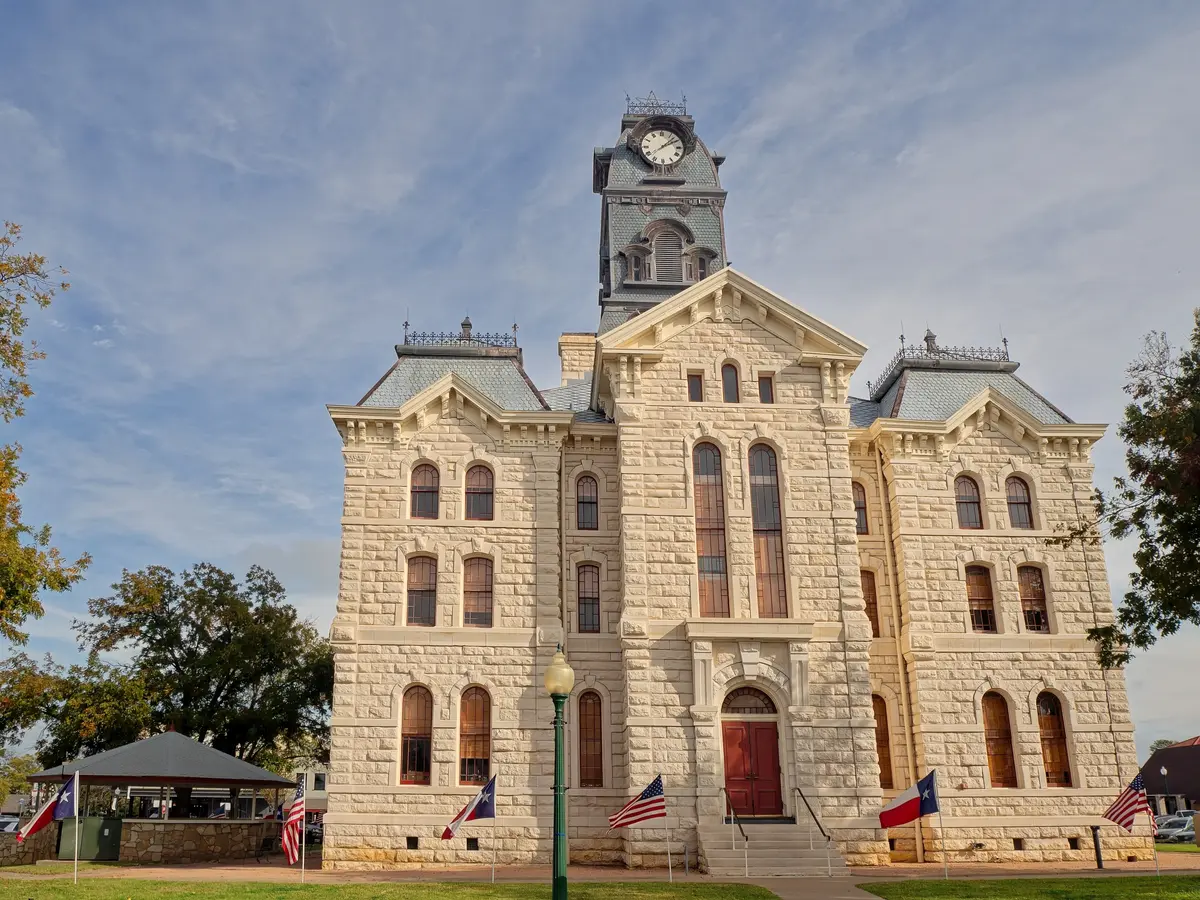
Retiring in Missouri City
Missouri City draws retirees for its balance of amenities, outdoor access, and cost. Here’s what to weigh.
🌤 Climate
Missouri City gets 207 sunny days a year, with mild winters that rarely see hard freezes — a genuine draw for retirees who want to be outdoors year-round. The summer heat from June through September is real and humid, so morning activity is the local adaptation. The shoulder seasons, particularly March through May and October through November, are excellent.
🍴 Lifestyle
Retirees here tend to anchor around Buffalo Run Park's trails and fishing, the 36-hole public course at Quail Valley Golf Course, and a dining scene that reflects the city's international character. The city's independent coffee shops and casual restaurants give daily life a comfortable rhythm. For anything the city doesn't offer, Sugar Land and Houston are both close.
🏚 55+ Communities
No 55+ communities were found in Missouri City. Retirees who want a dedicated age-qualified community will need to look at neighboring cities. That said, many of Missouri City's established neighborhoods — particularly in Quail Valley and Olympia Estates — have a mature resident base and a quieter, settled character that suits downsizers.
✈ Getting Around
Daily life in Missouri City requires a car for most errands and appointments. The highway network — US-90A, TX-6, Beltway 8 — makes regional trips straightforward. William P. Hobby Airport is 24 miles away, the most practical airport option for regional and domestic travel.
🏛 Texas Taxes for Retirees — What to Know
- No state income tax — Texas has no personal income tax — constitutionally protected under Article VIII, Section 24. Social Security, pensions, 401(k)/IRA withdrawals, and annuity payments are all untaxed at the state level, with no state return to file.
- Sales tax is the tradeoff — The state sales tax is 6.25%, and local add-ons bring the combined rate in Missouri City to 8.25% (Texas Comptroller of Public Accounts, city sales and use tax rates, July 2026). Groceries and prescription drugs are exempt.
- Property taxes — the real tradeoff — Texas’s effective property tax rate averages about 1.40%, among the highest in the country, since property tax (not income tax) funds most local government and schools.
- Over-65 homestead exemption and school-tax freeze — Homeowners 65+ (or disabled) get an additional $60,000 exemption from their home’s value for school district taxes, on top of the general homestead exemption — $200,000 off school taxable value combined, following November 2025’s Proposition 11 (SB 23), which raised the over-65 exemption to $60,000, and Proposition 13 (SB 4), which raised the general homestead exemption to $140,000. Once claimed, your school district tax bill is frozen at that year’s amount and cannot increase as home values rise, and the ceiling can transfer if you move to a new home within Texas.
- Deferral option if cash is tight — Homeowners 65+ can defer property tax payment entirely for as long as they live in the home, rather than paying it currently — interest accrues, but no forced sale.
- No estate or inheritance tax — Texas has no estate tax, no inheritance tax, and no gift tax.
- No separate capital gains tax — Because Texas has no state income tax, capital gains — including on investments and home sales — are not taxed at the state level at all, unlike states such as Washington that tax capital gains separately from income.
Tax laws change frequently and individual situations vary. This is general information, not tax advice — always consult a qualified Texas tax professional or CPA for personalized retirement tax planning.
Weekends & Local Favorites in Missouri City
Missouri City's weekend rhythm centers on its parks, its dining scene, and its proximity to a metro that fills in whatever the city doesn't yet offer on its own. That combination works better than it sounds on paper, especially for residents who've set their expectations to suburban scale rather than urban density.
Buffalo Run Park and the Outdoors
Buffalo Run Park anchors the city's outdoor calendar. With over 5 miles of trails, lake views, fishing, canoe and kayak access, and a pavilion large enough to host community-scale events, it functions as the city's de facto town square. The Juneteenth Celebration and the Fourth of July fireworks both draw large, genuinely diverse crowds. The Farmers Market Partners market operates at the park seasonally, offering a local produce and goods option that residents in the established neighborhoods use regularly.
Quail Valley Golf Course offers 36 holes across two layouts — the La Quinta and El Dorado courses — along with a driving range, a 25,000-square-foot clubhouse, and First Tee of Houston programming. It's a public facility associated with the city, which means it's accessible without a membership, and it draws players from across the southwest Houston suburbs. The Sienna Plantation trail network adds another outdoor option on the city's southwest side, winding through one of the larger master-planned communities in the region.
Eating and Drinking
The dining scene in Missouri City reflects the city's demographics in the best way: it's more international and more interesting than a suburb this size typically produces. 7Spice draws regulars with its Indian and Pakistani-influenced menu. Micheaux's brings a distinctly Southern and Black culinary tradition to a city where that food culture has deep roots. Brandani's Restaurant & Wine Bar offers a more formal sit-down option when the occasion calls for it. Alex's Kitchen fills the neighborhood-staple role — the kind of place that shows up in conversation when locals are asked where they actually eat. Texas Biergarten rounds out the mix with an outdoor, casual atmosphere that suits Missouri City's warm-months social scene.
For coffee, the independent options are genuinely strong. bean here coffee has the feel of a neighborhood anchor. Fresso Coffee & Tea, Beans Up Coffee, Mazajj Organic Coffee, and Roastronix each bring a distinct character — Mazajj with its organic focus, Roastronix leaning toward the craft roasting side of the spectrum. The variety here is a point of local pride, and residents who care about their morning coffee do not need to leave the city to find a good cup.
The Honest Leisure Caveat
Missouri City does not have the walkable restaurant row or the weekend nightlife density that some buyers assume a city of 77,327 would generate. A polished suburban town center experience is a short drive away in Sugar Land, and Houston proper is never more than 30 minutes for anything the local scene doesn't cover. Residents who frame Missouri City as a base rather than a destination tend to be happier with that dynamic than those who expect the city to deliver everything within its own limits.
Local favorites in Missouri City
Restaurants
- 7Spice
- Micheaux's
- Brandani's Restaurant & Wine Bar
- Alex's Kitchen
- Texas Biergarten
Outdoors
- Quail Valley Golf Course
- Buffalo Run Park
- Sienna Plantation trails
- Lake Olympia
Coffee
- bean here coffee
- Fresso Coffee & Tea
- Beans Up Coffee
- Mazajj Organic Coffee
- Roastronix
Farmers Markets
- Farmers Market Partners
Top Things Locals Say About Missouri City
The best intel about a city comes from the people who actually live there. Here’s what Missouri City residents say when newcomers ask the questions everyone’s thinking.
“I drove through Missouri City twice before making an offer and thought I understood it — but I didn't really get it until I was here on a Saturday morning at Buffalo Run Park, watching what felt like the entire world show up to fish, run, and push strollers. Nobody warned me how genuinely diverse this place is, and how much that ends up mattering to everyday life.”
— Recent Missouri City home buyer
“What's the most surprising thing about living in Missouri City?”
How diverse it actually is once you're living here. The numbers are one thing, but experiencing it at the park, at school pickup, or at a local restaurant is different. Quail Valley in particular has this older-neighborhood mix of long-time residents from all over — it doesn't feel like a typical Houston suburb at all.
“What do locals love most about Missouri City?”
Buffalo Run Park is hard to beat for a suburb this size — the trails, the lake, the festivals. And the coffee scene surprises people. You've got real independent options like bean here coffee and Roastronix that hold their own against anything in the city. The golf at Quail Valley is another one — 36 public holes is genuinely unusual.
“What should newcomers to Missouri City know?”
Plan your commute during actual rush hour before you commit to a neighborhood. The distance to Downtown looks the same on paper whether you're in Lake Olympia or southern Sienna, but the drive can feel very different in practice depending on which roads you're using. Also, TX-6 through the Fort Bend Town Center area is getting busier as development picks up — build in buffer time on school mornings.
“How much do you need a car in Missouri City?”
For daily life, a car is essentially required. Groceries, school runs, and most errands all mean driving. The park-and-ride at the Missouri City location is a real option if you work at the Texas Medical Center and want to skip the drive occasionally, but for everything else you're behind the wheel. The trail network at Buffalo Run Park and the Mustang Bayou Greenway give you good options once you've driven to a trailhead.
Cities Near Missouri City
Other communities near Missouri City worth a look — each with its own character and price point.
| City | Distance | Best For | Vibe | Median Rent | Median Buy |
|---|---|---|---|---|---|
| Sugar Land | 6 mi | Families wanting walkable retail density | Polished, amenity-rich, established | $2,068 | $449,277 |
| Stafford | 8 mi | Budget-focused buyers near highways | Commercial, accessible, no-frills | $1,578 | $301,545 |
| Houston | 20 mi | Urban professionals, renters, culture seekers | Dense, diverse, energetic | $1,561 | $263,563 |
More Helpful Guides for Missouri City
Going deeper on Missouri City? Our blog series covers everything from first-time buying to retiring here — explore the guides below.
Local Expert Takeaway: Missouri City is one of the most genuinely diverse suburbs in the Houston metro, with housing that still comes in below Sugar Land's prices and a school district — Fort Bend ISD — that draws families specifically for its scale and programming. Buffalo Run Park and Quail Valley Golf Course handle the weekend, independent coffee shops like bean here coffee and Mazajj Organic Coffee handle the mornings, and the commute to the Texas Medical Center or Downtown via Beltway 8 or US-90A is workable if you plan around the rush. The commercial density gap is real, but the city is actively building toward it — the Fort Bend Town Center development at TX-6 and Fort Bend Pkwy is the one to watch.
Quick Takeaways & FAQs
✅ Missouri City's demographics — no racial majority, nearly 24% foreign-born — make it one of the Houston metro's most genuinely multicultural suburbs, which shows up in everything from the schools to the restaurant scene.
⚠️ The commercial and dining infrastructure hasn't caught up to the residential quality yet; buyers who expect walkable suburban density will find Missouri City still working toward that.
📍 Buffalo Run Park hosts the city's biggest annual events — the Fourth of July fireworks, the Juneteenth Celebration, and the Snow Day winter festival in December — and is the clearest window into how diverse and community-oriented this city actually is.
Is Missouri City a good place to raise a family?
How far is Missouri City from Downtown Houston?
What is the typical home price in Missouri City?
What are the best neighborhoods in Missouri City?
Does Missouri City have flooding issues?
Helpful Links for Moving to Missouri City
Moving to Texas?
Tell us what you need help with and we'll connect you with local resources.
