
Maybe you've been priced out. Maybe your employer shifted to remote and the math finally tilted in Texas's favor. Maybe you have family in the Houston suburbs and kept telling yourself you'd look into it. Whatever brought you here, people who actually make this move report the same moment: standing in a Missouri City driveway, looking at a four-bedroom house with a two-car garage, doing the math in their heads, and thinking this cannot be right. It usually is. Missouri City sits in Fort Bend County about 20 miles southwest of Downtown Houston, connected to the metro by US-90A, TX-6, and the Beltway 8 (Sam Houston Tollway). It is not a small bedroom community — at 77,327 residents, it ranks as the 56th-largest incorporated city in Texas. But it moves at a pace that most Californians find jarring in the best possible way.
The local economy leans on the Houston metro rather than a single local anchor. Fort Bend Independent School District is the dominant employer within city limits, and the school district's reach extends deep into community life — Fort Bend ISD holds a B rating, according to the Texas Education Agency, and its 78,062 students enrolled in 2025-26 make it one of the larger suburban districts in the state. Many residents commute, with the drive clocking about 30 minutes to Downtown Houston and the Houston Energy Corridor and Texas Medical Center. The Greater Houston Partnership projects continued job growth for the metro, with healthcare, construction, and public education among the leading sectors. For Californians who have spent years working in one of those fields and paying California prices to do it, that commute math — and that tax math — lands differently once you run the numbers.
The cost-of-living gap between California and Missouri City is not a rounding error. The typical Missouri City home value stood at $336,838 as of July 2026, a figure noticeably below what most coastal Californians would consider an entry-level purchase. Texas collects no personal state income tax, which alone changes what a paycheck looks like. Property taxes run higher here by rate — Missouri City's effective rate is 1.87% — but when applied to a home priced well below what you likely sold in California, the actual annual bill can surprise you. Everyday costs follow suit: groceries, utilities, and dining out all run noticeably below California equivalents. The trade-off is real, though: this is a car-dependent suburb, winters are mild but summers are relentlessly humid, and the dining and arts density of a major coastal city requires a drive into Houston proper.
Whether you are weighing a job relocation, cashing out California equity, or simply rerunning your retirement timeline, the sections below break down Missouri City's tax and cost picture, what the housing market actually looks like for a California buyer, the school district, daily life, and the honest reasons some transplants end up going back.
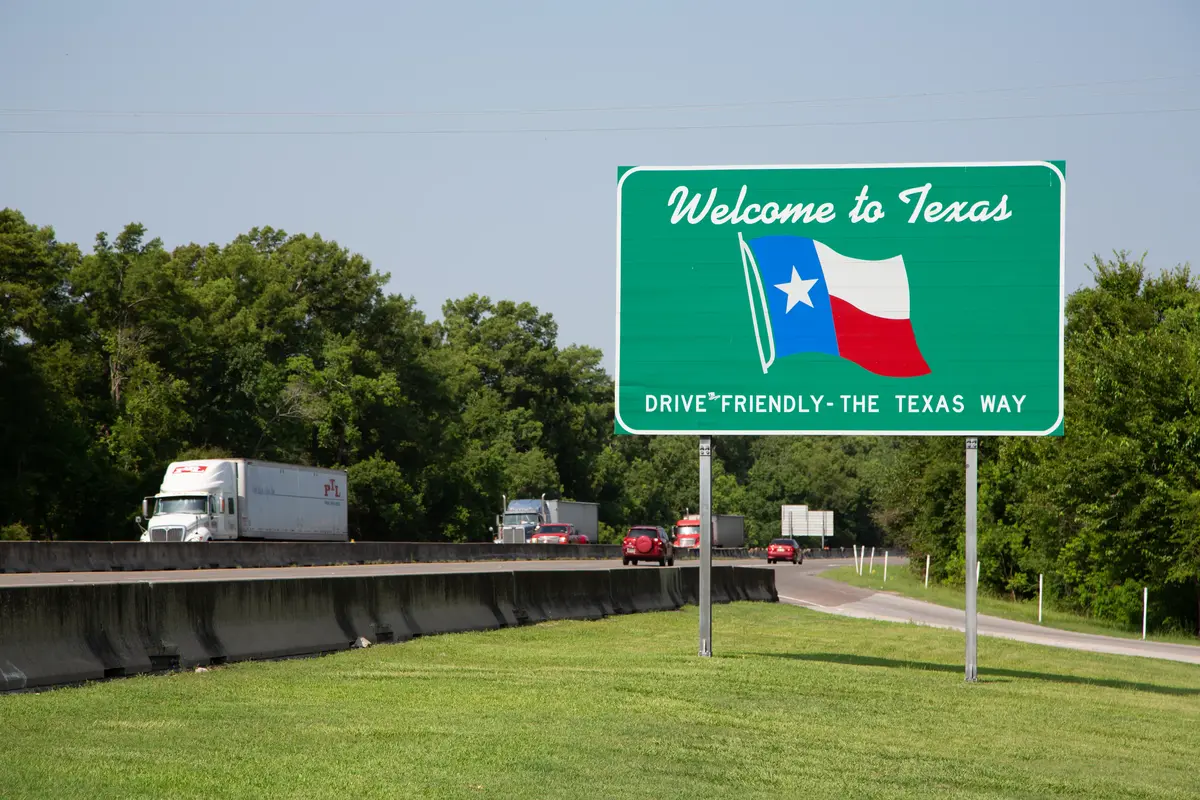
The Tax Reversal: What Leaving California Actually Means for Your Paycheck
The single biggest financial shift Californians feel in month one has nothing to do with home prices — it is the paycheck. Texas has no personal state income tax. California's top state income tax rate reaches 13.3%, and its brackets affect earners well into the middle-income range. The income-tax savings are most dramatic for higher earners and dual-income households; for middle-income households, the benefit is real but smaller, and other costs partly offset it. Either way, the direction of the shift is the same: more of your gross pay stays in your hands.
That is not a technicality or a moving-company sales pitch — it is a structural difference in how the two states fund themselves, and it reshapes what your salary is actually worth. Texas funds public services more heavily through property taxes and sales taxes, which is worth understanding before you celebrate too hard.
Sales Tax: Closer Than You Think
California's statewide base sales tax rate of 7.25% is the highest in the nation at the state level, but California localities add on top of that — some jurisdictions reach 10.75% combined. Texas's state rate is 6.25%, and with local add-ons Missouri City's combined rate runs in the 8.25% range. The gap is real but narrower than most Californians expect. You will spend a bit less on taxable purchases, not dramatically less.
Property Tax: The Rate Is Higher, the Bill May Not Be
This is where the comparison gets interesting. California's effective property tax rate of 0.71% sounds low — because it is, by national standards. But California applies that rate to home values that are often three to five times what you will pay in Missouri City. Texas's rate is higher, and Missouri City's effective rate of 1.87% is above the Texas statewide average. Run the numbers against a home at Missouri City's typical price point, however, and many California transplants find their annual property tax bill is not dramatically higher than what they paid in California — and sometimes lower in dollar terms, even at a higher rate.
One nuance worth knowing: depending on where your parcel sits within the city, your tax statement comes from Fort Bend County or Harris County. Both administer Missouri City properties. It is worth confirming which county your specific address falls under before you close, because exemption programs and appeal processes differ slightly between the two.
| Tax Type | California | Missouri City / Texas | Practical Impact |
|---|---|---|---|
| State income tax | Up to 13.3% (California Franchise Tax Board) | None | Paycheck gain most visible for higher earners and dual-income households; meaningful at most income levels |
| Effective property tax rate | 0.71% (Tax Foundation) | 1.87% | Higher rate; lower base price often offsets the gap in dollar terms |
| Statewide base sales tax | 7.25% state + local (some areas reach 10.75% combined) | 6.25% state + local (~8.25% combined) | Modest savings; gap is narrower than most expect |
The overall picture tilts toward Texas for most working households, particularly at higher incomes. The catch is that Texas leans on property taxes to fund schools and local government, so that 1.87% rate is not going away — and it adjusts with assessed value, which means if Missouri City's housing market appreciates, so does your bill.
Home Prices: What Your California Equity Actually Buys Here
California's statewide typical home value of $773,735 (Zillow Home Value Index) is the benchmark most Californians are working from — and that figure reflects the statewide average, not a coastal metro where many California sellers actually live. Missouri City's typical home value came in at $336,838 as of July 2026, less than half that statewide California figure. For buyers who have spent years watching Bay Area or Los Angeles prices accelerate past any realistic budget, this gap reads as surreal until you actually walk through houses.
What That Price Buys
At Missouri City's typical price point, you are shopping for a substantial single-family home — not a condo, not a townhouse, not a fixer at the edge of a desirable ZIP code. Three and four-bedroom houses with dedicated garages, backyards, and master suites are the norm at this level. Californians who have spent years in 900-square-foot apartments or paying a premium for anything with a yard consistently describe the same culture shock: the square footage feels excessive until it doesn't.
Neighborhoods vary. Quail Valley sits below the city-wide median, making it the most accessible entry point for buyers who want to keep purchasing costs down. Vicksburg Village and Olympia Estates track close to the city median. Riverstone, Colony Lakes, Lakes of Brightwater, and Lake Olympia all run above it — newer construction, more amenity-rich master-planned development, and the price reflects both. The neighborhoods guide covers each area in detail.
The Equity Play
Californians who are selling before they move frequently arrive with substantial equity — sometimes enough to significantly reduce or eliminate a mortgage entirely at Missouri City price levels. That is a structural advantage that changes what monthly housing costs look like for the rest of your working life. It is also what drives the migration numbers: the Texas Realtors report found more than 700,000 Californians relocated to Texas between 2020 and 2025, the largest out-of-state flow in the country. The U-Haul Growth Index named Texas the top growth state for 2025; California has ranked at the bottom for net out-migration for six consecutive years.
One honest note on affordability: Missouri City's median household income of $90,271 is below the income needed to buy the typical home here. This is not unusual for a suburb where incoming equity-rich buyers from elsewhere set the price floor — but it does mean financing the full purchase price without equity from a prior home requires a harder look at your income picture. See the cost of living page for the full breakdown on how income and housing costs interact here.
Nearby Market Context
If you are comparing Missouri City to neighboring cities while you shop, Sugar Land runs noticeably higher than Missouri City's typical price. Stafford comes in somewhat lower. Houston proper sits noticeably lower as well, though with significantly more variation by neighborhood. Missouri City occupies a middle tier in the Southwest Houston submarket — more affordable than Sugar Land's established master-planned corridors, better-serviced than many parts of unincorporated Fort Bend County.

Daily Life in Missouri City: What Changes, What Doesn't
The first thing California transplants notice is the weather, and not in the way the Texas tourism board prefers to frame it. Missouri City gets 207 sunny days a year — respectable, but the summers arrive with a humidity that coastal Californians find genuinely difficult for the first year or two. June through September means heat indices that regularly exceed 100°F. The flip side is mild winters, almost no frost risk, and a green landscape year-round that surprises people who expected the scrub desert they associate with Texas.
Getting Around
This is a car city. US-90A and TX-6 carry most of the daily traffic in and out, and the Beltway 8 (Sam Houston Tollway) gives residents access to the broader Houston loop. The Fort Bend Pkwy (Fort Bend Parkway) and FM-1092 (Murphy Road) handle the local connector routes. If you are arriving from Los Angeles, the driving culture will feel familiar. If you are arriving from San Francisco and haven't owned a car in years, plan to buy one before you move — transit options here do not replace a vehicle the way a major metro rail system can.
The commute to Downtown Houston and the Texas Medical Center runs about 30 minutes under normal conditions. Rush hour on US-90A tests that number. Many Missouri City residents describe the commute as the principal friction of the lifestyle — manageable but ever-present.
Schools
Fort Bend ISD holds a B rating, according to the Texas Education Agency — a solid outcome for a district at this size. On 2024-25 state assessments, 53% of students reached math proficiency and 63% reached reading proficiency. The district runs active UIL athletics programs, and in a community this family-oriented, Friday night football at the local high school is a genuine social anchor, not just a cliché. The schools page covers the district's individual campuses and boundary quirks in detail.
Weekends and Local Favorites
Missouri City's community life is quieter than what most Californians are used to, which is either a feature or a bug depending on why you left. Buffalo Run Park is the go-to green space for families — well-maintained, genuinely used, and busy on any mild weekend. The Quail Valley Golf Course runs two courses (the La Quinta and El Dorado layouts) and is a fixture for the subset of transplants who finally have time and affordable green fees to play regularly. Sienna Plantation trails offer a different flavor — long, flat walking and cycling paths through one of the city's larger master-planned communities that are more pleasant than they look on a map.
The local dining and coffee scene is more developed than Missouri City's suburban reputation suggests. For coffee, bean here coffee, Fresso Coffee & Tea, Beans Up Coffee, Mazajj Organic Coffee, and Roastronix each have their own character — you will not be driving to Houston for your morning cup. On the food side, 7Spice brings bold flavors to a local crowd that expects variety; Micheaux's is a local gathering point with a soul food and Southern orientation; Brandani's Restaurant & Wine Bar fills the sit-down dinner slot that most suburbs lack; Alex's Kitchen runs a more casual neighborhood feel; and Texas Biergarten handles the outdoor hang. Farmers Market Partners operates a local market if you want produce and local goods without a Houston trip.
Looking to buy in Missouri City? Estimate your payment.
Enter your numbers to see an estimated monthly mortgage payment.
Estimate only. Excludes HOA fees and mortgage insurance. The interest rate above is a starting point, not a quoted rate — replace it with your own to see real numbers. Insurance is a flat placeholder, not a Missouri City quote.
What Surprises Californians After Six Months
The financial relief is real and arrives immediately. Most people describe month one as a kind of low-grade shock — the paycheck lands differently, the mortgage payment is smaller than the rent they left, and the grocery bill is lower. That part lives up to the promise.
What Nobody Warned You About
The humidity is the first honest surprise. Californians arriving in October or March think they understand the weather because it is pleasant. Arriving in July or August is a different experience, and the adjustment takes longer than most expect. Power bills spike in summer with air conditioning running continuously — that is a real monthly cost that partly offsets the income tax savings, and it catches transplants who did not model it.
The second surprise is more social. Missouri City has a large and well-established Nigerian and West African community, a significant South Asian population, and a long-rooted African American community that gives it a cultural texture genuinely different from most Texas suburbs — and from most California suburbs, for that matter. People who moved expecting a generic Houston sprawl neighborhood frequently describe finding a more interesting and internationally diverse community than they anticipated. People who moved expecting California's particular style of urban progressivism sometimes find the political and social culture jarring, particularly in local civic life and school board dynamics.
Why Some People Leave
The transplants who move back to California are usually not leaving because Missouri City failed them — they leave because they underestimated how much they valued proximity to specific people, specific coastline, or a specific type of urban life that Houston's suburbs simply do not replicate. The financial case for staying is strong enough that the decision to go back is almost always about something the spreadsheet cannot capture. The other cohort that leaves is remote workers whose employers eventually call them back to California offices. If your job here depends on a remote arrangement that could change, that risk is worth pricing into your planning before you sell.
What you would not do if moving here: do not buy in an area where you have not personally driven the US-90A or TX-6 morning corridor. The commute pattern matters more to daily satisfaction than almost any other factor, and the difference between a neighborhood that adds fifteen minutes to that drive and one that does not is felt every single day. See the living in Missouri City page for more on commute patterns and who the city suits.
Safety is another area that tends to land better than Californians expect. Missouri City records a violent crime rate of 2 per 1,000 residents and a property crime rate of 11 per 1,000 residents — both below state and national averages. The safety page has the full picture by area.
Is Missouri City the Right Call? An Honest Assessment
The case for this move is easier to make than the case against it, which is itself a form of useful information. Missouri City offers a genuine middle-class lifestyle at a price point that California has essentially retired. A 77,327-person city in one of the fastest-growing metros in the country, with a school district that holds its own, a diverse and established community, and a commute into a major employment hub — these are real structural advantages, not marketing copy.
Who This Move Works For
Families with school-age children who are stretching their California budget to the limit get the most from Missouri City. The combination of Fort Bend ISD's breadth of programming, the space that comes with a suburban Texas home, and the income-tax relief creates a materially different financial trajectory after five years here than staying on the California cost curve would have produced.
Remote workers and dual-income households in tech, healthcare, or energy who can bring their California salaries to a Texas cost base are the other obvious fit. The income differential between what California employers pay and what Missouri City costs to live in is the strongest version of this trade.
Who Should Think Twice
If on-foot access and urban density are non-negotiable for you — not aspirational, but actually how you live day-to-day — Missouri City will disappoint. This is not a city where you walk to coffee, to dinner, to a weekend market, and back. You drive everywhere, and the built environment reflects that. People who framed the move as "I'll give up a little walkability" sometimes find they gave up more than that.
Single people in their 20s and 30s should be clear-eyed that Missouri City's social texture is oriented around families and homeownership rather than the amenity set that urban California neighborhoods built for that demographic. Houston proper has what they are looking for; Missouri City is a reasonable base for it but is not the destination itself.
The broader Houston job market is genuinely strong — the metro is forecast to add tens of thousands of new jobs, with Fort Bend County embedded in that growth trajectory. But if your career depends on a specific industry cluster that does not have a Houston foothold, relocating here requires either remote flexibility or a genuine career pivot. The living in Missouri City page covers the employer and industry picture in detail.
The honest summary: this is a city where the finances work, the schools are credible, the community is more interesting than its suburban profile suggests, and the summers will test you. For most of the Californians who make the move, that is a trade worth taking.

Local Expert Takeaway: California equity buys something qualitatively different in Missouri City — not just a bigger house, but a reset on what monthly costs feel like altogether. The income tax disappears, the mortgage payment drops, and the school district is solid enough that you are not trading one compromise for another. The catch most people underestimate is the summer: plan for three months of near-continuous air conditioning and genuinely oppressive heat, and model that utility cost before you finalize your budget. If you are going to plant yourself in the Houston suburbs, Missouri City's diversity, its established neighborhoods in Riverstone and Sienna, and its position on the Fort Bend Pkwy corridor make it one of the more defensible choices in the southwest metro.
Quick Takeaways & FAQs
✅ Texas's zero state income tax combined with home prices well below California's statewide typical home value of $773,735 means most California transplants see an immediate and meaningful improvement in their household financial position.
⚠️ Missouri City's effective property tax rate of 1.87% is higher than California's 0.71% rate — and while the lower purchase price often offsets the gap in total dollars, buyers should model that annual bill carefully before closing.
📍 The drive commute to Downtown Houston and the Texas Medical Center runs about 30 minutes under normal conditions, but US-90A morning traffic is real — where you buy within Missouri City matters more to daily life than almost any other single factor.
How much less will I pay in state income taxes moving from California to Missouri City?
Is Missouri City's property tax rate really that much higher than California's?
What are homes actually like at Missouri City's price point?
How are the schools in Missouri City compared to what I had in California?
What do California transplants most often wish they had known before moving to Missouri City?
Moving to Texas?
Tell us what you need help with and we'll connect you with local resources.
