
What Is Living in Richmond, Texas Like?
Most people who move to Richmond arrive expecting a sleepy small town and leave surprised by how much is already here — and how fast more is coming. Richmond sits on the west bank of the Brazos River as the county seat of Fort Bend County, with I-69 and US-90A running through it and the Grand Parkway putting a growing stretch of southwest Houston within reach. With a population of 13,389, the city itself is genuinely compact. But Fort Bend County is one of the fastest-growing counties in the country, and Richmond is where much of that growth is being planned and built.
The city's economic backbone is anchored by Fort Bend County government, the City of Richmond's own municipal operations, OakBend Medical Center — the last remaining independent nonprofit hospital in the Greater Houston Area — and two large school districts serving the area. The district serving the majority of Richmond holds a B rating, according to the Texas Education Agency, and is a significant employer in its own right. Families with school-age children make up a substantial share of the people who move here. Richmond was also named Texas' 2025 Scenic City of the Year by Scenic Texas, recognizing the city's tree preservation ordinance, billboard restrictions, and long-range planning — details that set it apart from the standard suburban sprawl to its east.
Home prices here are noticeably below what Sugar Land commands and meaningfully below the Houston metro's highest-demand suburbs, though still above what many first-time buyers expect — the typical home price stood at $380,221 as of July 2026. The effective property tax rate runs approximately 1.64%, which is relevant in a state with no income tax. Day-to-day life leans on the car — most errands need a drive — but Seabourne Creek Nature Park gives residents an in-city green space, and George Ranch Historical Park, a 20,000-acre working ranch on FM-762, is the kind of local landmark that genuinely shapes where families spend weekend mornings. For broader trail and outdoor recreation details, the parks and recreation page covers the full picture.
Whether you're weighing Richmond against Rosenberg next door, considering a longer commute from a quieter address, or just starting to understand this corner of Fort Bend County, the sections below break down Richmond's neighborhoods, housing market, commute patterns, local employers, and what daily life here is really like.

Richmond at a Glance
Looking to buy in Richmond? Estimate your payment.
Enter your numbers to see an estimated monthly mortgage payment.
Estimate only. Excludes HOA fees and mortgage insurance. The interest rate above is a starting point, not a quoted rate — replace it with your own to see real numbers. Insurance is a flat placeholder, not a Richmond quote.
Why Are People Moving to Richmond?
Richmond is attracting buyers who have run the numbers on the Houston suburbs and concluded that Fort Bend County's county seat offers something the better-known zip codes don't: a price point noticeably below Sugar Land, a functioning historic downtown, and a city government that is clearly investing in its own future rather than coasting on past growth.
A City Actively Building Itself
In August 2025, the Richmond City Commission approved a construction contract for a new city hall. A public-private partnership focused on revitalizing the old fire station site reached a planning milestone in 2025. The Oaks of District West — a walkable retail, dining, and entertainment center spanning roughly 87,000 square feet across ten buildings — broke ground in early 2026 after closing a $37.1 million construction loan in December 2025. These are not renderings; they are funded projects with construction underway.
The city closed fiscal year 2025 with a clean audit and a $10.6 million budget surplus. That kind of fiscal footing matters to buyers who remember what underfunded municipalities look like after a decade of deferred maintenance.
History That You Can Actually See
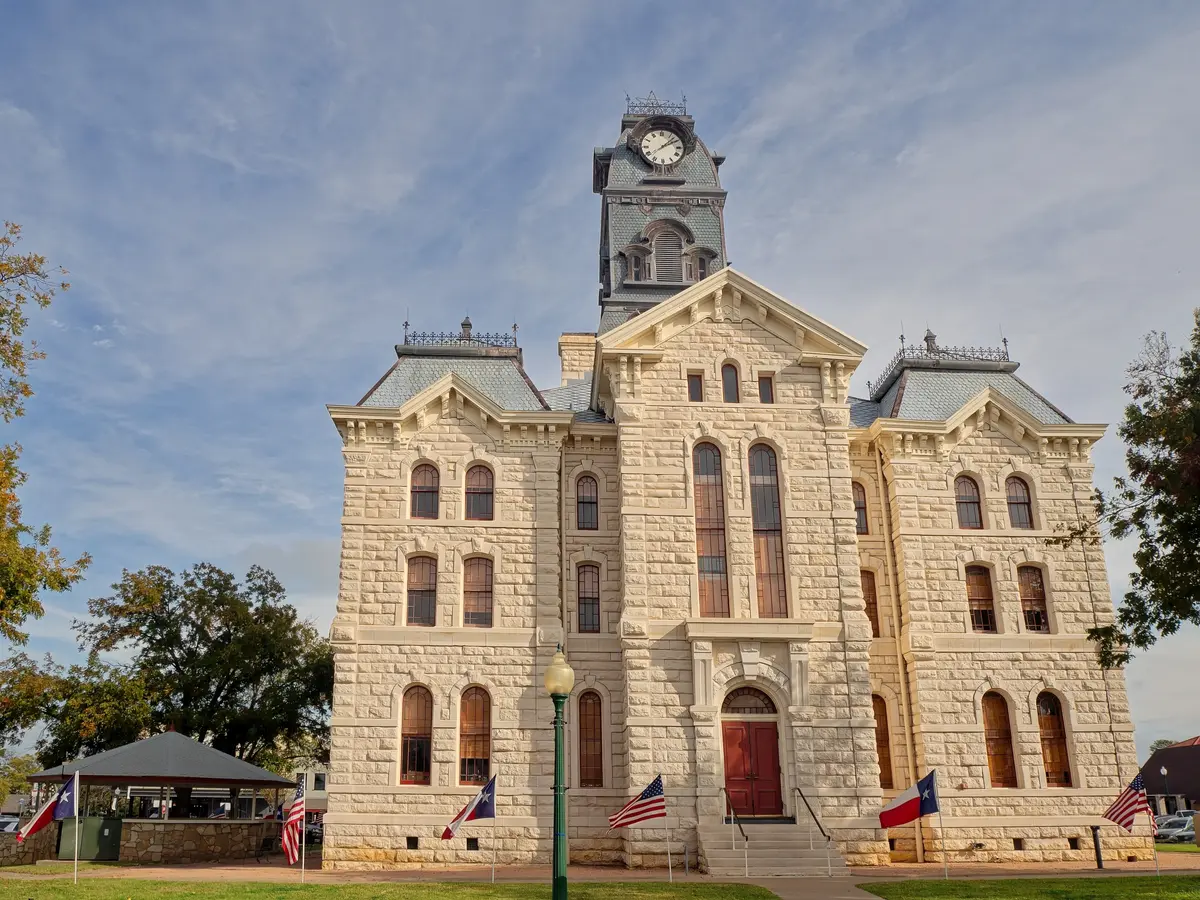
Richmond was incorporated by the Republic of Texas in May 1837 — the same year Fort Bend County was founded — and became the county seat in January 1838. Jane Long, called the Mother of Texas, lived here. The second president of the Republic of Texas is buried in Morton Cemetery. The 1908 Fort Bend County Courthouse, designed in the Texas Renaissance style, anchors the historic downtown with a copper-domed roof visible for miles. That history is not incidental to the city's identity; it is the reason the Richmond Commercial Historic District exists and the reason the streetscape looks different from every other suburb on the southwest side of Houston.
Who Actually Moves Here
| Buyer Type | What Draws Them | Best For |
|---|---|---|
| Families with school-age children | Highly rated local school districts, newer master-planned subdivisions, room to spread out | Families School |
| Houston commuters priced out of Sugar Land | Price point noticeably below Sugar Land, I-69 and US-90A access | Commuter Value |
| First-time buyers | Entry-level options in Rosenberg-adjacent areas, lower price floor than comparable suburbs | First-Time Value |
| Remote workers wanting acreage | FM-762 corridor, proximity to George Ranch, larger lots than inner suburbs | Privacy Nature |
| History and character buyers | Historic Downtown, Morton Cemetery, Fort Bend County Courthouse, St. John's United Methodist Church | Walkable |
| Renters building toward ownership | Typical rent of $1,833/mo (July 2026) below many comparable Fort Bend addresses | Renter First-Time |
The honest trade-off is that Richmond is still building the amenity base to match its ambitions — and buyers who move here before the Oaks of District West opens are betting on what the city is becoming, not just what it already is.
What Daily Life Feels Like in Richmond
Richmond operates at a pace that Houston residents find either refreshing or frustrating, depending on what they were expecting. The historic downtown — anchored by the Fort Bend County Courthouse — has a handful of independent businesses and a genuine sense of place, but it is not a walkable mixed-use district in the way Sugar Land's Town Square is. Most residents drive for most things.
The County Seat Reality
Being the county seat means Fort Bend County government facilities are here, which matters practically. Courthouse business, county services, and the administrative infrastructure that comes with a rapidly growing county all center on Richmond. That creates a certain kind of daily foot traffic and civic energy that purely residential suburbs lack.
A serious shopping run still means leaving town. The Oaks of District West, under construction as of early 2026, is specifically designed to address what developers have called a long-standing retail gap. Until it opens, residents ordering online or driving to neighboring cities for major retail is simply the current reality — worth knowing before you move.
Weather and Seasons
Fort Bend County averages slightly more than 45 inches of rainfall per year, and summer arrives early and stays late — average July highs run near 94°F. Richmond gets 205 sunny days a year, which sounds generous until August, when the combination of heat and humidity makes outdoor plans before 8 a.m. a survival strategy rather than a preference. The growing season lasts 296 days, which is why the landscaping and tree canopy that Richmond's scenic city ordinance protects actually matters — those trees make a measurable difference on a July afternoon. January average lows drop to around 44°F, and the area sees occasional hard freezes that catch newcomers from mild climates off guard.
Where Community Gathers
The Harvest Green Farmer's Market draws residents from across the area and has become a genuine weekly social anchor for the neighborhoods around it. George Ranch Historical Park hosts school groups, equestrian events, and seasonal programs that pull families back repeatedly throughout the year — not as a tourist attraction but as a local institution. Seabourne Creek Nature Park serves as the city's primary in-city green space, where residents walk, fish, and let kids run without a long drive. For a deeper look at trails, parks, and outdoor options, see the parks and recreation guide.
Six months after moving here, many residents say the same thing: they underestimated how much the city's size works in their favor. Finding a parking spot is never a project. Getting to a coach at their kid's school is a short drive, not a forty-five-minute ordeal. The neighborhood feels knowable in a way that larger Houston suburbs do not.
The Richmond Housing Market Right Now
The typical home price in Richmond stood at $380,221 as of July 2026, measured by the Zillow Home Value Index. That figure puts Richmond noticeably below Sugar Land and somewhat above neighboring Rosenberg — a positioning that reflects Richmond's combination of newer master-planned inventory, historic in-town stock, and a location that commands a Fort Bend County address without the premium of the county's best-known zip codes.
Renters in Richmond are paying a city-wide typical rent of $1,833 per month as of July 2026 (Zillow ZORI). For a full breakdown of cost of living, property taxes, and how Richmond's prices compare to the broader region, see the cost-of-living page.
What the Market Looks Like Day to Day
Richmond's housing stock spans a wide range: antebellum-era homes and Victorian-era properties in and around historic downtown, mid-century neighborhoods like Hillcrest and Winston Terrace, and master-planned communities like Canyon Gate at the Brazos and Veranda that are built to a more recent suburban template. That range means the buyer experience varies significantly depending on which part of the city you are shopping in.
Well-priced homes in desirable master-planned subdivisions tend to move without sitting long. Historic downtown properties attract a more specific buyer and spend more time on market — which can work in a patient buyer's favor.
The Affordability Reality
The median household income in Richmond is $50,337 — meaningfully below the income needed to carry the typical home at current prices and current rates. That gap is not unusual in Fort Bend County's growth corridor, where home prices have moved faster than local wages, and it means a significant share of buyers here are either dual-income households, people relocating with equity from higher-cost markets, or buyers who are stretching. It is worth going in clear-eyed about that math. The first-time homebuyer page walks through loan program options and what the buying process looks like in this market.
The effective property tax rate of approximately 1.64% is a real number to model, especially for buyers moving from states with income tax who are recalibrating their total cost picture. There is no Texas state income tax, but Fort Bend County property taxes are not trivial.
Richmond Neighborhoods
Richmond has several distinct areas — each with its own character and appeal. Here’s a breakdown to help you narrow down where to focus your home search.
🏡 Canyon Gate at the Brazos
A gated master-planned community built around the Brazos River corridor, suited to families and buyers who want a private, amenity-driven neighborhood with newer construction and a strong HOA structure.
🏠 Veranda
One of Richmond's newer master-planned communities, Veranda is designed around trails, parks, and a connected neighborhood feel — drawing families with school-age children and buyers looking for newer homes in a community with long-term investment behind it.
🌳 Del Webb Richmond (Del Webb Sweetgrass)
An age-qualified community with resort-style amenities, Del Webb Richmond attracts active adults who want a maintenance-light lifestyle with neighbors in a similar stage of life and easy access to Fort Bend County's broader services.
🏘 Bonbrook Plantation
Bonbrook Plantation offers larger lots and a more relaxed suburban pace than the tightly-planned newer communities, appealing to buyers who want room to spread out while staying within Richmond city limits.
🏔 Hillcrest
An established mid-century neighborhood with mature trees and a mix of original and updated homes, Hillcrest suits buyers looking for more character and less HOA than the master-planned alternatives — and a price point that reflects the older housing stock.
🌆 Winston Terrace
Winston Terrace is a quiet, established neighborhood with single-family homes that attract buyers prioritizing affordability and proximity to Richmond's historic core over newer finishes and community amenities.
Pros & Cons of Living in Richmond
The Pros
- More affordable than close-in Houston suburbs while still inside the metro job market
- Genuine small-town historic downtown along the Brazos River
- Strong master-planned community amenities (Aliana, Harvest Green, Riverpark)
- Good highway access via US-59/I-69 and the Grand Parkway
The Cons
- Long, hot, humid summers with frequent severe thunderstorms and hurricane risk
- Fort Bend County property tax rates run well above the national average
- Commute into central Houston can stretch past 40 minutes in traffic
Getting Around & Commuting in Richmond
Richmond sits at a geography that gives it genuine highway access without being on the immediate edge of Houston's core sprawl. I-69 and US-90A are the primary corridors toward Houston, and FM-762 ties the city to the George Ranch corridor to the south. The commute to Downtown Houston runs about 40 minutes under normal conditions — which, on the southwest Houston freeway network, is a qualifier that carries real weight.
The Commute Picture
The drive on I-69 toward Houston follows one of the region's busier suburban corridors. Morning rush adds time in the outbound direction from Richmond; the return leg in the afternoon can stretch significantly, particularly if anything disrupts flow near the 610 Loop or the US-59 interchange. Buyers who are commuting daily to jobs in the Energy Corridor, or further into the city, should budget honestly for that variability rather than the best-case drive time.
US-90A offers an alternative routing that some commuters prefer depending on their specific destination. FM-762 is the main corridor for residents in the southeastern portions of the city and for those accessing George Ranch and the outer Fort Bend County communities.
How Residents Actually Get Around
Richmond is a driving city. Most daily errands, grocery runs, and school pickups require a car. The historic downtown is compact enough to walk within, but the broader city is not — and the master-planned communities are designed around residential streets that connect to arterials rather than to walkable commercial districts. That changes as the Oaks of District West project opens, but the baseline assumption for anyone moving here should be that two-car households are the norm and a car is essential for daily life.
William P. Hobby Airport (HOU) is 35 miles from Richmond and is the closest major commercial airport. It serves Southwest Airlines' nationwide network and most domestic routes from the Houston south-side corridor. George Bush Intercontinental is farther north and is the better option for international travel and certain airline hubs.
Employers and the Job Base
The largest employers in Richmond are anchored in the public and healthcare sectors: Fort Bend County, the City of Richmond, OakBend Medical Center (the county's own independent nonprofit hospital, which provides emergency, cardiology, orthopedic, and women's services), and the school districts serving the area. These are stable, institutional employers that underpin the local economy across economic cycles.
Many Richmond residents work outside the city — in Houston's employment centers, the Texas Medical Center, or the major corporate campuses along the Energy Corridor. The county's growth trajectory is attracting new commercial investment, including a proposed hotel and convention center at the River Point development for which a Request for Proposal was issued in July 2025, but the current job base skews toward government, education, and healthcare rather than a diversified private-sector mix. Remote workers find Richmond's combination of price point, green space, and historic character genuinely appealing — and the city's fiscal investments in new infrastructure suggest that picture is improving.
Schools in Richmond
Families relocating to Richmond have public, private, and higher-education options nearby. Here’s a quick overview.
🎓 School District
Lamar Consolidated Independent School District serves K–12 students across Richmond and the surrounding area. Rated B (source: Texas Education Agency, 2025 A-F accountability rating (2024-25 school year)).
🏆 Graduation Rate
The 4-year high-school graduation rate here is approximately 94.2%.
📚 Higher Education
Texas’s public universities — the University of Texas at Austin, Texas A&M University, and the University of Houston — offer four-year degrees statewide, with one of the largest community college systems in the country (50+ public community college districts) providing two-year and workforce programs.
🌐 Online Learning
UT Austin Online and Texas A&M University Online offer fully accredited online degrees for remote learners across the state.
Safety in Richmond
A quick look at how Richmond compares on the numbers that matter most when weighing a neighborhood or a move.
🛡 Violent Crime
Approximately 2.5 per 1,000 residents.
🔒 Property Crime
Approximately 27.4 per 1,000 residents.
Compared to the most recent national figures from the Bureau of Justice Statistics (2024), Richmond’s violent crime is below the national average (about 3.7 per 1,000), and property crime is above the national average (about 18.4 per 1,000).
Against Texas as a whole, Richmond’s violent crime is roughly two-thirds of the state average, and property crime is somewhat above the state average (Bureau of Justice Statistics, Crime Known to Law Enforcement, 2024 (tables 2 and 3)).
Crime rates can vary a lot within a single city, so the citywide numbers above are only a starting point. Some neighborhoods in Richmond run well below these averages, while others run higher — the kind of block-by-block detail that matters most when you’re actually choosing where to live. The full guide below breaks it down neighborhood by neighborhood.
Working in Richmond
Richmond’s largest employers span several industries — here are some of the anchors of the local job market.
🏛 City of Richmond
Municipal government
🏛 Fort Bend County
County government
🏥 OakBend Medical Center
Healthcare
🎓 Lamar Consolidated Independent School District
Education
🎓 Fort Bend Independent School District
Education
Parks & Recreation in Richmond
Some of the outdoor spaces that shape everyday life in Richmond.
🌱 George Ranch Historical Park
Richmond residents don’t have to go far for green space — spots like George Ranch Historical Park are part of everyday life here, whether that’s a morning walk, a weekend hike, or just somewhere to unwind outside. The full guide below covers more of what Richmond has to offer for parks and outdoor recreation.
Retiring in Richmond
Richmond draws retirees for its balance of amenities, outdoor access, and cost. Here’s what to weigh.
🌤 Climate
Richmond's climate runs warm and humid for much of the year, with July highs averaging near 94°F and a growing season of 296 days. Winters are mild — January lows average around 44°F — with occasional hard freezes. The city logs 205 sunny days a year, and the long warm season suits retirees who want to be outdoors year-round, provided they are comfortable with Gulf Coast humidity.
🍴 Lifestyle
Historic downtown Richmond — anchored by the 1908 courthouse and the Richmond Commercial Historic District — offers a walkable historic core with a small but genuine local dining and coffee scene. George Ranch Historical Park and Seabourne Creek Nature Park are the primary outdoor anchors. The Harvest Green Farmer's Market runs regularly and serves as a community gathering point. For a full look at parks, trails, and cultural amenities, see the parks and recreation guide.
🏚 55+ Communities
No 55+ communities were found in Richmond proper. Del Webb Richmond (also known as Del Webb Sweetgrass) is an age-qualified community in the broader area worth researching separately. Retirees considering the Fort Bend County area may want to look at the full range of options across neighboring cities as well.
✈ Getting Around
Richmond is a driving city — a car is necessary for most daily needs. The drive to Downtown Houston runs about 40 minutes via I-69 or US-90A, which gives retirees with family or medical needs in the city a manageable route. William P. Hobby Airport (HOU) is 35 miles away and handles most domestic travel needs from the southwest Houston corridor.
🏛 Texas Taxes for Retirees — What to Know
- No state income tax — Texas has no personal income tax — constitutionally protected under Article VIII, Section 24. Social Security, pensions, 401(k)/IRA withdrawals, and annuity payments are all untaxed at the state level, with no state return to file.
- Sales tax is the tradeoff — The state sales tax is 6.25%, and local add-ons bring the combined rate in Richmond to 8.25% (Texas Comptroller of Public Accounts, city sales and use tax rates, July 2026). Groceries and prescription drugs are exempt.
- Property taxes — the real tradeoff — Texas’s effective property tax rate averages about 1.40%, among the highest in the country, since property tax (not income tax) funds most local government and schools.
- Over-65 homestead exemption and school-tax freeze — Homeowners 65+ (or disabled) get an additional $60,000 exemption from their home’s value for school district taxes, on top of the general homestead exemption — $200,000 off school taxable value combined, following November 2025’s Proposition 11 (SB 23), which raised the over-65 exemption to $60,000, and Proposition 13 (SB 4), which raised the general homestead exemption to $140,000. Once claimed, your school district tax bill is frozen at that year’s amount and cannot increase as home values rise, and the ceiling can transfer if you move to a new home within Texas.
- Deferral option if cash is tight — Homeowners 65+ can defer property tax payment entirely for as long as they live in the home, rather than paying it currently — interest accrues, but no forced sale.
- No estate or inheritance tax — Texas has no estate tax, no inheritance tax, and no gift tax.
- No separate capital gains tax — Because Texas has no state income tax, capital gains — including on investments and home sales — are not taxed at the state level at all, unlike states such as Washington that tax capital gains separately from income.
Tax laws change frequently and individual situations vary. This is general information, not tax advice — always consult a qualified Texas tax professional or CPA for personalized retirement tax planning.
Weekends & Local Favorites in Richmond
Richmond's local scene is smaller than what you get in Sugar Land or Katy, but it has a character those places lack — a historic courthouse square, a river nearby, and local institutions that have been part of the city's identity for years rather than months.
Food and Coffee
The dining scene runs from Italian to Gulf Coast seafood, with Pier 36 Seafood & Oyster Bar anchoring the coastal end of the menu. Sandy McGee's Restaurant has the kind of long-running local following that only comes from years of consistency. Red River Cantina handles the Tex-Mex side of the equation, and Ramble Creek Grill on the Grand Parkway draws a crowd from across the area.
The coffee scene is genuinely notable for a city this size. Qamaria Yemeni Coffee Co. and Arwa Coffee bring a depth and specificity to their menus that you would not expect outside a major urban neighborhood. Blockhouse Coffee & Kitchen runs the full café-plus-food model. WAH COFFEE and Dulcédo Coffee round out a local lineup that gives residents real options beyond the drive-through chains.
History, Nature, and Open Space
George Ranch Historical Park is the area's standout outdoor-historical attraction — a 20,000-acre working ranch that walks visitors through more than a century of Texas ranch life across four distinct eras. It is the kind of place locals take visiting family members and then find themselves returning to on their own. Seabourne Creek Nature Park is the everyday green space: trails, water features, and enough quiet that it genuinely earns the word "nature" in its name.
Brazos Bend State Park lies nearby and is worth knowing about — alligators in the open, dark skies for stargazing, and hiking trails that feel a long way from the Houston metro despite the short drive. For residents who moved from somewhere with easy access to mountains or forests, Brazos Bend becomes the standing weekend answer to "where do you go when you need to be outside."
The Historic Downtown
The Fort Bend County Courthouse and the Richmond Commercial Historic District give the downtown a scale and an architectural seriousness that newer suburbs simply cannot replicate. Morton Cemetery and St. John's United Methodist Church anchor a walkable historic core where you are genuinely surrounded by buildings that predate Texas statehood. The city's Scenic City of the Year designation — earned in 2025 — reflects a commitment to keeping that character intact as new development arrives.
The Harvest Green Farmer's Market is a weekly gathering point that draws both long-time residents and newcomers. It is one of those places where, within a few visits, you start recognizing faces — which, in a fast-growing suburb, matters more than most people admit when they are making a move.
Local favorites in Richmond
Restaurants
- Pane e Vino
- Ramble Creek Grill - Grand Parkway
- Red River Cantina
- Pier 36 Seafood & Oyster Bar
- Sandy McGee's Restaurant
Outdoors
- George Ranch Historical Park
- Seabourne Creek Nature Park
- Brazos Bend State Park (nearby)
Coffee
- Arwa Coffee
- Qamaria Yemeni Coffee Co.
- Blockhouse Coffee & Kitchen
- WAH COFFEE
- Dulcédo Coffee
Farmers Markets
- Harvest Green Farmer's Market
Top Things Locals Say About Richmond
The best intel about a city comes from the people who actually live there. Here’s what Richmond residents say when newcomers ask the questions everyone’s thinking.
“I knew the commute would be real, but I didn't expect how much I'd stop noticing it after the first month. What actually surprised me was the history — you drive past Morton Cemetery and the courthouse on the way to get coffee and it just hits you differently than any other suburb we looked at.”
— Recent Richmond home buyer
“What's the most surprising thing about living in Richmond?”
How much the size works in your favor once you are here. It is a genuinely small city in the middle of one of the fastest-growing counties in the country, and the combination means you have a real community feel — you see the same people at Seabourne Creek, at the farmer's market, at the school pickup line — while the broader Fort Bend County infrastructure keeps building around you. Six months in, it does not feel like a place you are waiting to arrive. It feels like it already has.
“What do locals love most about Richmond?”
The history is genuinely ours. The Fort Bend County Courthouse has been standing since 1908. Jane Long, called the Mother of Texas, lived here. That is not a marketing angle — it is something you feel when you are walking around the historic downtown on a slow morning. People also love that the city is clearly investing in itself. A new city hall, the Oaks of District West project, the scenic city ordinance that keeps the tree canopy and the billboard count in check — it reads as a city that has a plan.
“What should newcomers to Richmond know?”
Plan your commute honestly. About 40 minutes to Downtown Houston is the baseline on a clear day, but the I-69 corridor toward Houston can stretch that significantly in afternoon traffic. Also: summer here is serious. The heat and humidity together are a different category than what most out-of-state transplants expect, and the period from June through September requires adjusting how and when you spend time outdoors. The upside is that January lows sit around 44°F and the growing season runs nearly 300 days — you are planting things outside in February.
“How much do you need a car in Richmond?”
A car is essential for day-to-day life in Richmond. Groceries, school pickups, most errands, and any substantial shopping all require driving. The historic downtown is compact enough to walk within once you arrive, but getting there from the master-planned subdivisions means driving. The Oaks of District West project is specifically designed to bring more walkable retail to the area, but until that opens, the baseline assumption is that two-car households are the norm here.
Cities Near Richmond
Other communities near Richmond worth a look — each with its own character and price point.
| City | Distance | Best For | Vibe | Median Rent | Median Buy |
|---|---|---|---|---|---|
| Rosenberg | 4 mi | First-time buyers, value seekers | Working-class, affordable, unpretentious | $1,919 | $316,001 |
| Sugar Land | 10 mi | Families, established professionals | Polished, master-planned, amenity-rich | $2,068 | $449,277 |
| Missouri City | 15 mi | Commuters, diverse neighborhoods | Established, suburban, well-connected | $2,132 | $336,838 |
More Helpful Guides for Richmond
Going deeper on Richmond? Our blog series covers everything from first-time buying to retiring here — explore the guides below.
Local Expert Takeaway: Richmond is Fort Bend County's county seat and one of the Houston metro's genuinely underrated addresses — a city with real history, a fiscal surplus, and funded new development coming online in 2026, all at a price point noticeably below Sugar Land. The honest picture: you will drive for most things, summers are serious, and the retail and dining options are still building toward what they will be. But for buyers who want a Fort Bend address, a neighborhood that feels like a community rather than a subdivision, and a city government that is clearly investing in its own future, Richmond is worth looking at hard before the next wave of development prices it up.
Quick Takeaways & FAQs
✅ Richmond is the historic county seat of one of Texas's fastest-growing counties, with real civic investment — a new city hall, a $10.6 million budget surplus, and a major retail center under construction as of 2026.
⚠️ A serious shopping run still means leaving town, summers regularly top 94°F, and the median household income sits below the income needed to carry the typical home at current prices.
📍 George Ranch Historical Park — a 20,000-acre working ranch on FM-762 — is the kind of local landmark that shapes weekend life here in a way no subdivision amenity center can replicate.
What is the typical home price in Richmond, Texas?
How long is the commute from Richmond to Downtown Houston?
How are the schools in Richmond, Texas?
Is Richmond, Texas safe?
What is there to do in Richmond, Texas on weekends?
Helpful Links for Moving to Richmond
Moving to Texas?
Tell us what you need help with and we'll connect you with local resources.
