
What Is Living in Rosenberg, Texas Like?
You've been priced out of Sugar Land, or maybe you work somewhere along the Southwest Freeway corridor and you're done with the commute from the north side of Houston. Rosenberg keeps coming up — and when you look at the numbers, you understand why. At 42,701 residents and growing rapidly since 2010, this is not a city coasting on its past. It sits at the geographic heart of Fort Bend County — one of the fastest-growing and most ethnically diverse counties in the country — where I-69 and US-59 converge and SH-36 carries traffic toward the agricultural southwest. The tension for buyers is real: Rosenberg is genuinely affordable by Fort Bend standards, but it is also changing fast enough that the neighborhood you're researching today may look different in three years.
The city's two largest employers are Lamar Consolidated Independent School District — with 48,787 students enrolled in 2025-26 — and the City of Rosenberg itself. That tells you something honest about the local economy: the biggest paychecks here come from public-sector work, not a corporate headquarters. What's shifting the picture significantly is industry. Union Pacific Railroad's Mainline Texas Industrial Park — a 2,040-acre project in Rosenberg's extraterritorial jurisdiction capable of up to 20 million square feet of warehousing, logistics, and manufacturing space — was under active development as of mid-2025, with agreements in place and site work underway. The school district holds a B rating, according to the Texas Education Agency, placing it among the top-rated public districts in the Houston metro. Families with school-age children who've done the research tend to feel good about that tradeoff.
The typical home price in Rosenberg stands at $316,001 (Zillow Home Value Index, July 2026) — noticeably below comparable Fort Bend communities like Sugar Land or Missouri City, and well within reach for buyers coming from higher-cost Texas metros. The catch is that the median household income of $66,149 sits below what's needed to carry the typical home comfortably, which means down payment strategy and lender choice matter more here than in markets where incomes and prices align more cleanly. On the rental side, the city-wide typical rent runs $1,919 per month. Day-to-day life leans car-dependent, but the payoff is 164 acres of coastal prairie at Seabourne Creek Nature Park, the Fort Bend County Fairgrounds hosting one of Texas's largest county fairs each fall, and a Historic Downtown that's been steadily reclaiming its 1890s bones.
Whether you're seriously considering a move or just starting to compare options, the sections below break down Rosenberg's neighborhoods, housing market, commute realities, school district, local spots, and what daily life actually looks like once you're here.

Rosenberg at a Glance
Looking to buy in Rosenberg? Estimate your payment.
Enter your numbers to see an estimated monthly mortgage payment.
Estimate only. Excludes HOA fees and mortgage insurance. The interest rate above is a starting point, not a quoted rate — replace it with your own to see real numbers. Insurance is a flat placeholder, not a Rosenberg quote.
Why Are People Moving to Rosenberg?
Fort Bend County has been absorbing Houston overflow for two decades, and Rosenberg is the part of that story that still has room — both geographically and financially. Buyers who spent months circling Sugar Land or Missouri City, watching listings go fast at prices well above Rosenberg's, often end up here when they run the honest math. Richmond sits just east and runs noticeably higher in price too. Rosenberg is where the value is.
The growth is real and documented. The city broke ground in August 2025 on Holly Ridge, a 359-acre master-planned community slated for over 1,000 homes and 133 acres of green space west of the city. That same June, the City Council unanimously approved a development agreement with Beazer Homes for up to 1,100 additional single-family homes southeast of US-59/I-69. These aren't speculative proposals — they're funded agreements and construction that broke ground, which tells you something about how much builder confidence exists here right now.
The Industrial Catalyst
Union Pacific Railroad's Mainline Texas Industrial Park is the biggest economic story in Rosenberg's near-term future. At 2,040 acres with capacity for up to 20 million square feet of warehousing, logistics, manufacturing, and transportation development, the project had site agreements in place and development activity underway as of mid-2025. That distinction matters if you're weighing a 20-year horizon versus a five-year flip — Rosenberg is positioned to shift from a commuter bedroom community into a self-sustaining employment center.
Who Actually Moves Here
The profile of a Rosenberg buyer skews toward families with school-age children who've done their homework on Lamar Consolidated ISD and decided a B-rated district — holds a B rating, according to the Texas Education Agency — is the right call for their kids. It also draws people who work along the I-69/US-59 corridor and want a shorter reverse commute, and an increasing number of remote workers who've realized they can afford a four-bedroom house here for what a two-bedroom townhome costs closer to the loop.
The ethnic and cultural diversity of Fort Bend County is not incidental — it shows up directly in Rosenberg's schools, restaurants, and community events. Longtime residents from Houston often say the city feels more like the Houston they remember from twenty years ago: grounded, multiethnic, working-class proud, and not yet self-consciously curated.
For a full picture of how neighborhoods stack up by character and price tier, see the Best Neighborhoods in Rosenberg guide.
What Daily Life Feels Like in Rosenberg
Most errands require a car. That's the baseline reality, and buyers who accept it upfront tend to settle in comfortably — those who resist it tend to find Rosenberg frustrating. The city's commercial corridors along US-90A and the freeway frontage roads handle the practical shopping, while the denser retail clusters near the freeway exchange handle big-box and chain needs.
The Downtown That's Actually Coming Back
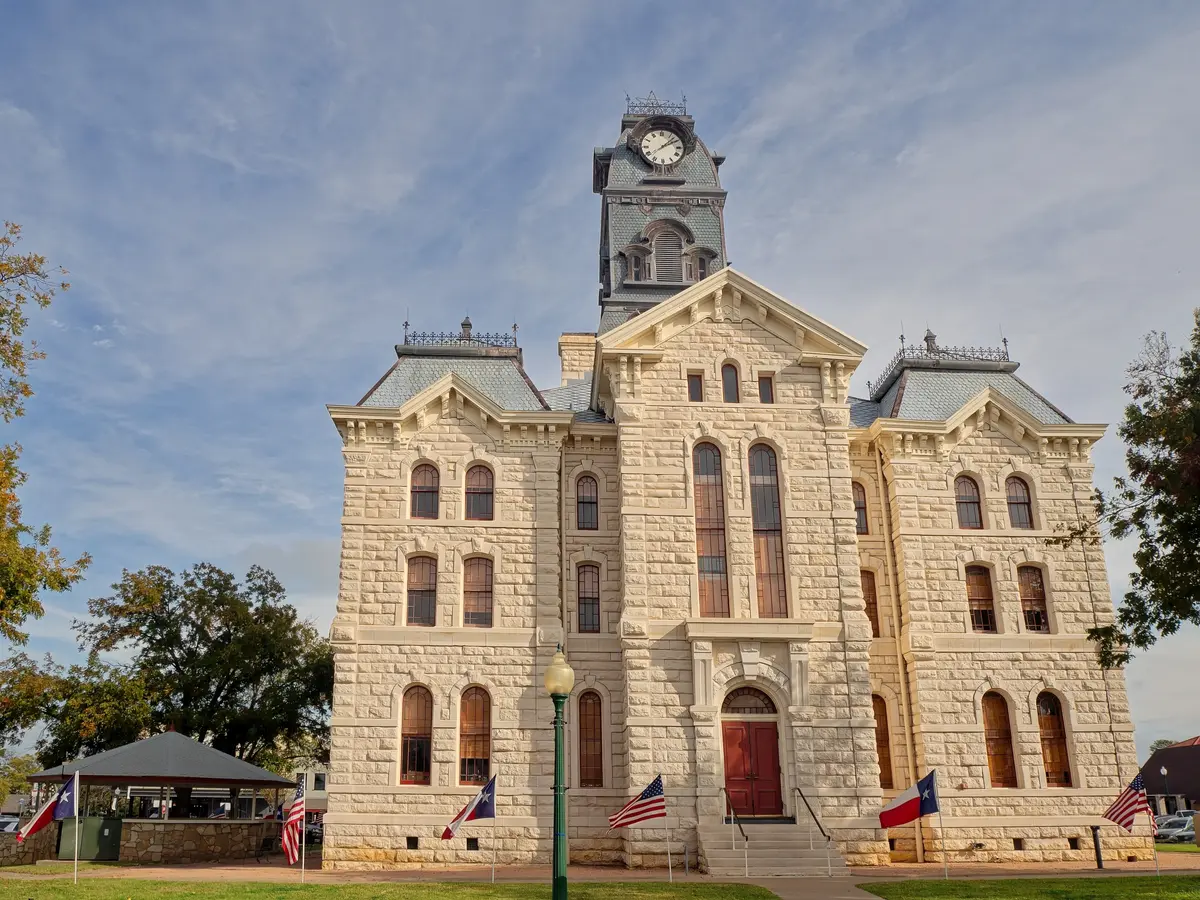
Historic Downtown Rosenberg is worth understanding as a project in motion rather than an arrival. Buildings restored from the 1890s line the core blocks, and the Rosenberg Center for the Arts anchors the cultural footprint alongside seasonal festivals and rotating exhibitions. The Historic Downtown Rosenberg Cultural Arts District draws local artists and gives the city a creative identity that most suburbs its size simply don't have. It's not a Saturday-night destination in the way Houston's neighborhoods are, but it's genuinely pleasant and improving.
Where Families Actually Gather
Seabourne Creek Nature Park is the city's social and recreational center for parents with younger kids — 164 acres of coastal prairie, wetlands, and wooded trails, a four-acre fishing lake stocked with bass and catfish, a butterfly garden, and a visitor center with interpretive exhibits. In 2025, the city added a new fishing pier at the park. On a weekday morning, you'll see more egrets than joggers; on a weekend afternoon, the trails fill with families from across Fort Bend County.
The Fort Bend County Fairgrounds, along SH-36, hosts the Fort Bend County Fair & Rodeo each fall — one of the largest county fairs in Texas, drawing tens of thousands of people over more than a week with a PRCA rodeo, live music, BBQ cook-offs, and livestock shows. Newcomers are frequently surprised by how seriously people take it. Block off your calendar.
The Seasonal Surprise
August and September in Rosenberg are genuinely brutal. The Gulf humidity combines with temperatures that regularly push past 100°F, and the flat coastal plain offers no shade relief. Nobody warns you thoroughly enough before you move. Budget for a good HVAC system and accept that outdoor errands before 9 a.m. or after 7 p.m. are non-negotiable in peak summer.
The flip side: Rosenberg averages 208 sunny days a year, and from October through April, the weather is legitimately pleasant — warm enough for outdoor activity most days, cool enough to make the parks and the Brazos River trails genuinely enjoyable.
For a breakdown of parks, trails, and outdoor options, see the Parks & Recreation guide. School programs and UIL athletics are covered in the Schools guide.
The Rosenberg Housing Market Right Now
The typical home price in Rosenberg sits at $316,001 (Zillow Home Value Index, July 2026). That figure puts Rosenberg meaningfully below the Fort Bend County communities it borders — Sugar Land and Missouri City both run noticeably higher, and Richmond comes in above Rosenberg as well. For buyers stretching from Houston proper or relocating from a higher-cost market, the gap is real.
What you get for that price in Rosenberg is primarily newer construction — master-planned community homes from the 2000s and 2010s with four bedrooms, two-car garages, and HOA-maintained common areas. The older housing stock in and around Historic Downtown runs smaller and generally sits at or below the city-wide figure. Summer Lakes & Summer Park, the city's most established master-planned area, runs above the typical home price — the tradeoff for its amenities and name recognition within the market.
The rental side of the market reflects the city's growth pressure. The city-wide typical rent runs $1,919 per month, which is competitive for Fort Bend County but still represents a significant portion of the median household income of $66,149. Renters considering a purchase here should review the full cost-of-living picture — including the effective property tax rate of 1.87% — before running the rent-vs.-own calculation. That full breakdown lives on the Cost of Living page.
The pipeline of new construction is substantial. The City Council approved a development agreement with Beazer Homes in June 2025 for up to 1,100 single-family homes southeast of US-59/I-69, and Holly Ridge broke ground in August 2025 as a 359-acre master-planned community west of the city. Rosenberg's supply side is actively expanding, which matters for buyers who want new construction and for those who want to understand the resale landscape. Some areas cost more than others, and the full neighborhood-by-neighborhood picture is on the Best Neighborhoods page.
Rosenberg Neighborhoods
Rosenberg has several distinct areas — each with its own character and appeal. Here’s a breakdown to help you narrow down where to focus your home search.
🏡 Summer Lakes & Summer Park
Summer Lakes & Summer Park is Rosenberg's most recognized master-planned address, with landscaped lakes, walking trails, and a community feel that draws families who want Fort Bend amenities at a price still below Sugar Land. It runs above the city-wide typical home price and tends to attract buyers for whom school-district access and neighborhood presentation matter most.
🏠 Kingdom Heights
Kingdom Heights is a newer master-planned community with a mix of production and semi-custom homes that suits families with school-age children who want modern floor plans and HOA-managed green space. The community's layout keeps traffic calm and the neighborhood feel cohesive.
🌳 Bonbrook Plantation
Bonbrook Plantation offers larger lots and a more spread-out feel than some of the city's denser master-planned communities, appealing to buyers who want breathing room between homes. The neighborhood suits families who prioritize outdoor space and a quieter residential texture.
🏘 Briarwood Crossing
Briarwood Crossing is a mid-size residential community with a practical, family-oriented character and proximity to US-59/I-69 access — making it a natural fit for commuters who want to minimize freeway time without sacrificing neighborhood stability.
🏔 River Run / River Mist
River Run and River Mist sit near the Brazos River corridor, giving residents access to trails and natural scenery that most of Rosenberg's inland neighborhoods can't match. The housing stock suits buyers who want a suburban home with a connection to the outdoors baked into the location.
🌆 Miller's Pond
Miller's Pond is a compact, well-kept neighborhood that suits first-time buyers or those downsizing who want a manageable community with easy access to the city's commercial corridors. The pond itself anchors the neighborhood's identity and gives it a sense of place beyond a standard subdivision.
Pros & Cons of Living in Rosenberg
The Pros
- Significantly more affordable housing than nearby Sugar Land or Fulshear
- Historic small-town downtown with a designated cultural arts district
- Convenient access to Houston via US-59/I-69
- Growing job base within Fort Bend County
The Cons
- Longer commute times into central Houston during peak hours
- Lower-rated schools compared to some neighboring Fort Bend districts
- Limited walkability and fewer dense urban amenities
Getting Around & Commuting in Rosenberg
Rosenberg's location is its strongest logistical selling point. I-69 and US-59 — the Southwest Freeway corridor — run through the city and connect directly to the Houston loop and beyond. US-90A provides an alternate route that bypasses the freeway interchange on lighter-traffic days. SH-36 handles north-south movement through the western part of Fort Bend County, and Spur 529 connects local streets to the broader grid.
The Commute Reality
The drive to Houston's employment centers runs about 40 minutes under normal conditions — which means considerably longer during the morning and evening rush on the Southwest Freeway. This corridor is among the most heavily traveled in the Houston metro, and the stretch from Rosenberg toward the West Loop is a known pressure point. Buyers who leave before 7 a.m. or after 6:30 p.m. report manageable commutes; those targeting standard office hours should drive the route before making an offer.
The reverse-commute picture is more forgiving. Workers heading outward from Houston toward Fort Bend's growing employment base — including the industrial corridor along the Southwest Freeway — often find Rosenberg a near-ideal staging point. The Mainline Texas Industrial Park development agreements approved in 2025 could shift a meaningful number of Rosenberg residents from outbound commuters to local workers over the coming years.
Within the City
Within Rosenberg itself, driving is essentially the only practical mode of daily transportation. The city's street grid handles local circulation reasonably well, and most major shopping, schools, and services are reachable in under fifteen minutes by car. The Brazos River trails offer a non-motorized option for recreation, but for routine errands — groceries, school pickup, medical appointments — a car is required.
Airport Access
William P. Hobby Airport is the closest major airport at 38 miles. For residents who travel regularly for work, that distance is manageable but not trivial — it's worth building the drive into your schedule expectations rather than assuming a quick pre-flight run.
| Route | Connects To | Primary Use |
|---|---|---|
| I-69 / US-59 (Southwest Freeway) | Houston loop, Sugar Land, regional corridor | Primary Houston commute route |
| US-90A | Missouri City, Houston (alternate) | Alternate commute, local arterial |
| SH-36 | Fort Bend County, Needville, north-south corridor | Local and regional travel |
| Spur 529 | Local street connections | Neighborhood access |
Traffic on the Southwest Freeway is the single biggest variable in daily life for Rosenberg commuters. Buyers who thrive here tend to be those with schedule flexibility or employers far enough along the corridor that the worst congestion is behind them by the time they merge.
Schools in Rosenberg
Families relocating to Rosenberg have public, private, and higher-education options nearby. Here’s a quick overview.
🎓 School District
Lamar Consolidated Independent School District serves K–12 students across Rosenberg and the surrounding area. Rated B (source: Texas Education Agency, 2025 A-F accountability rating (2024-25 school year)).
🏆 Graduation Rate
The 4-year high-school graduation rate here is approximately 94.2%.
📚 Higher Education
Texas’s public universities — the University of Texas at Austin, Texas A&M University, and the University of Houston — offer four-year degrees statewide, with one of the largest community college systems in the country (50+ public community college districts) providing two-year and workforce programs.
🌐 Online Learning
UT Austin Online and Texas A&M University Online offer fully accredited online degrees for remote learners across the state.
Safety in Rosenberg
A quick look at how Rosenberg compares on the numbers that matter most when weighing a neighborhood or a move.
🛡 Violent Crime
Approximately 2 per 1,000 residents.
🔒 Property Crime
Approximately 15 per 1,000 residents.
Compared to the most recent national figures from the Bureau of Justice Statistics (2024), Rosenberg’s violent crime is below the national average (about 3.7 per 1,000), and property crime is below the national average (about 18.4 per 1,000).
Against Texas as a whole, Rosenberg’s violent crime is roughly half the state average, and property crime is roughly two-thirds of the state average (Bureau of Justice Statistics, Crime Known to Law Enforcement, 2024 (tables 2 and 3)).
Crime rates can vary a lot within a single city, so the citywide numbers above are only a starting point. Some neighborhoods in Rosenberg run well below these averages, while others run higher — the kind of block-by-block detail that matters most when you’re actually choosing where to live. The full guide below breaks it down neighborhood by neighborhood.
Working in Rosenberg
Rosenberg’s largest employers span several industries — here are some of the anchors of the local job market.
🎓 Lamar Consolidated Independent School District
Education
🏛 City of Rosenberg
Municipal government
Parks & Recreation in Rosenberg
Some of the outdoor spaces that shape everyday life in Rosenberg.
🌱 Seabourne Creek Nature Park
Rosenberg residents don’t have to go far for green space — spots like Seabourne Creek Nature Park are part of everyday life here, whether that’s a morning walk, a weekend hike, or just somewhere to unwind outside. The full guide below covers more of what Rosenberg has to offer for parks and outdoor recreation.
Retiring in Rosenberg
Rosenberg draws retirees for its balance of amenities, outdoor access, and cost. Here’s what to weigh.
🌤 Climate
Rosenberg averages 208 sunny days a year, with mild winters that rarely see sustained cold and long, hot summers that run from May through September. For retirees who tolerate Gulf Coast heat well, the October-through-April stretch is genuinely comfortable — warm enough for outdoor activity most days and rarely cold enough to require heavy winter gear.
🍴 Lifestyle
The Rosenberg Center for the Arts and the Historic Downtown Cultural Arts District offer rotating exhibitions and seasonal events year-round. Seabourne Creek Nature Park's trails, butterfly garden, and fishing lake suit retirees who want accessible outdoor activity without strenuous terrain. The Fort Bend County Fair & Rodeo is the city's signature community event each fall.
🏚 55+ Communities
No 55+ communities were found in Rosenberg. Retirees who prioritize an age-restricted setting will need to look toward neighboring communities in Fort Bend County. For healthcare context and senior-living options in the broader area, see the Retiring in Rosenberg page.
✈ Getting Around
A car is necessary for virtually all daily errands in Rosenberg. Most routine needs — groceries, medical appointments, dining — are accessible within a short drive. OakBend Medical Center is 4 miles away. William P. Hobby Airport is 38 miles, making it manageable for retirees with moderate travel schedules.
🏛 Texas Taxes for Retirees — What to Know
- No state income tax — Texas has no personal income tax — constitutionally protected under Article VIII, Section 24. Social Security, pensions, 401(k)/IRA withdrawals, and annuity payments are all untaxed at the state level, with no state return to file.
- Sales tax is the tradeoff — The state sales tax is 6.25%, and local add-ons bring the combined rate in Rosenberg to 8.25% (Texas Comptroller of Public Accounts, city sales and use tax rates, July 2026). Groceries and prescription drugs are exempt.
- Property taxes — the real tradeoff — Texas’s effective property tax rate averages about 1.40%, among the highest in the country, since property tax (not income tax) funds most local government and schools.
- Over-65 homestead exemption and school-tax freeze — Homeowners 65+ (or disabled) get an additional $60,000 exemption from their home’s value for school district taxes, on top of the general homestead exemption — $200,000 off school taxable value combined, following November 2025’s Proposition 11 (SB 23), which raised the over-65 exemption to $60,000, and Proposition 13 (SB 4), which raised the general homestead exemption to $140,000. Once claimed, your school district tax bill is frozen at that year’s amount and cannot increase as home values rise, and the ceiling can transfer if you move to a new home within Texas.
- Deferral option if cash is tight — Homeowners 65+ can defer property tax payment entirely for as long as they live in the home, rather than paying it currently — interest accrues, but no forced sale.
- No estate or inheritance tax — Texas has no estate tax, no inheritance tax, and no gift tax.
- No separate capital gains tax — Because Texas has no state income tax, capital gains — including on investments and home sales — are not taxed at the state level at all, unlike states such as Washington that tax capital gains separately from income.
Tax laws change frequently and individual situations vary. This is general information, not tax advice — always consult a qualified Texas tax professional or CPA for personalized retirement tax planning.
Weekends & Local Favorites in Rosenberg
Rosenberg's weekend scene is grounded in the kind of places that have been here long enough to earn a regular crowd — not trendy pop-ups, but spots locals return to without thinking too hard about it.
Food & Drink
Gringo's Mexican Kitchen is the reliable Tex-Mex anchor, the kind of place where families land after a Saturday soccer game. Witt Pit BBQ handles the smoked-meat contingent with the seriousness Fort Bend County barbecue culture demands. For Italian, Adriatic Café Italian Grill draws a loyal dinner crowd. The Boudin Company brings Cajun-inflected flavors that reflect the Gulf Coast cultural overlap this part of Texas carries naturally. Fire & Ice Daiquiris To-Go Bar is exactly what it sounds like, and on a Friday afternoon in October it earns its parking lot.
Coffee & Bakeries
First Cup Coffee Co. is the local independent coffee answer for morning regulars. Hummingbird Bakery, V-Star Donut, Ana's Confections Bakery & Coffee Shop, and Karma Kolache & Dessert round out a morning pastry scene that reflects the city's diversity — kolaches here are a serious category, not an afterthought.
Culture & History
The Rosenberg Railroad Museum sits next to active tracks and earns its admission — a 1972 MoPac caboose, an 1879 Quebec passenger coach, a working model train exhibit, and a historic interlocker tower make it genuinely worth an afternoon, especially with kids. The Rosenberg Center for the Arts and the Historic Downtown Rosenberg Cultural Arts District give the city an arts identity that surprised more than a few newcomers who moved here expecting nothing but strip-mall suburbia.
Outdoors
Seabourne Creek Nature Park's 164 acres, butterfly garden, and stocked fishing lake anchor the outdoor weekend. The new fishing pier added in 2025 has made the lake more accessible for families without a lot of gear. Brazos River trails extend the options for walkers, joggers, and cyclists who want something more than a neighborhood loop. The Fort Bend County Fairgrounds host the Fort Bend County Fair & Rodeo each fall — a genuine Texas event, not a scaled-down approximation of one.
Local favorites in Rosenberg
Restaurants
- Gringo’s Mexican Kitchen {Rosenberg}
- The Boudin Company
- Fire & Ice Daiquiris To-Go Bar
- Witt Pit BBQ
- Adriatic Café Italian Grill
Outdoors
- Seabourne Creek Nature Park
- Rosenberg City Pool
- Brazos River trails
- Fort Bend County Fairgrounds
Coffee
- First Cup Coffee Co.
- Hummingbird Bakery
- V-Star Donut
- Ana’s Confections Bakery & Coffee Shop
- Karma Kolache & Dessert
Top Things Locals Say About Rosenberg
The best intel about a city comes from the people who actually live there. Here’s what Rosenberg residents say when newcomers ask the questions everyone’s thinking.
“I knew the commute would be a factor, but I didn't realize how much the Southwest Freeway could vary day to day — some mornings it's fine, other mornings it adds forty-five minutes. What I didn't expect was how much we'd actually use Seabourne Creek on weekends, or how genuinely into the county fair our kids would get after the first year.”
— Recent Rosenberg home buyer
“What's the most surprising thing about living in Rosenberg?”
Most people moving from Houston expect it to feel like a generic suburb, and then they discover the Historic Downtown — the restored 1890s buildings, the arts center, the seasonal festivals — and realize there's a real sense of place here. The Fort Bend County Fair also catches newcomers off guard. It's not a small local event; it's a serious multi-week Texas fair that the whole county turns out for.
“What do locals love most about Rosenberg?”
The price for what you get is hard to argue with — a four-bedroom house with a yard in a neighborhood like Kingdom Heights or Bonbrook Plantation for what a townhome costs closer to the loop. Seabourne Creek Nature Park is genuinely loved by families here, and the diversity of the city — the food, the people, the cultural mix — gives it a texture that a lot of newer master-planned suburbs lack.
“What should newcomers to Rosenberg know?”
Give yourself at least two weeks to understand the Southwest Freeway patterns before you settle into a routine. The congestion is real but it's also predictable once you know the timing. Summer heat starts in earnest by late May and doesn't really break until October — 100°F with Gulf humidity is the baseline expectation, not an exception. The fall and winter are genuinely pleasant, which is when you'll understand why people stay.
“How much do you need a car in Rosenberg?”
A car is essential for virtually all daily life here — groceries, school runs, medical appointments, and most dining all require driving. The Brazos River trails and Seabourne Creek Nature Park are accessible by car and worth the trip, but you won't walk to either from most neighborhoods. If you're coming from a city where you could manage without a vehicle, budget the cost and adjust your expectations before you arrive.
Cities Near Rosenberg
Other communities near Rosenberg worth a look — each with its own character and price point.
| City | Distance | Best For | Vibe | Median Rent | Median Buy |
|---|---|---|---|---|---|
| Richmond | 3 mi | History lovers & established neighborhoods | Older, quieter, county-seat character | $1,833 | $380,221 |
| Sugar Land | 12 mi | Master-planned amenities & top schools | Polished, walkable town center, higher price point | $2,068 | $449,277 |
| Missouri City | 15 mi | Houston commuters & diverse neighborhoods | Established, suburban, strong community feel | $2,132 | $336,838 |
More Helpful Guides for Rosenberg
Going deeper on Rosenberg? Our blog series covers everything from first-time buying to retiring here — explore the guides below.
Local Expert Takeaway: Rosenberg is the Fort Bend County buy that still makes financial sense — a typical home price of $316,001 (July 2026), a school district that holds a B rating according to the Texas Education Agency, and a major industrial park with development agreements in place as of 2025 that could redefine the city's employment base within a decade. The catch is the Southwest Freeway commute, which is real and should be driven during rush hour before you commit. If you can live with car-dependence and a humid summer, Seabourne Creek Nature Park, the Fort Bend County Fair, and a Historic Downtown that's actively improving make this a city with more texture than its price point would suggest.
Quick Takeaways & FAQs
✅ Rosenberg's typical home price of $316,001 (July 2026) sits noticeably below neighboring Sugar Land and Missouri City, making it one of the most accessible entry points into Fort Bend County.
⚠️ The Southwest Freeway commute to Houston is approximately 40 minutes under normal conditions — but rush-hour traffic on this corridor is among the heaviest in the metro, and buyers should drive it before committing.
📍 The Fort Bend County Fair & Rodeo at the Rosenberg Fairgrounds is one of the largest county fairs in Texas — a fall tradition that surprises most newcomers with its scale and the community seriousness it draws.
Is Rosenberg TX a good place to live?
What is the cost of living like in Rosenberg, TX?
How are the schools in Rosenberg TX?
How far is Rosenberg TX from Houston?
Is Rosenberg TX safe?
Helpful Links for Moving to Rosenberg
Moving to Texas?
Tell us what you need help with and we'll connect you with local resources.
