
You've run the numbers, and at some point the California math stopped working. Maybe it was the insurance renewal that came in 40% higher. Maybe it was watching a three-bedroom house two towns over list above a million dollars. Maybe someone at the office mentioned they'd just bought four bedrooms in Katy, Texas for what a condo in the Central Valley costs. The California-to-Texas corridor is the largest interstate population shift in the country right now, and Katy keeps appearing near the top of that conversation because it offers something specific: a major Houston suburb with a well-regarded school district, a real job base, and home prices that feel almost implausible coming from a California ZIP code.
Katy sits about 40 minutes to Downtown Houston along I-10, the Katy Freeway — one of the widest highways in the country — with US-90 as a secondary corridor. The city proper has a population of 28,373, though the communities that carry the Katy name and Katy ISD address extend well beyond those limits into unincorporated Harris, Fort Bend, and Waller counties. That distinction matters: when people say they're moving to Katy, they usually mean the broader area. Katy Independent School District is the civic engine here. The district holds a B rating, according to the Texas Education Agency, and its Friday night football culture — active UIL athletics programs filling the stands at the district's large stadium venues — is something California transplants either immediately embrace or quietly observe with curiosity.
The financial case for Katy is straightforward, and the sections below make it concrete. The typical home price as of July 2026 sits at $337,000, a figure that stops California buyers mid-sentence. The city's cost of living runs approximately 6% below the U.S. national average, with housing costs about 13.7% below the national average. Texas has no state income tax, which matters enormously once you model out what you were actually paying Sacramento. The trade-offs are real too — the property tax rate is meaningfully higher than what California's Proposition 13 system produced, summers are punishing in a way that coastal California never is, and Houston's sprawl means most errands happen from behind a steering wheel. None of that makes Katy a wrong answer; it makes it a different one, and worth understanding clearly before you commit.
Whether you're in the early research phase or already have a U-Haul date circled, the sections below break down the home price gap, the full tax picture, what to expect from daily life, the school district, and the honest downsides that California transplants tend to discover in month four.
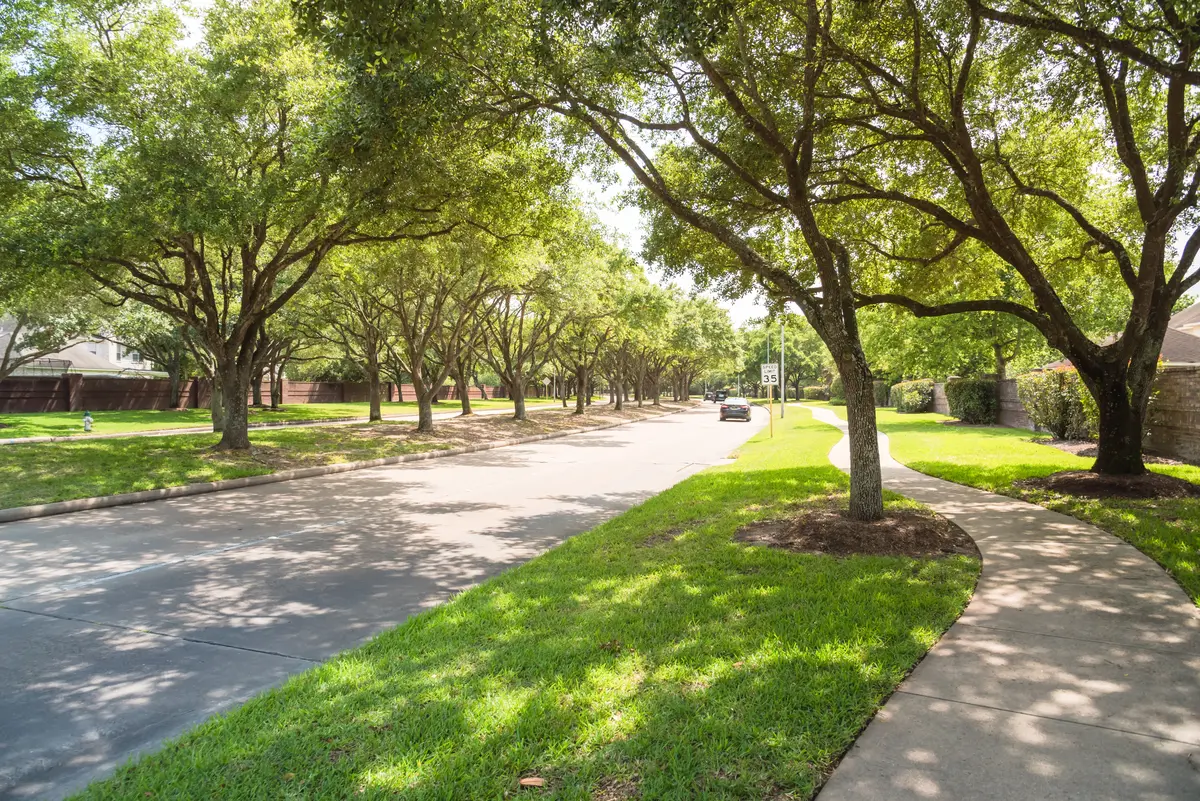
The Home Price Reality: What $337,000 Actually Buys
California's statewide typical home value of $773,735 is itself a blended number that obscures how much worse it gets in coastal metros. Katy's typical home price as of July 2026 is $337,000. That is not a starter-home floor or a distressed-inventory figure — it is the city-wide midpoint, meaning a genuine mid-market home in a functional neighborhood with access to Katy ISD.
That gap funds real house. In Katy, the typical mid-market home gets you four bedrooms, two or three bathrooms, a two-car garage, and a backyard — the kind of amenity infrastructure with pools, trails, and playgrounds that most California subdivisions reserve for buyers well above the median. Buyers coming from Sacramento, the Inland Empire, or the Central Valley sometimes feel the sticker shock in reverse: they budget for what they'd need to compete in California and find themselves with purchasing power they don't know how to spend.
Entry Points and Upper Tiers
The city-wide median is where most of the action is, but Katy's internal range is real. Neighborhoods like Cane Island and Elyson sit above the city median — Cane Island in particular draws buyers who want newer construction, resort-style amenity packages, and a more elevated finish level. For context on where neighborhoods fall relative to each other, the best neighborhoods guide breaks down character and fit.
Older sections of the city — including established communities like Nottingham Country, Kelliwood, and Grand Lakes — offer resale homes on mature lots with established trees, a quality that newer master-planned communities can't replicate. Old Town Katy offers a different texture entirely: smaller lots, older stock, and walkable proximity to the historic district.
The Insurance Reversal
One number California buyers don't always factor in at first: homeowners insurance. California homeowners have watched average premiums rise roughly 84% since 2020, with more than half a million Californians now on the state's FAIR Plan as major carriers have pulled back. Texas homeowners insurance is not cheap — coastal proximity, hail risk, and flooding make it a real line item — but you are almost certainly paying less than your California renewal, and you are doing it with standard market coverage rather than a residual-market backstop. Budget carefully; do not assume Texas insurance is inexpensive in absolute terms, only that the California baseline has become unusually painful.
For the full cost-of-living picture — utilities, groceries, and how Katy compares to nearby cities like Fulshear, Cypress, and Sugar Land (all noticeably higher on home prices) — see the cost of living page.
The Tax Shift: Where You Win and Where You Give Ground
The tax picture is the reason this move changes many Californians' financial lives more than the home price does. Understanding both sides of it — the dramatic wins and the real costs — is what separates buyers who feel great about year two from the ones who open their first property tax statement with genuine alarm.
State Income Tax: The Biggest Line Item
Texas levies no state income tax. California's top state income tax rate of 13.3% applies only to the highest earners, but California's progressive income tax runs from 1% all the way up to that ceiling — and the brackets hit sooner than most people realize. The income tax savings favor higher earners most directly; the more you make, the more pronounced the advantage. For dual-income households or anyone climbing into California's upper brackets, the practical effect on take-home pay is immediate and significant.
California's top rate of 13.3% is the highest top marginal state income tax rate in the nation (Tax Foundation). Move that income to Katy, and every dollar that previously went to Sacramento stays in your account — year after year, permanently.
Property Tax: The Real Trade-Off
Here is where the honest conversation happens. Katy's effective property tax rate is 2.09%. California's effective property tax rate of 0.71% is kept low by Proposition 13, which caps annual assessment increases at 2% until a property sells. The moment you buy in California, your assessed value resets to the purchase price — and the same is true in Texas. But in Texas, county appraisal districts reassess annually at market value with no equivalent cap on how much the appraised value can move.
Texas partially offsets this with a general homestead exemption for owner-occupants, and eligible seniors and disabled homeowners can qualify for an additional combined exemption. The net result: most California transplants save substantially on state income tax and spend more on property tax. Higher earners typically come out well ahead. Buyers on more moderate incomes should model both figures carefully before assuming the move is a straightforward financial win. Full property and sales tax figures live on the cost of living page.
Sales Tax
California's statewide base sales tax rate of 7.25% is the highest state-level rate in the country, with local add-ons pushing the combined rate as high as 10.75% in some California jurisdictions. Katy's combined sales tax rate is 8.25% — meaningfully lower than what many California cities charge after local additions stack on top of the state base. On large purchases — appliances, furniture, a vehicle — this difference adds up noticeably over the first year after the move.
Healthcare Costs
Health insurance premiums in Texas generally run noticeably below what you were paying in California, particularly if you were buying individual market coverage. The trade-off is distance: advanced specialist care means a drive into the Houston Medical Center, and Katy is not a city where every subspecialty is five minutes away.

Daily Life After the Move: What Changes and What Surprises You
The financial transition is usually easier to prepare for than the lifestyle one. California transplants consistently report that the first month in Katy feels exciting, the second feels manageable, and somewhere around month four a specific set of adjustments becomes clear.
Summer Is Not a Season — It's a Condition
Katy receives 208 sunny days a year. That sounds appealing until you realize that roughly 90 of those days will be above 90 degrees with humidity that makes the temperature feel 10 degrees hotter. June through September in Katy is genuinely difficult if you moved from coastal California, where that kind of heat is rare. People who grew up in the Central Valley or the Inland Empire adapt faster. People arriving from the Bay Area or San Diego often underestimate it badly. The practical effect: outdoor plans shift to early morning or evening, and air conditioning is not optional — it is a utility on par with electricity. Budget accordingly, and do not expect a gentle warm-up period.
The Car Is Not Optional
Katy is a car-dependent community. This is not a criticism — it is the operating reality of a Houston-area suburb built around the interstate grid. Most errands, most restaurants, most school pickup loops happen from the driver's seat. Californians who lived in walkable urban neighborhoods will notice this most sharply; those who were already driving everywhere in the suburbs often report the transition as nearly seamless. The city does have pedestrian-friendly pockets — LaCenterra at Cinco Ranch functions as a walkable town center with restaurants, retail, and an outdoor plaza — but it is a destination, not a neighborhood you happen to live in.
Where People Actually Gather
Community life in Katy organizes itself differently than in California. The Friday night football games at the district's large stadium venues draw the whole region — this is a genuine civic event, not just a school activity. The farmers markets anchor weekend routines: the Farmers Market On Grand Parkway and the Old Katy Farmers Market at The Dryer both draw regulars and give the community a recurring gathering point outside the chain-retail corridor. George Bush Park and Mary Jo Peckham Park are where families with school-age children spend the non-summer months, and Willow Fork Park fills in for weekend activity closer to the newer subdivisions.
What Californians Miss Most
Six months in, the honest answers from transplants cluster around a few things: the physical landscape (flat, with no mountains on the horizon), the food and coffee scene (broader than people expect in a Houston suburb, but different in character from California's food culture), and the distance from the ocean. Katy has a diverse dining scene — Katy Asian Town is a genuine regional draw — and the city's independent coffee shops and casual restaurants serve the population well. But if the beach or the mountains were part of your weekly rhythm, that absence is real and worth factoring in before you commit.
Looking to buy in Katy? Estimate your payment.
Enter your numbers to see an estimated monthly mortgage payment.
Estimate only. Excludes HOA fees and mortgage insurance. The interest rate above is a starting point, not a quoted rate — replace it with your own to see real numbers. Insurance is a flat placeholder, not a Katy quote.
Schools, Community, and What Families Are Buying Into
For most California families making this move, Katy ISD is the primary reason this suburb lands at the top of the list rather than somewhere else in the Houston metro. The district holds a B rating, according to the Texas Education Agency, and its scale — one of the larger suburban districts in Texas — gives it the budget and infrastructure to support programs that smaller districts can't sustain.
On 2024-25 state assessments, 63% of students reached math proficiency and 72% reached reading proficiency. Those figures give you an honest picture of where the district performs — solid, not exceptional, and consistent with a large suburban district managing a highly diverse student population. The district's active UIL athletics programs are genuinely part of the culture here in a way that California sports never quite replicated: Friday nights carry real weight, and the community shows up.
The School Boundary Question
Katy ISD is large enough that which school your child attends depends heavily on which specific neighborhood you buy in — and the boundaries don't always follow the patterns newcomers expect. A house in Elyson might feed into a different high school than a house half a mile away in Sunterra, and the reputational differences between high schools within the district are real enough that some families let school assignment drive their neighborhood choice entirely. If you have school-age children, verify the assignment for any specific address before you make an offer, not after. The schools page goes deeper on individual campuses, extracurricular programs, and what families with kids here actually report.
Youth Activities and the Community Fabric
Katy is a family-forward community in a way that shows up in infrastructure, not just marketing copy. The parks system is active and well-used. Typhoon Texas Waterpark is a serious summer resource for families — a regional waterpark that fills a genuine gap in the Houston area. Club sports, recreation leagues, and organized youth activities have the density you'd expect from a suburb this size. This is not a city where kids are bored on a Saturday; the question is more about car logistics than about what to do.
The Honest Trade-Off: What You Give Up and What You Gain
Californians who move to Katy run a version of the same internal audit. The gains are large and measurable. The trade-offs are real and worth naming plainly rather than glossing over in the excitement of the price comparison.
What You Gain
| Category | California Baseline | Katy Reality |
|---|---|---|
| Home price reference | California's statewide typical home value of $773,735 | Typical home price $337,000 (July 2026, Zillow Home Value Index) |
| State income tax | California's top state income tax rate of 13.3%; brackets begin at 1% | Zero. Texas levies no state income tax. |
| Sales tax base rate | California's statewide base sales tax rate of 7.25%, with local additions up to 10.75% | 8.25% combined rate in Katy |
| Property tax rate | California's effective property tax rate of 0.71%, held low by Proposition 13 | 2.09% effective rate; general homestead exemption for owner-occupants |
| School district | Varies widely; many California districts face structural challenges | Katy ISD, B rating (Texas Education Agency) |
| Homeowners insurance | Average premiums up 84% since 2020; FAIR Plan dependency rising | Standard market coverage available; lower than California's recent trajectory |
What You Give Up
The property tax rate is the first shock — and it is a real one. Coming from California's Proposition 13 environment, where a long-term homeowner might be paying effective rates well below 1%, Katy's 2.09% requires a genuine adjustment to how you model housing costs. The income tax savings offset this for higher earners, but the offset is not automatic — it depends on your income level, and buyers toward the lower end of the income spectrum should run the numbers carefully rather than assuming the trade is favorable.
The climate requires an honest reckoning. Gulf Coast summers are humid and long. If outdoor living was central to your California lifestyle — the kind where you eat dinner on the patio in October with a light jacket — that calculus changes significantly. Katy's outdoor season is real, but it runs roughly October through May rather than year-round.
Sprawl is structural, not fixable by choosing the right neighborhood. I-10 carries enormous volume, and the commute to Downtown Houston on a clear day can stretch well past 40 minutes in heavy traffic. Buyers who work remotely feel this less; anyone commuting into Houston daily will feel it consistently. The living in Katy guide covers commute patterns and employer landscape in depth.
Who This Move Works Best For
California transplants who land in Katy most successfully tend to share a few characteristics: they were already suburban in their California lives, they have children or plan to, they work in industries that pay well enough that the income tax savings are substantial, and they came with clear-eyed expectations about heat and car dependence. The move tends to disappoint buyers who assumed Katy would feel like a California suburb with a Texas address — the culture, the climate, and the physical geography are genuinely different, and embracing that difference rather than negotiating with it is what separates people who are glad they moved from people who start researching a return within two years.
For safety context, see the safety page. For neighborhood character and geographic divides within Katy, the neighborhoods guide is the right starting point.

Local Expert Takeaway: The financial case for moving from California to Katy is real — the income tax elimination returns real money annually to most households, with higher earners seeing the largest benefit — but the buyers who thrive here are the ones who came prepared for 2.09% property taxes, Houston-scale heat, and a car-dependent suburb rather than expecting California life at Texas prices. Katy ISD's B rating (Texas Education Agency) and the community infrastructure around it — from Friday night football to the Old Katy Farmers Market at The Dryer on weekends — give families with school-age children a specific, concrete reason to pick this suburb over others in the Houston area. Do the full tax math before you move, not after.
Quick Takeaways & FAQs
✅ Texas levies no state income tax, which means a substantial annual savings for most households compared with California — a structural financial advantage that begins the day you establish Texas residency.
⚠️ Katy's effective property tax rate of 2.09% will likely be higher than what you paid in California under Proposition 13, and the annual reassessment system means that bill can move — budget for it as a real cost, not a footnote.
📍 The Katy ISD boundary for your specific address determines which campus your children attend, and the differences between high schools within the district matter enough that families routinely let school assignment drive their neighborhood choice — verify before you offer.
How much do I actually save on taxes moving from California to Katy?
Is the Katy school district worth moving for?
What should I expect from Katy summers coming from California?
How does the home-buying process in Texas differ from California?
What do California transplants say they wish they'd known before moving to Katy?
Moving to Texas?
Tell us what you need help with and we'll connect you with local resources.
