
About 210 Californians moved to Texas every single day in 2024, making it the largest state-to-state migration corridor in the country. Hutto, a fast-growing city of 46,048 in Williamson County northeast of Austin, has become one of the most common landing spots — not because it showed up on a list, but because people priced out of the Bay Area or greater Los Angeles find that $335,073 buys an actual house here, not a condo at the edge of a suburb. The catch is real: you will trade California's property tax structure for Hutto's 1.80% effective rate, and the two systems work very differently. Understanding that trade-off before you sign anything is the most important thing this guide can do for you.
Hutto ranked 13th fastest-growing city in the United States among places with at least 20,000 residents, and led the entire Austin metro by percentage growth — a 9.4% population increase from July 2023 to July 2024 according to the U.S. Census Bureau. That growth is attracting real commercial investment: the city approved a $500 million data center development agreement in 2024, and Hutto Crossing Industrial Park is adding 1.6 million square feet of industrial space along US-79. The Hutto Independent School District serves 11,101 students enrolled in 2025-26. Dell Technologies in nearby Round Rock draws many residents for work, and the East Williamson County Higher Education Center adjacent to SH-130 hosts Texas State Technical College, Temple College, and Texas A&M University–Central Texas for bachelor's and master's programs.
Hutto's typical home price sits at $335,073 as of July 2026 — well below California's statewide typical home value of $773,735. That gap is the headline, but the full cost picture is more nuanced: you lose the income tax break California never gave you (Texas has none), you gain a higher property tax rate than most Californians have ever seen on a personal residence, and your daily grocery and retail costs land in a range that feels modest by California standards. Austin-Bergstrom International Airport is about 28 miles away — close enough that the metro's connectivity is genuinely yours. For outdoor access, Cottonwood Trail, Hutto Lake Park, and Fritz Park cover the basics, and about 30 minutes to Austin keeps the full metro within reach on weekends.
Whether you're narrowing a short list or already have a lease-break date circled, the sections below cover the California-to-Hutto home price gap, the Texas tax system in detail, what changes in daily life, where Californians typically settle in Hutto, and the practical steps most people underestimate before and after the move.
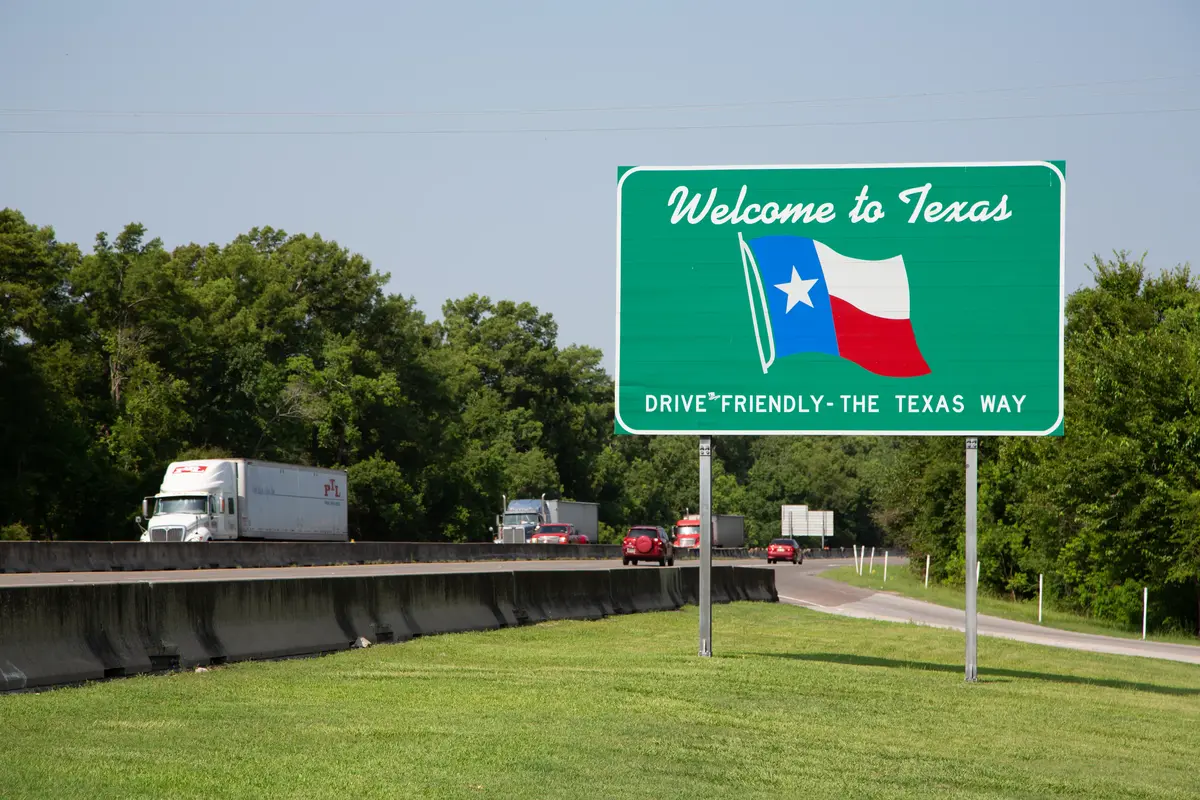
The Home Price Gap: What Your California Equity Actually Buys Here
California's statewide typical home value of $773,735 is a statewide figure — many California buyers are coming from markets where that number is a floor, not a ceiling. Hutto's typical home price of $335,073 (Zillow Home Value Index, July 2026) means that equity from a sold California home frequently covers a Hutto purchase outright, or produces a down payment large enough to lower monthly carrying costs dramatically.
That price point gets you a detached single-family home — typically three or four bedrooms, a two-car garage, and a yard — in developments like Star Ranch, Carmel Creek, Emory Farms, or Riverwalk. These are not starter-home compromises; they are the standard product in Hutto's new-build neighborhoods. Resale options in older sections of town and in areas like Prairie Winds and Brooklands can come in below the city-wide typical figure.
The neighborhoods closest to the SH-130 corridor and the Hutto Co-Op District tend to attract buyers who want walkable access to local retail and the growing restaurant scene. Legends of Hutto and Emory Crossing skew toward newer construction and families with school-age children. For a deeper look at how each area compares on character and fit, see the best neighborhoods in Hutto guide.
The Equity Conversion Most Californians Don't Fully Plan For
Californians arriving with significant equity sometimes find themselves buying more house than they need — because they can. The more useful question is whether your household income supports the ongoing carrying costs in a state with a 1.80% effective property tax rate. Hutto's median household income of $119,543 is at or above the income level needed to buy the typical home here, which tells you the market is calibrated to local earnings — not to California equity imports. If your income is moving with you (remote work, a job transfer to the Austin metro), the math works cleanly. If you are retiring on fixed assets, run the property tax numbers carefully before you choose a price point.
One thing Californians consistently underestimate: the Williamson County area saw self-storage inventory expand 68% as migration accelerated — a real proxy for how many households are mid-transition at any given time. Build in storage costs and a timeline buffer when you plan the physical move.
Texas vs. California Taxes: The Full Picture
The income tax headline is simple. California's top state income tax rate of 13.3% is the highest marginal rate of any U.S. state, applied to the highest earners. Texas has no state income tax — it is constitutionally prohibited. For a household earning $100,000, the annual difference runs to roughly $5,208 in state income tax savings, according to CountryTaxCalc's California vs. Texas analysis. For dual-income professional households in the $150,000–$250,000 range, the cumulative savings over a decade are significant enough to materially change retirement timelines.
The Property Tax Trade-Off
Here is where Californians get the biggest surprise. California's effective property tax rate of 0.71% is held low by Proposition 13's assessed-value caps — many long-term California homeowners pay tax on a 1978 assessment basis. Texas has no equivalent cap on new purchases. Hutto's effective property tax rate is 1.80%, which is higher than even the Texas statewide average.
On a $335,073 home, that rate difference is concrete and significant. Texas does offset this with a homestead exemption: Texas voters approved a ballot measure (referred to in the legislation as SB 4) in November 2025, raising the school-district homestead exemption from $100,000 to $140,000, retroactive to the 2025 tax year. Seniors and disabled homeowners qualify for a $150,000 school-district exemption. To capture the benefit, new Hutto buyers must file a homestead exemption application (Form 50-114) with the Williamson County Appraisal District by April 30 of the applicable tax year.
One timing detail that trips up first-year owners: Texas's 10% annual appraisal cap — which limits how much your assessed value can rise each year — does not apply in the first full year of ownership. If you close on a Hutto home this year, the cap begins protecting you the following year, not immediately. Do not assume your first tax bill reflects a capped value.
Sales Tax and the Grocery Exception
California's statewide base sales tax rate of 7.25% is the highest statewide base rate in the U.S., and most California jurisdictions stack local rates on top of it. Texas's combined state and local rate averages 8.19%, compared with California's combined average of 8.99% — a modest edge in Texas's favor. Neither state taxes groceries, so the gap at the supermarket comes from cost-of-living differences rather than tax structure.
| Tax Category | California | Texas / Hutto |
|---|---|---|
| State income tax (top rate) | California's top state income tax rate of 13.3% | None (constitutionally prohibited) |
| Effective property tax rate | California's effective property tax rate of 0.71% | 1.80% (Hutto effective rate) |
| Statewide base sales tax | California's statewide base sales tax rate of 7.25% | 6.25% state base (avg. combined 8.19%) |
| Grocery tax | None | None |
| School-district homestead exemption | N/A (Prop 13 caps assessed value) | $140,000 (as of 2025 tax year, SB 4) |
| Appraisal cap on homestead | Assessed at purchase year basis | 10% annual cap (starts year after purchase) |
* California figures: Zillow Home Value Index; California Franchise Tax Board; California Dept. of Tax and Fee Administration. Texas/Hutto figures: Texas Comptroller of Public Accounts; city fact sheet.
The net tax picture for most working households is strongly in Texas's favor. The reversal point — where California's lower property rate starts to outweigh Texas's income-tax-free status — typically only applies to long-term California homeowners with a very low Prop 13 assessment basis and a relatively modest income. For anyone earning above $80,000 or moving from a market with a purchase-year assessment, Hutto's tax structure is a meaningful improvement in total tax burden despite the higher property rate.

What Changes in Daily Life — and What Doesn't
The weather shift is the first thing most California movers notice. Hutto gets 225 sunny days a year — less than the Texas marketing mythology suggests, and punctuated by genuine thunderstorm seasons in spring and fall that a coastal California transplant will not be ready for. Summer heat is sustained and real: consecutive weeks above 100°F are normal, not exceptional. Air conditioning is not an amenity here; it is infrastructure, and your electricity bill will reflect that.
Driving Is the Default
Hutto is a car-dependent city. US-79 and SH-130 handle most of the daily movement, with FM-685 (Chris Kelley Boulevard) and FM-1660 serving the residential neighborhoods. Getting to Austin takes about 30 minutes under normal conditions, though peak-hour traffic on the SH-130 corridor adds time. Most daily errands and the Austin commute mean time behind the wheel — that is simply the shape of life here, and most California transplants adjust to it faster than they expect.
A serious shopping trip — for anything beyond the basics at local grocery stores and the growing retail along US-79 — still means driving out of town. Hutto's commercial base is expanding fast, but the full metro retail range is in Round Rock, Pflugerville, and Austin. You will order online more than you did in a denser California city, and you will make peace with that quickly.
The Community That's Actually Here
Hutto has a specific civic identity that California transplants find either endearing or disorienting. The Henrietta the Hippo statue in the Old Town Hutto Historic District is a genuine local landmark, not a PR stunt — the hippo is the city mascot and locals take it seriously. The Hutto Farmers Market draws a real crowd. The Hutto Co-Op District is an evolving mixed-use area that has become the social center for newer residents. Active UIL athletics programs mean Friday night football is a genuine community event, not just a high school thing.
Health insurance premiums run noticeably below what you were paying in California, though you will drive farther for specialist care than residents of denser metro areas. Routine care is accessible locally; advanced specialist care means heading into the Austin metro.
What takes longer to adjust to: the pace of suburban Texas socializing. People here gather at parks, at Friday football, and at the farmers market — not at a walkable block of restaurants and bars. The food and coffee scene is real (see the local favorites section below), but it is a smaller-city scene. Californians who move here expecting density comparable to even a mid-tier California city tend to find the adjustment takes about six months.
Looking to buy in Hutto? Estimate your payment.
Enter your numbers to see an estimated monthly mortgage payment.
Estimate only. Excludes HOA fees and mortgage insurance. The interest rate above is a starting point, not a quoted rate — replace it with your own to see real numbers. Insurance is a flat placeholder, not a Hutto quote.
Where Californians Tend to Land in Hutto
Most California buyers arriving in Hutto end up in one of two zones: new-construction neighborhoods near SH-130 where the price-per-square-foot is clear and the HOA infrastructure is established, or older in-town areas close to the Old Town Hutto Historic District where the lots are larger and the character is more established. Each suits a different kind of buyer.
New Construction Neighborhoods
Star Ranch, Emory Crossing, and Legends of Hutto are where most California buyers land first, largely because the homes are easy to evaluate remotely — builder-grade finishes, defined warranty periods, and a price range that is transparent from the model home visit. The Golf Club at Star Ranch gives that neighborhood a specific amenity anchor that makes sense to California buyers used to master-planned communities.
Carmel Creek and Emory Farms attract parents with school-age children who want newer construction without driving to the far edge of the city. Riverwalk and Brooklands round out the newer developments, each with access to green space and the trail network around Cottonwood Trail and Creekside Park.
In-Town Options
Prairie Winds and the areas adjacent to the Old Town Hutto Historic District offer a different calculus: larger lots, more established trees, and a neighborhood character that does not feel like it was built last Tuesday. These areas appeal to California buyers who came from older in-fill neighborhoods and found new construction sterile. The trade-off is that resale inventory moves less predictably than new builds, and the inspection list on older Hutto homes sometimes includes deferred maintenance items that a California buyer used to competitive offers and waived contingencies is not prepared for.
For neighborhood-by-neighborhood detail on character and fit, the best neighborhoods in Hutto page covers each area specifically.
The Honest Geographic Reality
Hutto's growth has pushed development outward from the original town core in every direction. Where you land relative to US-79 and SH-130 matters practically: those two corridors carry the retail, the employment access, and the Austin commute route. A neighborhood on the far edge of a new development — attractive for its price — can add meaningful time to every errand and every work commute. California buyers who underestimate this end up feeling more isolated than they expected, which is one of the more common reasons people relocate again within two years of arriving.
The Practical Checklist — Before and After the Move
The California Franchise Tax Board does not automatically release you when you leave. California taxes income earned while you were a California resident, and the FTB has a documented history of asserting ongoing residency claims against movers who did not make a clean break. To establish Texas domicile clearly, you need to update your voter registration, get a Texas driver's license, open Texas-based bank accounts, and document the date you stopped maintaining a California permanent address. The specifics of your situation — especially if you have investment income, a California LLC, or any property remaining in California — are worth a conversation with a CPA who handles interstate domicile questions before your move date, not after.
The Homestead Exemption Filing Is Not Automatic
File Form 50-114 with the Williamson County Appraisal District by April 30 of the tax year you want the exemption to apply. The $140,000 school-district exemption (as of the 2025 tax year, per SB 4) reduces your taxable assessed value substantially — but only if you file. The county does not do it for you, and missing the deadline costs you the benefit for that full year.
Remember that the 10% appraisal cap starts protecting your assessed value the year after your first qualifying homestead year. Your first full tax bill as a Hutto homeowner is the one to scrutinize most carefully, and potentially protest if the assessed value has moved significantly from your purchase price.
Schools: What California Parents Ask
Hutto Independent School District holds a C rating, according to the Texas Education Agency, based on the 2025 A-F accountability rating for the 2024-25 school year. With 11,101 students enrolled in 2025-26, the district is growing fast; on 2024-25 state assessments, 41% of students reached math proficiency and 54% reached reading proficiency. California parents used to higher-rated districts in the Bay Area or Southern California should look at this with clear eyes — the district rating is an honest data point and the Hutto schools page covers it in full detail.
Weekends and Local Favorites
Hutto's local scene is smaller than most California cities but more specific than the generic Texas suburb image suggests. Texan Cafe & Pie Shop is a genuine local institution. Southside Market & Barbeque - Hutto brings a Central Texas barbecue lineage to the city. Hippo Café fits the city's mascot-proud identity. For evenings, Hooky Entertainment Hutto and The Downtown Hall of Fame have become gathering spots for newer residents. Coffee options include Afugã Coffee, baked'nsconed, Lamppost Coffee, Oh My Tea! Hutto, and No. 1 Boba Tea Hutto — a range that reflects how much the city's demographic has diversified with its growth. Hutto Lake Park and Fritz Park handle outdoor time on weekdays; the Hutto Farmers Market is the weekend social anchor that most new residents find within their first month.
For a full overview of what daily life costs across categories, see the cost of living in Hutto page.

Local Expert Takeaway: Most Californians who land in Hutto spend their first six months adjusting to the property tax bill and their second six months wondering why they didn't move sooner. The home price relative to California's statewide typical home value of $773,735 genuinely changes what you can own. The income tax savings are real and recurring. The property tax rate at 1.80% is the honest complication — file your homestead exemption with the Williamson County Appraisal District the moment you close, and expect your first year's bill to reflect no appraisal cap. Beyond the numbers, Hutto rewards buyers who want a fast-growing community with a specific personality — the hippo is real, the barbecue is serious, and the Friday night football culture is not ironic.
Quick Takeaways & FAQs
✅ Hutto's typical home price of $335,073 (July 2026) puts a detached single-family home within reach for most buyers arriving with California equity.
⚠️ Hutto's 1.80% effective property tax rate is higher than California's and higher than the Texas statewide average — file your Williamson County homestead exemption by April 30 or you lose the benefit for that year.
📍 California's Franchise Tax Board does not automatically release you on moving day — establish Texas domicile with a new driver's license, voter registration, and bank accounts before you close, and consult a CPA if you have remaining California assets or business income.
How much cheaper are homes in Hutto compared to California?
Is the property tax in Hutto really higher than in California?
Does Texas tax income? What does moving to Hutto save me?
Will California still tax me after I move to Hutto?
What is the commute from Hutto to Austin like?
Moving to Texas?
Tell us what you need help with and we'll connect you with local resources.
