
What Is Living in Temple, Texas Like?
You've probably done the math on Austin — and walked away. Temple keeps coming up because it sits directly on I-35 about 75 minutes north of the capital, close enough to keep Austin in your orbit but priced at a fraction of what you'd spend inside the city limits. What catches people off guard is that Temple isn't a commuter suburb bolted onto a highway. It's a functioning city of 98,412 people with its own employers, its own culture, and a growth trajectory that has made it one of the faster-growing mid-size cities in Central Texas. The tension every buyer has to reckon with is this: you're trading Austin proximity for a place that is still building the infrastructure to match its ambitions.
The economic backbone here is healthcare, logistics, and manufacturing — a combination that makes Temple more recession-resistant than most Texas cities its size. Baylor Scott & White Health is the region's dominant employer and anchors a health and life sciences sector that draws clinicians, researchers, and administrators from across Texas. McLane Company, one of the largest food-service distributors in the country, is headquartered here. The H-E-B Distribution Center in northern Temple supports retail stores across a wide regional footprint. Wilsonart, the surfaces manufacturer, has operated here for decades. And in late 2025, Rowan Digital Infrastructure broke ground on Project Temple, a 300-megawatt hyperscale data center campus representing a minimum $700 million investment — with the company's broader east Temple footprint projected to reach at least $4.2 billion across multiple planned campuses. The school district, Temple ISD, 8,745 students enrolled in 2025-26 and holds a C rating, according to the Texas Education Agency — an honest number that serious buyers should factor in rather than ignore.
The typical home price in Temple sits at $248,213 (July 2026), which is noticeably lower than Belton or Salado and only slightly above Killeen to the south. For context, that figure is well below what most buyers are fleeing in the Austin metro. The effective property tax rate runs approximately 1.46%, which is moderate by Texas standards — and for more on taxes and the full cost picture, the cost of living page breaks it down in detail. Day-to-day life runs on a car, though the trail network is expanding. Miller Springs Nature Center, 260 acres of bluffs and river bottomland between the Leon River and Lake Belton Dam, is free to visit and gives the city genuine outdoor credibility. Temple logs 224 sunny days a year, and the climate is warm enough to use those trails most months.
Whether you're weighing a relocation, escaping a higher-cost market, or simply researching whether Temple makes sense for your family, the sections below cover the neighborhoods, housing market, commute reality, local economy, and what daily life actually looks and feels like here.

Temple at a Glance
Looking to buy in Temple? Estimate your payment.
Enter your numbers to see an estimated monthly mortgage payment.
Estimate only. Excludes HOA fees and mortgage insurance. The interest rate above is a starting point, not a quoted rate — replace it with your own to see real numbers. Insurance is a flat placeholder, not a Temple quote.
Why Are People Moving to Temple?
The short answer is affordability plus employment — a combination that's increasingly rare on the I-35 corridor. People who priced themselves into round after round of Austin offers, watched the numbers climb, and eventually stopped bidding are landing in Temple and discovering they can buy a house without a bidding war and still get to work.
But the job picture is what separates Temple from a pure bedroom community. Baylor Scott & White Health alone generates thousands of local positions ranging from clinical roles to administrative and research functions. McLane Company, headquartered here since the 1990s, anchors the logistics side of the economy. More than 130 manufacturing companies operate within city limits, and that sector represents a meaningful share of the local workforce. The city's median age of 33.2 years reflects a workforce in its prime earning years — not a retirement migration story.
The data center announcement changed the conversation about Temple's trajectory. When Rowan Digital Infrastructure broke ground in late 2025, it signaled that Temple had the power infrastructure, the land, and the workforce pipeline to attract hyperscale investment. Construction activity alone has already added jobs, and the longer-term employment picture in technology and engineering is shifting as a result.
The Education Pipeline
Temple College and Texas A&M University – Central Texas both serve the area, feeding the local workforce in healthcare, engineering, and technology fields. For families weighing the schools question, the district's C rating, according to the Texas Education Agency, is worth understanding clearly: on 2024-25 state assessments, 38% of students reached math proficiency and 44% reached reading proficiency. Those numbers are honest, and they're part of the city's story — see the full picture on the schools page.
What Draws Families Specifically
Bell County is one of the more racially and ethnically diverse counties in Central Texas. Parents with school-age children who move here from out of state often cite the combination of affordability, community feel, and access to outdoor space as the pull. The 65-plus parks spread across the city — including Miller Park, Lions Park, and the trail network along Bird Creek — give kids and adults consistent outdoor access without a long drive.
The friction moment that catches newcomers: Temple is growing fast, and infrastructure is catching up rather than leading. Sidewalk gaps, road construction, and the general messiness of a city adding people quickly are real parts of daily life here. The 2025-29 city plan addresses these directly, but you'll notice the work-in-progress character before you notice the finished product.
What Daily Life Feels Like in Temple
Temple runs at a Texas mid-city pace — unhurried compared to Austin, more active than the surrounding rural county. The median age skews young, and on a weekday morning the city feels like a working town rather than a transient one. Most residents have roots here or came for a specific job and stayed.
The Geographic Reality
I-35 is the spine of the city. The older established neighborhoods and the historic downtown core sit on the developed side; the newer subdivisions, data center campuses, and commercial corridors serving a growing population are building out on the other side. The two sides feel different in age, density, and texture. Buyers who don't think carefully about which side suits their priorities sometimes find themselves regretting the choice after six months.
An inner ring road keeps local traffic off I-35 for shorter trips. US-190 carries east-west movement across the city. Understanding how these routes interact with your specific address matters more here than it does in a grid city.
What Locals Know
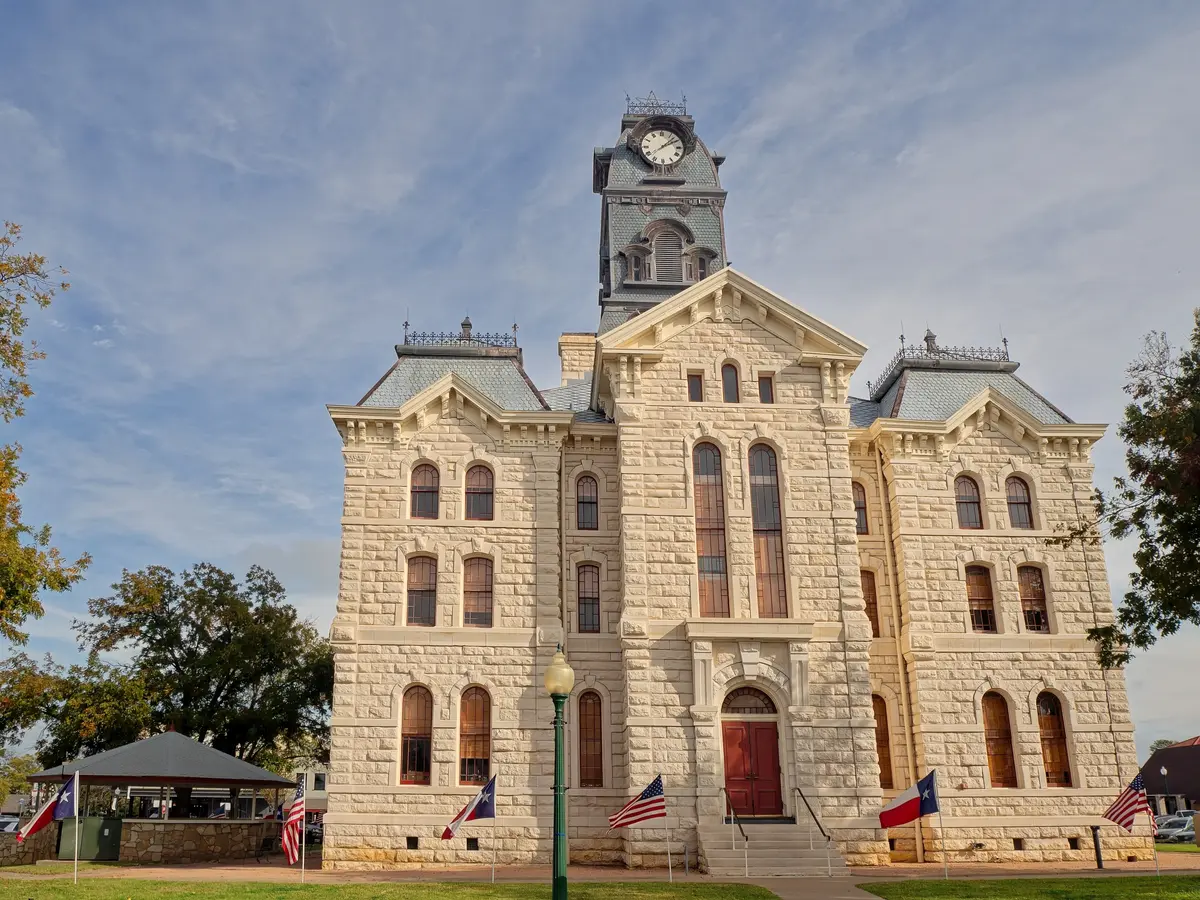
The Santa Fe Community Market is where the city's social fabric shows up on a weekend. Independent coffee shops give the city more café depth than most comparably sized Texas cities. There's a historic downtown district anchored by the Temple Railroad and Heritage Museum and the Czech Heritage Museum & Genealogy Center — both of which reflect the city's actual history rather than a curated version of it.
One thing newcomers from larger metros don't expect: how tight the sense of civic ownership is. The Frank W. Mayborn Civic and Convention Center hosts events that draw the whole city. Active UIL athletics programs at the local high school mean Friday nights in the fall genuinely fill the stands. Temple High School's Wildcats are a real presence in this town's weekly rhythm.
The honest trade-off: if you move here expecting Austin-level dining density or weekend entertainment options, you'll be disappointed in year one. The local restaurant and bar scene is real but not deep. A serious night out sometimes means driving to Waco or waiting for something to open closer. That's the catch that nobody mentions in the relocation pitch.
The Temple Housing Market Right Now
The typical home price in Temple stands at $248,213 (July 2026), which places it among the more accessible mid-size cities on the I-35 corridor. For what it costs to rent a studio in many Austin submarkets, you can own a three-bedroom house in an established Temple neighborhood. The typical citywide rent runs $1,400 per month — for the full cost breakdown including taxes and utilities, the cost of living page has the detail.
One number worth sitting with: the median household income of $68,204 runs modestly below what's needed to comfortably carry the typical home at current prices. That gap is real, and it means a significant share of households are stretching — or relying on dual incomes — to get into the market. First-time buyers in particular should read the first-time homebuyer page before making assumptions about what they can qualify for.
What the Market Looks Like on the Ground
Well-priced homes in move-in condition don't sit long. Temple has been absorbing consistent population growth, and construction — while active — hasn't fully caught demand in the middle price range. Some areas carry more of the new-construction energy; others offer older, more established housing stock with larger lots and mature trees.
The effective property tax rate of approximately 1.46% is moderate by Texas standards, though buyers coming from states with lower property taxes still feel it. There is no state income tax, which reshapes the overall picture for most relocating households. For the full neighborhood-by-neighborhood breakdown, the neighborhoods page goes deeper on character and geographic divides.
One dynamic that surprises buyers from coastal markets: the entry price in Temple is low enough that cash offers from investors do appear. The city's growth trajectory has drawn attention from buyers who aren't planning to live here. That has implications for how quickly certain price points move, and it's worth knowing before you're in a situation where you need to act.
Temple Neighborhoods
Temple has several distinct areas — each with its own character and appeal. Here’s a breakdown to help you narrow down where to focus your home search.
🏡 Canyon Creek
Canyon Creek is one of Temple's more established residential areas, with tree-lined streets and a mix of single-family homes that suit families looking for a settled neighborhood feel rather than new construction energy. The area sits well inside the city's developed core and gives residents quick access to the parks corridor.
🏠 Bella Terra
Bella Terra is a newer master-planned community with the amenities — trails, community common areas, and newer home construction — that attract buyers relocating from larger metros and expecting a polished suburban experience. It appeals strongly to young families and dual-income households who want move-in-ready homes.
🌳 Western Hills
Western Hills offers some of Temple's most established housing stock, with larger lots and mature landscaping that newer subdivisions simply can't replicate. It suits buyers who prioritize character and quiet over newness, and it sits on the city's older residential side where the settled fabric is most intact.
🏘 Lake Pointe
Lake Pointe draws buyers who want proximity to water and open space without leaving the city, with a community feel that works well for families with kids and active adults who use the nearby trail connections regularly. The neighborhood has a distinct natural-amenity identity within Temple's broader residential landscape.
🏔 Wyndham Hill
Wyndham Hill is one of Temple's newer growth areas, with newer construction and a community layout that suits families looking for a contemporary suburban neighborhood with good access to the city's developing corridors. It's a natural landing spot for buyers who want something built in the last decade.
🌆 Windmill Farms
Windmill Farms sits toward the outer edge of Temple's residential growth, with a mix of home sizes and price points that makes it accessible to a range of buyers — from first-timers stretching into the market to families upsizing from a starter home. The area has a newer, still-developing feel with room to grow.
Pros & Cons of Living in Temple
The Pros
- Home to a major regional medical center (Baylor Scott & White) with strong healthcare job base
- Home prices and rents well below the national average
- Easy I-35 access toward Austin and Waco
- Active parks and trail system including Miller Springs Nature Center
The Cons
- Property and overall crime rates run higher than many similarly sized Texas cities
- Hot, humid summers with highs regularly near or above 95°F
- Walkability is limited (Walk Score around 29), so a car is essentially required
Getting Around & Commuting in Temple
Temple is a driving city. The infrastructure exists for it — I-35 runs through the center, US-190 and SH-95 handle cross-town and regional movement, SH-36 and SH-53 serve the outer corridors, and an inner ring road keeps much of the local traffic off the interstate for inner-city trips. Most residents can handle their weekly routine entirely by car without significant friction, outside of peak hours on I-35.
The Austin Commute
The number most people ask about: it's about 75 minutes to Austin, TX under normal conditions. That figure stretches on days when the corridor clogs — and it does clog, especially southbound on weekday mornings and northbound in the evening. Buyers who plan to commute to Austin four or five days a week should make that drive during rush hour before they close on a house. Doing it in the middle of a Tuesday afternoon tells you almost nothing about what it will actually feel like.
What the regular commuters who've made it work say: the direction matters. If your Austin office is on the north side, the trip is materially shorter than if you're headed downtown or to the south. Most people who do this commute regularly end up restructuring their week — three days in Austin, two remote — rather than grinding the full round trip daily.
Other Options Worth Knowing
The Amtrak Texas Eagle stops at Temple's historic train depot with daily service connecting San Antonio and Fort Worth. It's not a commuter option in any practical sense, but it makes occasional trips to either city easy and car-free. For air travel, Killeen-Fort Hood Regional Airport (GRK) is the nearest major airport at 30 miles, served by American, Delta, and United with flights to Dallas-Fort Worth, Atlanta, and Houston. Austin-Bergstrom International Airport is approximately 65 minutes south and gives you considerably more route options for longer trips.
The HOP, which is Hill Country Transit, provides regional public transit across four counties. It serves residents who need it for medical appointments, work trips, and intercity connections — particularly useful for households without a car or with limited mobility. Within Temple itself, most errands and daily tasks require driving.
The Killeen and Waco Connection
Killeen is roughly 20 miles west via US-190 and serves a different employment market anchored by Fort Hood — residents who work on post often live in Temple and make that drive. Waco is close enough via I-35 to the north that it functions as a weekend destination and fills in some of the retail and entertainment gaps. Both cities expand the practical geography of living in Temple considerably.
Schools in Temple
Families relocating to Temple have public, private, and higher-education options nearby. Here’s a quick overview.
🎓 School District
Temple Independent School District serves K–12 students across Temple and the surrounding area. Rated C (source: Texas Education Agency, 2025 A-F accountability rating (2024-25 school year)).
🏆 Graduation Rate
The 4-year high-school graduation rate here is approximately 91.1%.
📚 Higher Education
Texas’s public universities — the University of Texas at Austin, Texas A&M University, and the University of Houston — offer four-year degrees statewide, with one of the largest community college systems in the country (50+ public community college districts) providing two-year and workforce programs.
🌐 Online Learning
UT Austin Online and Texas A&M University Online offer fully accredited online degrees for remote learners across the state.
Safety in Temple
A quick look at how Temple compares on the numbers that matter most when weighing a neighborhood or a move.
🛡 Violent Crime
Approximately 3 per 1,000 residents.
🔒 Property Crime
Approximately 20.29 per 1,000 residents.
Compared to the most recent national figures from the Bureau of Justice Statistics (2024), Temple’s violent crime is below the national average (about 3.7 per 1,000), and property crime is above the national average (about 18.4 per 1,000).
Against Texas as a whole, Temple’s violent crime is roughly two-thirds of the state average, and property crime is about the same as the state average (Bureau of Justice Statistics, Crime Known to Law Enforcement, 2024 (tables 2 and 3)).
Crime rates can vary a lot within a single city, so the citywide numbers above are only a starting point. Some neighborhoods in Temple run well below these averages, while others run higher — the kind of block-by-block detail that matters most when you’re actually choosing where to live. The full guide below breaks it down neighborhood by neighborhood.
Working in Temple
Temple’s largest employers span several industries — here are some of the anchors of the local job market.
🏥 Baylor Scott & White Health
Healthcare
💼 McLane Company
Logistics
💼 H-E-B Distribution Center
Logistics
🏭 Wilsonart
Surfaces manufacturing
🎓 Temple Independent School District
Education
🏛 City of Temple
Municipal government
Parks & Recreation in Temple
Some of the outdoor spaces that shape everyday life in Temple.
🌱 Miller Park
🌱 Lions Park
Temple residents don’t have to go far for green space — spots like Miller Park and Lions Park are part of everyday life here, whether that’s a morning walk, a weekend hike, or just somewhere to unwind outside. The full guide below covers more of what Temple has to offer for parks and outdoor recreation.
Retiring in Temple
Temple draws retirees for its balance of amenities, outdoor access, and cost. Here’s what to weigh.
🌤 Climate
Temple sees 224 sunny days a year with mild winters and long, hot summers. January lows rarely require more than a light jacket, and the spring and fall shoulder seasons are genuinely pleasant for outdoor activity. Summer heat from June through September is the trade-off — triple-digit days are possible and air conditioning is non-negotiable.
🍴 Lifestyle
The city has a relaxed Central Texas pace with genuine cultural anchors — the Temple Railroad and Heritage Museum, the Czech Heritage Museum, and the Frank W. Mayborn Civic and Convention Center all host programming through the year. The trail network, including Miller Springs Nature Center and the Bird Creek corridor, gives active retirees meaningful outdoor options within minutes of most neighborhoods. The dining scene is modest but has real local character.
🏚 55+ Communities
No 55+ communities were found in Temple. Retirees settling here tend to buy in established neighborhoods like Western Hills or Canyon Creek, which offer single-story options and proximity to medical care. The presence of a major regional health system within city limits is a significant practical asset for retirees weighing healthcare access — see the retiring page for more on that.
✈ Getting Around
A car is essential for daily life in Temple. Most errands, medical appointments, and social activities require driving, and the road network is well-suited to it. Killeen-Fort Hood Regional Airport (GRK), 30 miles away, offers commercial flights via American, Delta, and United to major hubs. Austin-Bergstrom International Airport is approximately 65 minutes south for wider route access.
🏛 Texas Taxes for Retirees — What to Know
- No state income tax — Texas has no personal income tax — constitutionally protected under Article VIII, Section 24. Social Security, pensions, 401(k)/IRA withdrawals, and annuity payments are all untaxed at the state level, with no state return to file.
- Sales tax is the tradeoff — The state sales tax is 6.25%, and local add-ons bring the combined rate in Temple to 8.25% (Texas Comptroller of Public Accounts, city sales and use tax rates, July 2026). Groceries and prescription drugs are exempt.
- Property taxes — the real tradeoff — Texas’s effective property tax rate averages about 1.40%, among the highest in the country, since property tax (not income tax) funds most local government and schools.
- Over-65 homestead exemption and school-tax freeze — Homeowners 65+ (or disabled) get an additional $60,000 exemption from their home’s value for school district taxes, on top of the general homestead exemption — $200,000 off school taxable value combined, following November 2025’s Proposition 11 (SB 23), which raised the over-65 exemption to $60,000, and Proposition 13 (SB 4), which raised the general homestead exemption to $140,000. Once claimed, your school district tax bill is frozen at that year’s amount and cannot increase as home values rise, and the ceiling can transfer if you move to a new home within Texas.
- Deferral option if cash is tight — Homeowners 65+ can defer property tax payment entirely for as long as they live in the home, rather than paying it currently — interest accrues, but no forced sale.
- No estate or inheritance tax — Texas has no estate tax, no inheritance tax, and no gift tax.
- No separate capital gains tax — Because Texas has no state income tax, capital gains — including on investments and home sales — are not taxed at the state level at all, unlike states such as Washington that tax capital gains separately from income.
Tax laws change frequently and individual situations vary. This is general information, not tax advice — always consult a qualified Texas tax professional or CPA for personalized retirement tax planning.
Weekends & Local Favorites in Temple
Temple has more going on than its reputation in Austin's shadow suggests — you just have to know where to look rather than expecting it to announce itself.
Where People Actually Spend Their Time Outdoors
Miller Springs Nature Center is the city's standout outdoor asset: 260 acres tucked between the Leon River and 110-foot bluffs near the Lake Belton Dam, with more than nine miles of trail for hiking, biking, and walking dogs. It's free, it's genuinely beautiful by Central Texas standards, and it's the place residents send visiting family to prove the city isn't just strip malls and highway access.
The Lions Park recreation trail runs through the Bird Creek floodplain and gives inner-city residents a greenway that doesn't require a car to reach. Miller Park anchors the center of the city's park system. The Pepper Creek Trail and Friars Creek Trail add wooded corridors where deer and field rabbits are a routine sighting rather than a surprise. With over 65 parks citywide, the outdoor infrastructure punches above its weight for a city this size.
Eating and Drinking
The local food and coffee scene has genuine character. Megg's Cafe is the kind of breakfast institution a city earns over decades. Green's Sausage House reflects the Central Texas meat-market tradition in a way that feels genuinely local rather than performed. Old Jody's Restaurant has a following for a reason. Back Porch Drafthouse fills the casual neighborhood bar role well. Bird Creek Brewing adds a local taproom to the mix.
For coffee, the variety is real: 1914 Coffee House has the historic-building atmosphere that fits the downtown district; Brew Bros draws the morning working crowd; Atrium Coffee Co., Peggy's Coffee House, and Ignite Coffee round out a scene that gives residents options without defaulting to chains.
The Santa Fe Community Market is the community gathering point for local produce, prepared food, and the kind of unplanned conversation that makes a city feel like a place rather than a zip code.
Culture and History
The Temple Railroad and Heritage Museum is genuinely worth an afternoon — this was a railroad town, and the museum tells that story without sanitizing it. The Czech Heritage Museum & Genealogy Center reflects the Central Texas immigrant history that shaped the region. The Frank W. Mayborn Civic and Convention Center hosts events large enough to feel like a real city is here. Temple's September 2025 designation as a Tourism Friendly Texas Certified Community reflects genuine effort to develop this side of the city's identity.
Local favorites in Temple
Restaurants
- Megg's Cafe
- Green's Sausage House
- Old Jody's Restaurant
- Back Porch Drafthouse
- Bird Creek Brewing
Outdoors
- Miller Springs Nature Center
- Lions Park recreation trail (Bird Creek floodplain)
- Miller Park
- Friars Creek Trail
- Pepper Creek Trail
Coffee
- 1914 Coffee House
- Brew Bros
- Atrium Coffee Co.
- Peggy's Coffee House
- Ignite Coffee
Farmers Markets
- Santa Fe Community Market
Top Things Locals Say About Temple
The best intel about a city comes from the people who actually live there. Here’s what Temple residents say when newcomers ask the questions everyone’s thinking.
“I expected to feel like I was in a smaller version of Austin, but Temple is really its own city — there's a whole community here that isn't thinking about Austin at all. The commute on heavy days is genuinely rough, and I wish someone had told me to drive it southbound at 7:30 a.m. before I signed.”
— Recent Temple home buyer
“What's the most surprising thing about living in Temple?”
Most people expect a sleepy pass-through town and find something considerably more active. The healthcare employment base means there are a lot of educated professionals here, the food scene has more independent options than you'd expect for the size, and the outdoor trail access — Miller Springs especially — genuinely surprises people who assumed Central Texas was flat and featureless. The flip side: I-35 through the middle of town is noisier and more disruptive than it looks on a map.
“What do locals love most about Temple?”
The combination of actually being able to afford a house and still having a real city around you. Longtime residents talk about the community feel — Friday night Wildcats football, the Santa Fe Community Market on weekends, knowing people at 1914 Coffee House by name. The county's genuine diversity shows up in the food, the schools, and the community organizations in a way that makes the city feel cosmopolitan for its size.
“What should newcomers to Temple know?”
The divide between the older established side and the newer developing side of the city matters more than you'd expect. The established side is older and more settled; the developing side is newer with more construction noise but also more new infrastructure coming in. If you're in the Canyon Creek or Western Hills area, your daily rhythm is different from someone in Windmill Farms. Also: summer heat is serious — 224 sunny days a year sounds great until August, and residents who didn't install quality window treatments in their first month regret it.
“How much do you need a car in Temple?”
You need a car for essentially everything — groceries, school pickup, most restaurants, all the trails worth driving to. The exception is a small walkable core in the Downtown Temple Historic District, where you can move between the railroad museum, a coffee shop, and a few restaurants on foot. The Hill Country Transit regional bus system exists and serves specific routes, but the city's footprint makes daily life car-dependent for nearly everyone.
Cities Near Temple
Other communities near Temple worth a look — each with its own character and price point.
| City | Distance | Best For | Vibe | Median Rent | Median Buy |
|---|---|---|---|---|---|
| Belton | 7 mi | Families seeking newer construction & quieter streets | Smaller, slower, established suburban | $1,300 | $324,012 |
| Salado | 12 mi | Buyers wanting historic character & higher-end homes | Boutique, artsy, upscale small town | $1,600 | $495,497 |
| Killeen | 20 mi | Military families & value-focused buyers | Active, diverse, Fort Hood-anchored | $1,258 | $220,448 |
More Helpful Guides for Temple
Going deeper on Temple? Our blog series covers everything from first-time buying to retiring here — explore the guides below.
Local Expert Takeaway: Temple is one of the few places on the I-35 corridor where a household with a median income can still buy a house without financial acrobatics — but the school district's C rating from the Texas Education Agency is real, and parents with school-age children need to look at it honestly before they commit. The healthcare and logistics employment base makes the city resilient, and the Rowan data center buildout is the biggest economic story here since Baylor Scott & White expanded. Get to Miller Springs Nature Center in the first month you live here, walk the bluffs above the Leon River, and you'll understand why people who move to Temple for affordability end up staying for the life.
Quick Takeaways & FAQs
✅ Temple's typical home price of $248,213 (July 2026) makes it one of the most accessible mid-size cities on the I-35 corridor, with major employers including Baylor Scott & White Health and McLane Company providing stable local job options.
⚠️ The drive to Austin is about 75 minutes under normal conditions — longer during rush hour — which is a genuine daily cost that buyers who plan to commute should test before they close.
📍 Rowan Digital Infrastructure broke ground in late 2025 on a 300-megawatt data center campus representing a minimum $700 million investment, the most significant economic development story Temple has seen in years.
Is Temple, Texas a good place to live?
How far is Temple, Texas from Austin?
What are the best neighborhoods in Temple, Texas?
What is the cost of living in Temple, Texas?
What are the major employers in Temple, Texas?
Helpful Links for Moving to Temple
Moving to Texas?
Tell us what you need help with and we'll connect you with local resources.
