
What Is Living in Bastrop, Texas Like?
Maybe your company is relocating you here because of SpaceX. Maybe Austin's prices finally pushed you out and someone mentioned the Lost Pines. Maybe you drove SH-71 east out of the city one weekend, crossed the Colorado River, and wondered why you hadn't looked at this place sooner. Bastrop sits about 40 minutes to Austin, TX — close enough to stay connected to the capital's economy, far enough that a 13,383-person city on the banks of the Colorado still feels like a real town with its own identity. The central tension here is not whether Bastrop is worth moving to. It's whether you can keep up with how fast it's changing.
The employer picture changed dramatically when SpaceX planted roots here, and it has kept changing since. The Bastrop Independent School District — with 13,453 students enrolled in 2025-26 — is the city's largest public employer, anchoring steady municipal work alongside the City of Bastrop itself. SpaceX is one of the largest private employers in the county, and X Corp operates nearby along the same technology corridor. A major regional health system rounds out the employment base. The city has also attracted film production, with Bastrop County designated a Texas Media Production Zone and large studio developments in the pipeline. Who moves here now skews younger than it used to — the median age is 35, and a significant share of new arrivals are families coming directly from Travis County, trading smaller Austin lots for more space and a different pace.
The typical home price in Bastrop is $353,503 (Zillow Home Value Index, July 2026), which sits noticeably below what comparable square footage costs inside Austin's city limits, though the median household income of $81,551 is below the income needed to buy comfortably at that price. The city counts 226 sunny days a year, which means the outdoor life here — kayaking the Colorado, hiking Bastrop State Park, exploring the Lost Pines ecosystem — is genuinely usable most of the year, not just a weekend novelty. A car is simply part of life here; most errands mean a drive, and the main corridor gets busy.
Whether you're weighing a first home, a move from a more expensive market, or a job offer tied to the tech corridor along SH-71, the sections below break down Bastrop's neighborhoods, housing market, commute realities, local employers, and what a typical weekend actually looks like here.

Bastrop at a Glance
Looking to buy in Bastrop? Estimate your payment.
Enter your numbers to see an estimated monthly mortgage payment.
Estimate only. Excludes HOA fees and mortgage insurance. The interest rate above is a starting point, not a quoted rate — replace it with your own to see real numbers. Insurance is a flat placeholder, not a Bastrop quote.
Why Are People Moving to Bastrop?
The short answer is Austin affordability and Bastrop opportunity — and those two forces are now pulling from the same direction. Roughly 38% of people moving into Bastrop County are coming directly from Travis County, trading the capital's prices for more house, a bigger yard, and a town where they can actually afford to own. But the SpaceX effect has added a second current: workers tied to the aerospace corridor who need to live within a reasonable distance of a facility that is only getting larger.
SpaceX's Bastrop facility broke ground on a more-than-one-million-square-foot expansion backed by a $280 million investment and a $17.3 million Texas Semiconductor Innovation Fund grant — a project expected to make the campus one of the largest printed circuit board and panel-level packaging facilities in North America when complete. That kind of investment reshapes a town of 13,383 people in ways that take a few years to fully feel. New restaurants open, new subdivisions go up, traffic patterns shift.
The broader development pace reinforces that picture. City officials called 2025-26 one of the biggest development years on record, with 43 commercial and retail projects covering 150 acres underway, alongside 174 residential projects. The Sendero mixed-use development, the 290-acre Ironwood Subdivision, and a new multifamily complex represent the residential side of that surge. Creative-industry investment is layered on top: a 546-acre film studio campus along the Colorado River and Wyldwood Studios — a 75-acre master-planned development with amphitheaters and a hotel, partly backed by actor Zachary Levi — are reshaping what the local economy looks like beyond tech and government.
The population grew 32% between the 2020 census and today. For buyers, that growth is both the appeal and the caveat — Bastrop is getting more of everything, but it's also getting more crowded and more expensive than it was even three years ago.
Who Bastrop Tends to Attract
| Buyer Type | Why Bastrop Works | What to Watch |
|---|---|---|
| First-Time Buyers | Entry-level prices below Austin; more square footage per dollar | Income gap vs. typical home price; property taxes add up |
| Families with Kids | Room to grow, outdoor access, growing school capacity | Bastrop ISD holds a C rating, according to the Texas Education Agency; district is still building to keep pace |
| Austin Commuters | about 40 minutes to Austin, TX; far less expensive than closer suburbs | SH-71 is under a multi-year construction program; mornings get slow |
| Tech / Aerospace Workers | SpaceX and X Corp corridor; growing employer base nearby | Housing supply is tightening as more workers arrive |
| Outdoor-Focused Buyers | Lost Pines, Colorado River, Bastrop State Park all within minutes | Summer heat limits some outdoor activity; wildfire history in the pines |
| Value Seekers from Pricier Markets | Noticeably lower prices than Austin; genuine small-town feel | Town is changing fast; what you buy into today won't look the same in five years |
The Bastrop ISD holds a C rating, according to the Texas Education Agency — worth understanding before you move a family here, though the district is actively investing in new buildings and expanded capacity with bond funding. See the full picture at our Bastrop schools page.
What Daily Life Feels Like in Bastrop
The first thing people notice after they move here is how much of daily life happens outside. The Lost Pines ecosystem — more than 75,000 acres of loblolly pines that represent the westernmost stand of that tree species in the United States — gives Bastrop a landscape that looks nothing like the surrounding Hill Country or the open scrub east of Austin. Walking through Bastrop State Park on a weekday morning, with pine canopy overhead and the understory still quiet, feels genuinely remote in a way that surprises people who thought they were moving to a suburb.
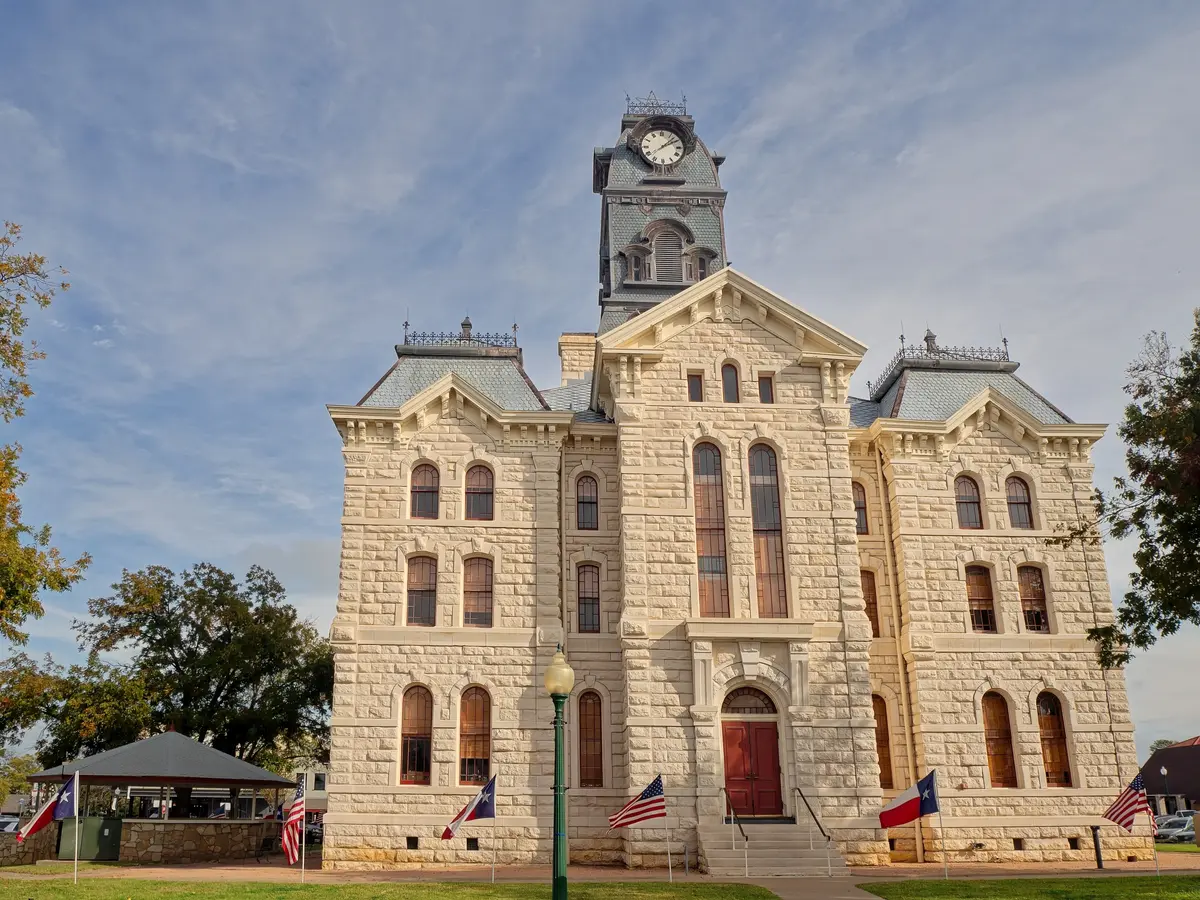
Downtown Bastrop is a real downtown — not a streetscape built to look historic, but one that is. The district is listed on the National Register of Historic Places, contains more than 130 registered historic sites, and has held a Texas Cultural Arts District designation since 2012. Main Street has independent businesses, the Bastrop Opera House anchors the cultural calendar, and the Bastrop County Courthouse gives the square its architectural center. The National Trust for Historic Preservation named it one of its Dozen Distinctive Destinations back in 2010, and it has held up.
The Morning Routine
Most mornings involve a car. The downtown core is compact enough to walk once you're parked, and a few independent coffee spots along Main Street make that walk worth it. First Watch handles the breakfast-and-brunch crowd for those who want table service. Texas Coffee Works and CAFF Coffee + Kitchen anchor the local coffee scene for regulars who want something with more character than a chain. Sunshine Sister Coffee and Bastrop Cafe round out the options for a town this size.
What Surprises People After Six Months
The heat is the thing newcomers underestimate most. Bastrop gets 226 sunny days a year, which sounds like a selling point — and it mostly is — but Central Texas summers run long and genuinely hot. Outdoor plans that work in May are different propositions in August. Longtime residents build their outdoor schedules around early mornings and late evenings from June through September.
The second surprise is how much construction interrupts daily driving. SH-71, the main artery connecting Bastrop to Austin, carries more than 50,000 vehicles daily and is undergoing a $293 million multi-phase overhaul. The Tucker Hill Lane overpass broke ground in October 2025 and is scheduled for completion in fall 2028. That project, and the others alongside it, mean the commute corridor will be in active construction for several more years.
The Community Feel
Bastrop runs on a mix of longtime residents and recent arrivals, and those two groups are still finding their rhythm. The Bastrop 1832 Farmers Market draws a regular crowd and is one of the consistent gathering points. The Colorado River and Lake Bastrop are where families end up on warm weekends. Friday night UIL football at Bastrop High School still fills the stands the way it always has, which says something about the continuity underneath all the growth.
For safety context, Bastrop carries a violent crime rate of 4.36 per 1,000 residents and a property crime rate of 32.29 per 1,000 residents — both above Texas state averages and the national benchmarks. That property crime figure is worth taking seriously when choosing a neighborhood. Full detail is on the Bastrop safety page.
The Bastrop Housing Market Right Now
The typical home in Bastrop is priced at $353,503 (Zillow Home Value Index, July 2026). That figure puts Bastrop noticeably below Austin proper and its closest-in suburbs, which is exactly what draws a large share of the buyers here. It also puts homeownership at the edge of reach for many local households — the median household income of $81,551 falls below what is needed to carry the typical home price at current rates. See the full cost breakdown at the Bastrop cost of living page.
Entry-level inventory tends to cluster in Tahitian Village and parts of Circle D-KC Estates, where the lot sizes run larger and the housing stock is older. The Hunters Crossing and Pine Forest areas draw buyers looking for newer construction with more amenities nearby. Colovista Country Club appeals to golfers and buyers wanting a country club lifestyle without Austin prices. Downtown and the Historic District offer a smaller number of older homes on tight lots — character properties that trade square footage for walkability to Main Street. For a deeper look at how these areas compare, the Bastrop neighborhoods page breaks it down in full.
The city-wide typical rent of $1,837/mo (Zillow ZORI, July 2026) reflects a rental market that has tightened alongside the ownership market. New multifamily supply has been added in recent years, but demand has been running ahead of inventory as the population grows. Some areas cost noticeably more than others, particularly near the newer planned developments.
The effective property tax rate of 1.41% is the figure to watch on top of any purchase price. Texas has no state income tax, which softens the blow somewhat, but on a home at the typical price, the annual tax burden is real and worth building into any budget before you start shopping. The overall tax picture is covered on the cost of living page.
Bastrop Neighborhoods
Bastrop has several distinct areas — each with its own character and appeal. Here’s a breakdown to help you narrow down where to focus your home search.
🏡 Tahitian Village
Tahitian Village is a large, established neighborhood that stretches along the Colorado River east of downtown, popular with buyers who want larger lots, mature trees, and a slightly removed feel from the busier parts of town. The neighborhood's grid of winding roads through pine-covered terrain gives it a distinctive character compared to Bastrop's newer subdivisions.
🏠 Pecan Park
Pecan Park is a mid-city neighborhood that appeals to families and first-time buyers looking for a central location within Bastrop without the distance of Tahitian Village from daily amenities. The housing stock is a mix of older homes and more recent infill, with straightforward access to Loop 150.
🌳 Hunters Crossing
Hunters Crossing is one of Bastrop's more established planned communities, with newer single-family homes and a neighborhood feel that draws families relocating from Austin who want something move-in ready. Proximity to SH-71 makes the Austin commute as direct as it gets within city limits.
🏘 Pine Forest
Pine Forest sits among the loblolly pines that give Bastrop its identity, with the Pine Forest Golf Club as the neighborhood's defining amenity and social anchor. Buyers here typically prioritize the golf lifestyle and the forested setting over walkability or proximity to downtown.
🏔 Colovista Country Club
Colovista Country Club centers on the ColoVista Golf Club along the Colorado River, attracting buyers who want a country club environment and river views at prices well below what comparable golf communities cost in the Austin suburbs. The neighborhood has an established, quieter character that appeals to both retirees and remote workers.
🌆 Downtown Bastrop / Historic District
Downtown is where Bastrop's 130-plus registered historic sites concentrate, and the homes here — many of them older Craftsman and Victorian-era properties — suit buyers who want to walk to the Bastrop Opera House, Main Street restaurants, and the Bastrop County Courthouse square. Lots are small and parking is shared, but nothing else in the city matches the sense of place.
Pros & Cons of Living in Bastrop
The Pros
- Small-town riverfront charm with rapid job growth nearby
- No state income tax
- Easy access to the Lost Pines forest and outdoor recreation
- Significantly cheaper housing than Austin proper
The Cons
- Property tax rate above the national average
- Long buyer's-market days-on-market and price softness in parts of the housing stock
- Crime rates (especially property crime) above national averages
- Wildfire risk given the surrounding pine forest
Getting Around & Commuting in Bastrop
Bastrop is not a city you navigate without a car. That's not a knock — it's a practical reality that shapes how you choose a neighborhood, how you time your mornings, and how you think about the commute to Austin before you commit to a street address.
The SH-71 Reality
SH-71 is the main corridor connecting Bastrop to Austin, and it carries the weight of that role — more than 50,000 vehicles a day use it. TxDOT's ongoing $293 million overhaul of the 22-mile SH-71 East Corridor is converting signalized intersections into grade-separated overpasses, which will meaningfully improve flow once complete. For now, active construction adds unpredictability to the commute. The drive to downtown Austin on a clear morning runs about 40 minutes to Austin, TX; add 15 to 25 minutes for peak-hour conditions, and more during active construction phases.
The Highway Network
SH-21 connects Bastrop to the north and south, crossing through the historic downtown. SH-95 runs north toward Elgin and Manor, giving commuters a secondary option toward the eastern Austin metro. SH-304 connects southeast toward Gonzales and provides a rural alternative out of town. Loop 150 circles the city and is how most residents move between neighborhoods without touching the main state highways.
Getting to the Airport
Austin-Bergstrom International Airport (AUS) is 23 miles from Bastrop. That distance — about 40 minutes on a clear run — is one of Bastrop's legitimate practical advantages over some more remote Texas small cities. For frequent business travelers, the airport is genuinely usable without a full day commitment.
What Locals Actually Do
Many residents who commute to Austin leave before 7 a.m. or after 9 a.m. to stay ahead of the worst SH-71 congestion. The remote-work population here has grown alongside the tech corridor — a meaningful share of residents work from home full or part-time, which takes some of the sting out of the highway situation. Workers at SpaceX, X Corp, and the regional health system are driving in-city or short-haul, which is a different calculation entirely. The commute math only gets complicated when Austin is in the equation every day.
| Destination | Route | Approximate Drive | Notes |
|---|---|---|---|
| Downtown Austin | SH-71 West | about 40 minutes to Austin, TX | Construction adds time; peak hours add more |
| Austin-Bergstrom Airport (AUS) | SH-71 West | ~40 minutes | 23 miles; shorter than the downtown run |
| SpaceX / Tech Corridor | SH-71 / local roads | 10–20 minutes | In-city or near-city; minimal highway exposure |
| Elgin | SH-95 North | ~20 minutes | Secondary shopping and services |
| Smithville | SH-71 East or SH-21 | ~25 minutes | Smaller; Colorado River access |
| Cedar Creek | SH-71 West | ~15 minutes | Hyatt Lost Pines; data center corridor |
One honest note on what you would not do: buying a home on the far eastern edge of Tahitian Village and planning a daily Austin commute is the scenario that tends to disappoint buyers who didn't drive it at 7:30 a.m. before signing. The distance feels modest on a map; the construction-era SH-71 makes it less so in practice.
Schools in Bastrop
Families relocating to Bastrop have public, private, and higher-education options nearby. Here’s a quick overview.
🎓 School District
Bastrop Independent School District serves K–12 students across Bastrop and the surrounding area. Rated C (source: Texas Education Agency, 2025 A-F accountability rating (2024-25 school year)).
🏆 Graduation Rate
The 4-year high-school graduation rate here is approximately 96.4%.
📚 Higher Education
Texas’s public universities — the University of Texas at Austin, Texas A&M University, and the University of Houston — offer four-year degrees statewide, with one of the largest community college systems in the country (50+ public community college districts) providing two-year and workforce programs.
🌐 Online Learning
UT Austin Online and Texas A&M University Online offer fully accredited online degrees for remote learners across the state.
Safety in Bastrop
A quick look at how Bastrop compares on the numbers that matter most when weighing a neighborhood or a move.
🛡 Violent Crime
Approximately 4.36 per 1,000 residents.
🔒 Property Crime
Approximately 32.29 per 1,000 residents.
Compared to the most recent national figures from the Bureau of Justice Statistics (2024), Bastrop’s violent crime is above the national average (about 3.7 per 1,000), and property crime is above the national average (about 18.4 per 1,000).
Against Texas as a whole, Bastrop’s violent crime is about the same as the state average, and property crime is about one and a half times the state average (Bureau of Justice Statistics, Crime Known to Law Enforcement, 2024 (tables 2 and 3)).
Crime rates can vary a lot within a single city, so the citywide numbers above are only a starting point. Some neighborhoods in Bastrop run well below these averages, while others run higher — the kind of block-by-block detail that matters most when you’re actually choosing where to live. The full guide below breaks it down neighborhood by neighborhood.
Working in Bastrop
Bastrop’s largest employers span several industries — here are some of the anchors of the local job market.
🎓 Bastrop Independent School District
Public education
🏛 City of Bastrop
Municipal government
🏭 SpaceX
Aerospace, manufacturing
💻 X Corp
Technology, social media
🏥 Ascension Seton Bastrop
Healthcare
🏥 Hyatt Regency Lost Pines Resort and Spa
Hospitality, located in Cedar Creek
Parks & Recreation in Bastrop
Some of the outdoor spaces that shape everyday life in Bastrop.
🌱 Bastrop State Park
🌱 Lost Pines Forest
🌱 Colorado River
🌱 Lake Bastrop
Bastrop residents don’t have to go far for green space — spots like Bastrop State Park and Lost Pines Forest are part of everyday life here, whether that’s a morning walk, a weekend hike, or just somewhere to unwind outside. The full guide below covers more of what Bastrop has to offer for parks and outdoor recreation.
Retiring in Bastrop
Bastrop draws retirees for its balance of amenities, outdoor access, and cost. Here’s what to weigh.
🌤 Climate
Bastrop gets 226 sunny days a year, with warm springs and mild winters that allow outdoor activity most of the year. Summers are long and hot — genuinely triple-digit-hot from June through August — which is the main climate adjustment for retirees coming from the Pacific Northwest or the Midwest. Fall is the season most long-term residents call the payoff: cool mornings, pine canopy color, and river conditions that are ideal for paddling.
🍴 Lifestyle
The downtown Historic District gives retirees a genuine walkable core with the Bastrop Opera House, Main Street dining, and independent shops that reflect the city's Texas Cultural Arts District designation. Bastrop State Park and the Colorado River paddling trails offer outdoor activity at a manageable pace. Three 18-hole golf courses serve the area, including the Wolfdancer Golf Club at the Hyatt Regency Lost Pines in Cedar Creek.
🏚 55+ Communities
No 55+ communities were found in Bastrop. Retirees typically choose among the city's established neighborhoods — Colovista Country Club and the areas near Lake Bastrop tend to attract older buyers — or look at the broader Bastrop County area. Austin-Bergstrom International Airport is 23 miles away, which keeps travel for family visits practical. For full healthcare and retirement living context, see the Bastrop retiring page.
✈ Getting Around
A car is necessary for daily life in Bastrop. The downtown is walkable once you've parked, but groceries, medical appointments, and most errands require driving. Austin-Bergstrom International Airport (AUS) is 23 miles from Bastrop — close enough for retirees who travel regularly to see family. A regional health system operates within city limits, which matters significantly for retirees evaluating healthcare proximity.
🏛 Texas Taxes for Retirees — What to Know
- No state income tax — Texas has no personal income tax — constitutionally protected under Article VIII, Section 24. Social Security, pensions, 401(k)/IRA withdrawals, and annuity payments are all untaxed at the state level, with no state return to file.
- Sales tax is the tradeoff — The state sales tax is 6.25%, and local add-ons bring the combined rate in Bastrop to 8.25% (Texas Comptroller of Public Accounts, city sales and use tax rates, July 2026). Groceries and prescription drugs are exempt.
- Property taxes — the real tradeoff — Texas’s effective property tax rate averages about 1.40%, among the highest in the country, since property tax (not income tax) funds most local government and schools.
- Over-65 homestead exemption and school-tax freeze — Homeowners 65+ (or disabled) get an additional $60,000 exemption from their home’s value for school district taxes, on top of the general homestead exemption — $200,000 off school taxable value combined, following November 2025’s Proposition 11 (SB 23), which raised the over-65 exemption to $60,000, and Proposition 13 (SB 4), which raised the general homestead exemption to $140,000. Once claimed, your school district tax bill is frozen at that year’s amount and cannot increase as home values rise, and the ceiling can transfer if you move to a new home within Texas.
- Deferral option if cash is tight — Homeowners 65+ can defer property tax payment entirely for as long as they live in the home, rather than paying it currently — interest accrues, but no forced sale.
- No estate or inheritance tax — Texas has no estate tax, no inheritance tax, and no gift tax.
- No separate capital gains tax — Because Texas has no state income tax, capital gains — including on investments and home sales — are not taxed at the state level at all, unlike states such as Washington that tax capital gains separately from income.
Tax laws change frequently and individual situations vary. This is general information, not tax advice — always consult a qualified Texas tax professional or CPA for personalized retirement tax planning.
Weekends & Local Favorites in Bastrop
Bastrop weekends are built around the outdoors and the river, with a downtown that punches above its weight for a city this size. The combination of pine forest, a navigable river, a genuine historic main street, and a growing food scene gives residents a range that most small Texas cities don't have.
On the Water and in the Forest
The Colorado River is the geographic spine of everything. The El Camino Real Paddling Trail runs approximately 6 miles from Fisherman's Park, and the Wilbarger Paddling Trail offers a 14.3-mile float upriver — both options make kayaking and canoeing genuinely practical, not just aspirational. Lake Bastrop North and South Shore Parks draw anglers and families looking for an easy weekend morning near the water. McKinney Roughs Nature Park, a short drive away, adds a different texture: rugged Hill Country-adjacent terrain along the Colorado that surprises people who expected flat pines.
Bastrop State Park is the anchor. The loblolly pines here — part of the Lost Pines ecosystem that represents the westernmost stand of the species in the United States — create a canopy that feels genuinely singular. After the 2011 Bastrop County Complex Fire burned through much of the park, the recovery has been visible and ongoing, which gives the forest a layered quality that longtime residents find meaningful. The Colorado River Refuge adds more protected corridor along the river.
Golf, Culture, and the Downtown Core
Three 18-hole courses serve the area: ColoVista Golf Club, Pine Forest Golf Club, and the Wolfdancer Golf Club at the Hyatt Regency Lost Pines Resort and Spa in Cedar Creek. The Hyatt property itself is a regional destination — whether you're booking a staycation or pointing out-of-town guests toward a weekend option, it handles both well.
Downtown is where the city's older identity lives. The Bastrop Opera House hosts live performances on a regular schedule, and Main Street's mix of antique shops, galleries, and independent businesses reflects the Texas Cultural Arts District designation the city has held since 2012. The Bastrop County Courthouse anchors the square architecturally, and the scale of the blocks makes it easy to spend a few hours on foot without planning much.
Where to Eat and Drink
Roadhouse Bastrop handles the barbecue-and-Texas-comfort end of the dining scene and does it well. Neighbor's Kitchen & Yard is the casual outdoor spot that feels most like where you'd take someone visiting for the first time — the setting matches the food. Maxine's Cafe & Bakery is the kind of place that earns regulars quickly; the baked goods are worth a trip on their own. Paw Paws Catfish House is the old-school local institution that longtime residents will defend enthusiastically. For something a step up, The Grace Miller — known locally as Gracie's — occupies one of the historic downtown buildings and represents what Bastrop's food scene has been becoming as the city grows.
The Bastrop 1832 Farmers Market is the weekly gathering point that feels most like the community taking stock of itself — local produce, prepared foods, and a crowd that includes both longtime residents and the newer arrivals figuring out what this town is.
Coming Attractions
Wyldwood Studios — a 75-acre master-planned creative campus with studios, a hotel, and two amphitheaters — broke ground with phases scheduled to open beginning in 2027. The 546-acre Line204 film studio campus along the Colorado River signals the direction the city's creative economy is heading. For residents, it means more weekend options within city limits over the next few years, though most of that is still on the horizon.
Local favorites in Bastrop
Restaurants
- Roadhouse Bastrop
- Neighbor's Kitchen & Yard
- Maxine's Cafe & Bakery
- Paw Paws Catfish House
- The Grace Miller "Gracie's"
Outdoors
- Bastrop State Park
- Lake Bastrop North & South Shore Parks
- McKinney Roughs Nature Park
- Colorado River Refuge
- Fisherman's Park
Coffee
- First Watch
- Texas Coffee Works
- CAFF Coffee + Kitchen
- Sunshine Sister Coffee
- Bastrop Cafe
Farmers Markets
- Bastrop 1832 Farmers Market
Top Things Locals Say About Bastrop
The best intel about a city comes from the people who actually live there. Here’s what Bastrop residents say when newcomers ask the questions everyone’s thinking.
“We knew the commute would be a factor, but we didn't fully expect what SH-71 looks like at 7:15 a.m. during construction season. Once we adjusted our schedule, the trade-off made total sense — we have a bigger yard than we could have touched in Austin, we're ten minutes from Bastrop State Park, and the town still knows it's a town.”
— Recent Bastrop home buyer
“What's the most surprising thing about living in Bastrop?”
The pines. People who move from Austin expect scrubby Hill Country or flat Central Texas, and instead they get this genuine pine forest that looks like it was airlifted from East Texas. Bastrop State Park is five minutes from most of the city, and walking in there on a Tuesday morning with no one around still catches people off guard after months of living here.
“What do locals love most about Bastrop?”
The scale of it — 13,383 people is big enough to have real restaurants, a farmers market, live music at the Opera House, and a couple of good coffee spots, but small enough that the downtown still has character and isn't dominated by chains. The Colorado River access is something residents use constantly, not just on special occasions. And for all the growth, Main Street still feels like it belongs to the people who live here.
“What should newcomers to Bastrop know?”
SH-71 is under major construction and will be for years — learn Loop 150 and the local grid before you assume the highway is always the fastest option. The heat from June through September is serious; the outdoor lifestyle that makes Bastrop attractive in spring works differently when the temperature hits triple digits. And the town is growing fast enough that the restaurant or coffee spot someone recommended to you six months ago may have been replaced by something new.
“How much do you need a car in Bastrop?”
You need a car for essentially everything beyond a short walk in the immediate downtown area. Most neighborhoods — Tahitian Village, Hunters Crossing, Pecan Park — require driving to reach groceries, schools, and daily errands. The downtown core is compact enough to cover on foot once you're parked, which makes it a pleasant destination rather than a practical daily-errand zone for most residents. For the Austin commute or the airport run, you are driving every time.
Cities Near Bastrop
Other communities near Bastrop worth a look — each with its own character and price point.
| City | Distance | Best For | Vibe | Median Rent | Median Buy |
|---|---|---|---|---|---|
| Elgin | 15 mi | Budget buyers and rural space | Small-town, agricultural, unpretentious | $1,821 | $272,537 |
| Smithville | 15 mi | River access and slower pace | Quiet, historic, creek-town feel | $1,350 | $310,000 |
| Cedar Creek | 10 mi | Upscale resort living near Austin | Wooded, spread-out, destination-resort adjacent | $1,500 | $380,000 |
More Helpful Guides for Bastrop
Going deeper on Bastrop? Our blog series covers everything from first-time buying to retiring here — explore the guides below.
Local Expert Takeaway: Bastrop is genuinely affordable relative to Austin and genuinely beautiful in a way that Central Texas rarely manages — the Lost Pines ecosystem, the Colorado River, and a real historic downtown in one place is a combination that doesn't repeat anywhere on the SH-71 corridor. The catch is that you're buying into a city mid-transformation: SpaceX is reshaping the employer base, SH-71 is under multi-year construction, and the school district is still building to keep pace with enrollment. If you can work the commute — or skip it entirely by working remotely or along the local tech corridor — Bastrop offers more authenticity per dollar than almost anywhere this close to Austin.
Quick Takeaways & FAQs
✅ Bastrop's Lost Pines ecosystem, Colorado River access, and a historic downtown listed on the National Register of Historic Places give it an outdoor and cultural depth that most small Texas cities can't match.
⚠️ SH-71 is under a $293 million multi-year overhaul, and the daily Austin commute runs long during construction — buyers should drive the route at 7:30 a.m. before committing.
📍 SpaceX's ongoing facility expansion and the arrival of X Corp have made Bastrop one of the few small Texas cities with a genuine private-sector tech anchor, which is changing who moves here and how fast.
How far is Bastrop from Austin, and is the commute realistic?
What are the schools like in Bastrop?
Is Bastrop affordable compared to Austin?
What is Bastrop known for — what makes it different from other Austin suburbs?
Is Bastrop a good place to raise a family?
Helpful Links for Moving to Bastrop
Moving to Texas?
Tell us what you need help with and we'll connect you with local resources.
