
What Is Living in Elgin, Texas Like?
You've probably heard Austin prices are out of reach. Someone mentioned Elgin — maybe a coworker, maybe a Zillow rabbit hole at midnight — and now you're wondering if a small city that calls itself both the Brick Capital of the Southwest and the Sausage Capital of Texas can actually be the answer. The honest answer: it might be, but only if you understand the trade. Elgin sits at the intersection of US-290 and SH-95, about 25 miles east of downtown Austin in Bastrop County. It is genuinely its own town, with its own identity and its own rhythms — but the reason most people move here today has everything to do with Austin, and the commute along US-290 is the deciding factor in how that relationship actually works.
The economic backbone here is more layered than the small-town feel suggests. Elgin Independent School District is the largest local employer, with 6,232 students enrolled in 2025-26 spread across nine campuses. The brick industry — a legacy tied directly to the area's clay deposits — is still active through Acme Brick Company and Red River Brick, two manufacturers that have been part of the local identity for generations. Yerico Manufacturing adds semiconductor work to the mix, and Southside Market & Barbeque, one of Texas's oldest continuously operating barbecue establishments, is both a civic institution and a genuine employer. The population has more than doubled since 2000, driven almost entirely by spillover from the Austin metro's economic expansion — families who want a real house at a real price, and who are willing to trade urban density for space and community.
The typical home price in Elgin sits at $272,537 (Zillow Home Value Index, July 2026), which puts it noticeably below Bastrop, Manor, and Austin — and the median household income of $91,114 means most buyers here are not stretching dangerously to afford the city-wide typical. For full cost-of-living context, including taxes and rent, see the cost of living page. Day-to-day life is car-dependent by design: errands, school runs, and dinner out all involve driving, and the outdoors are the primary amenity — Wilbarger Creek, Veterans' Memorial Park, and a short drive to McKinney Roughs Nature Park along the Colorado River give residents real outdoor access without leaving the county. Elgin gets 231 sunny days a year, which makes that access genuinely usable for most of the calendar.
Whether you are weighing a first purchase, moving from a pricier Texas city, or relocating from out of state and working through what Central Texas actually looks like from ground level, the sections below cover Elgin's neighborhoods, housing market, commute reality, local employers, and what a Saturday afternoon here actually feels like.

Elgin at a Glance
Looking to buy in Elgin? Estimate your payment.
Enter your numbers to see an estimated monthly mortgage payment.
Estimate only. Excludes HOA fees and mortgage insurance. The interest rate above is a starting point, not a quoted rate — replace it with your own to see real numbers. Insurance is a flat placeholder, not a Elgin quote.
Why Are People Moving to Elgin?
The growth number tells you the direction: Elgin's population has grown by more than 111% since 2000, outpacing the vast majority of comparably sized U.S. cities. That is not an accident of geography — it is a direct consequence of Austin's economic boom pushing buyers farther east along the US-290 corridor in search of something affordable enough to actually purchase.
What they find when they arrive is a city with genuine industrial depth. The brick manufacturing operations at Acme Brick Company and Red River Brick are not relics — they are active employers tied to one of Elgin's two historic nicknames. Yerico Manufacturing brings semiconductor work to the Elgin Business Park, which also sits within a Bastrop County Opportunity Zone. The City of Elgin itself is a significant employer, and the school district anchors the local economy the way it does in most Texas cities of this size.
The Affordability Argument
Buyers who have spent time in Austin or even Bastrop understand immediately why Elgin gets attention. The typical home price here is noticeably below both of those markets, and the median household income in Elgin is sufficient to support that purchase — meaning this is not a market where affordability is an illusion propped up by stretched budgets.
The effective property tax rate sits at 1.41%, which is relevant for anyone running a monthly budget. Texas has no state income tax, so that rate is the primary ongoing tax burden on a home. For the full picture on what owning here actually costs month to month, the cost of living page breaks down taxes, utilities, and groceries in detail.
Who Actually Moves Here
The profile is fairly consistent: parents with school-age children who have been priced out of closer-in Austin suburbs; remote workers or hybrid workers who commute two or three days a week and want land and space for what they give up in commute time; and people who grew up in smaller Texas towns and want that feel within reach of a major metro. Elgin is not trying to be Austin's coolest suburb — it is trying to be a real city with its own identity, and for buyers who want that, it works.
The Elgin Independent School District holds a D rating, according to the Texas Education Agency, based on the 2025 A-F accountability rating for the 2024-25 school year. On 2024-25 state assessments, 20% of students reached math proficiency and 31% reached reading proficiency. For families whose school quality is the deciding factor, the full picture is on the schools page — this is one of the honest tradeoffs the city asks buyers to sit with before they commit.
Safety is among the relative strengths. Elgin has a violent crime rate of 2 per 1,000 residents and a property crime rate of 16 per 1,000 residents — both below their respective state benchmarks of 4 per 1,000 for violent crime and 20.7 per 1,000 for property crime, and the violent crime figure runs below the national rate of 3.7 per 1,000. The safety page has the full breakdown.
What Daily Life Feels Like in Elgin
Six months in, most newcomers say the same thing: it is quieter than they expected, and they mean that as a compliment most days and a limitation on others. Elgin does not have the restaurant density or the retail saturation of Austin's suburbs closer in — a serious shopping run means driving out of town, and you will be ordering online for anything the specialty shops here do not carry.
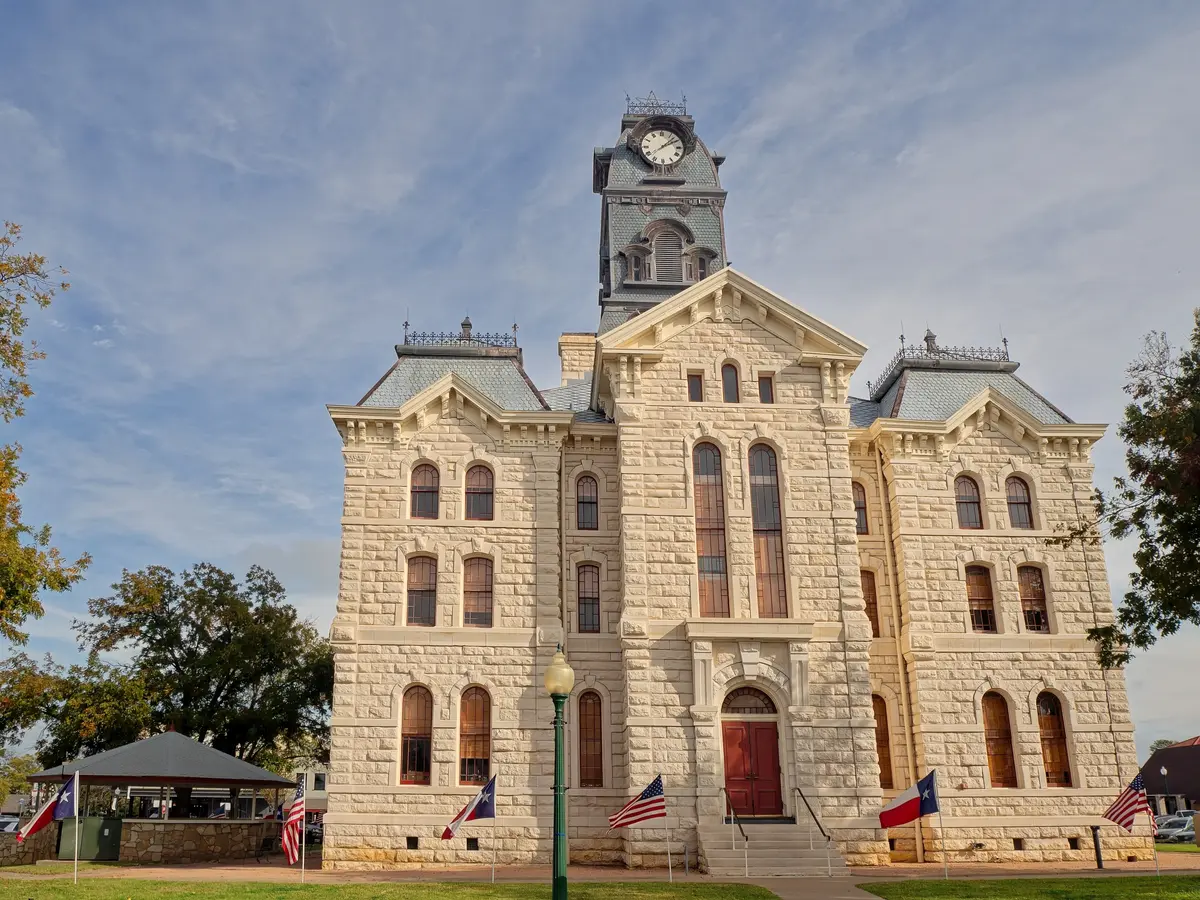
What the city does have is a historic downtown that is genuinely in motion. The Downtown Elgin Historic District is listed on the National Register of Historic Places, and the brick craftsmanship in the commercial buildings — a direct product of the local clay industry — gives the core a texture that most new-construction suburbs simply cannot replicate. The Elgin Depot Museum, housed in the turn-of-the-century Union Depot, maintains historical exhibits, archival photographs, and genealogical records that longtime residents and newly arrived history enthusiasts both use regularly.
The Seasonal Surprise
The Hogeye Festival is the thing newcomers do not see coming. Every October, a free downtown street festival draws crowds from across Texas — live music on multiple stages, a BBQ Pork Cook-Off, the Hogalicious Dessert Contest, and the Pearls Before Swine Art Show spread through the historic core. For a city of 13,327, that volume of people in a compact downtown is genuinely jarring if you moved here for the quiet. Plan around it or lean into it — there is no middle option.
The rest of the year, families with kids gather at Veterans' Memorial Park, and the outdoor draw is real: Wilbarger Creek runs through the area, McKinney Roughs Nature Park offers a 17.6-mile trail system for hiking, mountain biking, and horseback riding along the Colorado River — plus kayaking and birdwatching across more than 250 recorded species — and Lake Bastrop is a short drive for fishing and water recreation. For the full picture on parks and trails, see the parks and recreation page.
The Car-Dependent Reality
Every errand is a drive, every commute is a drive, and every evening out is a drive home. That is not a complaint unique to Elgin — it is the shape of most Central Texas cities at this price point — but buyers who move here expecting anything different tend to find it grating by month three. If you have two cars and do not mind the independence, it is a non-issue. If your household is down to one vehicle or you are used to transit options elsewhere, the adjustment is real.
The active UIL athletics programs at Elgin High School — home of the Wildcats — give the community a regular gathering rhythm that many residents say they underestimated before moving here. Friday night football fills the stands in a way that makes the city feel larger than its population suggests.
The Elgin Housing Market Right Now
The typical home price in Elgin is $272,537 (Zillow Home Value Index, July 2026). That figure places the market noticeably below Bastrop, Manor, and Austin — and for buyers arriving from any of those markets, the delta is not marginal. It is the kind of gap that changes what you can buy, not just what you pay.
The typical citywide rent runs $1,821 per month (Zillow, July 2026). That rent-to-own relationship is part of why buyers have been moving here rather than renting their way into the metro — at this price point, ownership pencils out for households at or above the city's median income.
What the Market Looks Like on the Ground
Elgin's housing stock is a genuine mix. The newer master-planned neighborhoods — Brickston, Trinity Ranch, Harvest Ridge — are the product of the post-2010 growth wave: large-lot single-family homes, newer construction, and the HOA infrastructure that comes with it. The Historic Downtown area and County Line corridor offer older stock with more character and more variability in condition. For neighborhood-level detail on character, feel, and who each area suits, the best neighborhoods page has the full breakdown.
A 150-unit mixed-income housing community called The Katy broke ground near Elgin's Historic Downtown, financed through tax-exempt bonds and housing tax credits — a sign that the city is actively adding rental supply near the historic core. The city also invested $45 million in capital improvement projects in fiscal year 2024, with its auditor issuing its highest opinion on the FY2025 financials. Infrastructure spending at that level for a city of this size signals genuine institutional confidence in the growth trajectory.
Well-priced homes in Elgin do not sit. The market is not frenzied in the way Austin's inner ring was at peak, but buyers who find the right property at the right price should expect to move quickly rather than negotiate leisurely. Come with financing already sorted, know your neighborhoods, and understand that the entry point here is not guaranteed to hold indefinitely as the metro continues to push east.
Elgin Neighborhoods
Elgin has several distinct areas — each with its own character and appeal. Here’s a breakdown to help you narrow down where to focus your home search.
🏡 Brickston
One of Elgin's more established master-planned communities, Brickston draws parents with school-age children who want newer construction and neighborhood amenities in a suburban setting. The streets are quiet and the housing stock skews toward larger single-family homes on consistent lots.
🏠 Trinity Ranch
Trinity Ranch is a newer planned community with a mix of builder homes suited to families making their first move out of a higher-cost market. The neighborhood has a structured feel with amenity infrastructure that newer-construction buyers tend to prioritize.
🌳 Elm Creek
Elm Creek offers a suburban residential feel with access to the natural drainage corridor that gives the neighborhood its name. It suits buyers who want space and a quieter setting without the density of closer-in Austin suburbs.
🏘 County Line
County Line sits at the edges of Elgin's developed footprint and tends to attract buyers looking for more land and more privacy than the planned communities offer — the housing is more varied in age and style, and the feel is distinctly more rural.
🏔 Harvest Ridge
Harvest Ridge is a newer development with modern floor plans and a community layout designed for families with kids. It reflects the most recent wave of Elgin's residential growth and offers some of the city's newest housing stock.
🌆 Downtown Elgin / Historic District
The Historic District is Elgin's most distinctive neighborhood — National Register brick commercial buildings, the Elgin Depot Museum, and a walkable cluster of dining and coffee anchored by institutions that trace to the 1880s. It suits buyers who want character, history, and a genuine small-city downtown within walking distance of home.
Pros & Cons of Living in Elgin
The Pros
- Significantly more affordable housing than nearby Austin
- Authentic small-town charm with a historic, brick-built downtown
- Strong local food culture as the self-proclaimed Sausage Capital of Texas
- Recurring community events like the Hogeye Festival and weekly farmers market
The Cons
- Longer commute times into Austin's job centers
- School district carries below-average academic ratings
- Bastrop County property tax rates run notably higher than the national average
Getting Around & Commuting in Elgin
The commute is the single most important variable in whether Elgin works for your household. The drive is about 35 minutes to Austin, TX under normal conditions — but US-290 is not a highway that performs consistently at all hours, and buyers who underestimate what a daily round trip on that corridor costs in time and stress tend to be the ones who are back on Zillow within two years.
The US-290 Reality
US-290 is the primary artery connecting Elgin to Austin, and it carries the full weight of east-corridor growth. Morning rush traffic heading toward Austin and afternoon traffic returning eastbound are the two moments that define the commute experience. Hybrid schedules — three days in the office, two at home — have made the math more manageable for many residents, and a meaningful share of Elgin's workforce has restructured around exactly that arrangement.
SH-95 provides the north-south axis through town, connecting to Loop 109 for local circulation. Neither route is a meaningful commute alternative to Austin — they serve local movement and connections to Taylor and Coupland to the north. For anyone commuting to the Taylor tech corridor rather than central Austin, the SH-95 route north offers a different equation worth modeling before you buy.
The Airport Question
Austin-Bergstrom International Airport is 25 miles from Elgin — a workable distance for occasional travel, though the drive lands you on the opposite side of Austin from Elgin, which means navigating metro traffic rather than rural highway. The airport is the closest major facility by a significant margin; plan accordingly if frequent air travel is part of your life.
What You Give Up and What You Get
Getting to Austin means a personal vehicle on US-290 — that is the commute, full stop. What you get in return is a home at a price point that Austin proper has not offered in years, space to spread out, and a city that is growing fast enough to add services and amenities year over year. The Elgin Police Department moved into an 11,000-square-foot dedicated headquarters in April 2025 — the first purpose-built police facility in the city's history. That level of civic infrastructure investment tends to follow population growth; the services are catching up to the demand.
Buyers who thrive here tend to treat the commute as a fixed cost, budget around it deliberately, and focus their attention on the quality of life inside Elgin itself rather than its proximity to Austin amenities. Buyers who move here expecting to access Austin's lifestyle regularly, on impulse, without much friction — those are the ones the commute wears down.
Schools in Elgin
Families relocating to Elgin have public, private, and higher-education options nearby. Here’s a quick overview.
🎓 School District
Elgin Independent School District serves K–12 students across Elgin and the surrounding area. Rated D (source: Texas Education Agency, 2025 A-F accountability rating (2024-25 school year)).
🏆 Graduation Rate
The 4-year high-school graduation rate here is approximately 88.3%.
📚 Higher Education
Texas’s public universities — the University of Texas at Austin, Texas A&M University, and the University of Houston — offer four-year degrees statewide, with one of the largest community college systems in the country (50+ public community college districts) providing two-year and workforce programs.
🌐 Online Learning
UT Austin Online and Texas A&M University Online offer fully accredited online degrees for remote learners across the state.
Safety in Elgin
A quick look at how Elgin compares on the numbers that matter most when weighing a neighborhood or a move.
🛡 Violent Crime
Approximately 2 per 1,000 residents.
🔒 Property Crime
Approximately 16 per 1,000 residents.
Compared to the most recent national figures from the Bureau of Justice Statistics (2024), Elgin’s violent crime is below the national average (about 3.7 per 1,000), and property crime is below the national average (about 18.4 per 1,000).
Against Texas as a whole, Elgin’s violent crime is roughly half the state average, and property crime is somewhat below the state average (Bureau of Justice Statistics, Crime Known to Law Enforcement, 2024 (tables 2 and 3)).
Crime rates can vary a lot within a single city, so the citywide numbers above are only a starting point. Some neighborhoods in Elgin run well below these averages, while others run higher — the kind of block-by-block detail that matters most when you’re actually choosing where to live. The full guide below breaks it down neighborhood by neighborhood.
Working in Elgin
Elgin’s largest employers span several industries — here are some of the anchors of the local job market.
🎓 Elgin Independent School District
Education
🏛 City of Elgin
Municipal government
🏭 Acme Brick Company
Brick manufacturing
🏭 Red River Brick
Brick manufacturing
🛒 Southside Market & Barbeque
Food manufacturing
💻 Yerico Manufacturing Inc.
Semiconductor manufacturing
Retiring in Elgin
Elgin draws retirees for its balance of amenities, outdoor access, and cost. Here’s what to weigh.
🌤 Climate
Elgin gets 231 sunny days a year, with hot summers that regularly push into the upper 90s and mild winters that rarely produce extended cold stretches. Spring and fall are the seasons that draw people outside most consistently — the Hogeye Festival in October falls squarely in that sweet spot. Summers require planning around the heat rather than ignoring it.
🍴 Lifestyle
The pace in Elgin is genuinely slower than Austin's inner suburbs, which suits many retirees well. The Historic Downtown has a walkable cluster of dining, coffee, and cultural spots including the Elgin Depot Museum. Outdoor recreation at McKinney Roughs Nature Park and Lake Bastrop is accessible and varied, covering everything from easy trails to kayaking. For healthcare and specialist access, a regional health system serves the area, and Austin's medical facilities are about 35 minutes away. See the retiring in Elgin page for the full picture.
🏚 55+ Communities
No 55+ communities were found in Elgin. Retirees who move here do so into the general housing market — typically single-family homes in the established neighborhoods near the historic core or in one of the newer subdivisions on the city's edges.
✈ Getting Around
A car is necessary for daily life in Elgin; all routine errands and most recreational destinations require driving. Austin-Bergstrom International Airport is 25 miles away and serves as the nearest major air hub for travel. Within the historic downtown, a handful of destinations are walkable, but the broader city is not designed for on-foot access.
🏛 Texas Taxes for Retirees — What to Know
- No state income tax — Texas has no personal income tax — constitutionally protected under Article VIII, Section 24. Social Security, pensions, 401(k)/IRA withdrawals, and annuity payments are all untaxed at the state level, with no state return to file.
- Sales tax is the tradeoff — The state sales tax is 6.25%, and local add-ons bring the combined rate in Elgin to 8.25% (Texas Comptroller of Public Accounts, city sales and use tax rates, July 2026). Groceries and prescription drugs are exempt.
- Property taxes — the real tradeoff — Texas’s effective property tax rate averages about 1.40%, among the highest in the country, since property tax (not income tax) funds most local government and schools.
- Over-65 homestead exemption and school-tax freeze — Homeowners 65+ (or disabled) get an additional $60,000 exemption from their home’s value for school district taxes, on top of the general homestead exemption — $200,000 off school taxable value combined, following November 2025’s Proposition 11 (SB 23), which raised the over-65 exemption to $60,000, and Proposition 13 (SB 4), which raised the general homestead exemption to $140,000. Once claimed, your school district tax bill is frozen at that year’s amount and cannot increase as home values rise, and the ceiling can transfer if you move to a new home within Texas.
- Deferral option if cash is tight — Homeowners 65+ can defer property tax payment entirely for as long as they live in the home, rather than paying it currently — interest accrues, but no forced sale.
- No estate or inheritance tax — Texas has no estate tax, no inheritance tax, and no gift tax.
- No separate capital gains tax — Because Texas has no state income tax, capital gains — including on investments and home sales — are not taxed at the state level at all, unlike states such as Washington that tax capital gains separately from income.
Tax laws change frequently and individual situations vary. This is general information, not tax advice — always consult a qualified Texas tax professional or CPA for personalized retirement tax planning.
Weekends & Local Favorites in Elgin
Elgin's identity on a weekend is built around two things the city has been doing since the 1880s: brick and barbecue. The smoked-meat tradition here traces to 1882, and both Southside Market & Barbeque and Meyer's Elgin Smokehouse carry that history forward — Southside is regarded as one of Texas's oldest continuously operating barbecue establishments, and Meyer's uses a family recipe brought from Germany. These are not novelty destinations for Austin day-trippers; they are civic anchors that residents take genuine pride in.
The Food and Coffee Scene
Beyond the two barbecue institutions, the local dining scene is small but developing. Lucy's Kitchen, Aviator Pizza & Brew Company, and Joseph's Steak House round out the sit-down options in town. For coffee, Lo-Fi Coffee House & Studio — open since 2025 in downtown Elgin's original 1888 Southside Barbecue building — combines a specialty coffee bar and bakery with local art displays, pop-up events, and a CSA produce pickup. Chemn Cafe offers another independent option in the same walkable core. Both reflect the broader wave of independent businesses moving into the historic district.
The Outdoors
Veterans' Memorial Park is the local gathering point for families — the kind of park where youth sports run on weekends and residents know each other by sight. Wilbarger Creek provides a natural corridor through the area, and McKinney Roughs Nature Park — a 1,140-acre LCRA-managed park along the Colorado River — is the serious outdoor draw for the region, with a 17.6-mile trail system, kayaking, and more than 250 bird species recorded there. Lake Bastrop extends the water recreation options a short drive south. For the full outdoor recreation picture, the parks and recreation page covers what is available and where.
Culture and Community
The Elgin Depot Museum in the historic Union Depot building is worth an afternoon for anyone curious about how the city got here — the archival photographs and genealogical records it maintains are genuinely substantive, not a bare-minimum civic exhibit. The Historic Downtown district itself, with its National Register designation and intact brick commercial architecture, is a walkable core that rewards attention.
October brings the Hogeye Festival — a free street festival that fills the downtown and draws crowds from well outside Bastrop County. Multiple music stages, a BBQ Pork Cook-Off, the Hogalicious Dessert Contest, and the Pearls Before Swine Art Show take over the historic core. If you live within a few blocks of the district, you will know it is happening whether you plan to attend or not.
Local favorites in Elgin
Restaurants
- Southside Market & Barbeque
- Meyer's Elgin Smokehouse
- Lucy's Kitchen
- Aviator Pizza & Brew Company
- Joseph's Steak House
Outdoors
- Veterans' Memorial Park
- McKinney Roughs Nature Park
- Lake Bastrop
- Wilbarger Creek
Coffee
- Chemn Cafe a coffee shop
- Lo-Fi Coffee House & Studio
Top Things Locals Say About Elgin
The best intel about a city comes from the people who actually live there. Here’s what Elgin residents say when newcomers ask the questions everyone’s thinking.
“I knew the commute would be a thing, but I didn't expect how much I'd actually enjoy the drive back — once you're past the congestion, it's just open Central Texas highway and you can decompress. What I didn't expect was how much personality the downtown already has. I thought I was moving to a bedroom community and it turns out there's a whole October festival that basically takes over the city.”
— Recent Elgin home buyer
“What's the most surprising thing about living in Elgin?”
The downtown is more alive than anyone tells you before you move here. The historic brick buildings, the coffee shops, the barbecue institutions — it does not feel like a suburb that is waiting to become something. It feels like a town that already has its own thing going on and is just getting more of it. The Hogeye Festival in October is the sharpest version of that surprise: the crowds that fill a city this size is something you have to see once to understand.
“What do locals love most about Elgin?”
The space and the price together — that combination genuinely does not exist closer to Austin anymore. You get a real house on a real lot, and on a weekend morning you can be hiking a 17-mile trail system at McKinney Roughs or fishing at Lake Bastrop without fighting for parking. The barbecue does not hurt either. Southside Market and Meyer's Elgin Smokehouse are local institutions, not tourist stops, and being able to treat them as a regular Tuesday option feels like a perk that outsiders pay for.
“What should newcomers to Elgin know?”
Drive US-290 during morning rush before you buy — not on a Sunday, not at 10 a.m. on a Tuesday, but on a real workday morning at the time you would actually be leaving. The commute is manageable for a lot of people, but only if you know what you are actually agreeing to. Also: the city is investing heavily right now, so services and amenities are actively improving. What was not here two years ago might be here now, and what is here now will likely be more built out in two more years.
“How much do you need a car in Elgin?”
A car is essential for getting around day to day. Most routine errands involve driving, and anything that requires a specialty store or a larger retailer means leaving town entirely. Within the historic downtown core, you can walk between the coffee shops, barbecue spots, and the Depot Museum, but that walkable radius covers a small slice of daily life. Two-car households have a significant quality-of-life advantage here.
Cities Near Elgin
Other communities near Elgin worth a look — each with its own character and price point.
| City | Distance | Best For | Vibe | Median Rent | Median Buy |
|---|---|---|---|---|---|
| Bastrop | 18 mi | Established buyers, river access | Historic, settled, outdoor-oriented | $1,837 | $353,503 |
| Manor | 15 mi | Austin commuters, newer builds | Fast-growing, suburban, transit-adjacent | $1,672 | $317,692 |
| Austin | 25 mi | Urban lifestyle, walkability seekers | Dense, cultural, high-cost | $1,610 | $504,148 |
More Helpful Guides for Elgin
Going deeper on Elgin? Our blog series covers everything from first-time buying to retiring here — explore the guides below.
Local Expert Takeaway: Elgin works best for buyers who have done the US-290 commute at least once during morning rush hour and made peace with it. The barbecue is real, the brick history is real, the typical home price of $272,537 (July 2026) is real — and so is the D rating from the Texas Education Agency on the school district. The city is growing fast, investing heavily in its own infrastructure, and adding independent businesses to a historic downtown that already has genuine bones. Go in with clear eyes on the school situation and the commute, and Elgin is one of the more honest values left in the Austin metro.
Quick Takeaways & FAQs
✅ Elgin's typical home price of $272,537 (July 2026) sits noticeably below every nearby market, including Bastrop, Manor, and Austin.
⚠️ The Elgin ISD holds a D rating from the Texas Education Agency — the school district is the most significant tradeoff families must weigh before buying here.
📍 The city holds two official Texas nicknames — Brick Capital of the Southwest and Sausage Capital of Texas — and both are grounded in active industries and working institutions, not just history plaques.
How long is the commute from Elgin to Austin?
Is Elgin, TX a good place to raise a family?
What is the crime rate in Elgin, TX?
What are the best neighborhoods in Elgin, TX?
Is Elgin, TX growing fast?
Helpful Links for Moving to Elgin
Moving to Texas?
Tell us what you need help with and we'll connect you with local resources.
