If you work from home and you're shopping the Austin metro, the decision is less obvious than it looks. The region stretches from the Hill Country west of Austin through the Williamson County suburbs to the north, down through Hays County to San Marcos, and east toward the Bastrop pines and the Caldwell County line. What ties it together is Austin-Bergstrom International Airport and a shared job market that remote workers increasingly treat as optional — but what pulls it apart is almost everything else: home prices, property tax rates, internet infrastructure, and how much a town can actually offer on a Tuesday afternoon when you close the laptop.
The spread across this list is real. Larger, denser cities tend to have more provider competition and more to do after hours; smaller towns offer quieter streets and, in several cases, meaningfully lighter property tax bills, but require more planning around connectivity and less spontaneity in daily life. The towns anchored by tech-corridor growth carry that in their prices; the working agricultural towns and smaller historic communities carry it in their amenity counts. The sections below break down each city on the factors that matter most to someone building a remote-work life here — connectivity, tax burden, airport convenience, what you can actually afford, and what the daily texture of the place feels like.
How This Ranking Was Built
Each city is scored 1-10 on every dimension below against a fixed statewide scale — never against the other cities in this region — then combined into one weighted Composite score out of 10.
Internet Speed — 25%Weighted contribution to the composite score, graded 1-10 against a fixed statewide scale.
Tax Burden — 20%Weighted contribution to the composite score, graded 1-10 against a fixed statewide scale.
Airport Access — 20%Weighted contribution to the composite score, graded 1-10 against a fixed statewide scale.
Affordability — 20%Weighted contribution to the composite score, graded 1-10 against a fixed statewide scale.
Quality of Life — 15%Weighted contribution to the composite score, graded 1-10 against a fixed statewide scale.
Top 21 Cities: Best for Remote Workers Snapshot
Ranked by overall composite score. Click any city to jump to the full breakdown.
| # | City | Composite | Internet | Property Tax | Median Price |
|---|
| 1 | Austin
Travis County | 7.7/10 | 10 | 5.6 | $504,148 |
| 2 | Round Rock
Williamson County | 6.8/10 | 9.1 | 4.1 | $405,249 |
| 3 | Bastrop
Bastrop County | 6.7/10 | 4.0 | 7.8 | $353,503 |
| 4 | San Marcos
Hays County | 6.7/10 | 7.3 | 4.2 | $310,480 |
| 5 | Kyle
Hays County | 6.6/10 | 7.1 | 6.2 | $299,223 |
| 6 | Pflugerville
Travis County | 6.5/10 | 7.0 | 6.6 | $373,188 |
| 7 | Georgetown
Williamson County | 6.4/10 | 8.2 | 5.7 | $427,174 |
| 8 | Leander
Williamson County | 6.4/10 | 7.7 | 5.7 | $427,012 |
| 9 | Elgin
Bastrop County | 6.3/10 | 4.0 | 7.8 | $272,537 |
| 10 | Lockhart
Caldwell County | 6.3/10 | 4.4 | 6.8 | $275,793 |
| 11 | Buda
Hays County | 6.2/10 | 4.3 | 6.2 | $355,320 |
| 12 | Hutto
Williamson County | 6.2/10 | 6.4 | 3.1 | $335,073 |
| 13 | Cedar Park
Williamson County | 6.0/10 | 7.4 | 5.7 | $470,231 |
| 14 | Taylor
Williamson County | 5.9/10 | 4.5 | 5.7 | $283,170 |
| 15 | Lakeway
Travis County | 5.7/10 | 4.5 | 10 | $747,050 |
| 16 | La Grange
Fayette County | 5.0/10 | 2.1 | 10 | $391,399 |
| 17 | West Lake Hills
Travis County | 5.0/10 | 1.8 | 8.6 | $2,116,171 |
| 18 | Dripping Springs
Hays County | 5.0/10 | 3.5 | 8.4 | $697,226 |
| 19 | Manor
Travis County | 5.0/10 | 4.9 | 1 | $317,692 |
| 20 | Bee Cave
Travis County | 4.9/10 | 2.9 | 9 | $1,009,500 |
| 21 | Liberty Hill
Williamson County | 4.6/10 | 4.0 | 5.7 | $488,964 |
Property Tax
5.6/10
out of 10
Airport Access
10/10
out of 10
Affordability
2.6/10
out of 10
Quality of Life
10/10
out of 10
Median Price
$504,148
2026 market price
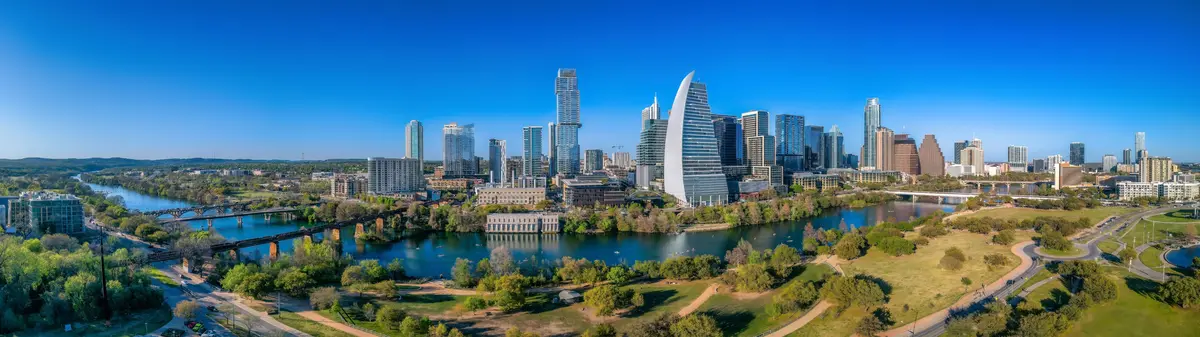
Austin is the infrastructure baseline everything else in the metro is measured against. It is the 5th-largest incorporated city in Texas, drawing every major broadband provider and the density to support genuine competition between them — which matters more than almost any other factor for a remote worker building a career from home. A $504,148 typical home price is the real cost of that access: you are paying for the city's scale, its airport proximity, and a quality-of-life profile — live music, trail systems, the Congress Avenue corridor, Lady Bird Lake — that no suburb in this list matches.
The property tax burden here is real and worth pricing carefully into your monthly budget before you fall in love with a house. For remote workers who rarely need to commute but fly occasionally, Austin's airport proximity is a genuine daily-life advantage. If budget is the primary driver, the eastern and northeastern suburbs will get you more square footage — but if you want the full urban remote-work package, Austin is the city against which everything else in this region is a trade-off.

Property Tax
4.1/10
out of 10
Airport Access
7.9/10
out of 10
Affordability
3.9/10
out of 10
Quality of Life
8.7/10
out of 10
Median Price
$405,249
2026 market price
Round Rock has built itself into one of the more self-sufficient suburbs in the metro, with enough scale — it is the 26th-largest incorporated city in Texas — to attract solid broadband infrastructure and a genuinely varied local scene. The tech-corridor demand that pushed prices up in Austin has followed I-35 north, which explains why a $405,249 typical home price isn't the bargain some buyers expect when they leave the city limits. Williamson County's property tax structure is on the heavier side, and it is worth running that number carefully against your budget before assuming suburban means cheaper.
Remote workers here tend to value the combination of connectivity and breathing room — there is actual green space, a walkable downtown core around Chisholm Trail, and the kind of established infrastructure that a city of this size earns over time. It suits buyers who want a real suburb with real amenities rather than a bedroom community, and who can absorb a property tax bill that requires honest budgeting.
Property Tax
7.8/10
out of 10
Airport Access
8.3/10
out of 10
Affordability
5.0/10
out of 10
Quality of Life
10/10
out of 10
Median Price
$353,503
2026 market price
Bastrop sits in a different category than the Williamson County suburbs — it is a small historic city in the Lost Pines region east of Austin, and its character shows it. The quality-of-life offering here is genuinely rich for a city this size: the Colorado River, the state park, a walkable historic downtown, and an arts and dining scene that punches well above its population. The typical home price of $353,503 reflects demand from buyers who have discovered all of that, and the property tax rate lands on the lighter side of the metro, which eases the carrying cost somewhat.
The honest caveat for remote workers is internet. At this population scale, provider competition is limited — verify what actually serves your specific address before you make an offer, because small-city infrastructure can vary significantly block by block. If your work is bandwidth-intensive, that due diligence is non-negotiable. For remote workers who can confirm solid connectivity, Bastrop offers a lifestyle — river access, pine forests, a real historic town — that no purely suburban option in this metro can replicate.

Property Tax
4.2/10
out of 10
Airport Access
7.5/10
out of 10
Affordability
6.0/10
out of 10
Quality of Life
8.7/10
out of 10
Median Price
$310,480
2026 market price
San Marcos is a university city anchored by Texas State, the San Marcos River, and I-35 — which means it has real broadband infrastructure, a lively local scene, and an airport that is a reasonable drive rather than a trek. A $310,480 typical home price makes it one of the more accessible entry points in the metro for buyers who want a mid-size city with genuine amenities rather than a purely residential suburb. The property tax rate here runs on the heavier side, so factor that into your true monthly cost rather than looking only at the purchase price.
The San Marcos River is the city's social spine — tubing, kayaking, and the springs draw residents year-round in a way that purely suburban amenities simply don't. Buyers drawn to an active outdoor lifestyle combined with a walkable university-city core will find San Marcos genuinely compelling. It suits remote workers who want a real downtown, don't mind that the city's energy skews young, and are looking for a home price that reflects Hays County rather than the northern tech corridor.
Property Tax
6.2/10
out of 10
Airport Access
8.4/10
out of 10
Affordability
6.3/10
out of 10
Quality of Life
4/10
out of 10
Median Price
$299,223
2026 market price
Kyle has grown fast — it is the 59th-largest incorporated city in Texas — and that growth shows in the infrastructure: connectivity here is in a reasonable tier for a city with a substantial residential base, and the I-35 corridor gives frequent flyers workable airport access. A $299,223 typical home price is among the more accessible in this part of the metro, which is the primary draw for buyers priced out of the northern suburbs. The property tax rate in Hays County sits above what many buyers hope for, so run the actual carrying cost before assuming the lower purchase price solves the affordability equation.
The honest trade-off in Kyle is amenities. The city is still building its local scene, and daily life here leans heavily on driving for most errands, dining variety, and entertainment. It genuinely suits remote workers who are primarily budget-focused, who work entirely from home and rarely need urban infrastructure, and who are willing to trade a thinner local amenity base for a home price that leaves meaningful room in the monthly budget.
Property Tax
6.6/10
out of 10
Airport Access
8.7/10
out of 10
Affordability
4.6/10
out of 10
Quality of Life
5/10
out of 10
Median Price
$373,188
2026 market price
Pflugerville is a Travis County suburb that sits close enough to Austin to feel genuinely connected while offering home prices that reflect its position just outside the city. A $373,188 typical home price is still well above mid-range for Texas, and the property tax structure — with multiple overlapping district layers — runs on the heavier side for the metro, so the monthly carrying cost requires honest budgeting. The airport is a quick run from here, which matters for remote workers who fly regularly to meet clients.
The quality-of-life picture in Pflugerville is decent but not deep — there are parks, local dining options, and a waterpark, but the overall amenity count is modest relative to the city's size. It tends to suit remote workers whose social life is self-directed and who value proximity to Austin's amenities without paying Austin prices, while accepting that Pflugerville itself won't provide most of the entertainment on a given weekend.
Property Tax
5.7/10
out of 10
Airport Access
7.1/10
out of 10
Affordability
3.6/10
out of 10
Quality of Life
7.3/10
out of 10
Median Price
$427,174
2026 market price
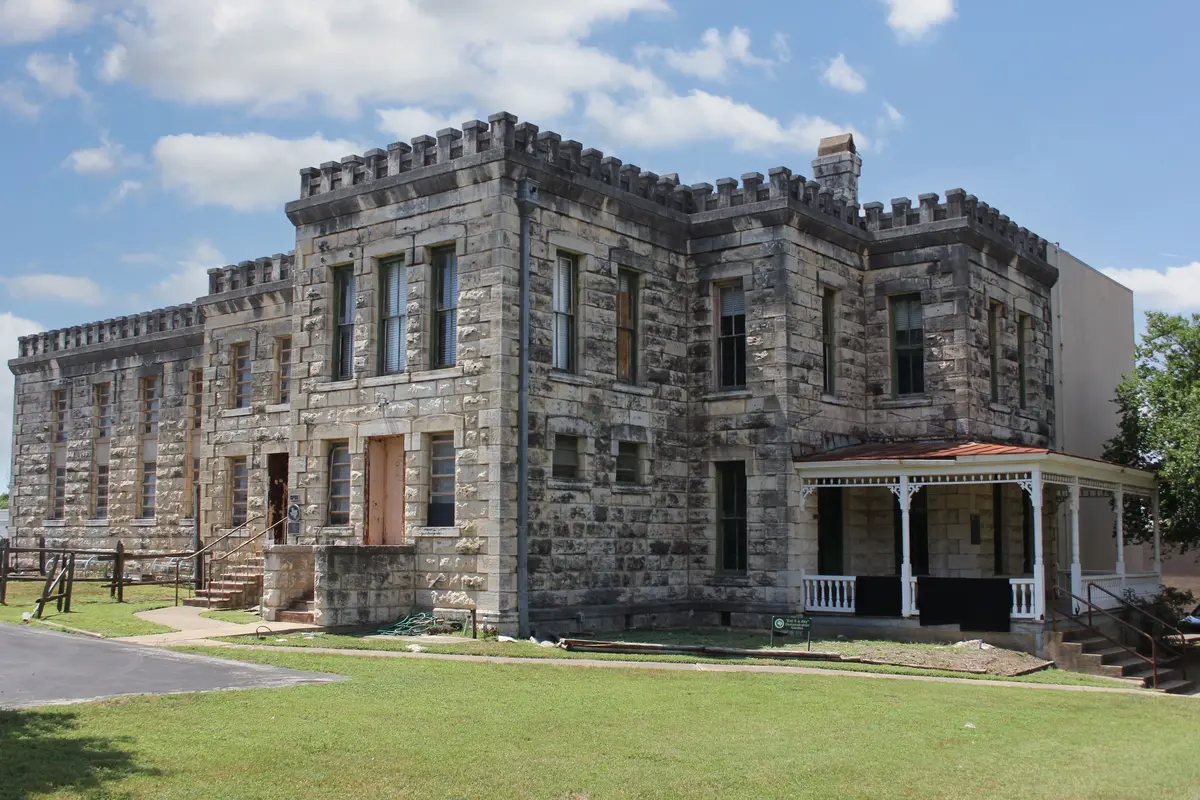
Georgetown has earned a real reputation beyond just being another Austin suburb — the Williamson County seat has a genuinely walkable courthouse square, a historic district that predates most of what surrounds it, and with substantial residential scale it has the size to support solid broadband infrastructure and a varied local scene. A $427,174 typical home price reflects that appeal. The property tax picture here involves overlapping city, ISD, and county layers — the effective rate runs above average for Texas suburbs, and it is worth confirming the exact figure for any specific address with the Williamson County Appraisal District.
Georgetown is also home to several of the metro's most established 55+ communities — Sun City Texas, Heritage Oaks, and Oaks at Wildwood — which makes it a genuinely strong option for remote workers who are at or near retirement age and want an active adult lifestyle with real amenities nearby. For younger remote workers, the combination of a real downtown, good connectivity, and airport access that is manageable if not lightning-quick makes it a solid if pricey suburban choice.
Property Tax
5.7/10
out of 10
Airport Access
7.3/10
out of 10
Affordability
3.6/10
out of 10
Quality of Life
7.3/10
out of 10
Median Price
$427,012
2026 market price
Leander has grown quickly along the US-183 and TX-183A corridors, and it has crossed the threshold where broadband infrastructure investment follows population density — remote workers here should have workable options, though confirming the specific provider serving your address remains the right step before buying. A $427,012 typical home price sits in similar territory to Georgetown, and the Williamson County property tax structure runs on the heavier side — the combined rate across overlapping districts is a real ongoing cost to price into a monthly budget.
Leander suits remote workers who want a mid-size suburban environment with growing local amenities and a commuter rail connection to Austin for the days they need to be in the city. The pace here is quieter and more family-oriented than the urban core, and the Hill Country edges of the city offer scenery that purely flat suburban alternatives in the metro cannot match. Buyers drawn to established neighborhoods at a suburban scale, with the infrastructure of a genuinely sized city, tend to find it a reasonable fit.
Property Tax
7.8/10
out of 10
Airport Access
8/10
out of 10
Affordability
7.2/10
out of 10
Quality of Life
5/10
out of 10
Median Price
$272,537
2026 market price
Elgin sits along US-290 east of Austin, and its character is fundamentally different from the Williamson County tech corridor: this is a small city with a working-town economy, a genuine BBQ identity, and a property tax rate that lands on the lighter side of the metro. A $272,537 typical home price reflects a market driven by local wages rather than tech-corridor demand, and for remote workers whose primary concern is housing cost, that matters. The carrying cost equation here is more favorable than in many of the northern suburbs once you factor in the tax rate.
The direct challenge for remote workers is internet infrastructure. At this population scale, provider competition is genuinely limited — this is not a city where you can assume broadband options will be equivalent to what you had in a larger suburb, and the work-from-home math breaks down quickly if connectivity is unreliable. Verify what serves your specific address before committing. Elgin suits remote workers who can confirm solid connectivity, value affordability over amenity density, and want a quieter small-town pace within a reasonable drive of the airport.
Property Tax
6.8/10
out of 10
Airport Access
7.7/10
out of 10
Affordability
7.0/10
out of 10
Quality of Life
6/10
out of 10
Median Price
$275,793
2026 market price
Lockhart carries real identity as the self-proclaimed BBQ capital of Texas, and its historic downtown gives it more character than most small cities of comparable size. It sits in a population tier where broadband options are more limited than in the northern suburbs — this is a city where verifying provider availability at your specific address is essential before making any offer. A $275,793 typical home price puts it in genuinely accessible territory for buyers priced out of the metro core, and the property tax rate runs at a moderate level that won't dramatically inflate the carrying cost.
Lockhart is best understood as a small working town with strong food culture and a historic core, not as a suburb with suburban infrastructure. Remote workers who can confirm reliable connectivity will find the price point compelling and the atmosphere genuinely distinct. It suits buyers who value affordability, a real sense of place, and a quiet lifestyle — and who are comfortable with a longer drive to the airport than the closer-in suburbs require.
Property Tax
6.2/10
out of 10
Airport Access
8.9/10
out of 10
Affordability
5.0/10
out of 10
Quality of Life
7.3/10
out of 10
Median Price
$355,320
2026 market price
Buda is a small Hays County city on I-35, just south of Kyle, and its proximity to Austin-Bergstrom is one of its more underappreciated advantages — the airport is an easy drive that doesn't require navigating deep into the city. A $355,320 typical home price is solidly above mid-range for Texas despite the small-town scale, driven by demand from buyers who want Hill Country adjacency and reasonable proximity to both Austin and San Marcos. The property tax rate sits in a mid-range position for the metro and is worth pricing accurately into your monthly budget.
The internet infrastructure picture here is more constrained than in the larger suburbs — at this residential scale, provider competition is more limited, and a remote worker with heavy bandwidth needs should verify what actually serves their address before buying. Buda tends to suit buyers who value the small-town feel over urban amenity density, who travel frequently enough to care about airport access, and who are drawn to a quieter Hays County lifestyle rather than the more built-out suburban environments to the north.
Property Tax
3.1/10
out of 10
Airport Access
7.7/10
out of 10
Affordability
5.4/10
out of 10
Quality of Life
8.7/10
out of 10
Median Price
$335,073
2026 market price
Hutto is a Williamson County city that has grown steadily with new construction and family-oriented development along the US-79 and SH-130 corridors. Its quality-of-life picture — parks, local dining, outdoor space — is genuinely solid for a city its size, and the connectivity infrastructure has followed the population growth into a mid-tier range. A $335,073 typical home price sits above the outer-ring average for the metro, and the Williamson County property tax structure is notably heavy here — it is one of the higher effective rates in this comparison, and it meaningfully changes the real monthly cost of ownership.
Remote workers who are drawn to Hutto are usually weighing new construction availability and a quieter residential pace against a carrying cost that requires careful budgeting. The airport access is workable rather than exceptional. It suits buyers who want a family-oriented suburban environment with decent local amenities, and who have run the property tax math and confirmed it fits within their budget — because the sticker price alone understates what ownership here actually costs.
Property Tax
5.7/10
out of 10
Airport Access
7.7/10
out of 10
Affordability
3.1/10
out of 10
Quality of Life
6/10
out of 10
Median Price
$470,231
2026 market price
Cedar Park is a Williamson County suburb that has matured into one of the more complete residential environments in the northern metro — there is real retail, real dining, and genuine connectivity infrastructure at this population scale. The broadband picture here is strong enough for most remote work configurations, which is a meaningful advantage over smaller cities in the region. A $470,231 typical home price reflects the premium that buyers pay for that maturity, and the property tax structure — which layers city, ISD, and MUD district rates — pushes the effective rate above average for Texas suburbs and significantly changes the true monthly cost.
Cedar Park tends to attract buyers who want the most complete suburban package in the northern corridor: good schools, established neighborhoods, walkable retail nodes, and connectivity that doesn't require verification anxiety before buying. The trade-off is that the combined purchase price and tax burden make it one of the more expensive ownership propositions in the metro. It suits remote workers for whom infrastructure certainty and lifestyle completeness matter more than finding the lowest carrying cost.
Property Tax
5.7/10
out of 10
Airport Access
7/10
out of 10
Affordability
6.8/10
out of 10
Quality of Life
6/10
out of 10
Median Price
$283,170
2026 market price
Taylor is a small Williamson County city that is navigating a significant economic transition — it was selected as the site of a major Samsung semiconductor manufacturing investment, which has started to reshape the city's identity and infrastructure trajectory. At its current population scale, broadband infrastructure is more limited than in the larger northern suburbs, and remote workers should verify provider availability before committing. A $283,170 typical home price is below the metro core but above prices found in smaller working towns farther from the tech corridor.
Taylor's property tax rate sits in a moderate position for Williamson County. The airport is a longer drive from here than from most cities on this list — manageable for occasional travel but not the quick run that closer-in suburbs offer. It suits remote workers who are drawn to a small-town pace with the potential upside of a city on an economic inflection point, and who can confirm connectivity meets their needs before buying.
Property Tax
10/10
out of 10
Airport Access
7.9/10
out of 10
Affordability
1/10
out of 10
Quality of Life
5/10
out of 10
Median Price
$747,050
2026 market price
Lakeway is a small Hill Country community on Lake Travis that operates at a fundamentally different price point than the rest of this comparison — a $747,050 typical home price reflects the lakefront setting, the relative exclusivity of its small residential scale, and one of the most favorable property tax rates in all of Travis County. That low effective rate is a genuine financial advantage for a high-value home, and it is worth understanding as part of the total ownership cost rather than just the sticker price.
The connectivity challenge here is real and directly tied to population size: Lakeway sits in a tier where infrastructure investment has not kept pace with the cost of living, and remote workers with heavy bandwidth needs should verify what actually serves their address with particular care. Lakeway suits a specific remote-work buyer — someone for whom the lake lifestyle and low tax rate are the primary draw, whose work is not bandwidth-intensive, and who has the budget for one of the higher home prices in the metro. Tuscan Village is the city's established 55+ community for buyers at that stage of life.
Property Tax
10/10
out of 10
Airport Access
5.3/10
out of 10
Affordability
4.2/10
out of 10
Quality of Life
4/10
out of 10
Median Price
$391,399
2026 market price
La Grange is a small Fayette County seat well outside the Austin metro's suburban footprint — with one of the lowest effective property tax rates in this entire comparison and a home price of $391,399 that feels incongruous for a town this small and this rural. The tax advantage is real and represents genuine long-term savings on a property of this value. But La Grange sits closer to rural infrastructure realities than any other city on this list: at this population scale, internet options are genuinely limited, and the airport is a longer haul than most remote workers who fly regularly would find comfortable.
La Grange is not a commuter suburb and does not function as one — it is a small Texas county seat with its own civic identity, a courthouse square, and a pace that is categorically different from anywhere else on this list. It suits remote workers whose bandwidth needs are modest and confirmable, who rarely fly, who value historic small-town character over suburban amenity density, and for whom the property tax advantage is a primary financial consideration.
Property Tax
8.6/10
out of 10
Airport Access
9.5/10
out of 10
Affordability
1/10
out of 10
Quality of Life
5/10
out of 10
Median Price
$2,116,171
2026 market price
West Lake Hills is a small enclave in Travis County, sitting in the Hill Country terrain just west of Austin with easy airport access and a property tax rate that is notably favorable relative to most Travis County addresses. A $2,116,171 typical home price reflects the reality of what this location commands: the terrain, the tree cover, the Eanes school district demand, and the proximity to Austin without being in it. The financial profile here is almost entirely defined by that price point.
The internet infrastructure situation is the counterintuitive challenge: at very small residential scale, West Lake Hills sits in a population tier where provider competition is genuinely limited despite its affluence and its proximity to one of the country's major tech cities. Remote workers here should verify connectivity at their specific address before buying — this is not a city where large-suburb broadband assumptions hold. It suits buyers for whom the address itself is the draw and whose budget allows a home at this price point without stretching.
Property Tax
8.4/10
out of 10
Airport Access
7.5/10
out of 10
Affordability
1/10
out of 10
Quality of Life
5/10
out of 10
Median Price
$697,226
2026 market price
Dripping Springs has carved out a distinct identity in the Hill Country west of Austin — it is a small city that has become a destination for breweries, distilleries, and winery tasting rooms, and the surrounding landscape is genuinely beautiful. A $697,226 typical home price reflects the combination of Hill Country scenery, Hays County location, and the demand that comes with a city that has become a lifestyle destination. The property tax rate here is on the lighter side for the metro, which partially offsets the carrying cost on a home at this price.
The connectivity picture requires honest due diligence: at this population scale, infrastructure investment lags the larger suburbs, and remote workers with bandwidth-intensive work should verify provider availability at their specific address before making an offer. The airport is a manageable drive, not a quick one. Dripping Springs suits remote workers who have confirmed connectivity, can absorb a premium home price, and are drawn to Hill Country living — the wineries and distilleries are the social life here, and it is a genuinely specific lifestyle rather than a general suburban one.
Property Tax
1/10
out of 10
Airport Access
9.2/10
out of 10
Affordability
5.8/10
out of 10
Quality of Life
3.5/10
out of 10
Median Price
$317,692
2026 market price
Manor is a small Travis County city that sits just east of Austin along US-290, and its airport proximity is one of the strongest in the metro — Austin-Bergstrom is close enough to make it genuinely convenient for frequent flyers in a way that some far pricier cities on this list cannot match. A $317,692 typical home price reflects its eastern-Travis-County position, driven by its distance from the tech-corridor demand that inflates prices to the north and west. The carrying cost, however, requires careful budgeting: Manor carries one of the highest effective property tax rates in Travis County, which substantially changes the monthly ownership equation.
The quality-of-life picture in Manor is still developing — dining options exist but cultural amenities are thin relative to the city's size, and most entertainment requires a drive. The internet infrastructure sits in a mid-range tier for a city of this size, better than the truly small towns but below the larger northern suburbs. Manor tends to suit budget-focused remote workers who value airport proximity and can accept a heavier tax burden and a thinner local scene in exchange for a home price that reflects a market less shaped by tech-corridor spillover.
Property Tax
9/10
out of 10
Airport Access
8.3/10
out of 10
Affordability
1/10
out of 10
Quality of Life
3.5/10
out of 10
Median Price
$1,009,500
2026 market price
Bee Cave is a small Hill Country community in Travis County, positioned near the Hill Country Galleria area with one of the more favorable property tax rates in the metro — a real financial advantage on a home at this price level. A $1,009,500 typical home price puts it among the pricier markets in the region, and at this population scale the internet infrastructure is more constrained than buyers might expect given the affluence of the area. Remote workers should verify provider availability at their specific address before making an offer.
Bee Cave suits a narrow buyer profile: someone who values the Hill Country setting, the retail and dining concentration near the Galleria, and a favorable tax rate, and who has the budget for a seven-figure home price. The amenity count is modest for a city in this price tier, and daily life here leans on driving. It is best understood as a lifestyle-driven location rather than a value-driven one, and remote workers whose work is bandwidth-intensive should approach connectivity verification here with extra care.
Property Tax
5.7/10
out of 10
Airport Access
6.3/10
out of 10
Affordability
2.8/10
out of 10
Quality of Life
4/10
out of 10
Median Price
$488,964
2026 market price
Liberty Hill is a fast-growing small city on the western edge of Williamson County, and its growth has outpaced its infrastructure in ways that directly affect remote workers. At this population scale, provider competition is limited — this is a city where verifying fiber or high-speed broadband availability at your specific address is essential, not optional. A $488,964 typical home price is high for a city with this level of services and infrastructure, driven by new-construction demand and Hill Country adjacency rather than established amenity density.
The airport is a longer drive from Liberty Hill than from most cities on this list, and the local amenity base is still in early stages — a handful of restaurants and parks, but the walkable commercial fabric that Georgetown or Round Rock offer is not here yet. The property tax rate runs above average for Texas. Liberty Hill tends to suit buyers who are specifically drawn to new construction on larger lots at the metro's quieter western edge, and who can confirm connectivity before committing — it is not the strongest all-around remote-work package at this price point.
No single city in this metro wins on every dimension for remote workers — Austin gives you the most infrastructure and the most to do, but the carrying costs are real; the smaller towns east of the city trade connectivity certainty for affordability and lighter tax bills. Before you make an offer anywhere, confirm which providers actually serve that specific address.
Want to see what's for sale in these neighborhoods?
Sign up for listing alerts — get notified when homes hit the market.
Get Listing Alerts →
Frequently Asked Questions
Which Austin-area cities are most practical for remote workers who need reliable internet?
The larger and denser cities in the metro — Austin, Round Rock, Georgetown, and Cedar Park — have the population scale that draws multiple broadband providers and genuine infrastructure investment. Cities like San Marcos, Leander, and Hutto sit in a reasonable mid-range for connectivity. Smaller cities like Bastrop, Elgin, Lockhart, La Grange, and Liberty Hill have more limited provider competition, and remote workers in those markets should verify what actually serves their specific address before making an offer — the gap between what a city has and what a given block has can be significant at small-city scale.
How does the property tax situation work for remote workers buying in the Austin metro?
Texas has no state income tax, so property tax is the primary recurring local cost of ownership, and it funds schools, roads, and emergency services. Rates are set by overlapping districts — county, city, school district, and sometimes a municipal utility district — which means two homes on the same street can sit at meaningfully different rates. Cities like Lakeway, Bee Cave, and La Grange have lighter effective rates that ease the carrying cost; cities like Hutto, Round Rock, and San Marcos run on the heavier side and require honest budget math before you fall in love with a purchase price. Always confirm the exact rate for a specific address with the relevant county appraisal district.
Which cities are best for remote workers who also fly frequently for work?
Manor, Buda, and Pflugerville sit closest to Austin-Bergstrom and offer some of the most convenient airport access in the metro, though each comes with its own trade-offs in amenities and tax burden. Austin itself makes airport runs almost incidental. Lakeway and West Lake Hills also offer strong proximity despite their small-town scale. The cities where airport access is a longer commitment — La Grange and Liberty Hill in particular — tend to suit buyers who travel occasionally rather than those catching monthly flights.
Is it worth living outside Austin proper as a remote worker, or does the savings not pencil out after taxes?
It depends heavily on which suburb you're comparing. Moving from Austin to Round Rock or Georgetown doesn't necessarily cut the carrying cost dramatically once you account for Williamson County's property tax rates. Cities like Elgin, Lockhart, Kyle, and Manor offer real purchase-price relief, but some carry higher effective tax rates or thinner connectivity options that create their own costs. The cities that offer the clearest total-cost advantage tend to be smaller, farther out, and more dependent on the remote worker having already confirmed that connectivity at their address is genuinely workable.
Which Austin-area cities have the most to offer remote workers outside of work hours?
Austin itself leads on lifestyle depth — the combination of live music, outdoor access, the lake, and the restaurant scene is the fullest package in the region. Bastrop surprises a lot of buyers with how much it offers at its size: the Lost Pines state park, the Colorado River, and a historic downtown that has attracted genuine dining and arts investment. San Marcos punches above its price point with river access and a university-city energy. Georgetown's courthouse square gives it more downtown character than most suburbs of comparable size. Smaller towns like Elgin and Lockhart have strong food identities and a real sense of place, but buyers who need a deep cultural calendar will find those thin.
Moving to Texas?
Tell us what you need help with and we'll connect you with local resources.

Todd Davidson
About the Author
Todd Davidson is the founder of The Move Genie, a premier digital resource offering in-depth city guides, neighborhood profiles, and localized market insights for communities nationwide. Drawing on an extensive background in home financing and real estate, he established the platform to streamline the relocation process, helping families make confident, data-driven decisions when comparing new areas.