
Is Greater Memphis a Good Place to Live?
Maybe you've been looking at Nashville prices and someone told you Memphis is where value still lives. Maybe you're relocating for FedEx or a position at one of Memphis's major medical research institutions, and you're trying to figure out which side of Shelby County actually makes sense for your family. The honest version of this region: Greater Memphis is not one thing. The city itself — Beale Street, Graceland, the National Civil Rights Museum, a logistics industry that moves a meaningful share of the world's packages — sits at the center. Wrapped around it are suburban cities that have quietly built their own school districts, their own downtowns, and their own reasons to stay.
The economic backbone here is logistics and healthcare, and those two industries reach into nearly every community in the region. FedEx's global headquarters and AutoZone's corporate offices anchor Memphis proper. World-class pediatric research and a major regional health system draw medical talent from across the country. Farther out, the Naval Support Activity Mid-South in Millington anchors Tipton County's economy, and Ford BlueOval City's arrival near Stanton is reshaping what Fayette County looks like for the next generation. The school picture varies sharply by municipality — Collierville, Germantown, Lakeland, and Arlington each operate their own municipal school systems, a fact that drives many family relocation decisions more than anything else.
On price, Greater Memphis sits comfortably below Greater Nashville and well below the state's priciest markets, which makes it one of the more accessible regions in Tennessee for buyers who want a real house with a real yard. That affordability is not evenly distributed: Memphis itself and Millington sit at the more attainable end, while Collierville, Germantown, Lakeland, and Piperton occupy the pricier end of the regional range. The cities in between — Bartlett, Arlington, Oakland, Atoka — cluster near the middle. Outdoor life here runs along the Mississippi River corridor, through parks like Mud Island and Knapp Heritage Park, and out into the rural stretches of Fayette and Tipton Counties where subdivisions back up to creeks and tree lines.
Whether you are weighing a move to the city itself or trying to choose between a Collierville address and an Arlington one, the cities below cover the full range of what Greater Memphis actually offers — neighborhoods, employers, landmarks, and what daily life looks like in each place.
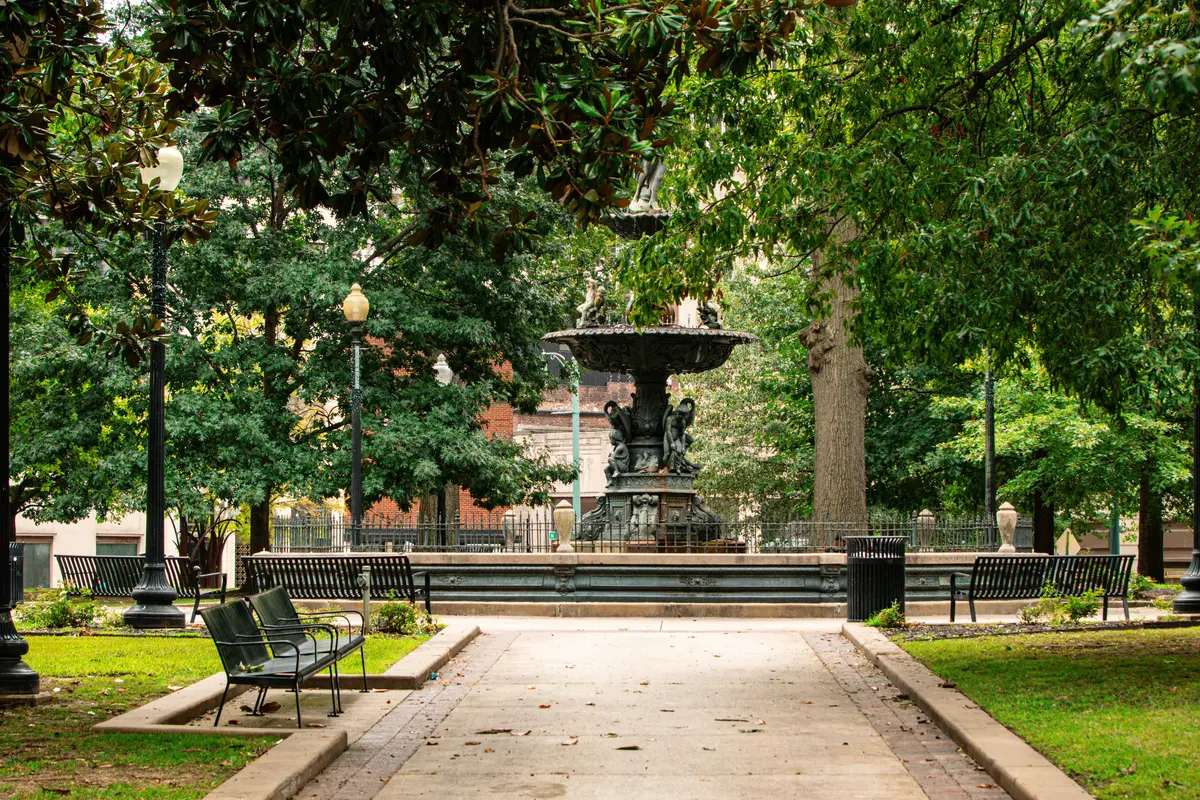
Explore All 11 Cities in Greater Memphis
Click into any city for the complete guide — neighborhoods, home prices, cost of living, pros & cons, schools, top employers, and mortgage help.
Memphis
Memphis is one of the state's larger cities and the undeniable center of this region — home to FedEx's global headquarters, AutoZone's corporate offices, a nationally significant pediatric research hospital, and landmarks like Beale Street, Graceland, and the National Civil Rights Museum. Its neighborhoods range from the walkable energy of Midtown to the quieter residential corridors of East Memphis and Cordova, giving buyers and renters genuinely different versions of city life to choose from. At the more affordable end of the region on price, Memphis suits buyers who want urban access and a lower entry point, and accepts the complexity that comes with a large American city.
Full Memphis Guide →
Bartlett
Bartlett is a mid-size city in northeastern Shelby County that has built a comfortable suburban identity around good schools, established neighborhoods, and access to both I-40 and the retail corridor near Wolfchase Galleria. Brother International Corporation and UPS contribute to a local employment base that is reinforced by proximity to FedEx and International Paper in Memphis. Priced near the middle of the region, Bartlett appeals to families who want suburban predictability without paying the premium that Collierville or Germantown command.
Full Bartlett Guide →
Collierville
Collierville is consistently one of the most sought-after addresses in Greater Memphis, built around a genuine historic town square, a strong municipal school system, and a mix of planned communities that range from Schilling Farms to Spring Creek Ranch. The FedEx World Tech Center and Mueller Industries anchor a local employer base that draws professional households, and the town's position along TN-385 and I-269 makes regional commuting manageable. Prices run toward the pricier end of the region, and buyers here are largely paying for the schools, the neighborhoods, and the town's carefully maintained character.
Full Collierville Guide →
Germantown
Germantown is a mid-size city that has long set the standard for affluent suburban living in Shelby County, with tree-lined streets, its own well-regarded municipal school district, and a residential fabric that leans toward established, mature neighborhoods like Dogwood Grove and Kimbrough Woods. A regional hospital and Mid-America Apartment Communities' headquarters add an institutional anchor to what is otherwise a bedroom community oriented toward Memphis. Like Collierville, prices sit toward the pricier end of the region — buyers here are trading dollars for access to Houston High School and one of the most stable residential markets in Tennessee.
Full Germantown Guide →
Arlington
Arlington is a small city on the eastern edge of Shelby County that has grown steadily as a destination for families priced out of Germantown and Collierville but still determined to land in a municipal school district. Neighborhoods like Wilson's Crossing and Trails of Arlington sit within the Arlington school system, and employers like MicroPort Orthopedics and Rich Products give the local economy depth beyond pure bedroom-suburb status. Priced near the middle of the region and accessed via I-40 and TN-385, Arlington is a genuine alternative for buyers willing to drive a little farther for the value.
Full Arlington Guide →
Lakeland
Lakeland is a small city that punches above its size: it operates its own school system through Lakeland Preparatory School, anchors its civic life around Lakeland Town Square and Garner Lake, and hosts a logistics employment base that includes Rooms To Go, Amazon Air, and PepsiCo distribution. The result is a place with a tight community identity and a price point that sits toward the pricier end of the region — buyers here are paying for the schools and the small-town feel, not for urban access. I-40 keeps Memphis reachable for work, but Lakeland is designed to keep you close to home.
Full Lakeland Guide →
Millington
Millington is a small city defined by Naval Support Activity Mid-South — the base shapes the local economy, brings a transient but stable population of military families, and gives the city a character distinct from the civilian suburbs to its south. Prices sit toward the more affordable end of the region, making it one of the more accessible entry points in Shelby County for buyers on a tighter budget. The Millington-Memphis Airport adds a logistical convenience, and Discovery Nature Park gives the city a recreational anchor beyond the base.
Full Millington Guide →
Oakland
Oakland is a small city in Fayette County that attracts buyers who want more land, more quiet, and more distance from the suburban density of Shelby County — without paying Collierville prices. Neighborhoods like Hidden Springs and Chickasaw Ridge reflect the area's appeal to buyers who want a subdivision feel with rural elbow room, and Fayette County Schools serves the community's families. Priced near the middle of the region, Oakland is the kind of place where the commute to FedEx or International Paper in Memphis is real, and residents decide it is worth it.
Full Oakland Guide →
Atoka
Atoka is a small city in Tipton County that sits just north of the Shelby County line, close enough to the Naval Support Activity Mid-South in Millington and the Memphis employment base to function as a genuine commuter community. Neighborhoods like Tymber Creek and Sterling Ridge attract buyers looking for newer construction and lower price points — Atoka sits near the middle of the region on price, and Tipton County's cost of living makes it one of the more affordable situations in the metro. A regional hospital anchors local healthcare in the county, and Munford High School serves older students in the area.
Full Atoka Guide →
Somerville
Somerville is the county seat of Fayette County — a small town with a genuine historic identity built around the Fayette County Courthouse and Court Square, and a pace of life that is deliberately unhurried. The arrival of Ford BlueOval City near Stanton is beginning to reshape Fayette County's economic expectations, but Somerville itself remains grounded in county government, Fayette County Schools, and a residential character that skews toward older homes and rural acreage. At the more affordable end of the region, Somerville suits buyers who want small-town Tennessee without the suburban infrastructure that Shelby County's municipalities have built.
Full Somerville Guide →
Piperton
Piperton is a small town in Fayette County that shares a school connection with Fayette Academy and sits close enough to Collierville's employment corridor — the FedEx World Tech Center and Schilling Farms business park — to function as a quieter, lower-density alternative to its Shelby County neighbor. Neighborhoods like Twin Lakes of Piperton and Piperton Preserve reflect a deliberate preference for land and privacy over urban amenity, and the town's price point sits toward the pricier end of the region, reflecting its appeal to buyers seeking newer, larger homes in a rural-feeling setting. I-269 connects Piperton to the broader metro, but the whole point of living here is that it does not feel like the suburbs.
Full Piperton Guide →Compare Every City in Greater Memphis
Full ranked breakdowns across every city in the region — scored and compared side by side.
Local Expert Takeaway: Greater Memphis rewards buyers who pick a city with a specific purpose in mind — the municipal school district, the proximity to a particular employer, the land and quiet of Fayette County — rather than those who treat its suburbs as interchangeable.
Frequently Asked Questions
Which city in Greater Memphis is best for families focused on schools?
How does Greater Memphis compare to Greater Nashville in terms of cost?
Is Greater Memphis a good fit for someone relocating for a logistics or healthcare job?
What is the difference between living in Memphis itself versus the suburbs?
Are there affordable options in Greater Memphis, or is the whole region expensive?
Helpful Tennessee Resources
Explore Other Tennessee Regions
Greater Memphis is one of 10 distinct regions that make up Tennessee. Each has its own climate, character, and housing market — explore them all.

The state capital and the ring of towns north and west of it, from riverfront suburbs to farm country an hour out. 16 cities including Nashville, Clarksville, Hendersonville.
Explore all 16 Greater Nashville cities →
Nashville’s southern growth corridor — historic town squares, newer subdivisions, and some of the priciest addresses in the state. 11 cities including Murfreesboro, Franklin, Smyrna.
Explore all 11 Southern Suburbs cities →
East Tennessee’s urban center, with lake towns and research-lab suburbs spread along the Tennessee River valley. 14 cities including Knoxville, Oak Ridge, Maryville.
Explore all 14 Knoxville Metro cities →
A riverfront downtown ringed by ridges and mountain towns, at the point where Tennessee meets Georgia and Alabama. 12 cities including Chattanooga, Cleveland, East Ridge.
Explore all 12 Chattanooga Area cities →
Three cities that function as one metro in the far northeast corner, surrounded by the oldest towns in the state and the high Appalachians. 8 cities including Johnson City, Kingsport, Bristol.
Explore all 8 Tri-Cities cities →
West Tennessee away from Memphis — a regional hub city, college towns, and river and lake country up against the Mississippi. 9 cities including Jackson, Dyersburg, Martin.
Explore all 9 Jackson & Northwest Tennessee cities →
County-seat towns between Nashville and the Alabama line, with walking-horse farms, lakes and a long manufacturing tradition. 7 cities including Shelbyville, Tullahoma, Manchester.
Explore all 7 Southern Middle Tennessee cities →
The plateau and highland rim between Nashville and Knoxville — waterfalls, lakes and a university town, at the lowest prices in Middle Tennessee. 6 cities including Cookeville, McMinnville, Crossville.
Explore all 6 Upper Cumberland cities →
The gateway towns to Great Smoky Mountains National Park, and the lake country just north of them. 6 cities including Morristown, Sevierville, Seymour.
Explore all 6 Smokies & Lakeway cities →Moving to Tennessee?
Tell us what you need help with and we'll connect you with local resources.
