
Maybe your company is relocating you to Memphis and you've heard conflicting things about the schools. Maybe you've been researching neighborhoods and keep hitting the same question: what do families with kids actually do here for education? The honest answer is that Memphis-Shelby County Schools is one of the largest urban districts in the South — and it carries the full weight of challenges that large urban districts across the country face. That is the real starting point for any family weighing a move to Memphis.
Memphis is the 2nd-largest incorporated city in Tennessee, and its school district, Memphis-Shelby County Schools (MSCS), is the dominant public education system inside city limits, covering Pre-K through 12th grade. Major employers like FedEx, St. Jude Children's Research Hospital, and AutoZone draw professional families into the city every year, and many of them land in East Memphis or Cordova, where the school options within the district are notably more concentrated. The district holds a C+ rating, according to Niche — a figure that reflects both real struggles and a system with genuine pockets of strength, particularly in its magnet school network.
The cost of living in Memphis makes it genuinely accessible in a way that most major Southern cities no longer are. The typical home price sits at $145,335 (August 2026), well below what families pay in neighboring Germantown, Collierville, or Bartlett, all of which carry noticeably higher home prices and separate school districts. For many families, that cost gap is exactly what makes Memphis worth a serious look — and the magnet system is a key part of how families navigate education within city limits. For a fuller breakdown of housing costs and neighborhood trade-offs, see the Memphis cost-of-living page.
Whether you're comparing Memphis to its suburbs or deciding which neighborhood to plant in, the sections below break down the district's structure, its strongest specialized programs, what academic performance looks like on the ground, where youth sports fit into family life here, and who the district is — and isn't — the right fit for.

Memphis-Shelby County Schools: The District at a Glance
MSCS is a unified Pre-K–12 district formed in 2013 when Memphis City Schools and Shelby County Schools merged. That merger created one of the largest urban school districts in the country, and the scale shows in every dimension: hundreds of schools, a student body that reflects the city itself — approximately 71.9% Black, 18.9% Hispanic or Latino, and 5.2% white, according to U.S. News district data from the 2021–2024 school years.
The district holds a C+ rating, according to Niche. That rating reflects real complexity: a system where individual schools vary significantly in focus, stability, and outcome, and where the magnet network produces meaningfully different environments than the zoned neighborhood schools.
On 2025-26 state assessments, 22.3% of students reached math proficiency and 25.7% reached reading proficiency. Those numbers are low by any standard, and the district's own Academic Plan 2025–2030 does not soften them — the document acknowledges that grade-level reading remains a significant gap at the elementary level, and that attendance is a real challenge district-wide. The plan is not a PR document; it is a road map built around acknowledged gaps.
The district has responded with new school models as part of that plan. Journey Coleman and Westside Middle opened in 2024–25, Tennessee Career Academy opened in 2025-26, and the Memphis Grizzlies Prep STEAM School for Girls is slated to launch in 2026–27. Whether those investments move the needle at scale takes years to see, but the direction is deliberate.
Teacher licensure rates in MSCS run below what you find in the suburban districts — a figure worth keeping in mind when comparing the district to Germantown, Collierville, or Bartlett.
| Metric | MSCS Figure |
|---|---|
| Overall Rating (Niche.com) | C+ |
| District Grade Span | Pre-K through 12th grade |
| Math Proficiency (2025-26 state assessments) | 22.3% |
| Reading Proficiency (2025-26 state assessments) | 25.7% |
| New Schools Opened (2024-26) | Journey Coleman, Westside Middle, Tennessee Career Academy |
| Upcoming School (2026-27) | Memphis Grizzlies Prep STEAM School for Girls |
Magnet Schools: Where the District Concentrates Its Strengths
The magnet school network is the part of MSCS that families most actively seek out, and for good reason. Rather than traditional zoning, magnet programs draw students citywide based on interest and application, which means the student body in a given magnet school is self-selected in a way that shapes the environment substantially.
Three programs stand out for their specificity and visibility:
East High School — STEM and Transportation
East High is the first magnet high school in the district to specialize in both transportation and STEM. The school fields active athletics programs under the Tennessee Secondary School Athletic Association. The transportation-plus-STEM focus is genuinely unusual and positions graduates for a specific set of career and college pathways in logistics, engineering, and related fields. Given that FedEx has its global headquarters in Memphis, that specialization is not accidental.
Overton High School — Creative and Performing Arts
Overton High is the district's dedicated arts magnet, serving grades 9 through 12. The school fields active athletics programs alongside a curriculum centered on creative and performing arts. For a family with a kid who is more interested in theater or music than STEM tracks, Overton is frequently the first name that comes up in parent conversations about the district. Competition for spots reflects that.
Craigmont High School — International Studies
Craigmont, in the Raleigh community, houses the district's only International Studies magnet program. For families with a background in international work — not uncommon in a city anchored by global companies — Craigmont's focus on language, global culture, and international frameworks is a meaningful option. Active athletics programs run alongside the academic program.
These three schools are highlights, not the complete picture. MSCS runs magnet programs at multiple grade levels, including elementary and middle, across different thematic focuses. Families who want to engage the magnet system seriously should plan to research individual programs by grade level and application timeline rather than assuming high school is the only entry point.
Youth Sports and Kids Activities in Memphis
Sports culture runs deep in Memphis, and the infrastructure for youth athletics reflects that. Families moving here with kids who play anything — or want to try — will find structured options at nearly every age and skill level.
Memphis Parks Athletic Department
The city's own parks system runs year-round recreational youth sports leagues across baseball, basketball, soccer, flag football, and volleyball. Divisions are organized in two-year age bands from 6U through 18U, which means a six-year-old and a seventeen-year-old can both find a league without aging out of the program. The recreational focus keeps the emphasis on participation rather than selectivity, and the city-wide infrastructure means these leagues draw from across Memphis rather than a single neighborhood.
i9 Sports
i9 Sports operates a no-tryout, no-draft recreational model in the Memphis area, covering basketball, volleyball, flag football, soccer, and baseball for ages three and up. The no-cut structure makes it a genuine starting point for younger kids and families who are not ready for competitive travel programs. Parents who've come from markets with higher-pressure youth sports scenes often find the rec-league tone here a welcome shift, at least early on.
Club and Travel Options
Memphis Blues Lacrosse launched in 2025 as a club travel program for competitive girls lacrosse development, with spring season registration open across age groups. Lacrosse has historically had a thinner footprint in Memphis than in coastal markets, and the Blues' emergence is a signal that the club landscape is broadening. The Memphis Sports and Events Center runs a youth recreational soccer league at Liberty Park fields, organized by age group with volunteer coaches and an open-enrollment format.
School Athletics
Middle and high school students in MSCS participate in athletics programs governed by the Tennessee Secondary School Athletic Association, which oversees public school athletics statewide. Friday night football is genuine community theater in Memphis; the stands fill up, the rivalries are real, and families who move here from elsewhere are often surprised by how central school athletics are to neighborhood identity. Beyond football, schools across the district field teams in the full range of sanctioned sports, and student-athletes in specialized magnet schools like East High and Overton compete under the same association while also carrying their magnet program's academic expectations.
For outdoor kids, Memphis has real options beyond organized leagues. Shelby Farms Park is one of the largest urban parks in the country, and the greenway and trail network gives kids and families room to move year-round. Memphis averages 218 sunny days a year, which keeps outdoor sports viable across most of the calendar.
Looking to buy in Memphis? Estimate your payment.
Enter your numbers to see an estimated monthly mortgage payment.
Estimate only. Excludes HOA fees and mortgage insurance. The interest rate above is a starting point, not a quoted rate — replace it with your own to see real numbers. Insurance is a flat placeholder, not a Memphis quote.
Beyond the Monthly Mortgage Payment — What to Factor In
- The property tax rate above — The 0.59% used in the estimate is the median effective rate — tax actually paid as a share of market value — published by Ownwell, 2026. Half of local homes pay more and half pay less: your own bill depends on that property's assessed value and any exemptions it qualifies for, which can differ a lot from its market price. Confirm with the Shelby County assessor before you budget.
- Total cost of ownership — Your monthly mortgage payment is just the baseline. Depending on the specific city, county, and service district, homeownership costs also include local utility fees, municipal surcharges, and special assessments (such as water, sewer, storm drainage, or local energy taxes) that vary by location.
- Independent due diligence — Because these recurring local costs and municipal fees change depending on the exact property address, buyers must research them independently during their transaction process.
Tax laws, local municipal fees, and utility costs change frequently and individual situations vary. This page is general information, not tax or legal advice — always consult a qualified tax professional, CPA, or local municipal offices for personalized guidance.
Three Things Families Learn After the First Year
Families who move to Memphis with kids and engage seriously with the district tend to surface the same observations around the six-month mark. These are worth hearing before you make an offer on a house.
The Magnet Application Timeline Is Not Forgiving
The MSCS magnet system is real and produces genuinely different school experiences — but it operates on a fixed application calendar, and missing the window means waiting a full year or accepting your zoned school. Families who move mid-year, or who assume they can enroll in a magnet the same way they would a neighborhood school, often learn this the hard way. If a specific magnet program is part of your relocation plan, confirm the application dates before you sign a lease.
The Suburb Question Comes Up Sooner Than Expected
Families who arrive committed to Memphis as a place — drawn by the culture, the price point, the city's genuine energy — sometimes find themselves weighing the suburban districts within two or three years. Germantown, Collierville, and Bartlett all have their own school systems with separate ratings and separate admissions, and all three carry noticeably higher home prices. That's the real trade-off: the cost gap is substantial, and it doesn't disappear. But for families with specific academic priorities, the conversation happens. Knowing it's coming lets you plan for it rather than scramble.
Where Families Actually Gather
Outside the school building, the social infrastructure for kids in Memphis is strong in ways that don't show up in district ratings. Shelby Farms Park draws families year-round, and Overton Park has been a gathering point for Memphis families across generations. Youth sports at the parks system level are where a lot of cross-neighborhood connections happen — the rec leagues are genuinely citywide, and parents who show up for weekend games end up meeting people from parts of Memphis they'd otherwise rarely visit.
Who This District Is NOT the Right Fit For
This section exists because the most useful thing a guide can do is save you from a mismatch. MSCS holds a C+ rating, according to Niche, and the district's own Academic Plan is candid about the gap between current outcomes and grade-level expectations. That honesty matters — and so does being clear about who will be frustrated by the reality on the ground.
Families who need a high floor, not just a high ceiling. The magnet system produces strong environments, but those programs require active navigation — applications, timelines, sometimes waitlists, and in some cases transportation across the city. Families who want a reliably strong zoned school in their immediate neighborhood, without the application process, will find Memphis harder to navigate than the suburban districts. The district's average outcomes are not the same as the magnet outcomes, and the gap between them is real.
Families prioritizing test-score benchmarks above other factors. On 2025-26 state assessments, 22.3% of students reached math proficiency and 25.7% reached reading proficiency. Those are district-wide averages, and individual magnet schools draw different results — but if standardized proficiency rates are your primary metric, and you want those rates at the district level rather than at the selected-program level, the Memphis suburbs are closer to what you're looking for.
Families who want to avoid the private school conversation entirely. Memphis has a robust private and parochial school ecosystem that a meaningful share of professional families use alongside or instead of MSCS. If the idea of factoring private tuition into your housing budget is a non-starter, that's worth knowing before you move into a neighborhood where it becomes the default social assumption among other parents.
Families transferring from high-performing suburban districts. The transition into MSCS from a district like those in Williamson County or Germantown can be a significant academic and social shift for kids who are used to a specific environment. That is not a reason to avoid Memphis — it's a reason to research specific schools and programs rather than assuming continuity.
None of this is a verdict on Memphis as a place to raise kids. The city's cultural depth, its outdoor infrastructure, the youth sports community, and the price point that makes genuine home ownership accessible — those things are real. But the school picture requires honest engagement, and the families who do well here are almost always the ones who did their homework before they arrived. For a neighborhood-level view of where different family profiles tend to land, see the Memphis neighborhoods guide.
Weekends and Local Favorites
The parts of Memphis that matter most to families with kids often have nothing to do with the school building. The city has a genuine infrastructure for weekends, and it punches above its weight for a metro of its size.
The Memphis Zoo, inside Overton Park, is a consistent anchor for families with younger kids — the zoo and the park together form one of the most used family destinations in the city. Overton Park itself has trails, a golf course, and the Brooks Museum of Art, and on a warm afternoon it draws a cross-section of Memphis that few other spots do.
Shelby Farms Park gives older kids and athletic families room at a different scale — the park is enormous, and the trail and greenway system supports everything from weekend runs to longer bike rides. Big River Crossing connects to the Mississippi River Greenbelt Park and puts families on a walk across the river that is genuinely unlike anything in the mid-South.
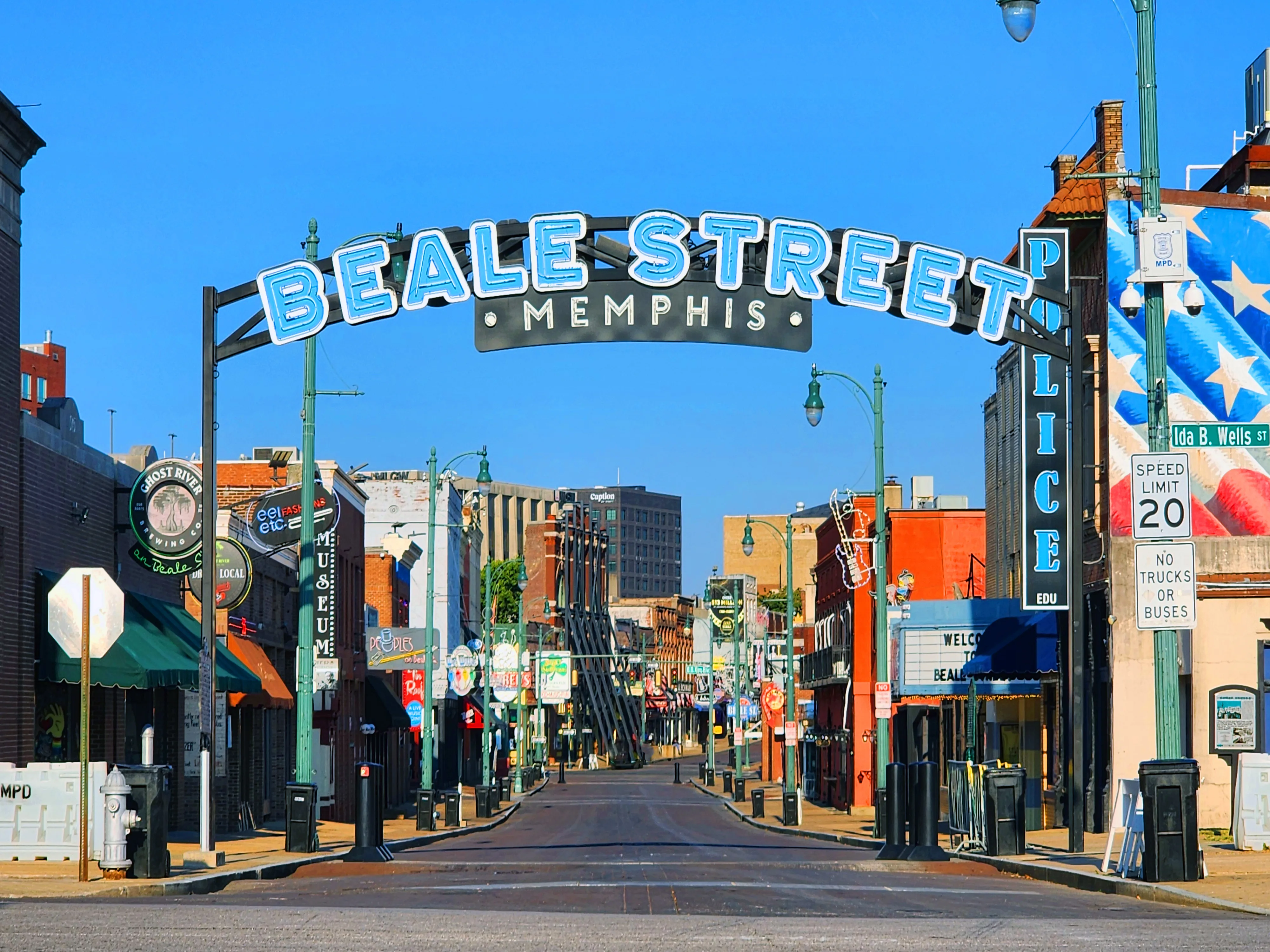
Beale Street and the National Civil Rights Museum are the cultural anchors that families with school-age kids return to repeatedly as kids get older and ask harder questions about Memphis's history. Sun Studio runs tours that land differently for kids who've been listening to early rock and roll in the car on the way over.
For coffee and downtime between kids' activities, the local independent coffee scene includes Ramblin' Joe's Coffee, Otherlands Coffee Bar, Memphis Chess Club, Aldar Cafe, and The Hub — each with its own character. The dining side has real depth: Charlie Vergos' Rendezvous has been the benchmark for Memphis barbecue for decades, Gus's World Famous Fried Chicken draws lines that reflect its reputation, The Arcade Restaurant is the city's oldest diner, B.B. King's Blues Club anchors the Beale Street end of the dining and live music circuit, and Blues City Cafe is where the two overlap on most nights. The Agricenter Farmer's Market and the Winchester Farmers Market give families access to local produce through the growing season.
For a fuller picture of what day-to-day life looks like across different parts of Memphis, the Memphis overview covers the city's neighborhoods, commute patterns, and what draws people here from elsewhere.
Local Expert Takeaway: Memphis-Shelby County Schools holds a C+ rating, according to Niche, and the district's own Academic Plan is honest about the distance between current outcomes and grade-level expectations. The families who navigate this system well are almost always the ones who engage the magnet network early, understand the application timelines, and don't wait until they've already moved to start researching specific programs. East High's STEM and transportation focus, Overton's arts magnet, and Craigmont's International Studies program are the three names that come up most consistently in parent conversations — but they require active pursuit, not passive enrollment. Outside the school day, Memphis delivers for families: the parks system runs citywide youth sports leagues year-round, Shelby Farms Park is legitimate, and the cultural infrastructure here is the kind that stays interesting as kids get older.
Quick Takeaways & FAQs
✅ MSCS runs a citywide magnet network with specialized high schools in STEM/transportation, creative and performing arts, and international studies — giving motivated families meaningful options within the public system.
⚠️ The district holds a C+ rating, according to Niche, and on 2025-26 state assessments district-wide math and reading proficiency sat below 30% — the gap between magnet outcomes and zoned-school averages is real and worth understanding before you move.
📍 The Memphis Parks Athletic Department runs year-round youth sports leagues in baseball, basketball, soccer, flag football, and volleyball from 6U through 18U — a genuinely citywide rec system that gives newly arrived families an immediate on-ramp to the local community.
What is the rating for Memphis-Shelby County Schools?
Are there good public magnet schools in Memphis?
How do Memphis schools compare to schools in Germantown or Collierville?
What youth sports leagues are available for kids in Memphis?
Should families consider private schools in Memphis instead of MSCS?
Moving to Tennessee?
Tell us what you need help with and we'll connect you with local resources.
