
You've done the math, and the math is not subtle. California's statewide typical home value of $764,158 buys you a lifestyle that costs roughly five times more in housing alone than what the typical Memphis home runs. That kind of gap changes the shape of a decision — it stops being about whether you can afford to move and starts being about whether you're ready to live somewhere that works completely differently. Memphis is the 2nd-largest incorporated city in Tennessee, a 609,647-person river city where FedEx built its global headquarters, where Beale Street is a genuine cultural institution rather than a theme-park version of one, and where the question isn't "can I buy a home?" but "which part of town do I want to plant in?"
The economic backbone here is logistics, healthcare research, and a growing biomedical corridor anchored by St. Jude Children's Research Hospital. AutoZone and International Paper both keep corporate headquarters in Memphis, giving the city a white-collar employment base that doesn't show up in the surface-level affordability narrative. For California professionals relocating for remote work or a corporate transfer, the salary math shifts dramatically the moment Tennessee eliminates its state income tax on earned income entirely — more on that below. The Memphis-Shelby County Schools district serves 105,856 students enrolled in 2024-25, which is worth understanding before you choose a neighborhood.
Memphis's overall cost of living runs roughly 10% below the U.S. national average, with housing costs sitting about 34% below the national norm. The outdoor infrastructure catches most Californians off guard: Shelby Farms Park spans 4,500 acres — roughly four times the size of New York's Central Park — and the Big River Crossing puts you on a pedestrian bridge over the Mississippi River. The city averages 218 sunny days a year, fewer than most of coastal California, and the summers are a genuine adjustment: July highs average around 91°F with heat indices that regularly push past 100°F. Annual rainfall is roughly 54 inches, well above anything coastal California delivers. The full cost-of-living breakdown covers utilities, groceries, and transportation in depth.
Whether you're being relocated for work, priced out of your current market, or simply recalculating what your income can do somewhere else, the sections below break down Memphis's tax picture, housing market, neighborhoods, lifestyle realities, and the honest tradeoffs that most relocation guides skip over.

The Tax Picture: What California Was Costing You
Tennessee's most immediate gift to a California transplant is the complete absence of a state income tax on wages, salaries, and bonuses. California's top state income tax rate of 13.3% applies only to the highest earners, but the bracket structure begins at 1% and climbs quickly — most working professionals in California are paying somewhere between 6% and 9.3% in state income tax alone. In Tennessee, that number is zero.
This is not a marginal difference for most households. A California family earning $150,000 annually could be directing $9,000 to $14,000 per year to the state — money that simply stays in the paycheck in Tennessee. Tennessee's decision to eliminate its income tax entirely, including on investment income (completed in 2021), is the primary reason the state consistently draws high earners from high-tax states.
The property tax story is comparably favorable. Memphis's effective property tax rate is 0.59%, compared with California's effective property tax rate of 0.71%. The raw rate difference is modest, but the base it applies to is dramatically different: when the typical home costs a fraction of what it does in California, the annual property tax bill follows. For a fuller picture of how the property and income tax numbers translate into a monthly budget, the cost-of-living page covers the full breakdown.
The Sales Tax Catch
Memphis does have one meaningful tax disadvantage you should budget for before you arrive. The combined sales tax rate here is 9.75% — built from the 7% Tennessee state base, a 2.25% Shelby County addition, and a 0.5% city levy. That makes it the highest combined rate in the state and among the highest in the country.
California's statewide base sales tax rate of 7.25% is the floor there, and local additions in high-cost counties push some California rates to 10.25% — so the gap is narrower than it looks on paper for buyers coming from Los Angeles or the Bay Area. The harder adjustment is groceries. California exempts most groceries from sales tax entirely. Tennessee taxes groceries at a reduced 4% state rate, and Shelby County's local surcharge applies on top of that. If you're feeding a family, this is a real line item to build into your relocation budget.
| Tax Category | Memphis / Tennessee | California |
|---|---|---|
| State income tax (earned income) | 0% | California's top state income tax rate of 13.3%; starts at 1% |
| Effective property tax rate | 0.59% (Memphis) | California's effective property tax rate of 0.71% |
| Statewide base sales tax | 7% (state base) | California's statewide base sales tax rate of 7.25% |
| Combined sales tax (Memphis) | 9.75% | Varies by county; up to 10.25% in high-cost areas |
| Grocery sales tax | 4% (state rate) + local add-on | Exempt in most cases |
| State estate / inheritance tax | None | None at state level |
The income tax elimination is the number that dominates this table for most California households. The sales tax on groceries is the one that surprises people in month two.
Home Prices: What Your California Budget Actually Buys Here
The typical Memphis home value stood at $145,335 as of August 2026. Set that against California's statewide typical home value of $764,158 and the arithmetic is hard to process at first — you are looking at a market priced at roughly one-fifth of what you left behind. For many California buyers, this isn't just an upgrade; it's a structural reset of what homeownership means.
Most California transplants arrive expecting a catch. The catch is not the price — it's the neighborhood research. Memphis rewards buyers who understand its geography, and it penalizes buyers who make an offer without that knowledge. The neighborhoods page goes deep on where to look and why; here's the orientation you need before you get there.
City vs. Suburbs: Where the Price Tiers Land
Within the city, East Memphis and Cordova run above the city median — these are the areas drawing families who want more established housing stock and proximity to employment corridors. Midtown, Whitehaven, Frayser, and Downtown Memphis all sit below the city median, each for different reasons and with very different buyer profiles. Raleigh tracks at roughly the city median.
If you're considering the suburbs — and many California transplants are drawn to Germantown, Collierville, or Bartlett for their school districts — expect noticeably higher prices than the Memphis city median in each of those communities. They're still dramatically below what California's statewide typical home value of $764,158 implies, but they represent the higher end of the local market rather than the entry point.
What Californians Should Know About Affordability Here
Memphis is one of the few major American cities where the median household income is at or above the income needed to buy the typical home — a condition that has essentially vanished from most California markets. For a California buyer arriving with equity from a sale, the purchasing power shift is substantial: a down payment that bought you a starter condo in Sacramento might purchase a fully detached home outright in Memphis.
The directional comparison from Numbeo (July 2026) frames the lifestyle cost gap clearly: a household spending $5,700 per month in Memphis would need approximately $9,152 per month in Los Angeles to maintain the same standard of living. Treat that as a directional benchmark, not a precise promise — individual spending patterns vary — but the order of magnitude is consistent with what transplants actually report experiencing. Health insurance premiums run noticeably below what most California residents paid, though the honest trade-off is that some specialist care requires longer drives than a dense California metro would have demanded.
Climate: The Adjustment No Spreadsheet Captures
Memphis has four actual seasons, and two of them will require a full wardrobe and mindset shift if you're coming from coastal California. This is not a city with mild, predictable weather. It is a city where summer is oppressive and spring is genuinely dangerous.
Summer: Heat That Has Weight
July highs average around 91°F, but the heat index — the combination of temperature and humidity — routinely pushes the felt temperature past 100°F. Californians from dry climates underestimate this until they step outside in August and realize the air itself feels like a wet towel. Air conditioning is not optional here; it is infrastructure. Budget for a higher summer electricity bill than you paid in California, and plan outdoor activity for early morning or evening from June through September.
Spring: Storm Season Is Real
Spring runs from March through May and is the wettest, most storm-prone stretch of the year. Memphis sits in a region with genuine tornado risk, and severe thunderstorms are a regular spring feature — not a once-a-decade event. Annual rainfall averages roughly 54 inches, well above California's coastal norm. Californians who've spent years in fire-season mode will find the seasonal anxiety here runs in the opposite direction: instead of monitoring air quality and evacuation routes in summer, you're watching the radar in spring.
Winter: Mild, With Occasional Ice
January highs average near 50°F, and true winter cold rarely persists more than a few days. The city averages only about 3 inches of snow per year — light enough that a single winter storm can shut down roads that California drivers would laugh at, because the infrastructure for ice management is limited. If you've never driven on black ice, ask a local before you try it. The upside: Memphis winters are genuinely short and relatively manageable compared to most of the South's interior cities.
The city averages 218 sunny days a year. That's meaningfully less than what most California coastal residents experienced, and it's one of the quiet cultural adjustments transplants mention at the six-month mark.
Looking to buy in Memphis? Estimate your payment.
Enter your numbers to see an estimated monthly mortgage payment.
Estimate only. Excludes HOA fees and mortgage insurance. The interest rate above is a starting point, not a quoted rate — replace it with your own to see real numbers. Insurance is a flat placeholder, not a Memphis quote.
Beyond the Monthly Mortgage Payment — What to Factor In
- The property tax rate above — The 0.59% used in the estimate is the median effective rate — tax actually paid as a share of market value — published by Ownwell, 2026. Half of local homes pay more and half pay less: your own bill depends on that property's assessed value and any exemptions it qualifies for, which can differ a lot from its market price. Confirm with the Shelby County assessor before you budget.
- Total cost of ownership — Your monthly mortgage payment is just the baseline. Depending on the specific city, county, and service district, homeownership costs also include local utility fees, municipal surcharges, and special assessments (such as water, sewer, storm drainage, or local energy taxes) that vary by location.
- Independent due diligence — Because these recurring local costs and municipal fees change depending on the exact property address, buyers must research them independently during their transaction process.
Tax laws, local municipal fees, and utility costs change frequently and individual situations vary. This page is general information, not tax or legal advice — always consult a qualified tax professional, CPA, or local municipal offices for personalized guidance.
Daily Life in Memphis: What California Didn't Prepare You For
Memphis is a car city. There is no version of life here built around transit the way some California metros are. I-40, I-55, and I-240 carry the commuter load, and you will need a reliable vehicle regardless of where you land. The city is large enough that driving to a different part of town feels like a commitment — east to west across the metro is a different cultural experience as much as a distance.
The Cultural Identity Is Specific and Genuine
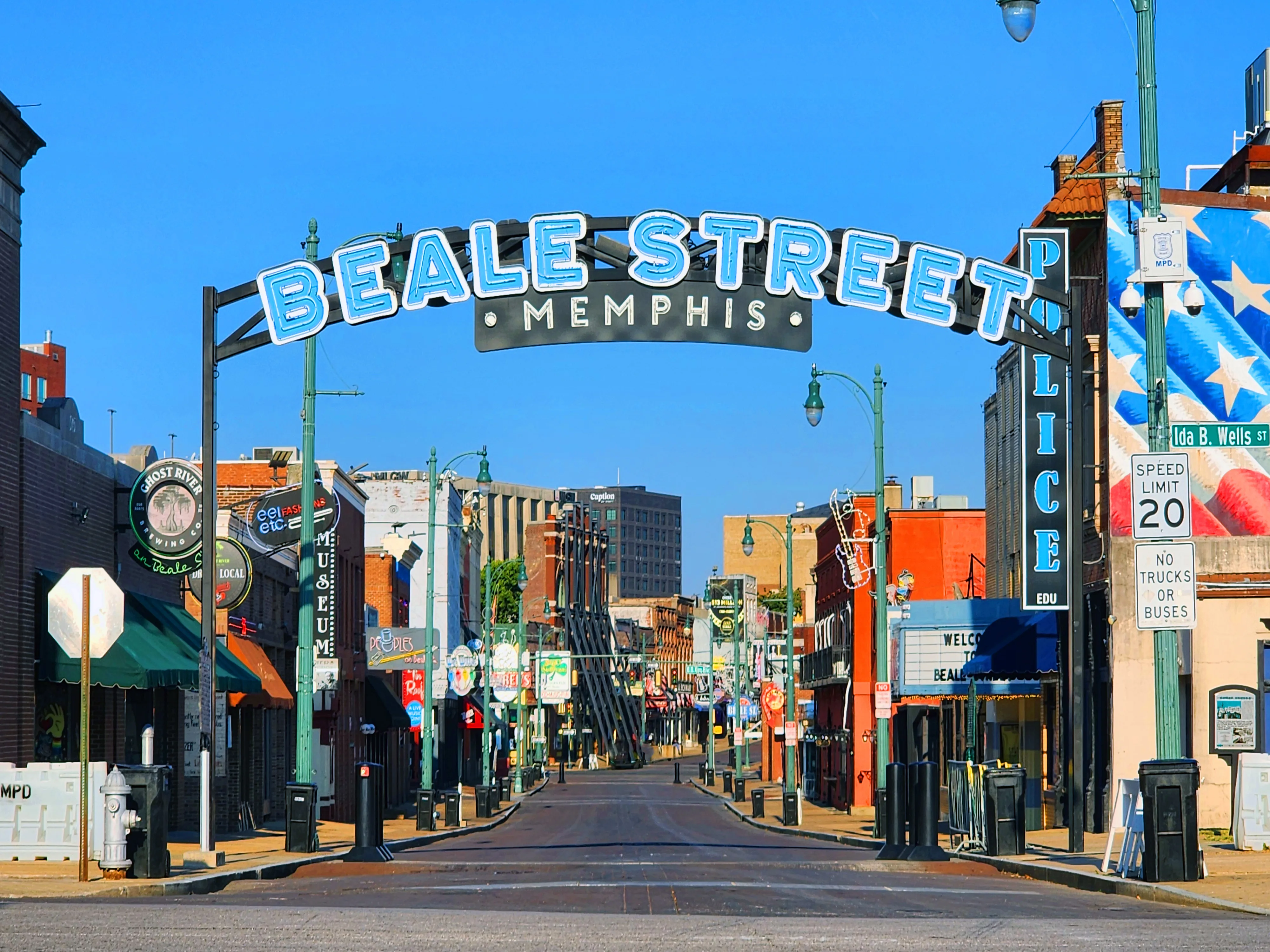
Memphis is not a generic Sun Belt city. It is the city where Beale Street is a working blues district, where Graceland draws visitors from around the world, where Sun Studio is a functioning recording facility and not just a museum, and where the National Civil Rights Museum sits at the Lorraine Motel because of what happened there. Californians sometimes arrive expecting a quieter Southern city and find instead a place with a deep, specific cultural identity that runs through the food, the music, and the civic conversation. That identity is worth understanding before you get here.
Where People Actually Gather
Shelby Farms Park is where Memphis goes on a decent weekend — 4,500 acres with trails, lakes for kayaking and paddleboarding, and fishing access. Overton Park anchors Midtown and is home to the Memphis Zoo. The Big River Crossing is a pedestrian bridge over the Mississippi that becomes a genuine local ritual: walking across the river on a clear evening is one of those things that doesn't sound impressive until you've done it. Meeman-Shelby Forest State Park sits north of the city along the river for residents who want longer, quieter trail runs.
The Weekends and Local Favorites
Memphis's food scene is specific and confident. Charlie Vergos' Rendezvous is the dry-rub ribs institution — the kind of place that doesn't need to advertise because its reputation travels. Gus's World Famous Fried Chicken is exactly what the name says, and the wait is part of the experience. Blues City Cafe on Beale Street puts you in the live-music atmosphere that defines the street. B.B. King's Blues Club is the marquee name on the block. The Arcade Restaurant is the city's oldest diner, the kind of place that anchors a neighborhood's identity across decades. For coffee, Otherlands Coffee Bar has the living-room atmosphere that regulars return to daily; Ramblin' Joe's Coffee, Memphis Chess Club, Aldar Cafe, and The Hub round out an independent coffee scene that punches above the city's size. The Winchester Farmers Market and Agricenter Farmer's Market are the main weekly produce options for residents building a local-food routine.
What Six Months Actually Teaches You
Most California transplants say the same thing around month six: they didn't expect to feel how different the social pace is. Memphis moves slower than Los Angeles or the Bay Area — not in a frustrating way, but in a way that takes adjustment. Conversations with strangers are longer. Neighbors introduce themselves. The trade-off is that the city's income and poverty divides are stark, and the school district picture — Memphis-Shelby County Schools holds a C+ rating, according to Niche, with 105,856 students enrolled in 2024-25 — is something families should research carefully rather than assume away. On 2025-26 state assessments, 22.3% of students reached math proficiency and 25.7% reached reading proficiency, figures that reflect a district working through significant challenges. Many families in Memphis address this by choosing the suburban school districts in Germantown, Collierville, or Bartlett — which comes with the higher home prices those communities carry.
What to Expect When You Arrive: Honest Tradeoffs
Memphis is one of the most genuinely affordable large cities in the country for a California buyer. That is not spin — it is arithmetic. But affordability is not the same as ease, and there are tradeoffs that don't fit neatly into a cost-of-living comparison.
Safety: Understand the Geography
Memphis has a violent crime rate of 2.51 per 1,000 residents and a property crime rate of 6.9 per 1,000 residents. Both figures sit well below the Tennessee statewide rates (violent: 6 per 1,000; property: 20.8 per 1,000) and below national benchmarks (violent: 3.7 per 1,000; property: 18.4 per 1,000). Crime in Memphis, like most large cities, is not evenly distributed — neighborhood selection matters significantly, and the safety page breaks down the geography in detail.
What You Give Up from California
The honest list is shorter than most people expect, but it's real. You give up proximity to mountains, coast, and desert in a single driving radius — Memphis's outdoor access is substantial but it's river and trail, not alpine. You give up the cultural density of a California metro for something that trades breadth for depth: fewer international dining options, a more specific and rooted local identity. You give up a school district that performs at the California average and get one that is working through documented challenges — families with school-age kids should build the suburban option into their housing search from the start and review the schools page before choosing a neighborhood.
What You Gain That Surprised People
The income tax elimination is the first thing most Californians mention. The second is the space — a budget that bought a two-bedroom apartment in a California city buys a detached home with a yard in Memphis, and the psychological shift of actually owning land is something transplants describe as unexpectedly significant. The third is the music and food culture: Memphis has an authentic local identity that most Sun Belt cities have traded away for growth, and many California transplants who came for the price stay because of the place. For first-time buyers specifically, the first-time homebuyer page covers what to expect from the buying process here.
The bottom line: if your primary reason for leaving California is financial, Memphis delivers on that case more decisively than almost any comparably sized city in the country. The things that make it worth staying are different from the things that got you on the plane — and most people who give it a genuine year figure that out.
Local Expert Takeaway: California buyers tend to fixate on the home price gap — and it's real, with the typical Memphis home at $145,335 as of August 2026 set against California's statewide typical home value of $764,158. But the income tax elimination is what changes the monthly math permanently: Tennessee collects zero on earned wages, while California's top state income tax rate of 13.3% means most California professionals have been handing the state a significant share of every paycheck. The sales tax on groceries and the 9.75% combined rate are the surprises that catch people in month two. Do your neighborhood research before you write an offer — Memphis rewards that work and penalizes buyers who skip it.
Quick Takeaways & FAQs
✅ Tennessee collects no state income tax on earned wages, which is an immediate and permanent financial shift for any California household used to paying between 6% and 13.3% of their income to the state.
⚠️ Memphis's combined sales tax of 9.75% — and the fact that groceries are taxed at a reduced rate rather than exempted — catches most California transplants off guard when the first grocery receipts arrive.
📍 Shelby Farms Park at 4,500 acres and the Big River Crossing pedestrian bridge over the Mississippi are the two outdoor experiences most transplants say they didn't expect to love as much as they do.
How much cheaper is Memphis than California for housing?
Does Tennessee really have no state income tax?
What is the sales tax in Memphis, and how does it compare to California?
What is Memphis's climate like compared to California?
Are the suburbs like Germantown and Collierville worth considering for California families?
Moving to Tennessee?
Tell us what you need help with and we'll connect you with local resources.
