
Memphis doesn't show up on the glossy retirement magazine lists the way Florida beach towns do. That's exactly why retirees who find it tend to stay. The 2nd-largest incorporated city in Tennessee, Memphis sits at the southwestern corner of the state where Tennessee, Arkansas, and Mississippi meet, straddling the Mississippi River and anchored by two interstates that make regional travel genuinely easy. What drives daily life here isn't scenery — it's affordability, a serious medical infrastructure, and a culture so deeply rooted in blues, barbecue, and civic pride that it reads as authentically local rather than curated for transplants.
The economic backbone is substantial for a city its size. FedEx operates its global headquarters here, St. Jude Children's Research Hospital draws researchers and medical talent from around the world, and Methodist Le Bonheur Healthcare anchors a regional medical ecosystem that most mid-sized American cities would envy. That concentration of healthcare infrastructure isn't just an employer story — it's a direct quality-of-life factor for retirees, who benefit from the specialist depth that typically only arrives with academic and research medicine. The school district, Memphis-Shelby County Schools, holds a C+ rating, according to Niche — relevant mainly to grandparents and to the character of neighborhoods where younger families cluster.
The cost picture is where Memphis surprises people most. The typical home price sat at $145,335 as of August 2026 — genuinely among the lowest entry points of any major American city, well below what most retirees leaving higher-cost metros are accustomed to. Overall cost of living runs roughly 10–11% below the national average, with groceries and utilities tracking below national benchmarks as well. For a more complete breakdown of daily expenses and rent, see the cost-of-living page. Add Tennessee's zero state income tax and a property tax rate that stays well below most comparable metros, and the financial case builds quickly.
Whether you're deciding between Memphis and a quieter suburb like Germantown or Collierville, weighing the healthcare access against a smaller Tennessee town, or simply trying to understand what day-to-day retirement life actually looks like here, the sections below cover the retiree budget, medical access, walkability, downsizing options, senior community life, and an honest comparison with the region's other retirement destinations.

Why Retirees Are Choosing Memphis
The case for Memphis in retirement is unusually concrete. The typical home price of $145,335 (August 2026) means retirees arriving from higher-cost markets — Chicago, Atlanta, coastal metros — often purchase outright or carry a minimal mortgage. That equity position changes everything on a fixed income: it converts what would be a monthly obligation into a property-tax bill that, at an effective rate of approximately 0.59%, stays manageable even for those who aren't wealthy.
Tennessee's zero state income tax is the other structural advantage. Social Security, pensions, 401(k) distributions, and IRA withdrawals are all untaxed at the state level — the former Hall Income Tax on dividends and interest was fully eliminated in 2021. For retirees drawing from multiple income streams, that's a real monthly difference, not a footnote. Tennessee also levies no inheritance or estate tax, which matters to retirees thinking about what they leave behind.
Memphis fits best for retirees who want urban amenities — multiple hospital systems, genuine arts and music culture, a restaurant scene with real depth, and the kind of civic institutions a city of 609,647 sustains — without paying urban prices for them. It fits less well for retirees prioritizing walkable errands without a car, manicured suburban quiet, or a retiree-dominant social environment. Crime is a real factor here: for the honest numbers and context, the safety page lays it out fully. Most retirees navigate this by choosing neighborhoods carefully — East Memphis and Midtown read very differently from one another and from parts of the city that carry more risk.
Healthcare & Medical Access in Memphis
Memphis's medical infrastructure is the strongest argument the city makes to retirees on a practical level. Baptist Memorial Hospital-Memphis is a full-service hospital inside city limits. Beyond it, the city supports multiple full-service hospital systems within a short drive of most neighborhoods.
Methodist Le Bonheur Healthcare operates a comprehensive regional system with strong cardiac, orthopedic, and specialty care. Methodist University Hospital in particular has established a reputation for joint replacement and orthopedic surgery — relevant for retirees anticipating that kind of procedure. Regional One Health rounds out the picture with trauma care, rehabilitation, and women's health services. Saint Francis Hospital adds another full-service option for residents on the eastern side of the metro.
What this means practically: Memphis is not a city where you drive two hours for a specialist. Cardiology, oncology, orthopedics, neurology, and rehabilitation are all available inside the metro. That depth is genuinely unusual for a city at this price point — it's a direct byproduct of having St. Jude Children's Research Hospital and a major university health system drawing medical talent into the region for decades.
Healthcare costs in Memphis run meaningfully below the national average — groceries, utilities, and medical services all track below national benchmarks. For a retiree with recurring prescriptions, specialist visits, and the occasional procedure, that differential compounds meaningfully over years. The combination of below-average costs and above-average access depth is rare, and it's the single strongest practical argument for Memphis over comparably priced but more medically thin alternatives in the region.
The Retiree Budget in Memphis
Tennessee's income-tax posture for retirees is about as favorable as any state in the country. Every dollar of Social Security, pension income, 401(k) or IRA distribution comes to you without a state income-tax haircut. There's nothing to file at the state level for retirement income — no exclusions to calculate, no credits to claim, because the liability doesn't exist.
Property taxes land at an effective rate of approximately 0.59% — notably below the national average and well below what most transplants from Illinois, New York, or the Northeast are used to paying. Tennessee does offer a state property tax relief program for qualifying homeowners 65 and older with household income (including Social Security) beneath a threshold set annually by the state; the City of Memphis and the state jointly fund reimbursements for those who qualify. Separately, 100% disabled veterans and their surviving spouses qualify regardless of income or age. Check the City of Memphis Treasury Division for the current year's income ceiling before applying.
Sales tax is the tradeoff. Tennessee's base rate sits at 7%, and local additions bring the Memphis combined rate to 9.75%. Prescription medications and some groceries receive reduced rates or exemptions, which softens the daily impact — but retirees making large purchases (appliances, vehicles, home repairs) feel it. For daily living, the overall cost of living running roughly 10–11% below the national average more than offsets the sales tax burden for most households. Utilities and groceries run below national average pricing. For a full picture of what fixed-income living costs in Memphis, the cost-of-living page breaks down each category.
The table below this section lets you model a specific purchase scenario. What the numbers don't show: the compounding effect of zero state income tax over a 20-year retirement is often larger than the headline home price savings, particularly for retirees drawing from taxable accounts.
Looking to buy in Memphis? Estimate your payment.
Enter your numbers to see an estimated monthly mortgage payment.
Estimate only. Excludes HOA fees and mortgage insurance. The interest rate above is a starting point, not a quoted rate — replace it with your own to see real numbers. Insurance is a flat placeholder, not a Memphis quote.
Beyond the Monthly Mortgage Payment — What to Factor In
- The property tax rate above — The 0.59% used in the estimate is the median effective rate — tax actually paid as a share of market value — published by Ownwell, 2026. Half of local homes pay more and half pay less: your own bill depends on that property's assessed value and any exemptions it qualifies for, which can differ a lot from its market price. Confirm with the Shelby County assessor before you budget.
- Total cost of ownership — Your monthly mortgage payment is just the baseline. Depending on the specific city, county, and service district, homeownership costs also include local utility fees, municipal surcharges, and special assessments (such as water, sewer, storm drainage, or local energy taxes) that vary by location.
- Independent due diligence — Because these recurring local costs and municipal fees change depending on the exact property address, buyers must research them independently during their transaction process.
Tax laws, local municipal fees, and utility costs change frequently and individual situations vary. This page is general information, not tax or legal advice — always consult a qualified tax professional, CPA, or local municipal offices for personalized guidance.
Walkability, Community & Staying Active in Memphis
Memphis is a car-dependent city for most daily errands — that's the honest baseline. The city's sidewalk network is extensive, but the urban form outside Downtown Memphis and Midtown is spread out in the way most mid-century Southern cities are: wide roads, setbacks, strip commercial. Retirees who want to walk to a pharmacy, café, or grocery store on a regular basis should target those two neighborhoods specifically, where the pedestrian environment is genuinely functional.
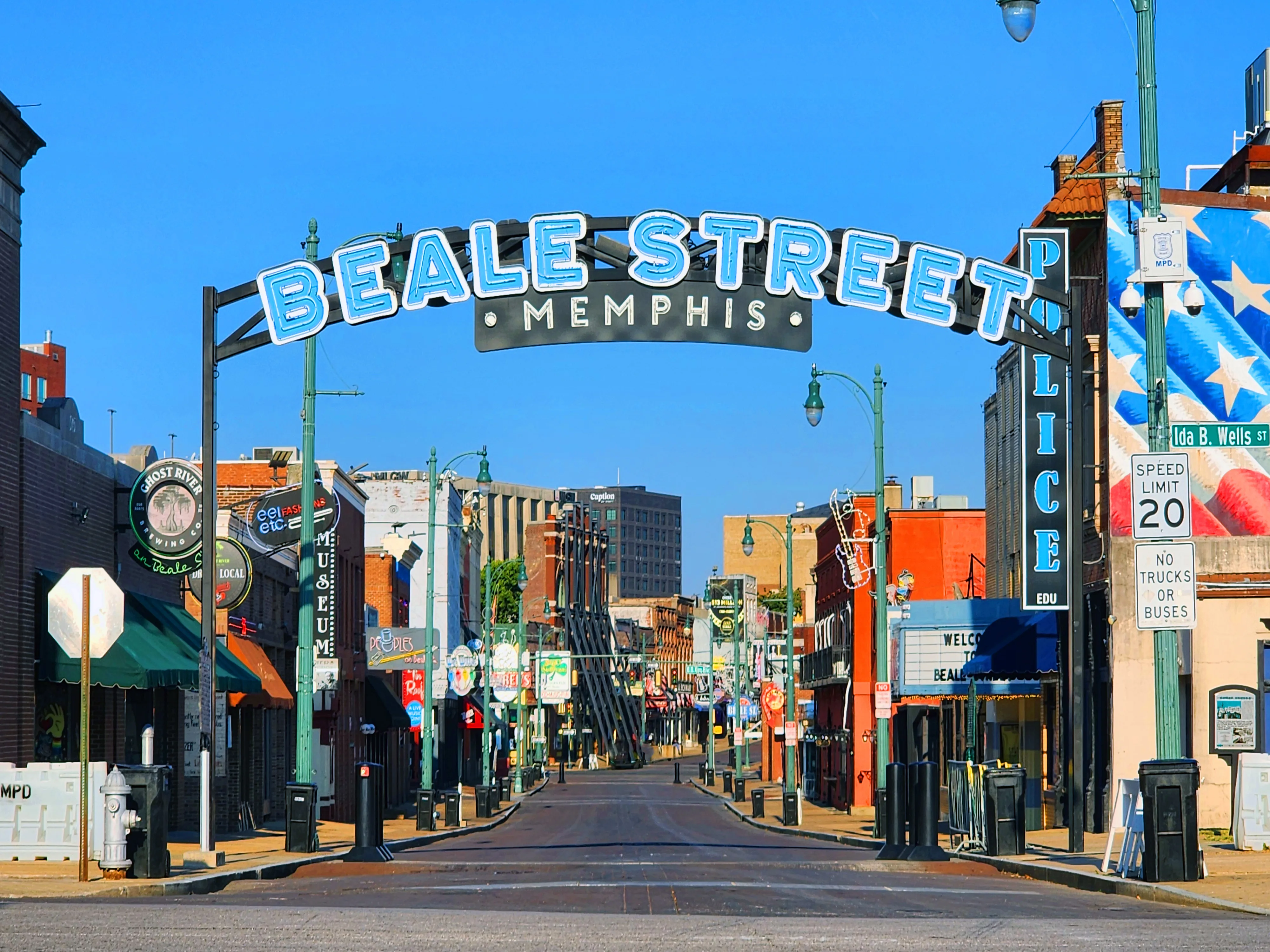
Midtown in particular has the density that supports walking-oriented retirement life — a concentration of independent coffee shops, restaurants, and services within a compact geography. Downtown Memphis offers a different version: more cultural walkability (Beale Street, the National Civil Rights Museum, the riverfront at Mud Island River Park) and less practical errands walkability. Both neighborhoods are meaningful outliers in a city where most of the residential stock assumes car access.
For retirees who drive — which is most of them — the activity picture opens up considerably. Shelby Farms Park is one of the largest urban parks in the country, with paved trails suited to walking and cycling that don't require navigating traffic. Overton Park anchors Midtown's green space, and the Big River Crossing pedestrian bridge gives easy access to the Mississippi River for a walk that feels genuinely unlike anything else in the region. Meeman-Shelby Forest State Park sits just north of the city for those who want nature without a long drive.
Community infrastructure for retirees is real here. The city supports multiple senior centers across Shelby County with programming that ranges from fitness and health education to arts classes and social events. Volunteer Memphis connects residents with placement opportunities across nonprofits and civic organizations — a draw for retirees who retire from a career but not from purpose. The Agricenter Farmer's Market and the Winchester Farmers Market give retirees a weekly social anchor that doubles as fresh-produce access, which matters on a fixed income. Memphis's music and arts scene — Sun Studio, the blues clubs on Beale Street, the art institutions in Midtown — provides the kind of cultural texture that retirees from larger cities don't expect to find at this price point.
Transit deserves an honest note. The Memphis Area Transit Authority (MATA) operates a network of bus routes and paratransit service for those who qualify medically. Retirees who plan to give up driving should research the routes serving their specific neighborhood before committing — Memphis is not a city where car-free retirement works easily outside of a few specific areas.
Right-Sizing: Downsizing in Memphis
Memphis's low median home price creates an unusual downsizing dynamic: retirees arriving from higher-cost markets often find they can buy single-level living here for cash or with minimal financing, then invest the equity difference. That's a genuinely different calculus than most markets offer, and it's one of the more underappreciated practical advantages of retiring here.
Single-level ranch homes are part of the existing housing stock across several Memphis neighborhoods, particularly in East Memphis and Cordova, where postwar and mid-century construction tends to be one-story and includes attached garages — a practical consideration as mobility becomes a factor. Midtown's older bungalow stock is charming but often two-story; buyers specifically seeking single-level options do better looking east of the city's core.
Patio homes and smaller detached properties exist in the market, though Memphis doesn't have the density of purpose-built active-adult subdivisions that newer Sun Belt metros do. Condos are available, particularly around the East Memphis and Downtown corridors, and suit retirees who want reduced maintenance obligations without leaving city limits.
For buyers specifically seeking a 55+ active-adult community, The Oaks at Woodchase is one designated option within Memphis proper. The city also supports four Continuing Care Retirement Communities (CCRCs), which offer the full continuum from independent living through memory care under one roof — meaningful for retirees who want to make one housing decision rather than a series of them as health needs evolve. Kirby Pines LifeCare Community has been operating since 1988 and is among the most established of those options, offering independent living, assisted living, and memory care.
Retirees who want the Memphis tax and healthcare advantages but prefer a newer suburban housing stock with more active-adult options tend to look at Germantown or Collierville. Both carry noticeably higher home prices than Memphis proper — see the neighborhoods page for the relative positioning — but also offer newer construction, quieter streets, and the kind of planned active-adult development that Memphis's urban core doesn't replicate. It's a genuine tradeoff rather than an obvious choice.
Memphis vs Nearby Retirement Destinations
| City | Cost vs Memphis | Primary Hospital | Walkability | Senior Living Depth | Overall Retirement Fit |
|---|---|---|---|---|---|
| Memphis, TN | Anchor | Baptist Memorial Hospital-Memphis; multiple full-service systems in-city | Car-dependent citywide; Downtown and Midtown walkable | 4 CCRCs; multiple IL/AL options; The Oaks at Woodchase (55+) | Strong for budget-conscious retirees needing medical depth |
| Germantown, TN | Noticeably higher | Access to Memphis systems via short drive | Suburban; most errands need a car | Good suburban senior options; newer construction active-adult | Better for retirees prioritizing quiet, newer housing, and school-district-adjacent community character |
| Collierville, TN | Noticeably higher | Access to Memphis systems via short drive | Suburban; walkable historic town square area | Growing senior living presence; more limited than Memphis | Strong for retirees wanting small-town feel with Memphis proximity |
| Bartlett, TN | Noticeably higher | Access to Memphis systems via highway | Suburban; car-dependent | Moderate; fewer CCRC options than Memphis proper | Good mid-range suburban option; less cultural texture than Memphis |
| Cordova, TN | Above Memphis city median | Access to Memphis systems via short drive | Suburban; car-dependent | Some senior housing; limited compared to Memphis core | Suits retirees wanting newer suburban stock closer to East Memphis amenities |
| Southaven, MS | Comparable to Memphis in many categories | Regional hospital access; Memphis systems a short drive north | Suburban; car-dependent | Developing senior living market | Appeals to retirees comfortable crossing into Mississippi for a slightly different tax structure |
On pure cost, Memphis proper holds the clearest advantage — the home price entry point and zero state income tax combination is difficult for any nearby option to match. Germantown and Collierville offer noticeably higher home prices in exchange for newer housing stock, quieter neighborhoods, and a community character that some retirees find easier to settle into.
On healthcare depth, Memphis wins outright — multiple full-service hospital systems inside the city, with specialist access that the suburbs can only reach by driving back into the metro. That matters most for retirees managing complex conditions or anticipating surgery. Bartlett and Southaven residents are functionally inside the Memphis healthcare market, which softens the distinction, but the drive adds a variable that matters on a bad health day.
Walkability is honestly thin across the entire metro — even Collierville's historic square, while pleasant, doesn't support car-free daily life. Retirees who want genuine on-foot access should prioritize Midtown or Downtown Memphis specifically, or accept that a car is a permanent part of the retirement budget here. For whom is Memphis the right call? Retirees who want urban cultural depth, serious medical access, low home prices, and Tennessee's favorable income-tax posture — and who are willing to choose their neighborhood deliberately rather than assuming the city is uniformly safe or uniformly convenient.

Local Expert Takeaway: Memphis makes the most sense for retirees who arrive with clear eyes: the home prices are genuinely low, the healthcare infrastructure rivals cities three times its size, and Tennessee's zero state income tax means retirement income stays yours. The catch is that Memphis requires neighborhood literacy — East Memphis and Midtown live differently from other parts of the city, and most daily life outside those pockets involves a car. Retirees who do the homework, plant themselves in the right neighborhood, and take advantage of what places like Shelby Farms Park, the Agricenter Farmer's Market, and the city's senior center network offer tend to find that Memphis punches well above its price point as a retirement city.
Quick Takeaways & FAQs
✅ Tennessee levies zero state income tax on any retirement income — Social Security, pensions, 401(k)s, and IRA withdrawals are all untaxed at the state level.
⚠️ Memphis is car-dependent for most errands citywide; retirees who want walkable daily life need to target Midtown or Downtown specifically before buying.
📍 Baptist Memorial Hospital-Memphis anchors in-city care, and multiple full-service hospital systems — including one with a strong reputation for orthopedic surgery and joint replacement — give Memphis genuine specialist depth at below-national-average healthcare costs.
Is Tennessee a good state for retirees from a tax perspective?
How good is healthcare in Memphis for retirees?
What 55+ communities are in Memphis proper?
Is Memphis walkable enough for retirement without a car?
How does retiring in Memphis compare to retiring in Germantown or Collierville?
Moving to Tennessee?
Tell us what you need help with and we'll connect you with local resources.
