
Memphis has a reputation that often arrives before the facts do. If you've been researching a move here, you've probably already read something alarming — and some of it is grounded in real history. But the picture in recent years looks meaningfully different from even two or three years ago, and anyone making a serious housing decision deserves the actual numbers, not the headline from 2022. Memphis carries one of the most affordable typical home prices of any major American city, and understanding what that affordability buys you in terms of neighborhood safety is the most important research you can do before settling on an area.
With a population of 609,647, Memphis is the 2nd-largest incorporated city in Tennessee, which means its crime totals are measured against a city that is genuinely large — home to the global headquarters of FedEx, St. Jude Children's Research Hospital, and AutoZone. Scale matters enormously when reading crime statistics: a city this size will always produce larger raw numbers than a suburb of 40,000. The relevant question is what the rates look like, how they compare to state and national figures, and — most importantly — how sharply they vary by neighborhood. The answers are more nuanced than the reputation suggests.
Memphis has seen a sustained run of improvement in its crime picture. The city recorded fewer than 200 homicides in its most recently reported year for the first time since 2019. City officials stated that overall crime reached its lowest point since 2001. That trajectory doesn't erase decades of concern, but it is the most sustained improvement the city has seen in a generation — and it directly affects the calculus for anyone choosing between Memphis neighborhoods right now.
This guide walks through Memphis's crime figures in context, maps the safety picture across the city's canonical neighborhoods, covers what law enforcement and community investment initiatives are doing to sustain the trend, and gives you the practical framework for doing your own neighborhood-level research before settling on where to live.

Memphis Crime Rates in Context: State and National Comparison
Memphis carries a violent crime rate of 2.51 per 1,000 residents and a property crime rate of 6.9 per 1,000 residents, based on the most current figures in this guide's data set. Before you absorb those numbers as alarming, run them against the benchmarks.
Tennessee as a whole reports a state violent crime rate of 6 per 1,000 and a state property crime rate of 20.8 per 1,000. Memphis's violent crime rate is well below the statewide figure — not modestly below, but by a wide margin. Its property crime rate similarly sits far below Tennessee's state average. The national figures tell a different story: the national violent crime rate is 3.7 per 1,000 and the national property crime rate is 18.4 per 1,000. Memphis's violent crime rate runs below the national average as well, while its property crime rate sits well under the national figure.
Look at that comparison carefully, because it runs counter to what most people expect when they hear "Memphis crime." The city's figures benchmark more favorably than Tennessee's own statewide rates on both violent and property crime.
Two important caveats belong here. First, these figures represent the city as a whole. Memphis's internal neighborhood variation is extreme — the commercial corridors and transitional zones see far more incidents than established residential neighborhoods on the east side and in suburban Cordova. A city-level rate averaged across that range can mask both how safe the safer neighborhoods are and how challenging the harder ones remain. Second, the city is in measurable improvement. City officials have noted that overall crime is at its lowest point since 2001 — a trajectory that directly affects the calculus for any buyer choosing a neighborhood today.
What the Reporting Series Means for Your Research
The figures above come from one consistent reporting series. Different tools use proprietary methodologies that mix reporting series and produce dramatically different-looking numbers. Comparing figures across series creates gaps that look real but are largely methodological. Stick to one source when doing your own research; the federal government's public crime data portal is the most transparent option. Sites like CrimeGrade, NeighborhoodScout, and AreaVibes are also useful for address-level lookups, though their scores are re-estimated on their own schedules and may differ from the table figures here.
Neighborhood-by-Neighborhood Safety Picture
Where you live in Memphis matters more than which city you live in. The safety spread between the city's quietest and most challenging neighborhoods is among the widest of any major American city — which means choosing well is the single most consequential variable in your Memphis housing decision. Here is the picture across the canonical neighborhoods.
Cordova
Cordova posts violent crime rates well below the city average. That gap is not marginal; it reflects a suburban character that feels categorically different from many inner-city Memphis neighborhoods. Cordova's housing runs above the city-wide typical home price, which reflects both its safety profile and its newer residential stock. Families with school-age children consistently rank it among the most livable parts of Memphis.
Best for: Families Quiet
East Memphis
East Memphis posts violent crime rates substantially below the city average — one of the city's more established residential corridors, with proximity to major employment centers and a dining and retail scene that draws residents from across the metro. Housing in East Memphis runs above the city median. For buyers who want urban convenience without downtown's elevated crime profile, East Memphis is the most common answer.
Best for: Commuters Walkable
Raleigh
Raleigh tracks below the city average on violent crime, putting it in a similar safety tier to East Memphis by most measures. It is a more working-class residential neighborhood than either East Memphis or Cordova, with housing running at roughly the city-wide typical price. The neighborhood has seen investment attention in recent years as part of broader city safety and community grant programs. It is worth research for buyers who want a below-city-average crime profile at a more accessible price point.
Best for: Value First-Timers
Midtown
Midtown's crime rate comes in below the overall city average, and it is one of the more livable neighborhoods for residents who want an urban feel. Its walkable streets, proximity to Overton Park, and dense mix of housing types make it a consistent draw for younger professionals and long-term Memphis residents. Housing runs below the city median, which makes Midtown one of the more affordable options with a better-than-city-average safety profile. The tradeoff is that Midtown's commercial corridors see more street-level activity than quieter suburban neighborhoods, so the experience varies meaningfully by block.
Best for: Walkable Renters
Downtown Memphis
Downtown reports elevated crime compared to most residential neighborhoods in the city. The Memphis Police Department opened a dedicated Downtown Command Center in April 2025 specifically to improve monitoring and incident response in that district — an acknowledgment that the area requires a different level of enforcement presence. For residents who want to live near Beale Street, the National Civil Rights Museum, and the Mississippi River waterfront, the tradeoff is real. Buyers choosing Downtown should research specific blocks rather than treating the neighborhood as uniform.
Best for: Views Transit
Frayser and Whitehaven
Frayser sits in the mid-range of Memphis's neighborhood crime spectrum — not the city's hardest areas, but above the safer suburban corridors. Whitehaven tracks above the city average on crime, which aligns with its below-median housing price. Both neighborhoods have active community investment programs operating within them, and both are worth granular block-level research before choosing a specific street.
South Memphis requires direct, address-specific research rather than a neighborhood-level generalization — the honest answer when a neighborhood's internal variation is too wide for a single characterization.
Best for Frayser: Value — with diligent block-level research.
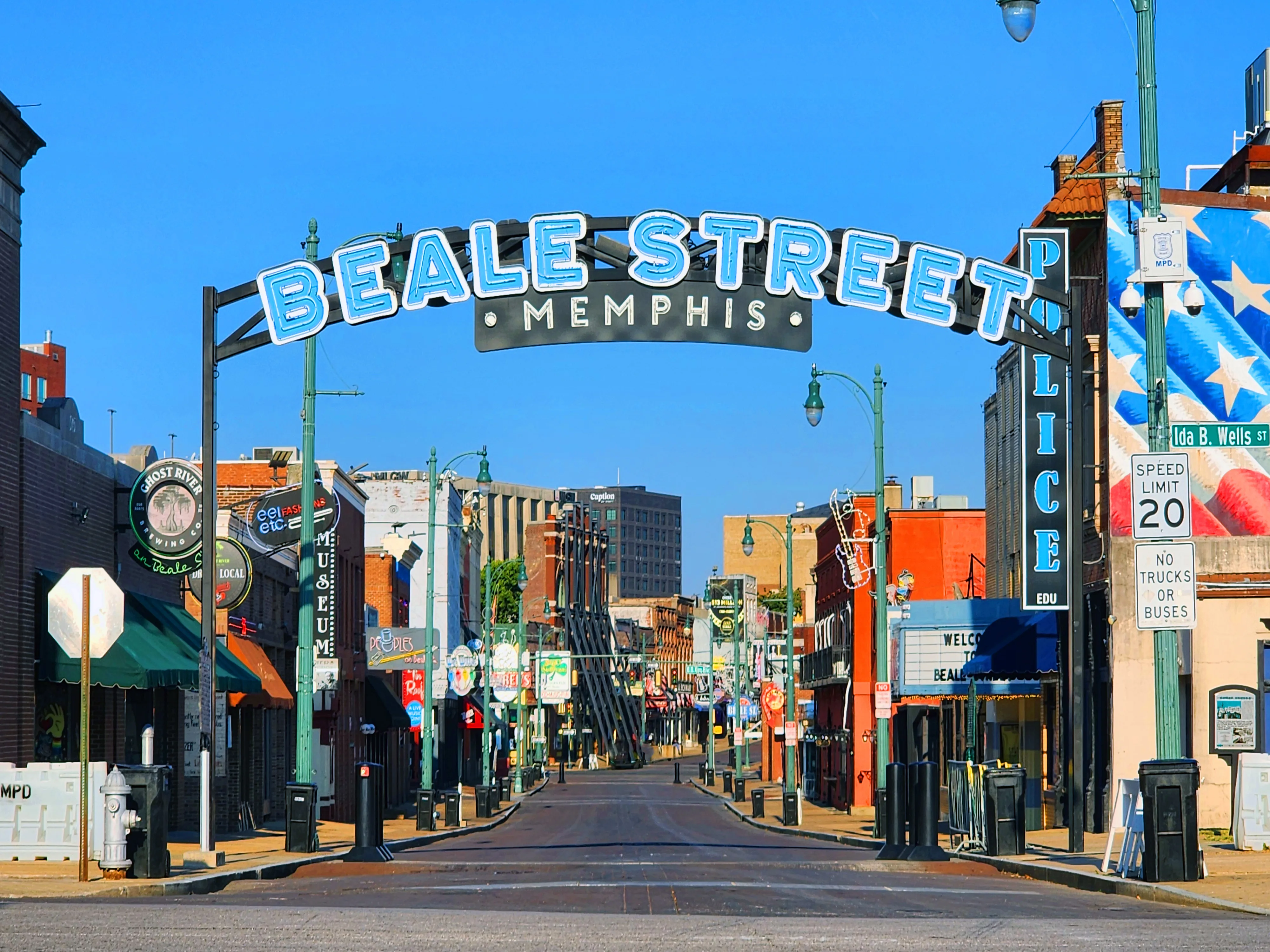
What Changed in Memphis's Crime Picture — and Why It Matters for Buyers
The most recent Memphis public safety data is significant enough that many people researching a move here haven't yet absorbed it. The city recorded fewer than 200 homicides in its most recently reported full year — fewer than at any point since 2019. City officials stated that overall crime reached its lowest point since 2001.
That improvement was not isolated to homicides. Multiple offense categories declined in the same period. Carjacking, motor vehicle theft, robbery, and larceny all posted meaningful reductions. The city's shooting incidents reached a multi-year low. These are not one-category rebounds — they represent broad-based movement across the crime spectrum.
The Continuing Picture
The Memphis Shelby Crime Commission has continued to report improvement in Shelby County's overall crime picture in subsequent reporting periods. If those figures hold, Memphis would be building a second consecutive year of broad-based improvement — which is a different and more durable signal than a single-year rebound from an anomalous peak.
The One Category That Hasn't Fully Recovered
Motor vehicle theft is the honest exception in an otherwise strong improvement narrative. Despite meaningful reductions, it remains one of the few offense categories still elevated above pre-pandemic baseline levels. If you're moving to Memphis, comprehensive auto coverage is a practical consideration — and parking habits matter more here than they would in most comparable cities. This is not a reason to reconsider the move, but it is the kind of thing that surprises people who arrive focused only on the violent crime numbers.
The broader arc is significant context for any buyer. A city at its lowest crime point since 2001 looks different from the Memphis of the last decade's coverage, and that difference is directly relevant to which neighborhoods are worth reconsidering.
Looking to buy in Memphis? Estimate your payment.
Enter your numbers to see an estimated monthly mortgage payment.
Estimate only. Excludes HOA fees and mortgage insurance. The interest rate above is a starting point, not a quoted rate — replace it with your own to see real numbers. Insurance is a flat placeholder, not a Memphis quote.
Beyond the Monthly Mortgage Payment — What to Factor In
- The property tax rate above — The 0.59% used in the estimate is the median effective rate — tax actually paid as a share of market value — published by Ownwell, 2026. Half of local homes pay more and half pay less: your own bill depends on that property's assessed value and any exemptions it qualifies for, which can differ a lot from its market price. Confirm with the Shelby County assessor before you budget.
- Total cost of ownership — Your monthly mortgage payment is just the baseline. Depending on the specific city, county, and service district, homeownership costs also include local utility fees, municipal surcharges, and special assessments (such as water, sewer, storm drainage, or local energy taxes) that vary by location.
- Independent due diligence — Because these recurring local costs and municipal fees change depending on the exact property address, buyers must research them independently during their transaction process.
Tax laws, local municipal fees, and utility costs change frequently and individual situations vary. This page is general information, not tax or legal advice — always consult a qualified tax professional, CPA, or local municipal offices for personalized guidance.
What the City Is Doing — and What You Should Watch
The improvement in crime figures didn't happen in a vacuum. Several specific initiatives contributed, and understanding them helps you evaluate whether the trend is durable rather than a one-year fluctuation.
Technology and Enforcement
The Memphis Police Department expanded drone operations citywide, giving dispatchers real-time aerial intelligence for active incidents. The city significantly expanded its camera network through a community-driven monitoring initiative that increases coverage across residential and commercial corridors. The dedicated Downtown Command Center, opened in April 2025, concentrated enforcement resources in the district where elevated crime remained most persistent.
These are operational investments, not policy aspirations. They were in place during the period that produced the city's lowest crime totals since 2001 — which gives them more credibility than a press release announcing a future plan.
Community Investment
In December 2025, the City of Memphis invested $600,000 in Safer Communities Grants through the Joint Office of Neighborhood Safety and Engagement, funding 34 nonprofit organizations working on mentoring, mental health services, crisis response, and street outreach. The Community Foundation of Greater Memphis launched a multi-year Community Solutions funding initiative in May 2025, supporting organizations focused on safety and community resilience — including programs that train residents to lead neighborhood safety conversations and theater-based trust-building in areas affected by violence.
The city's public safety agenda has continued intervention and prevention work, including expanded youth employment. The summer employment program employed 1,800 young people in its most recent year — a figure Mayor Paul Young pointed to as part of the city's longer-term violence-interruption strategy.
What Buyers Should Watch
Sustained improvement over two or three years is a different signal than a single-year rebound. The metric worth tracking for anyone considering a move is whether the homicide count stays below 200 and whether the motor vehicle theft rate continues its recovery toward pre-pandemic levels. Both are publicly reported and updated regularly at the Memphis Shelby Crime Commission's website.
Practical Safety Research Before You Choose a Neighborhood
City-level and neighborhood-level figures are the starting point, not the endpoint. The gap between the best and worst parts of Memphis is wide enough that your specific street matters more than most housing decisions in similarly sized cities. Here is how to do the research that city-level statistics can't do for you.
Go Granular with Public Crime Data
The federal government's public crime data portal allows you to look at reported offense counts by agency and, in some cases, by patrol zone or district. Memphis Police Department's CompStat reports, published regularly, give district-level breakdowns that let you see whether a specific neighborhood's figures are improving at the same rate as the citywide average or lagging behind it. Midtown, East Memphis, and Cordova have all shown improvement — but the pace varies, and a district-level look will tell you more than a neighborhood label.
Drive the Area at Different Times
This sounds obvious, and it is one of the most consistently skipped steps among people relocating from outside Tennessee. A weekend afternoon in East Memphis feels different from a Friday evening in parts of Downtown. The commercial corridors and transitional zones of Memphis look and feel categorically different from established east-side residential neighborhoods — that gap is lived experience before it shows up in a data table.
Check the City's Camera Coverage
Memphis expanded its camera network significantly in recent years. Camera density is an imperfect proxy for enforcement presence, but in Memphis it correlates with areas where the city has prioritized visible deterrence. Neighborhoods with higher camera saturation tend to be ones where the Memphis Police Department has concentrated monitoring resources — which is useful context when evaluating a specific block.
Talk to Neighbors, Not Just Listings
One thing that consistently surprises people who move to Memphis: the neighborhood associations here are active and specific. Midtown, East Memphis, and Cordova all have established neighborhood organizations that hold regular meetings and publish safety updates. Joining a neighborhood's email list before you commit to an area gives you a resident-level view that no annual crime table can replicate. This is especially important in transitional areas where the data is a year or two behind the current street-level reality — in both directions.
For a fuller picture of how neighborhoods differ in housing stock and character beyond safety, see the Memphis neighborhoods guide.

Local Expert Takeaway: Memphis's crime reputation is real but significantly out of date. The city is at its lowest crime point since 2001, with homicides below 200 for the first time since 2019 documented across multiple reporting categories. The neighborhood spread is the critical variable: Cordova and East Memphis post violent crime rates well below the city average, while Downtown and parts of Whitehaven require more careful block-level research. Motor vehicle theft remains the one honest exception — it has improved but hasn't fully recovered to pre-pandemic levels, and it matters practically when you're choosing where to park and what coverage to carry. If your research is still anchored to headlines from 2021 or 2022, the data has moved substantially in Memphis's favor.
Quick Takeaways & FAQs
✅ Memphis's violent crime rate sits below both the Tennessee state average and the national average by this guide's reporting series — a comparison most people researching the city never encounter.
⚠️ The neighborhood spread in Memphis is extreme: Cordova's violent crime rate is a fraction of the citywide figure, meaning your specific neighborhood choice matters far more than the city-level average.
📍 Motor vehicle theft remains elevated above pre-pandemic baselines despite meaningful recent reductions — comprehensive auto coverage and deliberate parking habits are practical considerations for new residents.
Is Memphis one of the most dangerous cities in the United States?
Which Memphis neighborhoods are the safest for families?
Is Downtown Memphis safe to live in?
How much has crime actually improved in Memphis recently?
What is the biggest safety concern in Memphis that newcomers don't anticipate?
Moving to Tennessee?
Tell us what you need help with and we'll connect you with local resources.
