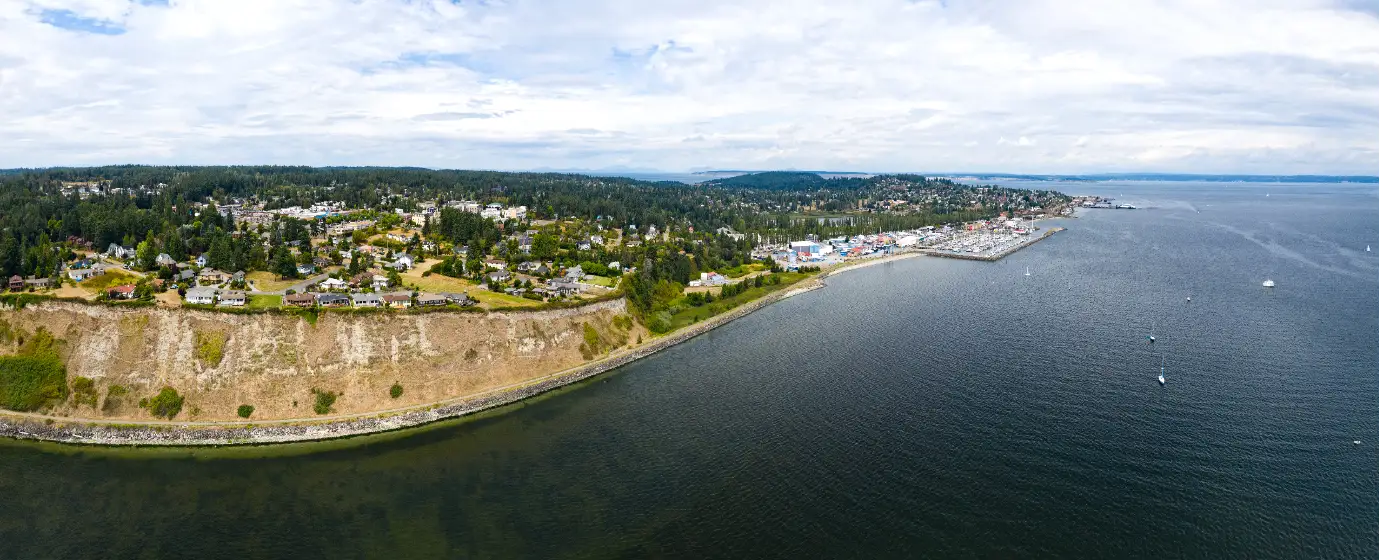
What Is Living in Port Townsend, Washington Like?
Maybe someone told you Port Townsend was a small Victorian seaport on the Olympic Peninsula and you pictured something quaint and sleepy. Then you looked at the housing market and realized $642,884 is the Zillow Home Value Index figure for May 2026 — not a typo, not a reflection of oceanfront mansions, just the going rate for a modest house in a city of about 10,500 people. That tension — a genuinely remote, slow-paced town carrying prices that would feel familiar in a Seattle suburb — is the first thing every serious relocator has to reconcile. Port Townsend sits at the northeastern tip of the Olympic Peninsula, separated from the rest of Puget Sound by water in every direction, reachable only by the Washington State Ferries Port Townsend–Coupeville crossing or by driving the long way around through Olympia. Geography shapes everything here: the ferry schedule governs your mornings, Admiralty Inlet frames your evenings, and the town's relative isolation is simultaneously its greatest draw and its most meaningful constraint.
The economic backbone is smaller than you might expect for a city at this price point. Jefferson Healthcare anchors the local employment base as a major regional health system. Port Townsend Paper Corporation — operating a mill that has been part of the city's economy for generations — remains a significant employer alongside Jefferson County government and the Port Townsend School District. Tourism and the maritime trades fill in a substantial layer: the Northwest Maritime Center on Water Street drives a year-round calendar of events, classes, and boat-building programs that give the local economy an artisanal, craftwork character unusual for a city this size. The median household income sits at $62,271 — notably below what you'd need to feel comfortable at these home prices — which helps explain why the population skews so heavily toward retirees, remote workers, and people arriving with equity from a higher-cost market.
That demographic reality is the defining community fact: the median resident age is approximately 60.8 years, with around 43.6% of Port Townsend residents age 65 or older, making it one of the most retirement-heavy small cities in Washington State. The community that greets you at the farmers market on a Saturday morning — which runs from April through December — is largely made up of people who made a deliberate, values-driven choice to be here: artists, retirees, maritime enthusiasts, and remote workers who traded proximity to Seattle for water views, a walkable historic downtown, and a pace of life that doesn't require noise-canceling headphones. The city's population has grown approximately 6% since the 2020 Census, suggesting that word continues to spread. Home prices are high relative to local incomes — a reality that shapes who can actually buy and who rents while they figure it out.
Whether you're considering a move or still in the research phase, the sections below break down Port Townsend's employment landscape, what daily life actually looks like, the current housing market, the realities of commuting, and where locals spend their weekends.
Port Townsend at a Glance
Looking to buy in Port Townsend? Estimate your payment.
Enter your numbers to see an estimated monthly mortgage payment.
Estimate only. Excludes HOA fees and mortgage insurance. The interest rate above is a starting point, not a quoted rate — replace it with your own to see real numbers. Insurance is a flat placeholder, not a Port Townsend quote.
Why Are People Moving to Port Townsend?
Port Townsend does not attract accidental residents. The ferry crossing, the distance from major job centers, and the home prices all function as filters — the people who show up and stay almost always made an intentional choice to be here, usually for one of a handful of very specific reasons.
The Retirement Calculation
The demographics tell the story plainly. When roughly 43.6% of your city's population is 65 or older, you're not living in a family suburb — you're living in a place that has quietly become one of the Pacific Northwest's most appealing retirement destinations. Retirees arrive from Seattle, from California, from Portland, drawn by the Victorian architecture, the cultural programming at Fort Worden State Park, and the sense that a town this compact and walkable will remain manageable as they age. The trade-off is that services and amenities skew toward that demographic, which surprises younger buyers more than they expect.
Remote Work Changed the Calculus
The roughly 6% population growth since 2020 is not coincidental — it maps almost exactly onto the remote-work era. For someone whose employer no longer requires a physical presence, Port Townsend suddenly becomes viable: you get Olympic Peninsula views, a genuine small-town community, and a city-level cultural calendar, and you surrender only the daily Seattle commute you no longer need. The catch is that the moment your employer reverses course on remote work, your 90-minute commute to Seattle — which involves at least one ferry crossing — becomes a serious quality-of-life problem.
The Maritime and Arts Community
Port Townsend has a documented, functioning arts and maritime trades community that isn't just marketing copy. The Northwest Maritime Center runs year-round boat-building and seamanship programs. The Wooden Boat Festival each September — the largest wooden boat festival in North America, according to organizers, with the 2026 edition scheduled for September 11–13 — draws thousands of visitors and signals the seriousness with which this community takes its relationship to the water. If that world resonates with you, the social infrastructure is real.
Who Tends to Struggle Here
Families with school-age children moving from larger markets sometimes find the adjustment harder than anticipated. The Port Townsend School District holds a B rating, according to Niche, which is solid for a district of this size, but the extracurricular depth of a 10,500-person city has real limits compared to what parents moving from Bellevue or Redmond are used to. Young professionals without remote-work arrangements face the sharpest friction: local wages at the median household income level don't stretch comfortably against home prices at the Zillow Home Value Index figure for this market, and entry-level career paths are narrow outside of healthcare, government, and hospitality.
| Buyer / Mover Type | Port Townsend Fit | The Honest Caveat |
|---|---|---|
| Retirees | Excellent — built for this | Home prices require equity coming in |
| Remote Workers | Strong — if remote status is permanent | 90-min ferry commute if that changes |
| Maritime / Outdoors Enthusiasts | Excellent — the community is real | Limited career paths in the trades |
| Families with Kids | Moderate — good schools, quiet neighborhoods | Limited youth programming depth |
| First-Time Buyers | Difficult at current price levels | Local incomes don't support local prices easily |
| In-Person Seattle Commuters | Poor fit for most schedules | Ferry-dependent, weather-affected, long |
The city's growth is real, but it's selective. Port Townsend rewards people who move here on its own terms rather than expecting it to approximate what they left.
What Daily Life Feels Like in Port Townsend
Six months after moving here, nearly everyone says a version of the same thing: the town is both smaller and more complete than they expected. Smaller in the sense that you will recognize faces at the farmers market within weeks. More complete in the sense that the cultural calendar — art walks, maritime workshops, live music at the historic theaters, whale-watching cruises out of Fort Worden — fills time in ways a city four times this size might not.
The Rhythm of Water Street
Water Street is the commercial spine, lined with Victorian-era brick storefronts that house independent bookshops, galleries, wine bars, and the kind of lunch spots that don't take reservations and don't need to. On a weekday morning it feels genuinely unhurried. On summer weekends, tourist traffic compresses everything: street parking hits its two-hour cap fast, and the sidewalks along the waterfront fill with day-trippers off the ferry. Locals learn to run Water Street errands before 10 a.m. or after 4 p.m. in July and August.
Uptown's Slower Gear
The Uptown district, sitting on the bluff above downtown, has a different tempo entirely. Victorian homes with broad porches, bakeries that double as neighborhood gathering spots, and small shops oriented toward residents rather than tourists — this is where you go when you want Port Townsend without the weekend crowds. Many long-term residents quietly prefer Uptown to downtown for everyday life, treating Water Street as a destination rather than a daily habit.
Fort Worden as Community Anchor
Fort Worden Historical State Park is more than a weekend hiking destination — it functions as the city's cultural campus. The park hosts arts residencies, concerts, and community events throughout the year. After Fort Worden Hospitality closed in January 2025, Washington State Parks stepped in as the overnight lodging operator, reopening accommodations in April 2026 for the season running April 1 through October 31. The transition means the park's historic officers' quarters and barracks buildings remain available for overnight stays, which matters for residents whose family visits depend on it.
The Seasonal Surprise
What newcomers don't fully anticipate is how different summer Port Townsend is from the rest of the year. From roughly Memorial Day through Labor Day, the city's population swells visibly — the Wooden Boat Festival alone brings thousands of visitors for the September 11–13, 2026 weekend — and the infrastructure (parking, ferry wait times, restaurant seating) operates near capacity. Then October arrives and the city contracts back into itself: quieter, greyer, and in the opinion of many year-round residents, actually more livable. If you visit in July and fall in love, spend a week in February before making any decisions.
The Farmers Market as Social Calendar
The Port Townsend Farmers Market, running from the first Saturday in April through the third Saturday in December, functions less as a grocery run and more as the town's informal weekly reunion. Regulars treat it as the place where you catch up with neighbors, meet newcomers, and take the temperature of the community. The 2026 season opened April 4. If you want a fast read on whether you'll fit into Port Townsend's social fabric, stand at the market for an hour and watch how people interact.
The Port Townsend Housing Market Right Now
The Zillow Home Value Index for Port Townsend stands at $642,884 as of May 2026, up 1.4% over the prior year. That modest annual appreciation — far slower than the pandemic-era surges — reflects a market that has stabilized rather than corrected: homes are sitting 59 to 83 days on market across multiple data sources, which gives buyers more time to evaluate than was possible a few years ago.
This is not a frenzied market. Sellers are pricing carefully, and buyers who are prepared are negotiating in ways that weren't realistic in 2021 or 2022. For a fuller breakdown of what different neighborhoods cost and how this compares to nearby markets, see the Port Townsend cost of living page.
What the Price Actually Buys
At the median, you're typically looking at a modest Victorian-era or mid-century home that has likely had some updates but may still need work. Entry-level inventory — older construction, smaller lots, less desirable orientation — starts meaningfully below the median, while well-restored Victorians with water views or proximity to Fort Worden push well above it. Some parts of the city command a significant premium over others, though prices in any given neighborhood vary enough that generalizations mislead more than they help.
The Rental Reality
The rental market in Port Townsend is tight and expensive relative to local incomes. Supply is limited, turnover is low, and the same remote-work and retiree in-migration that pushed home prices up has kept rental demand elevated. For current rent figures by unit type, the cost of living page has the latest ranges.
Market Pace: Read the Days on Market Honestly
59 to 83 days on market is longer than most competitive Pacific Northwest markets, and it tells a specific story: buyers at this price point in a geographically isolated small city have a narrower pool of qualified purchasers, and sellers occasionally overprice relative to what the market will bear. Homes that are priced correctly and show well still move with genuine interest. The ones sitting for 90-plus days are almost always a pricing story, not a location story.
Port Townsend Neighborhoods
Port Townsend has several distinct areas — each with its own character and appeal. Here’s a breakdown to help you narrow down where to focus your home search.
🏡 Uptown
Sitting on the bluff above the waterfront, Uptown trades tourist foot traffic for genuine neighborhood life — Victorian homes, bakeries, and small shops oriented toward residents. It's the part of Port Townsend that longtime locals tend to prefer for everyday living.
🏠 Downtown/Water Street
The historic commercial heart of the city, with Victorian brick storefronts, galleries, and the Northwest Maritime Center fronting the harbor. Living here puts you closest to the ferry terminal, the farmers market, and the best of Port Townsend's cultural calendar — with summer tourist traffic as the ongoing trade-off.
🌳 North Beach
Stretching west along the waterfront from the Fort Worden bluffs, North Beach is where residents go for shoreline walks with water views and minimal crowds. The area has a residential, low-key character that appeals to people who want proximity to the outdoors over walkability to downtown shops.
🏘 Fort Worden
The neighborhood surrounding Fort Worden Historical State Park occupies one of the most dramatically sited pieces of ground in the city, with views across Admiralty Inlet and access to the park's cultural programming and the Marine Science Center. It suits residents who want space, nature, and the park's year-round calendar as immediate neighbors.
🏔 Castle Hill
Castle Hill is a quieter residential district above the downtown core, with a mix of housing styles and a neighborhood character that feels removed from the tourist activity below. Families and long-term residents who want a house with a yard rather than a Victorian in a commercial zone tend to look here.
🌆 Morgan Hill
Morgan Hill sits on the southern residential edge of the city, offering more land and a quieter suburban feel compared to the denser historic neighborhoods closer to the water. It appeals to buyers who want space and privacy while remaining within easy reach of Port Townsend's downtown.
Pros & Cons of Living in Port Townsend
The Pros
- Stunning Victorian architecture and a nationally recognized historic seaport district
- Vibrant arts
- music
- and maritime culture with year-round festivals
- Easy access to Olympic National Park
- Salish Sea beaches
The Cons
- Limited direct highway access means longer
- ferry-dependent commutes to Seattle-area jobs
- Home prices are high relative to local wages
- Winters are gray and rainy with a very small stock of newer housing
Getting Around & Commuting in Port Townsend
There is no easy way to get to Port Townsend, and residents will tell you that is partly the point. The city sits at the end of a peninsula, which means every route involves either a ferry or a long drive — and understanding this geography before you choose where to live here is more important than almost any other factor.
The Ferry Reality
Washington State Ferries operates the Port Townsend–Coupeville route across Admiralty Inlet, a roughly 30-minute water crossing to Whidbey Island. From there, connecting to additional ferry legs adds time, putting a Seattle trip at approximately 90 minutes under normal conditions. That figure assumes no ferry delays — which are not uncommon in winter storm season — and no wait at the Haines Place Park-and-Ride, which serves as the primary overflow parking area near the ferry terminal downtown.
Downtown Parking: A Genuine Friction Point
Street parking on Water Street is capped at two hours. On summer weekends and during festival weekends, the Haines Place Park-and-Ride fills before midday. If you work downtown or run daily errands there, this is a logistical reality you plan around — not an occasional inconvenience but a structural feature of the city's layout.
Jefferson Transit: The Car-Free Option
Jefferson Transit connects the Kingston Ferry Terminal to the Haines Place Park-and-Ride in Port Townsend, running approximately three times per day. For commuters with flexible schedules, this creates a genuine car-free commute option for the ferry legs of the trip. Three departures per day is not a commuter-rail frequency, so this works for people whose schedules have some elasticity — not for someone who needs to be at a desk in Seattle at 8 a.m. sharp.
Local Getting-Around
Within Port Townsend itself, the compact downtown and Uptown districts are genuinely walkable for daily errands — groceries, the post office, the farmers market, the library. North Beach, Fort Worden, Castle Hill, and Morgan Hill require a car for most residents. The city has no traffic in the traditional commuter sense; the chokepoints are the ferry terminal approach and Water Street during summer peak hours, not anything resembling a highway backup.
| Route / Destination | Mode | Approximate Time | Key Variable |
|---|---|---|---|
| Port Townsend → Coupeville (Whidbey) | WSF Ferry | ~30 min crossing | Ferry schedule / wait |
| Port Townsend → Seattle | Ferry + drive | ~90 min | Which ferry leg, traffic |
| Port Townsend → Sequim | Drive | ~45 min | Minimal |
| Port Townsend → Port Angeles | Drive | ~60 min | Minimal |
| Port Townsend → Olympia (no ferry) | Drive | ~2.5 hrs | All-peninsula route |
| Kingston Ferry → Port Townsend | Jefferson Transit bus | Varies / ~3x per day | Schedule flexibility needed |
The all-drive route connecting the Olympic Peninsula to the rest of the state passes over a floating bridge that occasionally closes in high winds — an event Port Townsend residents experience a few times a year and treat as a known risk rather than a surprise.
What Relocators Underestimate
Most people who visit Port Townsend on a sunny summer day and decide to move here have driven in from Seattle in reasonable time and assume the commute, if they ever need it, is manageable. What they don't fully internalize is that the ferry runs on a schedule, that winter ferry service is reduced and weather-affected, and that a 90-minute trip in ideal conditions can become a 2.5-to-3-hour ordeal when a sailing is missed or weather delays service. If your job ever pulls you back to in-person work, that reality lands fast.
Schools in Port Townsend
Families relocating to Port Townsend have public, private, and higher-education options nearby. Here’s a quick overview.
🎓 School District
Port Townsend School District serves K–12 students across Port Townsend and the surrounding area. Rated B (source: Niche.com).
🏆 Graduation Rate
The 4-year high-school graduation rate here is approximately 84.7%.
📚 Higher Education
Washington’s public universities — the University of Washington, Washington State University, and Western Washington University — offer four-year degrees statewide, with a network of 34 community and technical colleges (SBCTC) providing two-year and workforce programs.
🌐 Online Learning
University of Washington Continuum College and Washington State University Online offer fully accredited online degrees for remote learners across the state.
Safety in Port Townsend
A quick look at how Port Townsend compares on the numbers that matter most when weighing a neighborhood or a move.
🛡 Violent Crime
Approximately 1.8 per 1,000 residents.
🔒 Property Crime
Approximately 13.9 per 1,000 residents.
Compared to the FBI’s most recent national data (2024), Port Townsend’s violent crime is below the national average (about 3.6 per 1,000), and property crime is below the national average (about 17.6 per 1,000).
Against Washington as a whole, Port Townsend’s violent crime is roughly half the state average, and property crime is roughly half the state average (Bureau of Justice Statistics, Crime Known to Law Enforcement, 2024 (tables 2 and 3)).
Crime rates can vary a lot within a single city, so the citywide numbers above are only a starting point. Some neighborhoods in Port Townsend run well below these averages, while others run higher — the kind of block-by-block detail that matters most when you’re actually choosing where to live. The full guide below breaks it down neighborhood by neighborhood.
Working in Port Townsend
Port Townsend’s largest employers span several industries — here are some of the anchors of the local job market.
🏥 Jefferson Healthcare
Healthcare
🏭 Port Townsend Paper Corporation
Paper manufacturing
🏛 Jefferson County government
Public sector
🎓 Port Townsend School District
Education
🏥 Local retail & tourism trades
Hospitality/retail
Parks & Recreation in Port Townsend
Some of the outdoor spaces that shape everyday life in Port Townsend.
🌱 Fort Worden State Park
Port Townsend residents don’t have to go far for green space — spots like Fort Worden State Park are part of everyday life here, whether that’s a morning walk, a weekend hike, or just somewhere to unwind outside. The full guide below covers more of what Port Townsend has to offer for parks and outdoor recreation.

Retiring in Port Townsend
Port Townsend draws retirees for its balance of amenities, outdoor access, and cost. Here’s what to weigh.
🌤 Climate
Port Townsend sits in a mild rain shadow created by the Olympic Mountains, which makes it noticeably drier than Seattle — around 20 inches of annual rainfall compared to Seattle's 37. Summers are cool and clear, rarely topping the mid-70s; winters are grey and damp but rarely freezing, with snow an occasional event rather than an annual expectation. The maritime air keeps temperatures moderate year-round, which retirees from colder climates tend to find genuinely comfortable.
🍴 Lifestyle
Retirement life in Port Townsend centers on the water, the arts, and community institutions. Fort Worden Historical State Park hosts cultural events and residencies year-round, the Port Townsend Farmers Market runs from April through December, and the Northwest Maritime Center offers workshops and programming that attract people who want their retirement years to involve learning something with their hands. Independent restaurants and galleries along Water Street and in Uptown fill the rest of the calendar; the overall pace is deliberately unhurried.
🏚 55+ Communities
Port Townsend does not have large-scale age-restricted master-planned communities in the style of a Sun City development. What it has instead is a community where the median resident age of approximately 60.8 years means retirees are not a subgroup but the dominant demographic — the social infrastructure, the programming, and the general pace of life are organized around people at or near retirement. The surrounding Jefferson County area and nearby communities like Port Ludlow offer some additional senior-oriented housing options for those seeking more structured settings.
✈ Getting Around
Within Port Townsend, the downtown and Uptown neighborhoods are walkable for daily errands, which matters as driving becomes less central to daily life. A car is useful for reaching Fort Worden, North Beach, and points beyond the city. The nearest commercial airport with regular scheduled service is Seattle-Tacoma International, roughly 90 minutes away via the Washington State Ferries route — a manageable trip for occasional travel, but one that requires planning around the ferry schedule.
🏛 Washington Taxes for Retirees — What to Know
- No state income tax — Washington does not tax personal income, so Social Security, pensions, and 401(k)/IRA withdrawals are all untaxed at the state level. There is no state return to file and no retirement exclusion to claim — the rate is simply zero.
- Military and public pensions — Because there is no income tax, military retirement pay and public-employee pensions are untaxed at the state level along with everything else.
- Sales tax is the tradeoff — The state sales tax is 6.5%, and local add-ons bring the combined rate in Port Townsend to 9.5% (Washington State Department of Revenue, Q3 2026 local sales & use tax rate table, July 2026). Groceries and prescription drugs are exempt.
- Property taxes, with senior relief — The effective property tax rate is roughly 0.9%. Homeowners 61+ (or unable to work due to disability, or a qualifying disabled veteran) who own and occupy their home may qualify for a reduction. Income limits are set against each county’s median household income, so the threshold differs by county — check with your county assessor. A separate deferral program is available for those who don’t qualify for the exemption.
- Capital gains tax — but not on retirement income — Washington taxes 7% on long-term capital gains above a $278,000 standard deduction for 2025, rising to 9.9% on gains above $1,000,000. Retirement accounts and real estate sales are both exempt. It therefore does not reach ordinary retirement income or the sale of a home.
- Estate tax — the one to plan for — Unlike most no-income-tax states, Washington has its own estate tax. For deaths on or after July 1, 2026, the exemption is $3 million with graduated rates topping out at 20%. Retirement accounts count toward the taxable estate, so long-time homeowners with sizable balances can cross the line without expecting to.
- No inheritance tax — Washington has no inheritance tax, and no gift tax.
- WA Cares payroll premium — Working Washingtonians pay 0.58% of gross wages into the WA Cares Fund, the state long-term care program, with no income cap. It applies to W-2 wages, so retirees who have stopped working do not pay it — but anyone relocating while still employed will see it. The private-insurance opt-out closed at the end of 2022 and is not available to new applicants; the remaining exemptions are narrow (living outside Washington, military spouses, certain visa holders, and veterans with a 70%+ service-connected rating).
- The Oregon border effect — Oregon has no sales tax, so Washington residents near the river — Vancouver, Camas, Washougal, Longview — often cross over for large purchases. Washington use tax technically applies to goods brought back for use in-state, though it is rarely enforced on ordinary personal purchases.
Tax laws change frequently and individual situations vary. This is general information, not tax advice — always consult a qualified Washington tax professional or CPA for personalized retirement tax planning.
Weekends & Local Favorites in Port Townsend
Port Townsend does weekends well — not because it has an abundance of options, but because the options it has are genuinely good and oriented toward the outdoors, the water, and community. There is no mall, no multiplex, and no sports bar strip. What there is tends to be specific to this place in a way that earns loyalty.
Fort Worden on Any Given Saturday
Fort Worden Historical State Park is where a significant percentage of weekend life happens. The grounds — a former military installation overlooking Admiralty Inlet, with views across to the Cascade Range on clear days — are open year-round for walking, picnicking, and exploring the historic gun batteries. The Port Townsend Marine Science Center, based at Fort Worden, runs seasonal whale-watching and birdwatching cruises around Protection Island National Wildlife Refuge through its partnership with Puget Sound Express, a program that has operated continuously since 1994. On summer weekends the park hosts arts events, music, and residency programs; in the off-season it quiets considerably but loses none of its drama.
The Wooden Boat Festival: The City's Signature Weekend
The Port Townsend Wooden Boat Festival, held each September at the Northwest Maritime Center on Water Street, is the largest wooden boat festival in North America. The 2026 edition runs September 11–13. For one weekend the population of the city essentially doubles, the harbor fills with extraordinary vessels, and the energy is unlike any other moment in the calendar year. If you move here, you will attend this festival. Probably every year.
Propolis Brewing and the Local Taproom Scene
Propolis Brewing on Jefferson Street is Port Townsend's farmhouse ale taproom, known for producing small-batch, botanically influenced ales that reflect the Pacific Northwest ingredient landscape in an unusually literal way. It's an interesting place to spend a Saturday afternoon — genuinely local, genuinely unusual, and the kind of establishment that gets written up in national brewing publications without losing its neighborhood character. The independent taproom scene beyond Propolis is modest in scale but present; a handful of spots along and near Water Street serve the after-dinner crowd on weekends.
Point Wilson and the Shoreline Walks
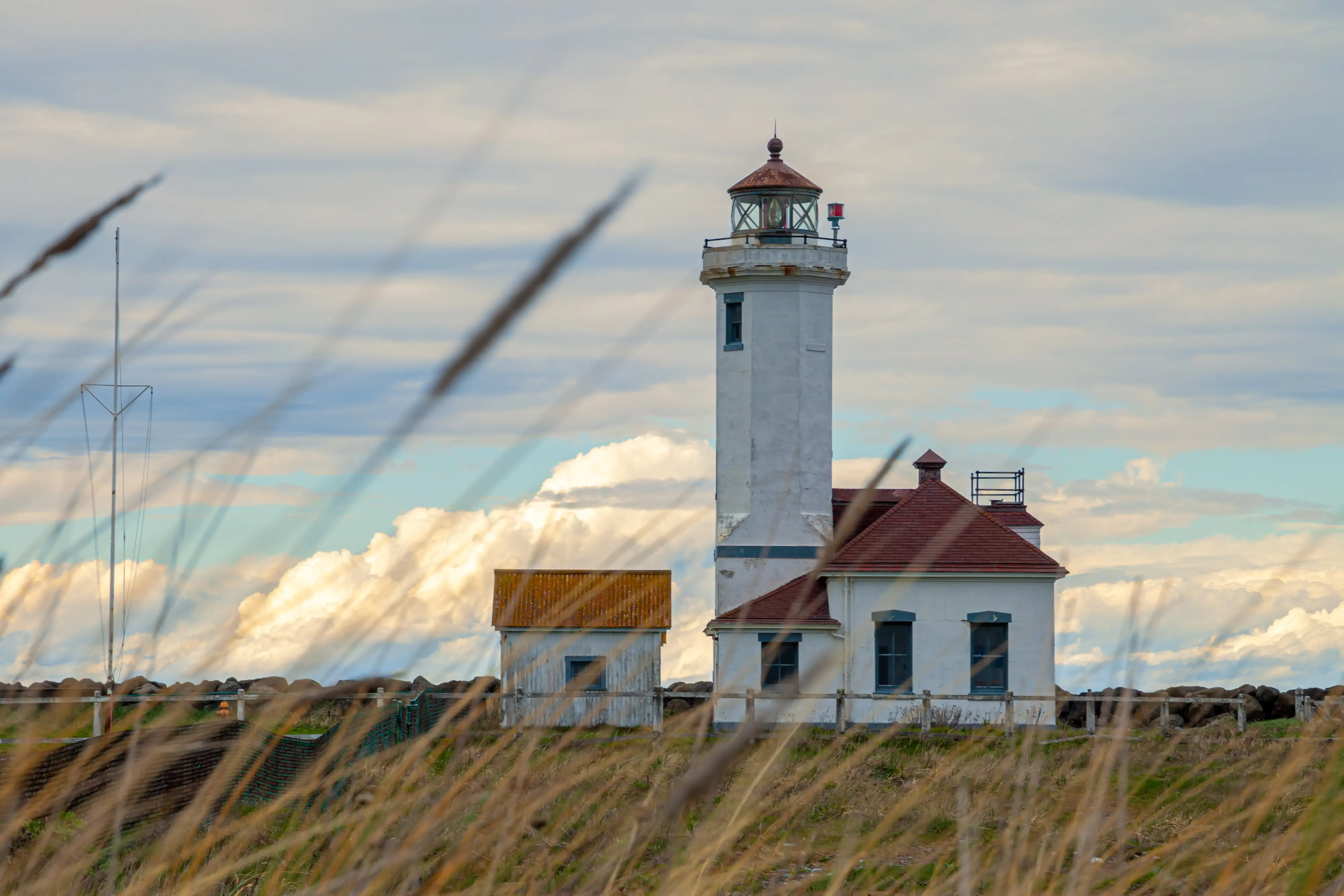
Point Wilson Lighthouse at the northern tip of the Fort Worden grounds marks the meeting of open saltwater channels at the peninsula's tip, and the walk out to it is one of the best free activities in the city. On clear days you can see the Olympic peaks to the west and islands to the north simultaneously. The North Beach shoreline stretching west of the lighthouse is where locals go when they want a walk with views and no tourist foot traffic. For a deeper look at trails and outdoor recreation in the area, the parks and recreation page has the full breakdown.
The Saturday Market Ritual
Experienced Port Townsend residents treat the farmers market not as one weekend activity among many but as the anchor around which Saturday morning is organized. The market — running from April through December — stocks local produce, prepared foods, crafts, and the kind of face-to-face social interaction that is genuinely harder to replicate in larger cities. By late morning the best vendors are sold out. The ritual is to arrive early, buy what you came for, and stay longer than planned.
Top Things Locals Say About Port Townsend
The best intel about a city comes from the people who actually live there. Here’s what Port Townsend residents say when newcomers ask the questions everyone’s thinking.
“I knew about the ferry before we moved here — I just didn't know what it meant to live by a ferry schedule until October, when our first sailing cancellation turned a routine day trip into an overnight. That was when it clicked that Port Townsend doesn't commute to the outside world; you make peace with that, or you don't stay.”
— Recent Port Townsend home buyer
“What's the most surprising thing about living in Port Townsend?”
How fast the tourist version of the city — the crowded Water Street weekends, the festival energy — gives way to the actual town. By October you're walking past the Jefferson County Courthouse on a Tuesday morning with almost no one else around, and you realize that the quiet version of Port Townsend is the real one. Most people who visited in July and moved here didn't fully anticipate how different winter feels, and most of them end up preferring it.
“What do locals love most about Port Townsend?”
The specificity of the place. You can't replicate the walk out to Point Wilson Lighthouse on a clear December morning, or the September weekend when the harbor fills with wooden boats for the festival at the Northwest Maritime Center. Longtime residents talk about the Uptown district the way people talk about a neighborhood in a city ten times this size — as a place with a real character and a real community that you can actually know. That's rare.
“What should newcomers to Port Townsend know?”
Run your downtown errands before 10 a.m. or after 4 p.m. on summer weekends — the two-hour parking cap on Water Street and the tourist foot traffic make midday logistics genuinely frustrating if you're just trying to pick something up. Also: the farmers market on Saturday morning is not optional if you want to meet people. Show up consistently for a month and you'll know more neighbors than most people meet in a year in a larger city.
“Can you live in Port Townsend without a car?”
Within the downtown and Uptown areas, daily errands are genuinely doable on foot — the city is compact enough that the farmers market, library, and most Water Street businesses are walkable from those neighborhoods. Getting to North Beach, Fort Worden, Castle Hill, or Morgan Hill without a car is harder, and reaching anything outside Port Townsend — Sequim, Port Angeles, or the ferry terminal if you're parking at Haines Place — requires either a car or the three-times-daily Jefferson Transit connection. Most residents eventually own a car; a few manage without one if they live centrally and have very flexible schedules.
Cities Near Port Townsend
Other communities near Port Townsend worth a look — each with its own character and price point.
| City | Distance | Best For | Vibe | Median Rent | Median Buy |
|---|---|---|---|---|---|
| Port Hadlock | 8 mi | Value buyers, trade workers, families | Practical, unpolished, affordable | $1,800 | $460,000 |
| Port Ludlow | 15 mi | Retirees, boaters, quieter pace | Marina community, resort-adjacent, calm | $1,900 | $550,000 |
| Sequim | 30 mi | Active retirees, sunny-climate seekers | Lavender country, sun-drenched, relaxed | $1,700 | $480,000 |
More Helpful Guides for Port Townsend
Going deeper on Port Townsend? Our blog series covers everything from first-time buying to retiring here — explore the guides below.
Local Expert Takeaway: Port Townsend is one of the few places in Washington where the lifestyle is genuinely irreplaceable and the price is genuinely high for what the local economy produces. If you're arriving with equity from a larger market, a permanent remote-work arrangement, and a real affinity for maritime culture, Victorian architecture, or retirement-pace living, this city will hold you. If you're counting on a Seattle salary but planning to make the ferry commute work long-term, run the math on what happens the first winter a sailing gets canceled. The farmers market, Fort Worden, the Wooden Boat Festival, and the walk out to Point Wilson Lighthouse are not exaggerated — they're as good as advertised. What's also not exaggerated is the isolation, the ferry dependency, and the reality that a median age of 60.8 years shapes the social and commercial fabric of this town in ways that take a few months to fully register.
Quick Takeaways & FAQs
✅ Fort Worden Historical State Park — a 434-acre former military installation with water views, arts residencies, and year-round public access — functions as the city's living cultural campus, not just a weekend hiking spot.
⚠️ The 90-minute Seattle commute via Washington State Ferries works well for occasional trips but runs on a fixed schedule that weather and missed sailings can stretch to 2.5–3 hours, which breaks most in-person work arrangements.
📍 Street parking on Water Street is capped at two hours, and the Haines Place Park-and-Ride — the main overflow lot near the ferry terminal — fills by midday on busy summer and festival weekends.
What is the typical home price in Port Townsend, WA?
Is Port Townsend, WA a good place to retire?
How long is the commute from Port Townsend to Seattle?
What are the main employers in Port Townsend?
What is the best neighborhood in Port Townsend for families?
Helpful Links for Moving to Port Townsend
Moving to Washington?
Tell us what you need help with and we'll connect you with local resources.
