
What Is Living in Port Angeles, Washington Like?
Maybe you've been priced out of Seattle and someone mentioned the Olympic Peninsula. Maybe you drove through Port Angeles on the way to catch the Coho ferry to Victoria and thought, wait — people actually live here? They do — about 20,000 of them — and the city's central reality is this: you are living at the edge of one of the most dramatic landscapes in North America, a 17-mile drive from Hurricane Ridge at 5,242 feet, with the Strait of Juan de Fuca out your front window and Olympic National Park as your literal backyard. The city sits at the northern tip of the Olympic Peninsula on US Route 101, roughly 82 miles northwest of Seattle, and that distance is not just geographic — it is a full psychological separation from Puget Sound metro life.
The economy here runs on a handful of anchor institutions. A major regional health system is among the largest employers in Clallam County, alongside the Port Angeles School District, Clallam County government, Peninsula College, and Nippon Paper Industries USA — a paper manufacturing operation that has been part of the city's industrial identity for decades. Tourism is a genuine fourth pillar: the Olympic National Park Visitor Center on Race Street pulls visitors year-round, the Coho ferry terminal on Railroad Avenue connects Port Angeles directly to Victoria, BC, and the Port of Port Angeles operates an 18-acre Marine Trades Industrial Park that supports water-borne commerce. The people who move here are typically choosing a pace of life, not chasing a job posting.
Home prices here are noticeably below what most Puget Sound buyers are used to — the Zillow Home Value Index put the typical home value at $432,551 as of mid-2026. Day-to-day life revolves around the waterfront, the Olympic Discovery Trail, weekend drives up to Hurricane Ridge (road open, ridge accessible — though the Day Lodge that burned in May 2023 is still in the pre-design replacement phase as of late 2025), and a compact downtown where Front Street and First Street hold most of the dining and retail the city has. For the full breakdown on cost of living and neighborhoods, those pages go deeper.
Whether you're considering a move or just starting your research, the sections below cover Port Angeles's job market and who the city suits, what daily life actually feels like here, the current housing market, commuting realities, and where locals spend their weekends.
Port Angeles at a Glance
Looking to buy in Port Angeles? Estimate your payment.
Enter your numbers to see an estimated monthly mortgage payment.
Estimate only. Excludes HOA fees and mortgage insurance. The interest rate above is a starting point, not a quoted rate — replace it with your own to see real numbers. Insurance is a flat placeholder, not a Port Angeles quote.
Why Are People Moving to Port Angeles?
Port Angeles attracts a specific kind of relocator: someone who has made a deliberate decision to trade commute range and urban density for something else entirely. That something else is direct access to one of America's great wild landscapes, a smaller-city cost structure, and a genuine waterfront town that hasn't been polished into a resort.
Who the City Suits Best
| Buyer Type | Why Port Angeles Works | What to Know |
|---|---|---|
| Nature Privacy Outdoor-first households | Olympic National Park trails from the city limits, Hurricane Ridge 17 miles up, the Olympic Discovery Trail for cycling and running | Expect cloud cover October–April; the outdoors payoff is real but seasonal |
| Renter First-Time Remote workers | Home prices well below Puget Sound, reliable broadband in established neighborhoods, quiet residential streets | Seattle remains ~150 minutes by road; not a commute city |
| Quiet Value Pre-retirees & retirees | Walkable waterfront, strong healthcare infrastructure, ferry access to Victoria, low property tax rate | Limited specialist medical care locally; Sequim and further for some services |
| Families Peninsula-rooted families | Lower cost of entry than Sequim, tight community feel, Peninsula College for dual-enrollment options | Port Angeles School District holds a C+ rating, according to Niche — check individual school data before committing |
| Commuter Victoria-side workers | Coho ferry runs year-round, 90-minute crossing, 2–4 departures daily depending on season | Winter service drops to roughly 2 crossings per day; plan around the schedule |
| Views Walkable Waterfront lifestyle seekers | Strait of Juan de Fuca views, City Pier, Feiro Marine Life Center all within walking distance of downtown | Downtown commercial mix is improving but still limited; online ordering fills gaps |
The people who struggle here are those who moved expecting a stepping-stone — somewhere to live while they commute into the Sound. Seattle is roughly 150 minutes by road, and that drive involves the Hood Canal Bridge, which can close without much notice during high winds.
The Economic Reality
The local economy supports workers across healthcare, education, retail, manufacturing, and tourism — and that breadth matters. No single employer collapse would crater the local economy the way a mill closure once could.
Nippon Paper Industries USA remains a significant manufacturing presence, and the Port of Port Angeles continues operating its three industrial terminals and marine trades park. Peninsula College adds an educational anchor that also draws younger residents and creates a modest arts-and-events scene.
Remote work has quietly become one of the most common reasons people land here. The city's Housing Action Plan is actively trying to expand supply, which signals that local leadership knows demand is real — and that inventory pressure isn't going away on its own.
What Daily Life Feels Like in Port Angeles
Living here takes about three months to fully click. The first month is the views — the ferry crossing the Strait, the mountains catching the last light above Lincoln Park. By month three, you know which mornings are worth the drive up to Hurricane Ridge and which ones mean cloud soup at 3,000 feet.
The Rhythm of a Small Waterfront City
Downtown Port Angeles is compact enough that errands on Front Street or First Street rarely require a car. Chestnut Cottage Restaurant on E Front Street is where weekend breakfasts happen for half the town — it's a genuine gathering spot, not a tourist trap. Bella Italia on E First Street has anchored the dinner scene for years; Kokopelli Grill a few doors down on E Front Street adds Southwest flavor to a dining scene that leans heavily on seafood and Pacific Northwest ingredients.
For an evening out, Downriggers on the Water on E Railroad Avenue gives you Strait views with your meal, and Next Door GastroPub on W First Street draws the after-work crowd. The dining scene is small — maybe 15–20 places worth your attention — but it's real, locally owned, and not built for tourists.
What Newcomers Don't Expect
The grey. October through April, Port Angeles sits under a persistent marine layer that is different from Seattle drizzle — it's heavier, more total, and it lasts longer than newcomers from sunnier climates anticipate. Locals stop talking about it within a year. Newcomers from California often don't.
The flip side: summer here is genuinely spectacular. July and August bring clear skies, the Strait turns deep blue, and Hurricane Ridge — the road and trails are open even without the lodge — draws hikers who would otherwise be fighting for parking in more famous parks. The crowd-to-landscape ratio is still favorable.
Where Locals Actually Gather
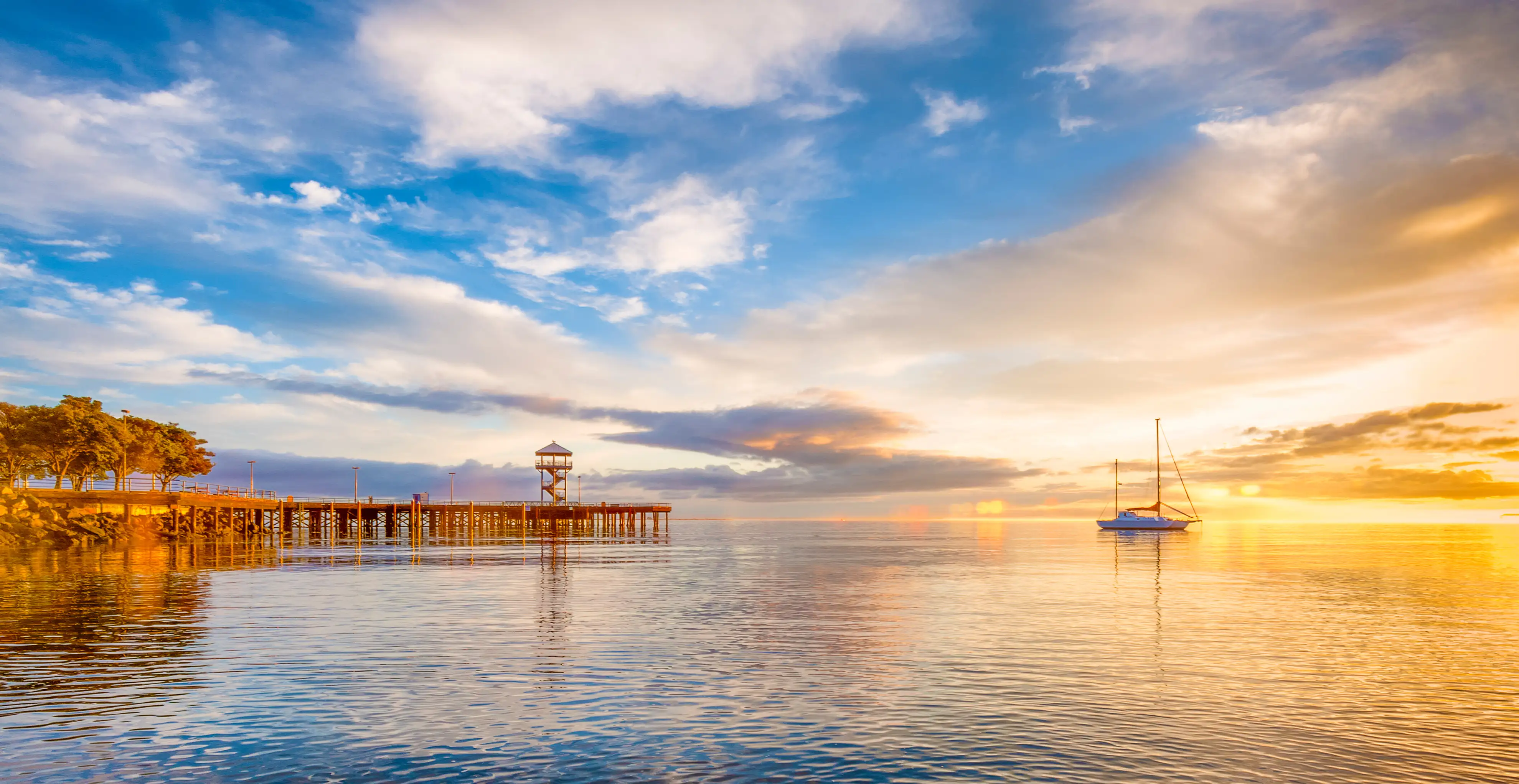
The City Pier is the de facto front porch of Port Angeles — people walk it on lunch breaks, families gather there on summer evenings, and the view of the Strait toward Victoria is one of the best free things in Clallam County. The Olympic Discovery Trail pulls cyclists and walkers through town and beyond. On Friday nights in summer, downtown parking gets genuinely competitive, which still surprises people who moved here expecting a sleepy small town.
For a city of 20,000, Port Angeles punches above its weight on community events — the ferry terminal alone generates a constant low-level international energy that keeps the waterfront feeling alive even on weekdays.
The Port Angeles Housing Market Right Now
The Zillow Home Value Index put Port Angeles's typical home value at $432,551 as of mid-2026 — down 3.0% from the prior year, which is a meaningful shift after several years of sharp appreciation across the Olympic Peninsula. For buyers, that cooling creates more room to be deliberate.
What hasn't cooled is pace. The average home is going to pending in around 13 days, which means well-priced listings in established neighborhoods still move quickly. This is not a market where you can schedule a second showing two weeks out and expect the house to wait.
What the Market Looks Like on the Ground
Port Angeles offers more range than most buyers expect — from older craftsman stock in established residential areas to newer construction on the city's edges. Some areas carry noticeably higher price points than the city-wide figure, particularly where views or lot size come into play; the full neighborhood breakdown lives on the best neighborhoods page.
Inventory is still tight relative to demand. The city's active Housing Action Plan signals that local government is aware of the supply gap — but policy moves slowly, and buyers competing for the available stock won't feel relief soon.
One honest downside the market data doesn't show: homes in Port Angeles often carry deferred maintenance or aging systems. The maritime climate is hard on roofs, siding, and foundations over time. A thorough inspection isn't optional here — it's the most important step in any offer.
Port Angeles Neighborhoods
Port Angeles has several distinct areas — each with its own character and appeal. Here’s a breakdown to help you narrow down where to focus your home search.
🏡 Downtown Port Angeles
The walkable core of the city, centered on First and Front streets, where restaurants, shops, the City Pier, and the Coho ferry terminal are all within a few blocks. It suits buyers who want on-foot access to daily life and don't mind smaller lots and older housing stock.
🏠 Eastside
A residential area east of downtown that tends to attract families and first-time buyers with a mix of mid-century homes and some newer infill construction. It's a practical, no-frills part of the city with quick access to US-101 heading toward Sequim.
🌳 Westside
West of downtown, this area has a quieter residential character with established neighborhoods close to Lincoln Park and the waterfront bluffs. It appeals to buyers who want space and a slightly more removed feel while still being minutes from downtown.
🏘 Mount Angeles
A hillside neighborhood with elevated lots that can offer views toward the Strait of Juan de Fuca and the Olympics, depending on position. Buyers here are typically trading flat terrain for the elevated setting and the sense of separation from the city floor.
🏔 Peninsula Golf Course area
The neighborhood around Peninsula Golf Course carries a more established, suburban feel with larger lots and a quieter pace than downtown. It's a good fit for buyers who want a conventional residential setting within the Port Angeles city limits.
🌆 Lincoln Park
The area around Lincoln Park sits near the city's western waterfront, giving residents access to beachside walking and the park's forested trails. It's a popular zone for buyers who prioritize outdoor access as part of daily life, not just weekend trips.
Pros & Cons of Living in Port Angeles
The Pros
- Direct gateway to Olympic National Park and Hurricane Ridge
- working waterfront with ferry access to Victoria
- BC
- relatively affordable coastal housing compared to Puget Sound cities
- strong sense of small-town community
The Cons
- Higher-than-average crime rate for a small city
- long
- isolated drive or ferry trip to reach Seattle-area jobs
- below-average school district ratings and limited economic diversity
Getting Around & Commuting in Port Angeles
Port Angeles is a driving city. There's no getting around it — the Olympic Peninsula's geography guarantees it. But the nature of that driving is different from a typical suburb: most daily errands stay within a few miles of downtown, and the roads that matter most run east-west along US Route 101.
The Lay of the Land
US Route 101 is the spine of peninsula life. It connects Port Angeles east to Sequim (about 18 miles) and west toward Forks, and it's the road you'll use for nearly every out-of-town trip. The stretch through downtown can back up at shift changes for major employers, particularly near the industrial waterfront.
The other road that shapes daily life is the Hurricane Ridge Road — 17 miles from sea level to 5,242 feet, taking about 45 minutes in good conditions. It's closed overnight and in severe weather, so checking road status before you go is a habit every Port Angeles resident develops.
The Seattle Question
Seattle is approximately 150 minutes by road — and that estimate assumes normal conditions, no Hood Canal Bridge closure, and no backup at the Edmonds or Kingston ferry queues if you cut across the Sound. The Hood Canal Bridge closes for naval vessel passage and during sustained high winds; it doesn't happen constantly, but it happens without warning, and it can add 45 minutes to an already long drive.
Most people who commute to Seattle from Port Angeles don't do it daily. They don't do it weekly, either. This is a city for people who have either cut the cord from the metro entirely or who make that drive deliberately — once a month for medical appointments, quarterly for a meeting — and who have arranged their professional life accordingly.
Getting to Victoria
The Coho ferry, operated by Black Ball Ferry Line, runs year-round between the downtown ferry terminal and Victoria, BC — a 90-minute crossing of the Strait of Juan de Fuca. Summer sees 3–4 daily departures in each direction; winter drops to roughly 2 per day. For residents who work in Victoria or who have family there, this is a genuine transportation link, not just a tourist amenity. Check current fares and schedules at cohoferry.com, as pricing changes seasonally.
Within the City
Clallam Transit runs local bus routes connecting Port Angeles's residential areas to downtown and to Sequim. It's usable for basic errands and commuting to Peninsula College, but most residents rely on a personal vehicle for anything time-sensitive. A handful of neighborhoods near downtown are walkable for grocery and restaurant access; most of the city is not.
| Destination | Mode | Typical Time | Key Variable |
|---|---|---|---|
| Sequim | Drive via US-101 E | ~20 min | Construction on 101 occasionally delays |
| Hurricane Ridge | Drive via Hurricane Ridge Rd | ~45 min | Road closures in winter/high winds |
| Port Townsend | Drive via US-101 E + SR-20 | ~55 min | Hood Canal Bridge closures possible |
| Victoria, BC | Coho Ferry | ~90 min crossing | Schedule varies by season; book ahead in summer |
| Seattle | Drive via Hood Canal Bridge | ~150 min | Bridge closures add 45+ min; no reliable alternative |
| Forks | Drive via US-101 W | ~60 min | Single-lane sections; logging truck traffic |
Schools in Port Angeles
Families relocating to Port Angeles have public, private, and higher-education options nearby. Here’s a quick overview.
🎓 School District
Port Angeles School District serves K–12 students across Port Angeles and the surrounding area. Rated C+ (source: Niche.com).
🏆 Graduation Rate
The 4-year high-school graduation rate here is approximately 74%.
📚 Higher Education
Washington’s public universities — the University of Washington, Washington State University, and Western Washington University — offer four-year degrees statewide, with a network of 34 community and technical colleges (SBCTC) providing two-year and workforce programs.
🌐 Online Learning
University of Washington Continuum College and Washington State University Online offer fully accredited online degrees for remote learners across the state.
Safety in Port Angeles
A quick look at how Port Angeles compares on the numbers that matter most when weighing a neighborhood or a move.
🛡 Violent Crime
Approximately 5.7 per 1,000 residents.
🔒 Property Crime
Approximately 24.8 per 1,000 residents.
Compared to the FBI’s most recent national data (2024), Port Angeles’s violent crime is above the national average (about 3.6 per 1,000), and property crime is above the national average (about 17.6 per 1,000).
Against Washington as a whole, Port Angeles’s violent crime is about one and a half times the state average, and property crime is about the same as the state average (Bureau of Justice Statistics, Crime Known to Law Enforcement, 2024 (tables 2 and 3)).
Crime rates can vary a lot within a single city, so the citywide numbers above are only a starting point. Some neighborhoods in Port Angeles run well below these averages, while others run higher — the kind of block-by-block detail that matters most when you’re actually choosing where to live. The full guide below breaks it down neighborhood by neighborhood.
Working in Port Angeles
Port Angeles’s largest employers span several industries — here are some of the anchors of the local job market.
🏥 Olympic Medical Center
Healthcare
🎓 Port Angeles School District
Education
🏛 Clallam County government
Public administration
🏭 Nippon Paper Industries USA
Paper manufacturing
🎓 Peninsula College
Education
Parks & Recreation in Port Angeles
Some of the outdoor spaces that shape everyday life in Port Angeles.
🌱 Olympic National Park Visitor Center
🌱 Olympic Discovery Trail
Port Angeles residents don’t have to go far for green space — spots like Olympic National Park Visitor Center and Olympic Discovery Trail are part of everyday life here, whether that’s a morning walk, a weekend hike, or just somewhere to unwind outside. The full guide below covers more of what Port Angeles has to offer for parks and outdoor recreation.

Retiring in Port Angeles
Port Angeles draws retirees for its balance of amenities, outdoor access, and cost. Here’s what to weigh.
🌤 Climate
Port Angeles sits in a mild maritime zone — winters rarely bring hard freezes, and summer highs typically stay in the 60s and 70s. The tradeoff is a persistent marine layer from October through April that produces overcast days more than dramatic storms. Retirees from sunnier climates should spend a winter here before committing.
🍴 Lifestyle
Daily life centers on the waterfront, the Olympic Discovery Trail, and a compact downtown with independent restaurants along Front and First streets. The Coho ferry to Victoria adds a unique dimension — a foreign city is 90 minutes away by boat, which makes day trips and cultural variety more accessible than you'd expect from a city this size.
🏚 55+ Communities
Port Angeles has senior housing options ranging from independent living communities to assisted care, with more full-service options available a short drive east in Sequim. The area's growing retirement population has expanded the range of services and social programming available locally. For a detailed look at healthcare and senior living specifics, see the <a href="/washington/port-angeles/retiring">retiring in Port Angeles page</a>.
✈ Getting Around
A personal vehicle is essential for most errands and medical appointments. Clallam Transit covers basic routes through the city and east to Sequim. The nearest commercial airport with regular service is Port Angeles William R. Fairchild International, with connections via Seattle-Tacoma International Airport for longer trips — plan extra time for the drive to SeaTac.
🏛 Washington Taxes for Retirees — What to Know
- No state income tax — Washington does not tax personal income, so Social Security, pensions, and 401(k)/IRA withdrawals are all untaxed at the state level. There is no state return to file and no retirement exclusion to claim — the rate is simply zero.
- Military and public pensions — Because there is no income tax, military retirement pay and public-employee pensions are untaxed at the state level along with everything else.
- Sales tax is the tradeoff — The state sales tax is 6.5%, and local add-ons bring the combined rate in Port Angeles to 8.9% (Washington State Department of Revenue, Q3 2026 local sales & use tax rate table, July 2026). Groceries and prescription drugs are exempt.
- Property taxes, with senior relief — The effective property tax rate is roughly 0.9%. Homeowners 61+ (or unable to work due to disability, or a qualifying disabled veteran) who own and occupy their home may qualify for a reduction. Income limits are set against each county’s median household income, so the threshold differs by county — check with your county assessor. A separate deferral program is available for those who don’t qualify for the exemption.
- Capital gains tax — but not on retirement income — Washington taxes 7% on long-term capital gains above a $278,000 standard deduction for 2025, rising to 9.9% on gains above $1,000,000. Retirement accounts and real estate sales are both exempt. It therefore does not reach ordinary retirement income or the sale of a home.
- Estate tax — the one to plan for — Unlike most no-income-tax states, Washington has its own estate tax. For deaths on or after July 1, 2026, the exemption is $3 million with graduated rates topping out at 20%. Retirement accounts count toward the taxable estate, so long-time homeowners with sizable balances can cross the line without expecting to.
- No inheritance tax — Washington has no inheritance tax, and no gift tax.
- WA Cares payroll premium — Working Washingtonians pay 0.58% of gross wages into the WA Cares Fund, the state long-term care program, with no income cap. It applies to W-2 wages, so retirees who have stopped working do not pay it — but anyone relocating while still employed will see it. The private-insurance opt-out closed at the end of 2022 and is not available to new applicants; the remaining exemptions are narrow (living outside Washington, military spouses, certain visa holders, and veterans with a 70%+ service-connected rating).
- The Oregon border effect — Oregon has no sales tax, so Washington residents near the river — Vancouver, Camas, Washougal, Longview — often cross over for large purchases. Washington use tax technically applies to goods brought back for use in-state, though it is rarely enforced on ordinary personal purchases.
Tax laws change frequently and individual situations vary. This is general information, not tax advice — always consult a qualified Washington tax professional or CPA for personalized retirement tax planning.
Weekends & Local Favorites in Port Angeles
Ask a long-term Port Angeles resident what they do on weekends and the honest answer is: it depends entirely on the weather. When the clouds lift, this is one of the best-positioned cities in Washington for outdoor access. When they don't, downtown and the waterfront hold up better than most small cities of this size.
The Outdoor Radius
Hurricane Ridge is the obvious headline — 17 miles from downtown to views of Mount Olympus and the interior Olympics. The ridge road and trails remain open as of mid-2026; the Day Lodge burned in May 2023 and a replacement visitor center is in the pre-design phase, so arrive self-sufficient with food and layers. The Cirque Rim and High Ridge loop trails are accessible without the lodge, and the views on a clear August morning are genuinely hard to overstate.
The Olympic Discovery Trail runs through town and is a legitimate cycling resource — segments connect east toward Sequim and west toward the Elwha River area, where the largest dam removal project in US history reshaped the lower river over the past decade. The City Pier and the Feiro Marine Life Center on the waterfront are the weekend-morning default for families with younger kids.
A practical note: summer tourist traffic peaks July through August, and the ferry terminal area on Railroad Avenue fills up quickly on weekend mornings. Locals who want a peaceful pier walk have learned to get there before 9 a.m. or after 6 p.m.
Downtown Dining and Evenings
The dining footprint is small but has genuine personality. Breakfast at Chestnut Cottage on E Front Street draws a loyal crowd; the line on Saturday mornings is a real thing and locals factor it in. Bella Italia on E First Street has earned its longevity — an Italian seafood menu that takes Pacific Northwest ingredients seriously. Kokopelli Grill on E Front Street is the Southwest-inflected option in a town that otherwise leans firmly toward seafood. Downriggers on the Water on E Railroad Avenue is the place for a meal with Strait views, and Next Door GastroPub on W First Street keeps the later-evening options open.
The city's arts scene runs through Peninsula College's programming and a calendar of seasonal events on the waterfront. It's not a nightlife city — last call happens early and the music venues are few. But summer evenings on the pier, with the lights of Victoria visible across the water on clear nights, are the kind of thing that makes people realize they're not missing urban density as much as they expected.
The Victoria Factor
Living in Port Angeles and having a weekend escape to a different country — via a 90-minute ferry crossing — is genuinely unusual. The Coho runs year-round, and longtime residents use it for day trips to Victoria's waterfront in a way that people in landlocked cities simply can't. It doesn't fully offset the isolation from Seattle, but it adds a dimension to Peninsula life that nothing else does.
Top Things Locals Say About Port Angeles
The best intel about a city comes from the people who actually live there. Here’s what Port Angeles residents say when newcomers ask the questions everyone’s thinking.
“I knew the drive to Seattle was long, but I didn't understand what 'the bridge is closed' actually meant until it happened to me twice in my first winter. Now I plan my whole month differently — and honestly, I barely miss the city.”
— Recent Port Angeles home buyer
“What's the most surprising thing about living in Port Angeles?”
How quickly you stop thinking of Seattle as relevant. The Hood Canal Bridge makes it feel even farther than the miles suggest, and after a few months the waterfront, the trail, and the drive up to Hurricane Ridge fill in the gaps. What surprises most newcomers is that it actually works — the city is small enough that you run into people you know at Chestnut Cottage on a Saturday morning, and that starts to feel like exactly what you moved here for.
“What do locals love most about Port Angeles?”
The immediate access to the Olympic Peninsula without having to fight for a campsite or a trailhead. People who live here can be at Hurricane Ridge in 45 minutes on a Tuesday afternoon when the parking lots at more famous parks are packed with out-of-state plates. The City Pier on a clear evening in July, with the Strait turning gold and Victoria's lights coming on across the water, is something residents mention over and over as the thing they didn't expect to love as much as they do.
“What should newcomers to Port Angeles know?”
Check the Hurricane Ridge Road status before you drive up — it closes in bad weather and overnight, and there's nothing worse than making the trip and finding the gate shut. The Hood Canal Bridge on US-101 can close without much notice, so if you have a time-sensitive appointment in Seattle or beyond, build extra time. And get used to Front Street and First Street being the center of everything — once you know those blocks, you know downtown.
“Can you live in Port Angeles without a car?”
Technically, Clallam Transit connects residential areas to downtown and to Sequim, and a handful of blocks near First Street are walkable for basic errands and dining. In practice, almost everyone owns a car. The Peninsula's geography makes transit a supplement, not a substitute — and if you need to access Hurricane Ridge, the Elwha, or anything west of the city, there's no realistic option other than driving.
Cities Near Port Angeles
Other communities near Port Angeles worth a look — each with its own character and price point.
| City | Distance | Best For | Vibe | Median Rent | Median Buy |
|---|---|---|---|---|---|
| Sequim | 17 mi | Retirees & new construction buyers | Sunnier, quieter, more amenities | $1,700 | $525,000 |
| Port Townsend | 48 mi | Arts lovers & historic home buyers | Victorian character, ferry access | $1,800 | $560,000 |
| Forks | 56 mi | Rural buyers & deep-woods lifestyle | Remote, affordable, logging-town roots | $1,100 | $280,000 |
More Helpful Guides for Port Angeles
Going deeper on Port Angeles? Our blog series covers everything from first-time buying to retiring here — explore the guides below.
Local Expert Takeaway: Port Angeles rewards people who move here for the right reasons — outdoor access, lower home prices than anywhere else on Puget Sound, a real waterfront, and a small-city pace. It tends to disappoint people who arrive expecting urban convenience with a nature backdrop. The Hood Canal Bridge and the 150-minute Seattle drive aren't inconveniences you adapt to; they're the defining constraints of Peninsula life. If you can work remotely, or if your professional life is already local to Clallam County, Port Angeles's home values, the Coho ferry to Victoria, and the 17-mile drive to Hurricane Ridge add up to something genuinely hard to replicate anywhere else in Washington.
Quick Takeaways & FAQs
✅ The Coho ferry to Victoria, BC runs year-round from downtown Port Angeles — living with a foreign city as your nearest weekend escape is a real and unusual perk of Peninsula life.
⚠️ Seattle is roughly 150 minutes away via a route that crosses the Hood Canal Bridge, which closes without warning in high winds — this is not a commuter city, and treating it like one is the most common source of buyer regret.
📍 Hurricane Ridge Road begins at sea level in Port Angeles and climbs 5,242 feet in 17 miles — the Day Lodge burned in 2023 and a replacement is still in the pre-design phase, so arrive self-sufficient with food and layers.
Is Port Angeles a good place to live if I work remotely?
How far is Port Angeles from Seattle, and can you commute?
What is the typical home price in Port Angeles?
What are the main employers in Port Angeles?
What's the ferry situation, and can residents actually use it regularly?
Helpful Links for Moving to Port Angeles
Moving to Washington?
Tell us what you need help with and we'll connect you with local resources.
